- The Day My Hat Nearly Blew Away at the Observatory
- What Is Makiyama Observatory? Irabu Island's Sashiba-Shaped Symbol
- "The Wind's Too Strong" Was True
- A Spectacle Worth the Climb Even So
- The Path from the Car Park to the Observatory
- A Rare Spot to See the Irabu Bridge "from Above"
- 7 Tips for Enjoying Makiyama Observatory Comfortably
- Frequently Asked Questions (FAQ)
- Summary | Don't Lose to the Wind — Claim the Spectacle
The Day My Hat Nearly Blew Away at the Observatory
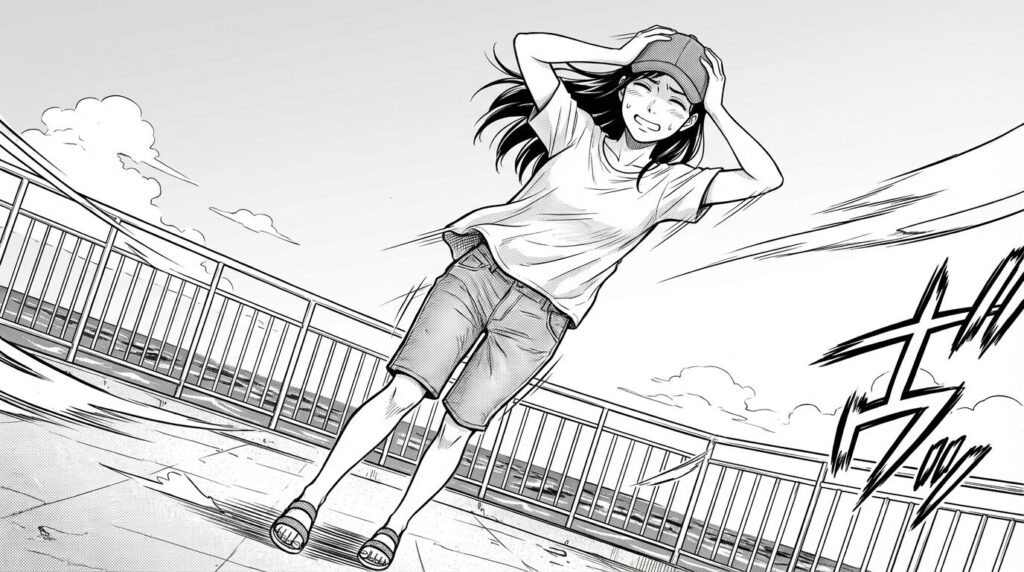
The moment I climbed up to the observatory, a side gust lifted my hat.
It genuinely nearly flew off, and I grabbed it in a panic. What wind speed is this? I wobbled just standing there. My hair went everywhere.
"Whoa, the wind's strong."
The friend with me was shouting too, holding their hat with one hand. At times like this, you really feel how a peaked cap is a disadvantage. It catches the wind easily, so it blows off in no time.
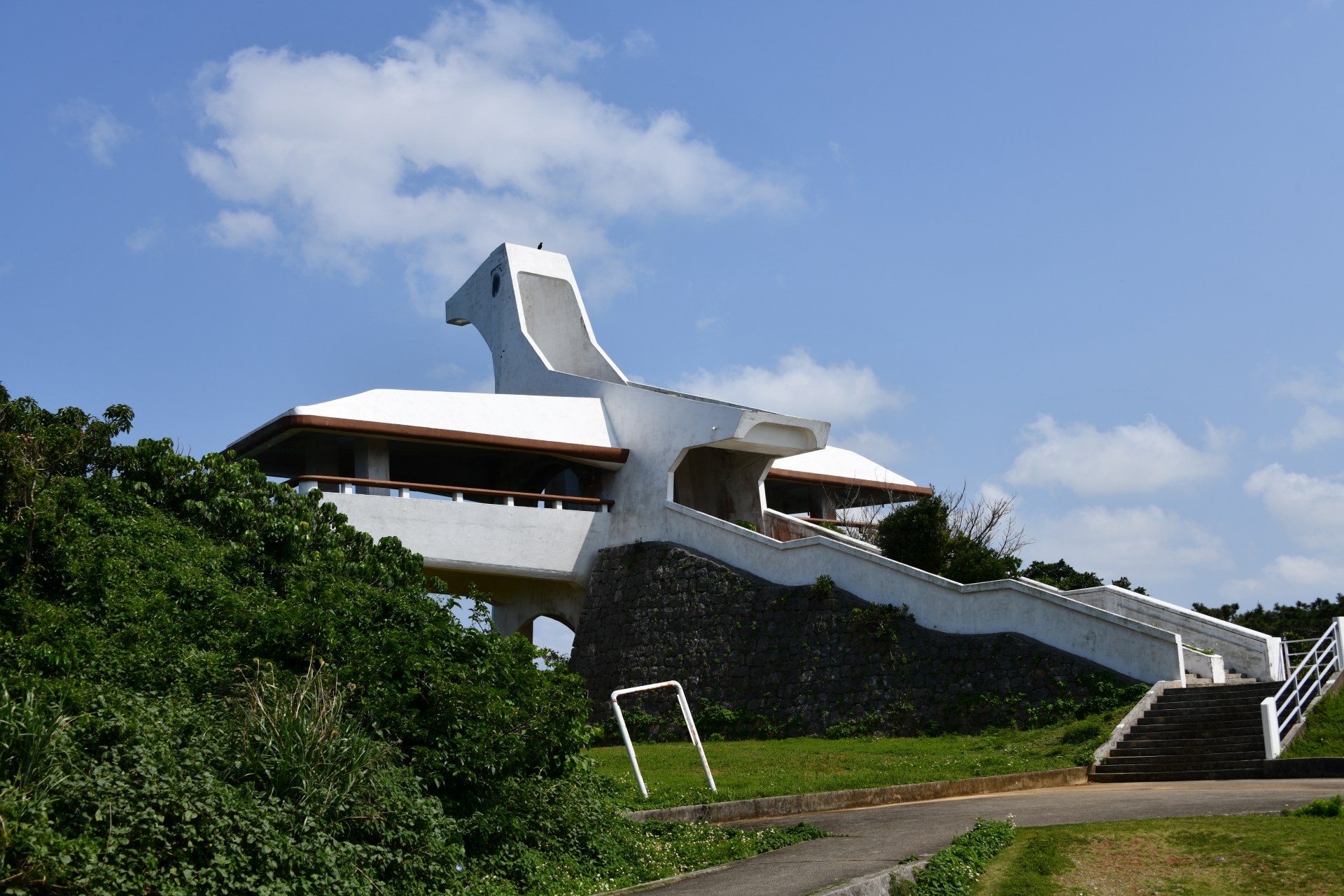
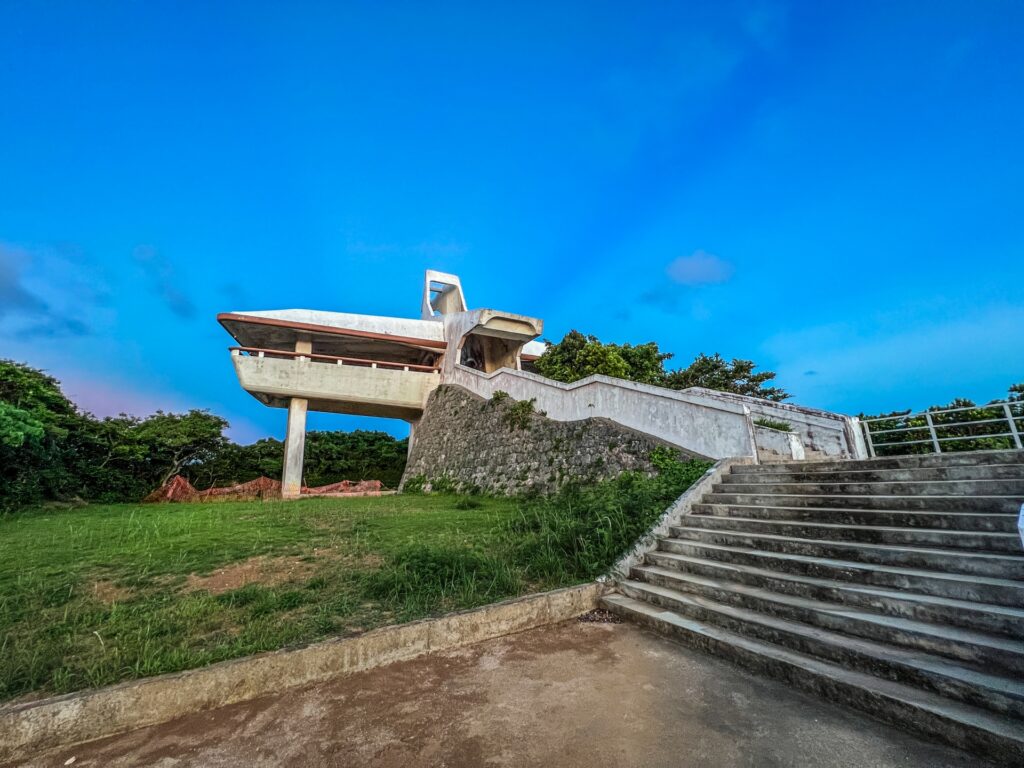
Makiyama Observatory. The observatory at the highest point on Irabu Island. Shaped like a bird called the sashiba, a white building you can spot straight away even from a distance.
I'd heard "the wind's strong" before going. But well, it's an observatory, of course there's wind, I thought lightly.
I'd underestimated it.
The strength of the wind at this observatory is out of the ordinary. Being on a height, there's nothing to block it. The wind off the sea blows full-on. Standing straight is quite a struggle.
But there's a spectacle you get in exchange for the wind.
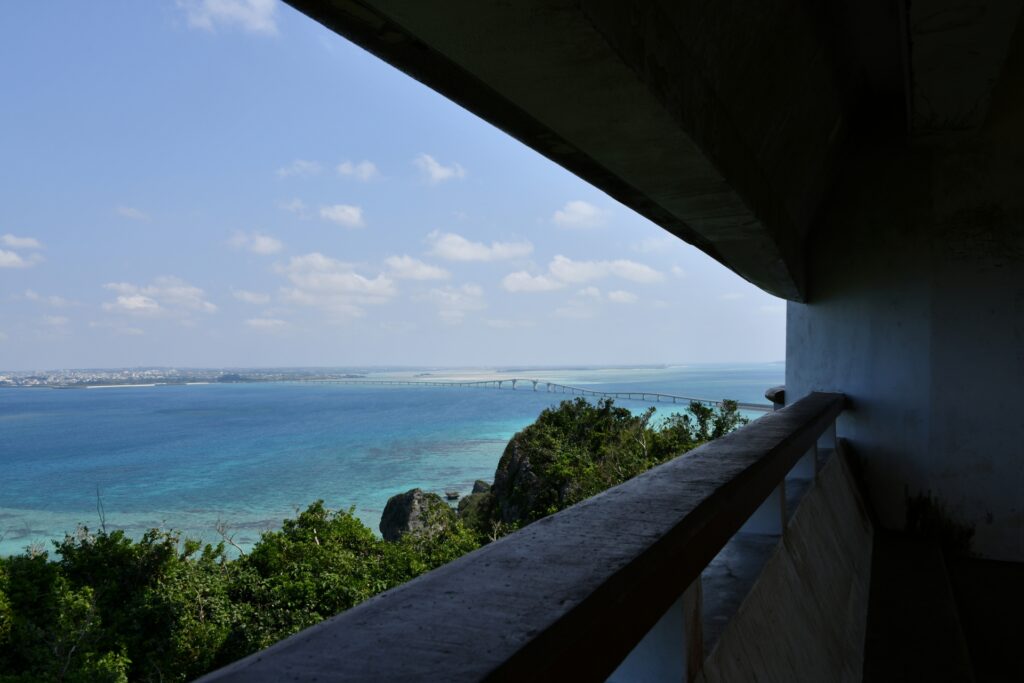
The whole of the Irabu Bridge. The Miyako-blue gradient. A 360-degree panorama surveying as far as Kurima Island and Ikema Island. One of the few spots where you can see all three great bridges.
"This is a view you can't see while crossing the bridge."
Squinting in the wind, that's what I thought.
Makiyama Observatory is a battle with the wind. But there's a view only those who win that battle get to see. Even while holding onto your hat, it's worth the climb.
In this article I'll write, based on real experience, about the strength of the wind at Makiyama Observatory and the reasons to climb up anyway. I'll also introduce tips for enjoying it comfortably, including wind countermeasures.
What Is Makiyama Observatory? Irabu Island's Sashiba-Shaped Symbol
Makiyama Observatory is the observatory at the highest point on Irabu Island. The elevation is about 90 metres (295 ft). A white building visible from anywhere on Irabu Island.
The building's shape is distinctive. It's modelled on a sashiba — a migratory bird — flying with its wings spread.
The sashiba flies to Irabu Island in numbers close to 50,000 every October. A kind of hawk. A seasonal feature of Irabu Island's autumn. This observatory, modelled on that sashiba, is a symbol of Irabu Island.
The observatory was completed in March 1981. Over 40 years ago now. It's been cherished as the island's landmark since before the Irabu Bridge opened.
Seen from a distance, it looks like a bird with its wings spread. You catch a glimpse of it on your right while crossing the Irabu Bridge too. That white building is Makiyama Observatory.
The location is 3–5 minutes by car from the Irabu Bridge. About 45 minutes from Miyako Airport. The access is good. The car park is large too. Free. There's a toilet too.
The observatory itself is open 24 hours. Free. Roofed. There are tables and chairs too. So you can enjoy the scenery at leisure.
However, the wind is strong. This one thing you'd best be prepared for.
From the observatory you can survey the eastern scenery. Miyako's main island, Kurima Island, Ikema Island. You can see all three great bridges (Irabu Bridge, Kurima Bridge, Ikema Bridge). If the weather's good, you can apparently see Ishigaki Island in the distance too.
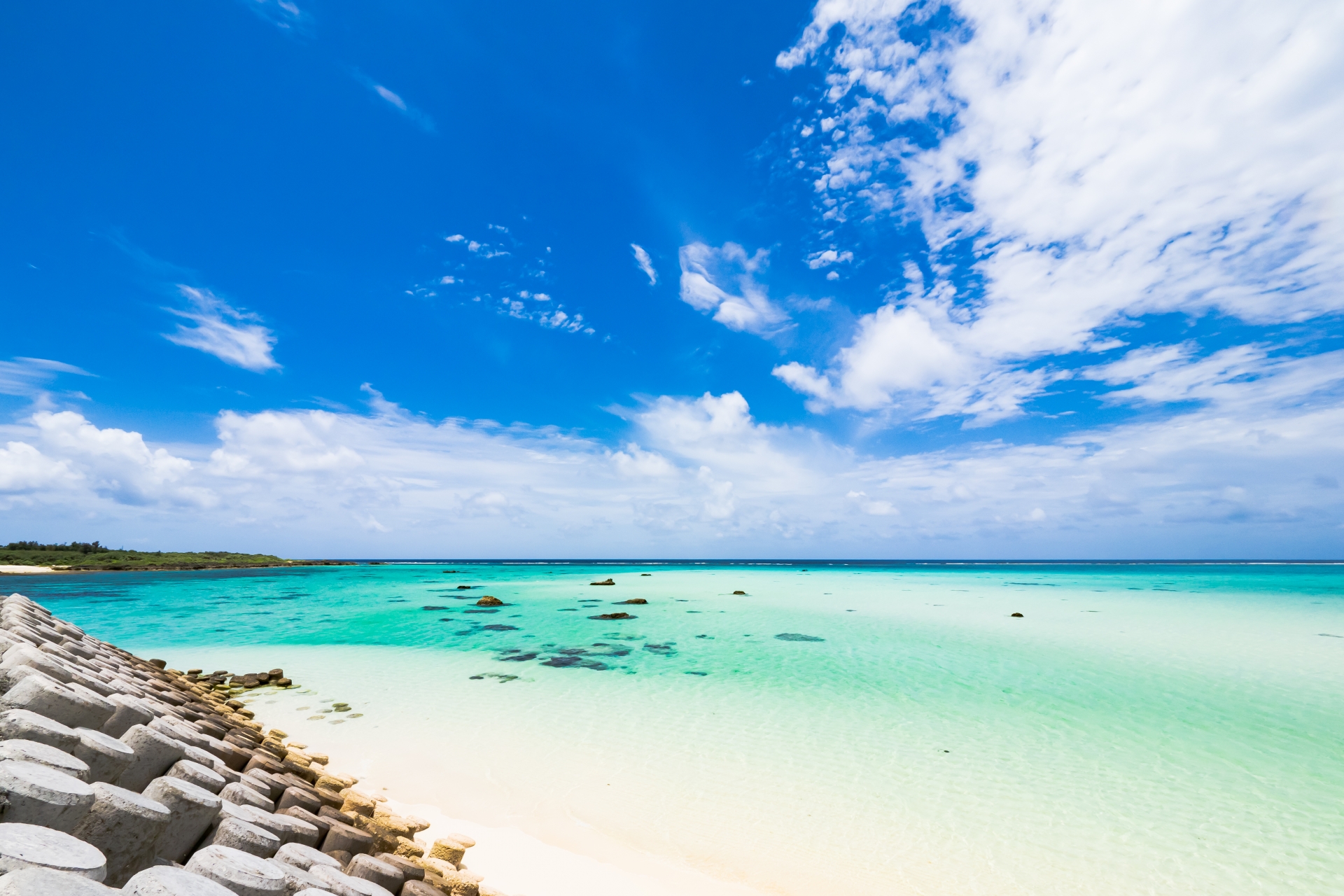
In the foreground, deep-green subtropical primeval forest. Beyond, a sea with a beautiful blue gradient. The contrast of the two colours is vivid.
Since it faces east, it's a good place to see the sunrise too. Go at sunrise time and you can see the sun rising from the sea.
However, the wind may be even stronger in the morning.
"The Wind's Too Strong" Was True
Look up Makiyama Observatory and a word always comes up. "The wind's strong."
Everyone writes it in the reviews too. "The wind was so strong my hat nearly blew away." "Wind so strong you can't stand straight." "The building looks like it'll fly off."
Honestly, at first I thought it was an exaggeration. Observatories are windy everywhere, it can't be that big a deal, I thought.
But actually going, I understood.
It's genuinely strong.
The moment I climbed up to the observatory, a side gust slammed into me. About three times stronger than I expected.
The hat nearly flies off, the hair goes everywhere, and you wobble just standing there. The sunglasses slip too.
The wind speed was probably about 10 or 15 metres per second, I think. It felt about the same as stepping outside on a typhoon day.
Why is the wind this strong? The reason is simple. Because it's on a height.
There's nothing around to block it. The wind off the sea blows full-on. And the observatory is shaped like a sashiba, so it has a structure that catches the wind easily.
It's especially strong in the daytime. The daytime sea breeze blows mercilessly. In the evening it eases a little. But even so, it's far stronger than an ordinary observatory.
On windy days it's even more intense. A review said "the building looks like it'll fly off," but apparently there really are days when wind that strong blows.
The day I went wasn't that bad, but even so I was desperate to hold onto my hat. My friend tried to take photos on their phone, and their hands were shaking all over. From the wind.
"This is impossible without a tripod,"
they said. Indeed, taking clean photos handheld is hard. Because the wind shakes your body.
But this wind isn't all bad.
Strong wind means clear air. The visibility is clear. You can survey far into the distance. The sea colours are sharply visible too.
And the wind feels good. Even on a hot day, the wind makes it feel cool. Even at midday in high summer, you don't get drenched in sweat.
Get along well with the wind and you can spend comfortable time.
A Spectacle Worth the Climb Even So
The wind is strong. But it's worth the climb.
The reason is the spectacle.
The view from Makiyama Observatory is genuinely beautiful.
You can see the whole of the Irabu Bridge. This is the top highlight.
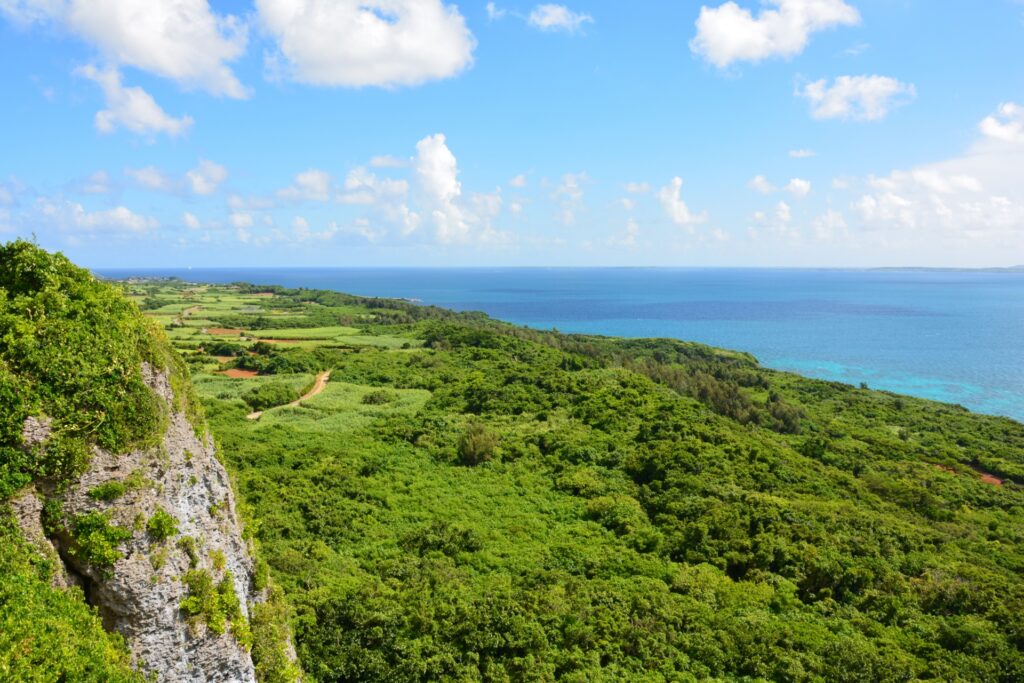
While crossing the bridge, you can only see the sea. You can't see the whole shape of the bridge. But from this observatory, the bridge's curving beauty and the contrast with the sea are perfectly visible.
The bridge stretches smoothly over the sea. Beyond it, Miyako Island. On both sides of the bridge, the Miyako-blue sea. A gradient from emerald green to deep cobalt blue.
The real thing is far more beautiful than in photos.
It's not just the bridge.
In the distance, Kurima Island. You can see the Kurima Bridge too. Even further, Ikema Island. You can faintly see the Ikema Bridge too.
You can see all three great bridges. This is a view you can only see here, even in the Miyako Islands.
In the foreground, deep-green primeval forest. Subtropical plants growing thickly. Beyond it, the blue sea. The contrast of the two colours is incredibly beautiful.
The sea is a different colour by place. The shallows, emerald green. The deep parts, deep blue. The gradient is clearly visible.
If the weather's good, the sky is deep blue too. The contrast of blue and green. It's photogenic.
And the field of view is wide. You can survey 360 degrees all the way round. Whichever way you face, a spectacle.
Not just the east side, the west side is beautiful too. On the west side you can see the runway of Shimojishima Airport. You can sometimes see planes taking off and landing.
To the south, around Toguchi-no-Hama and Sawada-no-Hama. To the north, you can see around 17END in the distance.
You can survey the whole of Irabu Island. You can clearly see the island's terrain.
"So from here you can see the whole of the island,"
you can really feel.
The observatory itself is comfortable too. Being roofed, you can avoid direct sunlight. With tables and chairs, you can sit and take it easy.
The wind is certainly strong, but watching the scenery, the wind stops mattering.
"My hat nearly blew away, but I'm glad I came,"
I thought from the heart.
The Path from the Car Park to the Observatory
Makiyama Observatory is a little walk from the car park.
The distance is about 100 metres. In time, 2–3 minutes. Not that far.
But this path is surprisingly good.
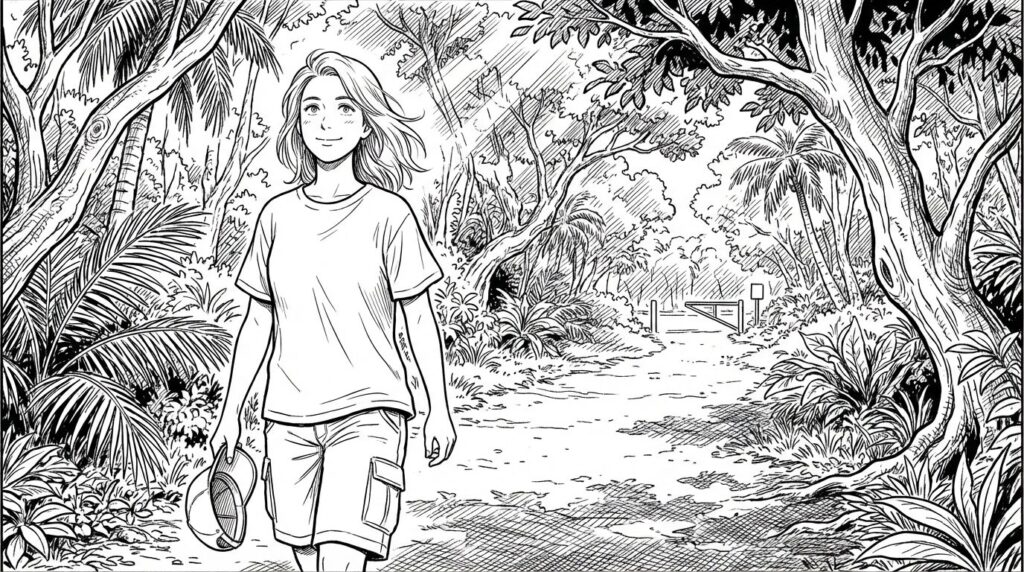
The path passes through subtropical primeval forest. Trees grow thick on both sides. Gajumaru, hibiscus and other tropical plants growing thickly.
A bit of a jungle feel.
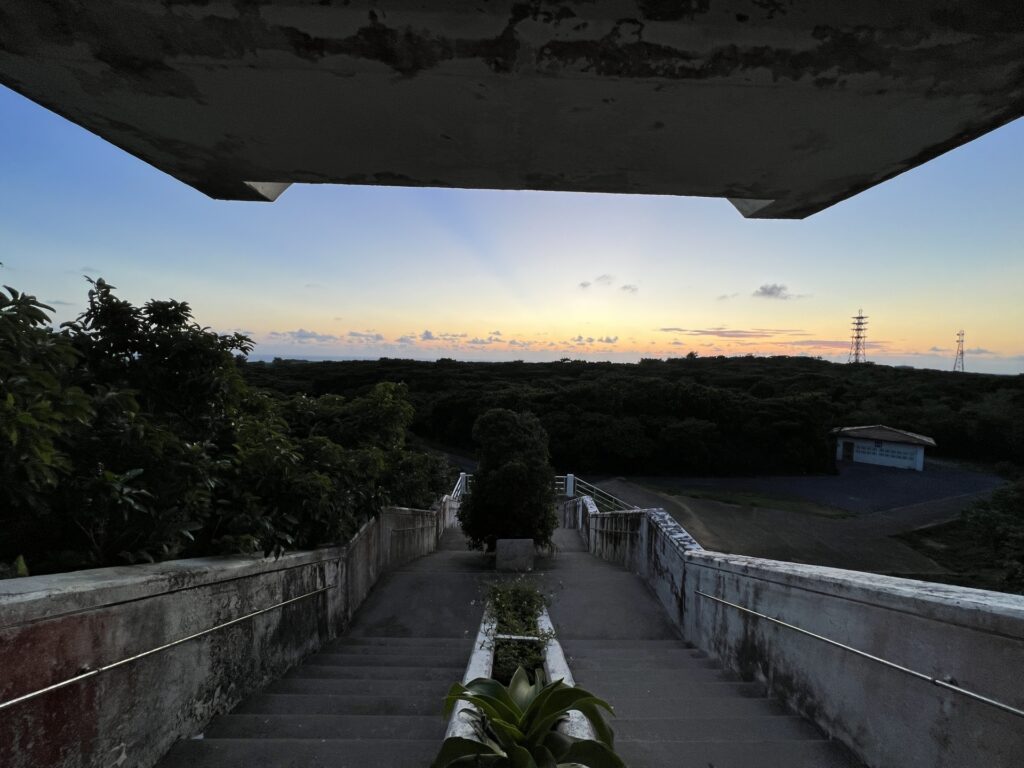
Unlike tourist spots on Okinawa's main island, it's not over-developed. Just as nature is. So the atmosphere is all the better.
Hibiscus blooming, flowers you've never seen blooming — just walking is fun. You can hear birds singing too.
"This is forest bathing,"
I thought. Even in the daytime, the tree shade is cool. The wind eases a little too.
However, there's a thing to note.
Depending on the season, there are many insects. Especially spiderwebs.
In summer, or after rain, there can be face-height spiderwebs strung across the path. Walk at the front and they catch your face.
I got caught once too.
"Ugh."
Spiderwebs are surprisingly tough. They stick to your face. Brush them off and they don't come off easily.
Since then, when walking the path I make a point of walking behind the person in front. Because the person at the front catches the spiderwebs for me.
Also, insect repellent is essential. There are many mosquitoes and small insects. If you can go in long sleeves and long trousers, that's better.
There are few stairs. Almost flat. So even those not confident in their stamina can walk it without trouble. Even small children are fine.
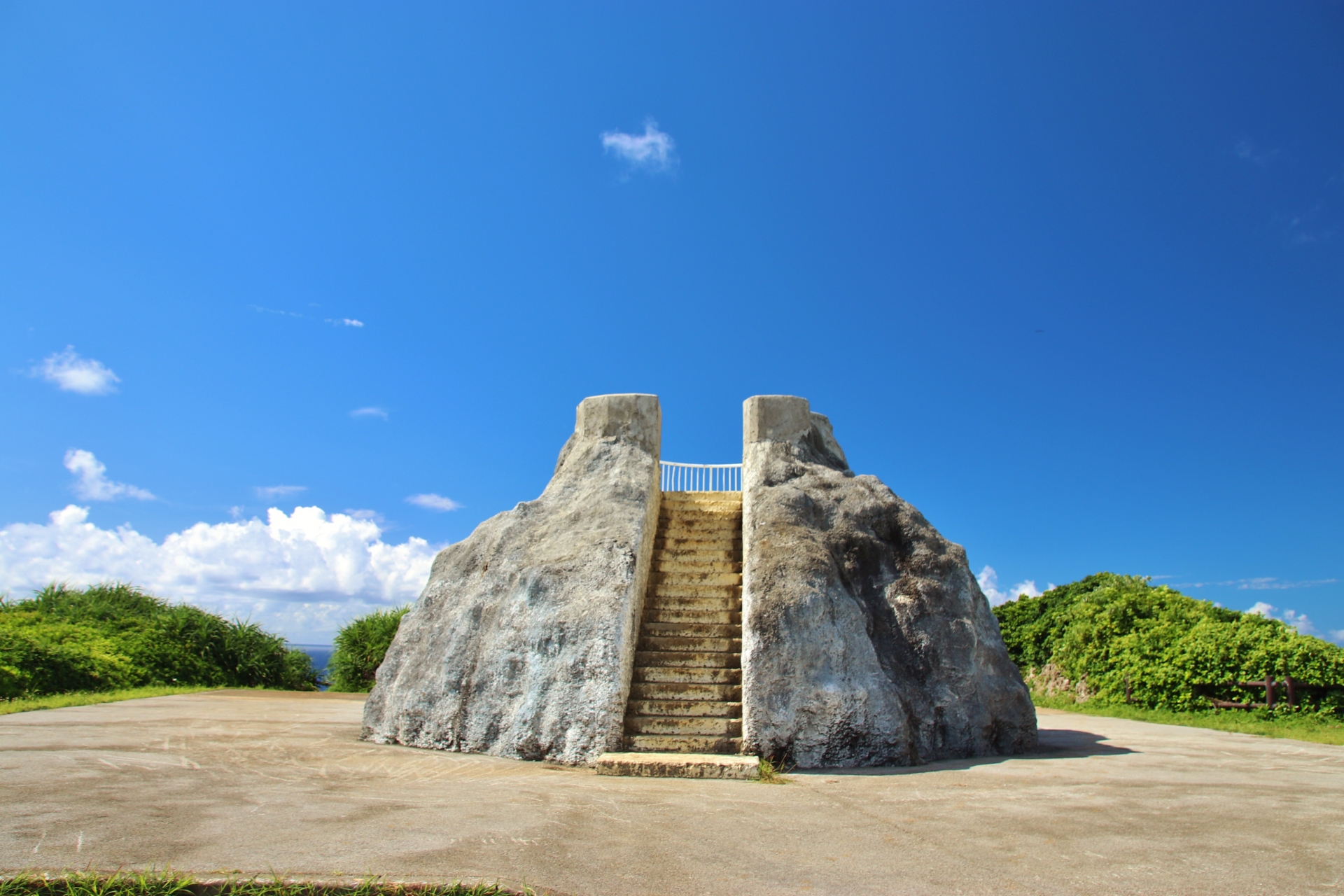
Walking the path, there's a sign partway for the "Makiyama military trench." A war ruin. A natural cave with its mouth gaping open.
If you're interested, dropping by is good too. But going inside is dangerous, so just seeing the entrance is the safe choice.
The path takes the same route going to the observatory and coming back. A single road. So you won't get lost.
On the way there, you walk excited, "is the observatory not here yet?" On the way back, you walk immersed in the afterglow, "ah, that was a nice view."
I quietly like this path.
A Rare Spot to See the Irabu Bridge "from Above"
Makiyama Observatory's greatest appeal is being able to see the Irabu Bridge "from above."
While crossing the bridge, it's the sensation of running over the sea. But you can't see the whole shape of the bridge. You don't really know what kind of bridge you're on right now.
But seen from Makiyama Observatory, you understand it all.
The bridge's length. The beauty of the curve. The contrast with the sea.
"So this is the shape it had,"
you can feel for the first time.
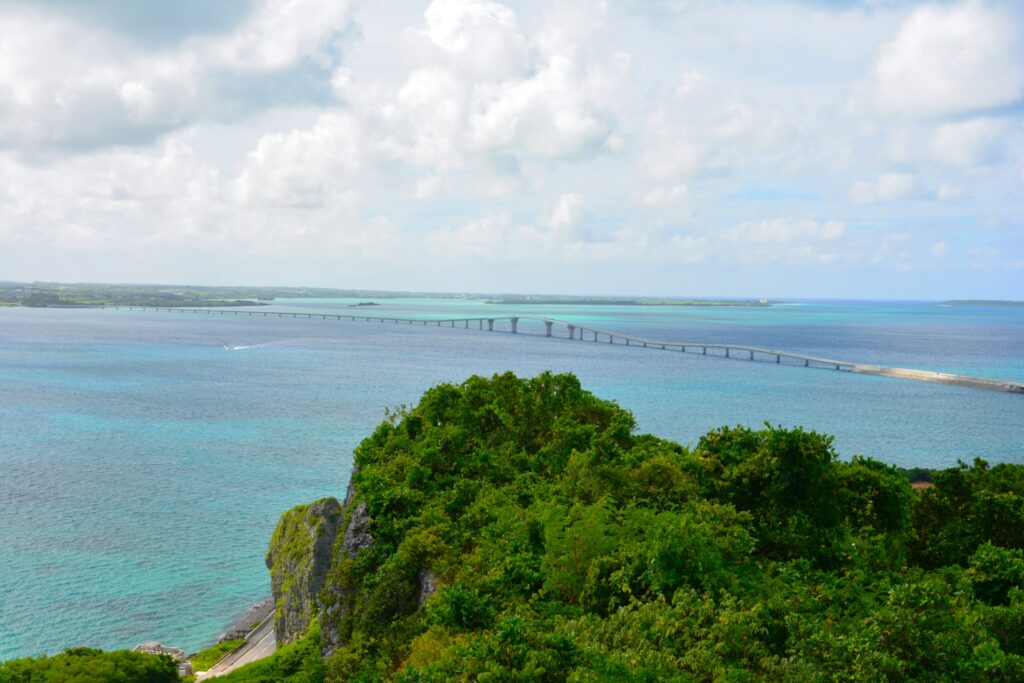
The Irabu Bridge is 3,540 metres long. As a toll-free bridge, it's the longest in Japan. It opened in 2015.
The bridge isn't straight. It curves gently. The central part rises in a hump. So that ships can pass.
This curving beauty is incredibly lovely.
On both sides of the bridge, the Miyako-blue sea. A gradient from emerald green to deep blue. The colour difference between the shallows and the deep parts is clearly visible.
On the bridge, cars run here and there. Rental cars, tour buses. When you think you were in one of those cars too, it's a strange feeling.
Beyond the bridge, Miyako Island. You can see the entrance on the Miyako Island side too.
Makiyama Observatory is the best spot for photographing the Irabu Bridge.
Search for photos of the Irabu Bridge on Instagram or social media, and there are many taken from on the bridge. But there are few photos of the bridge's whole shape.
The reason is simple. Because there are few places you can shoot the bridge's whole shape.
While crossing the bridge, you're on the bridge, so you can't shoot the whole shape. Try to shoot from the Miyako Island side and the angle's bad. Try to shoot from the Irabu Island side and the distance is too close.
But at Makiyama Observatory, you can shoot at the perfect angle.
There's height. The distance is just right too. The bridge's curve looks beautiful.
If you want to take Instagram-worthy photos, you should go to Makiyama Observatory.
However, the wind is strong, so it's better to have a tripod. Handheld, it shakes in the wind.
Also, being able to see all three great bridges is part of Makiyama Observatory's appeal.
Not just the Irabu Bridge, you can see the Kurima Bridge and Ikema Bridge too. The only spot where you can see all three great bridges at once is here.
Three bridges linking the islands of the Miyako Islands. You can survey them all. This is quite something.
"So the Miyako Islands really are connected,"
you can really feel.
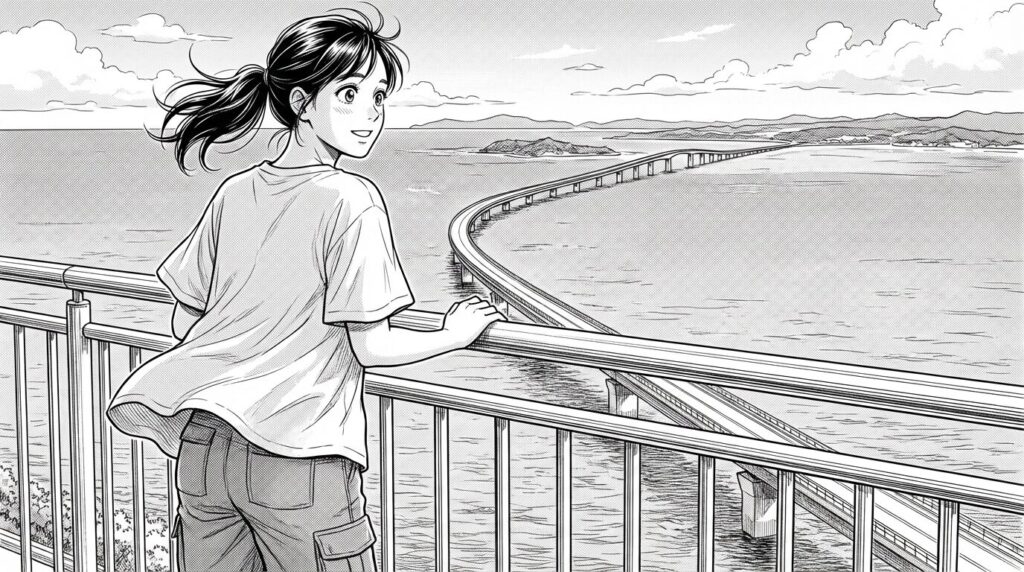
Seeing the Irabu Bridge "from above." This alone is worth going to Makiyama Observatory for.
7 Tips for Enjoying Makiyama Observatory Comfortably
I'll introduce 7 tips for enjoying Makiyama Observatory comfortably. Mostly wind countermeasures.
1. Fix Your Hat Firmly, or Give Up on It
Your hat will blow off. This is certain.
Hats that catch the wind easily, like peaked caps or straw hats, are especially dangerous.
There are two countermeasures.
The first is to fix your hat firmly. Choose a hat with a chin strap. Tie the strap firmly.
The second is to give up on the hat. Leave it in the car.
I choose the second. I go without a hat. The sunburn bothers me, but the time at the observatory is short, so I put up with it.
If you absolutely need a hat, choose one with a chin strap. Or a hat with a fitted feel like a beanie.
2. Be Prepared for Your Sunglasses to Slip Too
Your sunglasses slip too. In the wind.
I gave up on sunglasses. I leave them in the car.
If you absolutely need sunglasses, choose a sports type with a fitted feel. The kind that fits your face firmly.
Ordinary sunglasses slip in the wind. They fall off.
3. Tie Up Your Hair
If your hair is long, tie it up. A ponytail, a bun.
It goes everywhere in the wind. It covers your face. Even when you take photos, your hair is over your face.
I had my hair down at first too. But it went everywhere in the wind, and the photos didn't come out well at all.
Since then, when I go to Makiyama Observatory, I tie my hair up.
4. Bring Insect Repellent
Needed when walking the path.
There are many mosquitoes and small insects. Especially in summer. In the morning and evening there are even more.
Give yourself a spritz of insect repellent before walking the path. This alone makes a big difference.
5. Go in the Morning or Evening
The wind changes by time of day.
The strongest wind is in the daytime. Around midday. The daytime sea breeze blows full-on.
It eases a little in the morning and evening. Around 9–10 am, around 4–5 pm.
At these times the wind is somewhat better.
However, the morning has its own windy days. The evening too.
If you want to avoid the wind for sure, check the wind speed on the weather forecast before going.
6. Bring a Tripod
If you want to take clean photos, it's better to have a tripod.
The wind shakes your body, so handheld it shakes. Especially when shooting with a telephoto, a tripod is essential.
I went without a tripod and regretted it. The photos were shaking all over.
Next time, I'll bring a tripod.
7. Use the Toilet at the Car Park
The observatory has no toilet. The car park does.
Use the toilet before going to the observatory.
Coming back from the observatory is only 2–3 minutes, but if you suddenly need the toilet, you're stuck.
Keep these 7 and you can enjoy it comfortably. Without losing to the wind, you can fully enjoy the spectacle.
Frequently Asked Questions (FAQ)
Q1. What are Makiyama Observatory's opening hours?
You can enter any time, 24 hours. You can enter at night too. But at night it's pitch dark. There are no streetlights. You can't see the scenery. It's not a night-view spot either. Going in the daytime (around 8 am–6 pm) is realistic.
Q2. Is there a charge?
Free. The car park is free too.
Q3. Is it better not to go on windy days?
Even on windy days, it's worth going.
However, when a typhoon or storm warning is out, it's dangerous, so it's better to avoid it.
On an ordinary windy day, you can enjoy the scenery even while holding onto your hat.
Q4. Can children and the elderly climb up?
They can. The path is almost flat. There are few stairs. Just a 2–3 minute walk. However, the wind is strong, so take care with small children. It's better for a parent to hold their hand. The elderly can wobble in the wind too, so be careful.
Q5. Is the car park large?
It's large. About 20–30 cars can park. Even in tourist season, it's rare to be full. Makiyama Observatory doesn't get as crowded as 17END or Toguchi-no-Hama.
Q6. Is there a toilet?
There's one at the car park. There's none at the observatory.
Q7. What time is recommended to go?
Around 9–10 am or around 4–5 pm. In the morning you can see the sunrise. In the evening you can't see the sunset, but the wind eases a little. The daytime (around midday) has the strongest wind. But the scenery is beautiful.
Summary | Don't Lose to the Wind — Claim the Spectacle
Makiyama Observatory is windy. This is a fact.
Your hat nearly blows off, your hair goes everywhere, and you wobble just standing there.
But it's worth going even so.
The whole of the Irabu Bridge. The Miyako-blue gradient. A view where you can see all three great bridges. The deep green in the foreground and the blue contrast beyond.
For the sake of seeing this scenery, the wind doesn't matter.
At first I thought too, "if the wind's strong, maybe I don't need to go." But I'm glad I went.
My hat nearly blew off in the wind, but the moment I saw the scenery, I forgot all that.
"This is a view you can't see while crossing the bridge,"
I thought from the heart.
Makiyama Observatory is a classic spot of Irabu Island sightseeing. But it's surprisingly easy to pass by.
I understand the reason. 17END and Toguchi-no-Hama are more Instagram-worthy. Makiyama Observatory is plain.
But there's a view you can only see at this observatory.
Seeing the Irabu Bridge "from above." Seeing the three great bridges at once. Surveying the whole of Irabu Island.
The only place you can do this is Makiyama Observatory.
Don't lose to the wind — claim the spectacle. Even while holding onto your hat, it's worth the climb.
If you've come to Irabu Island, do stop by Makiyama Observatory. Even if the wind is strong, you absolutely won't regret it.