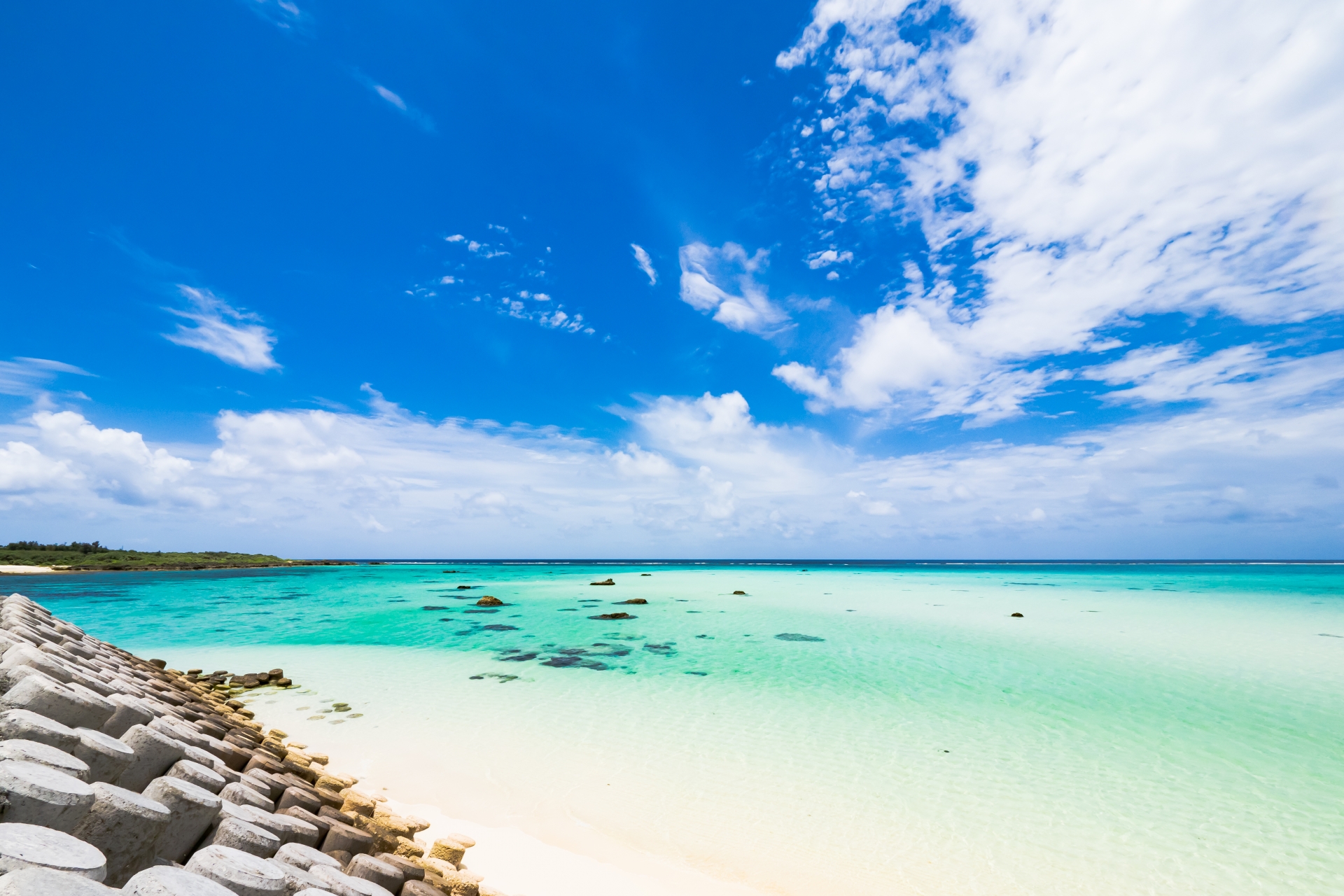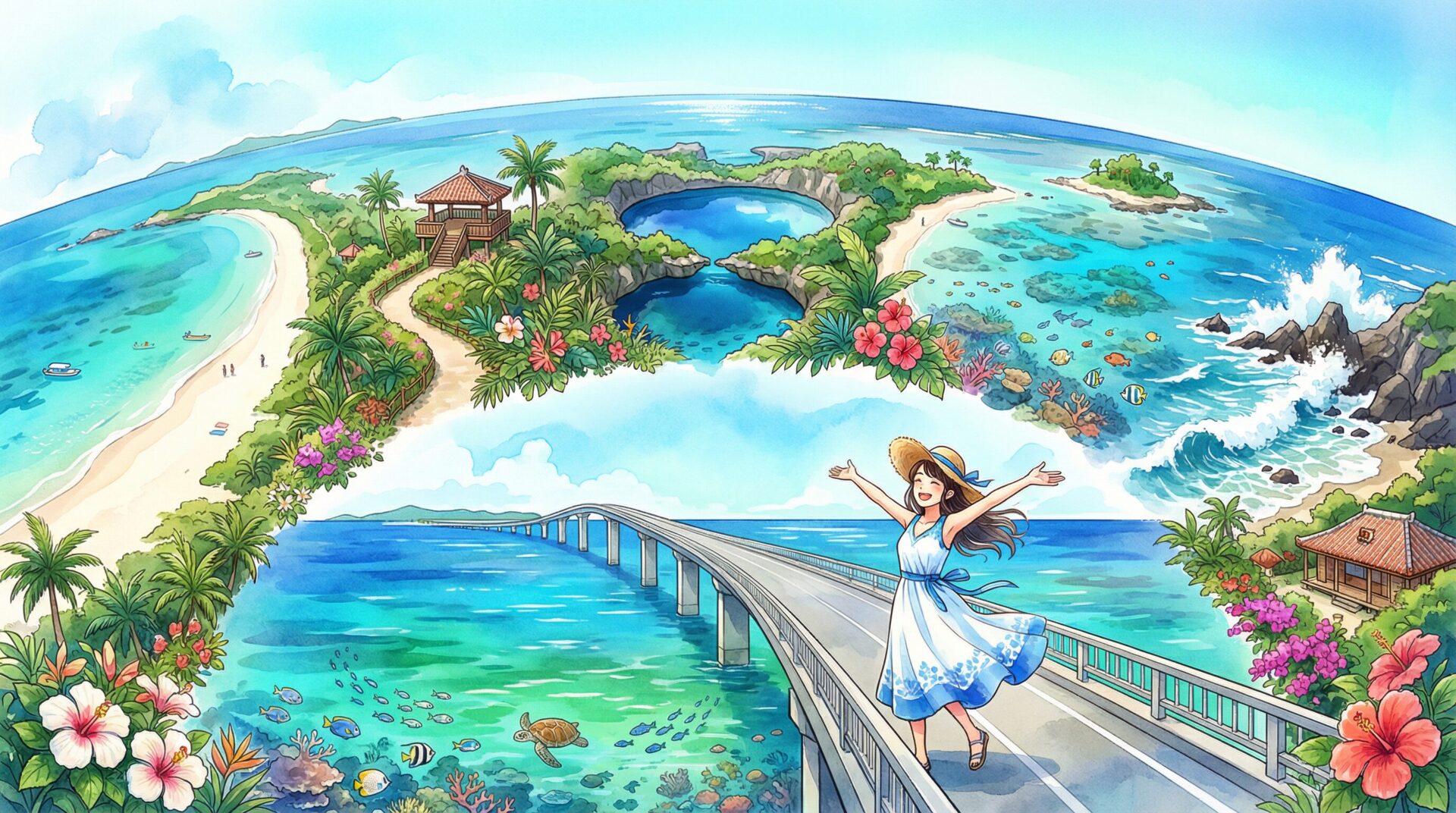
The first time I went to Irabu Island, I thought, "so a place like this existed in Japan."
Just after crossing the Irabu Bridge from Miyako Island, I stopped the car and gazed at the sea. At the sight of the water's colour changing before my eyes, from emerald green to deep blue, I couldn't move for a while. "I'd heard there was nothing here, but it's totally different," said the friend with me. At that moment I thought to myself, "right, that's exactly it," but the words wouldn't come out well.
Irabu Island is a small island next to Miyako Island. Until the Irabu Bridge opened in 2015, you could only cross by boat. Now you can cross by car and tourists have increased, but even so, compared with Miyako's main island there are fewer people, and plenty of untouched nature remains. Some people say there's "nothing here," but actually come and the density of sights is higher than you'd think.
In this article, I introduce 8 recommended sights you should definitely visit on Irabu Island, based on the experience of actually visiting many times. Spectacular views, the sea, power spots, history — I've gathered places each with its own character, so do use it as a reference for planning your trip.
- Rediscover Irabu Island's Charm! 8 Recommended Sights
- 1. A Spectacular Drive! Irabu Bridge
- 2. A White-Sand Paradise! Toguchi-no-Hama
- 3. A Mystical Spot! Toriike Pond
- 4. Like a Natural Aquarium! Nakanoshima Beach
- 5. A 360-Degree Spectacle! Makiyama Observatory
- 6. A Power Spot! Nudokubi Abu
- 7. Beautiful Sunsets! Sawada-no-Hama
- 8. A Hidden Landmark! Funausagibanata
- Recommended Activities on Irabu Island
- Recommended Food Spots on Irabu Island
- Irabu Island Model Sightseeing Courses
- Irabu Island's Best Season and Things to Note
- Frequently Asked Questions
- Summary
Rediscover Irabu Island's Charm! 8 Recommended Sights
1. A Spectacular Drive! Irabu Bridge
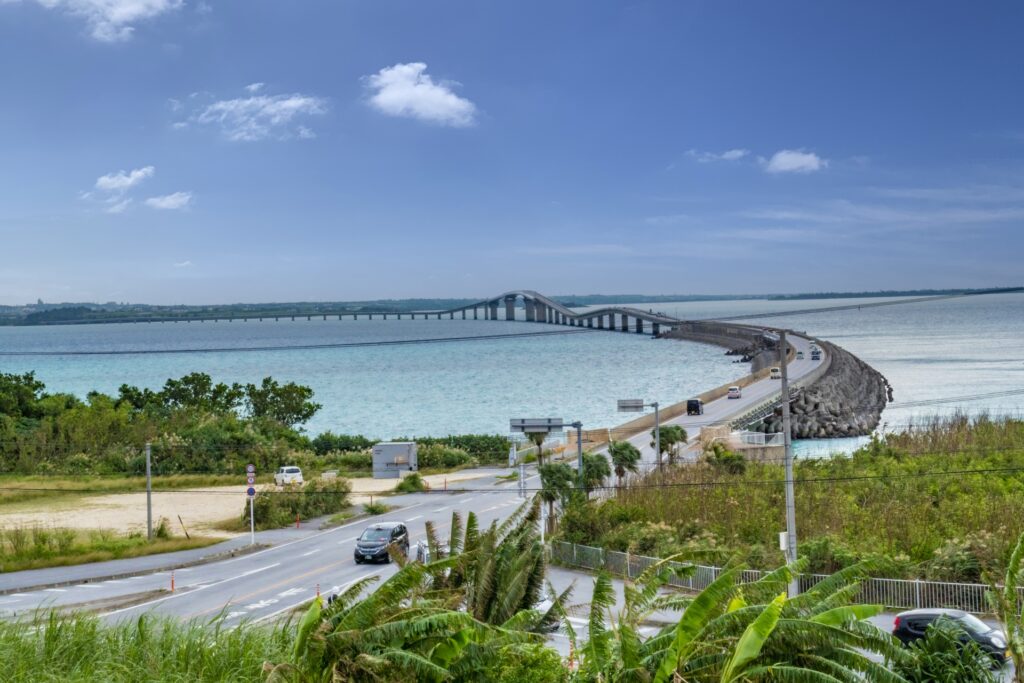
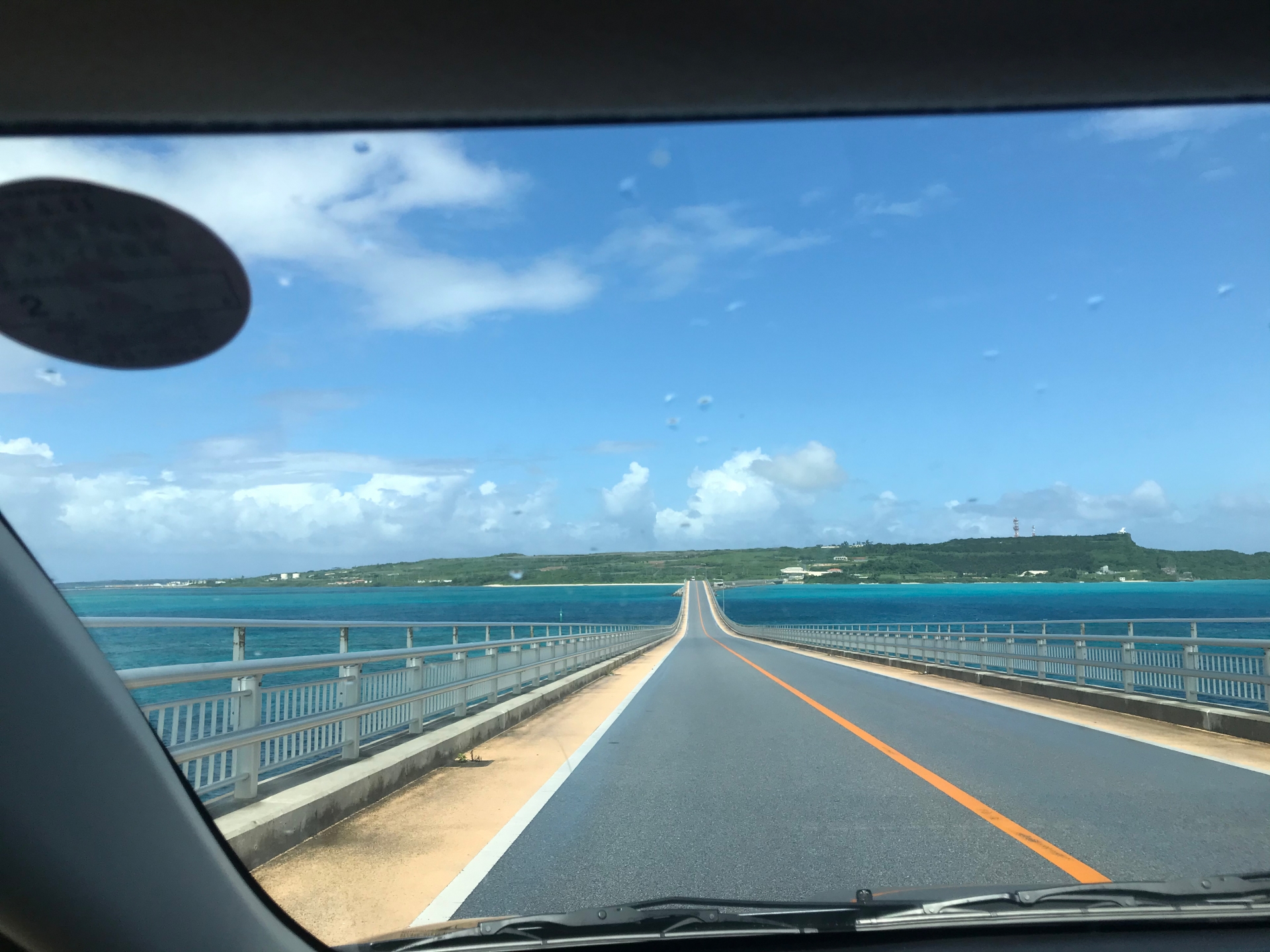
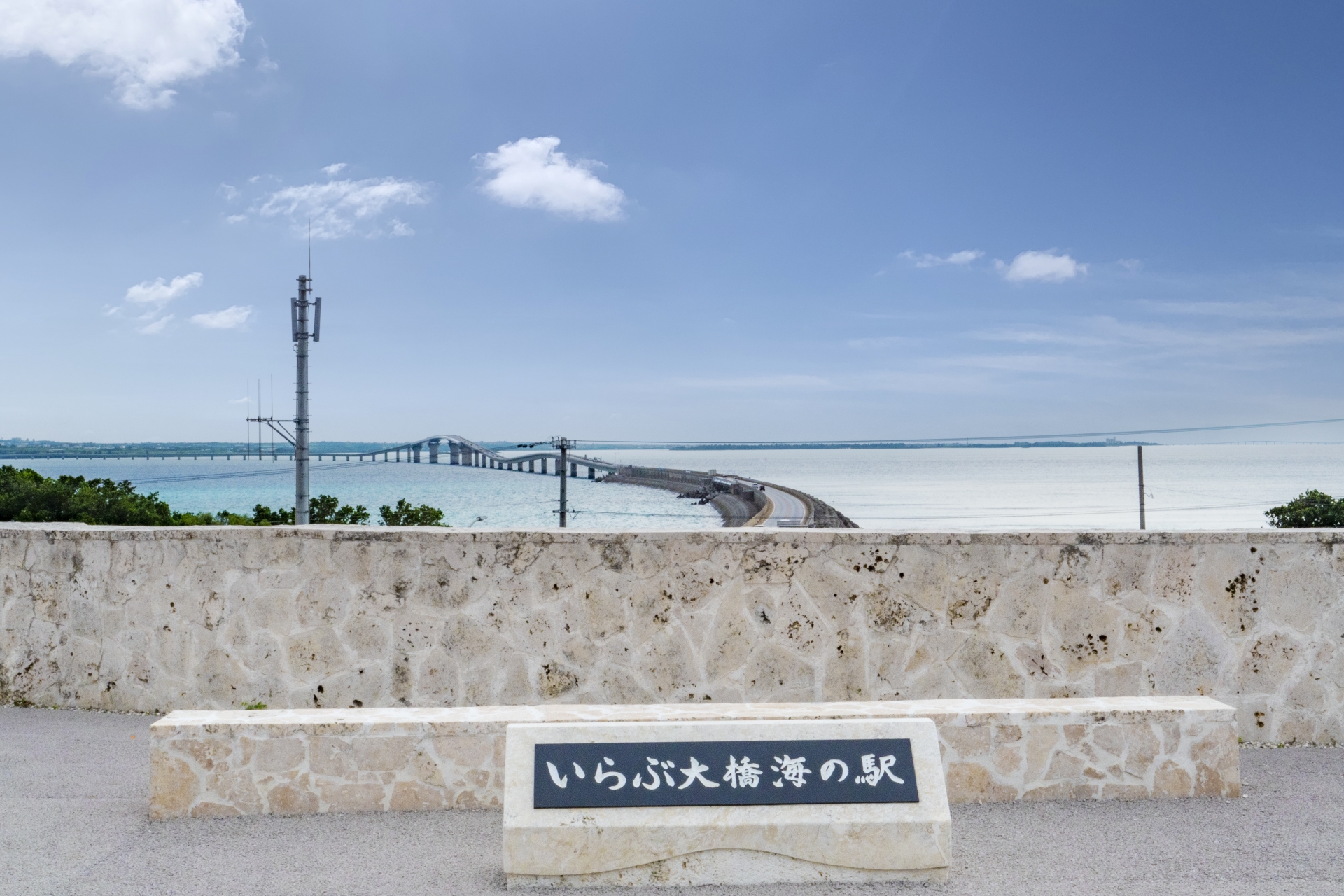
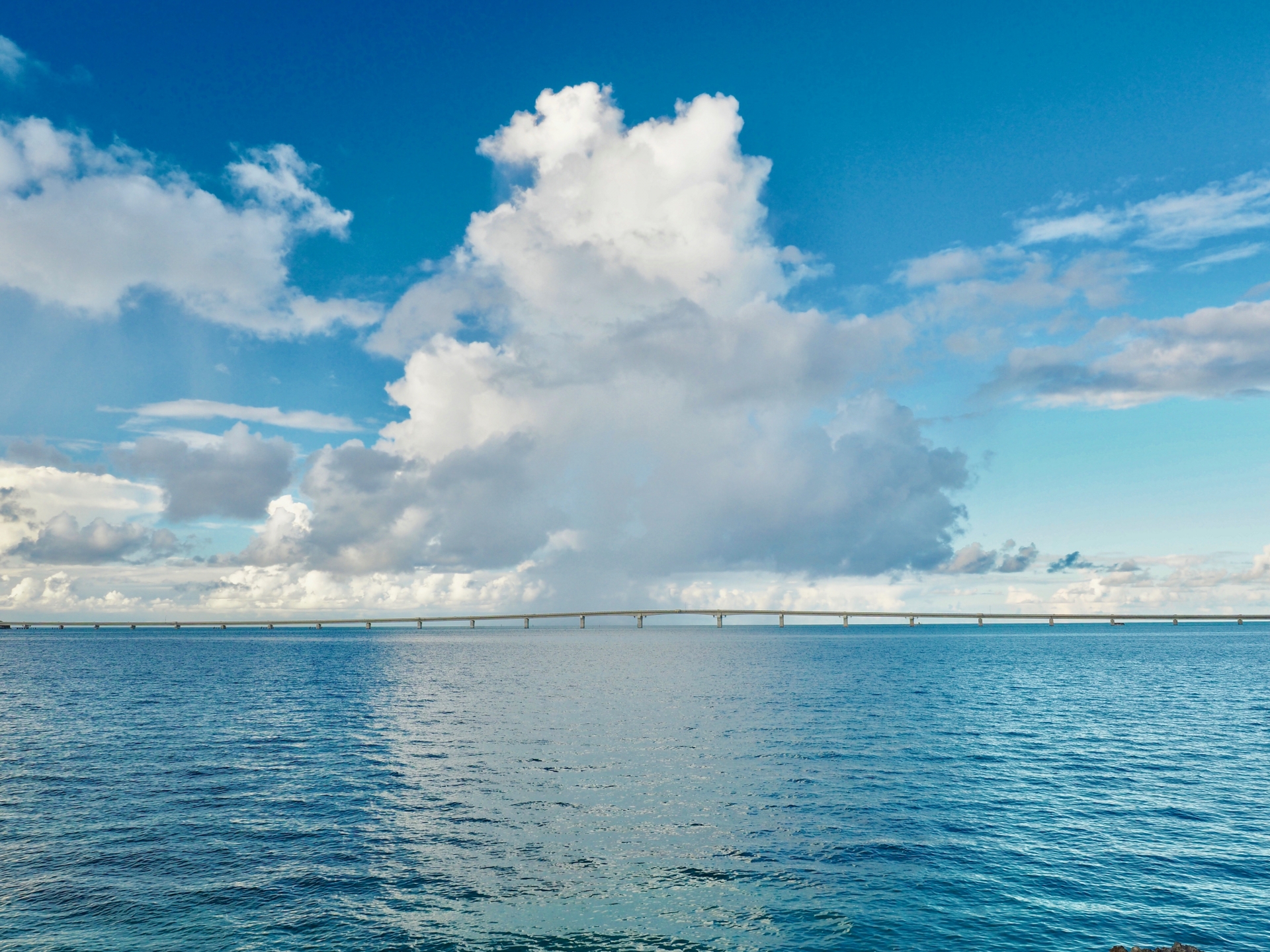
A bridge 3,540 metres long linking Miyako Island and Irabu Island, it's the longest toll-free bridge in Japan. Since opening in January 2015, it has become one of Okinawa's famous spectacular spots.
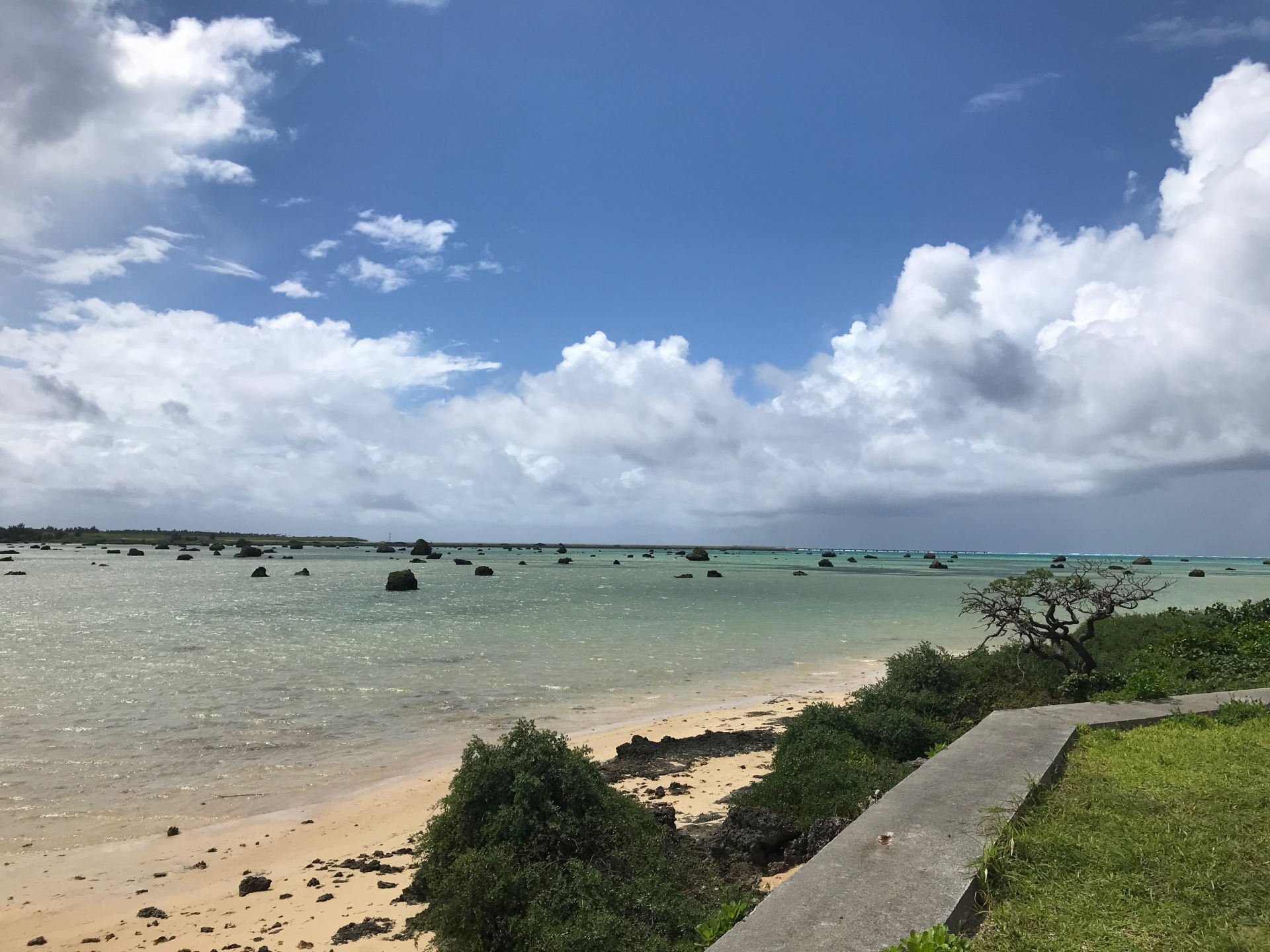
Once you start across the bridge, the Miyako-blue sea spreads left and right. The water's clarity is high, and you can tell even while driving how the colour changes — emerald green in the shallows, deep cobalt blue in the deeper parts. On fine days you can sometimes see all the way to Ikema Island and Kurima Island from the bridge.
If crossing by car, note that stopping on the bridge is prohibited. But the area in front of the "bridge nameplate" on the Miyako Island side is famous as a photo spot, and many travellers take commemorative photos here. It's lit up at night too, so it's a place that shows different faces by day and night.
The first time I crossed, the bridge's railing felt low and it was a little scary. But once I got used to it, the sensation of flying over the sea felt so good that I went round and came back.
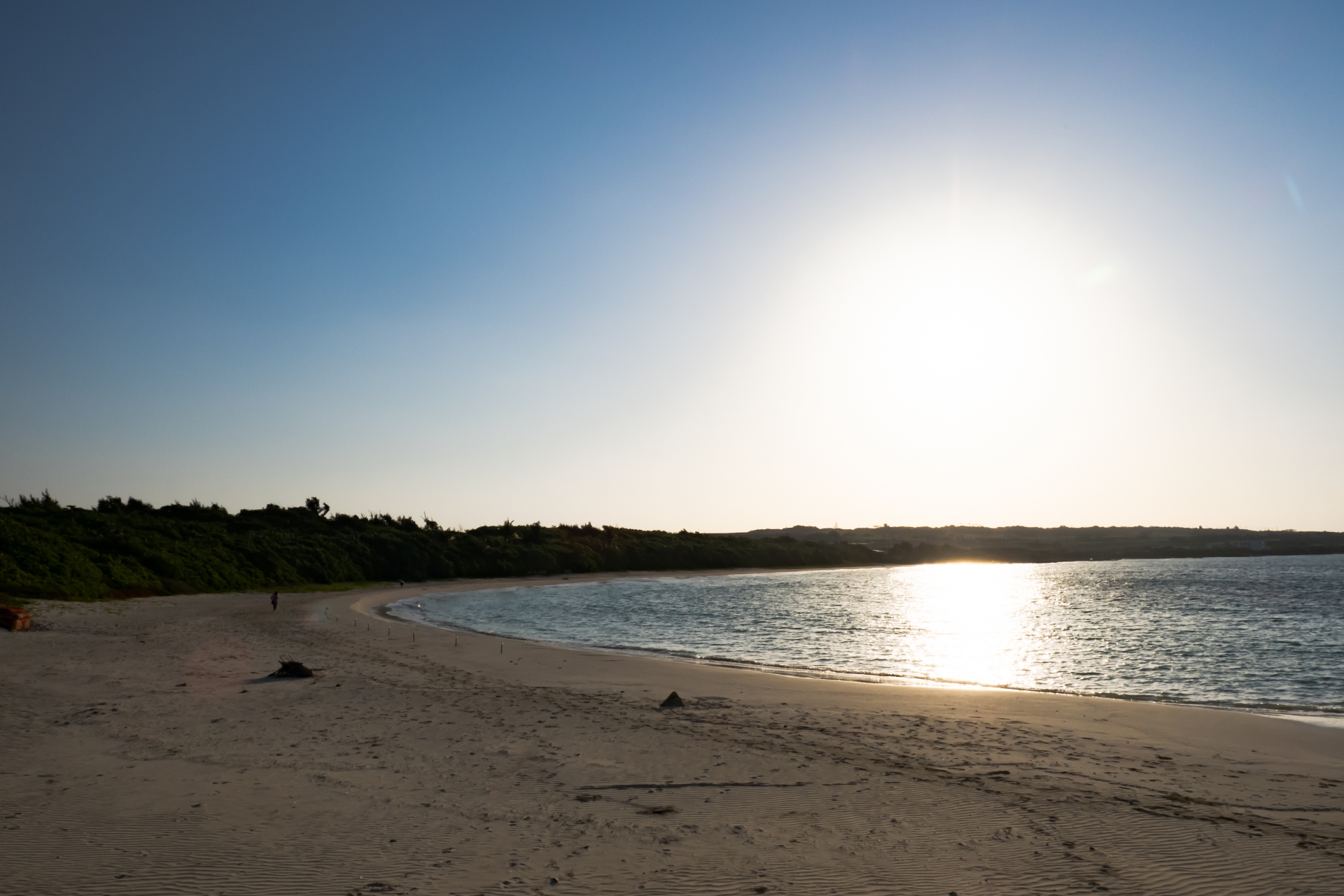
2. A White-Sand Paradise! Toguchi-no-Hama
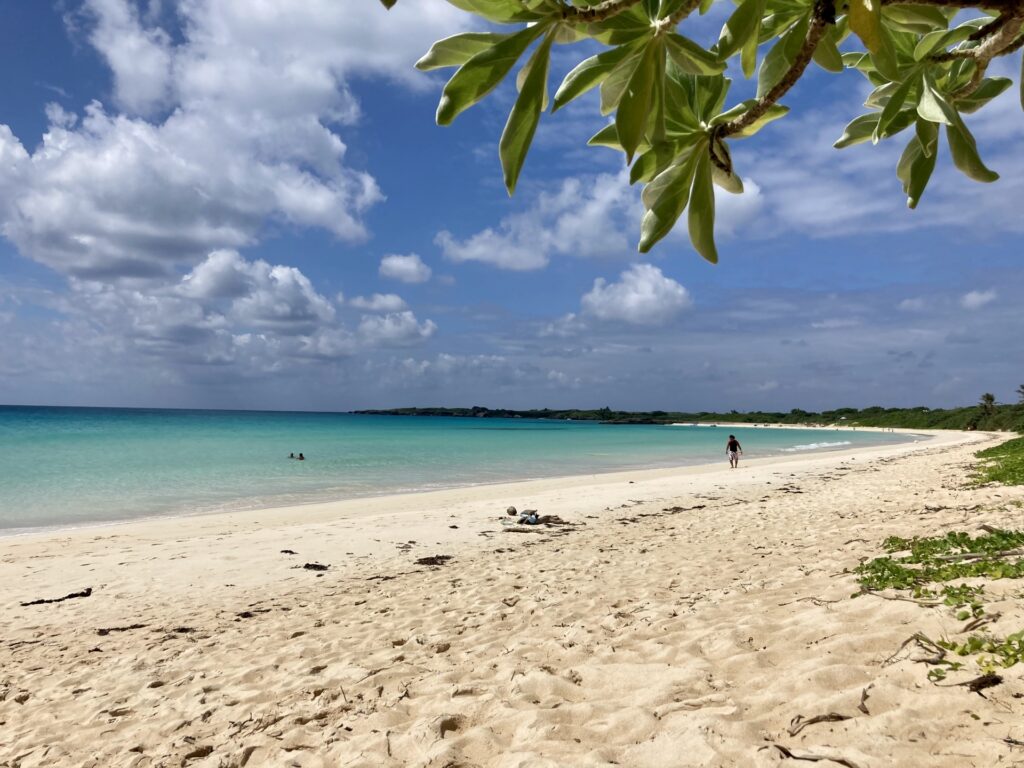
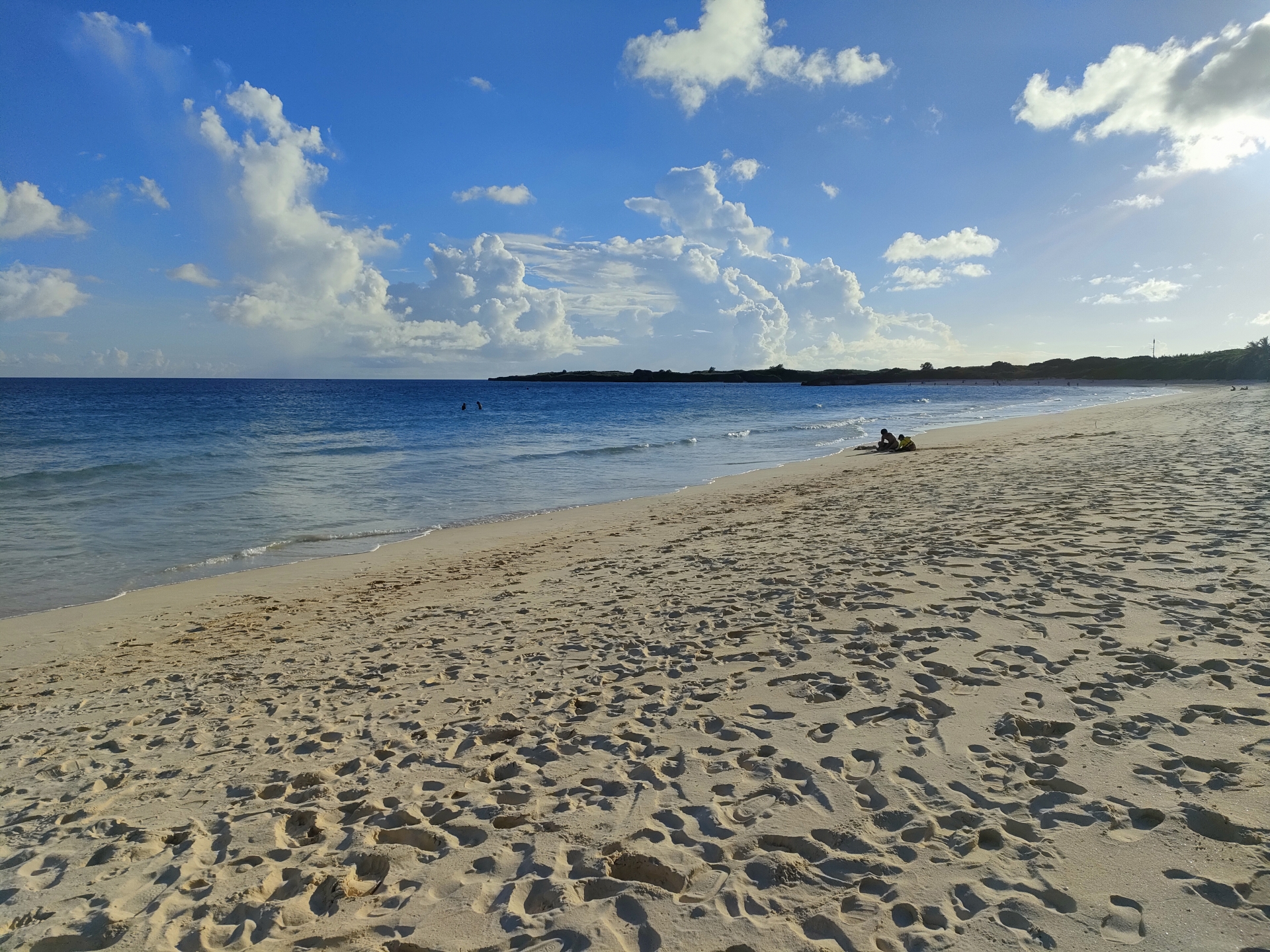
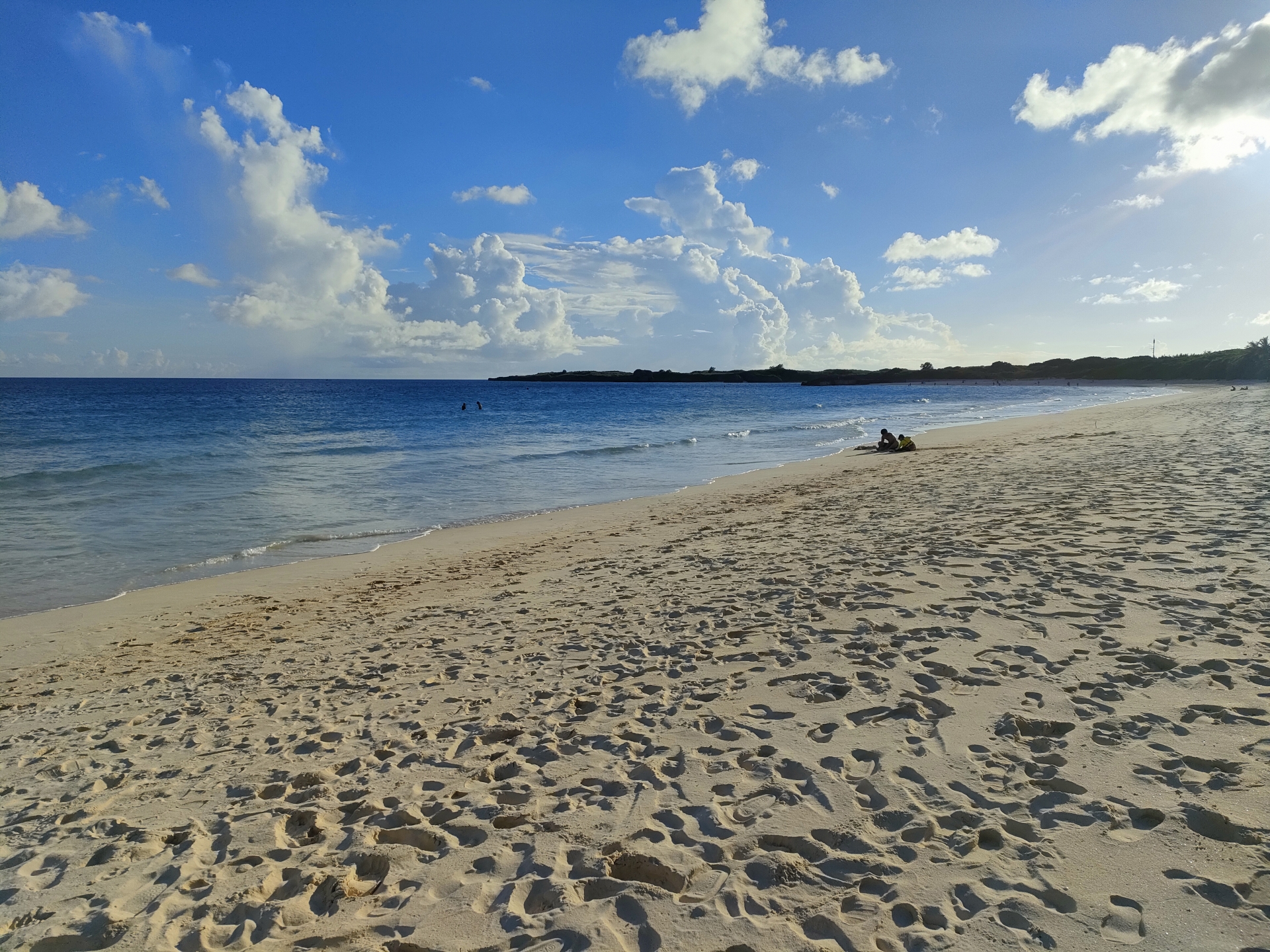
A white-sand beach representative of Irabu Island, it's a beautiful spectacular spot with a highly clear sea and an arc-drawing sandbar. Written "渡口の浜" and read "Toguchi-no-Hama."
The white sand is fine like powder, and there's a feeling of your feet sinking right in as you walk. The waves are calm and there are many shallow spots, so even those with children or weak swimmers can get in with peace of mind. The clarity is high even out towards the open sea, and snorkelling lets you see coral reefs and tropical fish.
The beach has a car park, and toilets and shower facilities are in place. There's a shop nearby too, so it's easy to spend time even coming empty-handed.
I'll just say one thing: in the busy period (July–August) the car park fills up easily. Going early in the morning, or in spring or autumn outside the season, lets you fully enjoy the beach with few people. My favourite thing is going on an April morning and zoning out at a Toguchi-no-Hama with no one around.
3. A Mystical Spot! Toriike Pond
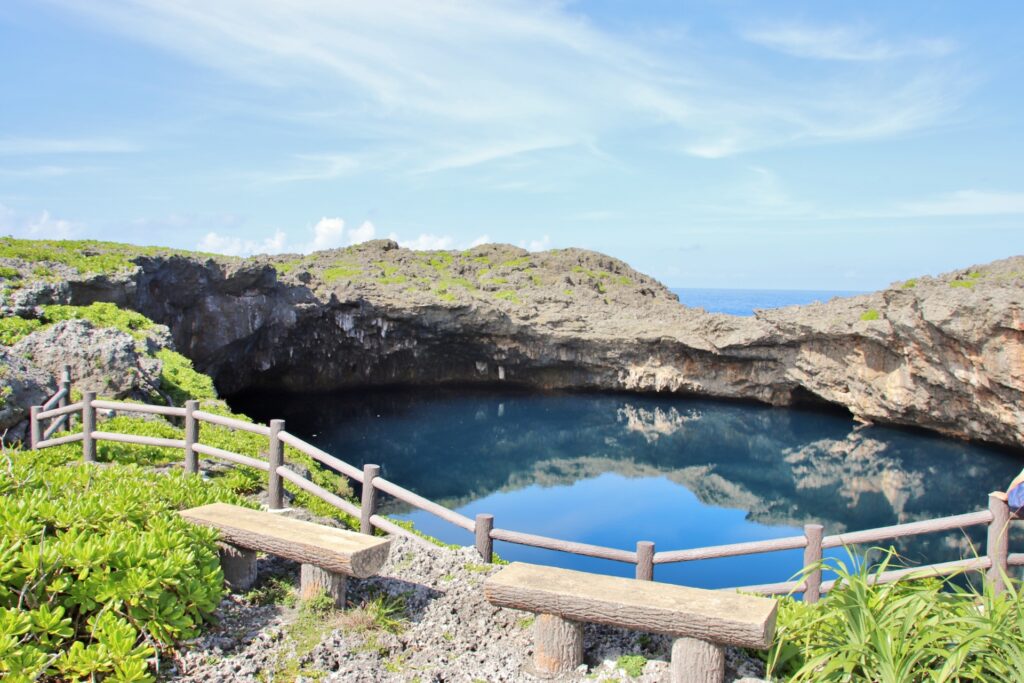
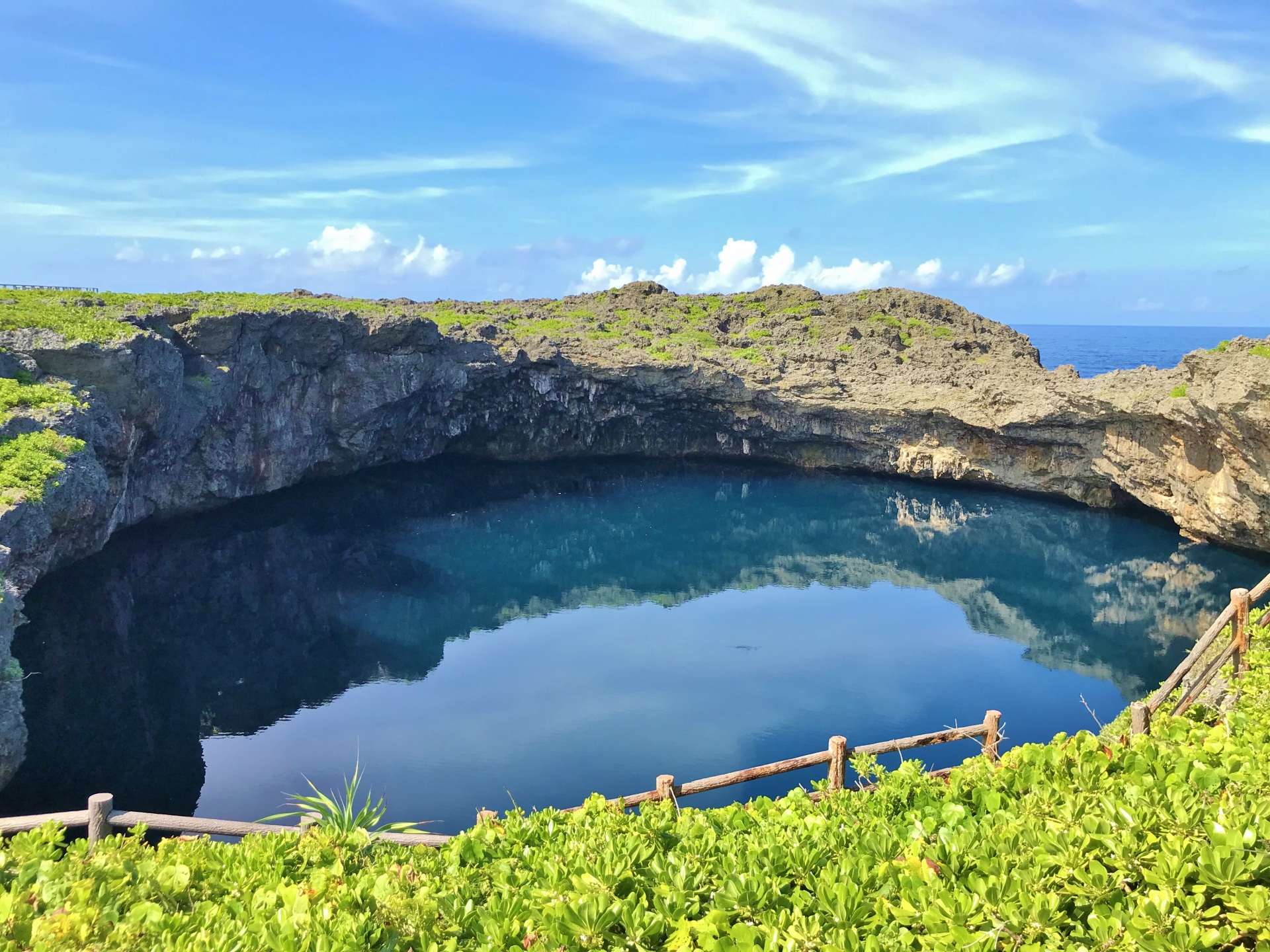
This spot is on neighbouring Shimojishima rather than Irabu Island itself, but since you can get there in about 10 minutes by car from Irabu Island, I want to introduce it together. Two circular ponds, one large and one small, sit side by side along the coast, and it's a special place designated a "National Scenic Beauty and Natural Monument."
The reason Toriike Pond is mystical lies in its structure: the two ponds are connected underground, and further connect to the open sea. That's how it got the name "Toriike" (passing pond). The water level changes with the ebb and flow of the tide, and on fine days and cloudy days, morning and evening, the pond's colour shows utterly different expressions. Sometimes it's pale blue, sometimes a deep indigo.
It's a world-famous place among divers, and rare creatures such as the pyramid butterflyfish and the giant oceanic manta ray live within the pond. Just observing on foot from the path above the ground, the pond's depth and stillness come across plenty.
The first time I visited, I peered into the pond and got a little scared. The deep indigo that seemed about to suck me in felt bottomless. But that coexistence of fear and beauty is, I think, Toriike Pond's appeal.
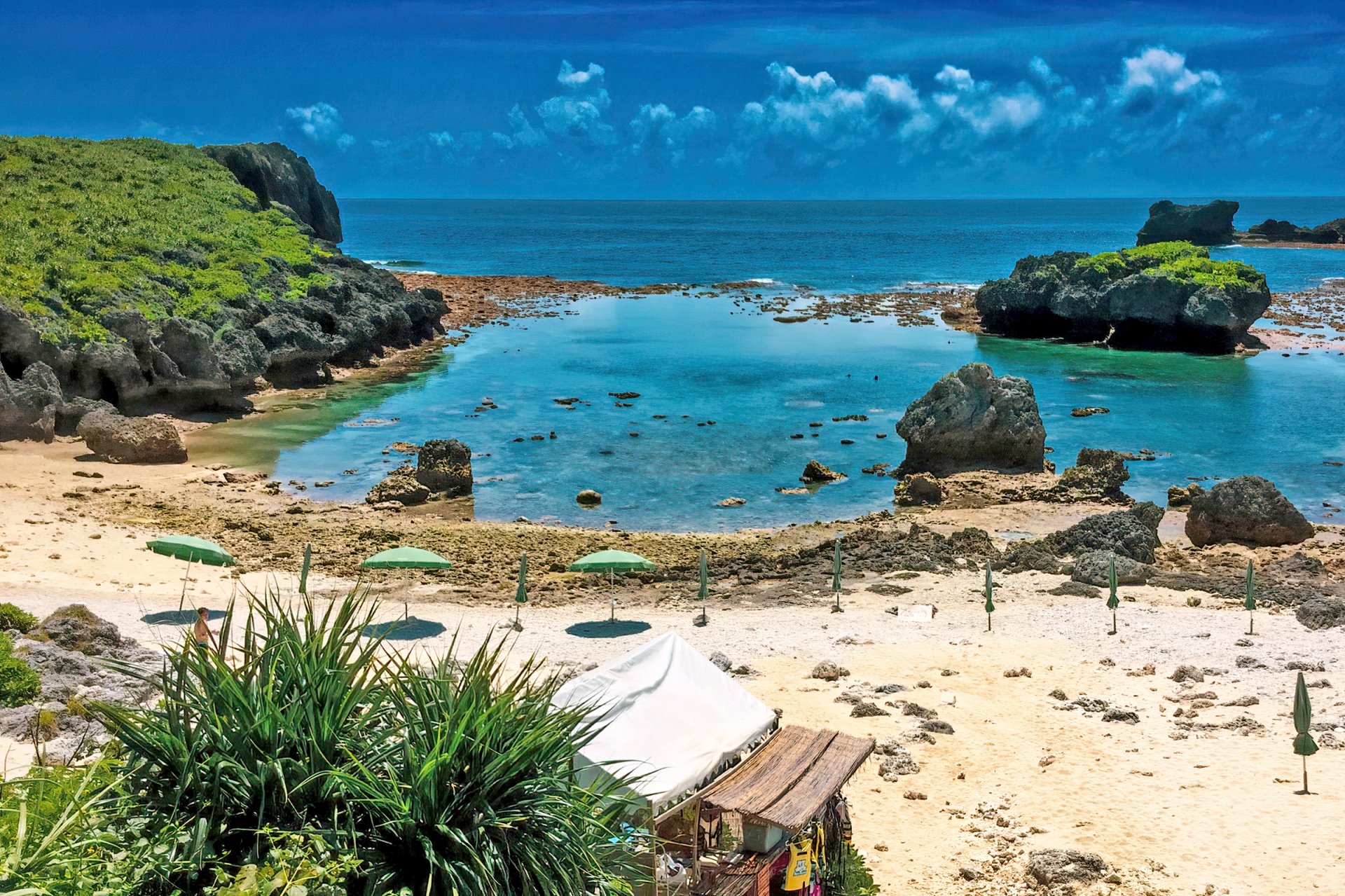
4. Like a Natural Aquarium! Nakanoshima Beach
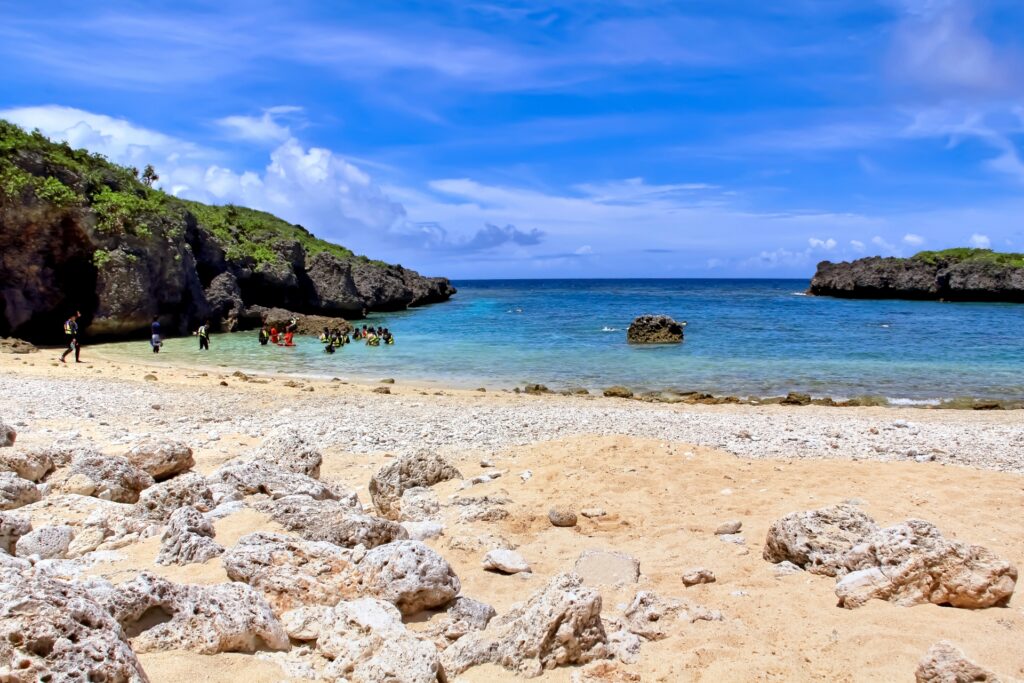
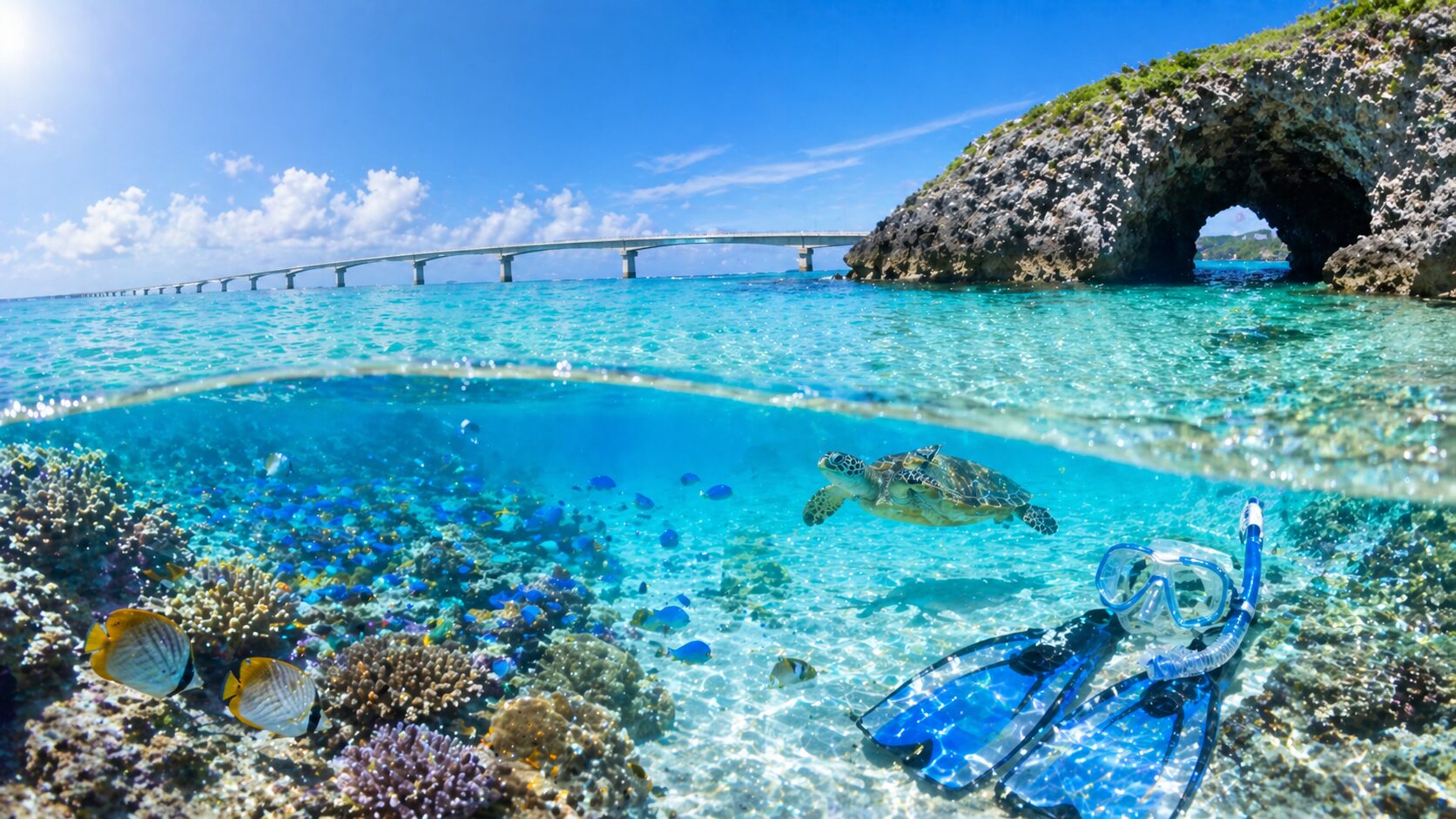
Also called "Kayaffa Beach," it's one of Irabu Island's premier snorkelling spots. A coral reef where over 100 kinds of tropical fish live spreads out, and put on a snorkel and get in the sea and you'll meet the fish right away.
The beach itself is compact, with a rustic atmosphere different from a big resort beach. The waves are calm and it's not that deep, so even beginners and those with children can enjoy it with peace of mind. The experience of drifting while looking at colourful coral and tropical fish is, I think, among the most satisfying even in the Miyakojima area.
However, the facilities are minimal, so do prepare well. You need to check whether there's somewhere nearby to rent snorkelling gear, and using a shop tour in advance is also recommended.
This is where I encountered a sea turtle for the first time. It was right near the shore, swimming so serenely it startled me. I still remember that moment vividly.
5. A 360-Degree Spectacle! Makiyama Observatory
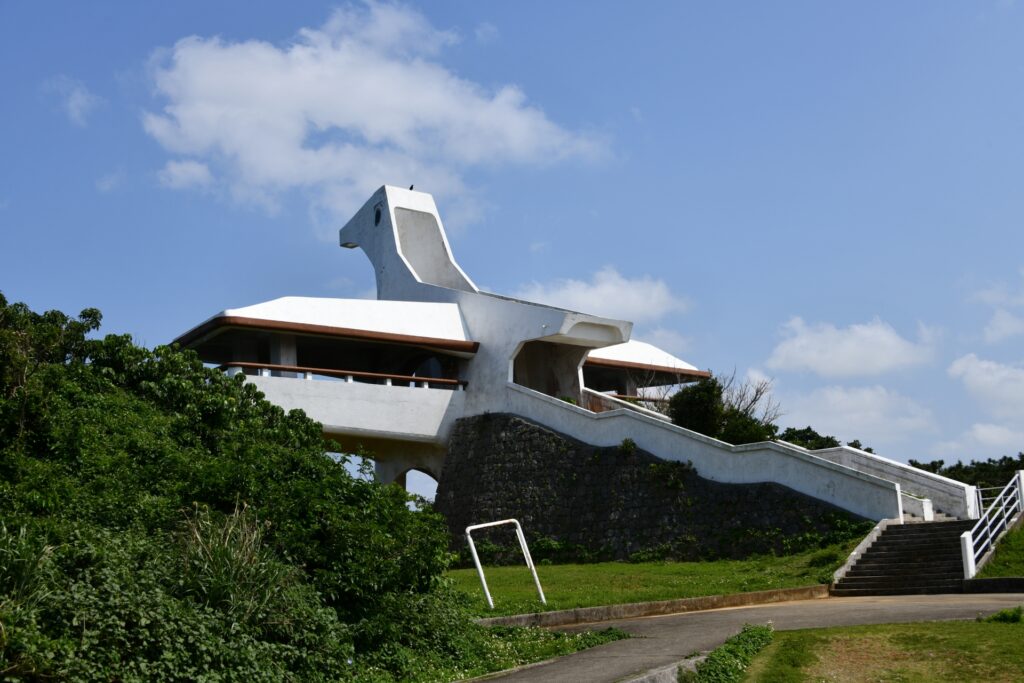
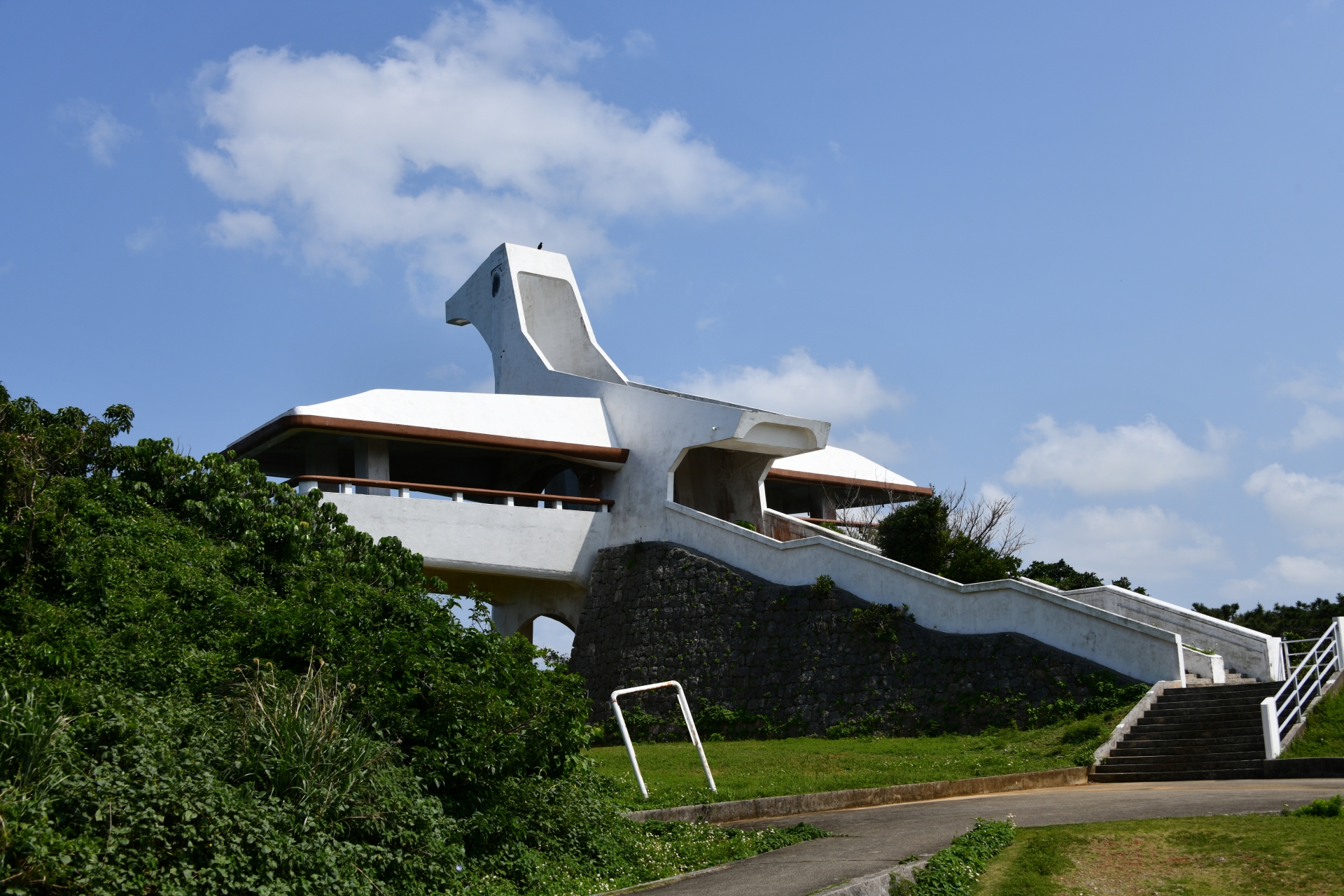
An observatory at the highest point on Irabu Island, it's one of the must-see places among the island's sights. The observatory building is designed to resemble a sashiba (grey-faced buzzard) — the migratory bird that flies to Irabu Island every autumn — with its wings spread.
From the observatory you can survey Miyako Island, Kurima Island, Ikema Island, the Irabu Bridge, and the surrounding sea. On fine days you can apparently sometimes see as far as the direction of Ishigaki Island. The scenery of looking down from the height at the Miyako sea, where emerald green and deep blue mingle, is stunning in a word.
A path is laid out around the observatory, where tropical flowers like hibiscus and bougainvillea bloom. Just strolling slowly, you can enjoy 30 minutes. The daytime spectacle is wonderful, but coming at sunset lets you see another face. The sky dyes orange, and the contrast with the Miyako-blue sea is simply beautiful.
Admission is free. There's a car park too. Access is basically by car, but it's also a common sight to see travellers cycling around the island taking a rest here.
6. A Power Spot! Nudokubi Abu
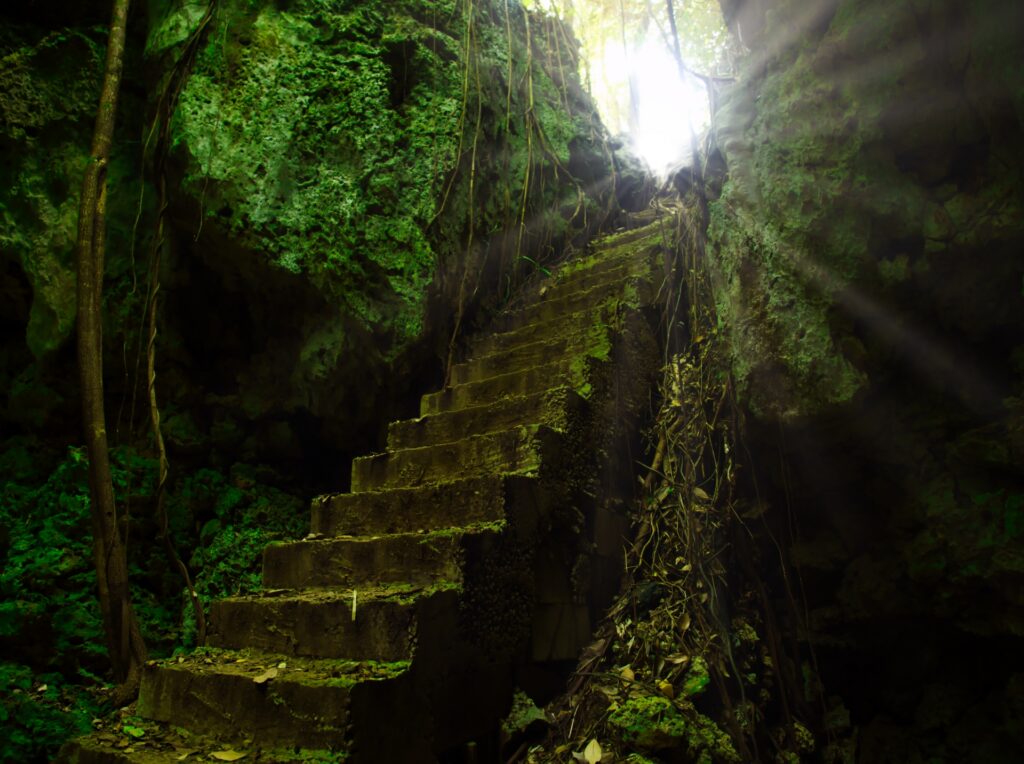
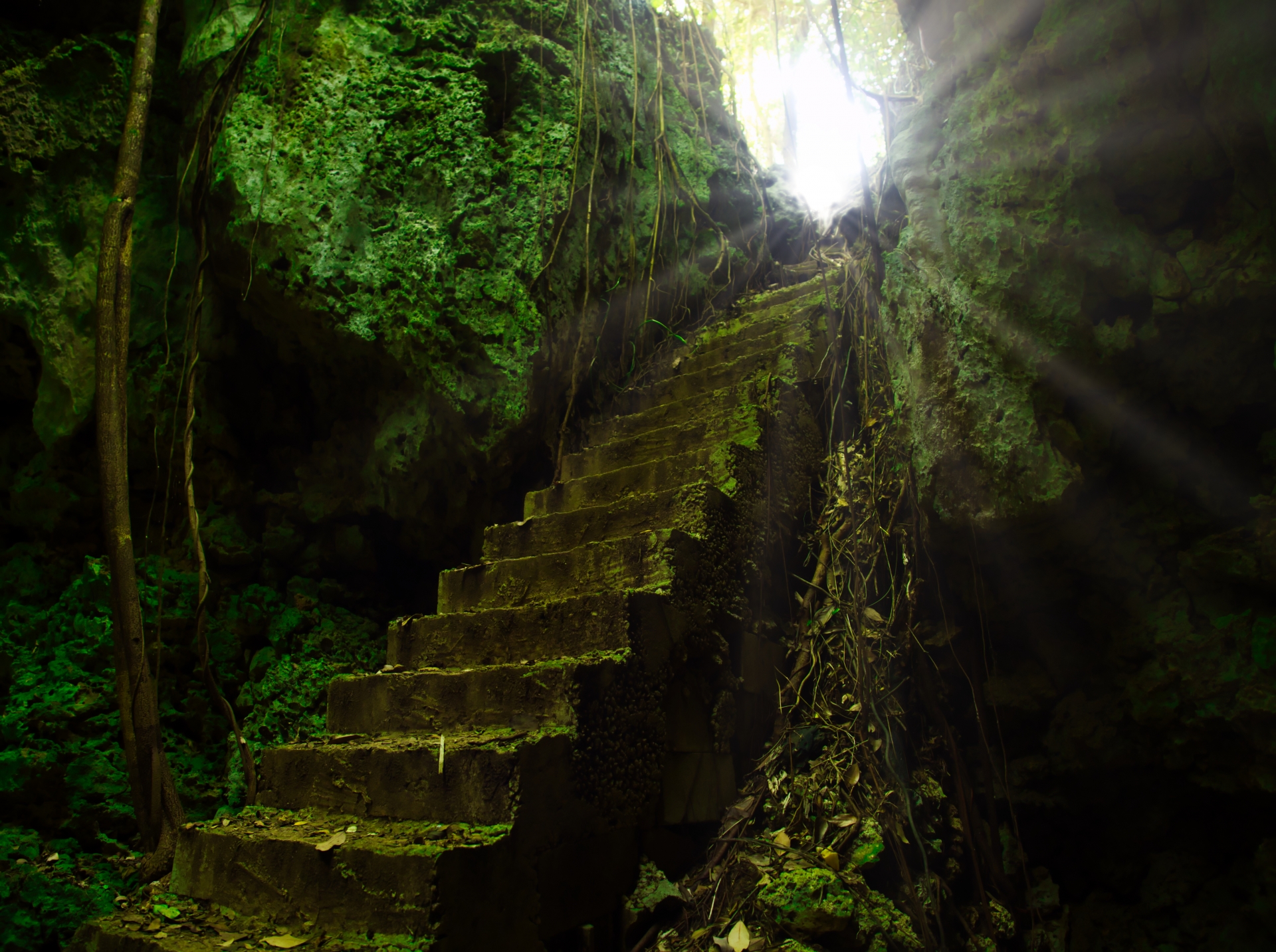
A vertical-shaft cave standing quietly amid the sugarcane fields, it's also a designated historic site of Miyakojima City. "Nudokubi" means "throat" in the local language, and "Abu" means "cave, vertical shaft." True to the name, it's a 22-metre (72 ft) vertical shaft, as if you'd be swallowed into the ground's throat.
There's a steep stairway at the entrance, and the coolness increases as you descend. Inside is a stalactite-cave-like structure formed by dissolved Ryukyu limestone, with a mystical space spreading out where rock hangs down. The sight of gajumaru (banyan) roots dangling down from the surface and crawling over the cave ceiling has a distinctive atmosphere.
It also has a history of being used as an air-raid shelter by the Japanese military during the war, and standing in that silent space makes you think about all sorts of things. Many people visit it as a power spot, and indeed it's a place where you feel a special presence.
As a note of caution, the inside is slippery, so go in trainers you're used to. Also, there's no lighting, so visiting in the bright daytime is best. The first time I went, it was hidden by grass and I nearly overlooked the entrance. Do search carefully relying on the sign.
7. Beautiful Sunsets! Sawada-no-Hama
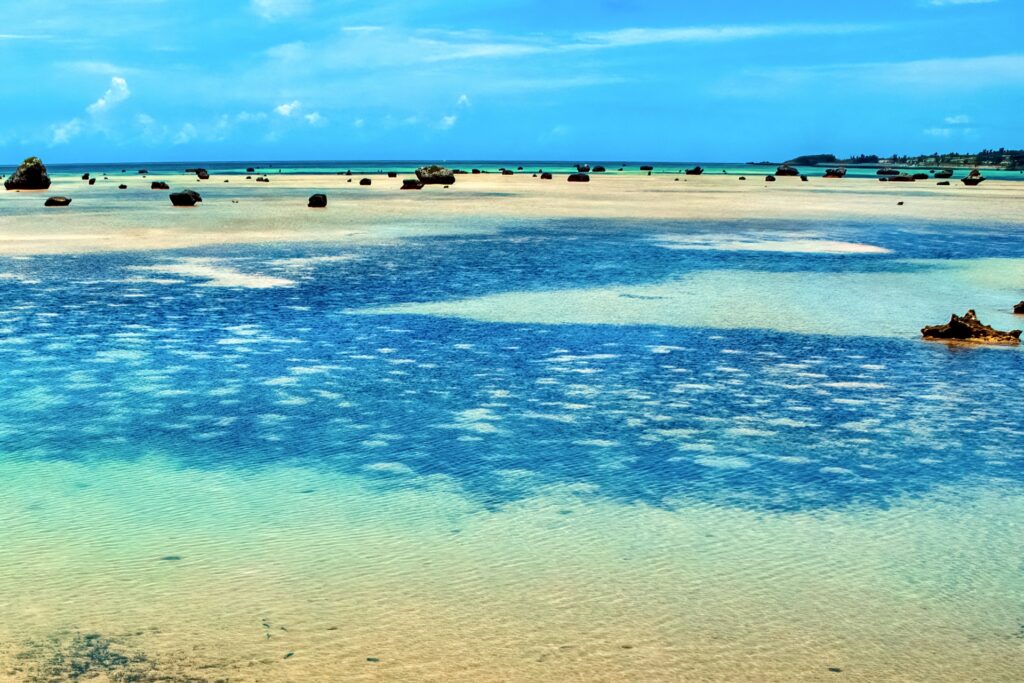
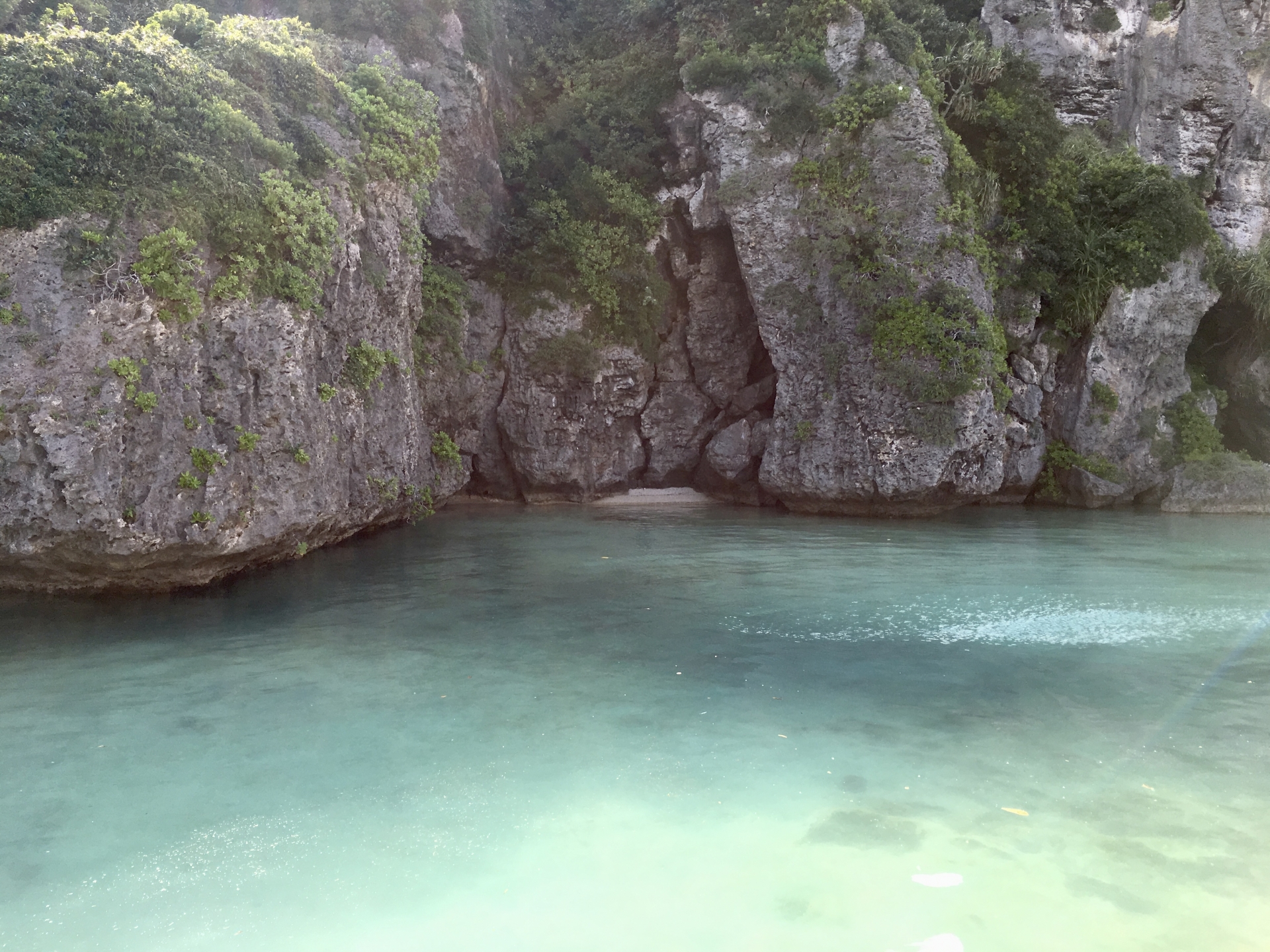
A beach on Irabu Island's north coast chosen among "Japan's 100 Best Beaches," it's famous as a sunset-viewing spot. At low tide countless huge rocks (boulders) appear, and the sight of the setting sun sinking between the rocks is so beautiful it leaves you speechless.
Known as a Miyako diving spot too, the distinctive coastline dotted with large rocks — said to have once been thrown up from the seabed by a tsunami — is scenery different from any beach in Okinawa.
For the sunset, around 5–6 pm is the time to aim for (it changes by season, so check). It's also close to Sarahama Port, and easy to use as a place to drop by after a tour. But parking space is limited, so in the busy season at dusk it's good to come a little early.
Because the atmosphere isn't resort-like, there are fewer tourists and you can take it easy. It's an area where locals often take walks too, and I like that everyday air drifting about.
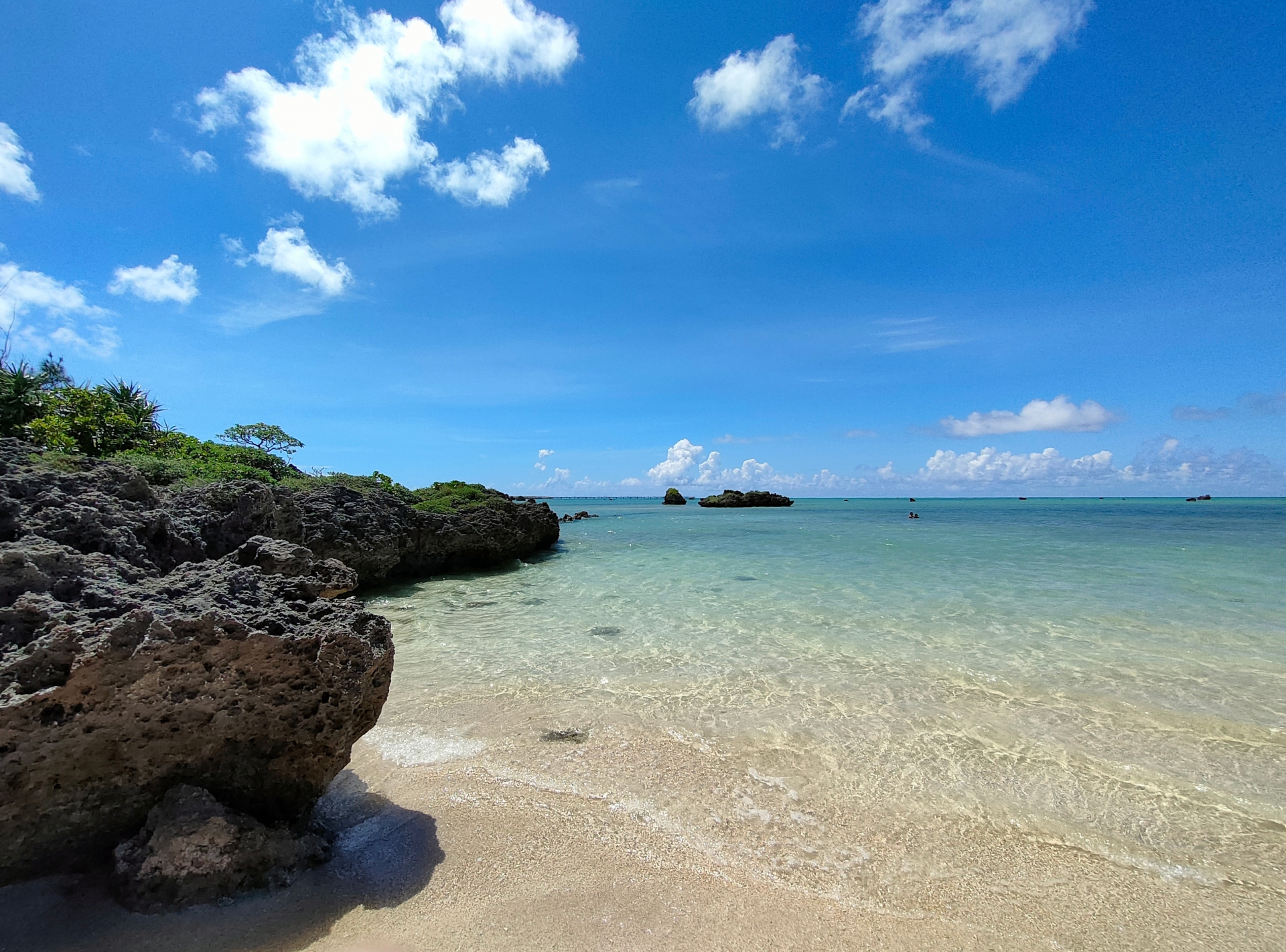
8. A Hidden Landmark! Funausagibanata
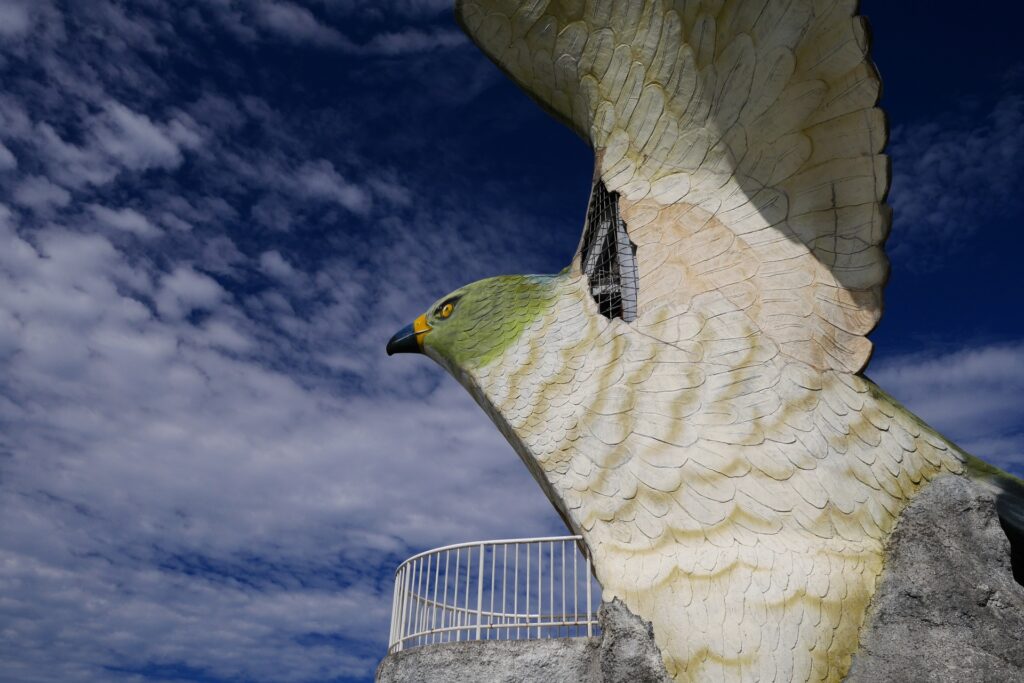
An observatory on the sheer cliffs of northern Irabu Island, when I first learned the reading and meaning of the name, I thought how romantic it was. "Funausagibanata" means "the cape that sees off boats" in the Irabu Island dialect. As a place that once saw off families and fishermen setting out from the remote island, it's deeply tied to the island's history.
From the height you can survey the gradient made by the cobalt-blue sea and the coral-reef shallows. Once a large structure modelled on the sashiba was the symbol, but it deteriorated from salt damage and was removed in 2019, and now there's only the observatory. Even so the fine view lives on, and on fine days you can survey as far as other remote islands.
About 15 minutes by drive from the Irabu Bridge. It's easy to work into a route going right around the north side of the island, and many people visit it together with Toriike Pond. It has a hidden-gem feel and isn't crowded, so it's a place where you can enjoy the scenery slowly.
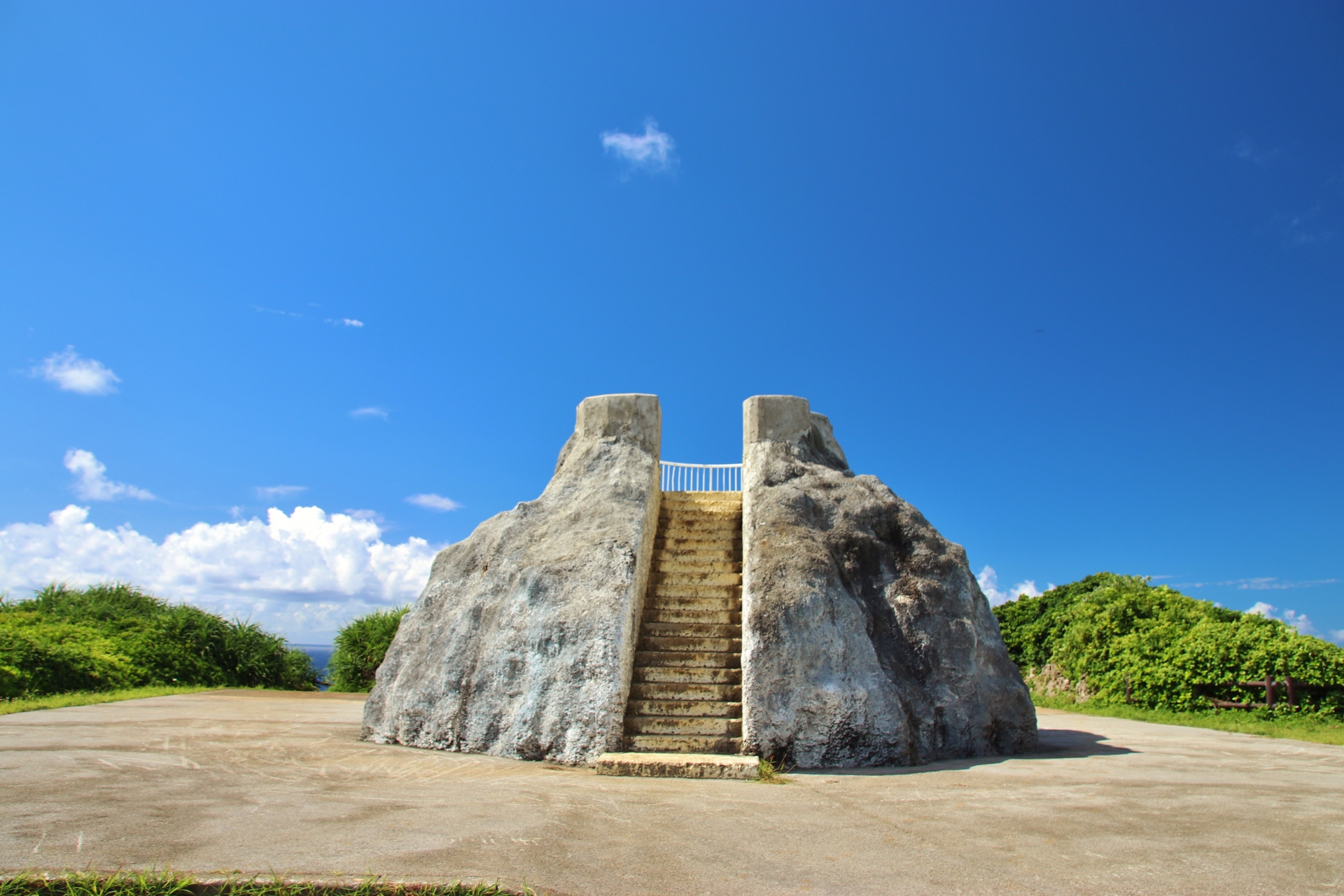
Recommended Activities on Irabu Island
Beyond just touring the sights, do also experience feeling Irabu Island's sea with your body.
Snorkelling is the most popular activity in the Miyakojima area, with Nakanoshima Beach and the area around the Blue Cave (Sapphire Cave) especially famous. You can observe coral reefs and tropical fish in the highly clear water. There are tours you can join from age 3, so even beginners can relax.
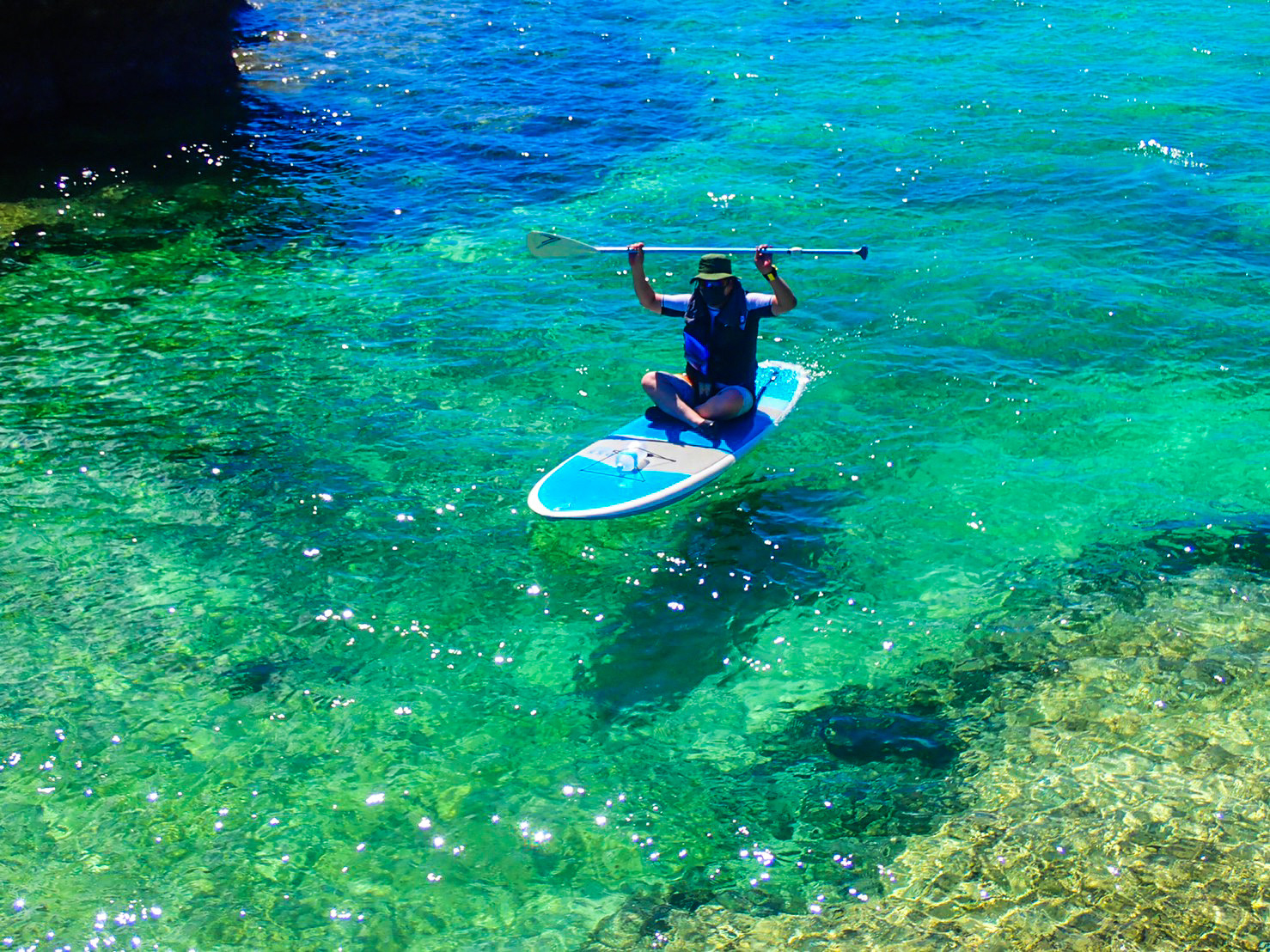
SUP (stand-up paddleboard) is an activity of standing on the sea and paddling. The calm waters around Irabu Island suit beginners too, and set plans with sea kayaking are also popular.
As for diving, the areas around Toriike Pond and the Blue Cave are known as world-class diving spots. There are several shops catering not only to licence holders but also to those diving for the first time on an introductory dive.
An interesting hands-on activity is birdwatching, searching for tropical birds while strolling the path around Makiyama Observatory. Autumn (October–November) is the period when sashiba — migratory birds of the hawk family — fly in in great numbers, and the sight of flocks crossing the Irabu Island sky is stunning. It's a phenomenon called "taka-bashira" (hawk pillar) in the local dialect, and it's a seasonal feature of the island's autumn.
Recommended Food Spots on Irabu Island
While touring the sights, do also enjoy the local food.
The Local Taste! Miyako Soba
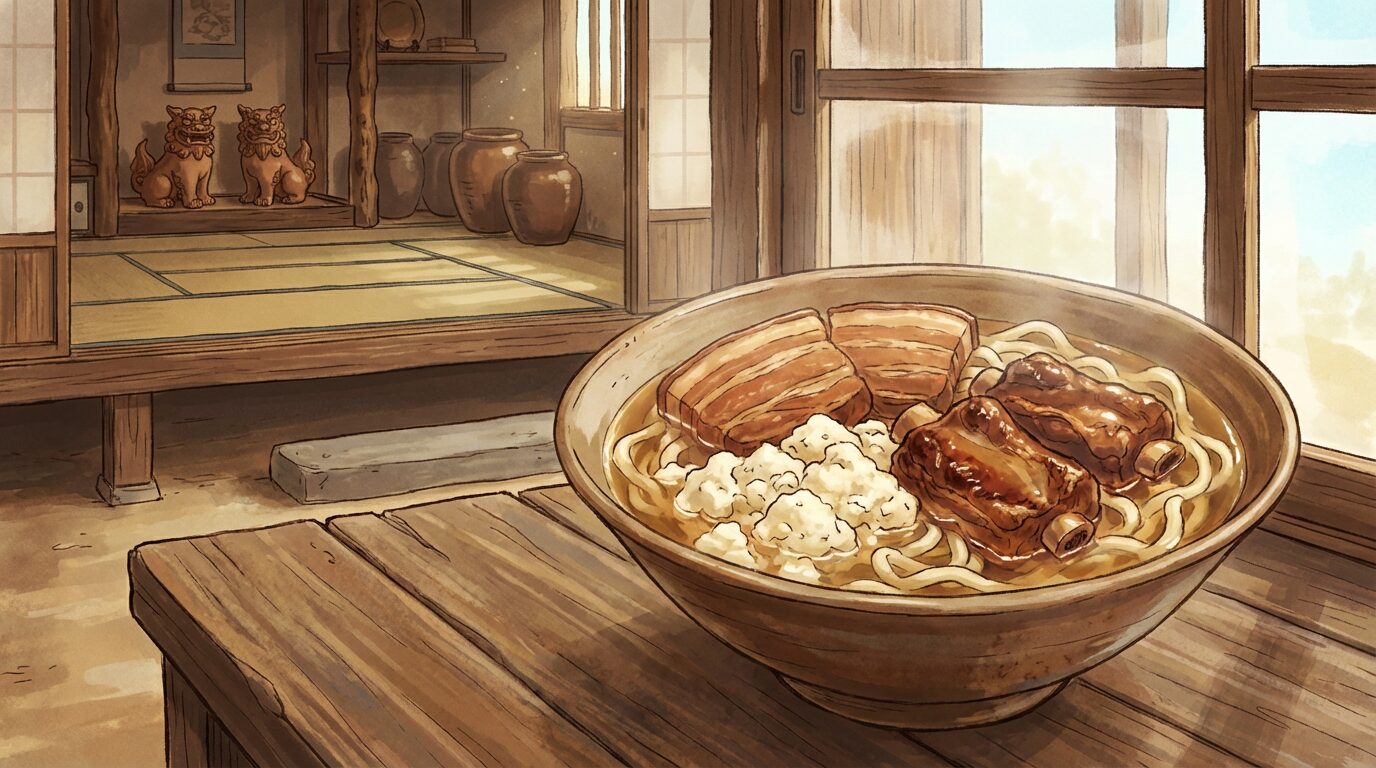
Okinawa soba is a representative of Okinawa's food culture, but Miyako soba has its own distinctive style within it. The noodles are on the thin side, and the soup is often a light bonito base. A feature of Miyako soba is that the rafute (braised pork) topping is hidden beneath the noodles, sometimes called a "treasure hunt."
Old-fashioned diners are dotted around the Sarahama area, with shops serving the rustic Miyako soba the locals frequent. I like that it's not over-touristed, and going in at lunchtime you'll find local grandpas and grandmas just casually eating. That kind of air makes the meal taste better, I feel.
Enjoy Fresh Seafood
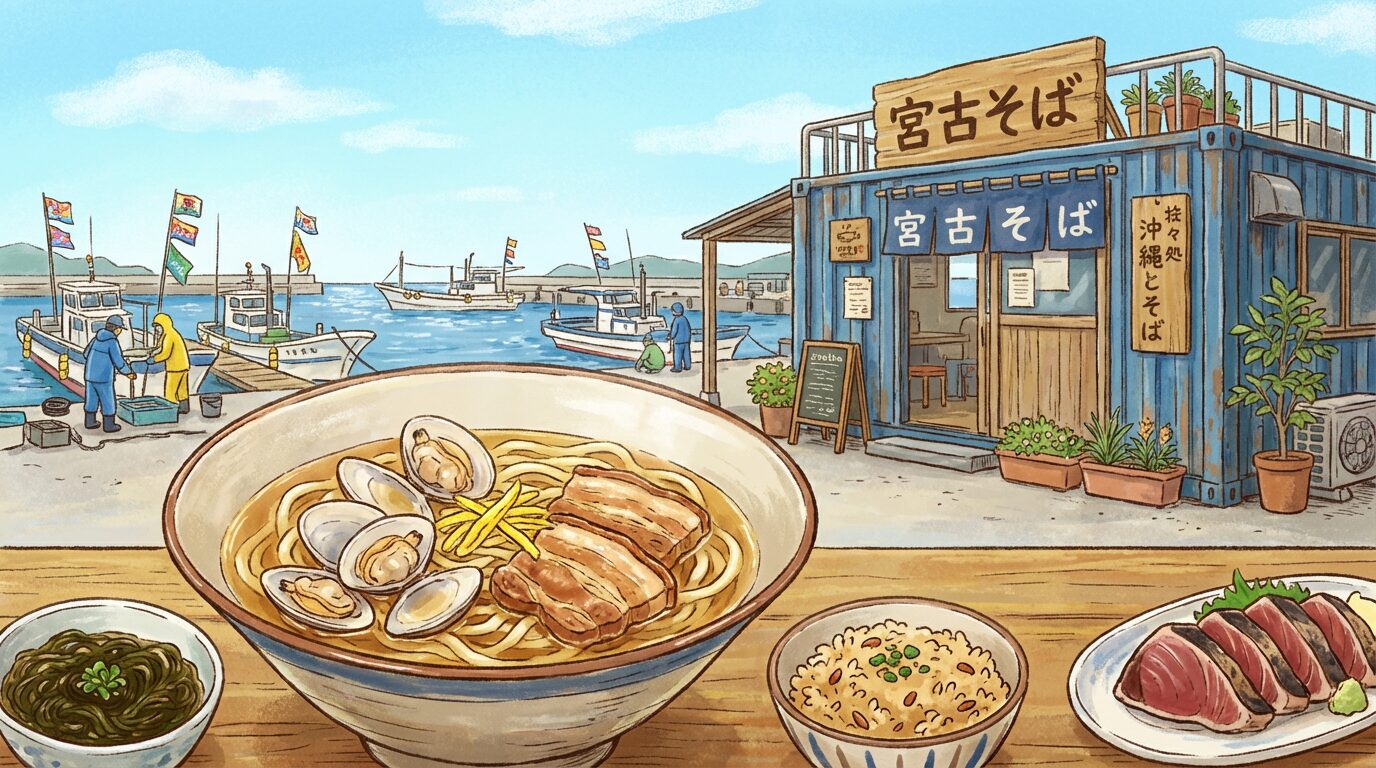
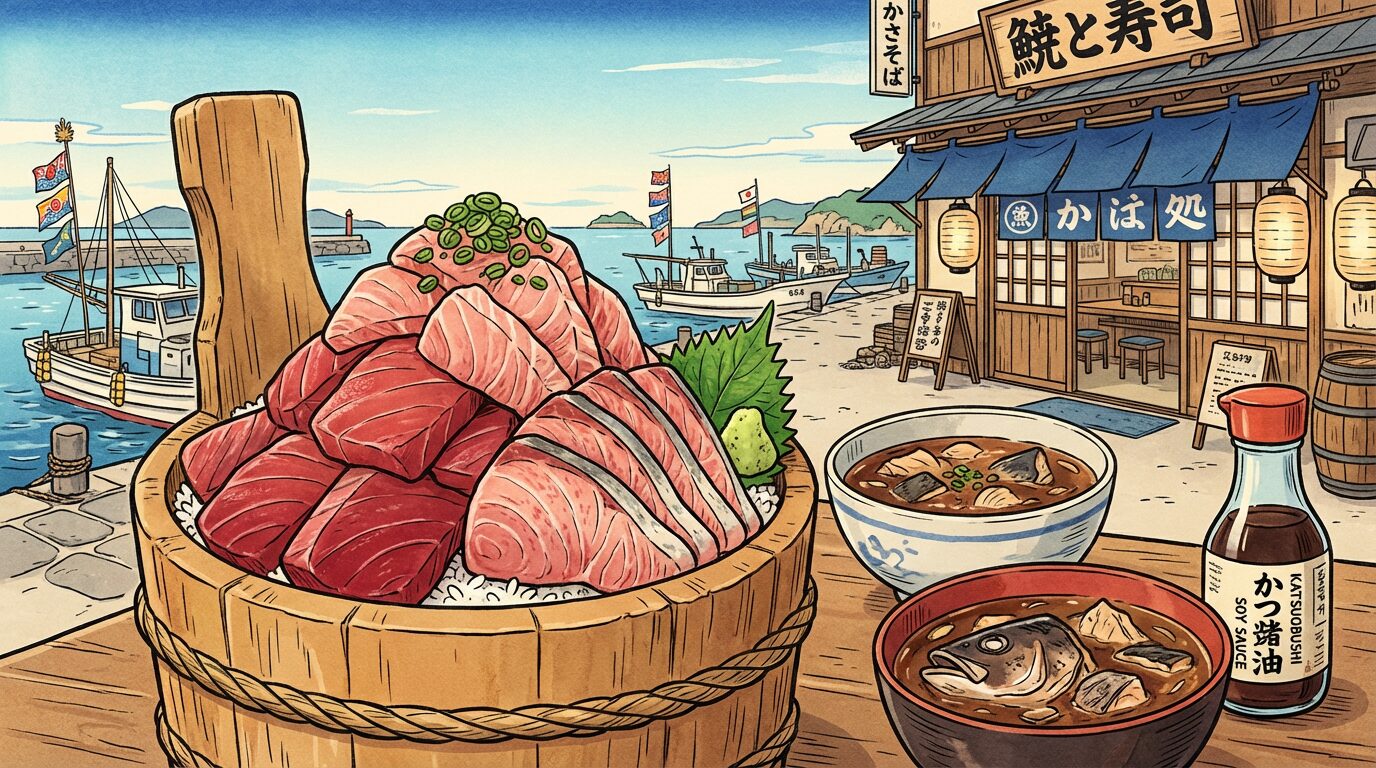
Sarahama Fishing Port is an area where the atmosphere of a fishing town still strongly remains, with diners where you can eat freshly landed fish. You can enjoy seafood unique to the Miyakojima area — bonito and tuna rice bowls, mixed sashimi platters, local marlin dishes and more. Places like "Uoichiba Ichiwa" are famous for their tub-served seafood bowls, and it's a treat to taste many kinds little by little.
The bowl you eat here after coming back from a tour is exceptionally delicious. See inside the sea, then eat the bounty of the sea — this flow has become a classic course of an Irabu Island trip.
Relax at a Stylish Café
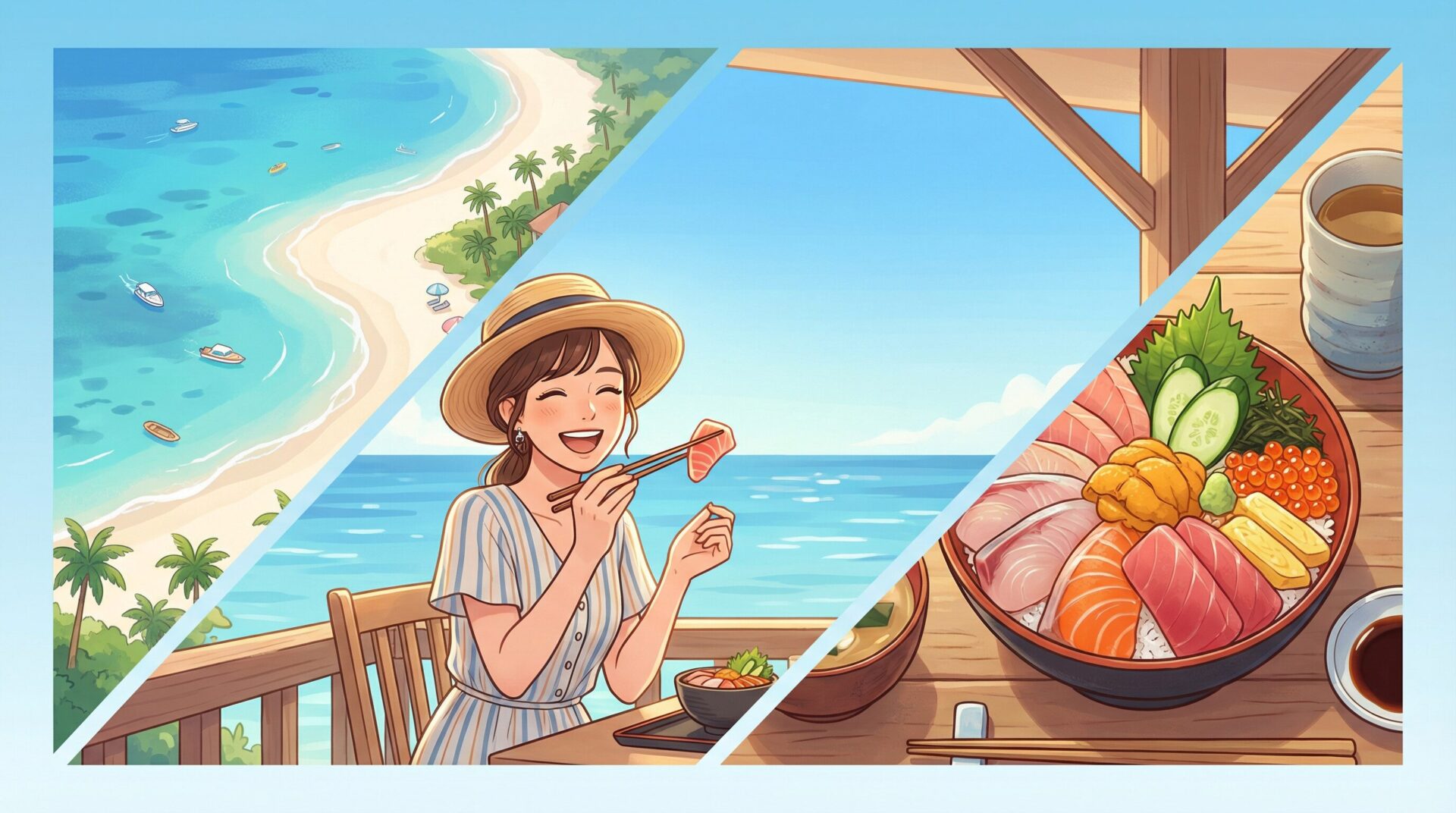
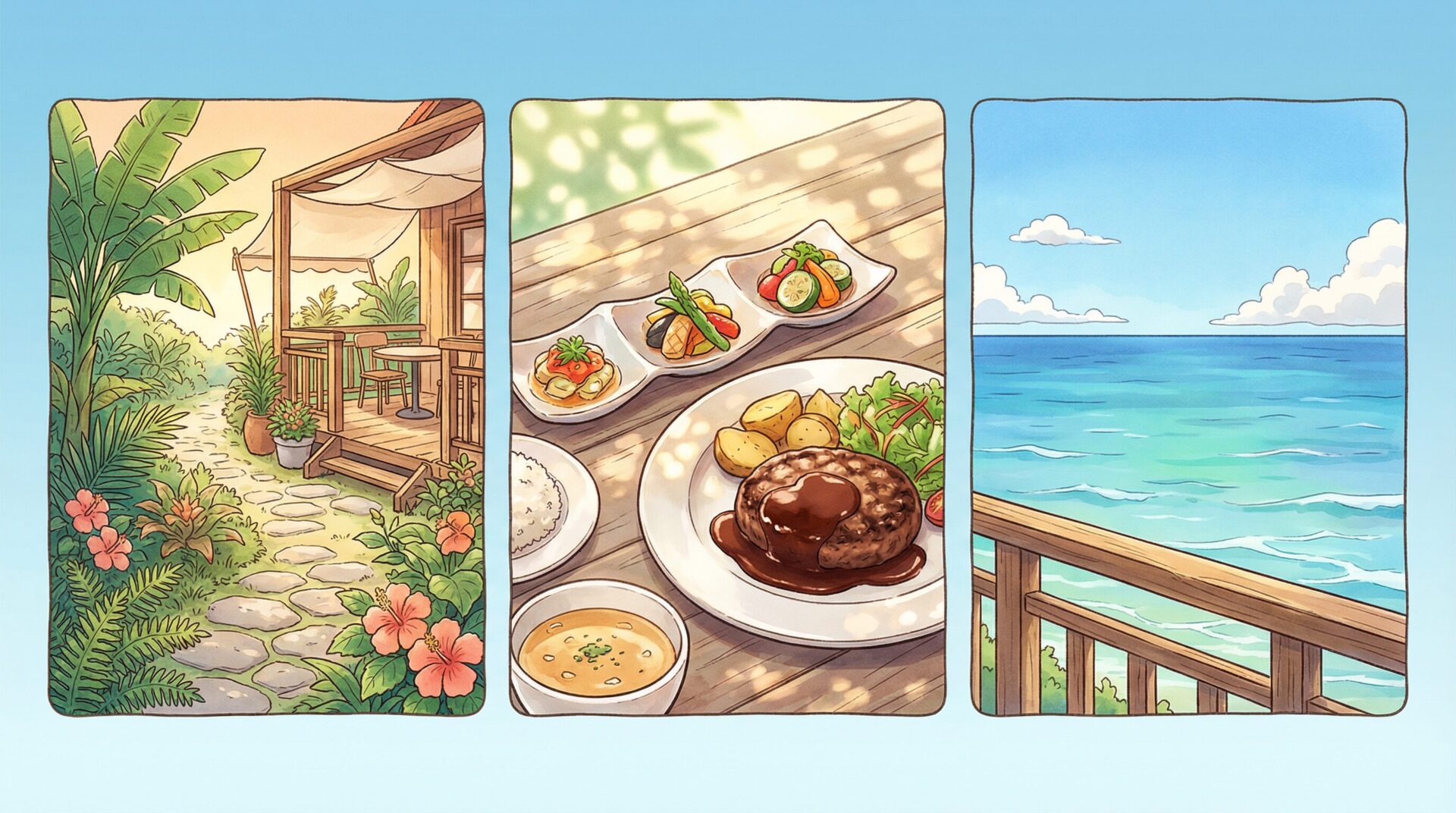
Stylish cafés where you can enjoy lunch or café time while gazing at the sea have been increasing on Irabu Island too. Soraniwa Hotel & Café is set on a height, where you can dine while surveying the Miyako-blue sea from the terrace seats. Miyako beef hamburg and plates using island vegetables are popular, and the atmosphere is calm.
Spending about two hours at a café like this, drinking coffee with no plans at all, is, I think, one of the real joys of an Irabu Island trip. A trip touring sights one after another is fun too, but the time doing nothing is sometimes the greatest luxury.
Irabu Island Model Sightseeing Courses
Day-Trip Course (Half a Day to a Full Day)
Once you cross the Irabu Bridge, head straight to Toguchi-no-Hama. The morning beach with few people is the best. After that, survey the whole island at Makiyama Observatory, then drive on to Funausagibanata. Cross to the Shimojishima side and stroll Toriike Pond, then take a lunch break around Nakanoshima Beach. In the afternoon enjoy snorkelling at Nakanoshima Beach, and before dusk move to Sawada-no-Hama to watch the sunset. With this route you can do 6 of the 8 spots in one day. With a car, most of the spots are within 30 minutes' travel of each other, so you should be able to go round without strain.
Relaxing too long at Toguchi-no-Hama so the afternoon schedule gets pushed back — this is a classic of an Irabu Island trip. I recommend building your plan with a little leeway.
Two-Day Plan
On day 1, conquer the main spots with the route above. On day 2, combine Nudokubi Abu and a Blue Cave tour to dig deeper into the island's nature and history. You'll have the leeway to eat a bonito or tuna seafood bowl at a diner in the Sarahama area, or to spend a relaxed time at a local bakery. With two days you start to feel less like "sightseeing" and more like "staying on the island," and the trouble is you won't want to go home.
Hotels and guesthouses you can stay at on Irabu Island are increasing too, and staying on the island lets you experience the early-morning Toguchi-no-Hama and the late-night starry sky. The Miyakojima area has little light pollution, and the night sky is a level of beauty you can absolutely never see in the city.
Ways to Enjoy It for Families
For a trip with children, swimming at Toguchi-no-Hama and strolling Makiyama Observatory are classics you can't miss. Snorkelling at Nakanoshima Beach is a spot where children seeing tropical fish for the first time get hugely excited, an experience easy to remember as a family-trip memory. Toriike Pond can be viewed together if children are of primary-school age or older (but take care not to slip on the path). Nudokubi Abu's steep stairway is hard for small children, so going on a separate day with just the adults, without forcing it, is one option.
Irabu Island's Best Season and Things to Note
If You're Visiting, Spring (March–May) or Autumn (October–November) Is Recommended
Summer (July–August) has the best sea conditions, but travellers concentrate and rental cars and tours fill up easily. In spring and autumn there are fewer tourists, and you can enjoy the beaches and observatories at leisure. October especially is the season when the migratory sashiba fly in in great numbers, and the flocks crossing the skies above the island are a spectacle unique to Irabu Island.
Winter (December–February) isn't suited to swimming, but it's the season you can do whale watching. Humpback whales migrate to the waters near Miyako Island, and tours observing them by boat draw popularity.
A Rental Car Is the Basis for Getting Around
Irabu Island has almost no public transport. There's distance between the sights too, so securing a rental car from the start is the iron rule. In the busy period rental cars run out at Miyako Airport, so I strongly recommend arranging one at the same time as your tours and hotel.
Frequently Asked Questions
Q. How many days do you need for Irabu Island sightseeing?
Even half a day lets you go round several main spots, but with 1–2 days you can enjoy it thoroughly. If you're adding activities (snorkelling or diving), you'll want to secure 2 days.
Q. Can families enjoy it too?
Toguchi-no-Hama, Makiyama Observatory and Funausagibanata suit families too. Nakanoshima Beach has calm waves and shallow water, so it's also suited to children's snorkelling. Nudokubi Abu has a steep stairway, so care is needed with small children.
Q. What's the rough time needed?
Many spots can be seen in 15–30 minutes each. Including access by car, going round all 8 spots takes a full day.
Q. Is there parking?
Toguchi-no-Hama, Makiyama Observatory, Toriike Pond, Sawada-no-Hama and so on have car parks in place. Funausagibanata has limited parking space, so when crowded it's better to go early.
Summary
Irabu Island's sights are each distinctive and never get boring. A spectacular drive starting from the bridge, an almost-too-clear white-sand beach, a mystical vertical-shaft cave, a view from sheer cliffs — each gives you a completely different experience. "Japan's longest toll-free bridge," "a pond designated a National Natural Monument," "a cape that sees off boats" … all of them are things found only on the small island of Irabu.
With a car, you can enjoy it plenty even on a day trip from Miyako Island. But stay a night and you can experience the stillness after the sun sets and the time when the morning beach has no one around, and it becomes an island you'll want to come to again.
Irabu Island is a little different from a flashy resort. But within that quiet beauty, there's something new you can find no matter how many times you come. Do work the whole of Irabu Island into your Miyakojima trip route.
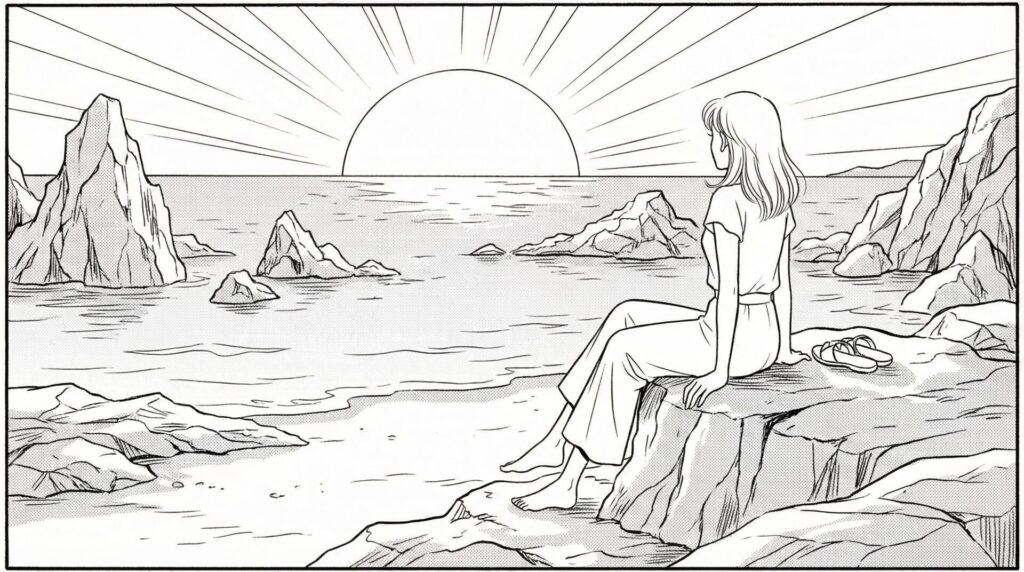
That colour of the sunset is unforgettable once you've seen it. I want you to see that sight too.