The night before my Miyakojima trip, searching over and over at the guesthouse, I came across a name I'd never seen.
"Yuni Beach."
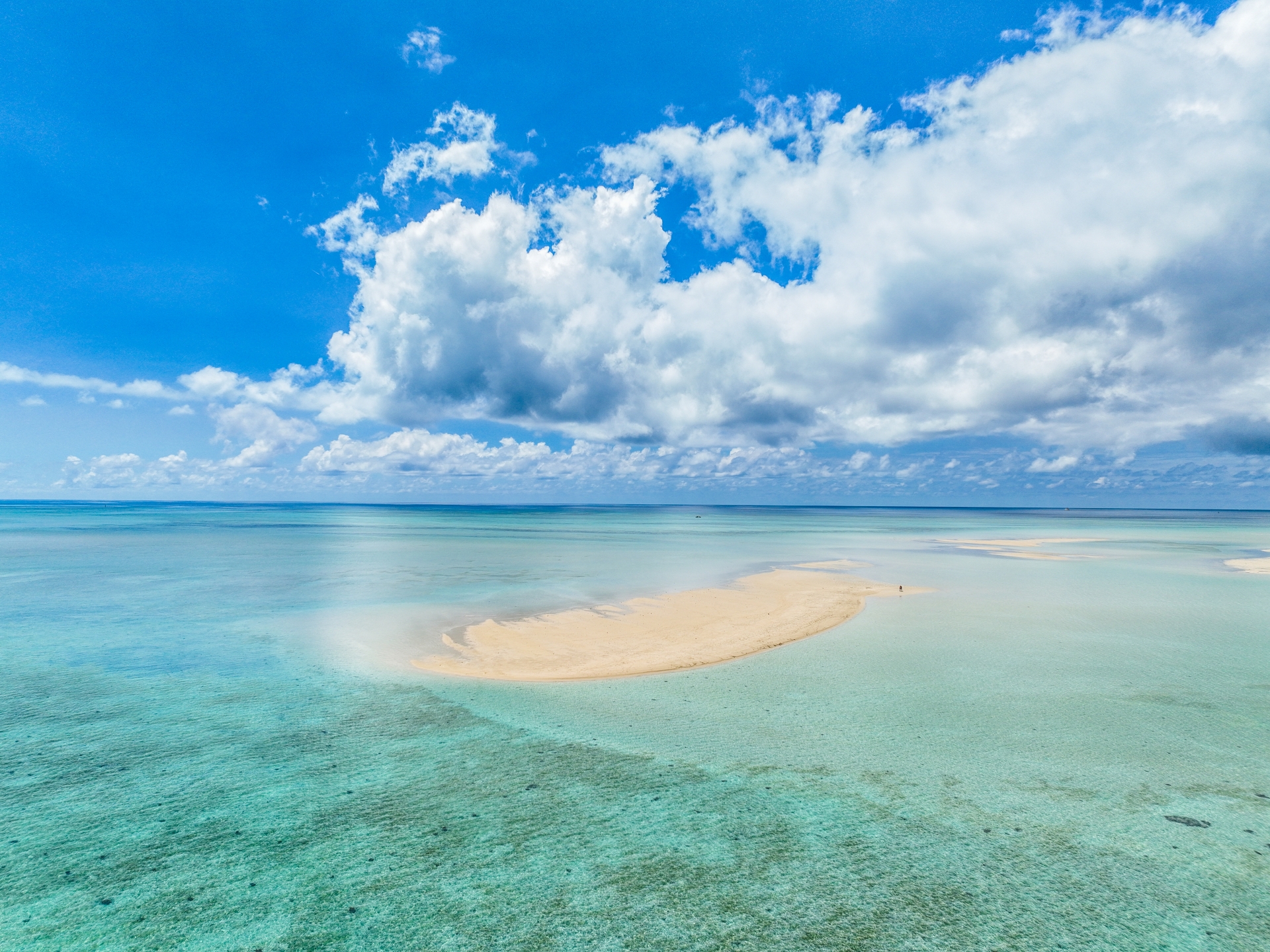
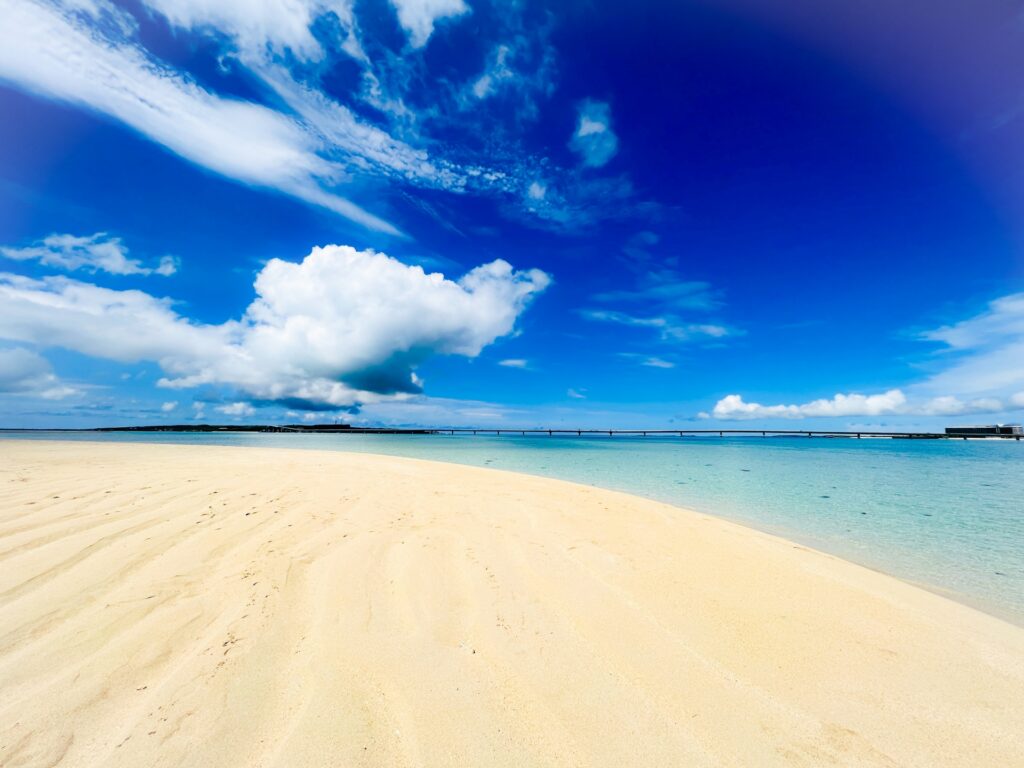
A white sandbar in the sea between Miyako Island and Irabu Island that appears only at low tide — that's what it said. Thinking "what do you mean you can't normally see it?", I looked at the tour photos and an involuntary "wow" escaped me. 360 degrees, the sea in every direction. And in the very middle of it, a pure-white sandbar floating out of nowhere.
It's honestly hard to put into words how it felt when I joined the tour the next day and arrived after paddling a kayak for about an hour. "Moved" or "beautiful" isn't nearly enough, and the moment I got off the kayak and put my feet on the sand, I only thought, "ah, I'm glad I came."
In this article I write about Miyakojima's phantom island, "Yuni Beach." Why you can't see it, how to get there, and what to know so you don't regret the trip. I'll write as honestly as I can about what I felt after actually experiencing it, so do use it as a reference.
- What Is Yuni Beach? — A Phantom Sandbar Floating Between Miyako and Irabu Islands
- The Appeal of Yuni Beach — Why It Draws People So Much
- How to Get to Yuni Beach — Joining a Tour Is the Only Way
- The Best Timing to Visit Yuni Beach
- Things to Watch Out for at Yuni Beach
- Nearby Sights — Places to Visit Together with Yuni Beach
- Frequently Asked Questions
- Summary — the Value of Going to Yuni Beach on a Miyako and Irabu Trip
What Is Yuni Beach? — A Phantom Sandbar Floating Between Miyako and Irabu Islands
A "Phantom Island" That Appears Only at Low Tide
Yuni Beach is an uninhabited island about 1.4 km (0.9 miles) offshore, on the south side of the Irabu Bridge that links Miyako Island and Irabu Island. To be precise, it's less an "island" than a tidal-flat sandbar (kanshutsu-saha) — that is, a stretch of sand that shows itself above the sea surface only at low tide, and at high tide vanishes completely beneath the sea, true to its phantom name.
Normally you can't see it. That's why it's called the "phantom island."
Even gazing from the Irabu Bridge, the place where Yuni Beach sits at high tide is just open sea. You'd never notice a white sandbar is there if you didn't know. But at low tide, white sand gradually rises up on the surface of the sea where there was nothing, and before long a small paradise surrounded 360 degrees by Miyako blue appears. The very fact that it "appears," I think, is already something out of the ordinary.
When a typhoon comes, the surface sand is scoured away and it can temporarily disappear, but the power of the tide and waves brings it out again. After it reappears its shape and position have apparently sometimes changed. In other words, nature keeps on making it.
Invisible Even from the Irabu Bridge — That's Why It's a Phantom
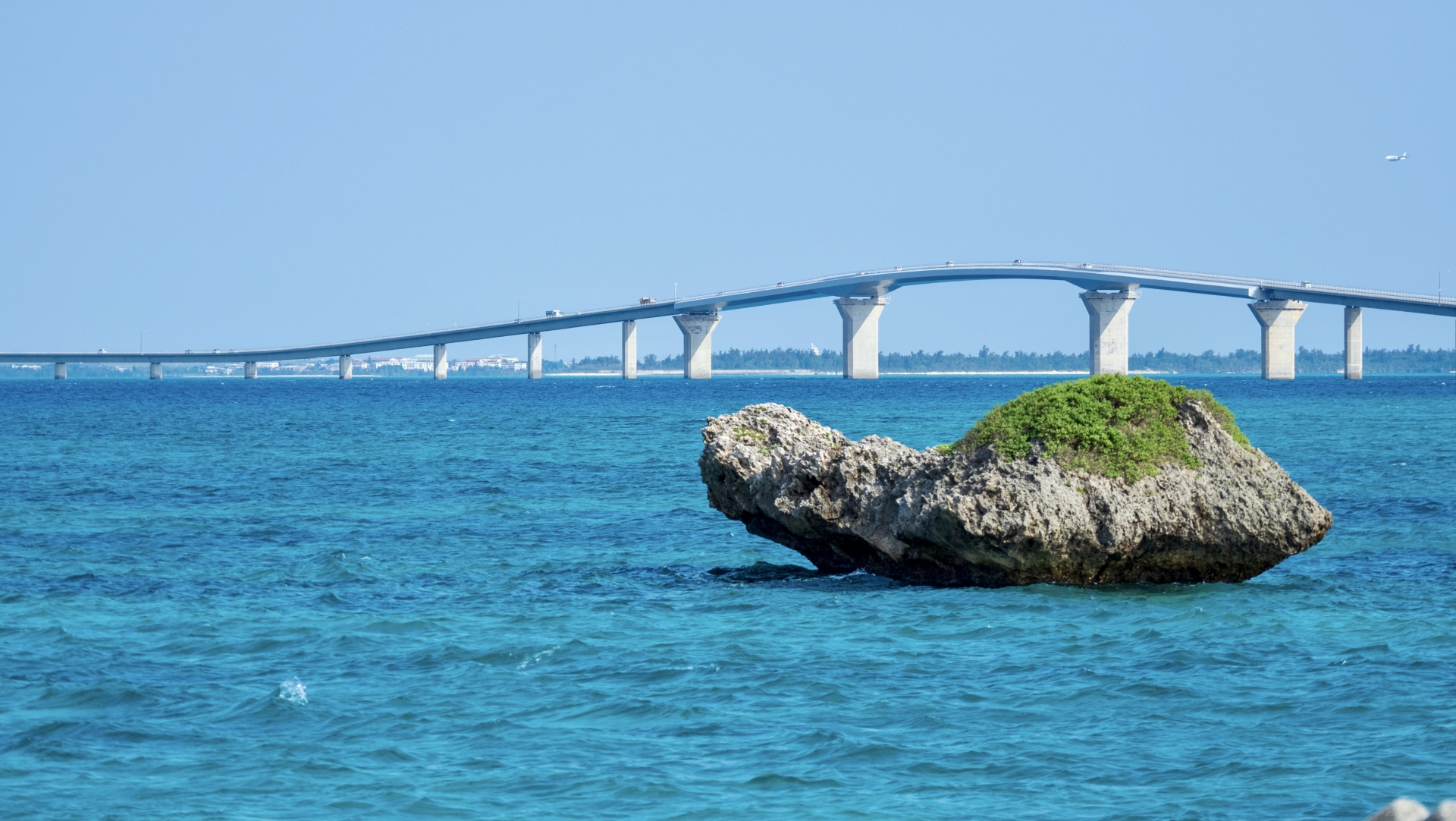
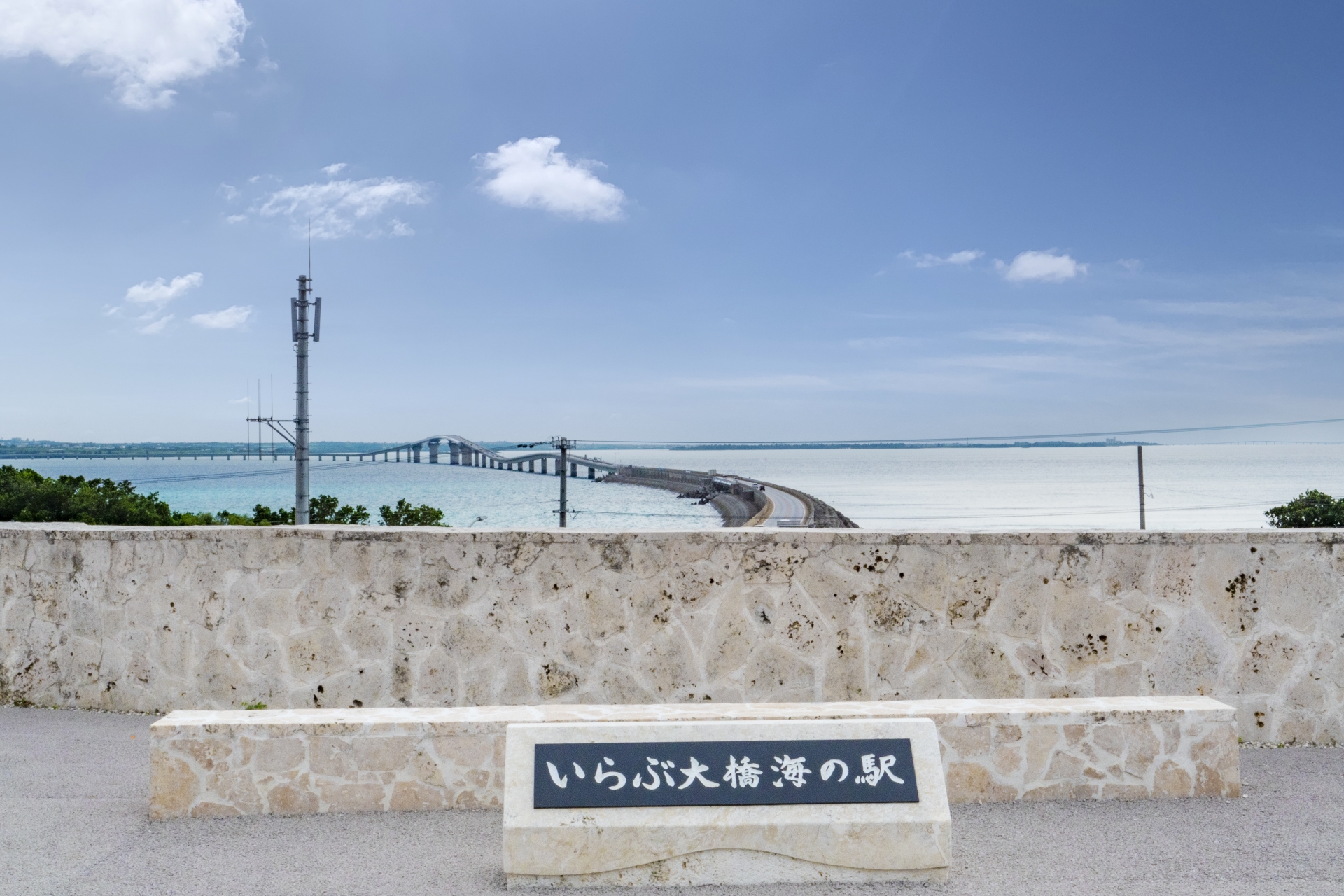
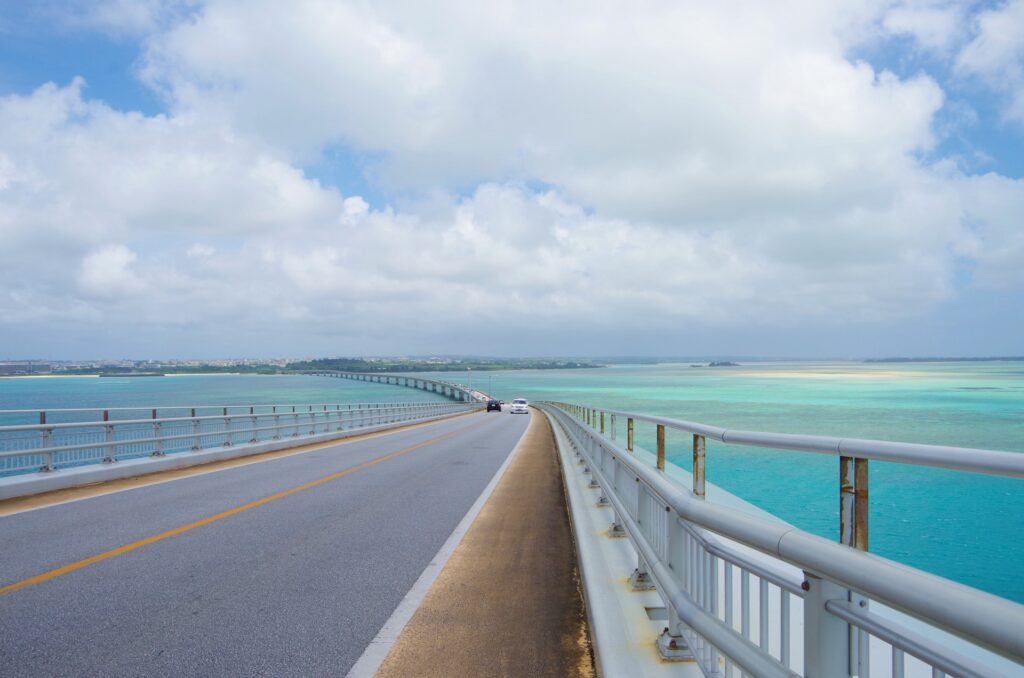
Many people on a Miyakojima trip have crossed the Irabu Bridge. At 3,540 metres long, it's the longest toll-free bridge in Japan. The Miyako-blue sea seen from the bridge is a spectacle, and you find yourself unable to move for a while at the gradient of sea colours spreading left and right.
At that moment, Yuni Beach is somewhere in the sea spreading on the south side of the bridge — it should be, but at high tide you can't see it. Most tourists crossing the Irabu Bridge are in the situation of "passing right over Yuni Beach without realising it."
If you know, you get the pleasure of gazing at the sea from the bridge thinking "maybe around there." And the figure of the Irabu Bridge looked up at from the sea at low tide is also exceptional — the bridge viewed from the angle of Yuni Beach looks completely different from usual.
The Appeal of Yuni Beach — Why It Draws People So Much
The Experience of 360 Degrees of Miyako Blue in Every Direction
What first overwhelms you at Yuni Beach is the experience of "being surrounded by sea on all sides."
Stand on the white sandbar and turn full circle, and whichever way you face it's the sea. No land in sight. No buildings, no trees, nothing man-made. A world of only sky, sea and sand. The phrase "360-degree ocean view" gets used a lot, but at Yuni Beach it's so in the true sense, with nothing blocking the view.
Honestly, before impressions like "amazing" or "beautiful" came out, there was a sensation of my mind not quite keeping up. Too out of the ordinary for my brain to process, you might say. Standing on the sandbar, the fact that "I'm right now in the middle of the sea" gradually settled into my body.
In the distance you can see Miyako Island's coastline, and make out the silhouette of the Irabu Bridge too. But underfoot is sand, and all around is sea. It's an experience where the strangeness of "the place I'm in" slowly sinks in as time passes.
The Contrast of White Sand and Miyako Blue
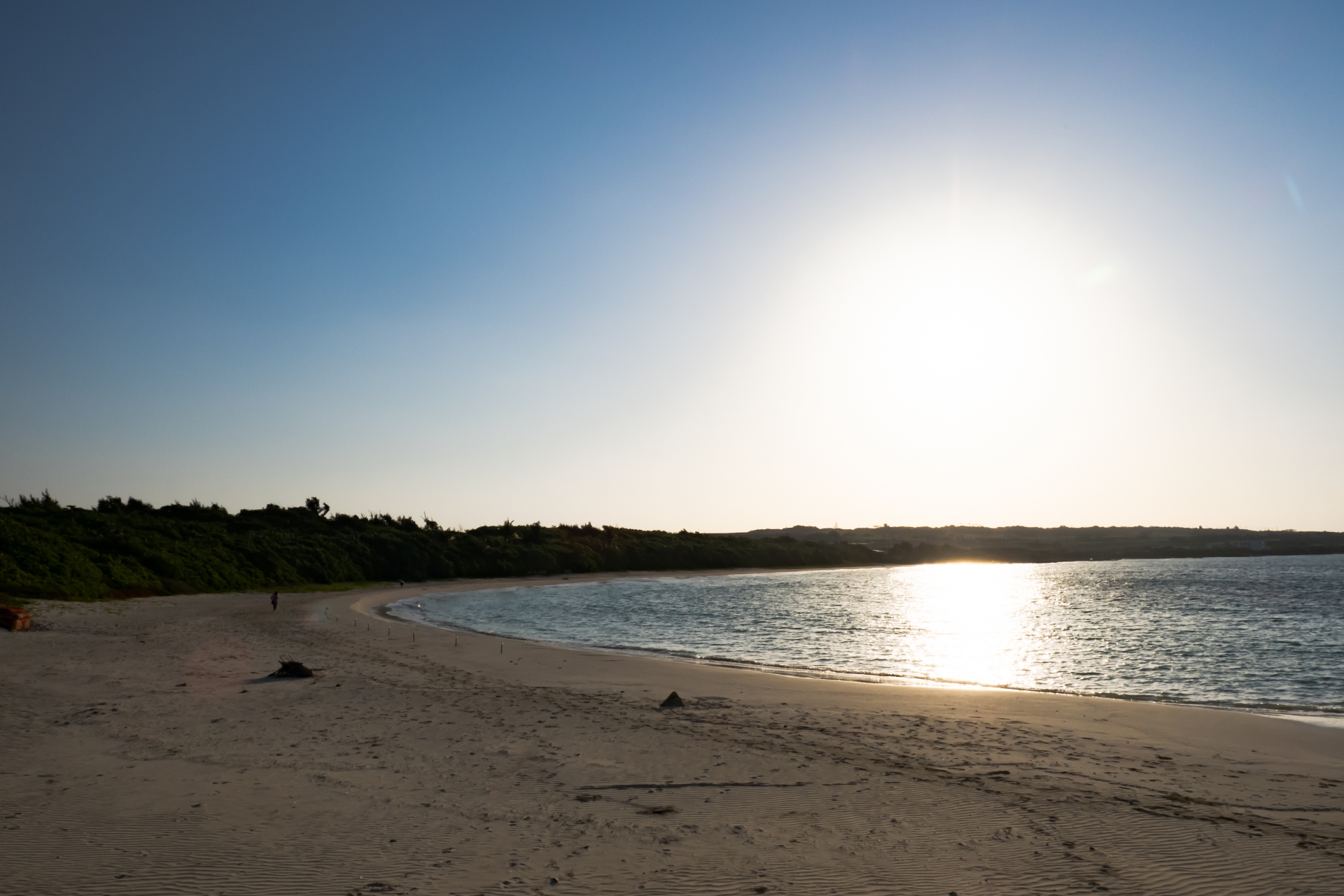
The sand of Yuni Beach is white. Or rather, it's fine and silky — the coral-derived powdery sand common on the outer islands of Okinawa and Miyakojima. The contrast of the clear Miyako-blue sea spreading there isn't a matter of being photogenic or anything like that, but purely the kind of beauty that delights the eyes.
Miyakojima's sea is known worldwide for its high clarity, and the waters around Yuni Beach are no exception. The shallows are emerald green, and going a little deeper it's cobalt blue — the sight of a white sandbar floating within this gradient is overwhelming whether in drone footage shot from the sky or in the scenery viewed from the ground.
Being on the sandbar during the hours when the tide is going out, you can tell the sand is gradually spreading. The sand that was small at first increases its area as time passes. Watching this change before your eyes, a real sense of "nature in motion" is born.
Conversely, as the tour time nears its end and high tide advances, the edges of the sandbar begin to be submerged. Without anyone saying "time's up," the sea seems to tell you "it's about time you went home." That sensation may be one of the most memorable scenes of my time at Yuni Beach.
Shells Left on the Sand — Treasures Usually on the Seabed
On the ground of Yuni Beach there are lots of beautiful shells.
Because the sandy ground that's usually on the seabed is exposed at low tide, many of the shells haven't been tumbled by the currents and keep their shape intact. Unbroken shells lie scattered about, and absorbed in picking them up — "oh, this is pretty," "this one too" — time flew by in an instant. I'm no collector or anything, but the time spent sitting on the sand lining up shells was somehow blissful.
About taking the shells you pick up home, please check with the tour shop beforehand. From a nature-conservation standpoint, some shops advise refraining from taking them. Look at them on the spot, take a photo, and return them to the sand — that may be the right way to engage with Yuni Beach.
How to Get to Yuni Beach — Joining a Tour Is the Only Way
Swimming There on Your Own Is Dangerous — Absolutely a No
About 1.4 km offshore. That's where Yuni Beach is.
Some may think "isn't that a swimmable distance," but swimming there on your own is dangerous, so please refrain. The midpoint of the sea is an area strongly affected by tidal currents, and even when the surface looks calm there's a flow. Getting in the sea without a guide carries a high risk of accident. In fact, the tour companies all call on visitors to "please don't access it under your own power."
Access to Yuni Beach by joining a tour is the only safe method.
Kayak — 1–2 Hours Round Trip, Paddling Fun and Wonder as a Set
Among Yuni Beach tours, the kayak (sea kayak) is especially popular.
The departure point is often Sunset Beach, and you head for Yuni Beach passing under the Irabu Bridge. The moment of passing under the bridge is a special experience where you feel the bridge's enormousness from below, gaining a completely different viewpoint from "Miyako Island seen from atop the bridge." The round trip takes about 1–2 hours, but that time itself becomes part of the journey.
Tour prices are around ¥10,000–11,500 (about US$67–77; roughly 2 hours). Many plans come with drone filming or free photo data, and Yuni Beach seen in aerial shots clearly shows the composition of "a white sandbar floating in the Miyako-blue sea," for another kind of wonder. Many tours can be joined by beginners, so don't worry if you have no kayaking experience. The guide teaches you how to paddle properly, so you get used to it within the first few minutes.
You can often meet sea turtles while paddling the kayak. It's not unusual for a cry of "ah, a sea turtle!" to go up on the way there. The kayak moves quietly, so the sea turtle sometimes stays close by without fleeing. After passing under the Irabu Bridge, the experience of paddling across the wide sea of Miyako Island with the Irabu Bridge as your backdrop is a tour highlight on a par with landing on Yuni Beach.
Boat — the Shortest Route, Arriving in About 5 Minutes
If you're in a hurry, paddling is physically tough, or you have small children — in those cases the boat plan is recommended.
Board at the departure point, Toriba Marina, and it's about 5 minutes to Yuni Beach. You arrive just by getting on and off, so it can be enjoyed across a wide range of ages. Even those worried about seasickness find it easy to attempt since the distance is short. It also suits those who want to secure plenty of time on the sandbar.
SUP and Jet Ski — Active Options for Enjoying It
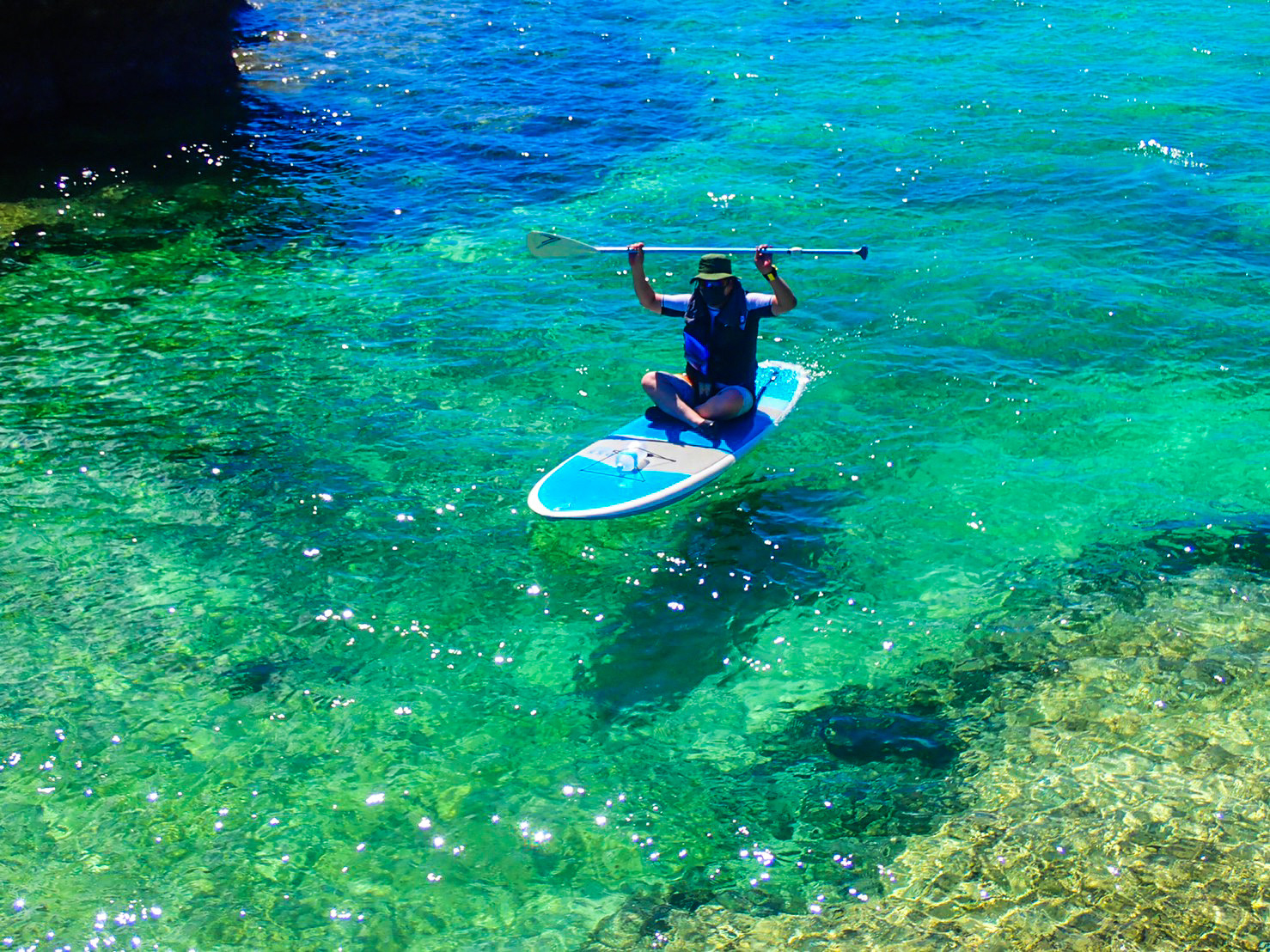
SUP (stand-up paddleboard) is an activity where you stand on the sea surface and head for Yuni Beach while enjoying the scenery. A plan going by clear SUP, standing on the transparent sea surface, becomes a special experience where you can see underwater too.
The jet ski has a sense of speed, and the experience of powering along with the Irabu Bridge as a backdrop is fun. The advantage is reaching Yuni Beach in a short time, which also suits travellers short on time.
The Best Timing to Visit Yuni Beach
Always Check the Low-Tide Times in Advance
Yuni Beach shows itself only at low tide. This is an unchangeable fact, so you need to look up the tidal information for the day you visit in advance.
That said, tour companies set their times to match the day's tide, so if you join a tour you'll be fine just checking "what low tide the tour is built around." Even without poring over a tide table yourself, the shop will guide you to the right time slot.
However, in time slots near high tide the sandbar may be narrow, and depending on conditions landing may not be possible. Checking at the time of booking "how many hours before low tide can we land?" is reassuring.
The Best Season Is May to October
Yuni Beach's sandbar looks most radiant on a fine day from May to October. It's the period when sunlight illuminates the white sand and the contrast it makes with the Miyako-blue sea shows to its fullest, and many of the spectacular photos you often see were taken in this period.
July and August, after the rainy season ends, have stable sea conditions too, and as long as the weather is good you can land almost every day. But in this period tourists concentrate and it tends to get crowded. In peak season, apparently 50–60 people gather on Yuni Beach at once, and it can become a situation where the "360 degrees, sea in every direction" scenery has too many people in it.
"Early in the morning if you want to avoid crowds" and "choosing a small-group tour" are effective choices.
Spring (March to May) and autumn (October) are relatively empty, and you can enjoy Yuni Beach in a calm atmosphere. The water temperature is a little low, but many shops accommodate wetsuits, so even in early spring it's often no problem.
Things to Watch Out for at Yuni Beach
Zero Facilities — Entirely a Place of Self-Responsibility
Yuni Beach has no toilets, no shade, no showers, no shop. It's a completely natural sandbar.
Go without knowing this and there's no escape from the blazing midsummer sun. There's no shade on the sandbar, and Miyakojima's summer sun is quite strong. The perceived temperature is higher than you'd imagine, so have your sun protection fully in place.
The essentials you should bring are drinks (enough to keep hydrated frequently), a hat, a rash guard and sunscreen, and a change of clothes. When you return from the tour you'll be covered in salt and sand, so packing a change of clothes in your bag is more comfortable.
For sunscreen, choosing a "reef-safe" type that's harmless to coral is best. Some tour shops specify it, so check in advance. UV damage is greater than you'd think, and "before I knew it my back was bright red" is a story you often hear on Irabu Island and Miyakojima. A rash guard isn't just sun protection but jellyfish protection too.
In Busy Periods It Stops Being a "Phantom"
To write honestly, Yuni Beach in peak season is crowded. The wonder of "a phantom island with sea on all 360 degrees" is somewhat diluted when there are many people. Go expecting "a white sandbar with no one on it" and you can feel it's different from what you imagined.
Choose a small-group tour, avoid the busy period, or go having accepted that "even crowded, that spectacle is worth seeing" — deciding in advance what kind of experience you want reduces the gap between expectation and reality on site.
Spring (March to May) and autumn (October) have less crowding and you can often take it easy. For travellers who can choose this period, I'd recommend it.
Consider the Risk of Same-Day Tour Cancellation
On days with poor sea conditions, tours can be cancelled. On days with high waves or when a typhoon approaches, the shop judges departure for safety's sake. Having a day of leeway in your itinerary makes it easy to reschedule if it is cancelled.
Choosing a plan with free cancellation up to the day before lets you decide right up to the last minute while watching the weather, which is reassuring. Miyakojima's weather changes easily, so building a plan you can move flexibly with is, I think, the basics of travel.
Also, in busy periods arrange a rental car early too. A rental car is the basic means for getting to the Yuni Beach tour departure points (Sunset Beach or Toriba Marina). How many people have I heard say "I booked only the tour and couldn't get a rental car."
Nearby Sights — Places to Visit Together with Yuni Beach
Irabu Bridge | Before and After Departing for Yuni Beach
Many Yuni Beach tours move with the Irabu Bridge as their base. Just by driving across the Irabu Bridge before departure or after returning, you conquer one of the classics of Miyakojima sightseeing. Driving the 3,540 metres while watching the Miyako-blue sea spread left and right, the feeling of "I'm glad I came here" grows stronger.
And beyond the Irabu Bridge is Irabu Island. Famous spots like Toguchi-no-Hama, 17END and Toriike Pond await, and it's easy to put together a one-day course of finishing the Yuni Beach tour in the morning and then driving around Irabu Island and Shimojishima.
Toguchi-no-Hama | For a Beach Break After the Tour
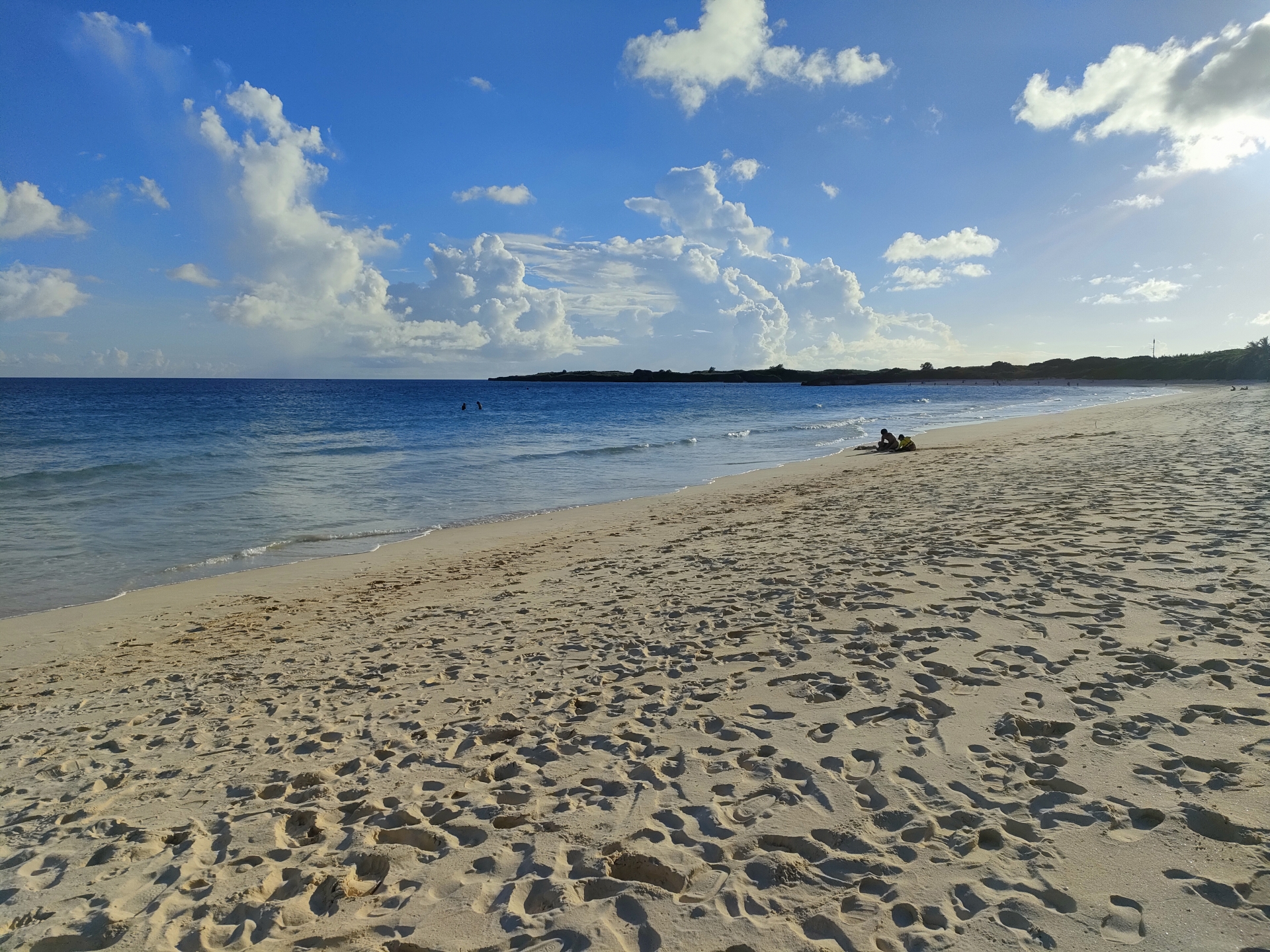
Irabu Island's "Toguchi-no-Hama" is a white-sand beach representative of the Miyakojima area. A sandbar of about 800 metres spreads out, the waves are calm, and toilets and showers are in place.
After standing in the middle of the sea on the Yuni Beach tour, walk leisurely along Toguchi-no-Hama. You can make the comparison "so the phantom island and an ordinary beach are this different," and that becomes an interesting experience in its own right.
Sunset Beach | The Departure Point for Yuni Beach Tours
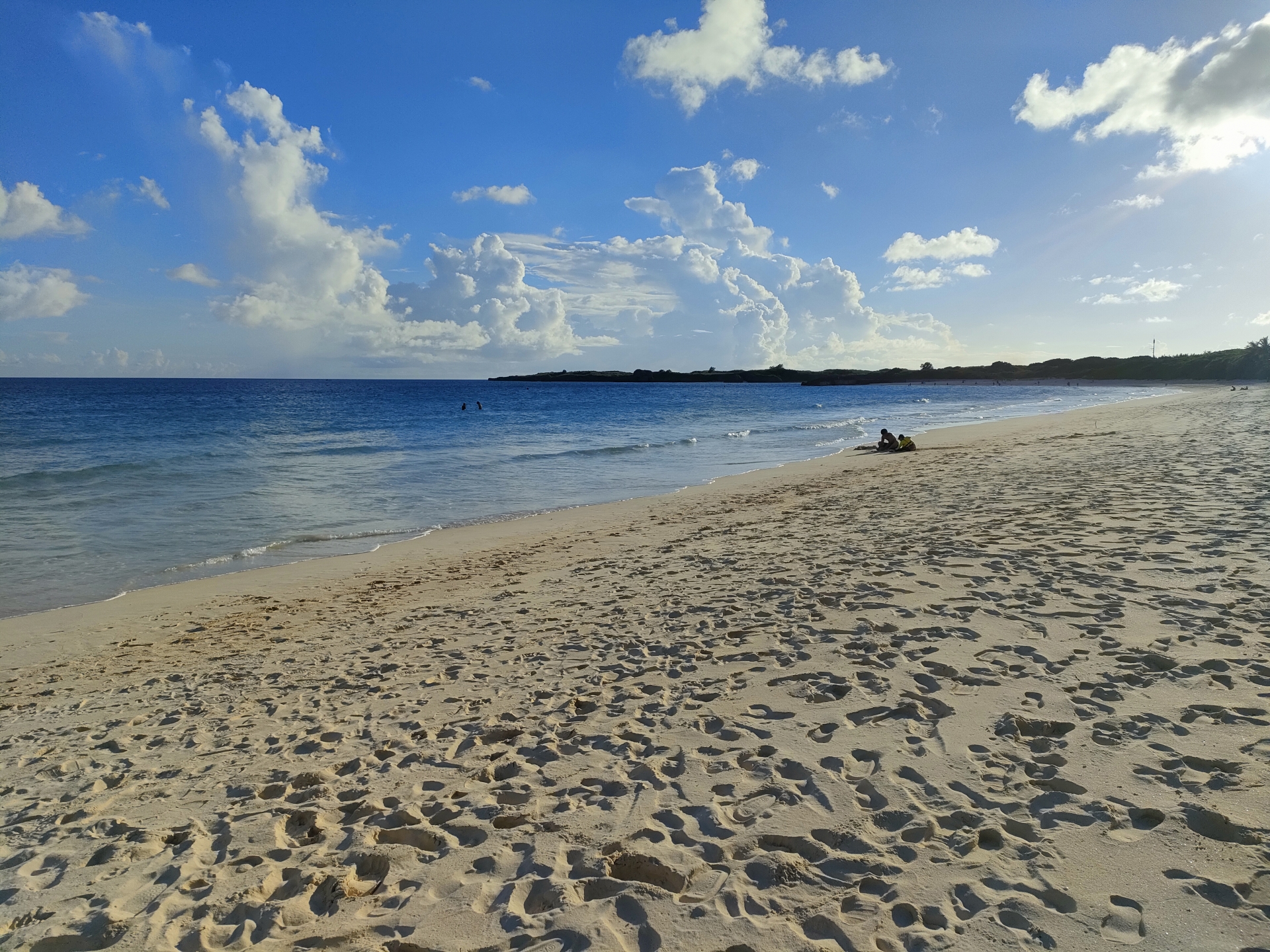
When heading for Yuni Beach by kayak, many tours depart from Miyako Island's Sunset Beach. It's the place where you paddle out the kayak while gazing at the Irabu Bridge, and it's a beautiful beach in itself. It's a good place to relax a little after the tour, and coming in the evening you can enjoy the sunset, true to its name.
Frequently Asked Questions
Q. Can you go to Yuni Beach on your own?
It's about 1.4 km offshore, and swimming there on your own is dangerous, so it's a no. Joining a tour is the only safe method.
Q. Which tour should I join?
The kayak suits people who "want to enjoy Miyakojima's sea while paddling" and "want the experience of passing under the Irabu Bridge." The boat suits cases of "wanting to reach Yuni Beach in a short time" or "being with small children or those unsure of their stamina."
Q. What time is best to go?
The basics are joining a tour timed to low tide. If you want to avoid crowds, early in the morning is recommended.
Q. Can I go with children?
The shallows are calm with gentle waves, so even with small children you can enjoy it. The boat plan has less physical burden too. But there are no facilities, so parents must firmly prepare drinks and sun protection.
Q. Can you do drone filming?
There are plans that can. Several tours advertise "free drone filming," and Yuni Beach seen in aerial shots is reputed to be powerful with the whole sandbar visible. In busy periods you may overlap with other groups, but choosing a small-group tour lets you keep footage with a private feel.
Q. Can you see nothing at high tide?
You can't. Since the sandbar appears only at low tide, at high tide there's no white sand to be seen on the sea surface. That "invisible" state is exactly why it's a "phantom."
Q. What's the origin of the name Yuni Beach?
"Yuni" is said to be a word related to Miyakojima dialect or place names, but there are various theories about the origin and no clear record remains. The name "Yuni Beach" itself has settled in as a common name closer to a nickname than an official place name.
Q. Does it change after a typhoon?
It can change. A typhoon scours the surface of the sand and it can temporarily disappear. But the power of waves and tide brings it out again — though its shape and position may have changed a little from before. Think of it as getting to meet a different-faced Yuni Beach each time, and that too is interesting.
Summary — the Value of Going to Yuni Beach on a Miyako and Irabu Trip
Yuni Beach is, I think, a place that promises a "unique experience." There are plenty of other spectacular spots. The white sand of Toguchi-no-Hama, the spectacle of 17END, the mystery of Toriike Pond — each is a beauty so characteristic of Miyakojima.
But Yuni Beach has the specialness of "appearing only at low tide." The sandbar you're standing on returns to the seabed a few hours later — that sensation can't be tasted anywhere else. There's value in the very experience of "going to see an island you can't see."
Join a tour, paddle a kayak, and put your feet on the white sand. It's a place where that whole series of processes becomes the experience. The travel time, the encounter with the sea turtle, that moment of passing under the Irabu Bridge — all of it together is, I think, the "Yuni Beach tour."
If you're a traveller sightseeing on Miyako and Irabu Islands, it's a hidden gem I think you should go to at least once. The strange journey of "going to see an island you can't see" will probably stay in your memory for a long time.
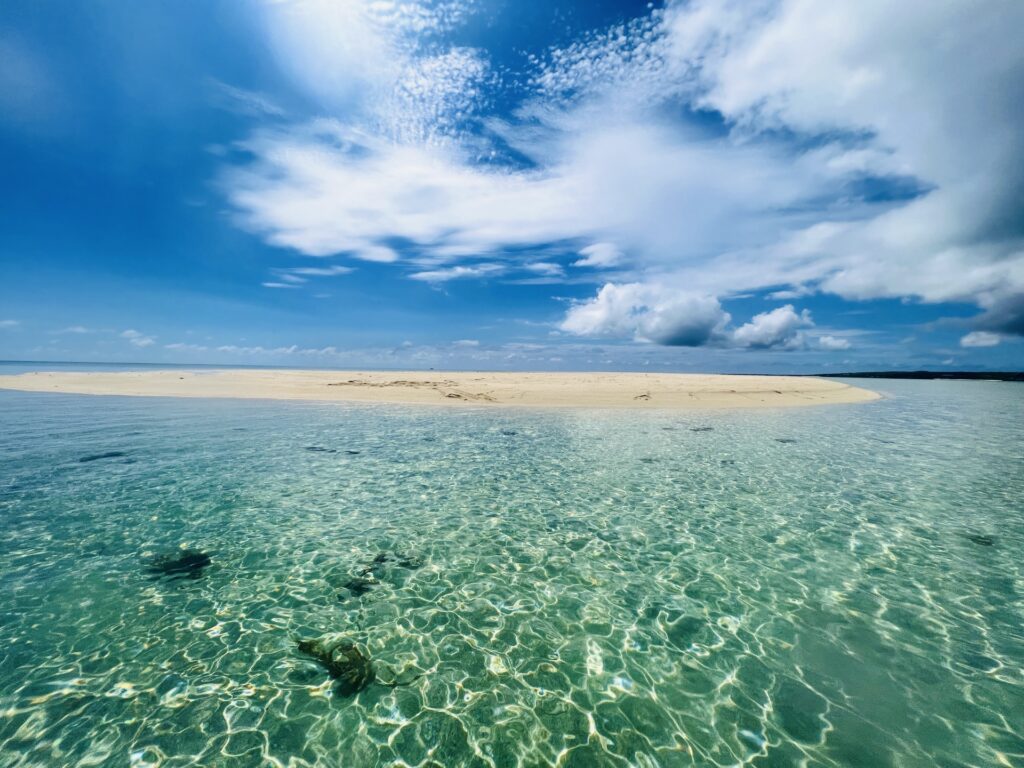
Next time you come to Miyakojima, Yuni Beach may be a different shape again. A typhoon changes the shape of the sand, and the tide and waves move it little by little. The same scenery never comes twice. So no matter how many times you come, each time becomes a "first encounter with the phantom."