- When I Arrived at Sawada-no-Hama at Noon, I Honestly Thought "Is That All?"
- The Day I Thought "Is That All?" at Midday Sawada-no-Hama
- What Is Sawada-no-Hama? Why It Was Chosen as One of Japan's 100 Best Beaches
- Midday Is "Just a Rocky Shore," Evening Is "Another World"
- The 300 Giant Rocks Carried In by the Great Meiwa Tsunami
- The Scenery Changes with High and Low Tide
- The Stillness Is Incredible: The Difference from 17END and Toguchi-no-Hama
- 7 Tips to Enjoy It to the Fullest
- Sights and Accommodation Around Sawada-no-Hama
- How to Enjoy Sawada-no-Hama, as Told by a Local
- How to Enjoy Sawada-no-Hama, Learned from Failure
- FAQ: Frequently Asked Questions
- What I Learned Going Twice, at Midday and in the Evening
- Evening Sawada-no-Hama Won't Betray Your Expectations
- Why Midday Sawada-no-Hama Is "Ordinary"
- What Sawada-no-Hama Taught Me
When I Arrived at Sawada-no-Hama at Noon, I Honestly Thought "Is That All?"
The gap between the words "one of Japan's 100 Best Beaches" I'd seen in a guidebook and the scenery actually spread out before me was huge. Rocks scattered everywhere, a shallow sea spreading out, and I was bewildered: "Erm, what am I supposed to look at?"
A friend had told me "Sawada-no-Hama is beautiful," so I'd come with expectations, yet I thought, "where's the beauty in this?" I'd imagined a pure white sandy beach like Toguchi-no-Hama, and it was completely different.
However I shot it, it just felt like a rocky shore. Thinking "this won't make an Instagram shot," I went back to the car in about 15 minutes. Regretting "maybe that was a waste of time," I headed to the next sight.
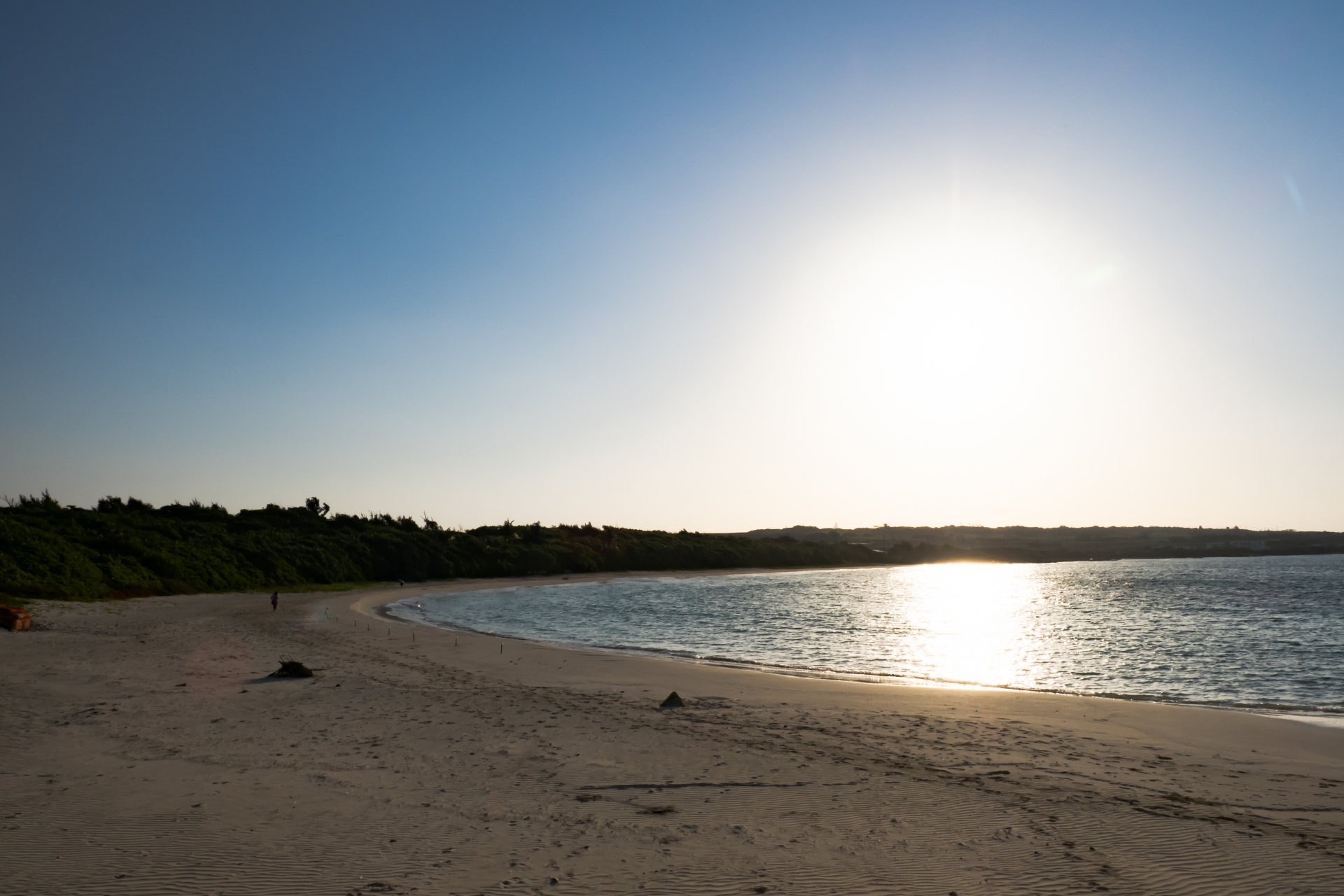
But when I passed by at 6 pm, Sawada-no-Hama wore a completely different face. The sky was dyed orange, the rock silhouettes loomed up black, and I was startled: "Wait, is this the same place as before?"
I hurriedly parked and ran to the beach. There, a scene from another world from the midday one spread out. "So this is it. This is Sawada-no-Hama's true form," I thought, transfixed by the sunset.
In this article, from my experience of failing by going at midday, I'll write out all the reasons "you should go to Sawada-no-Hama in the evening." The story of the giant rocks carried in by the Great Meiwa Tsunami, the difference between high and low tide, the difference from 17END and Toguchi-no-Hama — I'll write it all honestly.
The Day I Thought "Is That All?" at Midday Sawada-no-Hama
The first time I went to Sawada-no-Hama was in August 2024, in the middle of the day.
The guidebook said "one of Japan's 100 Best Beaches," so I expected "it must be an absolutely beautiful beach." I imagined a pure white sandy beach and emerald-green sea like Toguchi-no-Hama.
I entered "Sawada-no-Hama" into the car navigation and drove across Irabu Island. Driving the coastal road, I saw a car park on the left. "This is it," I thought, and parked.
I walked from the car park to the beach. What spread out there was scenery completely different from what I'd expected.
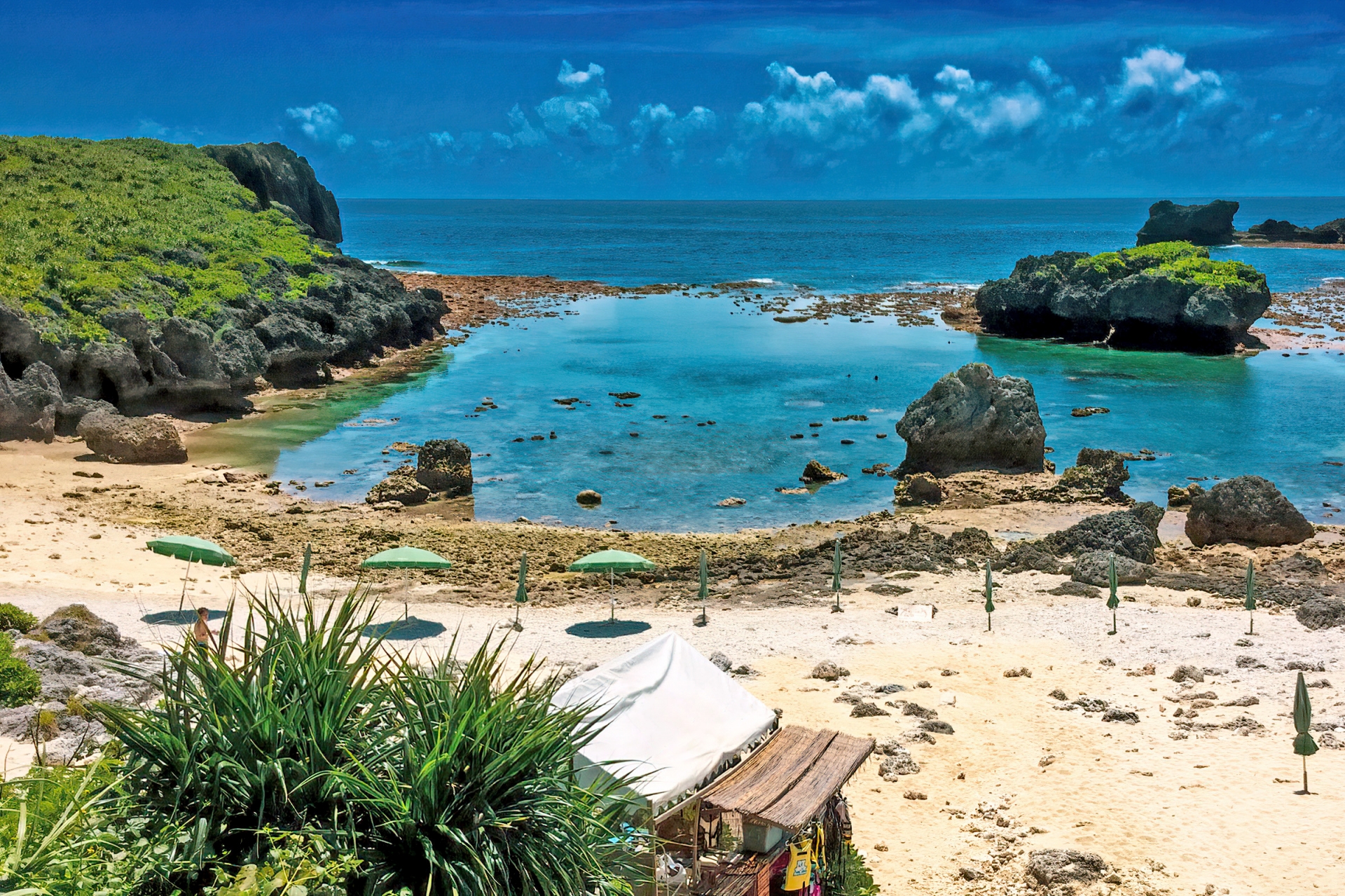
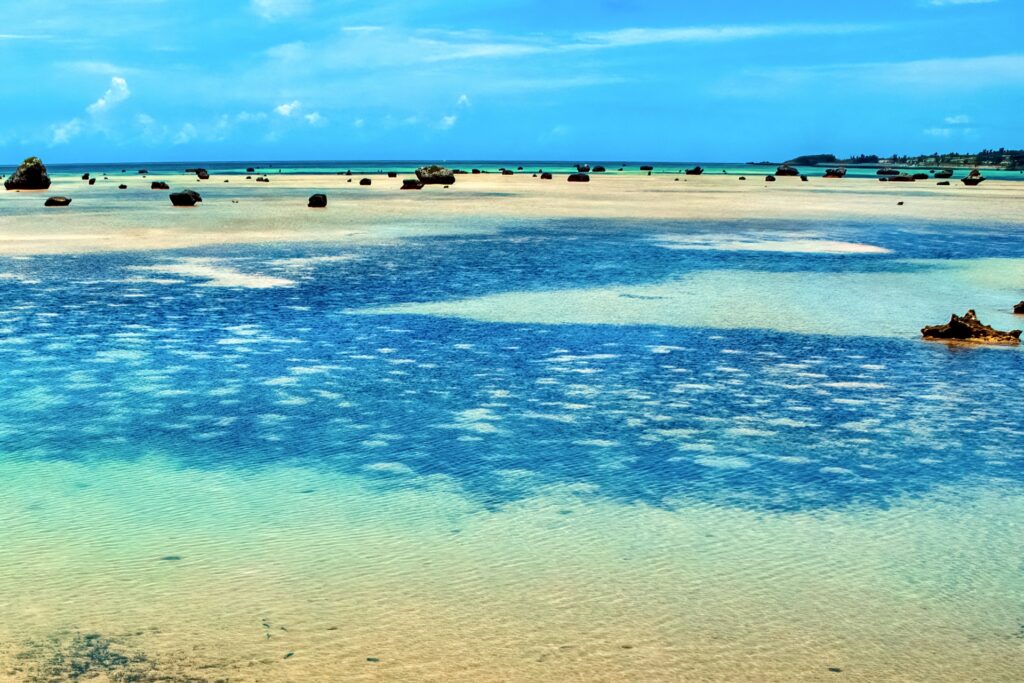
Rocks scattered across a shallow sea. Big rocks, small rocks, rocks of all sizes dotted about. "Huh, this is a beach?" I thought.
There was sand, but not the pure white, silky sand of Toguchi-no-Hama. More ordinary, brownish sand.
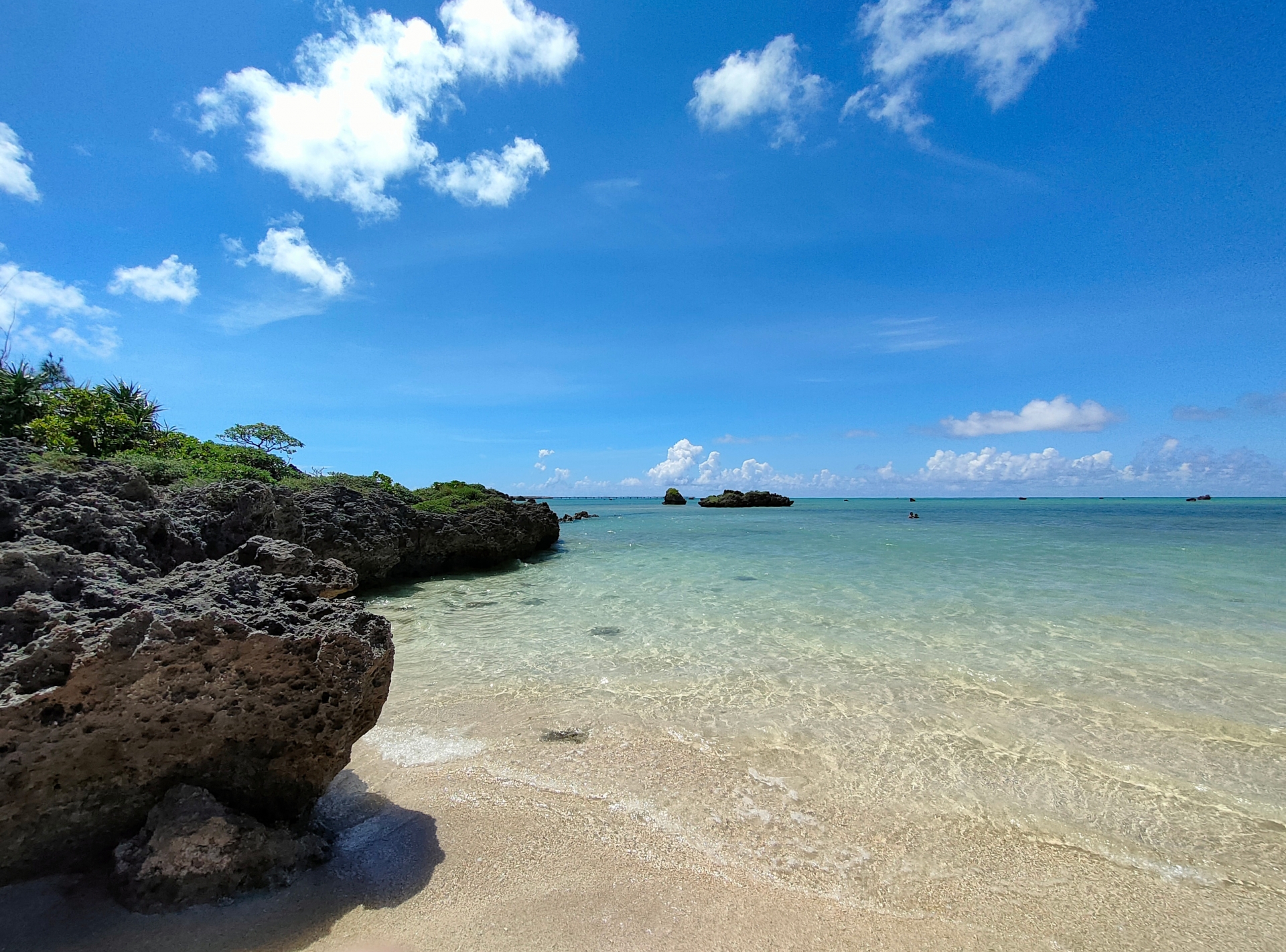
Looking at the sea, it wasn't especially beautiful either. It was sunny, so the sea was blue, but I thought, "well, the sea around Miyako Island is beautiful everywhere."
Wondering "what's the standard for Japan's 100 Best Beaches?" I walked the beach. I walked around the rocks, but there was nothing especially interesting.
There was hardly anyone about. Just me and my friend on the beach. "Maybe it's not popular," I thought.
I took a few photos, but none of them stood out. Thinking "even if I post it to Instagram, no one will react," I put my phone away.
In the end, I got bored in about 15 minutes. "Let's go to the next sight," I said to my friend, and went back to the car.
In the car, we talked: "Sawada-no-Hama was a letdown, wasn't it." Laughing "the guidebook tricked us," we headed off.
But at 6 pm, on the way back from 17END, when we passed in front of Sawada-no-Hama again, the scenery was completely different.
What Is Sawada-no-Hama? Why It Was Chosen as One of Japan's 100 Best Beaches
Sawada-no-Hama is a coast running from the north-west of Irabu Island to the north-east of Shimoji Island, a natural beach chosen as one of "Japan's 100 Best Beaches" in 1996.
It's apparently one of three chosen from Okinawa Prefecture. But when I went at midday, I thought, "why was this chosen?"
What I learned by looking into it later is that Sawada-no-Hama wasn't chosen for the beauty of the scenery alone. It was apparently evaluated including its historical value, cultural value and natural value, all together.
The giant rocks dotting the shallow sea were carried in by the Great Meiwa Tsunami of 1771. This tsunami brought waves over 10 metres (33 ft) crashing onto the Miyako Islands, causing major damage.
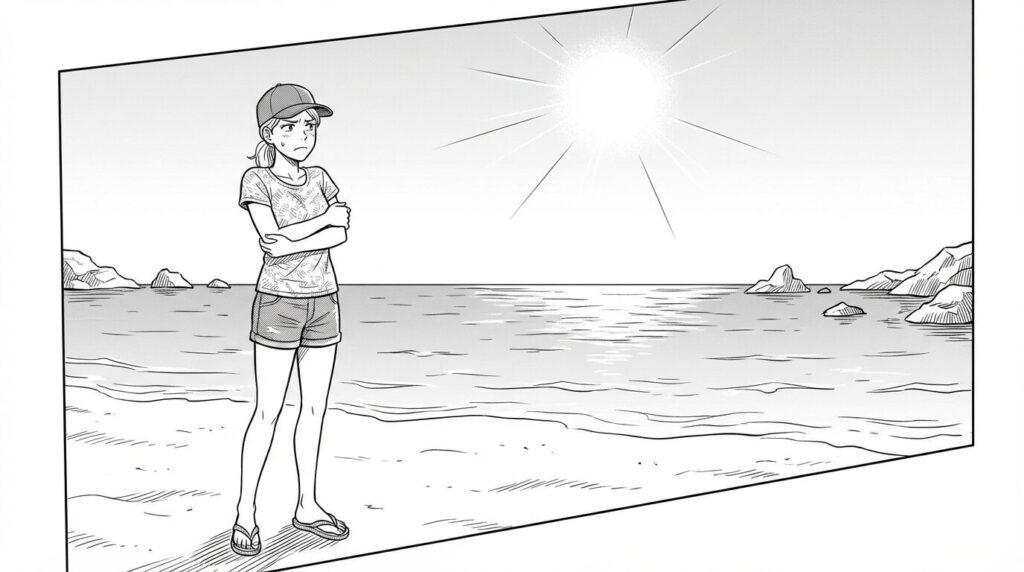
The giant rocks are "tsunami stones" — masses of coral reef torn from the seabed and thrown ashore. They quietly tell of nature's awesome power.
On the west side of Sawada-no-Hama there are remains of a traditional fishing method called a "kakinaki" (fish weir). It's a method that uses the rise and fall of the tide to catch fish trapped inside a stone wall, designated a tangible folk-cultural property of Miyakojima City.
It's also been chosen as one of the "100 Historical and Cultural Fishery-Village Assets to Preserve for the Future," apparently a place precious both historically and culturally.
And it's famous as a sunset spot. At dusk, many people gather.
When I went at midday, I knew nothing of that background. I just had the feeling of "coming to see a beautiful beach," so I think that's why I thought "letdown."
But seeing the scenery in the evening, I was convinced: "Ah, this is why it was chosen as one of Japan's 100 Best Beaches."
Midday Is "Just a Rocky Shore," Evening Is "Another World"
At 6 pm, on the way back from 17END, I passed in front of Sawada-no-Hama.
As I drove, my friend said, "Hey, isn't that sunset beautiful?" Looking towards the sea, the sky was dyed orange.
"Oh, come to think of it, Sawada-no-Hama that we passed earlier is around here," I recalled, and asked my friend, "shall we stop by for a bit?"
"We're here, let's stop," we decided, and parked in the car park.
Walking to the beach, scenery completely different from midday spread out.
The sky was a gradation from orange to pink to purple. That light lit the sea's surface, sparkling.
And the rock silhouettes loomed up black. At midday I'd thought "just rocks," but in the evening it was totally different. The rocks were the stars.
As the sun neared the horizon, the sky's colour kept changing. The orange deepened, the redness increased, it turned purplish. I couldn't take my eyes off the colours changing moment by moment.
On the beach, more than ten people had gathered — hardly anyone at midday. Everyone had come to see the sunset.
Some sat in the pavilion gazing intently at the sunset, others sat on the rocks taking photos. Everyone quietly enjoyed the sunset.
My friend and I were lost for words. All that came out was "amazing."
The moment the sun sank into the horizon, the sea's surface turned crimson. The rock silhouettes stood out sharply, and I thought, "it's like a painting."
The scenery I'd thought "is that all?" at midday had changed to "this is amazing" by evening.
Even after the sun set completely, the sky's gradation remained, and that was beautiful too. Watching the sky gradually darken from purple, I thought, "I should have come earlier."
It was the moment I realised, "Sawada-no-Hama was a beach to come to in the evening."
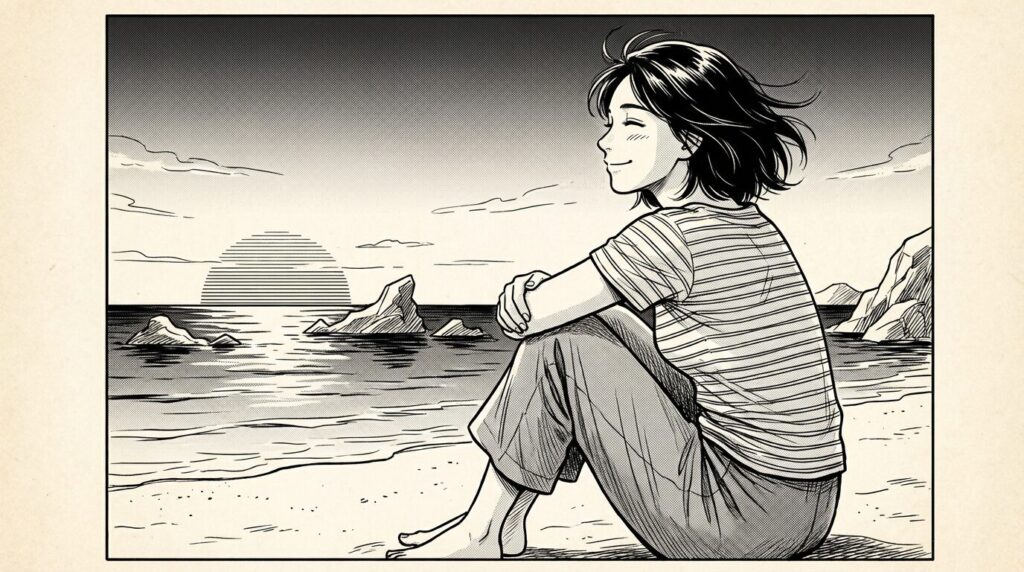
The 300 Giant Rocks Carried In by the Great Meiwa Tsunami
The giant rocks scattered across Sawada-no-Hama were carried in by the tsunami of the Yaeyama Earthquake on 24 April 1771, commonly known as the "Great Meiwa Tsunami."
It was a major earthquake of estimated magnitude 7.4–8.7, with a tsunami over 10 metres crashing onto the Miyako Islands. There was little damage from the ground motion, but the tsunami damage was apparently devastating.
The giant rocks dotting Sawada-no-Hama are masses of coral reef torn from the seabed and thrown ashore by that tsunami. They're called "tsunami stones."
The big rocks are about 2–3 metres across. Even the small ones are about 1 metre. There are apparently more than 300 in all.
At midday I only thought "there are a lot of rocks," but seeing them in the evening, I thought, "each one of these rocks has a history."
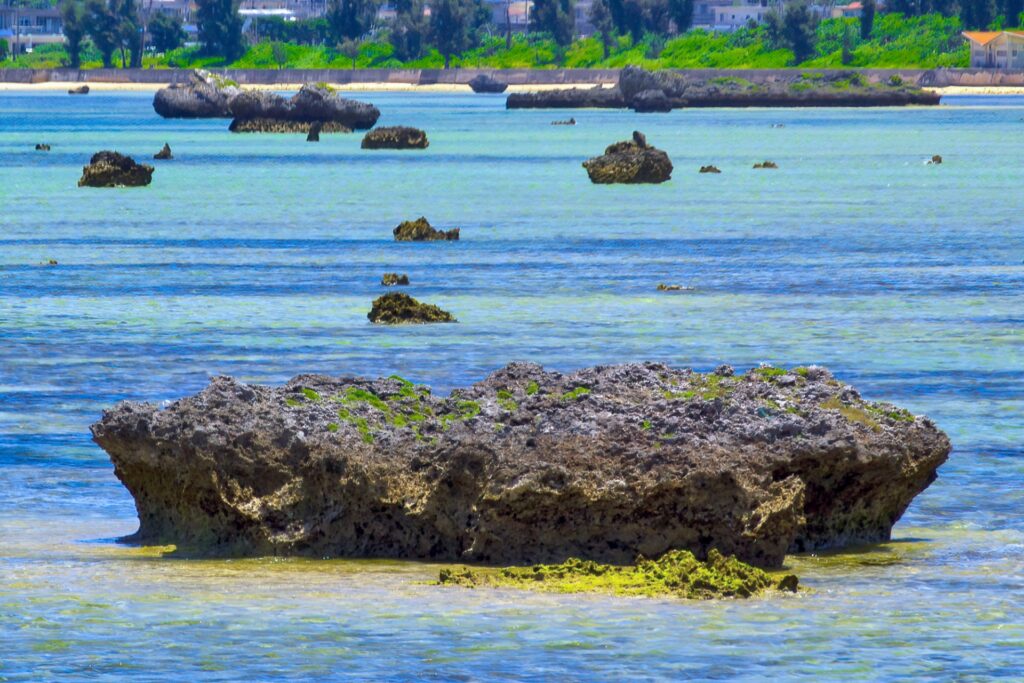
Looking at the rocks that quietly tell of the tsunami's destructive force, I feel nature's awesome power. That a tsunami over 250 years ago carried in rocks this big is beyond imagination.
At low tide you can walk around the rocks and see them up close. Look at the rock surfaces and the traces of coral remain. "These really are masses of coral reef," you realise.
At high tide part of the rocks sinks into the sea for a different scene again. There are rocks poking their faces out of the water and rocks fully submerged, and I thought, "high tide and low tide are completely different."
In the evening, the giant rocks seen with the sunset have a presence completely different from midday. The rocks become black silhouettes, looming against the sunset, giving off a mystical atmosphere.
Hearing "the 300 giant rocks carried in by the Great Meiwa Tsunami," you understand they're not just rocks but things of historical value.
The Scenery Changes with High and Low Tide
Sawada-no-Hama is a shallow sea, so the scenery is completely different at high and low tide.
When I went at midday, it was close to high tide. The seawater came right up near the rocks, and I thought, "they say shallow, but it's not that shallow."
When I went in the evening, it was close to low tide. The water had drawn back, and the area around the rocks was completely dry land. "Totally different from before," I was startled.
At low tide you can walk out to sea. The sand spreads out, and you can walk around the rocks. Seeing the rock surfaces up close, taking photos in the rocks' shadows — the ways to enjoy it increase.
At high tide the rocks are about half submerged, and only the parts poking out of the water are visible. In this state the rocks look like they're floating on the sea, which is beautiful in its own way.
But personally I prefer low tide. You can walk around the rocks, and I like the view of the spreading sand too. Combined with the sunset, it's even more beautiful.
I recommend checking the tide table and going at low tide. Especially being able to go at low tide in the evening is the best.
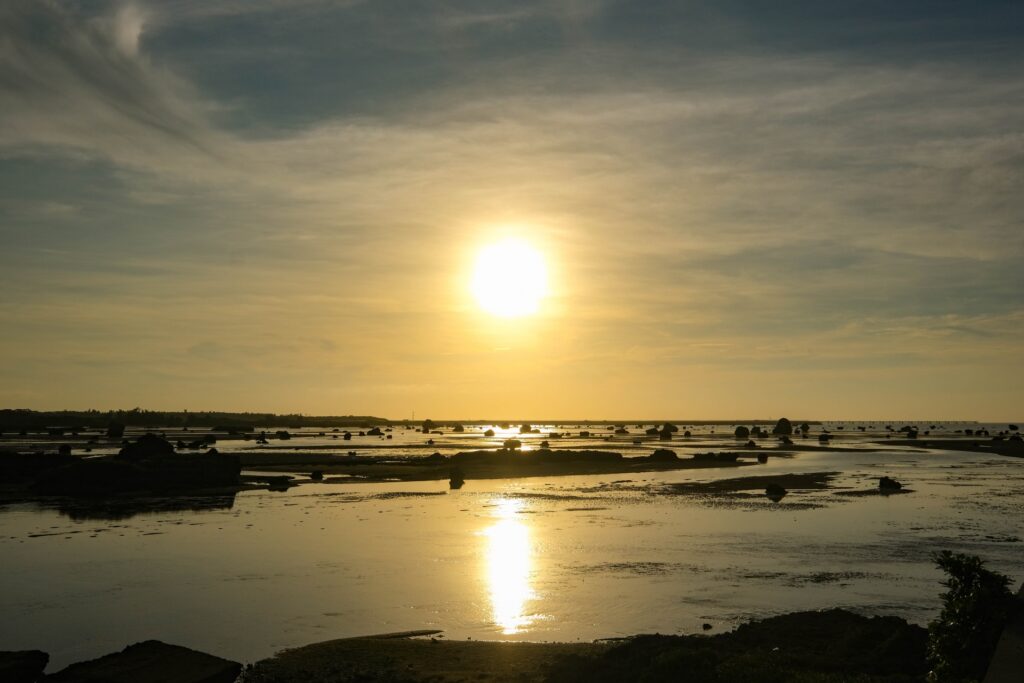
When I went in the evening, it happened to be close to low tide, and I thought, "I was lucky." I got to taste the luxury of watching the sunset while walking around the rocks.
Going at high tide is enjoyable in its own way too. But I think low tide lets you taste Sawada-no-Hama's true appeal.
The Stillness Is Incredible: The Difference from 17END and Toguchi-no-Hama
Sawada-no-Hama's greatest appeal, I think, is the stillness.
17END and Toguchi-no-Hama are busy with people and lively. There are people taking photos, people swimming, all sorts, with energy. That's fun in its own way.
But Sawada-no-Hama is different. It's quiet.
When I went to Sawada-no-Hama in the evening, there were only about ten people. Everyone quietly watching the sunset. No one talking loudly, no one making a fuss.
Just the sound of the waves and the occasional bird call. This stillness feels good.
17END is a place where you can watch planes take off and land, so there's the sound of aircraft. Toguchi-no-Hama has many people swimming, so you hear people's voices.
But Sawada-no-Hama is truly quiet. A place where, away from the bustle of the city, you can zone out without a thought.
Sitting in the pavilion, watching the sunset, zoning out. I thought this was the most luxurious time.
My friend and I didn't talk much either. Just watched the sunset and said quietly, "beautiful, isn't it." No more words needed.
17END and Toguchi-no-Hama are places to "look." Places to take photos, post to social media, and say "it was beautiful."
But Sawada-no-Hama is a place to "feel." A place to face your own heart while watching the sunset. A place to look at yourself again amid the stillness.
This difference, I think, is Sawada-no-Hama's appeal.
It may not suit people who like "lively beaches." But for people who "want to spend time quietly," I absolutely recommend it.
7 Tips to Enjoy It to the Fullest
Here are the tips for enjoying Sawada-no-Hama to the fullest, learned from actually going twice. I'll write it all, including my midday failure.
1. Go in the Evening
This is the most important. Sawada-no-Hama is a beach to go to in the evening.
Go at midday and you only think "just a rocky shore." But go in the evening and you can think "spectacular."
Arriving an hour before sunset is best. You can enjoy the gradually changing scenery.
I arrived 30 minutes before sunset and thought, "I should have come earlier." If I'd watched from an hour before, I think I could have enjoyed more of the colour change.
2. Aim for Low Tide
I recommend checking the tide table and going at low tide.
At low tide you can walk around the rocks and enjoy the view of the spreading sand. Overwhelmingly better than high tide.
"Low tide in the evening" is ideal, but it doesn't work out so well every day. Still, aim for low tide if you can.
3. Sit in the Pavilion
There's a pavilion on the beach where you can sit and watch the sunset.
Watching seated is more relaxing than standing. There are shaded spots in the pavilion too, so it's comfortable even when the sun is strong.
I watched standing at first, but sat in the pavilion partway through. Sitting was far better.
4. Bring a Camera
A smartphone is fine, but if you can, bring a good camera like a DSLR.
The sunset's colours are hard to capture beautifully on a smartphone. I shot on my phone, but it came out darker than the real colour, and I was disappointed: "but the real thing was more beautiful."
Next time I'm thinking of renting a DSLR.
5. Allow Plenty of Time
After watching the sunset, don't leave straight away — stay a little longer.
The sky's gradation after the sun sets is beautiful too. Watching the sky gradually darken from purple is enjoyable.
I stayed about another 15 minutes after the sun set. That time was good too.
6. Go to Pizza & Caffe BOTTA
Five minutes' walk from Sawada-no-Hama there's a café called "Pizza & Caffe BOTTA."
You can eat pizza and dessert from the terrace seats gazing at Sawada-no-Hama. This is apparently the best.
I haven't been yet, but next time I absolutely want to stop by. Eating pizza and relaxing after watching the sunset sounds good.
7. Bring Insect Repellent
In the evening, mosquitoes come out. Especially in summer, there are a lot.
I got bitten in several places and regretted "I should have brought insect repellent."
Next time I'll definitely bring insect-repellent spray. This is important.
Sights and Accommodation Around Sawada-no-Hama
There are lots of other sights around Sawada-no-Hama. Since you've come, do enjoy the surrounding area too.
About 15 Minutes by Car to 17END
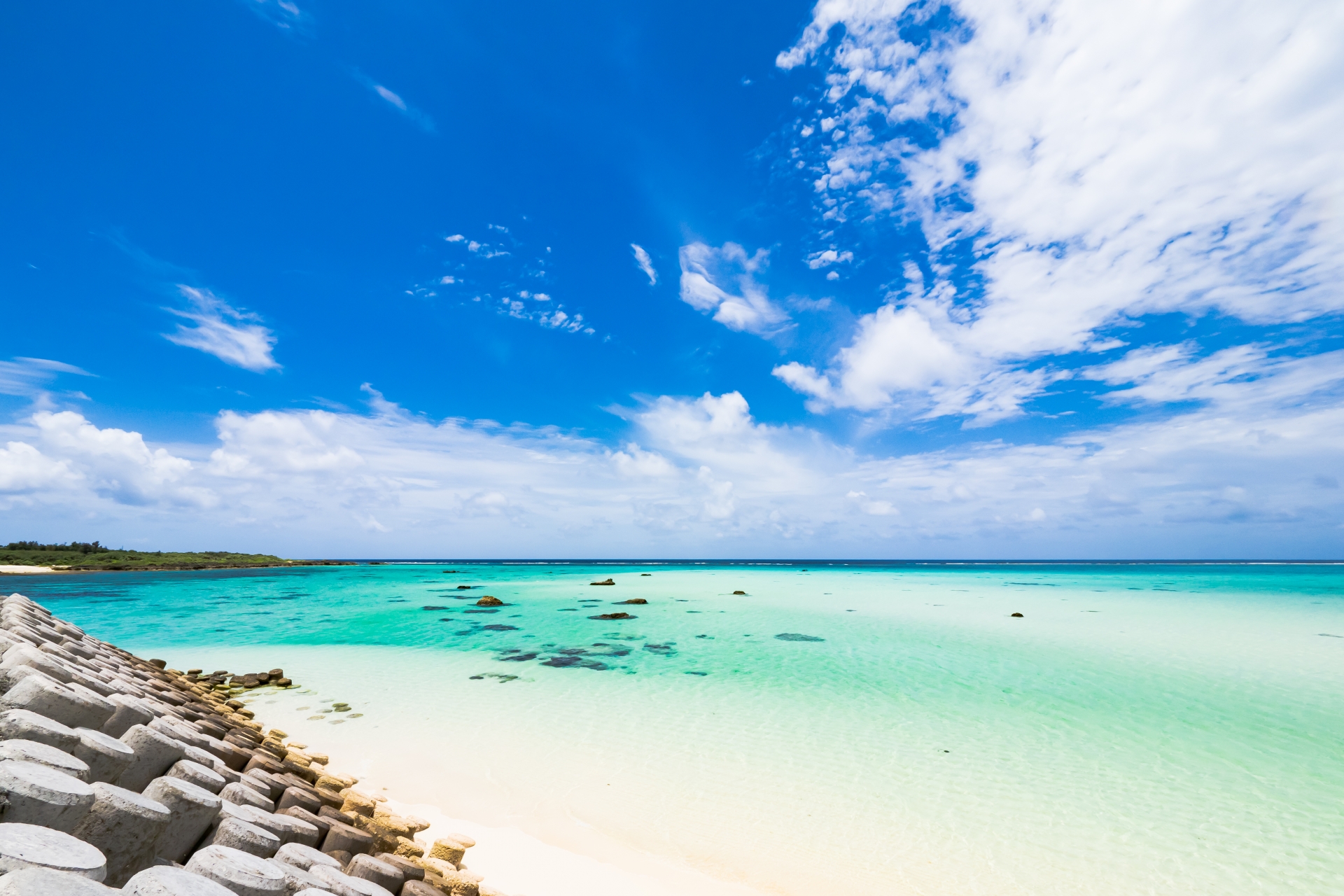
17END, at the tip of Shimojishima Airport's runway, is a place where you can see an incredibly beautiful sea. About 15 minutes by car from Sawada-no-Hama.
I stopped by Sawada-no-Hama after going to 17END too. Touring them as a set is recommended.
About 10 Minutes by Car to Toguchi-no-Hama
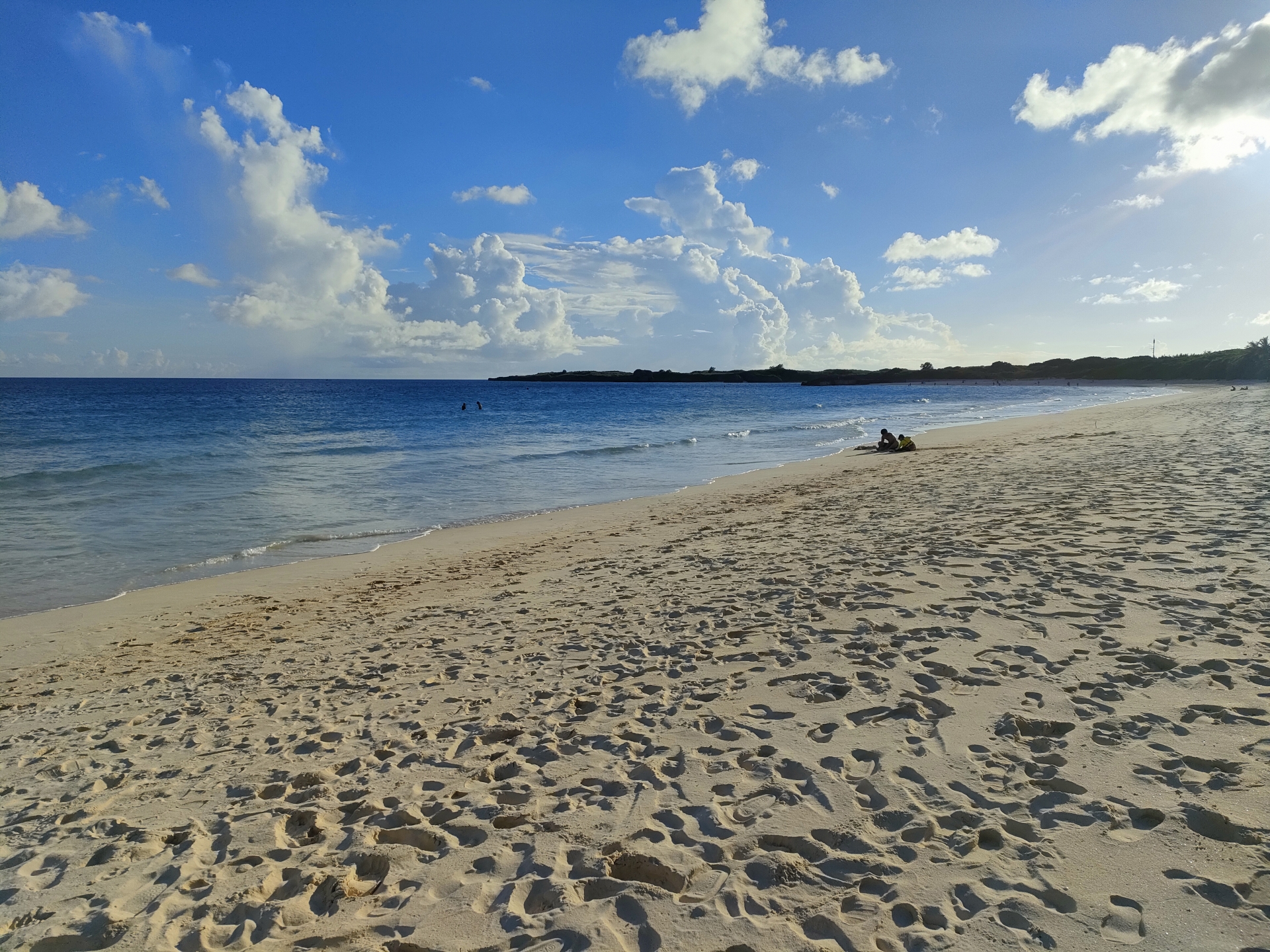
Toguchi-no-Hama is Irabu Island's most famous beach, characterised by pure white sand and a highly transparent sea. About 10 minutes by car from Sawada-no-Hama.
You can see both a pure white sandy beach and a rocky beach, so the contrast is interesting.
About 15 Minutes by Car to Nakanoshima Beach
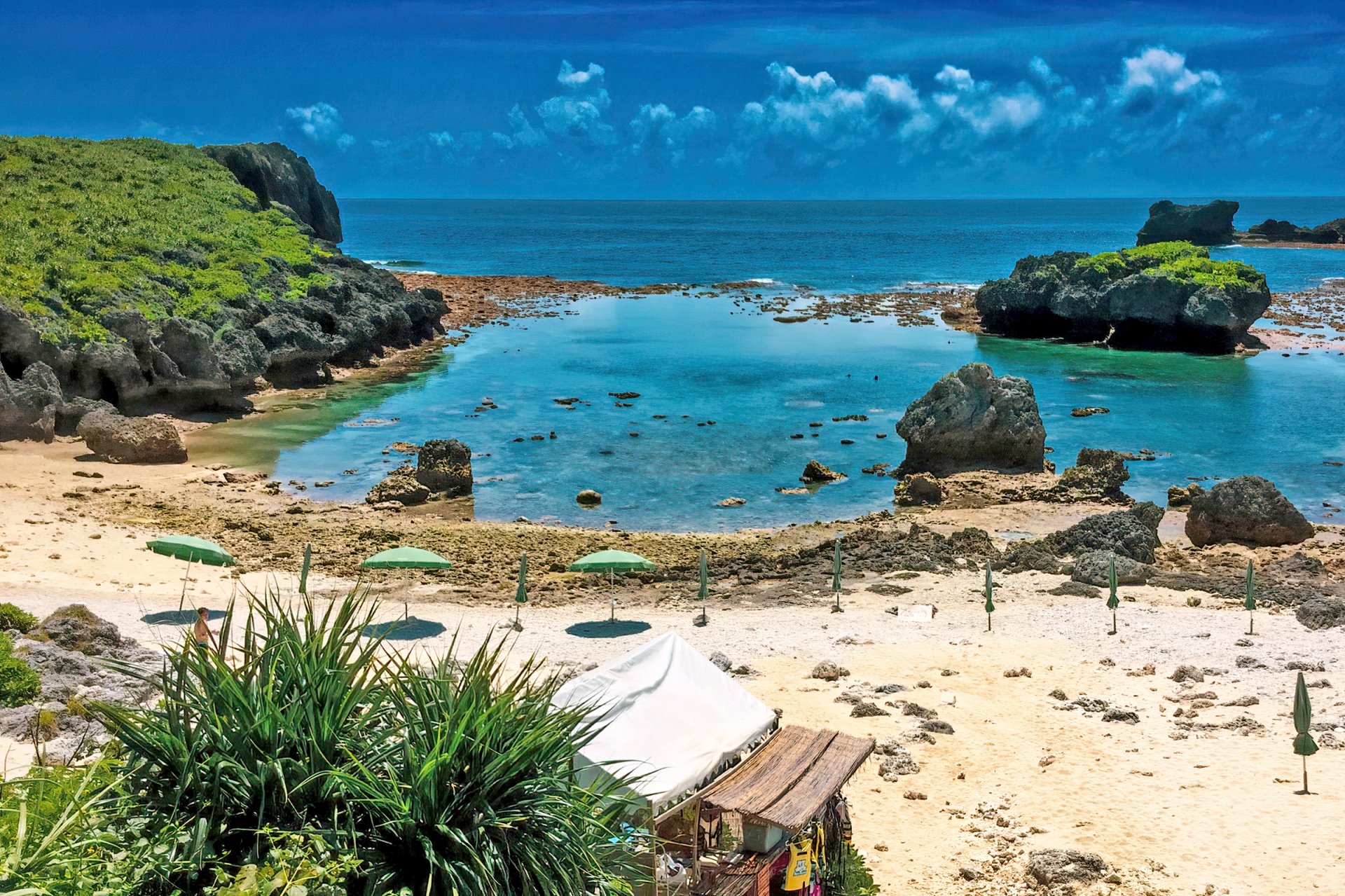
Nakanoshima Beach is famous for snorkelling. About 15 minutes by car from Sawada-no-Hama.
It's called a natural aquarium, with lots of fish. If you love snorkelling, you absolutely should go.
About 20 Minutes by Car to Toriike Pond
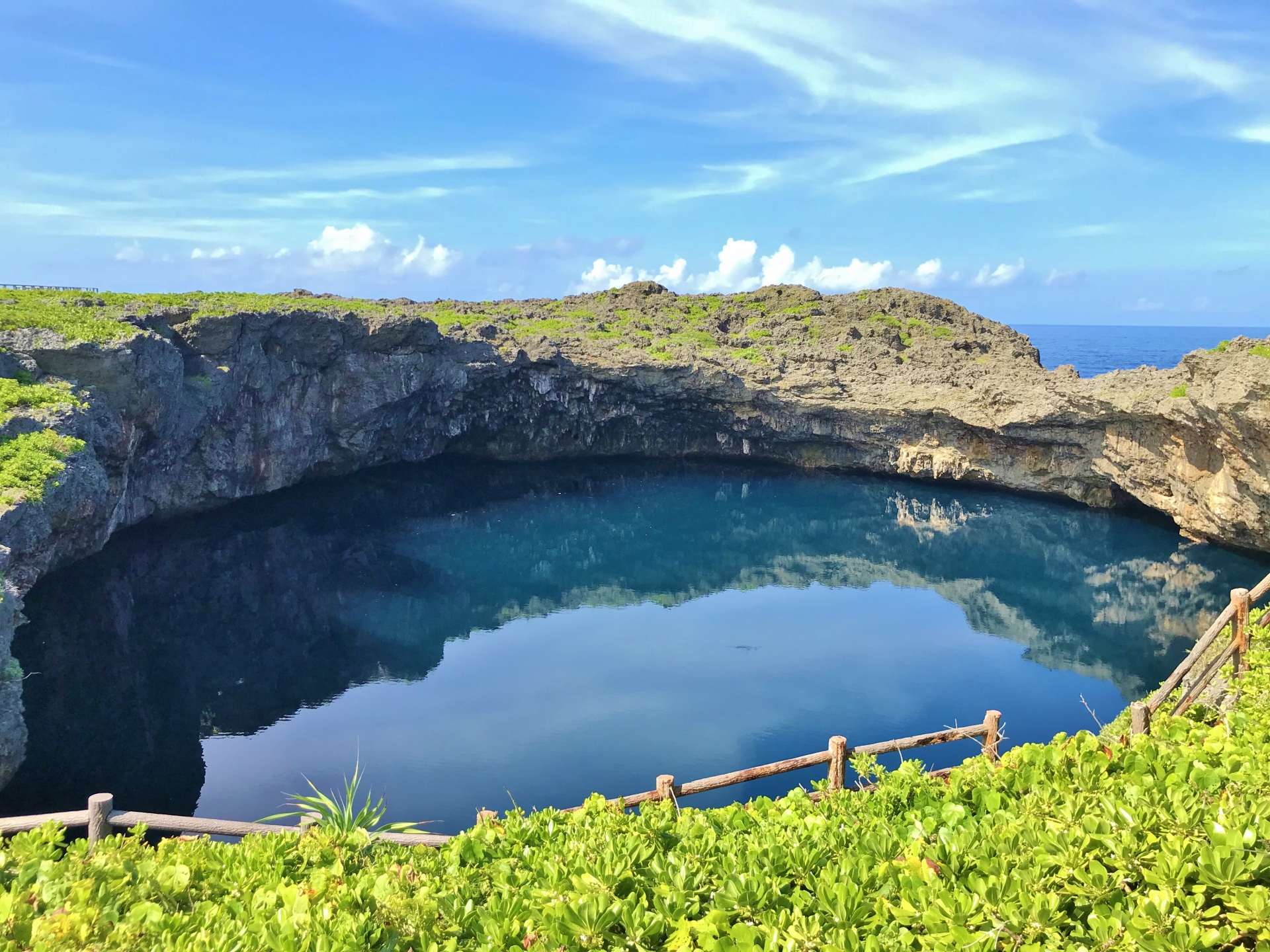
Toriike Pond is a mystical place where two ponds sit side by side. About 20 minutes by car from Sawada-no-Hama.
It connects to the open sea and is a popular spot with divers. Even just viewed from above, the deep-blue ponds are beautiful.
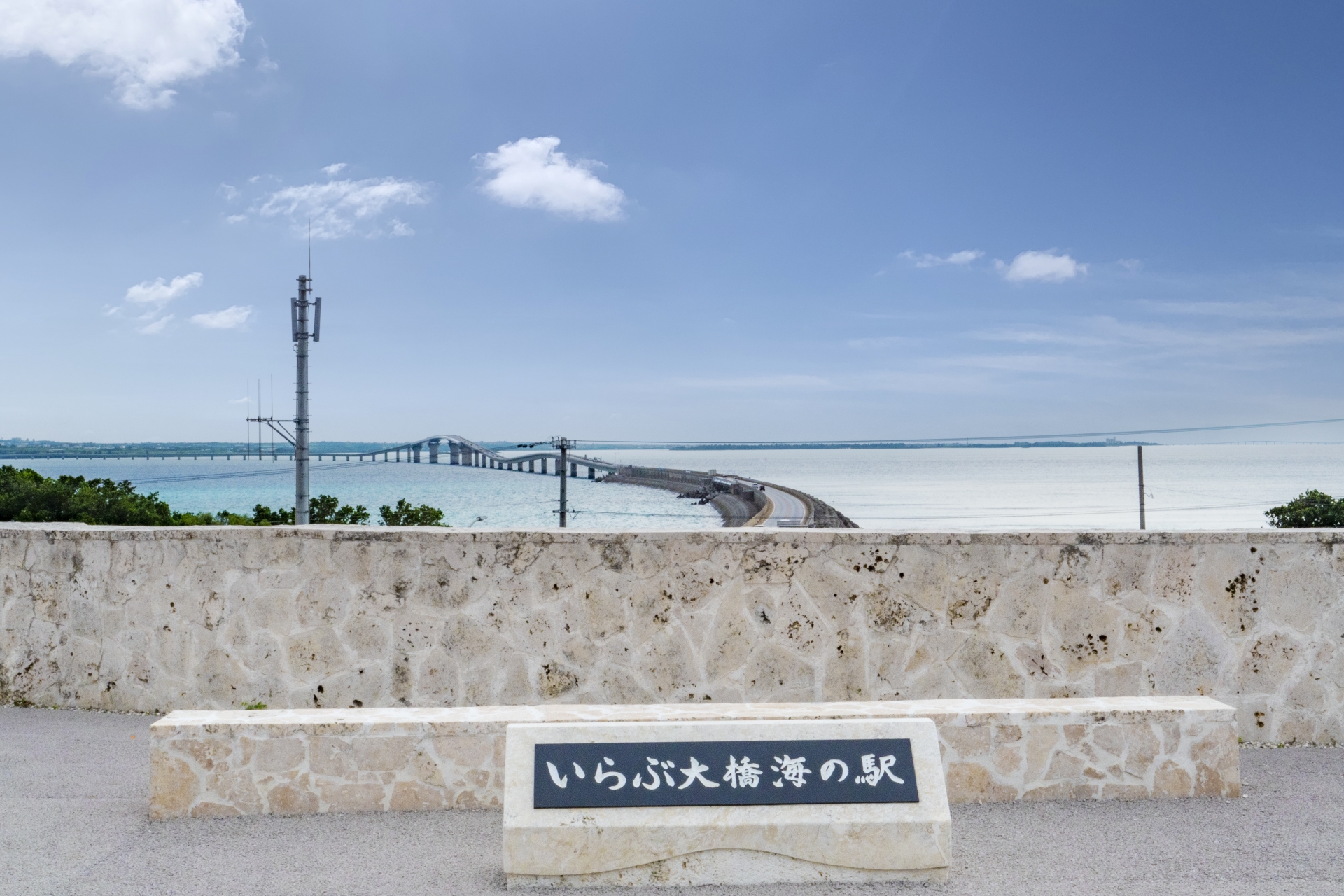
The Irabu Bridge
The Irabu Bridge is a 3,540-metre (2.2-mile) bridge — Japan's longest toll-free bridge — linking Miyako Island and Irabu Island.
The view from the bridge is beautiful, making it popular as a drive. Just crossing the bridge lifts your spirits.
Accommodation on Miyako Island
There's no accommodation right by Sawada-no-Hama, so you'll stay on Miyako Island or Irabu Island.
Miyako Island has various hotels and guesthouses. Hotels near Maehama Beach are popular, but staying on Irabu Island is good too.
On Irabu Island, Sawada-no-Hama is close, so it's easy to go see the sunset.
How to Enjoy Sawada-no-Hama, as Told by a Local
On my second visit to Sawada-no-Hama, a local old man spoke to me.
Asked "did you come to see the sunset?", I answered "yes, I failed coming at midday, so I came back," and he laughed.
"Everyone's like that," he told me. "Lots of people come at midday, think 'is that all?', and go home. But come in the evening and it's 'amazing'."
That old man apparently comes to Sawada-no-Hama every evening to watch the sunset. "It never gets old no matter how often I see it," he said.
"It's different every day, the sunset. The sky's colour, the shape of the clouds, all different. So even coming every day, there's a new discovery."
I thought, "that may well be true." Today's sunset and tomorrow's may be completely different.
The old man told me, "it's more beautiful at low tide. You can walk around the rocks, and the view of the spreading sand is good."
"Also, the winter sunset is good. The air is clear, so the sky's colours are more vivid. Summer's good in its way, but winter's good in its way."
It differs by season too, apparently. I thought I'd like to see the sunset in all four seasons — spring, summer, autumn, winter.
The old man said, "that rock over there, the biggest one — it was carried in by the Great Meiwa Tsunami. A tsunami over 250 years ago carried a rock that big, amazing isn't it."
Hearing the history changes how you see the rocks. You understand they're not just rocks but things of historical value.
Asked "did you see the fish weir?", I answered "not yet," and he told me, "then see it next time you come. It's full of the wisdom of people of old."
Hearing the locals' stories, you understand Sawada-no-Hama's appeal more. They'll tell you things not written in tourist guides, so I think it's good to try striking up a conversation.
How to Enjoy Sawada-no-Hama, Learned from Failure
From my experience of failing by going at midday, there's a lot I learned.
Failure 1: I Got the Time of Day Wrong
The biggest failure was going at midday. Sawada-no-Hama was a beach to go to in the evening.
The guidebook said "sunset spot," yet somehow I went at midday. I thought "it'll be beautiful at midday too," but it was completely different.
From now on, I'll always go in the evening. Check the sunset time and arrive an hour before.
Failure 2: I Didn't Check the Tides
When I went at midday, it was close to high tide. The seawater came right up near the rocks, and I couldn't walk around them.
When I went in the evening, it was close to low tide. I could walk around the rocks, the sand spread out, completely different.
From now on, I'll check the tide table and aim for low tide. "Low tide in the evening" is ideal.
Failure 3: I Didn't Bring Insect Repellent
Mosquitoes come out in the evening. I got bitten in several places and the itching was awful.
From now on, I'll always bring insect-repellent spray. Without it, you can't even focus on the sunset.
Failure 4: Poor Camera Preparation
I shot on my phone, but it came out darker than the real colour. I couldn't reproduce the sunset's beautiful colours, and that was a shame.
From now on, I'll rent a DSLR. Or shoot in sunset mode even on a phone.
Failure 5: I Didn't Allow Enough Time
When I went in the evening, I arrived 30 minutes before sunset, so I couldn't relax much. I wanted to come earlier and enjoy the gradually changing scenery.
From now on, I'll arrive an hour and a half before sunset. That way you can enjoy it at leisure.
FAQ: Frequently Asked Questions
Here are answers to some commonly asked questions about Sawada-no-Hama.
Q1: Where is Sawada-no-Hama?
A coast running from the north-west of Irabu Island to the north-east of Shimoji Island. About 30 minutes by car from Miyako Airport.
Q2: Is there parking?
Yes. There's a free car park, and the beach is a short walk from it.
Q3: Are there toilets and showers?
Yes. Both toilets and showers are provided. There are vending machines too.
Q4: Can you swim?
You can, but it's shallow with low water depth, so it's unsuited to snorkelling or proper swimming. It's good for paddling with children.
Q5: When is the best time to go?
The evening. An hour before sunset is best. Going at midday isn't very moving.
Q6: Low tide or high tide — which is better?
Low tide. You can walk around the rocks and enjoy the view of the spreading sand.
Q7: How long should you stay?
About 1 to 1.5 hours. Arrive an hour before sunset and stay a little after the sun sets too.
Q8: Can children enjoy it?
Yes. At low tide, children can enjoy walking the sand and exploring around the rocks. But it's not suited to swimming.
Q9: Does it get crowded?
People gather in the evening, but not as crowded as 17END or Toguchi-no-Hama. You can spend the time quietly.
Q10: What should you bring?
Insect-repellent spray, a camera and a drink. Mosquitoes come out in the evening, so repellent is essential.
Q11: Is there a café nearby?
Yes. A café called "Pizza & Caffe BOTTA" is five minutes' walk away. You can gaze at Sawada-no-Hama from the terrace seats.
Q12: Can you barbecue?
Yes. There's apparently rental too. You can camp as well.
Q13: What is the fish weir?
Remains of a traditional fishing method. A stone wall used to catch fish trapped inside it by using the rise and fall of the tide. Designated a tangible folk-cultural property of Miyakojima City.
Q14: Is the sunset beautiful in winter too?
Yes. The sunset can be seen year-round. But the sunset time is earlier than in summer, so check the time before going.
Q15: Is it worth going on a rainy day?
Honestly, no. Sawada-no-Hama is a beach where the sunset is the star, so you can't enjoy it in the rain. Go on a fine day.
What I Learned Going Twice, at Midday and in the Evening
From going to Sawada-no-Hama twice, at midday and in the evening, there's something I learned.
That Sawada-no-Hama is "a beach that shows a completely different face depending on the time of day."
At midday it's so plain you can think "just a rocky shore." It doesn't have the showiness of Toguchi-no-Hama or the impact of 17END. It's so ordinary you think "I don't understand why it was chosen as one of Japan's 100 Best Beaches."
But the evening is completely different. The sky dyed orange, the rock silhouettes looming up, and you can think "this is spectacular."
Even people who think "letdown" going at midday should be able to think "I'm glad I came" going in the evening.
I regretted it when I went at midday too, but going in the evening I thought, "Sawada-no-Hama is the best, isn't it."
And that Sawada-no-Hama is "a beach for people who want to spend time quietly."
It doesn't suit people who like lively beaches like 17END or Toguchi-no-Hama. But for people who "want to gaze at the sunset in stillness," it's the best beach.
Just the sound of the waves and birds. Quietly watching the sunset. Being able to spend this luxurious time is, I think, Sawada-no-Hama's appeal.
Evening Sawada-no-Hama Won't Betray Your Expectations
The Sawada-no-Hama I thought "is that all?" going at midday. The Sawada-no-Hama I thought "this is amazing" going in the evening.
What I understood experiencing both is that "Sawada-no-Hama is a beach to go to in the evening."
Go at midday and you're not moved. You only think it's a rocky shore. But go in the evening and another world spreads out.
The sky dyed orange, the rock silhouettes looming up black, the sea's surface sparkling. See this scenery and you understand "the reason it was chosen as one of Japan's 100 Best Beaches."
The 300 giant rocks carried in by the Great Meiwa Tsunami. Watching the sunset while feeling their historical and cultural value — this experience can't be had at other beaches.
The scenery changes with high and low tide, so I recommend going at low tide. Do taste the luxury of watching the sunset while walking around the rocks.
Unlike 17END and Toguchi-no-Hama, it's a quiet beach. There's no liveliness, but there's stillness. Amid this stillness, you can spend time facing yourself.
Why Midday Sawada-no-Hama Is "Ordinary"
I thought afterwards about why I thought "letdown" going at midday.
Sawada-no-Hama isn't a beach that competes on "the beauty of the sea" like other beaches. Of course the sea is beautiful, but it doesn't have the pure white sand and emerald-green sea of Toguchi-no-Hama.
It's not like 17END where you can watch planes take off and land. It's not like Nakanoshima Beach where you can see lots of fish snorkelling.
Midday Sawada-no-Hama feels like "a shallow beach with rocks scattered about." There's nothing special.
But come the evening, everything starts to take on meaning.
The rock silhouettes set off the sunset. The shallow sea reflects the sunset's light. The stillness makes the time of watching the sunset special.
What was "ordinary" at midday becomes "special" in the evening. This is Sawada-no-Hama's appeal.
I failed by going at midday. But because of that failure, the splendour of the evening scenery stood out all the more.
If you're "wondering whether to go to Sawada-no-Hama," you absolutely should. But in the evening.
Arrive an hour before sunset, aim for low tide, sit in the pavilion, and watch the sunset at leisure. Go with this perfect plan and you absolutely won't regret it.
Even people who thought "letdown" going at midday, please go again in the evening. Completely different scenery awaits.
What Sawada-no-Hama Taught Me
Going to Sawada-no-Hama twice, there's something I learned.
That "even the same place shows a completely different face depending on the time of day."
What was "ordinary" at midday becomes "special" in the evening. Just the angle of the light changes, and the scenery is completely different.
This applies to travel in general, I think. A place you thought "letdown" may be completely different if you go at a different time of day.
I'd thought "I won't come again" going at midday. But happening to pass by in the evening, seeing the scenery, I could think "this is it."
If I hadn't happened to pass by in the evening, I'd have remained ignorant of Sawada-no-Hama's true appeal. I'd have stayed convinced "it's one of Japan's 100 Best Beaches, but it was nothing much."
From this experience, I thought "don't judge in one go" is important. Try going at a different time of day, try going in a different season. Then there may be new discoveries.
Sawada-no-Hama taught me that.
Evening Sawada-no-Hama won't betray your expectations. Rather, it exceeds them.
A "mere rocky shore" with rocks just scattered about changes into a "scenic spot" in the evening. See this change with your own eyes.
When you come to Miyako Island, go not just to 17END and Toguchi-no-Hama but to Sawada-no-Hama too. And go in the evening.
Watch the sunset in stillness. Zone out to the sound of the waves. Away from the bustle of the city, look at yourself again.
Being able to spend this luxurious time is Sawada-no-Hama.
I'll definitely go to Sawada-no-Hama again. Next time I want to arrive an hour and a half before sunset and spend more time at leisure.
I want to go to Pizza & Caffe BOTTA too, and watch the sunset while eating pizza. I'll bring a DSLR and take more beautiful photos.
And I want to recommend it to friends. "Go to Sawada-no-Hama in the evening. It's absolutely beautiful."
Precisely because I have the experience of regretting going at midday, I can say strongly "go in the evening."
You too, watch the sunset at Sawada-no-Hama. Spend time facing yourself amid the stillness.
Because you're sure to think "I'm glad I came."
And even if you go at midday and think "letdown," don't give up. Please go once more in the evening.
Because completely different scenery is waiting for you.
Sawada-no-Hama is "a magical beach that changes its expression with the time of day." I want you to experience that magic too.