- The Moment I Put On the Snorkel Mask and Dipped My Face in the Sea
- A Number of Fish You'd Call the Dragon's Palace at Knee Depth
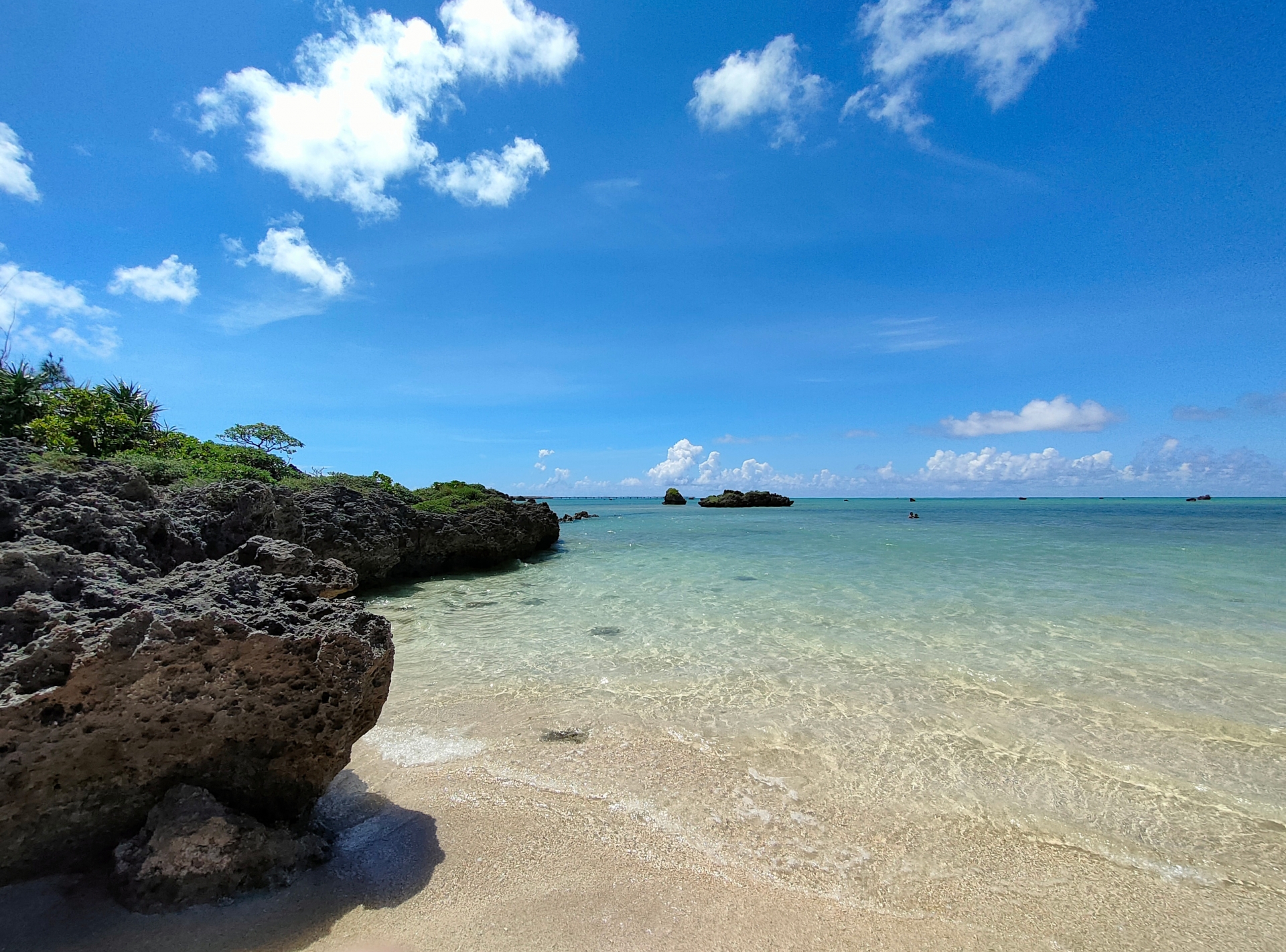
- What Is Nakanoshima Beach? A Natural Aquarium
- The Sheer Volume of Fish Is on Another Level: The Dragon's Palace at 3 Metres
- Watch Your Feet: Marine Shoes Are Absolutely Essential
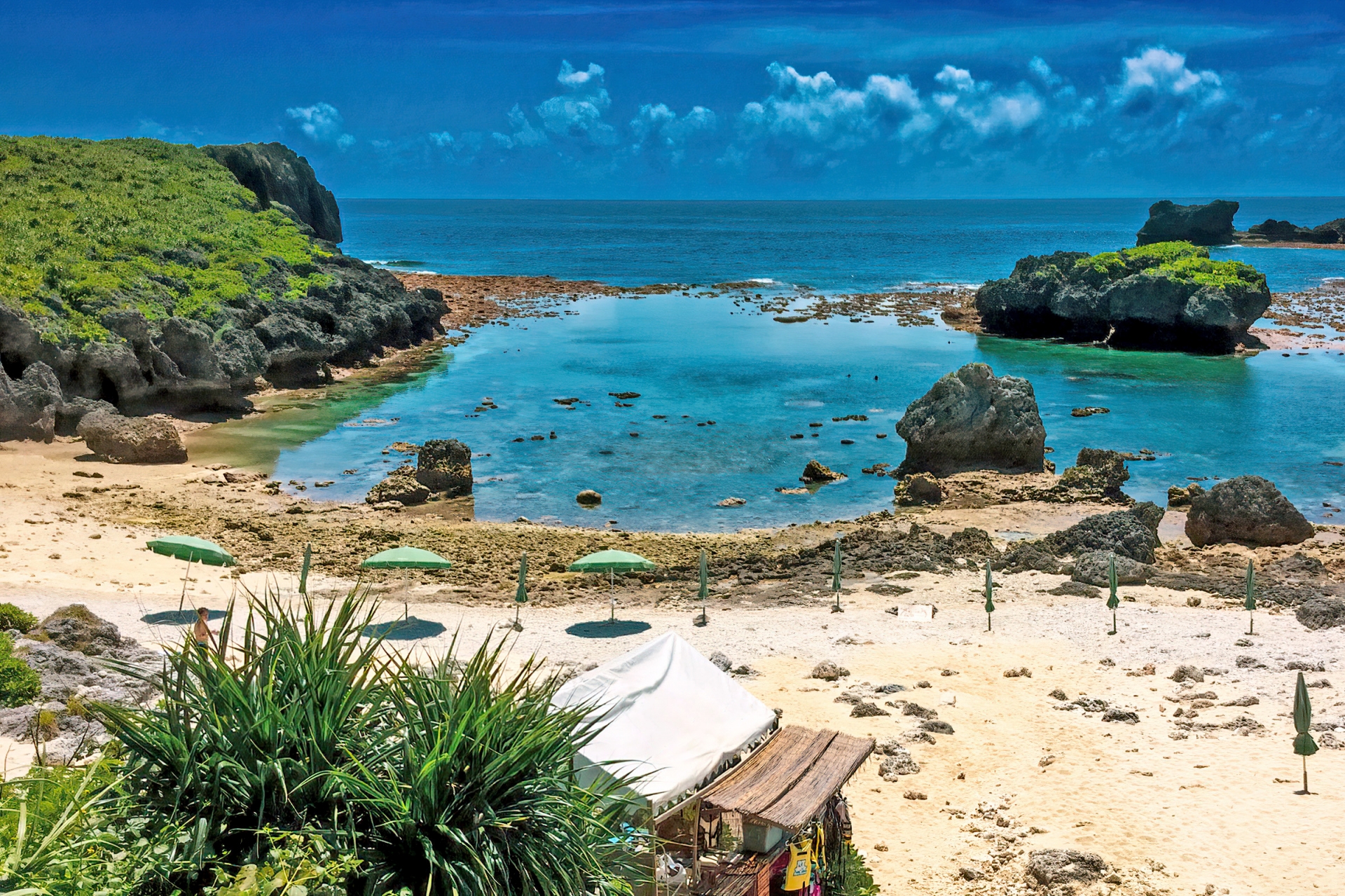
- The No-Facilities Problem: No Toilets or Showers
- The Terror and Wonder of the Drop-Off: It Suddenly Gets Deep
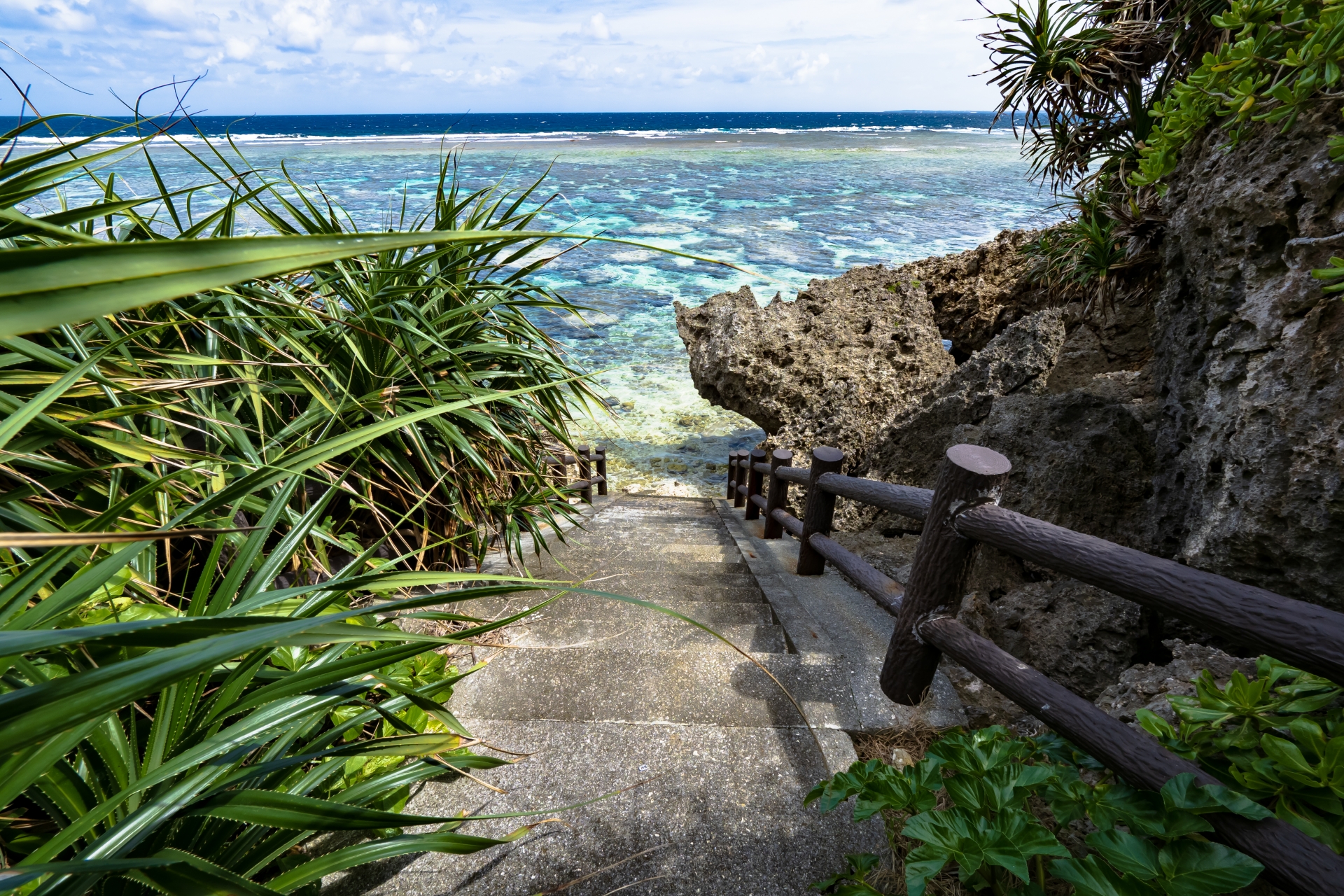
- The Small-Sign Problem: Hard to Find
- 7 Tips to Enjoy Nakanoshima Beach to the Fullest
- Sights and Accommodation Around Nakanoshima
- 5 Things First-Timers Absolutely Get Wrong
- FAQ: Common Questions About Nakanoshima
- Nakanoshima Beach Is a Natural Aquarium
- The Most Memorable Memory
- Different Ways to Enjoy It by Season
- If You Come to Miyako Island, You Absolutely Should Go
The Moment I Put On the Snorkel Mask and Dipped My Face in the Sea
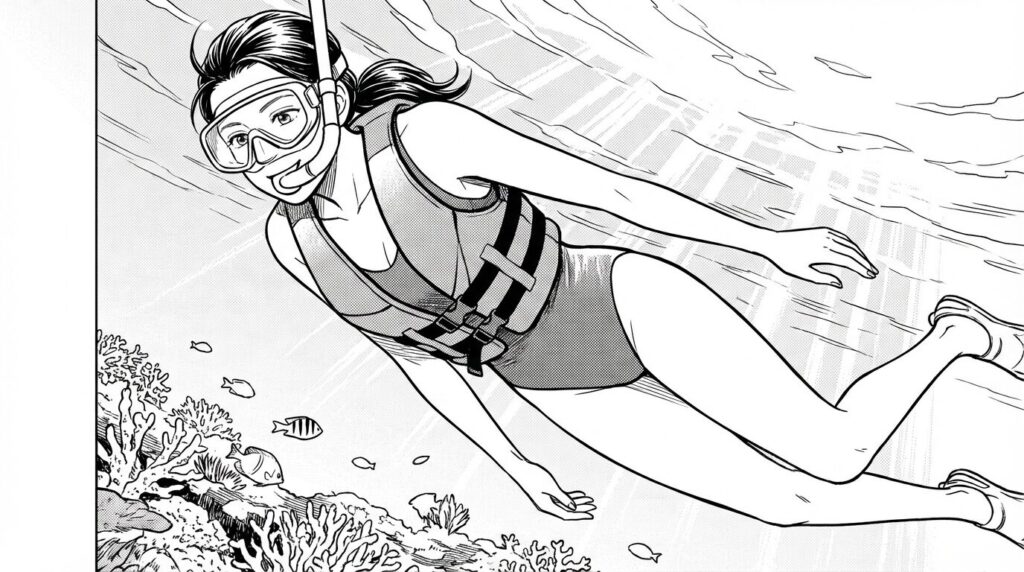
The moment I put on the snorkel mask and dipped my face in the sea, a gasp came out. There are too many fish.
Colourful tropical fish like the ones you see at an aquarium were swimming right in front of me. Blue fish, yellow fish, striped fish, clownfish. There were so many I couldn't count, to the level of doubting "is this really wild?"
It was only knee-deep, yet already full of fish. Go about 3 metres offshore and it's even more incredible — I seriously thought, "is this the Dragon's Palace from the legend?"
I'd heard that for snorkelling on Irabu Island you go to Nakanoshima Beach, but I didn't think it was this much. There are about three times as many fish as I'd expected. I came because a friend told me "you absolutely should go," and I'm convinced — it really is just as they said.
But at first it was nothing but mistakes. I came in beach sandals and nearly cut my feet, missed the sign and drove past, was stuck with no toilet. There's a lot first-time visitors absolutely should know.
In this article, from my experience of going more than five times, I'll write out all of Nakanoshima Beach's appeal and the things to note. The sheer number of fish, why marine shoes are absolutely essential, the no-facilities problem, the terror and wonder of the drop-off — I'll write it all honestly.
A Number of Fish You'd Call the Dragon's Palace at Knee Depth
The first time I went to Nakanoshima Beach, I was half-doubting: "can you really see fish somewhere that shallow?"
I arrived at the beach, got the snorkel ready, and entered the sea. The moment I put the mask to the surface at knee depth, I was startled: "what, they're already here."
Fish swimming at my feet. Not 10 or 20. So many I couldn't count.
I'd thought you couldn't see fish without going further offshore, yet they were already visible at knee depth. This was unexpected. "Even this shallow?" I thought over and over.
I went a little offshore. Swimming just about 3 metres, the scene was completely different. The number of fish doubled. No, it tripled.
A school of small blue fish changed direction all at once, sparkling. Below them yellow fish swam, and in the shadow of a rock there was a clownfish. "Aren't there more fish than at an aquarium?" I thought.
I went further offshore. Swimming about 5 metres, the coral reef came into view. Around that coral reef, again, lots of fish. The variety increased too, and I got excited: "ah, that's the one I saw in the field guide."
I went with a friend, and underwater we pointed at each other, signalling "did you see that?" "there's one over there too." But there were so many fish we couldn't tell which to look at. A luxurious problem.
After swimming about 30 minutes, I went back to the beach to rest. As we talked, "that was amazing, wasn't it," it became "let's go in once more," and we entered the sea again. The second time was moving too. It never gets old no matter how many times you go in.
This, I think, is Nakanoshima Beach's appeal. You can see fish even in the shallows, and offshore it's even more incredible. I was convinced — this is what they mean by "enjoyable from beginners to advanced."
What Is Nakanoshima Beach? A Natural Aquarium
Nakanoshima Beach is a beach in the south-west of Shimoji Island, locally called "Kayaffa Beach." Kayaffa apparently means the grass used to thatch house roofs.
You cross the Irabu Bridge from Miyako Island, pass through Irabu Island, and enter Shimoji Island. Cross the bridge, turn left, and drive straight along Route 204 to reach the coastal road. Driving there, it comes into view on the left. About 25 minutes by car from Miyako Airport, closer from Shimojishima Airport.
You understand at once, on going there, why it's called a "natural aquarium." There are apparently over a hundred species of fish, and you can see false clown anemonefish too. Hearing that of the six species of anemonefish in Japan, four can be seen here, I thought, "amazing."
The clarity is high too. Shimoji Island is flat with no high places, so sediment almost never flows into the sea. So it apparently boasts the best clarity in the Miyako Island area. Indeed, looking up at the sky from underwater, the sunlight streams in sparkling and beautiful.
It's shaped like an inlet, little affected by the open sea, so the waves are calm. Even snorkelling beginners can enjoy it with peace of mind. But the offshore part is quite deep with complex terrain, so advanced snorkellers can enjoy it too.
It's famous as a diving spot too, with points called "Nakanoshima Hole" and "Nakanoshima Channel." From morning into the afternoon you often see diving boats.
The locals said too that if you snorkel on Irabu Island, here is the best. Indeed, I've been many times, and I'm moved every time. It's that incredible a place.
The Sheer Volume of Fish Is on Another Level: The Dragon's Palace at 3 Metres
The volume of fish at Nakanoshima Beach really is on another level. Compared with other beaches, overwhelmingly more.
The first time I went, I'd also snorkelled at other beaches on Miyako Island, so I thought "well, there'll be a fair number of fish." But it was completely different.
Entering the beach and swimming just about 3 metres, it's "huh, what is this." A school of fish passes right in front of you. Not 10 or 20. A school so big you think there must be over a hundred.
A school of small blue fish changes direction all at once, reflecting the sunlight and sparkling. That sight is so beautiful you hold your breath and stare.
Swim a little more and yellow fish swim around the rocks. Below them are striped fish, and below those a clownfish. "Just how many species are there," you think.
Around the coral reef, even more fish gather. The coral colours are beautiful too — purple, pink, brown, all sorts of colours of coral. Fish swim around them, and I thought, "this really is the Dragon's Palace."
My friend shouted underwater "too many fish," and it really is just so. So many you can't tell where to look.
I brought a camera, but the shooting couldn't keep up. While thinking "that's beautiful, this is beautiful," the fish move on. I took video, but watching it back later, I was saying "amazing, amazing" the whole time — I'd run out of vocabulary.
The second time I went, I thought "I'm used to it now," but I was still moved. The volume of fish was as high as ever, and I thought, "it never gets old no matter how often I come."
Going a third and fourth time, I came to recognise "ah, I saw this fish before." But each time I find new fish too. There are fish I think "weren't there before," and conversely fish I think "were there before but aren't now." Because there's change, it's fun no matter how often I come.
Watch Your Feet: Marine Shoes Are Absolutely Essential
What I regretted most at Nakanoshima Beach was coming in beach sandals.
The first time I went, I came lightly thinking "it's a beach, so beach sandals are fine," and it was a big failure.
Even while walking down the slope from the car park to the beach, I noticed "huh? there are a lot of rocks." But I thought "well, it'll be fine" and kept walking.
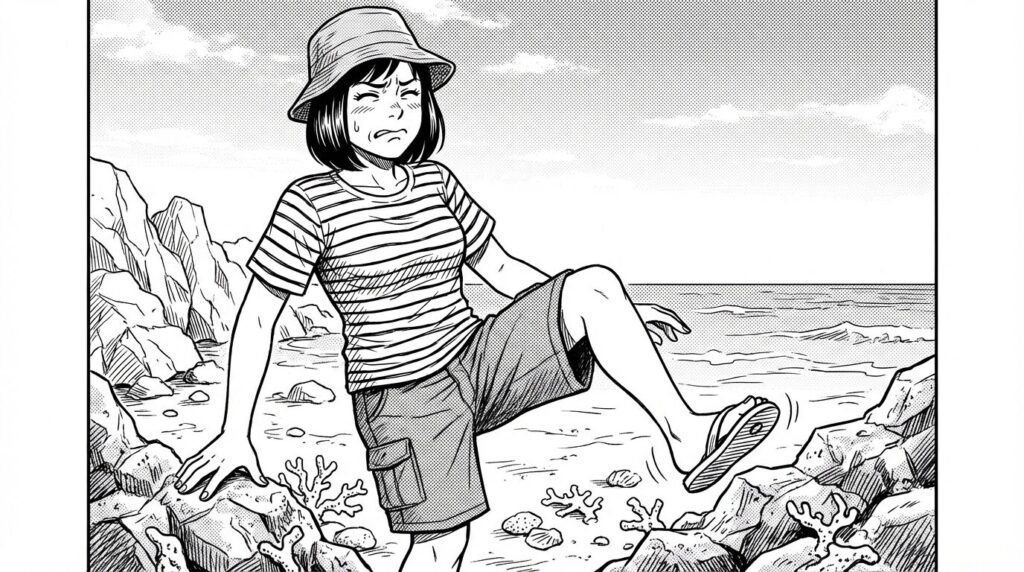
Arriving at the beach, it wasn't sand but coral and rocks scattered everywhere. I panicked: "wait, isn't it impossible to walk this in beach sandals?"
Entering the sea, when I took off the beach sandals and walked barefoot, it was "ow." Coral and rocks dug into my soles, incredibly painful.
My friend walked saying "ow, ow" too, and it became "this is impossible." In the end I entered the sea with the beach sandals on, but they nearly came off in the waves and were hard to swim in — the worst.
During snorkelling too, when I tried to stand in the shallows, the bottom was rough with coral and rocks and I couldn't stand. "Where am I supposed to put my feet," I struggled.
And sure enough, I cut my foot. It was a small cut, but the seawater stung. I regretted it: "it said marine shoes were essential."
When I went the second time, I properly bought marine shoes. A cheap pair for about ¥2,000 (about US$13) on Amazon, but just having them makes all the difference.
Walking the beach and entering the sea, no pain at all. You can walk without worrying about coral or rocks. When standing in the shallows during snorkelling, you can stand with peace of mind.
I seriously thought, "I should have bought marine shoes from the start." If ¥2,000 makes it this comfortable, you absolutely should buy them.
Marine gloves are good to have too. When you take balance with your hands, you sometimes touch rocks or coral, so it's better to protect your hands too. I didn't have them and cut my hand a little. This is another regret point.
If you go to Nakanoshima Beach, marine shoes and marine gloves are absolutely essential. Going in beach sandals — you absolutely should not. You'll regret it like I did.
The No-Facilities Problem: No Toilets or Showers
What troubled me at Nakanoshima Beach was that there are no facilities at all. No toilets, no showers.
The first time I went, I thought "it's a beach, so there'll at least be a toilet," but there was none at all.
Arriving at the car park and looking around, no toilet to be seen. I panicked: "wait, there isn't one?"
Asking someone nearby, they told me, "there isn't one. Drive about 10 minutes and there's a shower at Toguchi-no-Hama." "Ten minutes?" I thought, but there was no helping it.
I regretted not going to the toilet before snorkelling. From then on, I always make sure to use the toilet at a convenience store on the way.
There are no showers either. After getting out of the sea, you want to rinse off but can't. The saltwater is sticky and unpleasant.
I brought fresh water in a plastic bottle, but one 2-litre bottle wasn't nearly enough. I split it with my friend, so I could only rinse a little.
The next time I went, I brought a water tank holding about 10 litres. With this you can rinse off properly. You can rinse your hair, your feet, comfortable.
There's nowhere to change either. You have no choice but to change in the car. But parking in the car park and changing on the spot is a bit embarrassing.
I wrapped a large bath towel around myself and changed inside it. Changing while checking with my friend "can you see anything?", I thought, "this is hard work."
A poncho-type changing towel is apparently handy. I'm thinking of buying one next.
There's no shop either. In high season a stall renting snorkel sets sometimes appears, but it's not certain. It wasn't out when I went.
Drinks aren't sold either, so bringing your own is essential. It's hot in summer, so it's better to bring plenty. I brought two 2-litre bottles and drank them all.
There's little shade too. There's hardly any tree shade, just a little where the rocks cast shadows.
When it's busy, even the rocks' shade is taken by people reserving spots. It becomes "no shade," and I regretted not bringing a parasol.
From then on, I make a point of bringing a pop-up tent. With this you can make shade, change, and it's handy.
Nakanoshima Beach has no facilities at all. But some people like that, as it conversely feels left to nature. I was inconvenienced at first too, but once I got used to it, I came to think "this is good in its way."
The Terror and Wonder of the Drop-Off: It Suddenly Gets Deep
What scared me most at Nakanoshima Beach was the drop-off. There's a place that suddenly gets deep, and I panicked: "wait, what is this."
At first I snorkelled in the shallows, swimming at knee-to-waist depth. With lots of fish, I swam thinking "this is fun."
I thought I'd try going further offshore and swam a little. About 5 metres, I think.
Then suddenly, my feet went dark. "Huh?" I thought, and looking down, I couldn't see the bottom. It had been about 3 metres deep until just now, and suddenly it looked over 10 metres deep.
"Wow, scary," I thought. My heart pounded. I hadn't heard it suddenly got deep, so I panicked.
I had a life jacket on so I wouldn't sink, but it was scary even so. I hurried back to the shallow side.
Back on the beach, when I told my friend "there's a place that suddenly gets deep," they told me "that's the drop-off." When I asked "what's a drop-off?", they explained, "a place that suddenly gets deep."
Looking it up, Nakanoshima Beach is shaped like an inlet, shallow on the inside but suddenly deep towards the outside. It said there are lots of fish at that drop-off.
"I see," I thought, and the next time I went properly prepared. I fastened the life jacket firmly and decided to swim with my friend.
I swam to the drop-off and timidly looked down. Deep, as expected. But this time, excitement won over fear.
In the deep, there were big fish. Fish of a size I hadn't seen in the shallows swam slowly. "Amazing," I thought.
Coral reef grows abundantly along the edge of the drop-off too. Fish swim around it, and I was moved: "this is spectacular."
Peering into the deep is a bit scary, but get past that fear and you can see incredible scenery. The terror and wonder of the drop-off come as a set, I think.
Beginners don't have to force their way to the drop-off. You can enjoy the shallows plenty. But once you're used to it, I'd like you to give it a try. You can see a completely different world.
The Small-Sign Problem: Hard to Find
I had a terrible time finding Nakanoshima Beach. The sign is too small to spot.
I searched on Google Maps and followed the navigation, but even arriving where it should be "around here," I couldn't find the beach.
"Where is it?" I thought, driving slowly. But the sign was small and I missed it.
In the end I drove past twice. Thinking "it's definitely around here," I finally noticed on the third pass.
There's a small sign by the roadside that says "Nakanoshima Beach." But that sign is really small. You'll miss it driving normally.
And since the beach is below the guardrail, you can't see it from the road. It's a place where you'd think "is there a beach here?"
The car park is a roadside gravel space too, making you anxious: "is this OK?" But other cars are parked, so you know "this is it."
When I went there were several other cars parked, so I could find it, but if there'd been no one I absolutely wouldn't have known.
My advice to those going is, above all, drive slowly. Watch carefully so you don't miss the sign.
Also, if the Google Maps reviews say "the sign is small" or "hard to find," believe it. It really is hard to find.
When there are lots of people, use them as a landmark. If cars are parked in the car park or people are playing on the beach, you'll know "that's it."
Don't panic if you drive past. Just do a U-turn and go back. I drove past twice but found it on the third try, so it's fine.
7 Tips to Enjoy Nakanoshima Beach to the Fullest
Here are the tips for enjoying Nakanoshima Beach to the fullest, learned from going more than five times. I'll write it all, including what I learned from failure.
1. Marine Shoes and Marine Gloves Are Essential
I'll say this as many times as it takes. Marine shoes and marine gloves are absolutely essential. Going in beach sandals — you absolutely should not.
You'll cut your feet and hands. It's rough with coral and rocks, so without protection you get injured. They cost about ¥2,000, so don't skimp — buy them.
2. Use the Toilet Beforehand
There are no toilets at the beach. Always go to the toilet at a convenience store on the way.
Hold it and go to the beach and you'll be stuck with no toilet. There's one at Toguchi-no-Hama about 10 minutes' drive away, but going specially is a hassle.
3. Bring Plenty of Water
I recommend bringing a water tank holding about 10 litres. One plastic bottle isn't nearly enough.
You use it to rinse off, and you need drinking water too, so it's better to bring plenty. I bring a 10-litre tank and two 2-litre bottles for drinking.
4. Plan for Shade
There's little shade, so it's good to bring a pop-up tent or parasol.
The summer sun is strong, and without shade you can't rest. With a tent you can change and put your luggage down too — handy.
5. Bring Your Own Snorkel Set
In high season a rental stall sometimes appears, but it's not certain.
Bringing your own snorkel set is safer. You can buy one for about ¥5,000 (about US$33) on Amazon. If you'll use it many times, it's better to buy.
6. Wear a Life Jacket
Even if you're confident swimming, it's better to wear a life jacket.
There's a drop-off that suddenly gets deep, so a buoyancy aid is reassuring. When you're tired, a life jacket makes it easier too.
7. Go Early
I recommend going early in the morning. There are fewer people and the fish are easy to see.
From early afternoon people increase and the beach gets crowded. The car park can fill up too, so it's better to go early.
Sights and Accommodation Around Nakanoshima
There are lots of other sights around Nakanoshima Beach. Since you've come, do enjoy the surrounding area too.
About 5 Minutes by Car to Toriike Pond
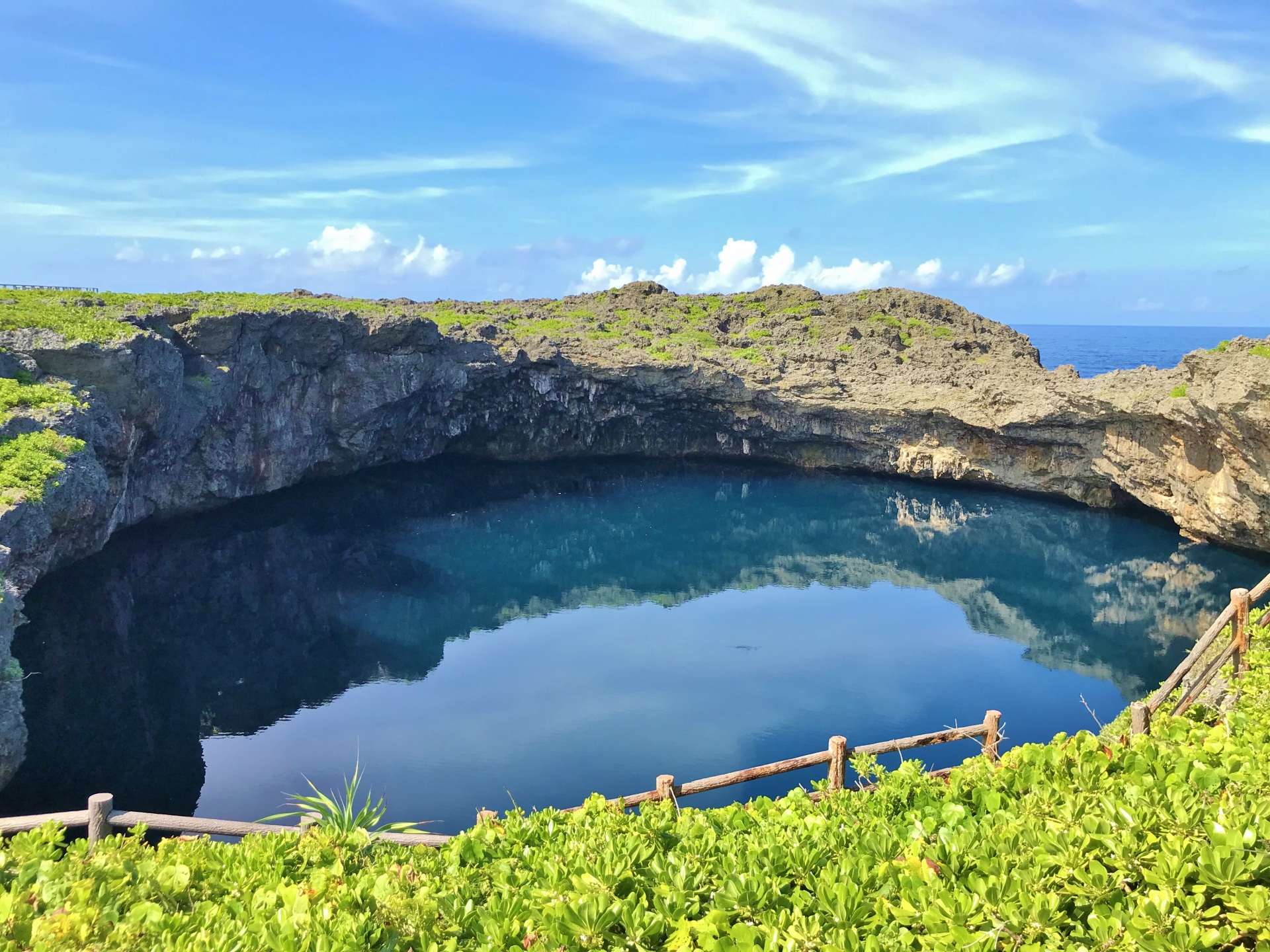
Toriike Pond is right near Nakanoshima Beach. About 5 minutes by car.
Two ponds sit side by side, and they apparently connect to the open sea. A popular spot with divers, with mystical scenery.
I went too, and viewed from above, two deep-blue ponds sat side by side, beautiful. "There's a place like this," I was moved.
About 10 Minutes by Car to 17END
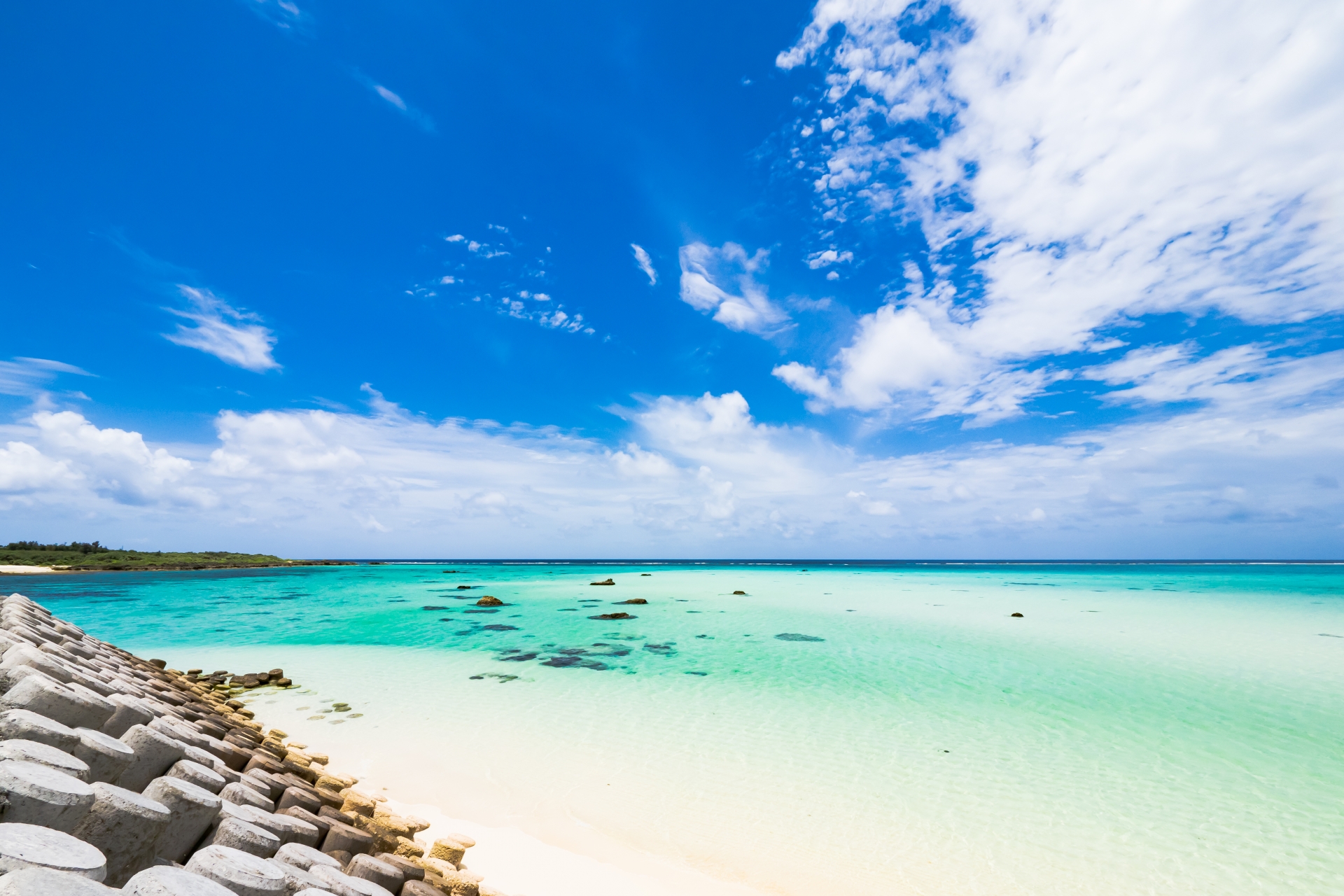
17END, at the tip of Shimojishima Airport's runway, is a place where you can see an incredibly beautiful sea. About 10 minutes by car from Nakanoshima Beach.
Go at low tide and a shallow sea spreads out, the emerald-green sea beautiful. You can watch planes take off and land too, so it's popular as a photo spot.
About 10 Minutes by Car to Toguchi-no-Hama
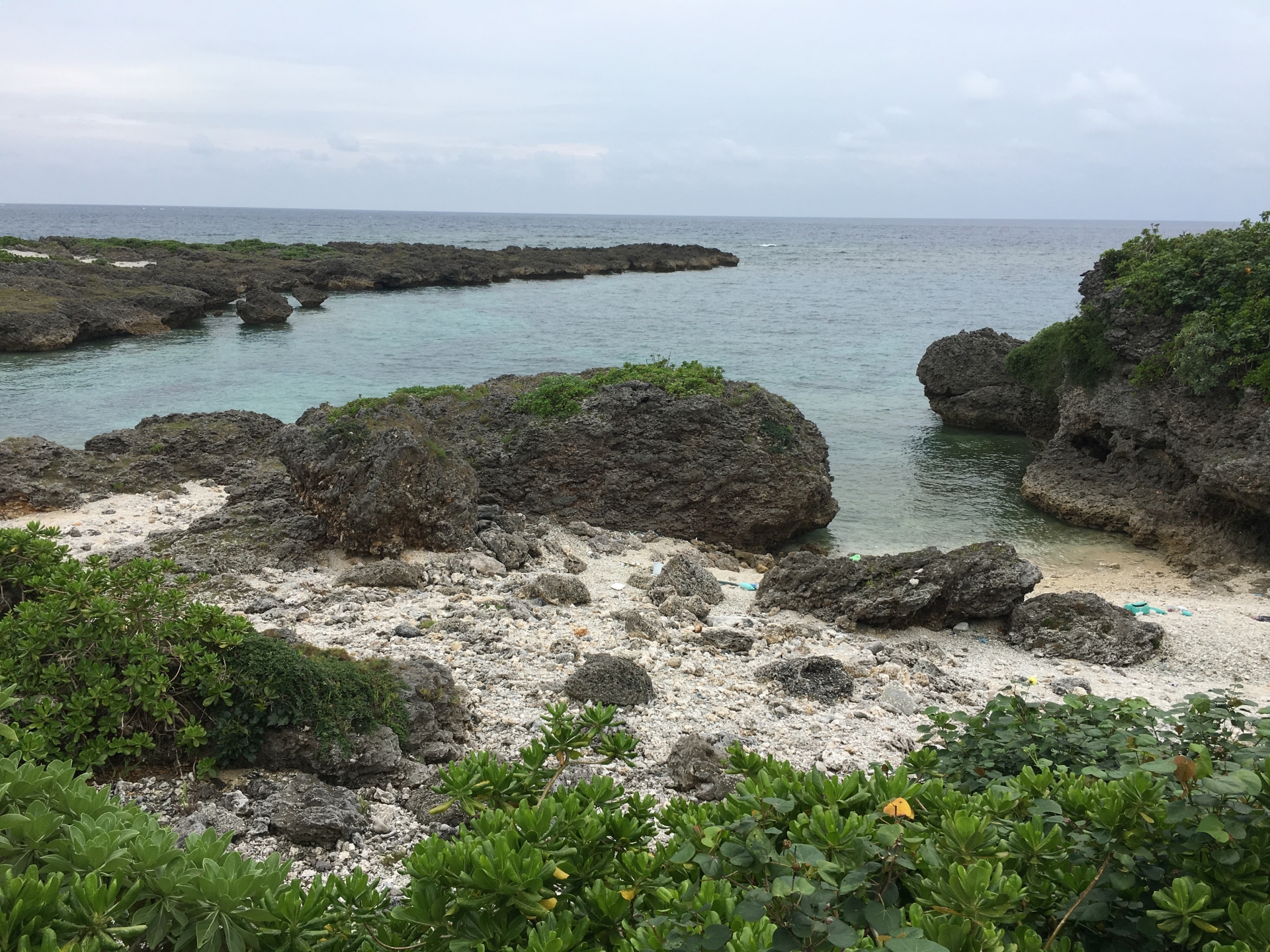
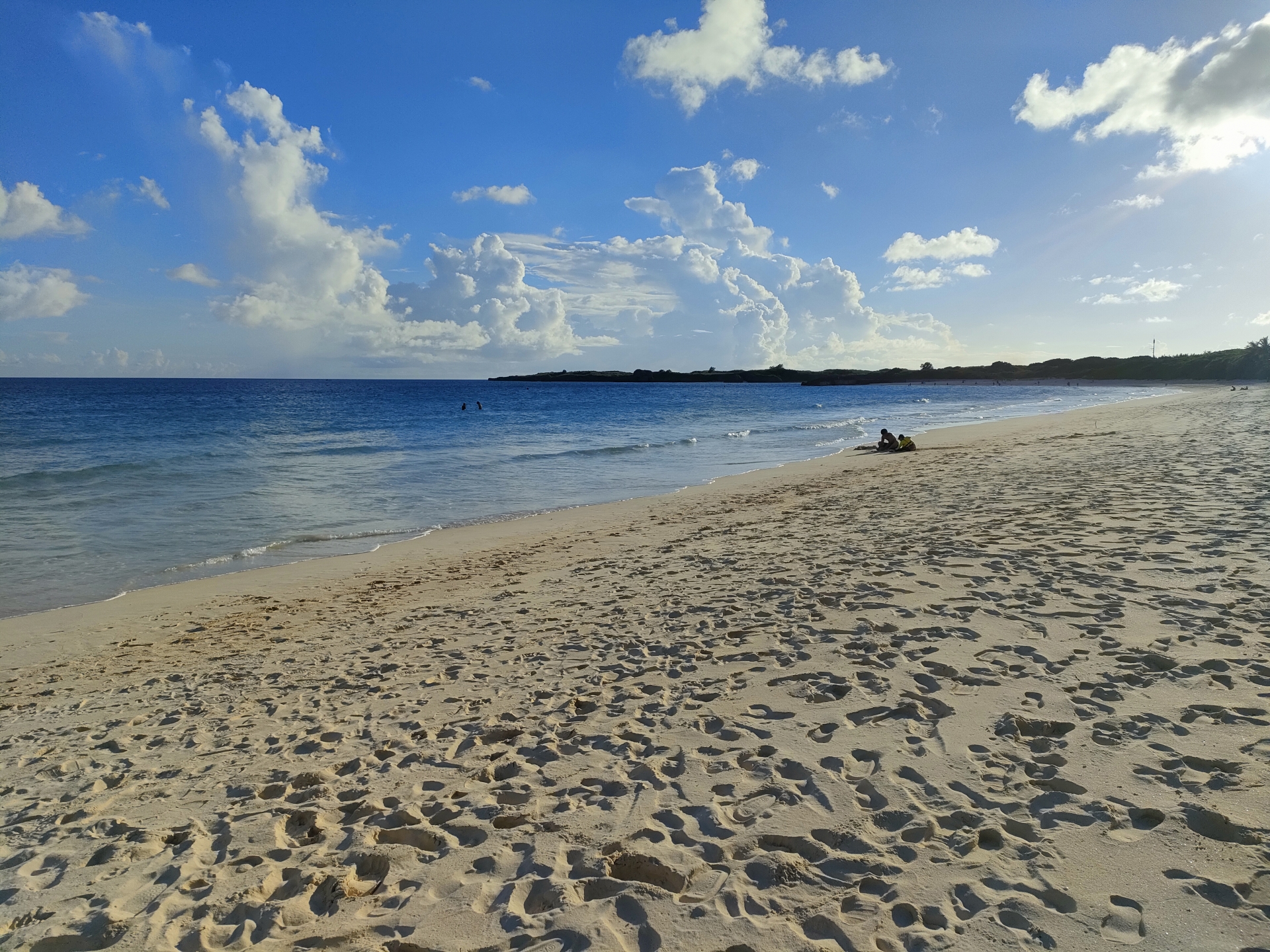
Toguchi-no-Hama is Irabu Island's most famous beach, characterised by pure white sand and a highly transparent sea. About 10 minutes by car from Nakanoshima Beach.
To relax on a beach, Toguchi-no-Hama is recommended. There are showers too, so stopping by to shower after swimming at Nakanoshima Beach is good.
About 15 Minutes by Car to Sawada-no-Hama
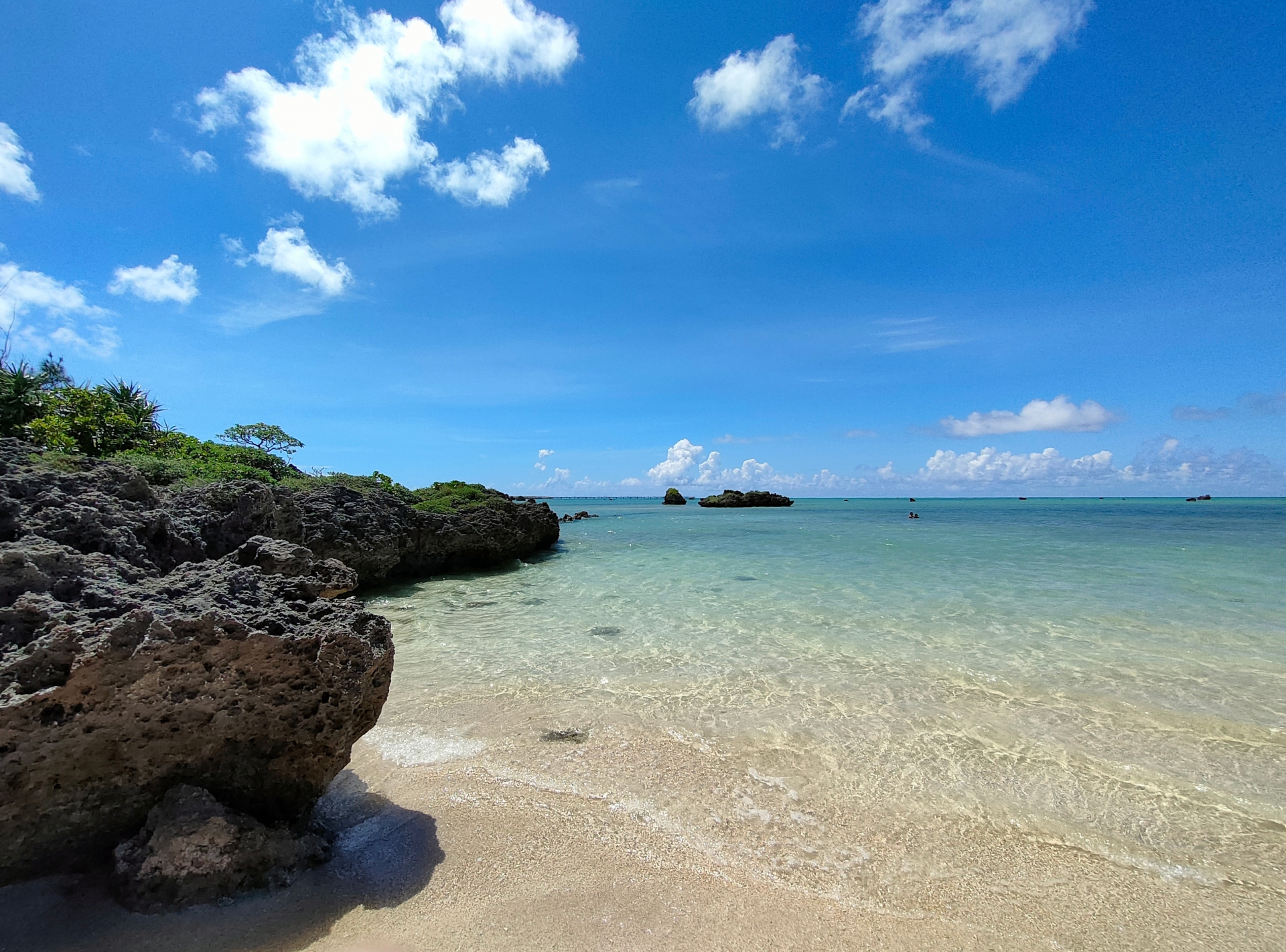
Sawada-no-Hama is a beach chosen as one of Japan's 100 Best Beaches, about 15 minutes by car from Nakanoshima Beach.
Big rocks are scattered about, and you can enjoy a distinctive landscape. It's famous as a beautiful sunset spot too.
Accommodation on Miyako Island
There's no accommodation right near Nakanoshima Beach, so you'll stay on Miyako Island or Irabu Island.
Miyako Island has various hotels and guesthouses. Hotels near Maehama Beach are popular, but staying on Irabu Island is good too.
On Irabu Island, Nakanoshima Beach is close, so you can go early in the morning — handy.

Miyako Shimojishima Airport
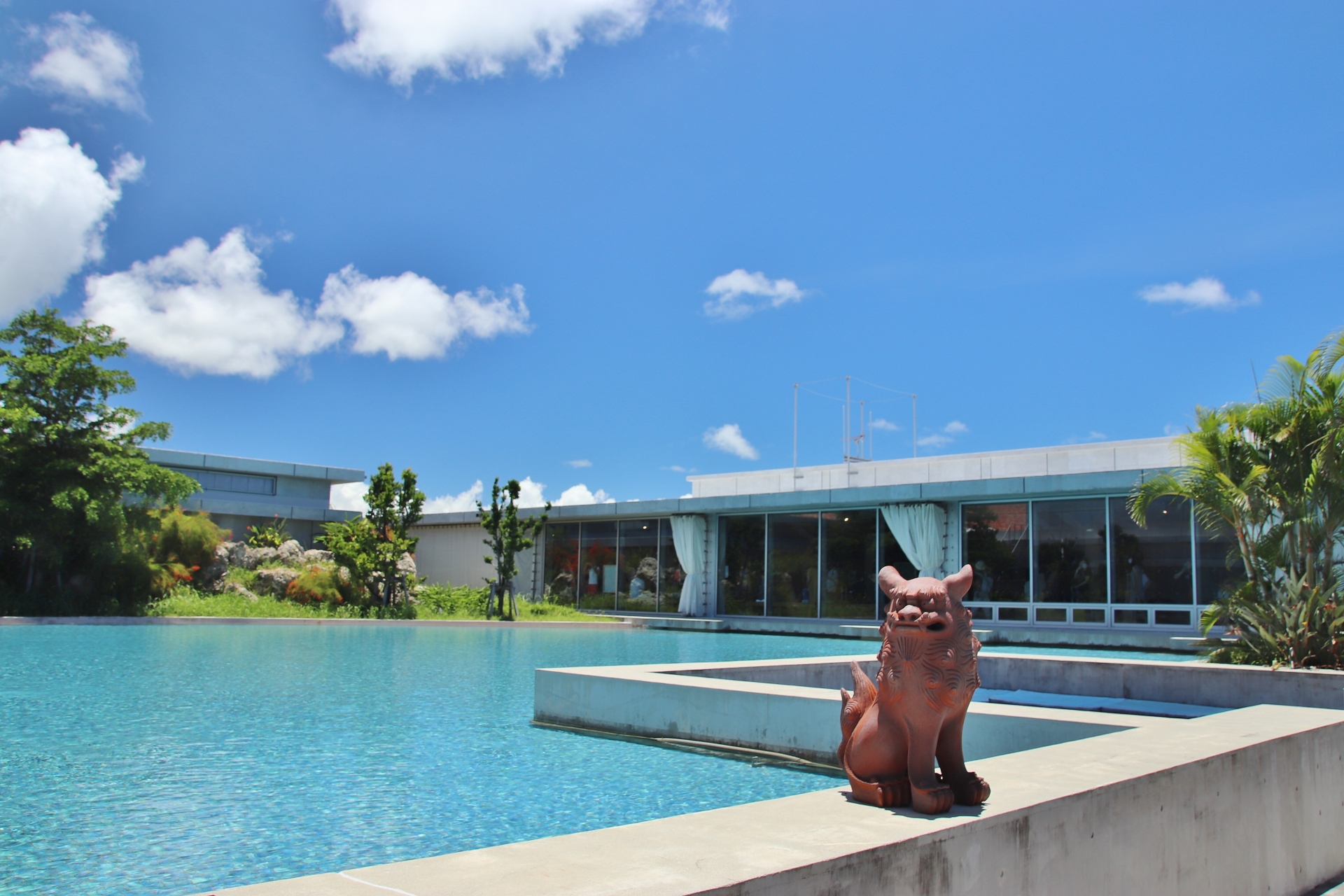
Miyako Shimojishima Airport is about 10 minutes by car from Nakanoshima Beach. A new airport opened in 2019, with LCCs operating.
The airport itself is beautiful, and you can see the sea from the observation deck. There's a café too, where you can relax.
5 Things First-Timers Absolutely Get Wrong
Here are the mistakes first-time visitors to Nakanoshima Beach absolutely make, learned from going many times. I made them all.
Mistake 1: Coming in Beach Sandals
This is really common. Hearing "beach," lots of people come in beach sandals. I did too.
But Nakanoshima Beach is full of coral and rocks, not sand. Walk it in beach sandals and it's too painful to bear.
Take off the beach sandals to enter the sea and your soles hurt too much to walk. Marine shoes are essential. I want to say this loud and clear.
Mistake 2: Coming Without Using the Toilet
Lots of people come thinking "there'll be a toilet at the beach." I did too.
But there isn't. None at all. Even if you need the toilet during snorkelling, you have to hold it. Incredibly tough.
Always go to the toilet at a convenience store on the way. This is important.
Mistake 3: Coming with Nothing Over Your Swimsuit
Quite a few people come in just a swimsuit. But the sun is too strong and you burn quickly.
I once went without a rash guard and my back turned bright red. It hurt and I couldn't sleep at night.
You absolutely should wear a rash guard or T-shirt. Sunscreen is essential too.
Mistake 4: Bringing Only a Little to Drink
Bring "one plastic bottle will do" and it's not nearly enough.
After getting out of the sea, you're parched. But there's nothing to drink. Tough.
I make a point of bringing two 2-litre bottles. Even that's barely enough. Bring plenty.
Mistake 5: Missing the Sign and Driving Past
The sign is too small, and you miss it driving normally. I drove past twice.
Even thinking "it should be around here," the sign is nowhere to be seen. Drive slowly and watch carefully or you won't find it.
If there are people, use them as a landmark. If cars are parked in the car park, you'll know "that's it."
FAQ: Common Questions About Nakanoshima
Here are answers to some commonly asked questions about Nakanoshima Beach.
Q1: Where is Nakanoshima Beach?
The south-west of Shimoji Island. About 25 minutes by car from Miyako Airport; cross the Irabu Bridge, turn left, and drive straight along Route 204.
Q2: Is there parking?
Yes. A roadside gravel space is the car park. Free, but it can fill up.
Q3: Are there toilets and showers?
No. Drive about 10 minutes and there's a paid shower at Toguchi-no-Hama.
Q4: Can you rent a snorkel set?
A stall sometimes appears in high season, but it's not certain. Better to bring your own.
Q5: Can beginners snorkel?
Yes. You can see fish even in the shallows, so beginners can enjoy it. It's better to wear a life jacket.
Q6: How deep is it?
The inside is 2–4 metres, the drop-off over 10 metres. Beginners are best enjoying the shallows.
Q7: What time is recommended?
Early in the morning. There are fewer people and the fish are easy to see. Early afternoon gets crowded.
Q8: Can you see clownfish?
Yes. Including the false clown anemonefish, there are apparently four species of anemonefish.
Q9: Can children swim?
Yes. But it's rough with coral and rocks, so marine shoes are essential. An adult should watch over them.
Q10: Are beach sandals OK?
Absolutely not. Marine shoes are essential. In beach sandals you'll cut your feet.
Q11: Is there shade?
Little. Just a little where the rocks cast shadows. Better to bring a tent or parasol.
Q12: Are drinks sold?
No. Bringing your own is essential. Bring plenty.
Q13: Is there somewhere to change?
No. Change in the car, or it's good to bring a pop-up tent.
Q14: Are there lifeguards?
No. Enjoy it at your own risk.
Q15: When is the best season?
June–September, when the sea is warm. But you can swim year-round. In winter a wetsuit is good to have.
Nakanoshima Beach Is a Natural Aquarium
What I think after going more than five times is that Nakanoshima Beach really is a "natural aquarium."
You can see fish even at knee depth, and swim 3 metres and scenery like the Dragon's Palace spreads out. Colourful fish swim, the coral reef is beautiful, the clarity is high.
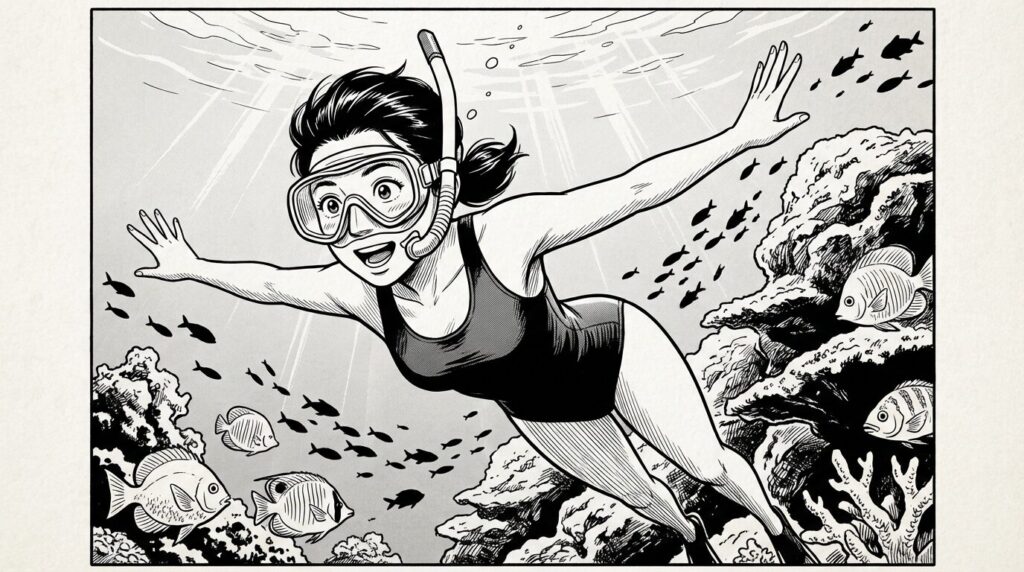
"There's a place like this in Japan," I think every time.
At first it was nothing but mistakes — cutting my foot without marine shoes, stuck with no toilet, missing the sign and driving past. But including all that, it's a good memory.
From the second time, I came properly prepared. I bought marine shoes, brought a water tank, used the toilet beforehand. Then I could enjoy it even more.
The drop-off was scary at first too, but once I got used to it I was moved. Big fish in the deep, a beautiful coral reef, and I thought, "this is worth seeing."
When I took friends, everyone says "amazing." "Too many fish," "I've never seen anything this beautiful," "I want to come again."
It never gets old for me either. Every time there's a discovery — finding new fish, seeing different scenery.
The Most Memorable Memory
Of the more than five times I've been, the most memorable is the third visit.
That day the weather was fine and the sea was incredibly beautiful. The clarity was so high you could clearly see to the bottom.
Snorkelling, I came across a big school of fish. A great shoal of what must have been hundreds, swimming as if to surround me.
As I shouted "amazing, amazing" underwater, my friend swam over and we watched it together. We were both excited and stayed in that spot for ages.
The moment the school of fish changed direction all at once was beautiful, reflecting the sunlight and sparkling. I can't forget that sight.
I was also happy when I found a clownfish. An orange clownfish hid inside a sea anemone, and I got excited: "it's Nemo!"
Getting closer, the clownfish grew wary and hid deep in the anemone. But it came straight back out, looking this way. Too cute.
When I tried to take a photo, the clownfish moved and I could only get blurry shots. But that memory stays in my heart.
Different Ways to Enjoy It by Season
Nakanoshima Beach is enjoyed differently by season. I've been in both summer and winter, and each has its good points.
In summer (June–September) the sea is warm and you can swim in just a swimsuit. The clarity is high and you see lots of fish too. But there are many people. August especially is crowded, and the car park can fill up.
In winter (December–February) the sea is cold. It's tough without a wetsuit. But there are few people and you can enjoy it at leisure. I've heard the clarity is higher than in summer.
I prefer summer. Swimming in a warm sea feels good, and the sunlight streams into the sea, making it bright underwater. The fish swim actively too, fun to watch.
But when I went in winter, there were few people and I could relax, so that was good in its way. I had a wetsuit on, so I wasn't cold.
Spring (March–May) and autumn (October–November) are apparently just right. The sea has warmed up and there aren't too many people. I'm thinking of going in spring next.
If You Come to Miyako Island, You Absolutely Should Go
If you come to Miyako Island, Nakanoshima Beach is unmissable. For snorkelling on Irabu Island, I think here is the best.
There are no facilities, but I conversely like that it feels left to nature. There's nothing artificial, and you can enjoy the natural sea as it is.
You understand why it's called a "natural aquarium" once you go. There really are more fish than at an aquarium. At an aquarium you go to look at fish, but at Nakanoshima Beach you can swim with the fish. That's completely different.
It feels like getting into an aquarium tank and swimming with the fish. But wider, freer, and the fish swim naturally too.
Don't forget your marine shoes, bring plenty of water, go early, and enjoy the natural aquarium.
I'd like you to experience the moment of shouting "too many fish" too. Taste the wonder of seeing the Dragon's Palace at knee depth.
Experience the terror and wonder of the drop-off too. Feel the excitement of seeing big fish where it suddenly gets deep.
Nakanoshima Beach has become, for me, "a place I want to come to again and again." Every time I come to Irabu Island, it's a place I always stop by.
I'm already thinking about when to go next. Next time I want to buy a new snorkel set and bring a GoPro too. Take video and show it to my family.
Do go to Nakanoshima Beach too. And experience the "natural aquarium." It's sure to become a memory for life.
I was half-doubting at first too: "is it really that incredible?" But going there, it was three times more incredible than I'd imagined.
Crossing the Irabu Bridge, entering Shimoji Island, arriving at Nakanoshima Beach, and the moment I entered the sea, I thought, "this place is really incredible."
I'd like you to taste that wonder too. I look forward to seeing you at Nakanoshima Beach.