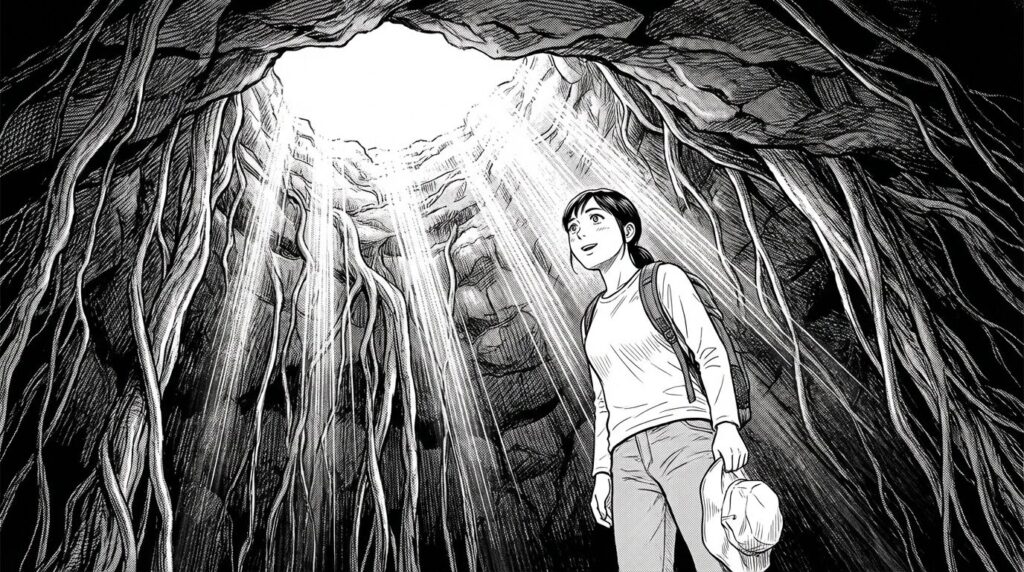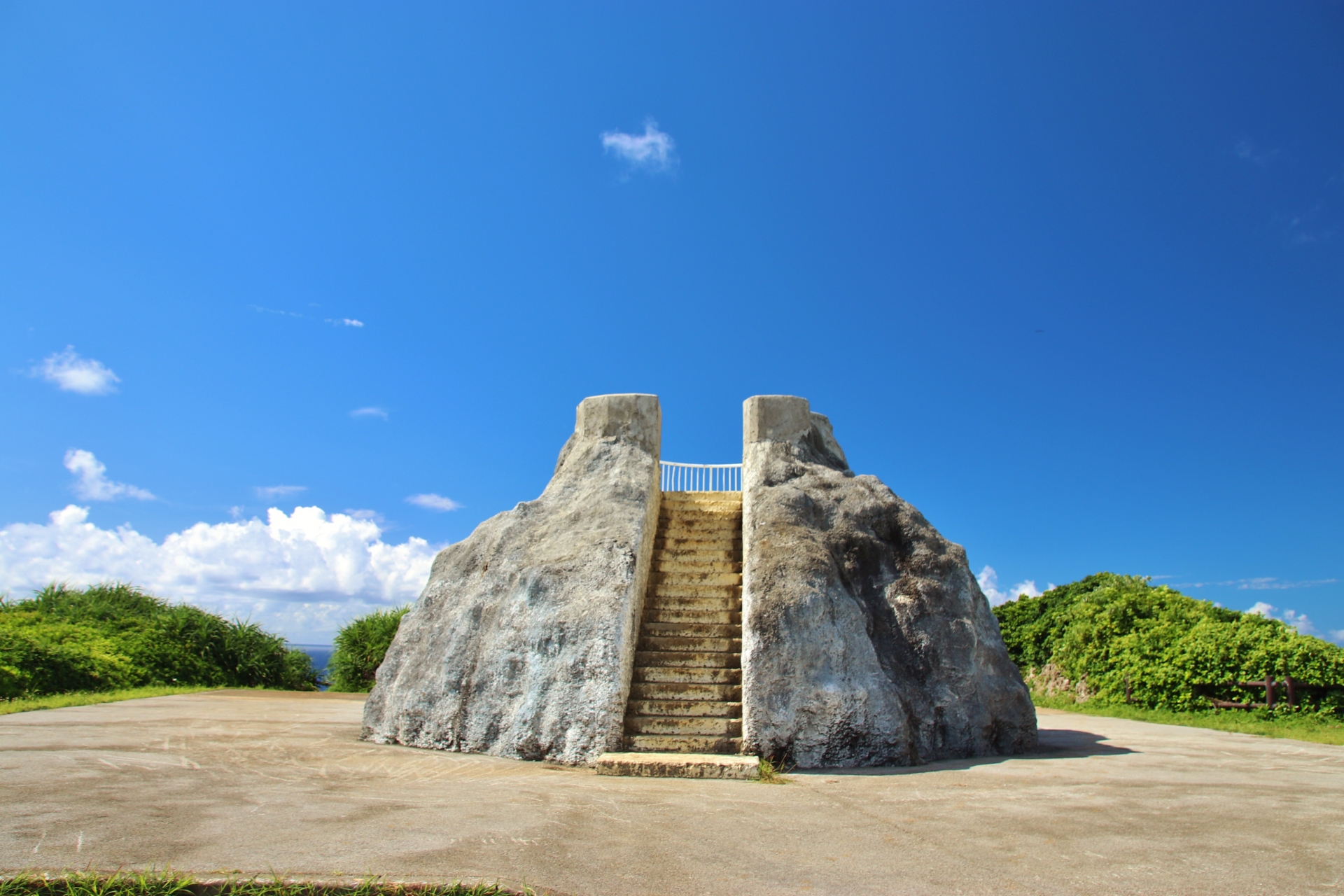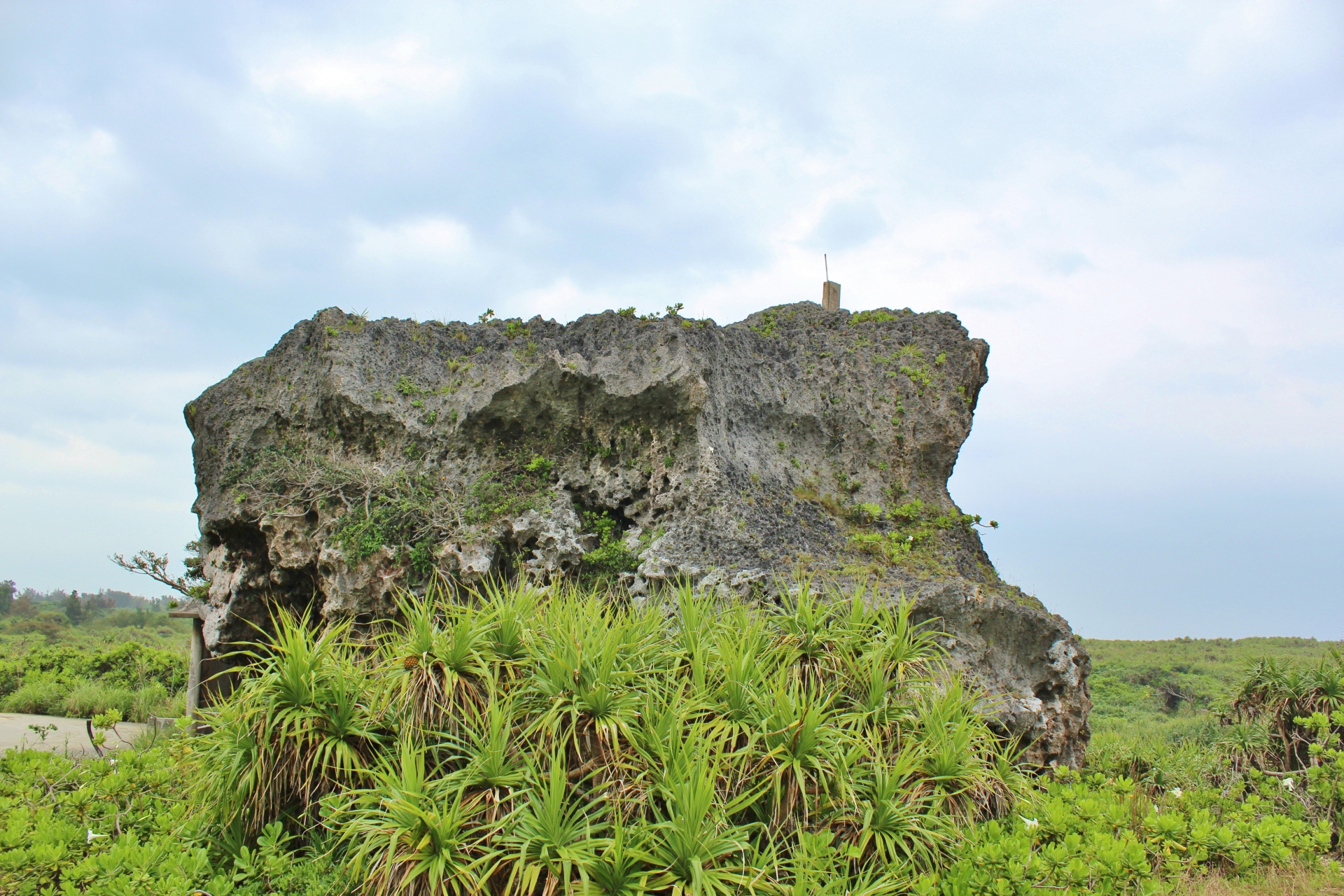
Look at a map of Irabu Island and the name "Nudokubi Abu" comes up. "Abu" is a word in the Okinawa–Miyako dialect meaning cave, and Nudokubi Abu is a natural cave on Shimojishima. When I first saw a photo on social media, I was startled by the sheer impact. Countless gajumaru (banyan) roots hanging down from the ceiling, with outside light streaming into the dim rocky space — the sight had a somehow otherworldly atmosphere. I decided then and there, "I'm definitely going on my next trip."
When I actually went, it took over 30 minutes just to find the entrance.
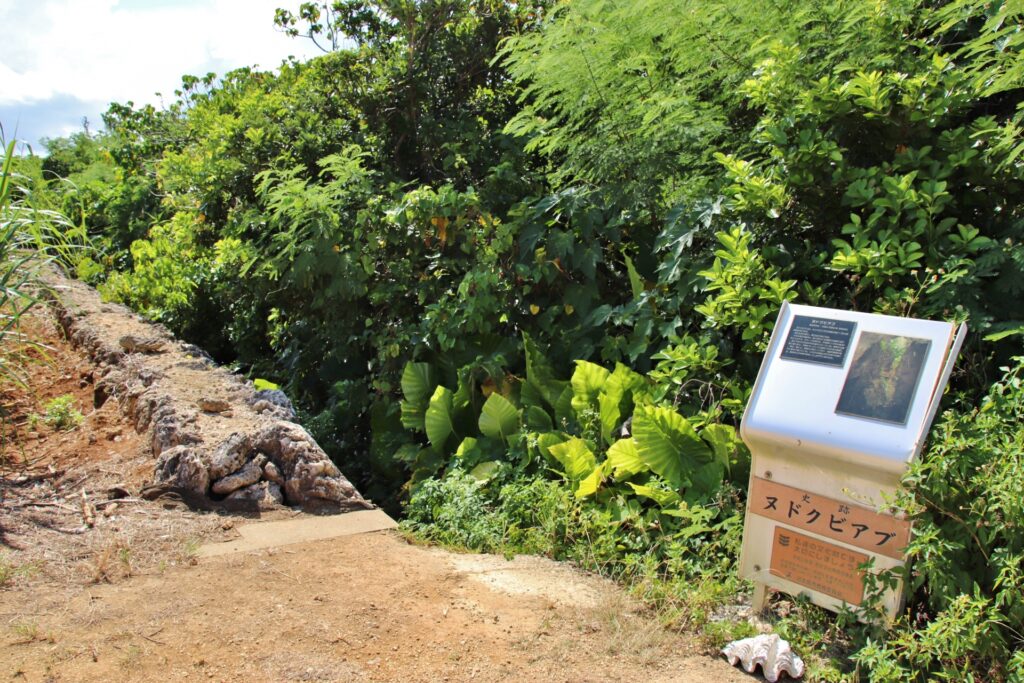
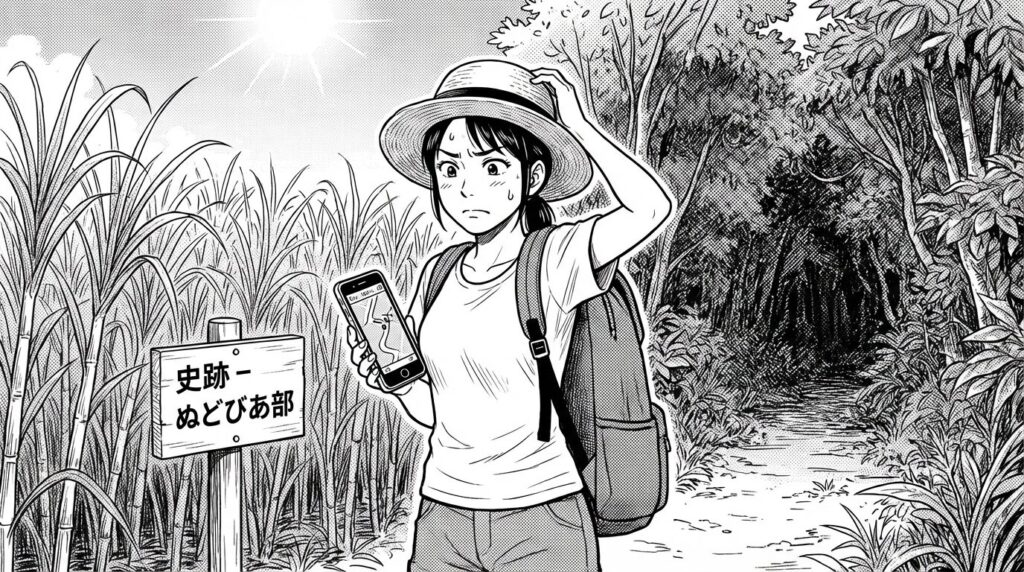
I searched "Nudokubi Abu" on Google Maps and headed there relying on the pin, but where I arrived was a sugarcane field. Wherever I looked, there were only fields and narrow roads. I circled the area twice looking for a guidance board, and just as I started to think "maybe today's a no-go," I found a small wooden sign half-hidden in the grass. I still remember the relief of that moment.
In this article I've gathered everything about Nudokubi Abu's location and highlights, and what first-time visitors should know. The story "I couldn't find the entrance" is common on social media too, but having the information in advance makes it harder to get lost. The scenery you can see inside the cave, the history as an air-raid shelter, mosquito countermeasures, and the reason it's called a power spot — I'll write them in order.
- The Air the Moment I Found It Was Incredible
- What Is Nudokubi Abu? Irabu Island's Hidden War Ruin
- The "Where's the Entrance?" Problem | Getting Lost in the Sugarcane Fields
- The Moment You Descend the Steps, the Air Changes
- Gajumaru Roots Hanging Down, a Castle-in-the-Sky-Like Sight
- A Wartime Air-Raid Shelter | The Remains of a Hearth Survive
- Insect Repellent Essential | There Are Masses of Mosquitoes
- Nudokubi Abu as a Power Spot
- What to Know Before Visiting
- Frequently Asked Questions (FAQ)
- Summary | Nudokubi Abu Is a Place That Tickles Your Sense of Adventure
The Air the Moment I Found It Was Incredible
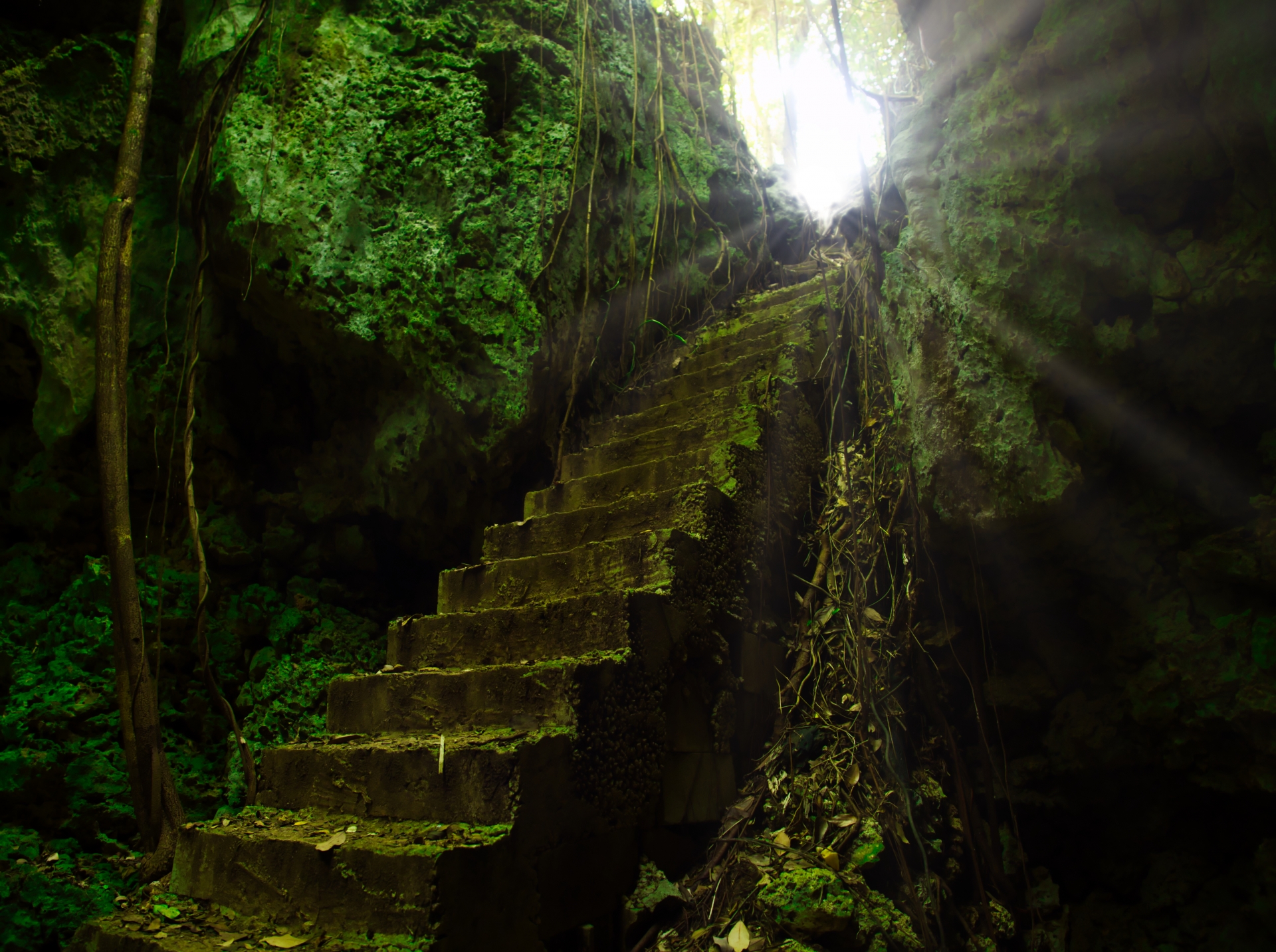
I was about to give up. Walking around a field where sugarcane leaves rustled in the wind, with my phone's navigation completely failing to match the actual scenery, just as I started to think about turning back, I spotted a wooden sign standing at the side of the road. Its colour was faded, the grass at its base was overgrown, and it had absolutely no air of asserting its presence. But it certainly said "Nudokubi Abu." Beyond the sign was a footpath, and treading through the grass, stone steps soon appeared. With each step down, cool air hit my body.
Once I'd descended the stone steps, the cave entrance was open. The cicadas and the sound of the wind outside vanished, and only the dripping of water and my own footsteps echoed off the rock walls. From the ceiling of the dim space, countless gajumaru roots hung down. It was just as in the photo, but seeing it on-site is completely different. The thickness of the roots, the sheer number, the depth of the whole cave, the dampness of the air. All of it layered together and I thought, "I'm glad I came." I was in the cave for over 20 minutes, and only after coming out did I notice the mosquito bites on my arms had increased. That became the motivation for the next visit: "next time I'll apply more insect repellent."
What Is Nudokubi Abu? Irabu Island's Hidden War Ruin
The Meaning of the Name
There's a theory that the word "Nudokubi" means "throat" in the Okinawa–Miyako dialect. It seems to have long been used to refer to terrain that narrows, or passage-like terrain as narrow as a neck. "Abu" is a Miyako dialect word meaning cave, used widely in the names of caves across the Miyako Islands.
I think many people felt a slightly eerie ring when they heard the name "Nudokubi Abu." Actually go inside the cave and there are several places where the ceiling is low and the rock juts out, and you do feel a "narrowness like a throat" at times. That the name accurately expresses the terrain is something you realise once you go in.
What Kind of Place It Is
Nudokubi Abu is a natural cave on Shimojishima. Shimojishima is a small island located to the west of Irabu Island, known as the island with Miyako Shimojishima Airport. Irabu Island and Shimojishima are connected by six bridges, accessible in a few minutes by car.
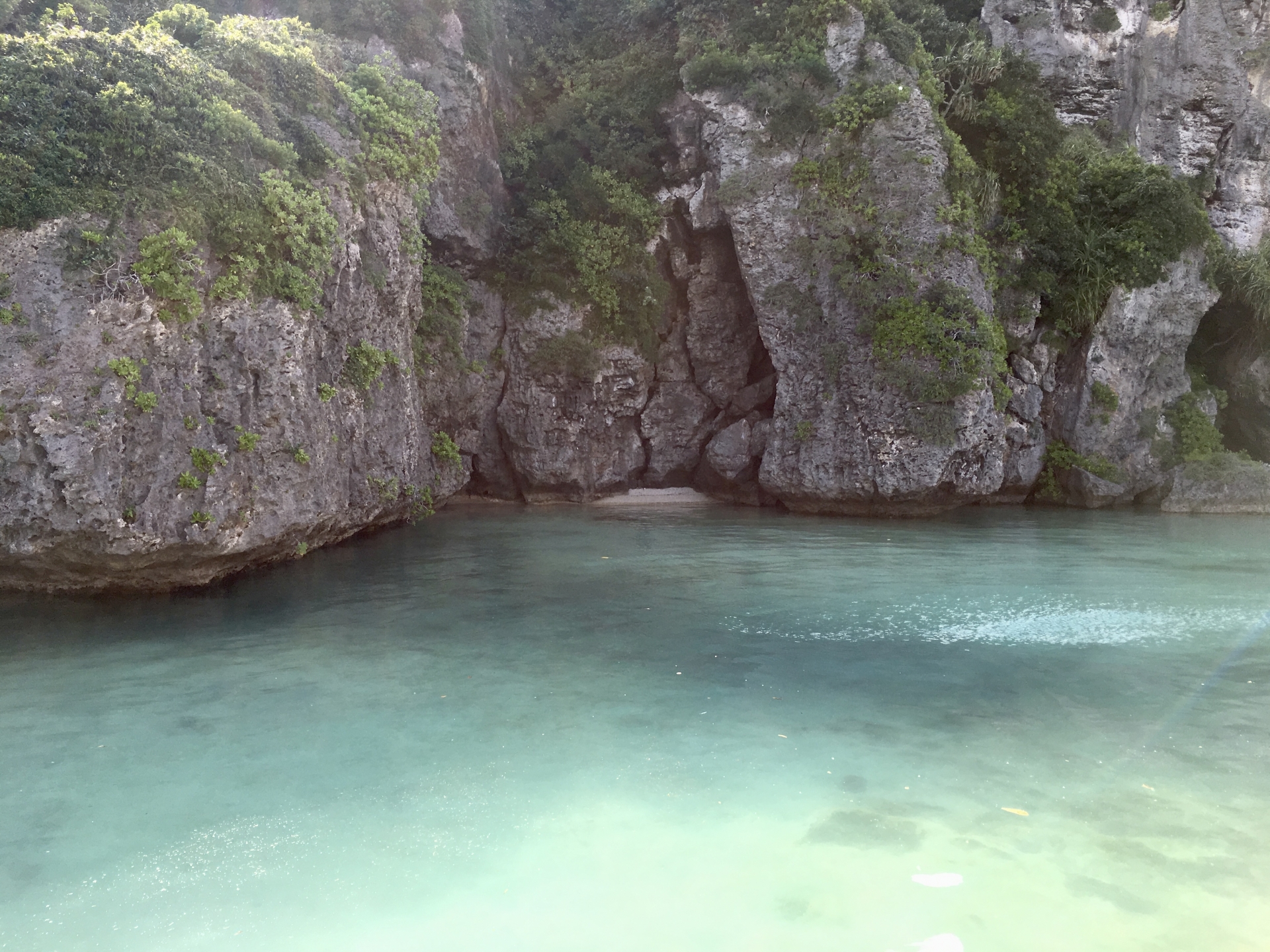
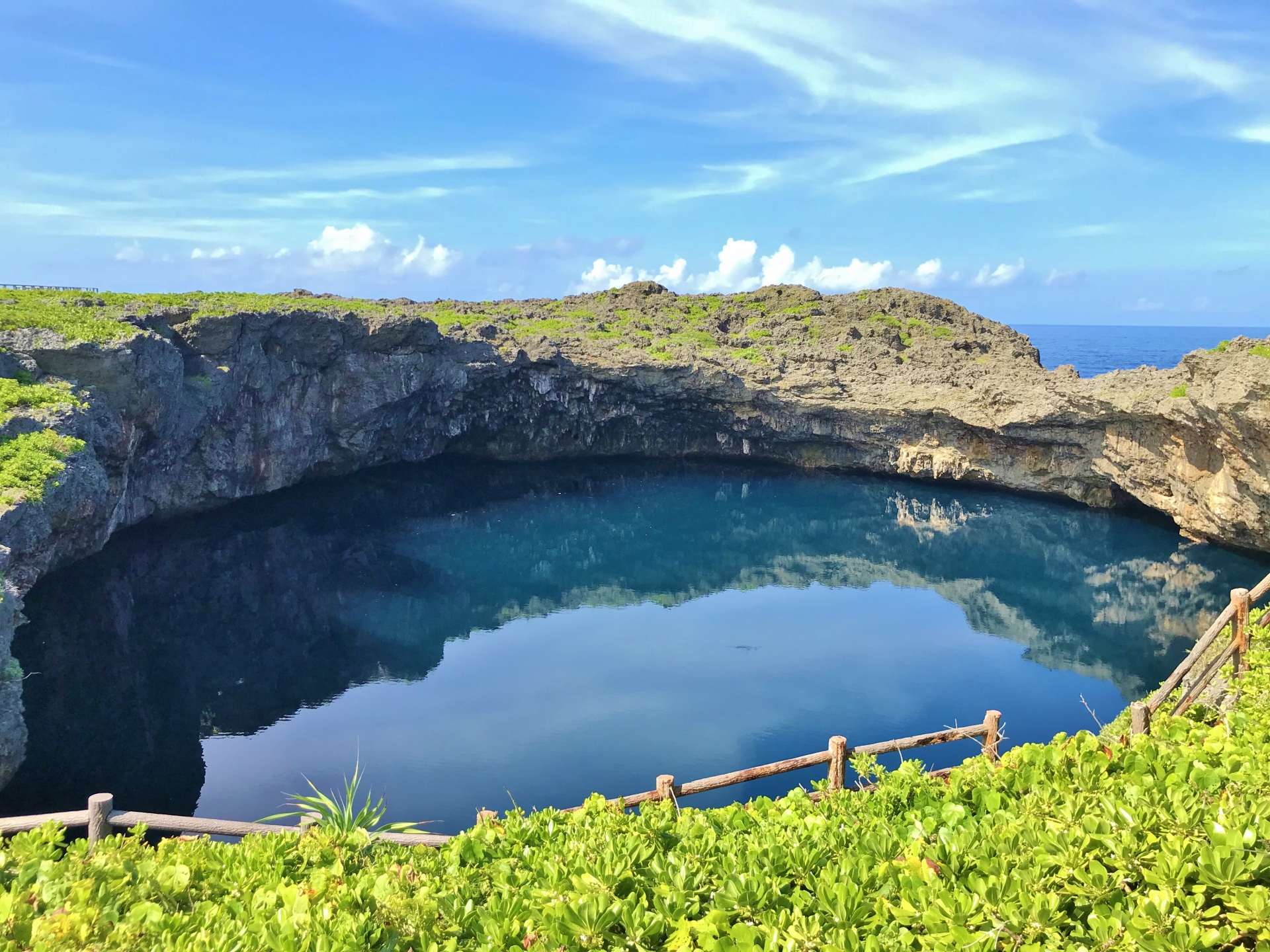
The cave is formed within Ryukyu limestone bedrock made of uplifted coral reef. It's a hollow born as a result of rainwater and seawater continuing to dissolve the limestone over many years, and like Toriike Pond and Obiiwa, it's a place created by the topographical features of the Irabu Island–Shimojishima area.
The cave's depth is around 20 metres (66 ft), and the interior is divided into several spaces. The ceiling height differs by place — there are spots where an adult can walk standing straight, and spots you can't pass without crouching. Go all the way to the back and you come out into a hall-like space, where the remains of a hearth survive.
It has a history of actually being used as an air-raid shelter during the war. During the Pacific War, natural caves were used on the Miyako islands too to avoid US air raids. Nudokubi Abu was one of them, said to be a place where civilians and soldiers took refuge. That natural beauty and the weight of history exist in the same space is this place's distinctive character.
It's currently certified as a historic site of Miyakojima City and is subject to protection as a cultural property. Tourists can enter freely, but there's no developed path — it's preserved in a state close to nature.
The "Where's the Entrance?" Problem | Getting Lost in the Sugarcane Fields
What people who go to Nudokubi Abu all say in unison is "I couldn't find the entrance." This is true, and almost everyone going for the first time gets lost. It's a paradoxical situation where getting there is harder than the inside of the cave.
There's a Sign, but It's Small
Search "Nudokubi Abu" on Google Maps and a pin appears. However, head to where the pin is and the surroundings are mostly sugarcane fields, with no atmosphere of a tourist spot being nearby. The sign certainly exists, but it's small in size, wooden, faded in colour, and half-hidden in the vegetation. Searching while driving, there's a high chance you'll pass it without noticing.
The tip is, once you reach the area the Google Maps pin shows, stop the car and walk around on foot to search. The sign is often set a little back from the road, so proceed while widening your gaze. Once you find the sign, there should be a footpath beyond it, and proceeding along it, stone steps appear.
After that, splitting up with your companions and searching from different directions often means one of you finds it first. The time spent searching while calling out "it's here!" to each other also becomes a fun memory in the end. Come with the feeling of "going expecting to get lost" from the start, and finding the entrance becomes part of the adventure too.
The reason relying only on your phone's Google Maps makes it easy to get lost is that the pin's accuracy and the local terrain don't perfectly match. Looking at visitors' blogs and photos in advance lets you picture the sign's appearance and the entrance's atmosphere, making it dramatically easier to find.
There's No Car Park
Nudokubi Abu has no dedicated car park. This is another point that troubles first-time visitors. You end up parking on the shoulder of the surrounding roads or somewhere like the edge of a farm road. Choosing a place that doesn't get in the way of farm work is basic, and if there's a car already there, parking near it is usually the right place.
If you come by rental car, some people feel that coming to Nudokubi Abu on its own gives "a short time on-site relative to the travel time." Making it a half-day route combined with Toriike Pond, Obiiwa and other Shimojishima spots improves travel efficiency.
You Need the Courage to Enter the Forest
Even after finding the sign, you need to proceed along a narrow grassy path. It's not a developed path but a natural footpath. After rain especially, the ground underfoot is muddy and mud can get on your shoes.
The anxiety of "is there really a cave ahead?" continues until you find the stone steps. Find the stone steps and it's confirmed — after that you just descend. Choosing the route where the footpath is clearest is the right answer, and grass that's been trodden down firmly is a sign of the correct path.
Access and Address
Address: 1229 Ikemasoe, Irabu, Miyakojima City, Okinawa
The Moment You Descend the Steps, the Air Changes
From the moment you step on the first of the stone steps, the temperature starts to drop. The cave interior, surrounded by limestone bedrock, is cut off from the outside temperature, staying cool even in high summer. Even when it's about 32°C (90°F) outside, the cave interior feels around 25°C (77°F). The sensation of that difference hitting your body simply feels good.
Once you descend the stone steps, the cave entrance is open. The cicadas and the sound of the wind vanish, and only the dripping of water and your own footsteps echo off the rock walls. Near the entrance the outside light reaches and it's relatively bright, but it gets darker as you go in, so it's reassuring to have a phone light or a torch ready.
Gajumaru Roots Hanging Down, a Castle-in-the-Sky-Like Sight
The most striking thing inside the cave is the gajumaru roots hanging down from the ceiling towards the ground. This scenery is Nudokubi Abu's greatest highlight.
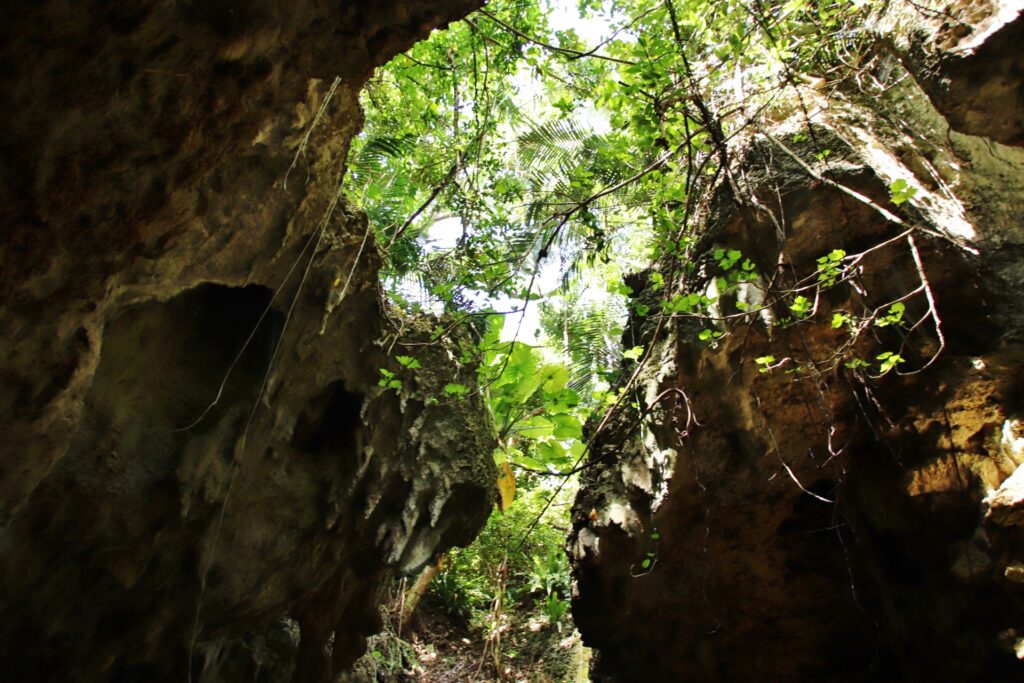
Roots Hanging Down from the Ceiling
A gajumaru growing above ground grows while extending its roots underground. Those roots penetrate the bedrock and hang down from the cave ceiling. From thin ones to ones a few centimetres thick, dozens of roots line up like a curtain.
The colours vary, from whitish to brown to greenish with moss attached. The roots' colour looks different depending on the angle the light comes in. Near the cave entrance they're bright catching the outside light, getting darker as you go in. That light-and-dark gradient, combined with the density of the roots, creates a distinctive atmosphere.
Just after entering the cave, look up at the ceiling and you can see the roots are dense. At first you just think "wow," but as you go in the thickness and quantity of the roots increase and you gradually become overwhelmed. Especially near the hall at the very back, some roots reach almost to the ground, to the point you need to duck under them to proceed.
Why It's Called Castle in the Sky
Search Nudokubi Abu and the words "like Castle in the Sky" frequently come up. In the ruin scenes of Hayao Miyazaki's film "Castle in the Sky (Laputa)," the sight of plants encroaching on ruins is depicted, and the look inside the Nudokubi Abu cave resembles that.
A space with no man-made objects, where only natural rock and plant roots exist, certainly has a somewhat sci-fi atmosphere. It's not a ruin but a natural cave, but I think the sense of "a place nature shaped over a long time" overlaps with the world of Castle in the Sky.
Actually going in, I felt that expression isn't off the mark. However, the scale of the whole cave is on the smaller side than the photos suggest, and some people have the impression "it's not as big as I thought." In photos the depth and sense of scale tend to look bigger than reality, so it's best to adjust your expectations a little before going. Even so, the real thing is plenty worth seeing.
The Quality of the Light Is Beautiful
Nudokubi Abu's scenery changes greatly with how the light comes in. In the early morning, outside light streams in from the entrance and the roots and rock are brightly lit. In the afternoon the angle of the light changes and the cave interior becomes darker. If you want to take photos, around 10 am to midday is the best time.
Near the cave entrance, where the outside brightness and the cave's darkness mix, is the most photogenic point. Whether you shoot the silhouette of the roots against the outside light, or shoot the light streaming in from the entrance from inside the cave, either composition makes an interesting photo. When shooting with a phone camera, turning on HDR mode lets you capture detail without blowing out even in scenes with extreme light-dark contrast.
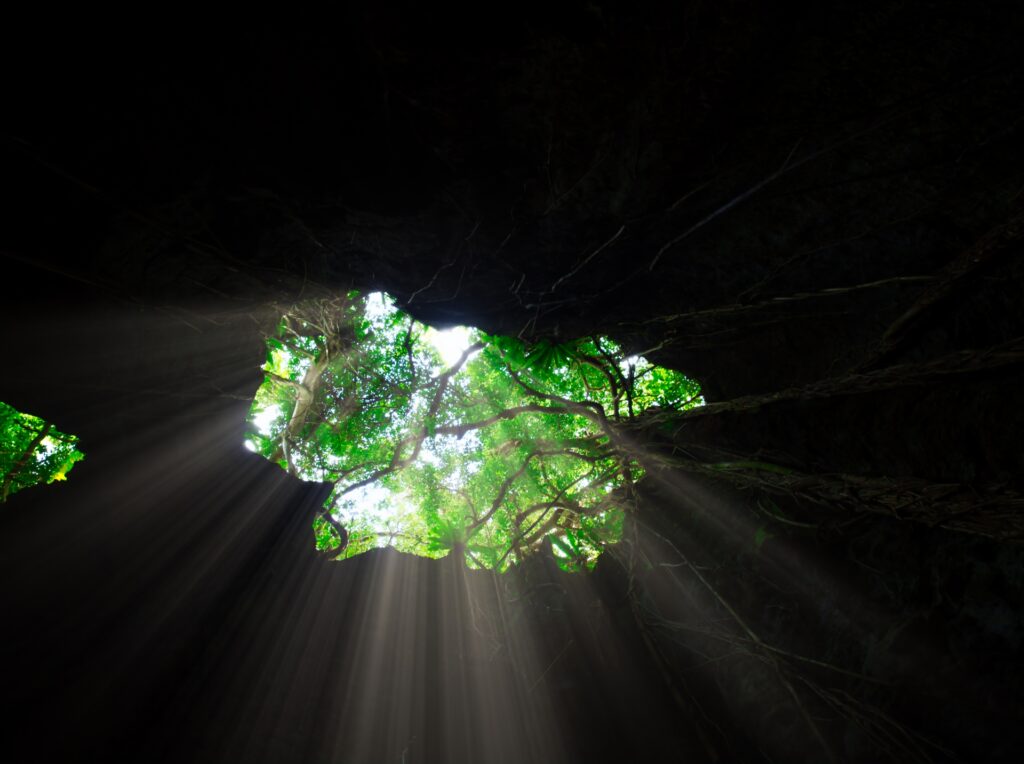
A Wartime Air-Raid Shelter | The Remains of a Hearth Survive
I want to write a little here about how Nudokubi Abu isn't merely a natural cave but also a place that holds the memory of history. Just entering the cave and enjoying the scenery is enough, but seeing it knowing the historical background changes the impression.
The History as an Air-Raid Shelter
During the Pacific War, natural caves were used as air-raid shelters on Okinawa's remote islands too, to prepare for US air raids and shelling. The Irabu Island–Shimojishima area has several caves, and Nudokubi Abu, as one of them, is said to have been used as a place where civilians and military personnel hid.
At the back of the cave, the remains of a hearth survive. The remains of a hearth made of stonework, with parts of the wall where traces of soot remain. There were people here who cooked meals, kept the light burning, and strained to hear the sounds outside. Those traces still remain today.
In the cave, standing before the remains of the hearth, your feelings change. The fantastical scenery of hanging gajumaru roots and the traces of wartime life are in the same space. Natural beauty and the memory of war overlap. Both are real, and neither can be ignored. There's a weight here that makes it hard to end with just "it was a beautiful place."
It's Registered as a Historic Site
Nudokubi Abu is certified as a historic site of Miyakojima City and is subject to cultural-property protection. You can enter freely, but acts of damaging or removing the rock or plants inside the cave are prohibited. Pulling on the gajumaru roots or scraping the walls is, of course, also a no.
Taking photos, enjoying the scenery, reflecting on history. It's a place you can fully enjoy just with that, and not changing the natural state is the condition for many people to be able to enjoy the same scenery from now on too.
Insect Repellent Essential | There Are Masses of Mosquitoes
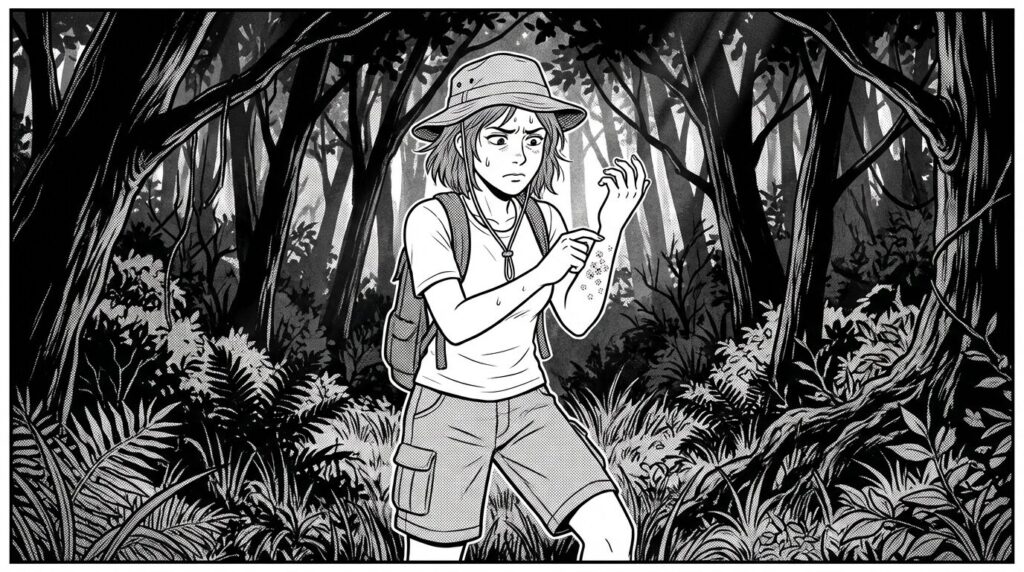
This one thing I'll tell you clearly in advance. Nudokubi Abu has a great many mosquitoes. Get absorbed in the cave's atmosphere and you'll be bitten in many places before you notice.
They're Inside the Cave Too
The mosquitoes are not only in the grass outside but inside the cave too. A limestone cave is cool and humid, a very comfortable environment for mosquitoes. From near the entrance to the back of the cave, mosquitoes are constantly flying, and I have the experience of being bitten in many places on my arms and legs during the few minutes of standing still taking photos.
Going in a T-shirt and shorts in the daytime in summer is an almost defenceless state against mosquitoes. You'd best assume bare skin without insect repellent will be bitten. The longer you linger in the cave the more times you're bitten, so go thinking "let's view it slowly" without mosquito countermeasures and you'll regret it.
Take Full Countermeasures
Applying insect repellent all over right before entering the cave is the most effective countermeasure. Be sure to apply it to exposed skin — neck, arms, ankles, the backs of hands. A spray type is easy to use, applied quickly all over. Ones containing DEET, whose effect lasts long, are effective in the cave environment.
Long sleeves and long trousers are ideal clothing. Even in summer, thin outdoor material doesn't get too hot. Trainers are best for footwear; sandals slip easily on the stone steps and wet ground. There's a chance of catching your feet on the rock inside the cave too, so it's better to choose shoes that cover the feet as much as possible.
Keeping your time inside the cave to the minimum necessary is also a way to reduce the number of bites. Checking the highlights, taking photos, and coming straight out is a realistic way to move. Rather than viewing slowly while being bitten, moving quickly to grasp the whole and then leaving makes for a more satisfying experience in the end.
Nudokubi Abu as a Power Spot
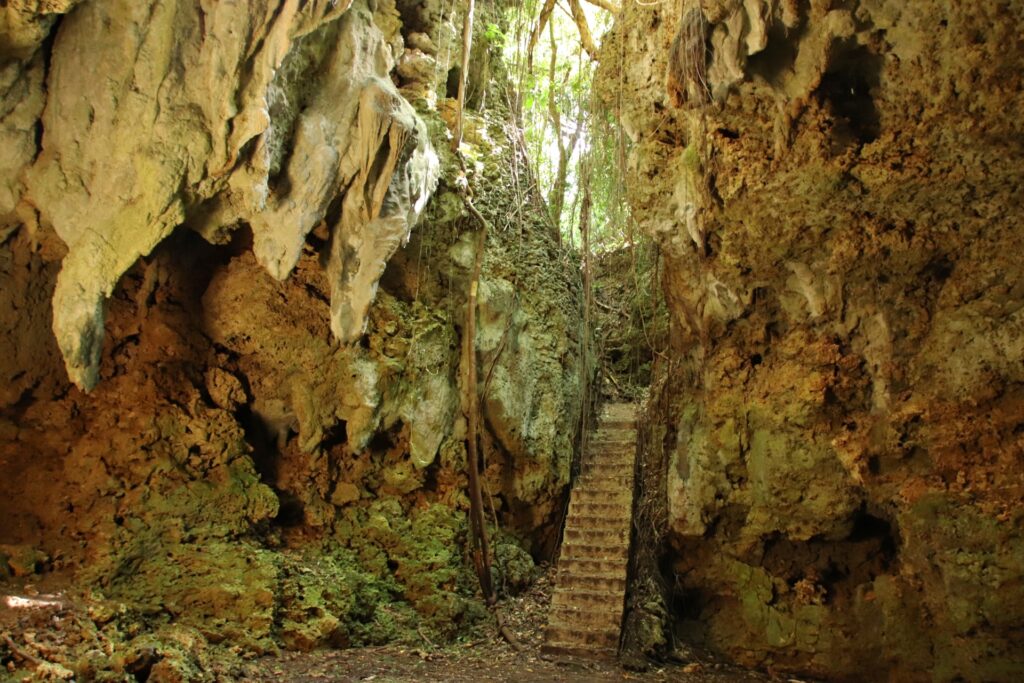
Beyond just being introduced as a tourist spot, Nudokubi Abu is sometimes spoken of as a power spot.
What the Locals Say
When I talked with someone living on Irabu Island, the topic of Nudokubi Abu came up. The words "that place has been cherished since long ago" stayed with me. It means that, beyond seeing it as merely a cave or merely a tourist site, there's an aspect of the island's people cherishing it for many years as a sacred place.
In Okinawa–Miyako culture, caves and rocky places are often tied to rituals as sacred sites called utaki. I haven't been able to confirm whether Nudokubi Abu was directly used as such a ritual site, but there's no doubt it's been consciously regarded as a place rooted in the island since long ago.
As someone visiting as a tourist, I think it's fine to come as "a place to enjoy beautiful scenery." But knowing how the locals view this place changes how you engage with it a little. Avoiding acts like raising your voice or striking the rock is also natural as manners.
The Stillness of Few People
One reason Nudokubi Abu becomes a special experience is the small number of people. Famous spots like Toriike Pond and 17END always have tourists, but Nudokubi Abu, with its low profile, on weekdays it's not unusual to meet only one or two people. Even on busy days, there's almost never a situation where the inside of the cave is crowded.
That stillness creates a distinctive atmosphere. The time spent gazing alone at the scenery of hanging gajumaru roots in a cave with no one around is, I think, an experience that falls into a special category even within Irabu Island sightseeing. Quiet, cool, and a sensation as if cut off from the outside world. When this kind of "time alone" is inserted into a trip of ticking off sights one after another, the impression of the whole trip changes.
You could say that precisely because it's not well known, there's value in going now. When it spreads on social media and people increase, this stillness is lost. Right now, it's at the stage of "a place known to those who know." Among an island that changes each time you come to Irabu Island, Nudokubi Abu is a hidden gem still in that state.

What to Know Before Visiting
Insect Repellent and Clothing Are Essential
This is the most important. There are many mosquitoes inside the cave, and without spray your time on-site shortens dramatically. It's reassuring to buy it in central Miyakojima or at the airport, and ones containing DEET are effective in the cave environment. For clothing, long sleeves and long trousers; for shoes, trainers are best. Please avoid sandals as they slip easily on the stone steps and are dangerous.
Avoid After Rain and at Night
After rain, the stone steps and the ground inside the cave get wet and become very slippery. After a typhoon there's a risk of fallen trees and falling rocks too, so choosing a fine day is basic. At night, finding the entrance becomes difficult and the risk of falling increases. Be sure to visit during daylight hours.
Don't Rely on Google Maps Alone
The Google Maps pin shows the rough location, but the "from the sign to the entrance" part isn't guided by the navigation. Looking at visitors' blogs and photos in advance lets you picture the sign's appearance and the look near the entrance, making it dramatically easier to find. Search "Nudokubi Abu how to get there" and accounts from people who actually went come up, so do use them as a reference.
Frequently Asked Questions (FAQ)
Does Nudokubi Abu have an admission fee?
You can enter free. There's no caretaker or reception — anyone can enter freely. It's not a tourist facility, so the level of development is limited, and safety requires judgement at your own risk.
Can you go with children?
From mid-primary-school age or older, you can enjoy it without trouble. The stone steps are steep, so small children need an adult to hold their hand firmly. There are dark, narrow places inside the cave, so children not good with dark places may feel scared. Mosquito countermeasures are needed for children the same as for adults.
Can you go without a car?
It's an area with no bus routes, so it's practically difficult without a rental car or rental bike. A rental car is the most efficient way to sightsee Irabu Island and Shimojishima.
How long does it take, roughly?
Viewing inside the cave itself is about 15–30 minutes. Including the time to find the entrance, allowing an hour on-site gives you leeway. It's easy to make a course combining it with Toriike Pond and Obiiwa to go round the Shimojishima area over half a day.
Summary | Nudokubi Abu Is a Place That Tickles Your Sense of Adventure
Nudokubi Abu is the type of place hard to put in a tourist pamphlet. There's no car park, the sign is small, and the entrance is hard to find. But that, conversely, strengthens the feeling of "I found it myself." The change of air the moment you descend the stone steps, the scenery of hanging gajumaru roots, the remains of a hearth at the back of the cave. All of them are things you can only experience here. Just prepare insect repellent and long sleeves, and after that, striking scenery awaits if you just proceed while watching your footing.
After going round the standard spots, when you think "I want to see somewhere a little different," Nudokubi Abu becomes the answer. Including the time spent lost searching for the entrance, it's fun when you can think of it as the experience here. Precisely because it's "a place that's hard to reach," the sense of achievement when you find it and the awe inside the cave are great. Get your equipment in order, allow plenty of time, and do go and try it.