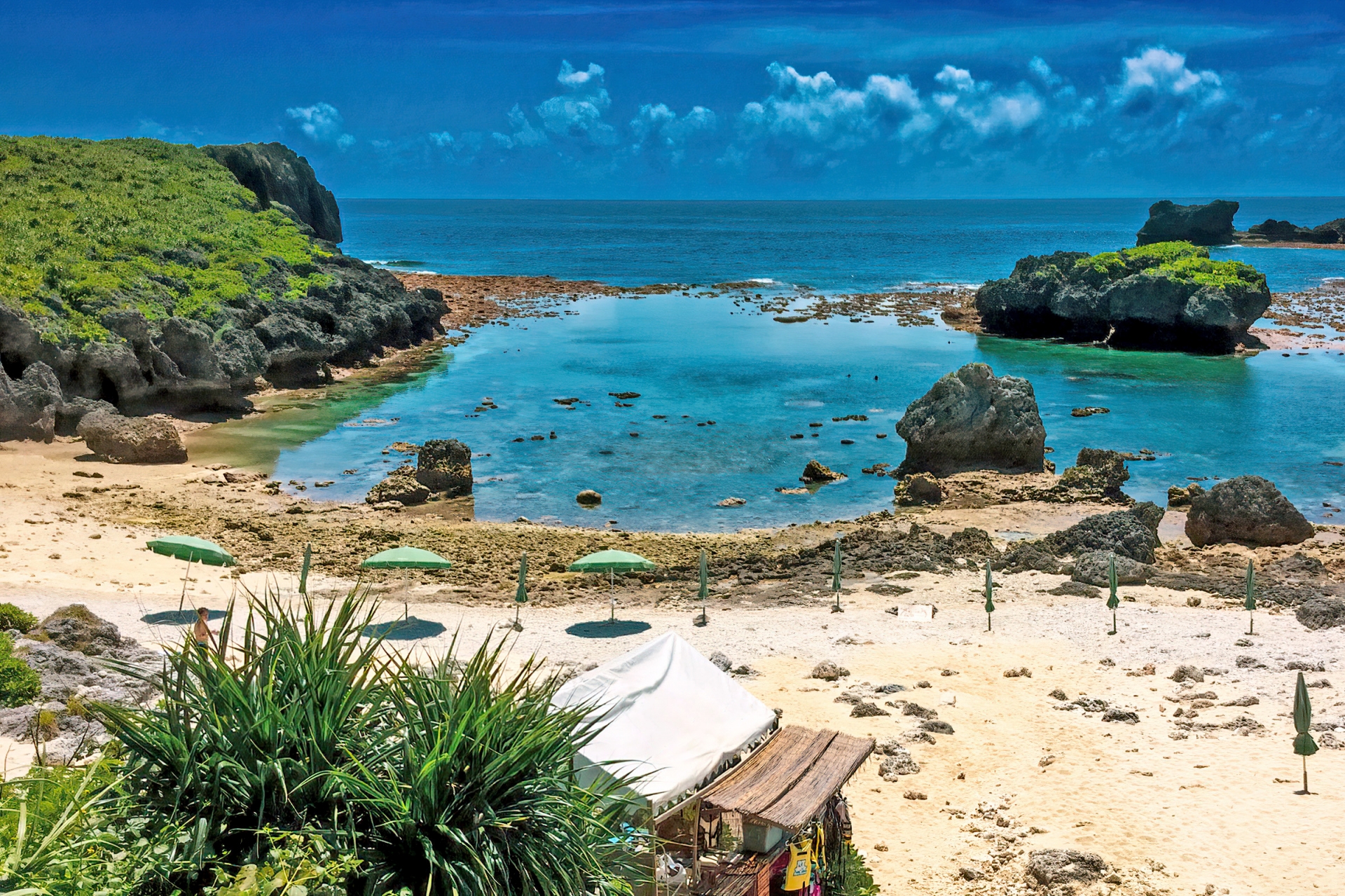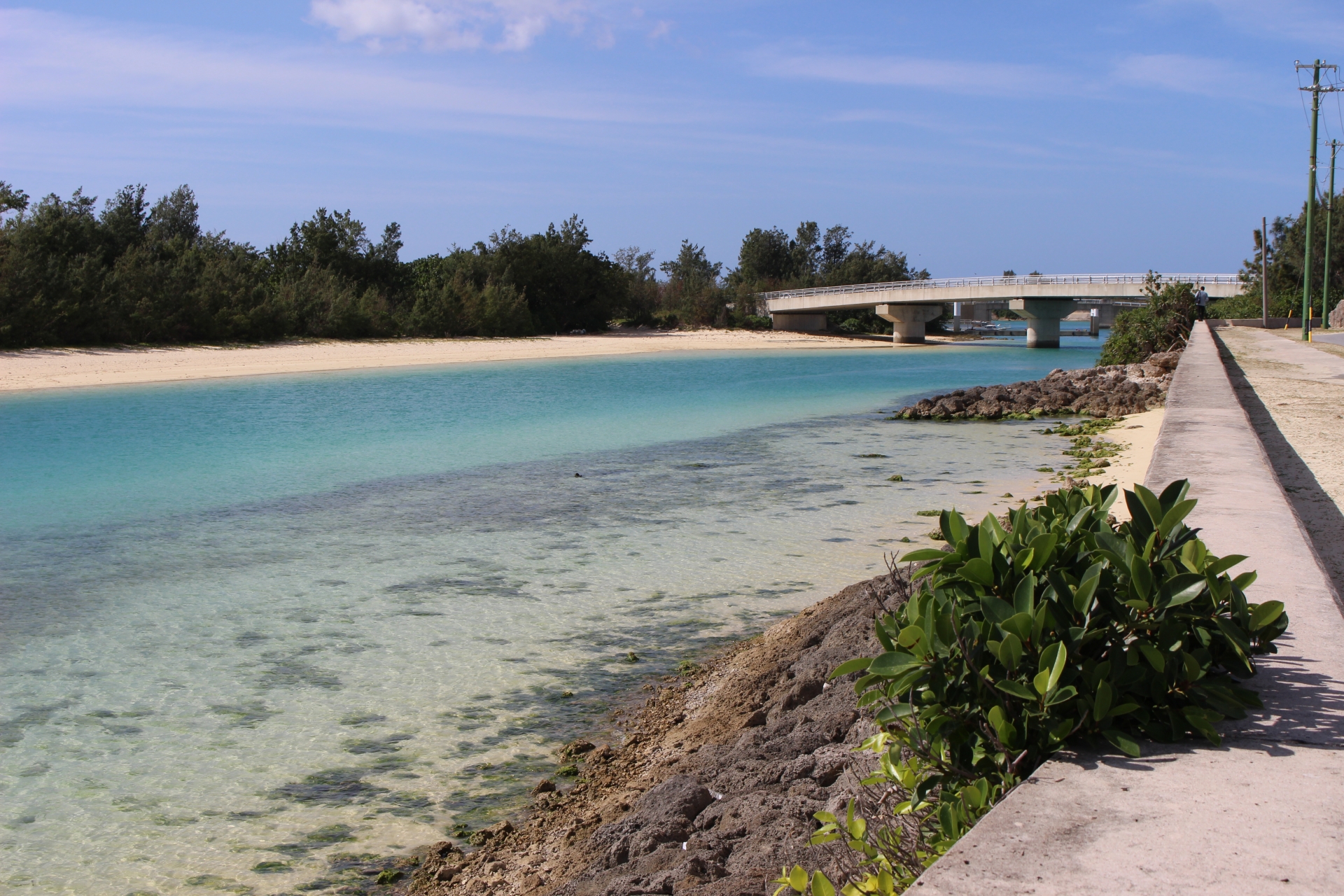
- A Hidden Gem That Steals Your Heart
- What Is Shinbiji?
- How to Get to Shinbiji
- The Appeal of Shinbiji
- Things to Note When Visiting Shinbiji
- How to Spend Your Time at Shinbiji
- Recommended Spots Around Shinbiji
- A One-Day Model Course Including Shinbiji
- Shinbiji's History and Its Ties to the Locals
- The Best Season for Shinbiji
- Voices of People Who've Visited Shinbiji
- Frequently Asked Questions (FAQ)
- Shinbiji Is a Place to Taste the Luxury of "Nothing"
A Hidden Gem That Steals Your Heart
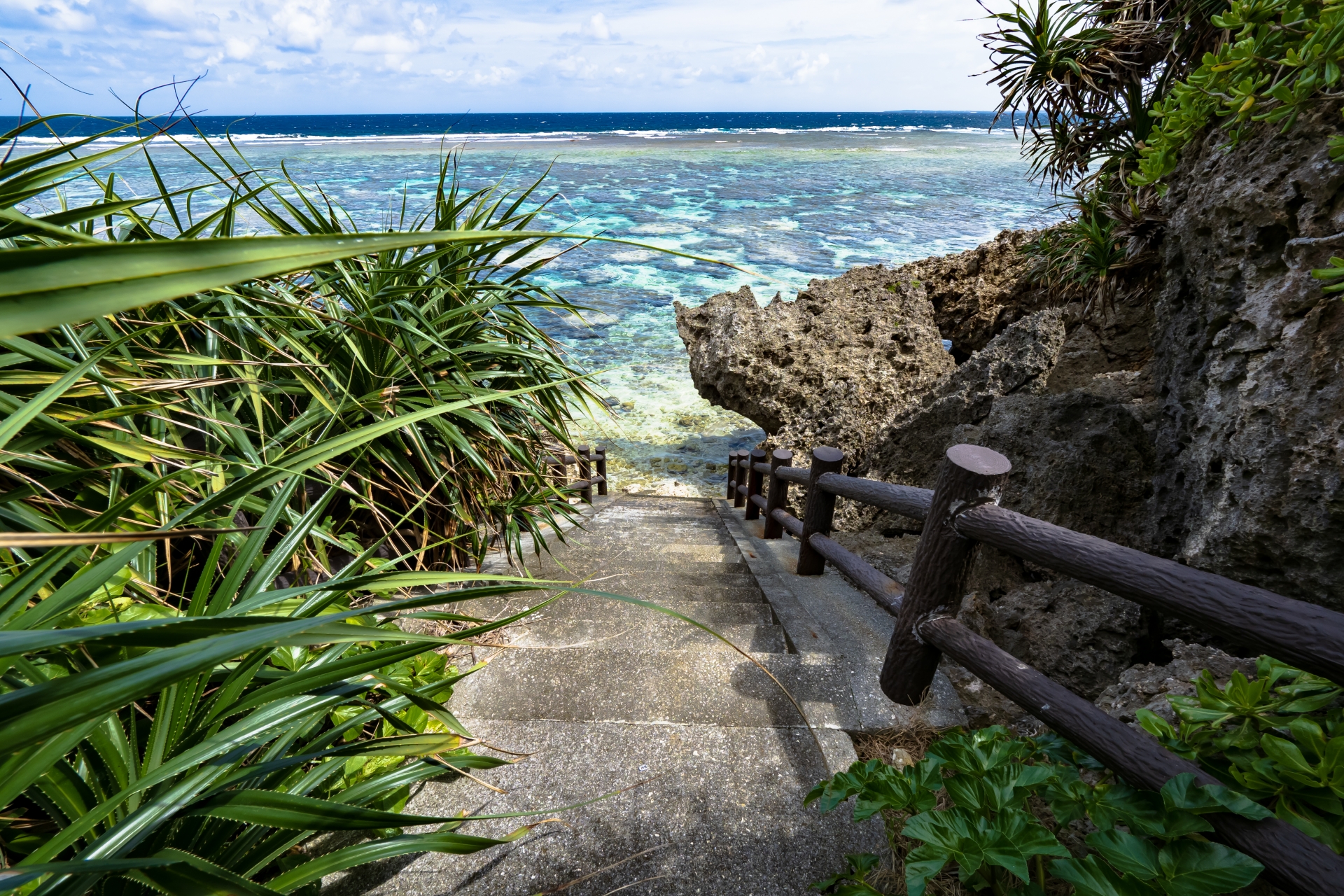
The first time I saw the stairs at Shinbiji, I stopped in my tracks. The pure white steps led straight down into a cobalt-blue sea, so beautiful I doubted, "is this really real?"
But getting there was quite hard work. Walking through jungle-like undergrowth, anxious about "is this really the right way," I pressed on. Even so, the moment I saw the scenery waiting at the end, I thought from the heart, "I'm glad I came."
About Irabu Island's hidden scenic spot "Shinbiji," I — having visited many times — will introduce it in detail. The location, how to get there, things to note, how to enjoy it, nearby spots. I'll write it all.
If you're looking for a "genuinely beautiful place with few tourists" on Irabu Island, Shinbiji is one you absolutely should visit. It's a special spot where you can avoid the crowds and quietly face the sea.
What Is Shinbiji?
Shinbiji is a scenic spot in the north of Irabu Island, characterised by white stairs leading down to the sea.
The Origin of the Name
The name "Shinbiji" apparently means "white beach" in the Irabu Island dialect. For the locals it's been cherished since long ago as a sacred place, and was apparently also a place for holding rituals. Knowing that history, you somehow understand the stillness and mystical atmosphere of this place.
What Kind of Place Is It?
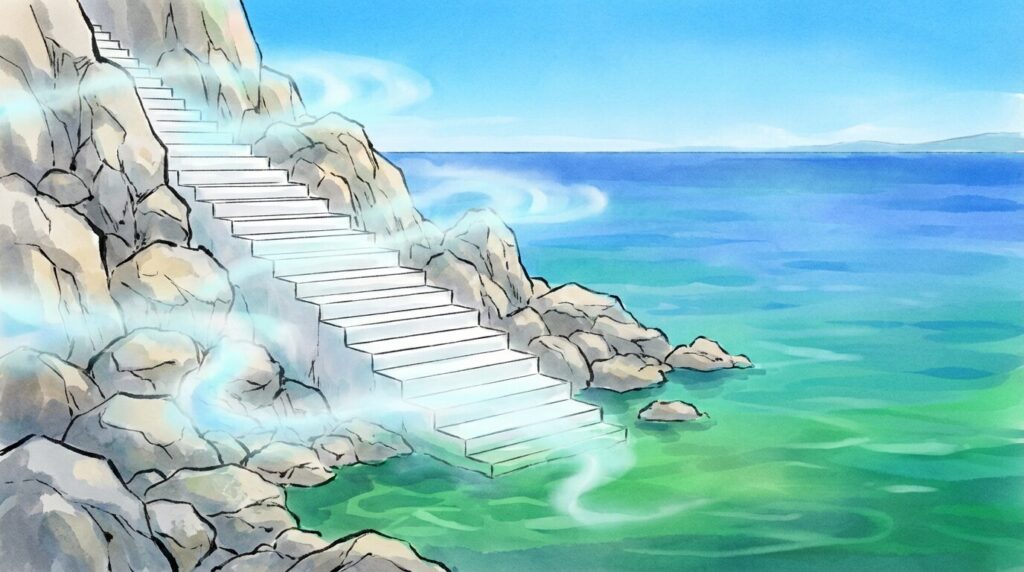
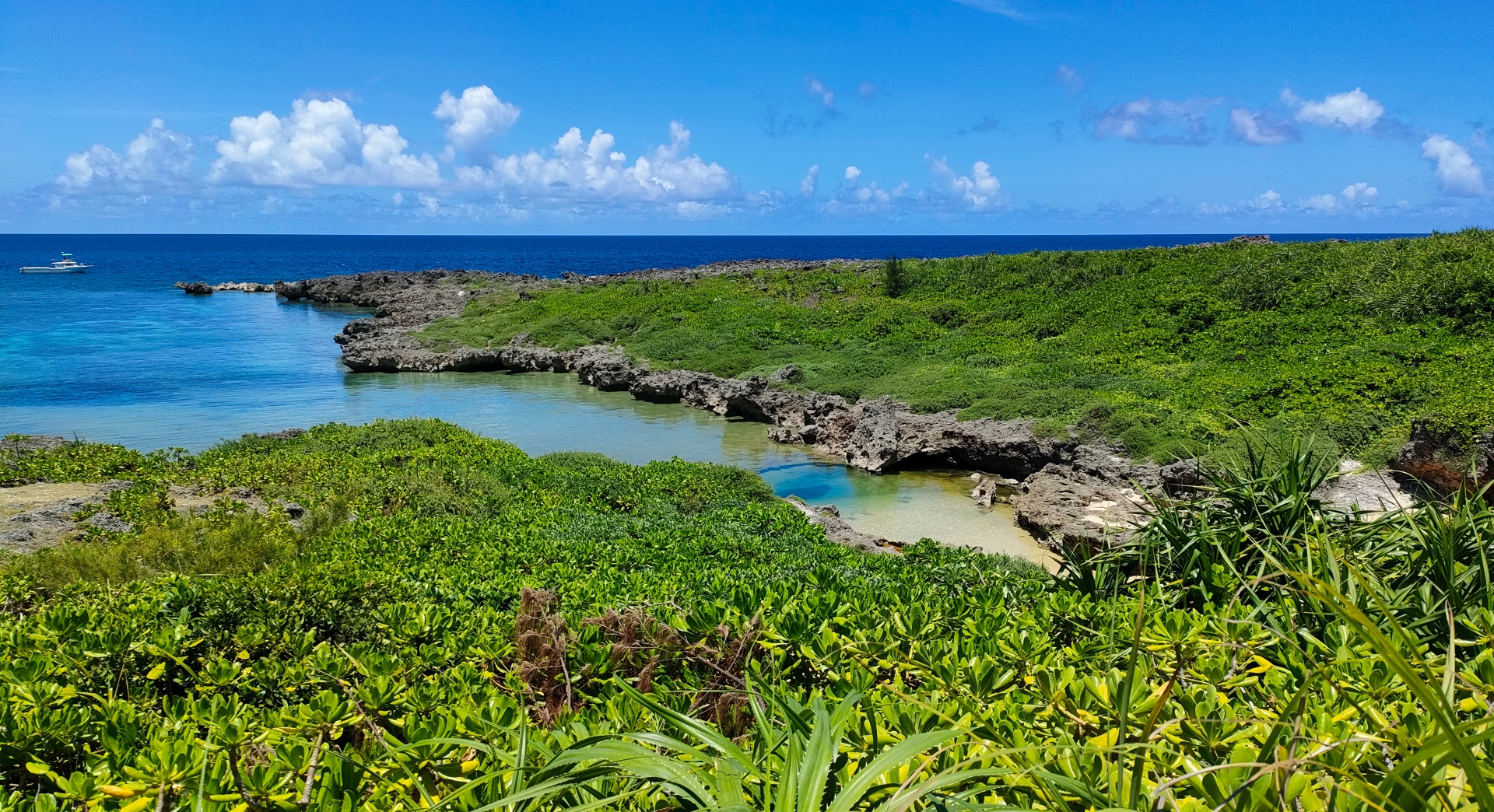
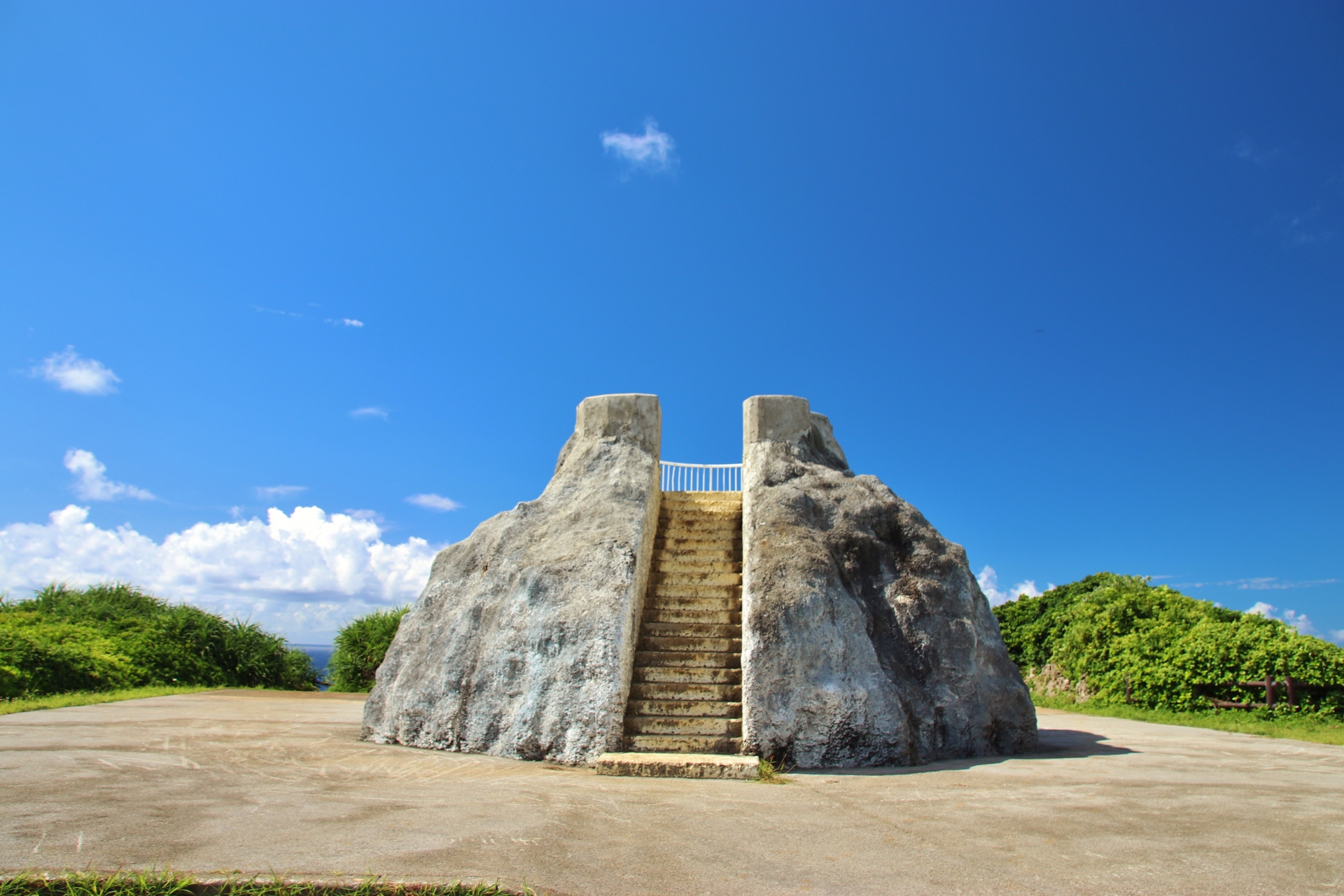
Shinbiji's greatest feature is, of course, the white stairs leading to the sea. Pure white steps descend straight from the top of the cliff to the sea, and beyond them spreads a supremely clear cobalt-blue sea. It's like a scene from a film, with some people even calling it "the stairway to heaven."
The area around the stairs is rocky, and at high tide the lower part of the stairs is submerged. That sight is fantastical too, with a curious beauty as if the sea and stairs have merged.
It hasn't been developed as a tourist site, so there are no signs or flashy guidance. That's exactly why there are few people and it's quiet. It's a place where you can leisurely gaze at the sea, listen to the waves, and face nature.
Where Is It?
Shinbiji is in the north of Irabu Island, between Cape Shiratori and the Funausagibanata observation point. After crossing the Irabu Bridge onto the island, follow the coastal road around to the north side. It's about 15 minutes by car.
However, the location is a bit hard to find. It comes up on Google Maps if you search "Shinbiji," but there's almost no entrance signage on site, so the first time I went I was nervous. I remember pressing on, thinking over and over, "is this really right?"
How to Get to Shinbiji
Let me explain the route to Shinbiji in detail.
Access by Car
Going to Shinbiji is basically by car. Rent a car and drive the coastal road that loops around the north side of Irabu Island.
After crossing the Irabu Bridge onto Irabu Island, head towards Sarahama Port. From there, drive the coastal road heading north. Along the way, signs for Cape Shiratori and Funausagibanata appear, and just before Funausagibanata, look for the narrow road descending towards the sea.
The landmark for that narrow road is a wood-style guard fence. Among the ordinary white guardrails, a wood-style fence suddenly appears, so I think you'll know at once: "huh? only this bit has a different feel." Between that wood-style fence is the road descending towards the sea.
Parking
Going down the narrow road, there's a small parking space at the dead end. Only about four cars can park. It's an unpaved gravel area, and honestly it has an atmosphere that makes you a bit anxious: "is this right?"
The first time I went too, arriving at the car park I thought, "huh, here? is this really a tourist spot?" It seems to be a place with a lot of illegal dumping, with rubbish lying in the undergrowth, a thick, overgrown feel. But a spectacle waits beyond, so you mustn't give up here.
The car park is free. But there really are only four spaces, so during busy seasons or times you may not be able to park. I went on a weekday morning, so there was only one other car.
From the Car Park to the Sea
Once you park, you walk from there to Shinbiji's sea. It's about a 3-minute walk, but these 3 minutes are quite nerve-racking.
About 20 metres back up the road from the car park, right where the road curves, there's the entrance to the jungle. It's covered in grass, and at first it's "huh, here?" But look closely and a paved path continues, so you push through the grass and press on.
Walking through this undergrowth, I thought over and over, "I'm glad there are no habu snakes on Miyako Island." On the Okinawa main island, walking through grass like this would be scary, but Miyako Island has no habu, so on that point it's reassuring.
Walk a little and a wooden fence appears again (almost hidden by grass, though). Follow the path along that fence and the view opens up, with Shinbiji's stairs and the sea appearing before you.

The Appeal of Shinbiji
I'll write about Shinbiji's appeal as I felt it on actually visiting.
White Stairs and a Cobalt-Blue Sea
Shinbiji's greatest appeal is, after all, the contrast of the white stairs and the cobalt-blue sea. The pure white steps lead straight into a highly transparent sea, and that sight is beautiful beyond words.
The stairs are made of stone, with a slightly aged feel. But that aged feel conversely has character, making you think "this has been here since long ago." The sea's gradation from emerald green to cobalt blue sets off the whiteness of the stairs, creating a scene like a painting.
When I went the tide was out, and I could see all the way to the bottom of the stairs. Descending the stairs, it feels like you can walk straight into the sea. At high tide the lower part is submerged, so you'd see a different scene then.
Overwhelming Stillness
Shinbiji's second appeal is the overwhelming stillness. There's hardly anyone. When I visited too, there was only one other couple.
Tourist sites are inevitably crowded and noisy, aren't they. But Shinbiji is different. Only the sound of the waves and the wind. Just the occasional bird call. Gazing at the sea in that stillness, you feel deeply, "ah, I'm glad I came to Irabu Island."
This stillness, I think, is what makes Shinbiji a special place. You can face nature undisturbed by anyone. Forget the bustle of the city and reset your mind. It's that kind of place.
Untouched Nature
Shinbiji has no toilets, showers or pavilion. No vending machines, no shop. There really is nothing. But that's what's good.
Precisely because it hasn't been developed as a tourist site, the nature remains as it is. The rocks, the undergrowth, the stairs, all left to nature. It's beautiful precisely because it's a landscape untouched by human hands, I think.
That said, "nothing" also means you need to prepare. You should definitely bring a drink, and use the toilet beforehand. Before going, I bought a drink at a convenience store and used the FamilyMart toilet before heading there.
The Beauty of the Sunset
Shinbiji is apparently beautiful at sunset too. I haven't been in the evening yet, but the sunset photos I see on social media are really lovely, and I'm thinking I'll absolutely go in the evening next time.
It's a west-facing sea, so you can see the moment the sun sinks into the sea. I imagine the white stairs and the orange-dyed sea would show a different beauty again.
But if you go in the evening, it's better to plan to arrive while it's still light. Walking through the undergrowth after dark is, naturally, scary.
A Supremely Clear Sea
Shinbiji's sea has supreme clarity. Even looking down from atop the stairs, you can clearly see the seabed. Inside the reef the waves are calm too, and the water's surface reflects the light, sparkling — truly beautiful.
That said, there apparently aren't that many fish. As a snorkelling spot, other places (like Nakanoshima Beach) may be better. Shinbiji is a place to "gaze" rather than "swim."
You can get in the sea too, but the rocks are rough and sharp, so your soles hurt in bare feet or soft marine shoes. If you do get in, it's better to wear sturdy marine shoes.
Things to Note When Visiting Shinbiji
Shinbiji is a wonderful place, but there are a few things to note when visiting.
Go with Two or More People
Shinbiji is a place with little foot traffic. When I went too, there was only one other group. So I don't recommend going alone. If something happens, it's hard to call for help.
Always go with two or more people. With friends or family, you can enjoy it with peace of mind. I went with a friend too, the two of us.
Choice of Footwear Matters
To get to Shinbiji you walk through undergrowth. So sandals or heels are absolutely out. Go in trainers or easy-to-walk-in shoes.
If you plan to descend the stairs and get in the sea, marine shoes are essential. The rocks are sharp, so in bare feet your soles hurt too much to walk. Something sturdy, like KEEN sandals, is recommended.
At first I was going to go in ordinary beach sandals, but my friend stopped me — "you absolutely shouldn't" — and I went in trainers. The right call. Walking through the undergrowth, I'd definitely have slipped in beach sandals.
Take Care at High Tide
At high tide the lower part of the stairs is submerged. So if you go at high tide, you can't see the whole staircase. That's a fantastical sight in its own way, but if you want to descend the stairs and get in the sea, it's better to aim for low tide.
You can check the tides online in advance. Search "Miyakojima tide table" and you'll find the day's high and low tide times, making it easy to plan.
Drinks and Taking Rubbish Home
Shinbiji has no vending machines or shop. So always bring a drink. In summer especially, heatstroke prevention is important. I brought two 500 ml bottles.
And please always take your rubbish home. Shinbiji has no bins either. Take home the rubbish you make. This is the most basic of basics, but it's important.
Seeing the illegally dumped rubbish in the car park, I thought, "this kind of thing is really a shame." We'd want to avoid dirtying such a precious, beautiful place.
Slippery — Take Care
The stairs get wet and slippery when submerged at high tide. And the stair surface is a little rough, so you could get hurt if you fall.
There's no handrail, so descend slowly and carefully. Descending while holding a camera is especially dangerous. I took photos before descending, and kept both hands free going down.
Use the Toilet Beforehand
Shinbiji has no toilet. The nearest is probably FamilyMart Miyako Irabu or a nearby café.
I used the FamilyMart toilet before going. If you plan to spend about an hour at Shinbiji, it's reassuring to use the toilet beforehand.
Sun Protection
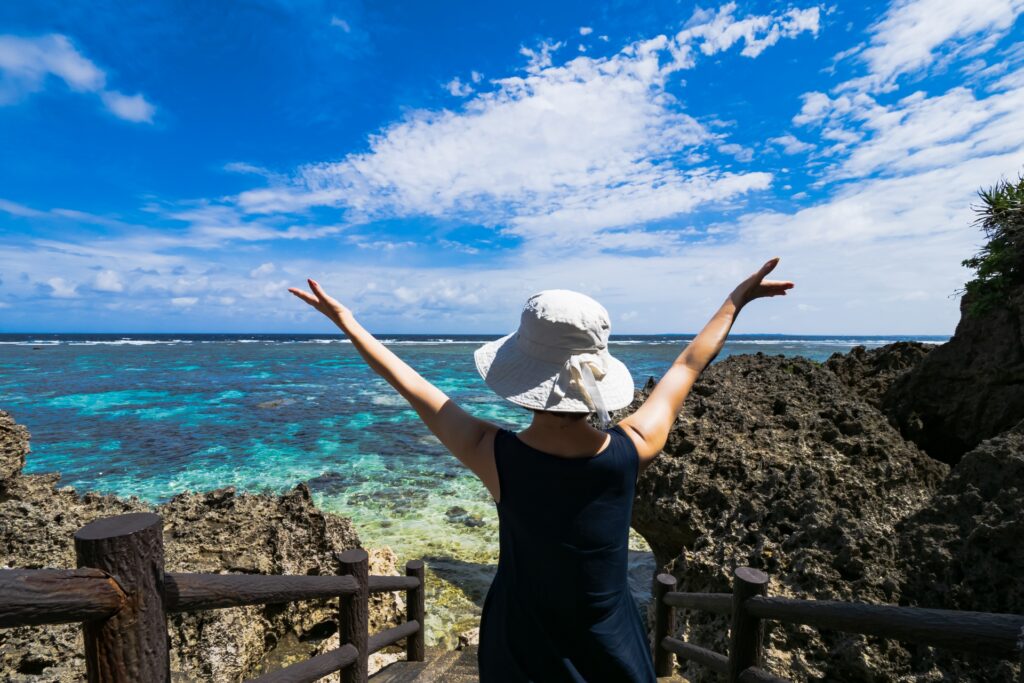
Shinbiji has almost no shade. The stairs and rocks take direct sunlight head-on. So sun protection is essential.
Apply sunscreen, wear a hat, and ideally wear a rash guard too. I applied sunscreen, but still got a little burned.
How to Spend Your Time at Shinbiji
Based on my experience, I'll write about the recommended way to spend your time at Shinbiji.
Just Gaze
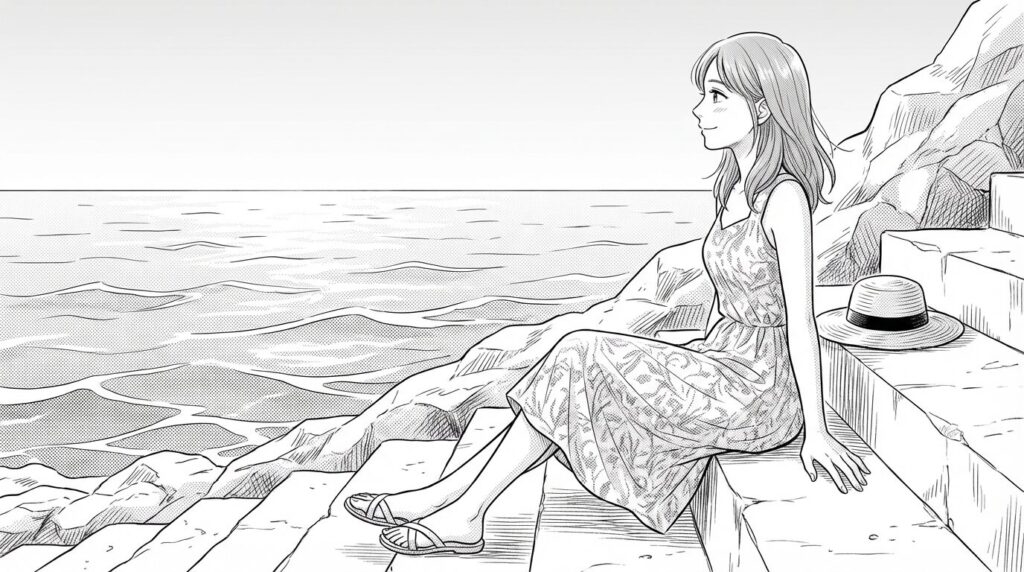
The top recommendation at Shinbiji is to "just gaze." Sit on the stairs and gaze at the sea. That alone is enough for a happy time.
I sat partway down the stairs and gazed at the sea for about 30 minutes. Listening to the waves, feeling the wind, without a thought. You can't easily get that kind of time in everyday life, can you. That's exactly why it's precious.
My friend said, "doing nothing is such a luxury, isn't it." I really think so too.
Take Photos
Shinbiji is a photogenic spot. The white stairs and cobalt-blue sea, that contrast is so beautiful, it makes a picture wherever you shoot.
The recommended shooting point is the angle looking down from atop the stairs. The whole staircase and the sea fit in one photo, giving off that "stairway to heaven" feel.
Sitting partway down the stairs and taking a selfie with the sea behind you is good too. I had my friend take it. The sea spreading out behind came out really beautifully, and when I posted it to Instagram I got asked "where is this?" so many times.
Get in the Sea
At low tide you can descend the stairs and get in the sea. But the rocks are rough, so marine shoes are essential.
I just dipped my feet in the sea. The clarity is high and you can clearly see your feet. The water temperature was just right too. Not too cold, not too warm.
You can snorkel, but there aren't that many fish, so if "swimming" is the aim, other beaches may be better. Shinbiji is a place to "enjoy the scenery."
Meditate Quietly
Shinbiji's stillness is perfect for meditation. In a space where only the waves are heard, close your eyes and breathe deeply. Everyday stress, that hazy feeling — it all feels like it flows away.
I hadn't really done meditation or yoga, but sitting at Shinbiji, I naturally closed my eyes and breathed deeply. My friend said too, "this place is somehow calming," and there was time we sat in silence, the two of us.
That's an experience you don't easily get in ordinary sightseeing. "Where next?" "I have to take a photo" — we're always busy moving, but at Shinbiji you forget all that and just be there. That was comfortable.
Recommended Spots Around Shinbiji
Here are nearby spots you can stop by before or after visiting Shinbiji.
Funausagibanata
Funausagibanata is an observation point about 5 minutes by car from Shinbiji. It's shaped like a bird called a sashiba (grey-faced buzzard) and sits at the highest point on Irabu Island.
The view from here is truly wonderful. The Irabu Bridge, Miyako Island, and on a clear day even Ikema Island and Kurima Island. A 360-degree panorama, a place where you can really feel "Irabu Island is such a beautiful island."
I recommend the route of first enjoying the view of all of Irabu Island from Funausagibanata before going to Shinbiji.
Cape Shiratori
Cape Shiratori is also a cape near Shinbiji. It's a scenic spot too, where you can look down at the sea from a sheer cliff.
About 10 minutes by car from Shinbiji. A white lighthouse is the landmark. This is a quiet place with few people too, so visiting it together with Shinbiji lets you thoroughly enjoy the north of Irabu Island.
Toriike Pond
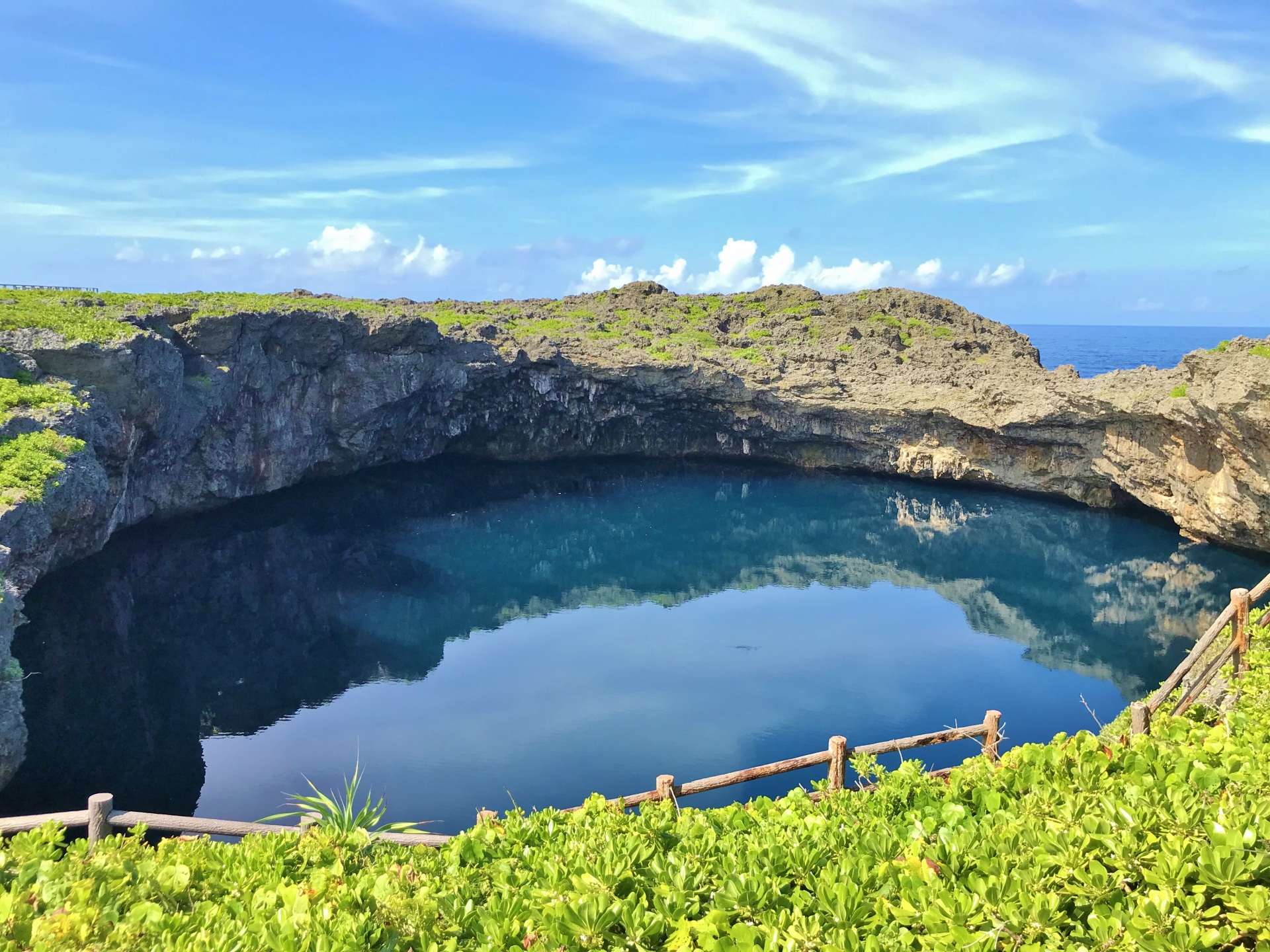
Toriike Pond is a sight that represents Irabu Island. Designated a national place of scenic beauty and natural monument, it's characterised by the mysterious landform of two ponds connected to the sea.
About 15 minutes by car from Shinbiji. Also called the "Dragon's Eye," it's popular as a power spot too. It has a completely different atmosphere from Shinbiji, but both are spots where you can feel the beauty of Irabu Island's nature.
Toguchi-no-Hama
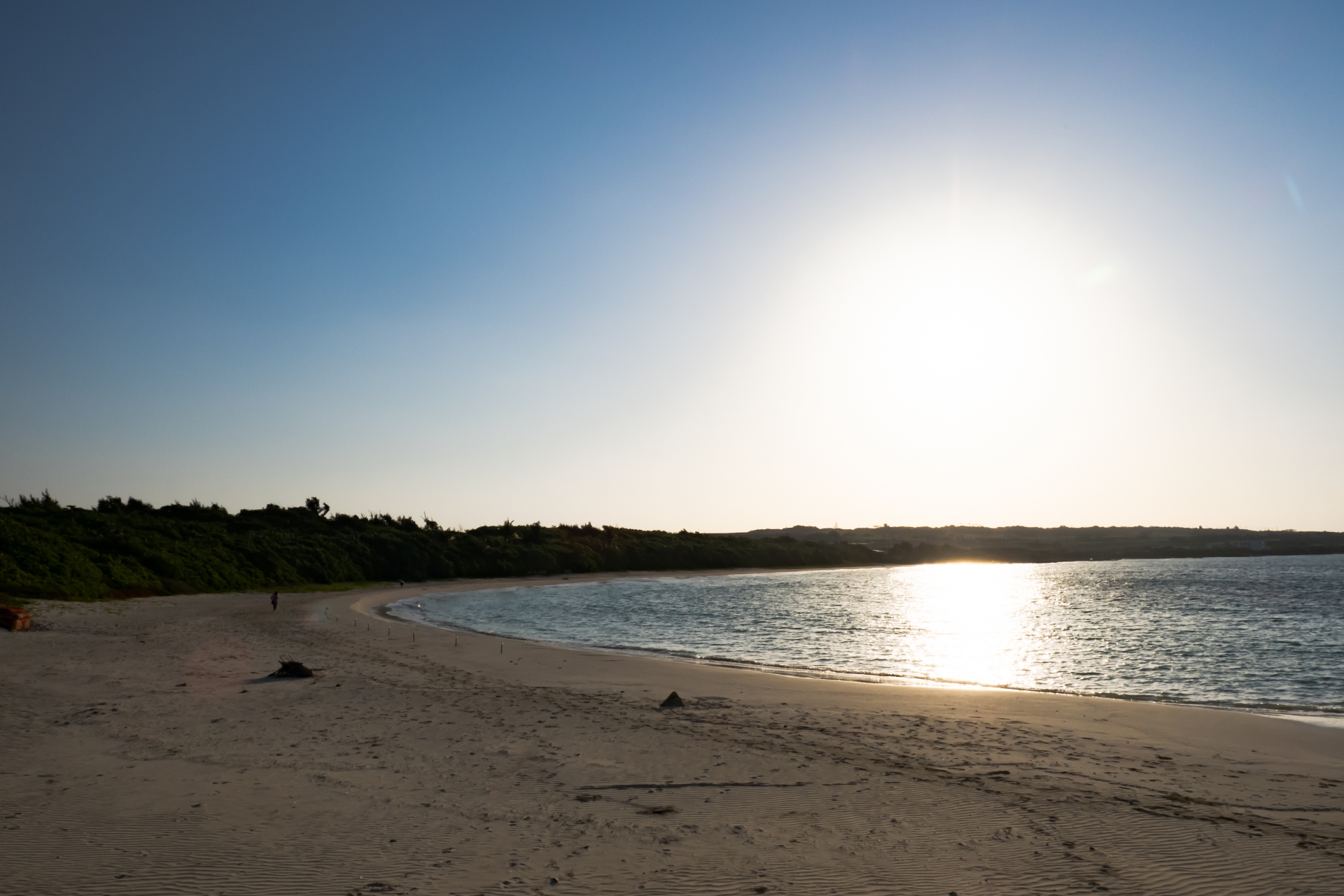
Toguchi-no-Hama is Irabu Island's most famous beach. White sand and a supremely clear sea spread out, perfect for swimming.
About 10 minutes by car from Shinbiji. A plan of enjoying the scenery at Shinbiji and then swimming at Toguchi-no-Hama is good too. Toguchi-no-Hama has toilets and showers, so it's reassuring facility-wise as well.

A One-Day Model Course Including Shinbiji
Here's a one-day model course for enjoying the north of Irabu Island, including Shinbiji.
Morning: Shinbiji + Funausagibanata
9:00 FamilyMart Miyako Irabu
First, buy drinks and snacks at FamilyMart and use the toilet. Shinbiji has nothing, so get prepared here.

9:30 Funausagibanata
Enjoy the view of all of Irabu Island from the observation point. Stay about 30 minutes and take photos too.
10:30 Shinbiji
Arrive at the main spot, Shinbiji. Sit on the stairs gazing at the sea, take photos, and spend the time at leisure. Staying about an hour is recommended.
Midday: Lunch and Toriike Pond
12:00 Lunch at a café on Irabu Island
Lunch at a café on Irabu Island. Enjoy dishes made with local ingredients.
13:30 Toriike Pond
Visit the national place of scenic beauty, Toriike Pond. Be soothed by the mystical pond scenery. Stay about 30 minutes.
Afternoon: Relax at the Beach
14:30 Toguchi-no-Hama
Swim at Irabu Island's most famous beach, Toguchi-no-Hama. Enjoy the supremely clear sea.
16:00 17END
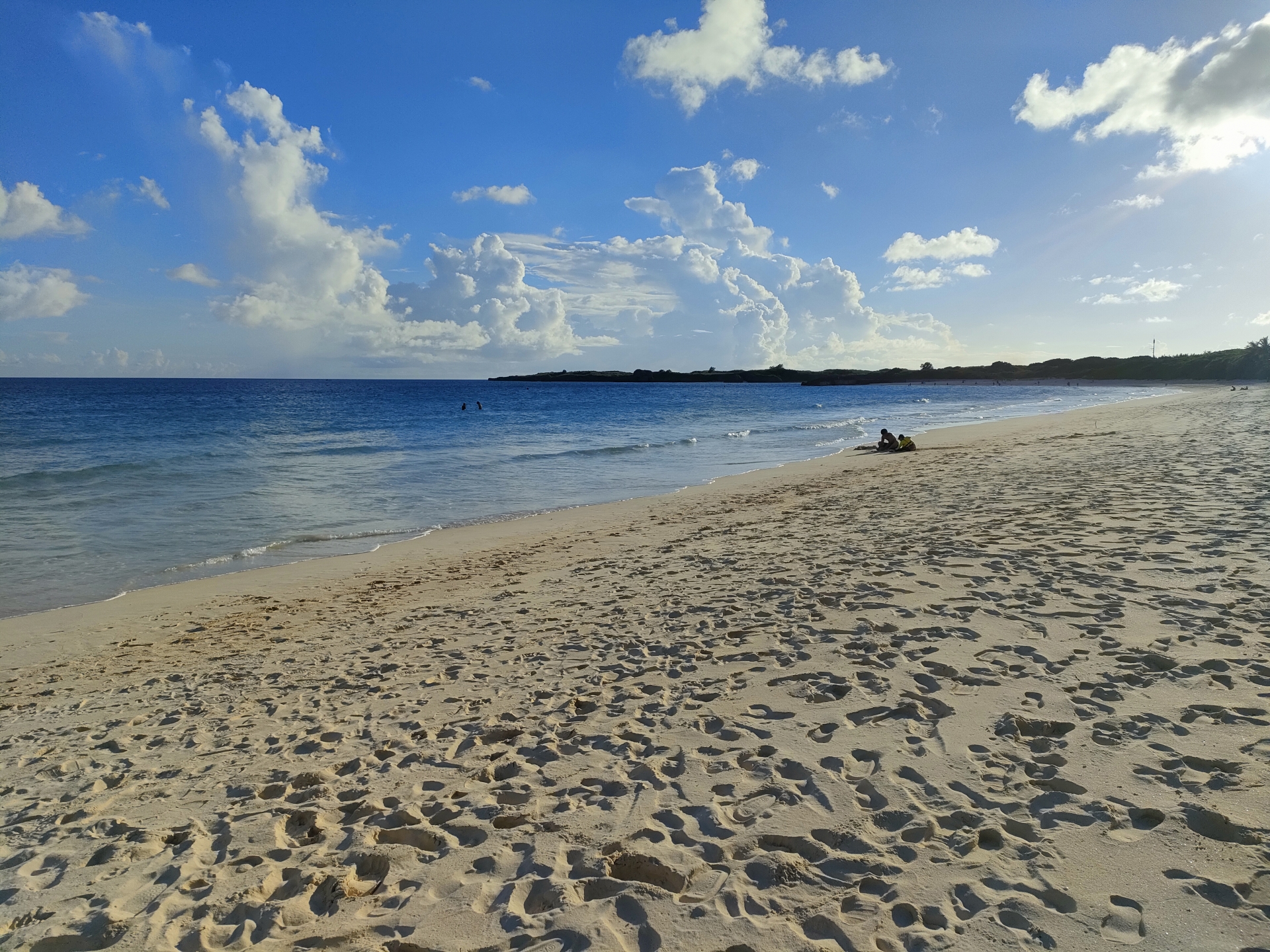
To Shimoji Island's scenic spot, 17END. The evening sea has a different beauty again.
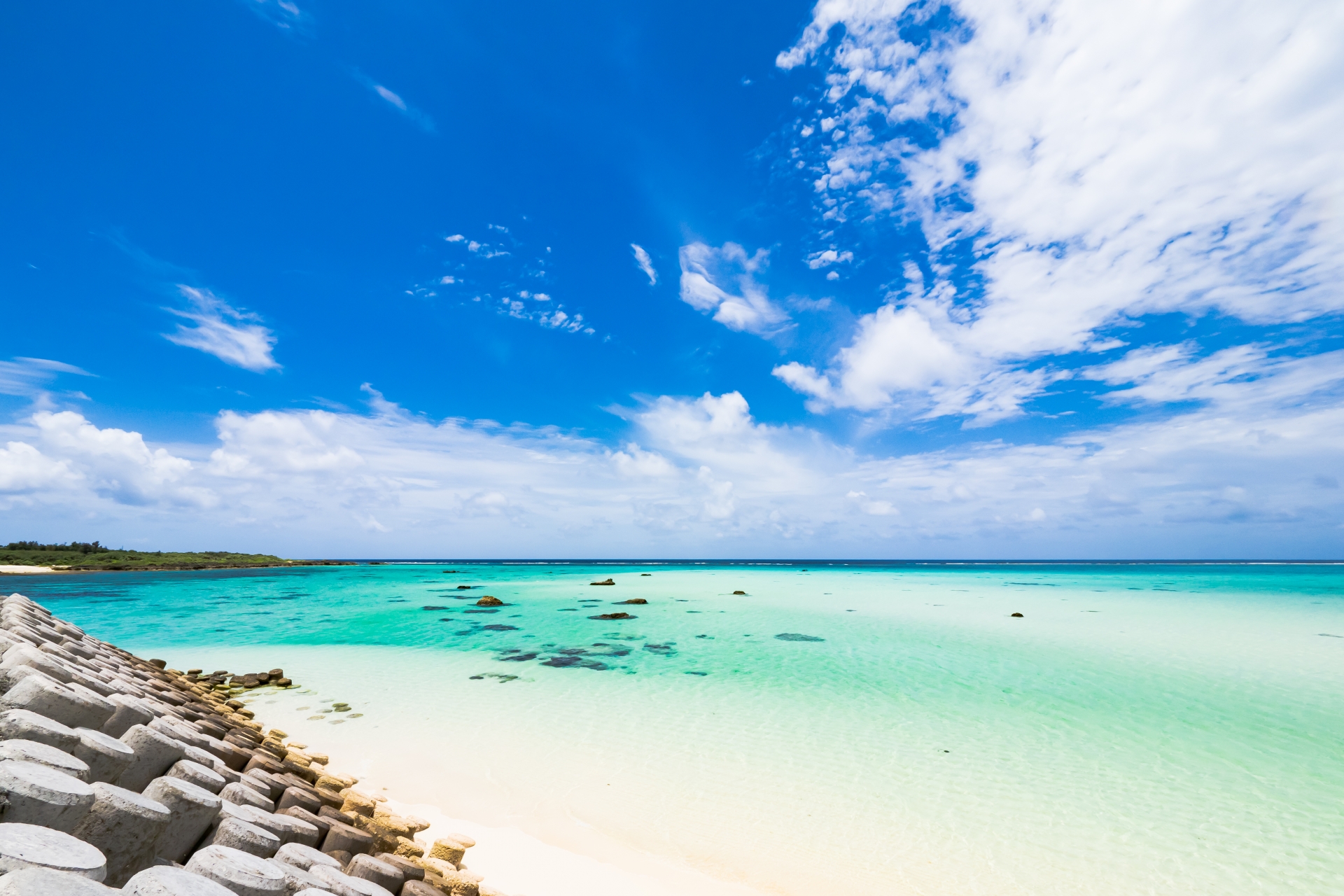
17:30 Watch the Sunset
Watch the sunset from some coast and round off the day.
With this course you can tour the main spots of Irabu and Shimoji Island without rushing. That said, if you want to spend leisurely time at Shinbiji, using the whole morning for just Shinbiji is also an option.
Shinbiji's History and Its Ties to the Locals
Shinbiji isn't just a tourist spot. It's a place that holds special meaning for the locals.
A History as a Sacred Place
Shinbiji has been a sacred place for the locals since long ago. As you can tell from the name "Shinbiji" meaning "white beach," this place is characterised by white sand and a beautiful sea, and has been regarded as special since old times.
Elderly locals apparently say "we used to pray here" and "it's a place where the island's spirit dwells." It was also used as a place for rituals, so for the island's people it was like a spiritual anchor.
When I visited Shinbiji, with its stillness and mystical atmosphere, I thought, "ah, people of old must have felt this is a special place too." It can't be explained scientifically, but you somehow sense "this isn't an ordinary place." That kind of feeling is something I'd like to value.
The Feelings of the Locals
Lately, Shinbiji has gradually become known through social media and the like. Tourists are increasing too. That's a happy thing, but at the same time, I think the locals may have complicated feelings.
A place they've cherished is being turned into a tourist site. Rubbish increases, ill-mannered tourists come. There are such risks too.
That's exactly why we tourists should treat Shinbiji with respect when we visit. Take your rubbish home, don't make a loud fuss, don't damage nature. Basic things, but important.
So that Shinbiji remains a beautiful place forever. And so it remains a precious place for the locals. What we visitors can do isn't that difficult. Just respectfully, quietly, enjoy the beauty. That's all.
The Best Season for Shinbiji
Shinbiji can be visited year-round, but here are the recommended times.
Spring (March–May)
Spring is a comfortable time as the temperature rises. The sea gradually warms too, just right for swimming. There aren't that many tourists, so you can enjoy Shinbiji at leisure.
I went in April, with good weather and comfortable temperatures. The sunshine is strong, but the wind was pleasant, and I didn't mind staying a long time. Unlike the mainland at cherry-blossom time, Okinawa's spring is already as warm as summer. But the full sizzling heat of summer isn't there yet, so it may be the most comfortable time.
Spring Shinbiji has an exceptional sea colour too. It's the time when the dark winter sea colour gradually changes to bright cobalt blue. Watching this transition is enjoyable too.
Summer (June–August)
Summer is when the sea is most beautiful. The clarity is high and the cobalt blue is vivid. The way the sunlight reflects off the sea and sparkles is truly breathtaking.
But the sunshine is incredibly strong, so sun protection is essential. My friend went to Shinbiji in summer and the part where they forgot to apply sunscreen ended up like a burn. A hat, sunglasses, sunscreen, rash guard — prepare it all.
It's a time when tourists increase too, but Shinbiji is a hidden gem, so I don't think it gets that crowded. Even so, the car park has only four spaces, so it's reassuring to go early. Arriving in the morning, ideally around 9 or 10, is recommended.
Summer Shinbiji is perfect for getting in the sea too. The water is warm, so you don't get cold even soaking for a long time. But it's rocky, so marine shoes are absolutely necessary.
Autumn (September–November)
Autumn is a comfortable time, not as hot as summer. Some typhoon risk remains, but from October it's relatively stable. September is still typhoon season, so check the forecast carefully and aim for a time without typhoons.
It's also a time when the sunset is beautiful, so visiting Shinbiji in the evening is recommended too. The orange-dyed sea and the white stairs — beautiful just to imagine, isn't it. In autumn the air is clear, so the sunset colours apparently look more vivid.
I haven't been to autumn Shinbiji yet, but I'm thinking I absolutely want to go on an autumn evening next. Arrive in time for the sunset, sit on the stairs watching the orange-dyed sea. That kind of way to spend time — isn't it the best.
Winter (December–February)
In winter there are few tourists, with a high chance of having Shinbiji to yourself. But the temperature drops, so getting in the sea may be cold. Even so, just to enjoy the scenery it's plenty.
The sea seen in winter's clear air has a different beauty again. Unlike summer's glaring feel, it's a quiet, calm atmosphere. The winter sea is somehow lonely, but that conversely makes it beautiful.
Prepare well against the cold and give it a visit. A light down jacket or a windbreaker is reassuring. Okinawa's winter isn't as cold as the mainland, but the sea wind is chilly, so wind protection matters.
Winter Shinbiji is truly quiet, with hardly anyone. In a space where only the waves are heard, you can slowly face yourself. If you want to spend that kind of time, winter is recommended.
Voices of People Who've Visited Shinbiji
Looking at the impressions of people who've visited Shinbiji on social media and blogs, everyone says in unison "beautiful," "quiet," "I want to go again."
"I was moved by the colour of the sky and sea, like CG." "I love the stillness at hours with no tourists, and the sand dyed by the sunset. This is a place where your heart is reset." "There are no facilities so you need to be ready. But in return, it's a place where you can taste the luxury of truly 'nothing'." "I found it by chance on Google Maps, but I'm glad I came. I could gaze at it for hours."
Seeing these voices, I think again that Shinbiji really is a special place. It's not flashily advertised as a tourist site, but a place carved deeply into the hearts of those who visit. Places like that aren't easy to find.
Frequently Asked Questions (FAQ)
Here are answers to common questions about Shinbiji.
Q1: Is there an entry fee for Shinbiji?
No, entry is free. The car park is free too. There's no charge at all.
Q2: Are there toilets?
No. The nearest toilet is probably FamilyMart Miyako Irabu or a nearby café. I recommend using one beforehand.
Q3: Are there showers?
No. If you want to shower after getting in the sea, you'll need to move to a beach with facilities, such as Toguchi-no-Hama.
Q4: Is it OK to go alone?
Not recommended. Shinbiji has little foot traffic, so if something happens it's hard to call for help. Always go with two or more people.
Q5: Can you go with children?
You can, but care is needed. You walk through undergrowth, so you may need to carry small children. And the stairs have no handrail, so take care that children don't fall.
Q6: Can you go on a rainy day?
I don't recommend rainy days. The undergrowth gets slippery and the stairs are dangerous. And the sea scenery is so-so in the rain, so it's better to go on a fine day.
Q7: Can you swim?
You can, but the rocks are rough, so marine shoes are essential. And there aren't that many fish, so as a snorkelling spot other places may be better.
Q8: Can you see the sunset?
Yes. It's a west-facing sea, so you can apparently see the moment the sun sinks into the sea. But plan with time to spare so you can get back to the car park before dark.
Q9: How long does it take?
The round trip from the car park to the sea is about a 6-minute walk. Spending about 30 minutes to an hour on site, the total is about 1 to 1.5 hours.
Q10: Can you get there without a car?
It's difficult. Shinbiji is in a place not accessible by public transport. You'll need to either rent a car or charter a taxi.
Shinbiji Is a Place to Taste the Luxury of "Nothing"
Shinbiji has no toilets, showers or café. No signs or flashy guidance, and only four parking spaces. It really is a place with "nothing."
But that's exactly what makes it special.
Tourist sites inevitably have "things to see," "things to do," "photos to take," don't they. That's fun in its own way, but now and then you want to be freed from all that.
Shinbiji is that kind of place. "Doing nothing" is the best way to spend it. Sit on the stairs, gaze at the sea, listen to the waves, feel the wind. That alone fills your heart.
The first time I went to Shinbiji, I was surprised that "such a beautiful place exists so quietly." And I thought, "a beautiful place doesn't have to be flashy."
White stairs, a cobalt-blue sea, and stillness. That alone is more than beautiful enough.
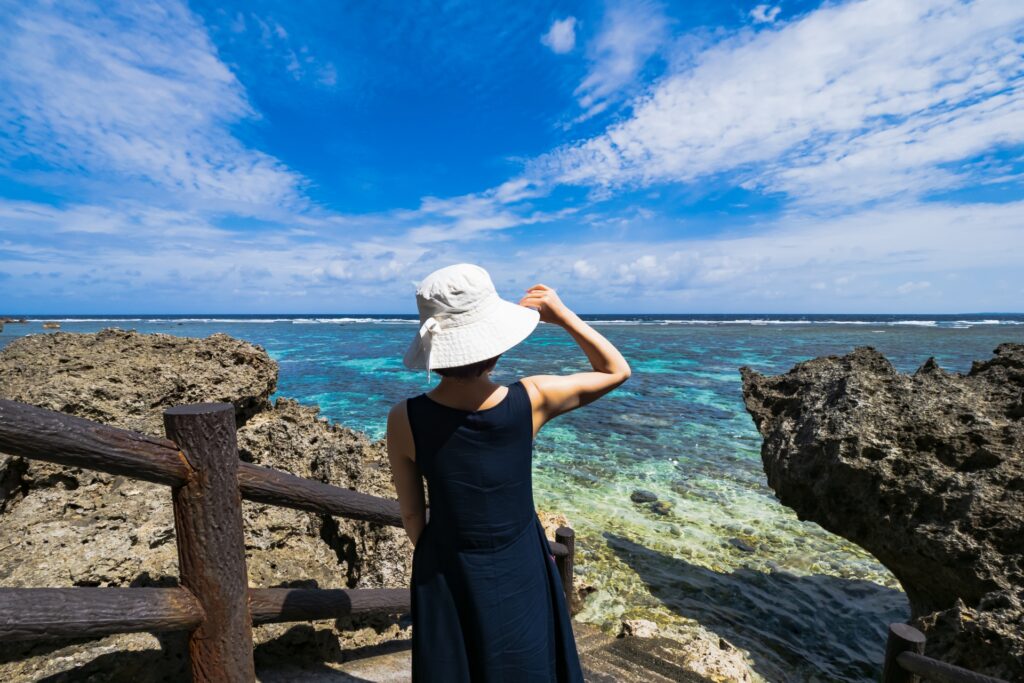
If you're planning to visit Irabu Island, do go to Shinbiji too. The route there is a little hard work, but the scenery waiting beyond will undoubtedly stay in your heart.
And sitting on the stairs gazing at the sea, do taste the "luxury of doing nothing." It's time you can't easily get in everyday busy life. But that kind of time is, I think, the truly important time — that's what I thought going to Shinbiji.
Shinbiji is sometimes called "the stairway to heaven." Indeed, looking at those white stairs, it really feels like they lead to heaven. But for me, Shinbiji is "a place to reset my heart."
A place where you can reset all your everyday stress and hazy feelings, and feel ready to do your best again from tomorrow. That's Shinbiji.
You too, let Irabu Island's blue sea and Shinbiji's white stairs steal your heart. It's sure to become an unforgettable experience.