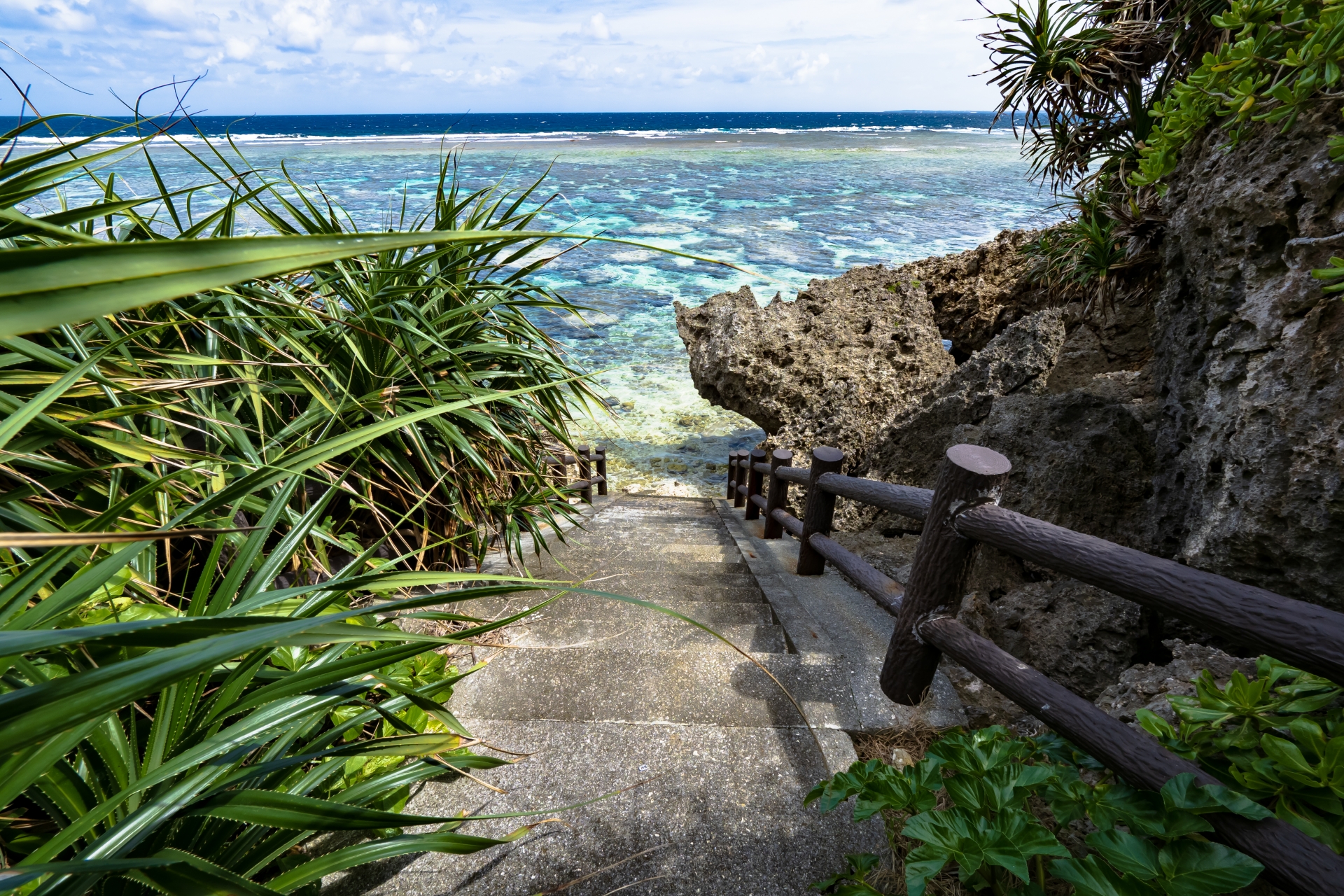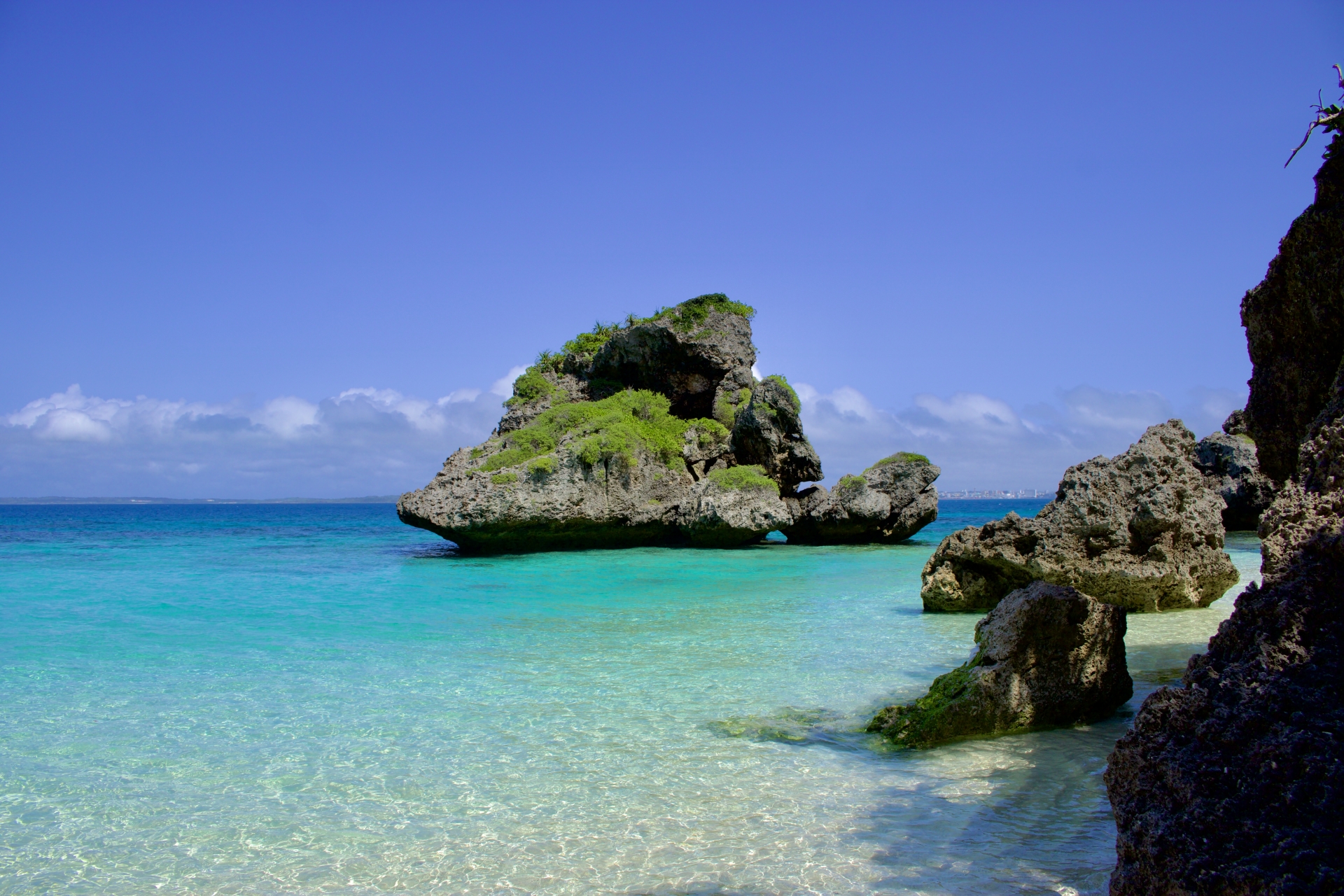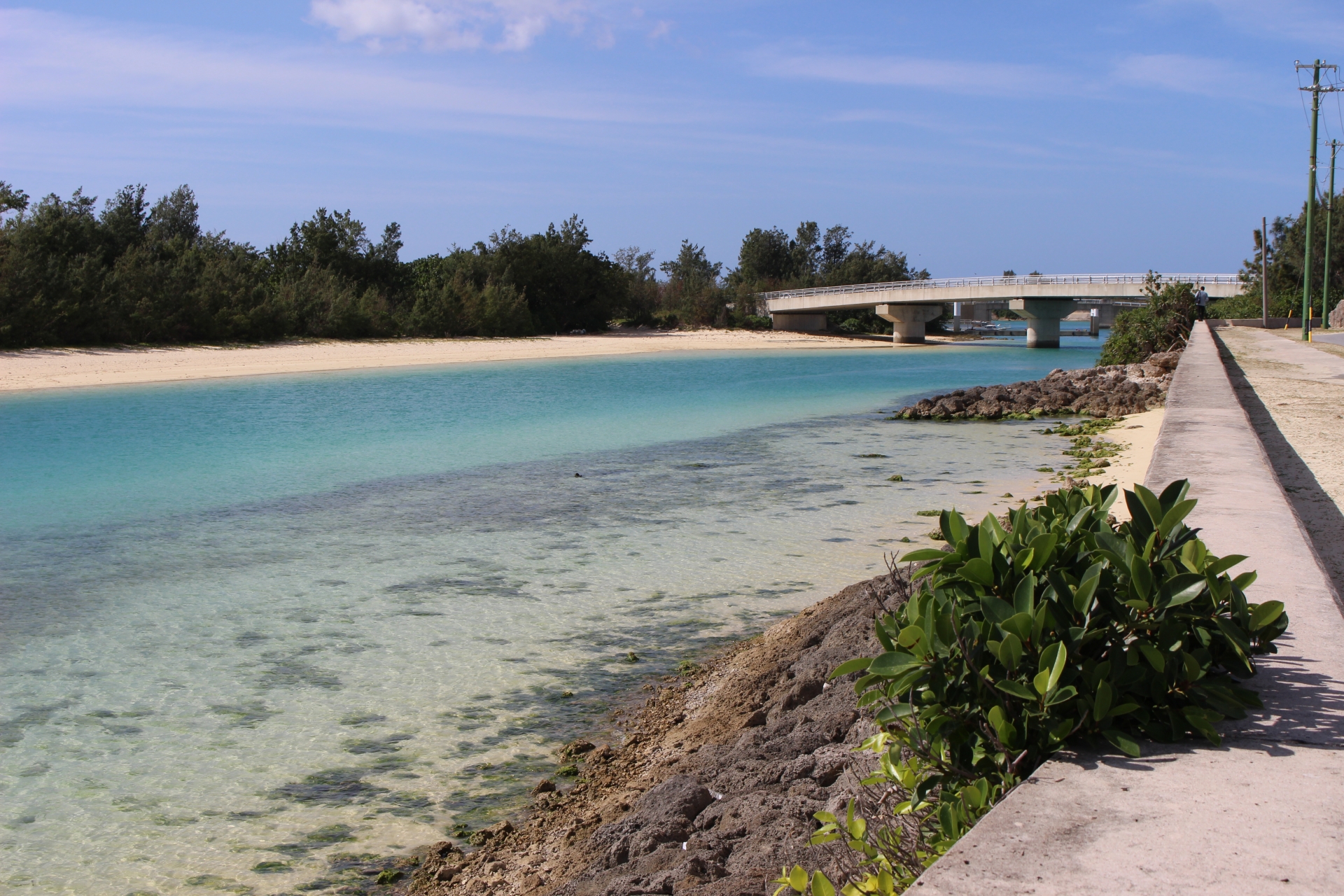
Looking at the map, I wondered, "what's this beach called?"
Across the channel from Toguchi-no-Hama, on the far side, there's a coastline drawn ever so faintly on the map. No name comes up. It's not listed on travel-information sites. But zoom in on Google Maps and there's certainly what looks like a sandy beach there. "Can you get there?" I wondered, and headed over by car.
When I arrived, there was no one there.
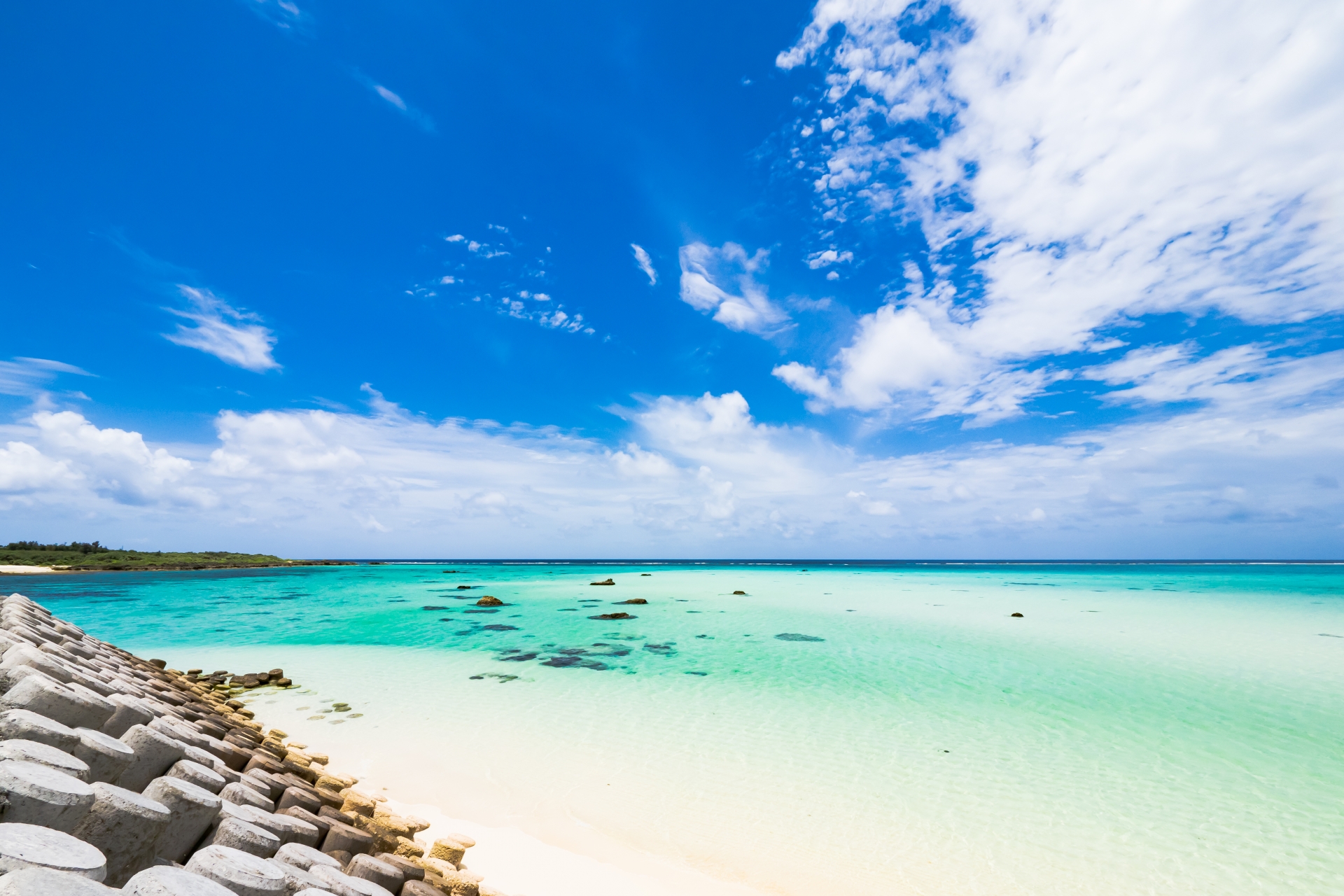
A white sandy beach curved in an arc, with waves quietly washing in. The same powder-fine sand as Toguchi-no-Hama, and the sea colour was Miyako blue itself. Zero sign of people around. "Huh, did a place like this really exist?" I thought, and stood still for a while.
It was only later that I learned the name "Magimoto-no-Hama." It's a hidden-gem beach on Shimoji Island, and most tourists who come to Toguchi-no-Hama go home without knowing about this beach on the opposite shore. The fineness of the sand is the same as Toguchi-no-Hama. But overwhelmingly fewer people.
What actually got me onto Magimoto-no-Hama was that, gazing absent-mindedly at the sea from Toguchi-no-Hama, the sandy beach on the opposite shore happened to catch my eye. "Isn't that a sandy beach?" I thought, and "can you get over there?" got me curious. Looking it up, almost no information came out. "Then let's go," I thought, and that was my encounter with that white sandy beach.
In this article I'll write about Magimoto-no-Hama's appeal in full. How to get there, the sand, the cave at the back, things to note, and nearby sights. If you're sightseeing Irabu and Shimoji Island, do use it as a guide.
- What Is Magimoto-no-Hama? — Shimoji Island's Unknown White Beach
- The Appeal of Magimoto-no-Hama — Three Points
- Access to Magimoto-no-Hama — How to Get There and Things to Note
- The Difference from Toguchi-no-Hama — Sorting Out Each One's Appeal
- Nearby Sights — Places to Tour with Magimoto-no-Hama as a Base
- Tips for Enjoying Magimoto-no-Hama
- Frequently Asked Questions
- In Summary — Why Magimoto-no-Hama Stays a "Hidden Gem"
What Is Magimoto-no-Hama? — Shimoji Island's Unknown White Beach
A Hidden Gem on the "Opposite Shore" of Toguchi-no-Hama
Magimoto-no-Hama is a beach on Shimoji Island, located across a channel facing Irabu Island's popular beach "Toguchi-no-Hama."
The distance from Toguchi-no-Hama is actually short. On the map they sit almost next to each other across the channel, but accessing by car requires a big detour, so most tourists end their visit at Toguchi-no-Hama alone. I've heard many times, "I didn't know there was a similar white sandy beach on the opposite shore."
While Toguchi-no-Hama is famous as Irabu Island's main beach, Magimoto-no-Hama is barely listed even on travel-information sites — a place quietly known among locals and repeat visitors as a "super hidden gem" of Shimoji Island.
The beach is about 230 metres long. Compared with Toguchi-no-Hama (about 800 metres) the scale is small, but the sand quality is the same powder type and the sea's clarity is no less. And on top of that, there's hardly anyone. It's a beach where the impression "I'm glad I could come to a place like this" comes out naturally.
The Origin of the Name "Magimoto-no-Hama"
The name "Magimoto-no-Hama" has the distinctive ring common to place names in the Miyako/Irabu area. No detailed record remains of the name's origin, and even locally it's often talked about along the lines of "I wonder why it's called Magimoto."
The pronunciation "Magimoto" has the feel of the Miyako/Yaeyama dialect, and the reading and kanji can vary between sources. Depending on the travel site, it's written in hiragana as "Magimoto-no-Hama" or given the kanji "曲元の浜."
Precisely because the reading is hard to grasp, information is hard to find even when you search. That's one reason it stays a "super hidden gem," you could say. Many place names in the Miyako Island area have similarly hard-to-read forms. "Toguchi-no-Hama" too — and "17END" is read "one-seven-end." The character of a place name is also the character of that land.
The Appeal of Magimoto-no-Hama — Three Points
1. The Same Powder-Fine Sand as Toguchi-no-Hama
When talking about Magimoto-no-Hama, the first thing you can't leave out is the sand.
When you step on it, your feet sink right in. And yet it's silky and doesn't stick to your soles. I had the same sensation at Toguchi-no-Hama, and Magimoto-no-Hama's sand has the same powdery feel. Walk barefoot and that fineness travels up through your soles, and you understand, "ah, this is Miyako's sand."
This fineness is formed over long years from crushed coral and shells — geologically a sand quality particular to Okinawa's remote islands. The Miyako Island area's coasts are made of uplifted coral reef, and much of the beach sand is coral-derived. So it tends to become white, fine sand.
Toguchi-no-Hama's sand became "famous" because its fineness and whiteness stand out. But the same quality sand spreads across Magimoto-no-Hama on the opposite shore too. With fewer people than the crowded Toguchi-no-Hama, being able to have this sand leisurely to yourself may be Magimoto-no-Hama's greatest appeal.
The whiteness of the sand shines almost dazzlingly in the sun on a fine day. The contrast of the Miyako-blue sea and white sand looks great in photos, but the beauty you actually see with your eyes far surpasses them. A beach where you feel "the real thing is more beautiful than the photos" isn't that common even in Okinawa. That's Magimoto-no-Hama's sandy beach.
Also, the beach is smaller in scale than Toguchi-no-Hama, but that compact size heightens the "private feel." Because it's not too wide, you can take in the whole beach from end to end in your view. That makes the "a beach just for me" feeling all the more real.
2. Hardly Anyone Around — A Private-Beach Feel
What almost everyone who's visited Magimoto-no-Hama says is "there was no one" and "we had it to ourselves."
In season, Toguchi-no-Hama can be crowded with beach parasols lined up. But Magimoto-no-Hama on the opposite shore across the channel has almost no one even at the same time. With little exposure on travel information, the number of visitors stays low.
When I actually visited, during the two hours I stayed, there were zero other people. The feeling of completely occupying a white sandy beach where only the waves are heard, alone, is a luxury you can never taste at an ordinary beach, I think.
The phrase "you can enjoy it with a private-beach feel" appears on several information sites, and it really is just so. Coming with someone dear, wanting to spend time without minding others' eyes — it's a perfect place for that kind of trip.
There's a reason there are few people. First, there's little information. Search "Irabu Island beach" or "Shimoji Island sightseeing" and Magimoto-no-Hama barely comes up. With Toguchi-no-Hama and 17END taking the top spots, Magimoto-no-Hama rarely appears in the results. So most travellers don't know it, and those who do are limited to "locals and repeat visitors."
Another is that there's no car park. A "beach with no proper car park" raises the hurdle for travellers touring by rental car. Quite a few travellers probably drive past thinking "I don't know where to park."
This "difficulty" conversely protects the hidden-gem feel.
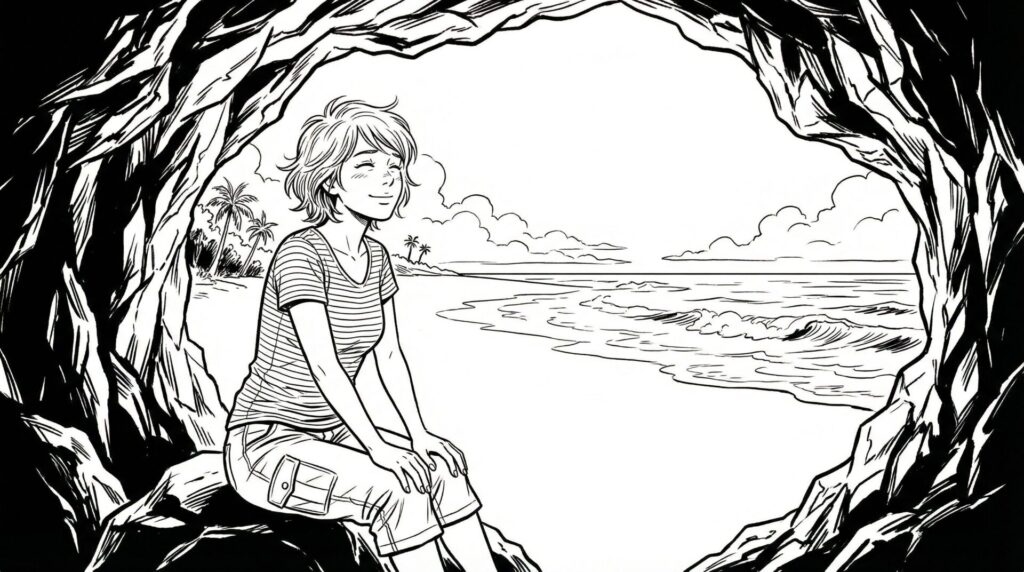
3. The Cave at the Back of the Beach — A Hidden Photo Spot
Walk to the far back of Magimoto-no-Hama's beach and a cave appears in the rocks.
It's a small cave, and stepping inside it gets somewhat cooler. After playing on the beach in the blazing sun, being able to come in here and rest is welcome. But more than the coolness, the view of the beach seen from inside the cave is exceptional.
The white sand and Miyako-blue sea seen through the cave opening make a composition as if cropped by a frame. The sea level changes between high and low tide, and the visible scenery differs little by little. The way the light hits changes with the movement of the clouds too, making it a curious place where "the scenery is never the same no matter how often you come."
It's an especially recommended spot for photography lovers. Travellers apparently come bringing a tripod and taking their time shooting. Since there's no one, you can take time over one shot without bothering anyone. That too is unique to a hidden-gem beach.
The cave's interior is an extension of the beach, and stepping in, the feel of the rock surface changes. The ceiling isn't low, with height for an adult to stand comfortably. The rock texture is the Ryukyu limestone particular to the Miyako Island area, with distinctive bumps on the surface. Looking back at the beach from the depths of the cave, the spread of the beach and the colour of the sea look like a single painting.
The existence of this cave keeps Magimoto-no-Hama from being merely "a hidden-gem beach with sand," making it "a place where you can have some special experience," I think.
Access to Magimoto-no-Hama — How to Get There and Things to Note
The Route from Miyako Island
Access to Magimoto-no-Hama is the route of crossing the Irabu Bridge from Miyako Island, passing through Irabu Island, and entering Shimoji Island.
The approximate time from Miyako Airport is about 30–40 minutes by car. Cross the Irabu Bridge (3,540 m / 2.2 miles long, toll-free), drive through Irabu Island, and on to Shimoji Island. Shimoji Island is connected to Irabu Island by several bridges, so you can access it by car across a bridge.
The common route is to head for Toguchi-no-Hama and then loop around towards the opposite shore. However, Magimoto-no-Hama may not come up accurately on Google Maps. Entering "Magimoto-no-Hama" sometimes doesn't get a hit, so you may need to search for it on site while looking at the surrounding terrain. For a first visit, stopping by Toguchi-no-Hama and checking the opposite shore before heading over is the route least likely to go wrong.
From Miyako Shimojishima Airport it's close, about 10–15 minutes by car. As a place to stop by right after arriving at Shimojishima Airport, it's easy to fit in time-wise. For those using Miyako Shimojishima Airport, a plan of heading straight to Magimoto-no-Hama after arriving and renting a car, and starting from there, is efficient.
As a note, demand for rental cars concentrates in peak season in the Miyako/Irabu Island area. Golden Week and the summer holidays especially require early arrangement, and I strongly recommend securing a rental car at the same time as your accommodation booking. The story of travellers who "checked the beach but couldn't get a rental car" comes up every year.
No Car Park — Take Care Here Above All
Magimoto-no-Hama has no proper car park. This is the biggest thing to note.
You'll park by the roadside, but you need to choose a spot that doesn't obstruct traffic. There's a "space for about one car" along the road, but take special care if visiting in multiple cars.
Precisely because it's a hidden-gem beach that hasn't been turned into a tourist site, I'd want parking manners to be kept. It's also a residents' road for daily life, so absolutely avoid parking that obstructs the road.
No Facilities — Going Prepared Is a Prerequisite
Magimoto-no-Hama has no toilets, showers, shop or lifeguards. No bins either.
This is the fate of a natural beach not developed as a tourist facility, but put the other way, it also means "that much untouched nature remains."
What you'll want to prepare before going: drinks and food (a beach in the blazing sun saps your energy more than you'd think), a bottle of fresh water to use in place of a shower, a bag to take your rubbish home, and sunscreen and a rash guard.
There's no shower you can use without leaving the car, so on the way back you'll be covered in sand and saltwater. Stowing a change of clothes in the boot is handy.
The Difference from Toguchi-no-Hama — Sorting Out Each One's Appeal
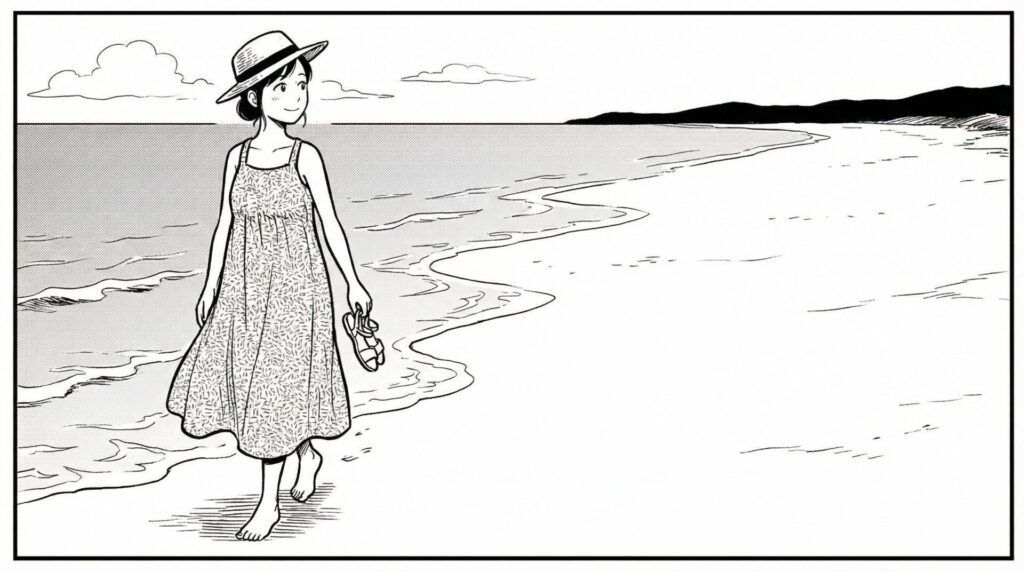
Since we're here, I'd like to sort out the difference from "Toguchi-no-Hama" on the opposite shore too. I hope it helps anyone wondering which to go to.
The Features of Toguchi-no-Hama
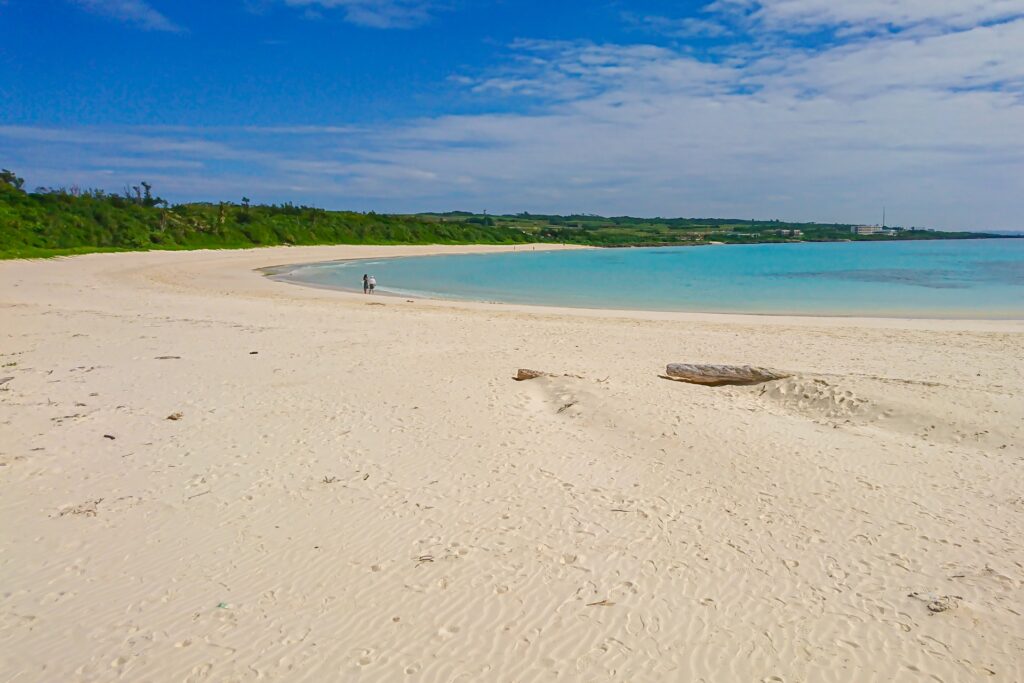
Toguchi-no-Hama is a white-sand beach in the south of Irabu Island, characterised by a vast beach about 800 metres long. It's Irabu Island's most famous beach, a popular spot always listed in tourist guides.
Car park, toilets and showers are provided, and there's a marine-goods rental shop nearby too. With facilities in place, it suits first-time visitors to Irabu Island and families. It's highly popular as a snorkelling spot too.
However, it's crowded in season. With many tourists, it can be hard to spend leisurely, private time.
The Features of Magimoto-no-Hama
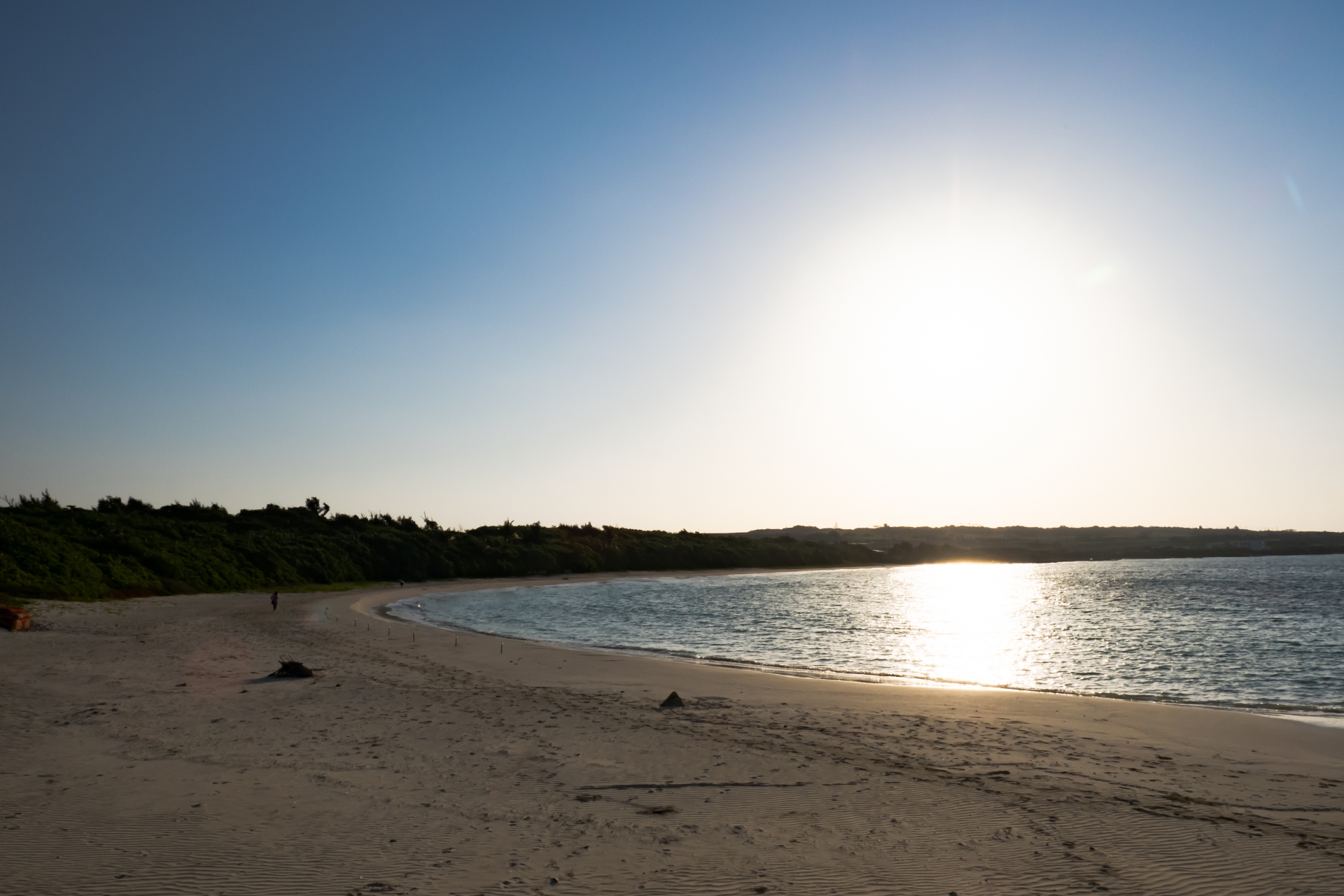
Magimoto-no-Hama is a much smaller beach than Toguchi-no-Hama, on the Shimoji Island side. At about 230 metres long the scale is small, but the same powder-fine white sand and highly transparent sea are no less than Toguchi-no-Hama's.
The greatest feature is "few people." With little information and no tourist development, you can spend time in an almost reserved state. There are no car park, toilets or showers, so you have to prepare yourself. In exchange, you get a "private-beach feel" in place of facilities.
Toguchi-no-Hama: good facilities, popular, snorkelling ◎, crowded
Magimoto-no-Hama: no facilities, hidden gem, few people, has a cave, private feel ◎
If you had to choose one, it comes down to: Magimoto-no-Hama if you "want to spend leisurely time just among yourselves," Toguchi-no-Hama if you "want to play with peace of mind with facilities in place." If you have time, visiting both and comparing the difference in atmosphere is fun too.
Listening to the impressions of people who've visited both, there are many voices like "I preferred Magimoto-no-Hama's sand," "Magimoto-no-Hama had no people so I could settle down," "I swam at Toguchi-no-Hama and zoned out at Magimoto-no-Hama." Rather than "which is better," choosing according to purpose is the best choice, I think.
The image is of positioning Toguchi-no-Hama as the "main beach" and Magimoto-no-Hama as a "special secret place." If you have room in your Shimoji/Irabu Island itinerary, do visit both.
Nearby Sights — Places to Tour with Magimoto-no-Hama as a Base
Shimoji and Irabu Island have many sights you'll want to visit together with Magimoto-no-Hama. I hope it helps you tour the same area efficiently.
Toguchi-no-Hama | About 5 Minutes by Car
Irabu Island's main beach on the opposite shore. If you visit Magimoto-no-Hama, I strongly recommend stopping by as a set. Comparing the sand quality, you'll see clearly how alike the two are. Facilities are in place too, so if you want a shower, head to Toguchi-no-Hama.
Toriike Pond | About 10 Minutes by Car
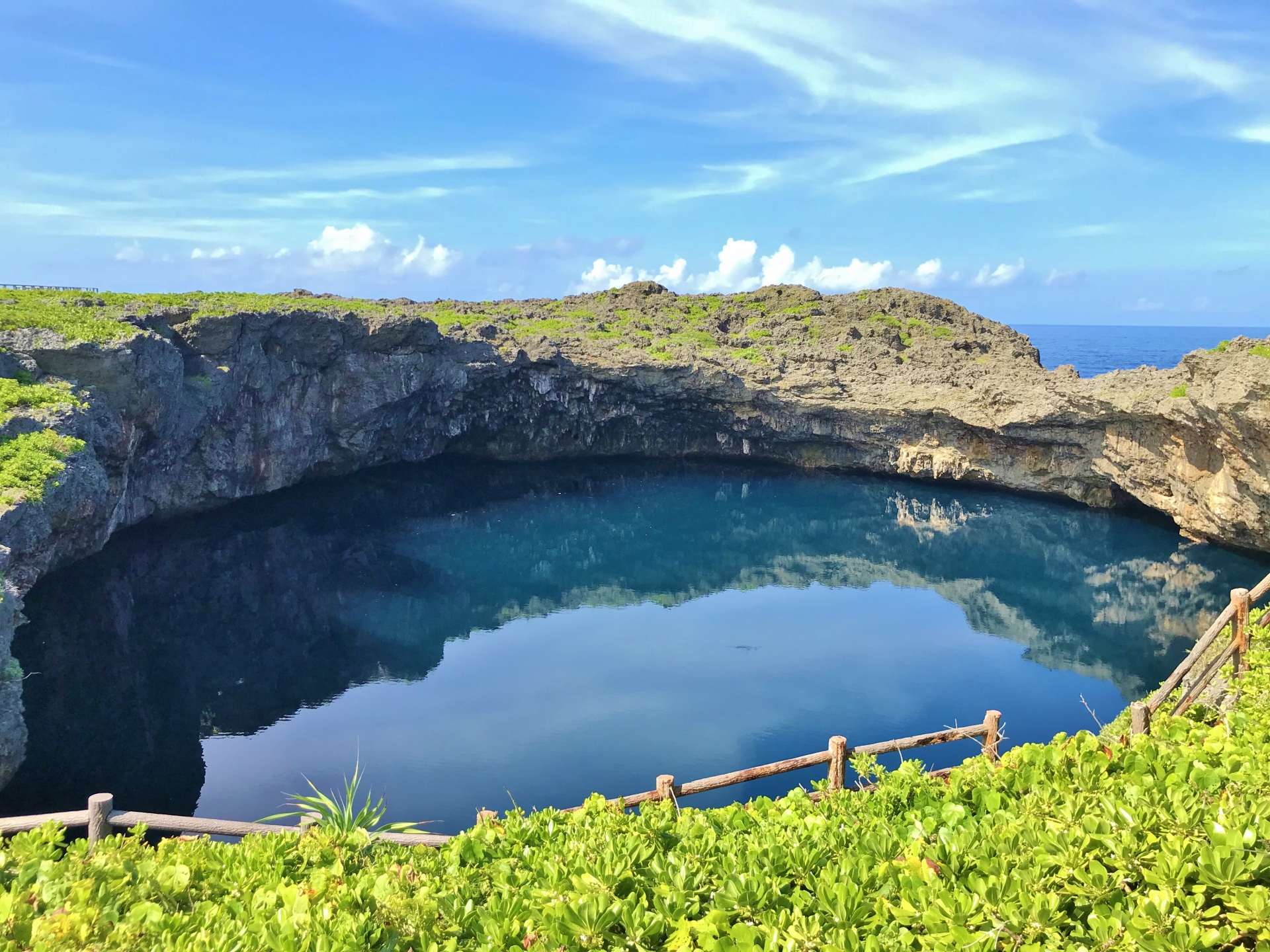
A mystical pond designated a national place of scenic beauty and natural monument. It's a curious landform where two circular ponds connect underground and also link to the open sea. World-famous as a diving spot, it's well worth seeing just by observing while walking the path. It's in the same area as Magimoto-no-Hama, so you can tour both in half a day.
Nakanoshima Beach (Kayaffa Beach) | About 5 Minutes by Car
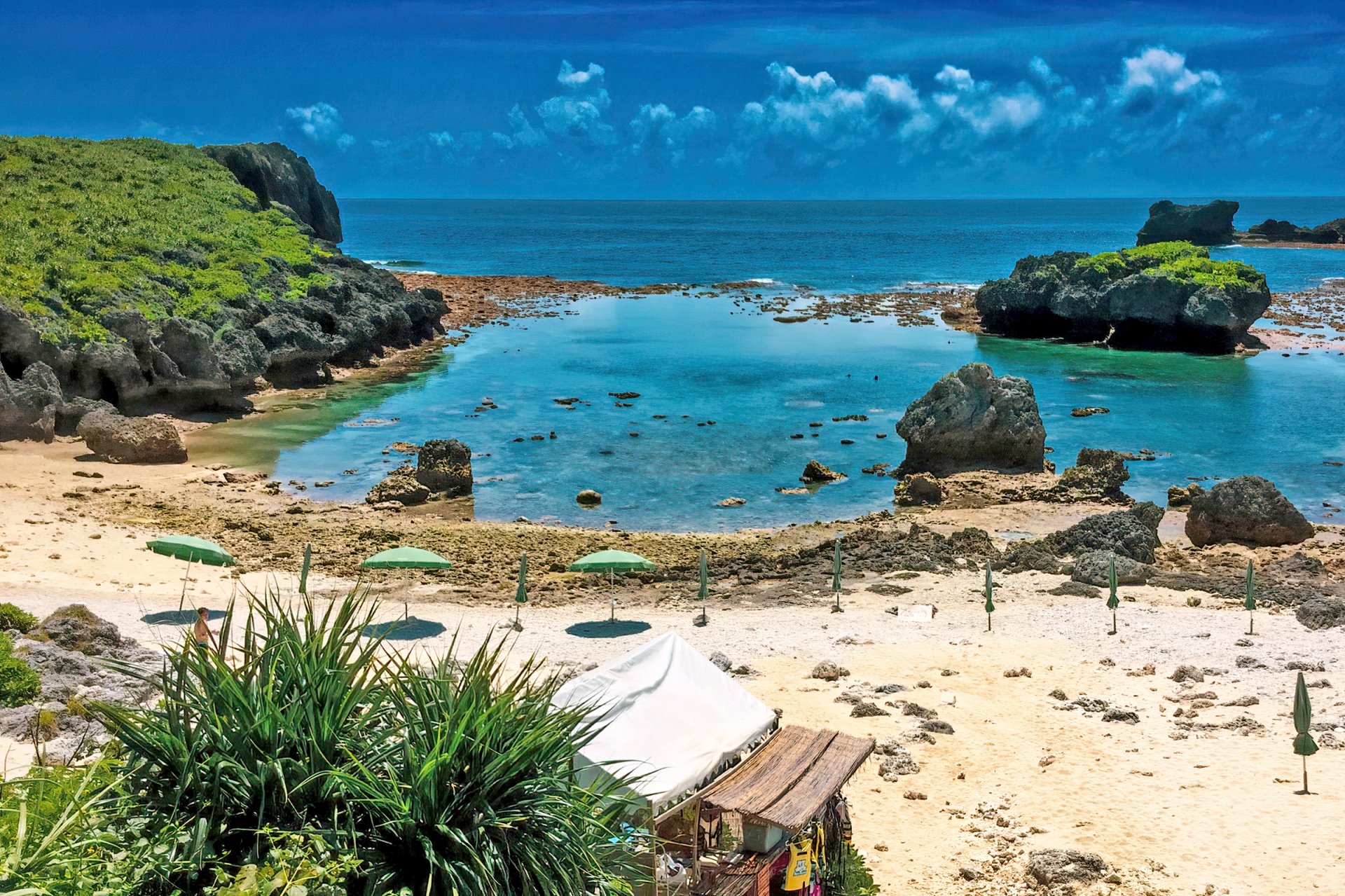
A famous Shimoji Island snorkelling spot home to over 100 species of tropical fish. In a calm bay little affected by the open sea, even beginners can enjoy it. After relaxing at Magimoto-no-Hama, if you want to enjoy the sea underwater too, the recommended route is to move to Nakanoshima Beach.
17END | About 15 Minutes by Car
A scenic spot spreading at the end of Shimojishima Airport's runway. Famous for the emerald-green shallows that appear at low tide, where you can enjoy the collaboration of planes taking off and landing with the sea. Checking the tide table is essential. Take care: go at high tide and you won't see the famous view.
Sawada-no-Hama | About 20 Minutes by Car
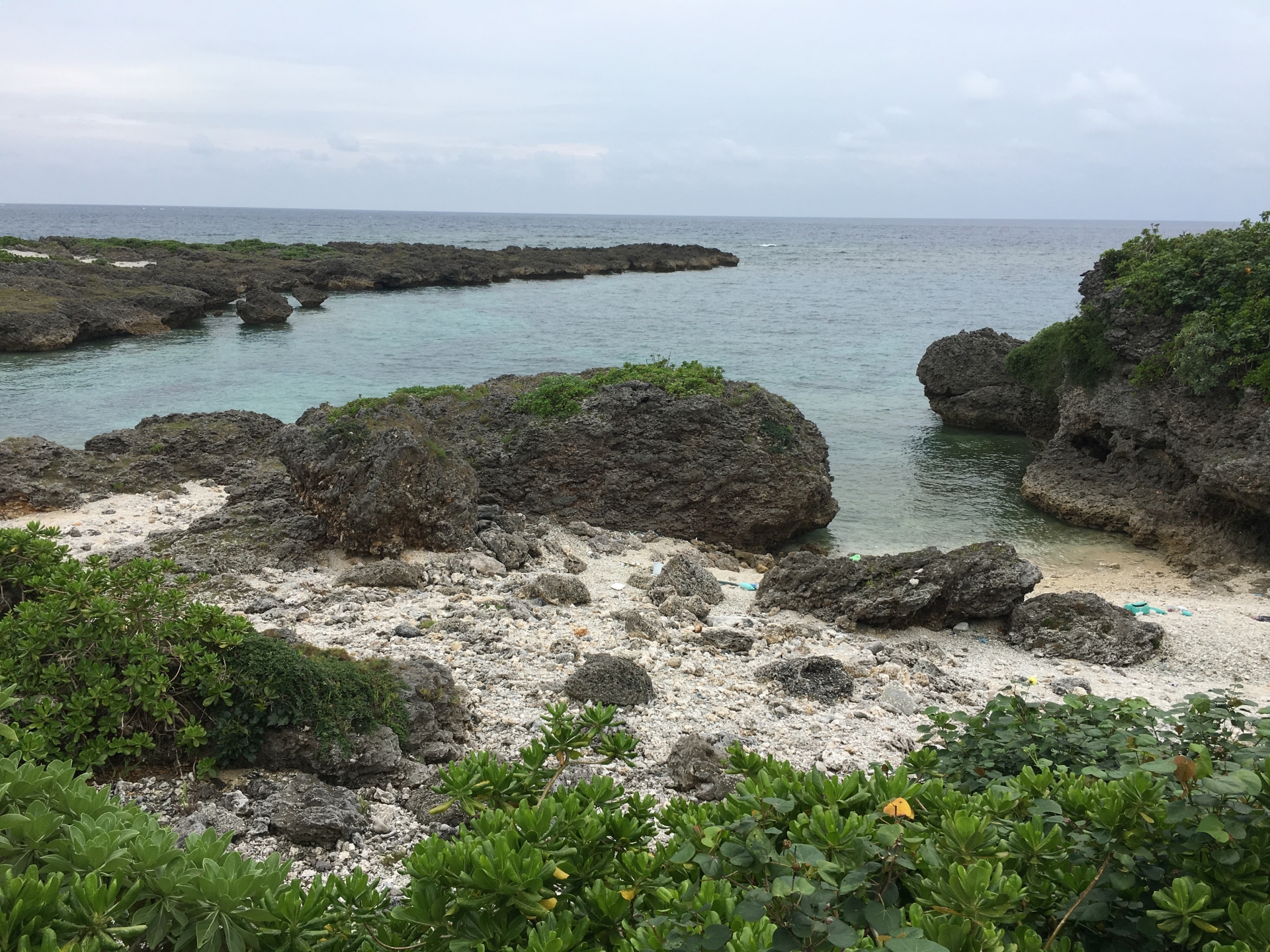
A beach on Irabu Island's north coast chosen as one of "Japan's 100 Best Beaches." Rather than a place to get in the sea, it's a spot to enjoy the distinctive landscape of scattered giant rocks and the sunset. Spend the evening here and it makes the best time to round off a Miyako Island trip.
Giant rocks said to have been thrown up by the Great Meiwa Tsunami of 1771 are scattered across the whole coast, and the sight of the sunset streaming through the gaps in the rocks has a distinctive force. At low tide a shallow sea spreads out, and you can observe tide pools among the rocks.
Makiyama Observatory | About 20–25 Minutes by Car
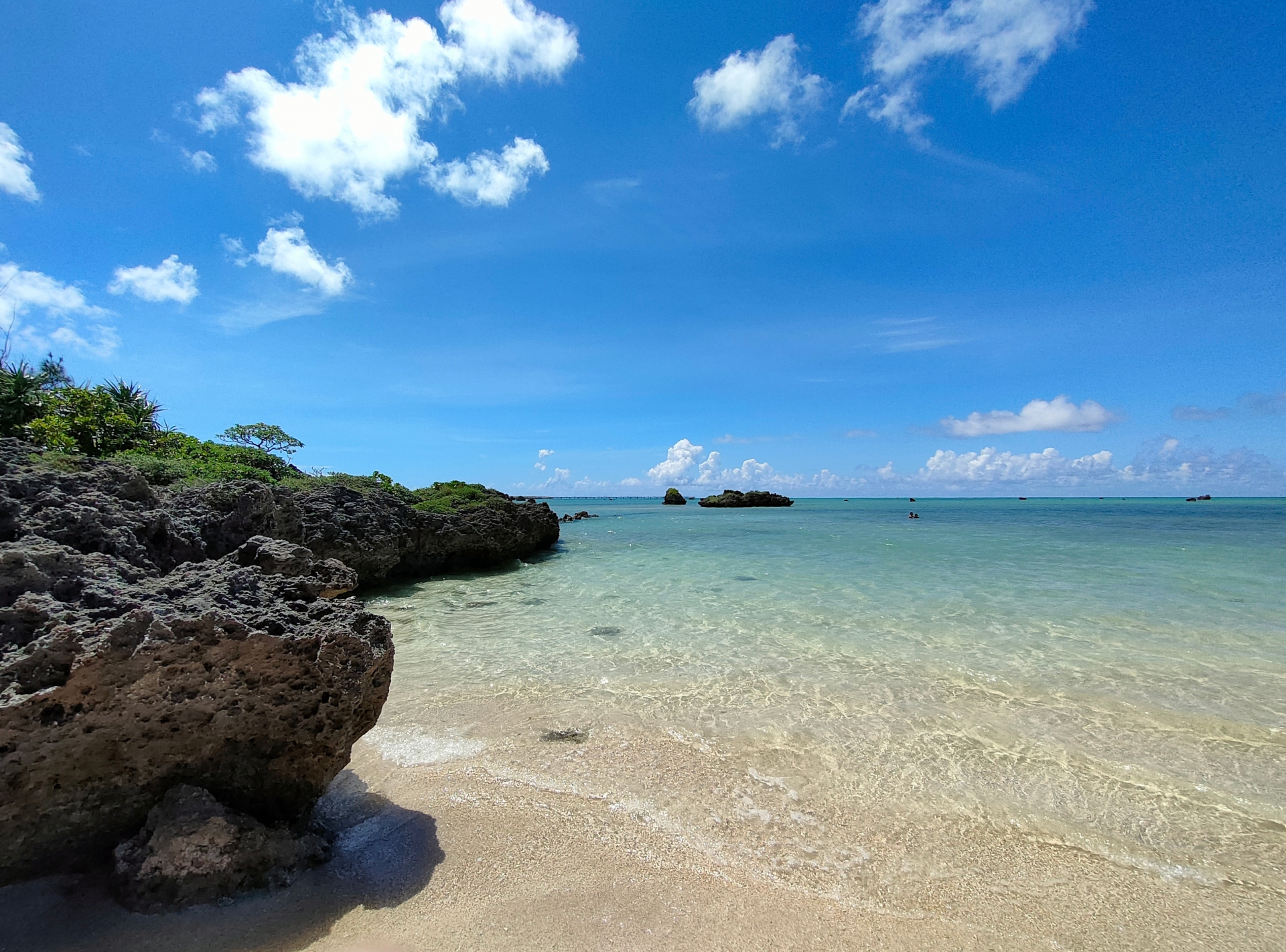
An observatory at the highest point on Irabu Island, where you can enjoy a 360-degree view surveying Miyako Island, Kurima Island and Ikema Island. On a fine day you can even see as far as Ishigaki Island in the distance. The observatory's design is a distinctive shape modelled on the migratory sashiba (grey-faced buzzard), and tropical flowers such as hibiscus bloom around the walking path.
A route of relaxing at Magimoto-no-Hama and then watching the sunset at Makiyama Observatory in the evening is, I personally think, an ideal day of an Irabu Island trip.
Irabu Bridge | About 15–20 Minutes by Car
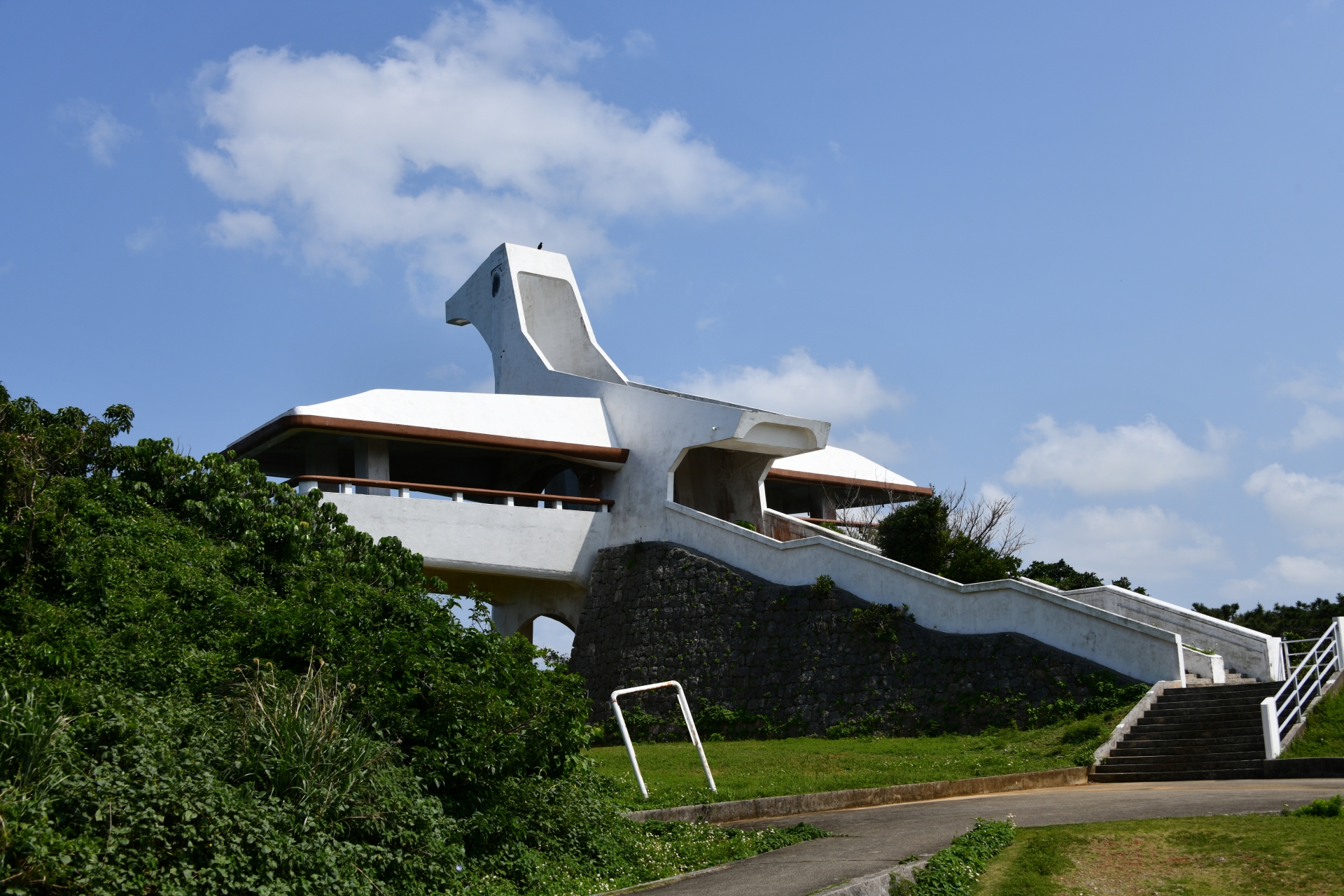
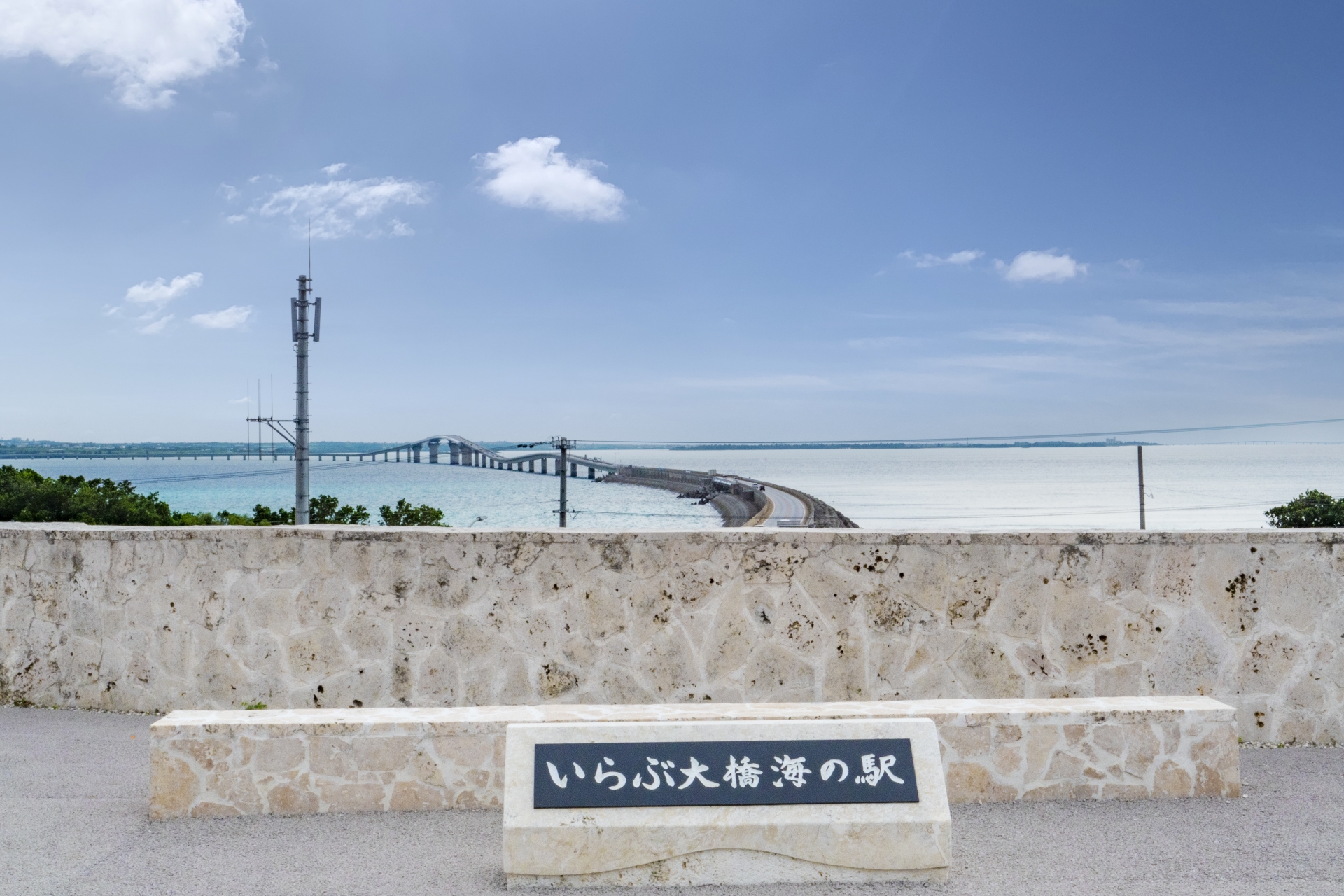
Japan's longest toll-free bridge (3,540 m long), linking Miyako Island and Irabu Island. The Miyako-blue sea seen from the bridge is a scenic spot that's both the start and the close of Shimoji/Irabu Island sightseeing. At night it's lit up, showing a beauty different from the day.
On the way home, crossing the bridge, I feel it's a place that makes you think "let's come again." Returning to the Miyako main island, the orange of the sunset seen from the bridge and the afterimage of Miyako blue is scenery fit for the end of a trip.
Tips for Enjoying Magimoto-no-Hama
Best Season and Time of Day
This applies to sightseeing in the Shimoji/Irabu Island area in general, but July–August has the best sea conditions while tourists concentrate. April–May and October are relatively quiet, with high sea clarity too.
Magimoto-no-Hama has few people, so crowding isn't much of an issue, but a beach in the blazing sun saps your energy. From morning to early afternoon is comfortable, and in the afternoon the sun can get too strong.
Coming on a summer morning and spending 2–3 hours cooling off in the cave — this is, personally, the most pleasant way to spend it, I think.
Winter (December–February) isn't suited to swimming, but the Miyako Island area's winter isn't as cold as the mainland. Just strolling the beach or gazing at the sea from the cave can be enjoyed in winter too. Visit on a winter weekday, when tourists are especially few, and you can experience the feeling of truly "being the only one in the world."
Spring (March–April) is a good bet too. Summer approaches the Miyako Island area earlier than the mainland, and by around April the water is warm enough to swim. And before Golden Week there are still few tourists, so it's a time you can relax even at popular beaches. Magimoto-no-Hama at this time can be in the quietest, most beautiful condition of the year.
What to Bring
To repeat, it's a beach with no facilities, so preparation matters.
Essential: drinking water, food (even snacks), fresh water (for rinsing off sand and salt), sunscreen, a rash guard, a full change of clothes, a rubbish bag.
Handy to have: a beach mat, parasol, sunglasses, a hat, a snorkel set (if bringing your own).
The AEON Miyakojima Shopping Center is on the way from Miyako Airport, so the rule of thumb is to gather what you need before crossing the Irabu Bridge.
Don't Go Alone — About Safety
Magimoto-no-Hama is a natural beach with no lifeguards. When getting in the sea, always be with someone. Please avoid going alone and swimming alone.
Shimoji Island's sea is clear and beautiful, but tidal currents and sea conditions differ by place. Especially on a first visit, start by just getting your feet wet, check the state of the sea, and then swim.
Also, don't go into the rocks barefoot. It's better to wear marine shoes, or at minimum beach sandals. You easily cut your feet on sharp rocks and shells.
Frequently Asked Questions
Q. Where is Magimoto-no-Hama? Irabu Island? Shimoji Island?
Administratively it belongs to Shimoji Island. It's located across a channel from Irabu Island's Toguchi-no-Hama. You access it by the route of crossing the Irabu Bridge from Miyako Island, passing through Irabu Island, and entering Shimoji Island.
Q. Is the reading "Magimoto-no-Hama"?
It's read "Magimoto-no-Hama." It's given the kanji "曲元の浜," but the origin of the name isn't clear. The notation can vary between information sites, but say this name on site and locals will understand.
Q. Can you tour it together with Toguchi-no-Hama?
You can. Toguchi-no-Hama and Magimoto-no-Hama face each other across the shore, but car access has some distance, so if visiting as a set, consider a half-day to one-day plan. A way of enjoying snorkelling at Toguchi-no-Hama and then spending leisurely time at Magimoto-no-Hama is recommended.
Q. Are there lifeguards?
No. A completely at-your-own-risk natural beach. Please take great care for safety. Going with several people and checking the sea conditions before swimming is basic.
Q. Where is the toilet?
Magimoto-no-Hama has none. Toguchi-no-Hama has toilets, so stopping by beforehand is recommended. Places with toilets across the whole of Shimoji Island are limited, so it's reassuring to go after using one on the Miyako Island side.
Q. Is the cave in an easy-to-find place?
It's a cave naturally in the rocks at the very back of the beach, so walk to the end of the beach and you'll find it. It's small so you might overlook it, but look carefully at the base of the rocks and you can spot it. Even first-timers often say "I found it while walking."
Q. Can you go with children?
It's shallow so you can play at the water's edge, but take full care over the lack of lifeguards. If bringing small children, always keep your eyes on them. The lack of a car park may be a little inconvenient with children too. Without facilities like Toguchi-no-Hama, Toguchi-no-Hama is safer-suited for families.
Q. Can you snorkel?
You can. But you bring your own gear or rent it at a nearby rental shop (around Toguchi-no-Hama). Note that, unlike Nakanoshima Beach, rental on site isn't possible.
Q. How do you get there from Shimojishima Airport?
About 10–15 minutes by car from Shimojishima Airport. You can rent a car at the airport and head straight there. For those using Miyako Shimojishima Airport, it's a very easy-to-access place.
In Summary — Why Magimoto-no-Hama Stays a "Hidden Gem"
Magimoto-no-Hama stays a hidden gem not just because "it's little known."
Undeveloped, no facilities, no car park — this "absence" conversely keeps protecting "untouched nature." If it were developed as a tourist site, many people would visit, like Toguchi-no-Hama. But in its current state, with only the fine white sand, the Miyako-blue sea and the cave at the back quietly there — that value is, honestly, immeasurable.
Shimoji and Irabu Island have the famous spots — Toguchi-no-Hama, 17END, Toriike Pond — but if you have room in your time, do extend your steps to Magimoto-no-Hama too.
The same sand quality, the same Miyako blue. But no people. That alone makes the time at the beach something completely different.
A beach where you think not "I'm glad I went" but "this is the one place I don't want to tell anyone about" still remains. When you come to the Miyako Island area, I'd like you to look for such places. Magimoto-no-Hama is one of them.
If You're Sightseeing Irabu and Shimoji Island, This Route Is Recommended Too
Finally, here's an example route for how to tour Shimoji and Irabu Island with Magimoto-no-Hama at the centre.
Half-day plan starting in the morning:
Toriike Pond (about 30 min) → Nakanoshima Beach (snorkelling, about 1–2 hours) → Magimoto-no-Hama (relaxing, cave exploring) → Toguchi-no-Hama (lunch & rest) → home
One-day plan (full version):
Morning: 17END (timed to low tide) → Toriike Pond
Midday: Toguchi-no-Hama (swimming, lunch)
Afternoon: Magimoto-no-Hama (leisurely) → Makiyama Observatory (evening) → Sawada-no-Hama (sunset)
With this route you can cover almost all of Shimoji and Irabu Island's main sights and hidden-gem beaches in one day. Not cramming it in while minding the clock, but having the room to take time where you feel "I want to stay here" at each spot, makes the trip richer.
The time spent at Magimoto-no-Hama becomes an experience closer to "time just for yourself" than any other sight, I think. Do taste that feeling.
Someday I'd like to come here again and gaze at the white sand from that cave. That stillness really was one of a kind.