In August 2024, the first day of my Irabu Island trip was wet. I woke up, looked out the window, and saw rain falling from a heavy grey sky — "after coming all this way," I thought.
But when I actually went out and explored, a rainy Irabu Island turned out to be surprisingly enjoyable. The Blue Cave was beautiful even in the rain, the hours spent relaxing in a roofed café were lovely, and I got to soak up a quieter, calmer atmosphere than on a sunny day.
In this article, I'll write up a full model course for sightseeing on Irabu Island that you can enjoy even on a rainy day, based on my own experience of touring it in the wet. I'll cover indoor spots, food and what to pack, so I hope it helps anyone disheartened by a rainy forecast.
- The Big Picture of an Irabu Island Model Course (With a Rainy-Day-Friendly Map)
- Morning: A Scenic Beach Drive — Toguchi-no-Hama → Sawada-no-Hama → Obiiwa Rock
- Toguchi-no-Hama: Enjoy the Contrast of White Sand and Emerald Green
- Sawada-no-Hama & the Obiiwa Boulder: A Natural-Monument Blue-Sea Viewpoint
- Makiyama Observatory: A Sweeping View of the Miyako Islands Mid-Drive
- Tasting Sarahama Port's Signature "Binbinpan" at a Fishing-Town Diner
- A List of Local Diners That Impress Even Foodies from Tokyo and Osaka
- A Luxurious Afternoon Spent at the Shimojishima Airport Café
- A Packing Checklist to Make a Rainy Beach Walk Comfortable
- Afternoon: Indoor Activities for Adventure and Calm — Toriike Pond, the Underwater Observatory and More
- A Must for the Spiritually Inclined! Irabu Island's Power Spots and a "Scary" Legend
- Trip-Planning Q&A: Access from Miyako Island / Miyako Airport and Booking Tips
- Rainy-Day Packing and Plan-Adjusting Tips
- Do You Need This? Q&A
- Irabu Island Is Fun Even in the Rain
The Big Picture of an Irabu Island Model Course (With a Rainy-Day-Friendly Map)
Sightseeing on Irabu Island in the rain means planning a different course from a sunny day, centred on indoor spots and roofed places.
What I actually did was a morning drive around Toguchi-no-Hama and Sawada-no-Hama for a rainy beach walk, lunch at a Sarahama Port diner with a bowl of binbinpan, a Blue Cave snorkelling tour in the afternoon, and then a relaxed spell at a Shimojishima Airport café afterwards — and that was plenty of fun even in the rain.
Irabu Island is small, so you can drive a full loop in about 45 minutes, and the sights are concentrated, so you can get around efficiently even in the rain. There aren't many indoor spots, but that's made up for by the food and the marine activities, so I discovered a charm quite different from a sunny day.
It's precisely because it's a rainy day that you can enjoy taking your time, and with fewer people around, sightseeing quietly is another plus.
Why You Can Enjoy It Even in the Rain: The Indoor and Roofed Spots
The reason Irabu Island is enjoyable even in the rain is that there are surprisingly many indoor and roofed places: the Blue Cave snorkelling tour runs even in the rain, the Shimojishima Airport café is a relaxed indoor spot, and there are roofed cafés like BOTTA too.
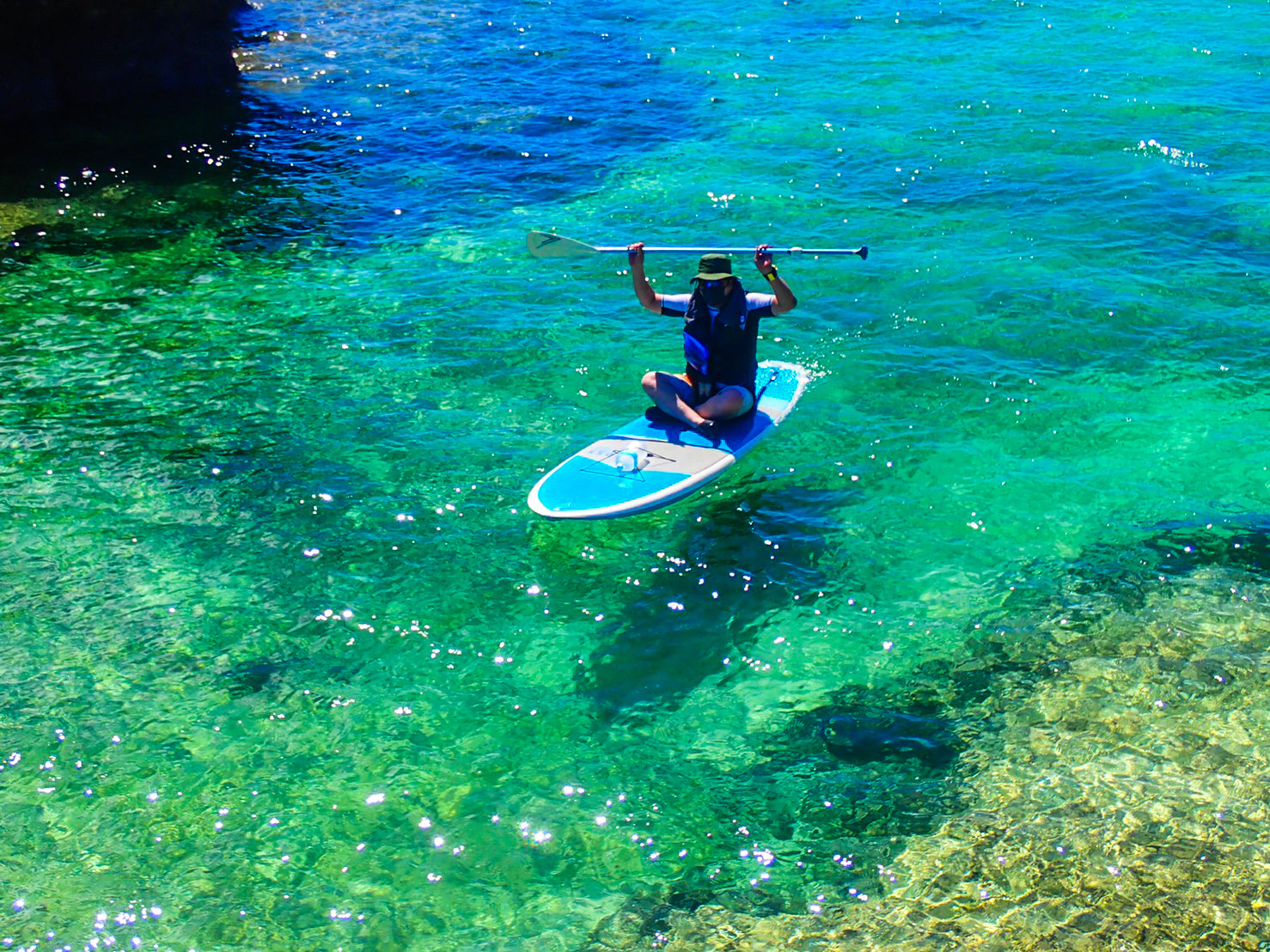
My favourite was the Blue Cave. It doesn't matter that it's raining when you're underwater — in fact, there were fewer people on the rainy day, so I could enjoy it quietly. You're warm in a wetsuit, and once you're in the sea the rain doesn't bother you at all. Swimming with the fish inside a cave wrapped in blue light was just as wonderful in the rain.
The Shimojishima Airport café is new and clean, perfect for sheltering from the rain over a coffee, and the sandwich of bonito namari-bushi (half-dried bonito) and sea grapes was delicious. A roofed café lets you see the view too, so I loved being able to eat while gazing at the sea even in the rain.
Irabu Island has few indoor spots, but the food and marine activities more than make up for it, so you can enjoy it in a way that's different from a sunny day. Being able to enjoy that quiet, rainy-day atmosphere is, I think, part of Irabu Island's appeal too.
Comparing Plans by Length of Stay (Half Day / One Day / Three Days)
The spots you can cover change with your length of stay, so it's important to plan around how long you're staying. For half a day, just the Blue Cave snorkelling and the Shimojishima Airport café are plenty; for a full day, I recommend a beach tour in the morning and the Blue Cave plus food in the afternoon.
I did it in one day, but I felt I'd have liked more time, so with three days you'd be able to get around comfortably.
The half-day plan flows as Blue Cave snorkelling in the morning (two to three hours) followed by lunch at the Shimojishima Airport café (one hour) — that leaves the afternoon free for other plans.
The one-day plan is roughly: Toguchi-no-Hama and Sawada-no-Hama in the morning (two hours), lunch at a Sarahama Port diner (one hour), Blue Cave snorkelling in the afternoon (two to three hours), and café time at BOTTA in the early evening (one hour) — a full day's worth of fun.
With a three-day plan, you can flex around the weather: a sunny-day course on day one (17END and Makiyama Observatory), a rainy-day course on day two, and back to Miyako Island for sightseeing on day three — so you can enjoy it with room to spare.
Morning: A Scenic Beach Drive — Toguchi-no-Hama → Sawada-no-Hama → Obiiwa Rock
On a rainy morning, I recommend a beach-hopping drive. I went round Toguchi-no-Hama and Sawada-no-Hama and stopped to see Obiiwa Rock too. The beach scenery is beautiful even in the rain, and with few people about you can stroll quietly — in fact, the damp, mellow atmosphere of a rainy day was lovely.
Just getting out of the car and walking under an umbrella is plenty of fun, and the photos take on a mood that's unique to a rainy day. At first I thought "it's raining, so is there any point going to the beach?" — but once I went, I was glad I did. Toguchi-no-Hama's pure white sand is gorgeous, and the sea was as clear as ever even in the rain; Sawada-no-Hama, with its mystical boulders, had even more atmosphere on a wet day. Obiiwa Rock, a giant rock designated a natural monument, looked powerful with its rain-soaked surface.
Toguchi-no-Hama: Enjoy the Contrast of White Sand and Emerald Green
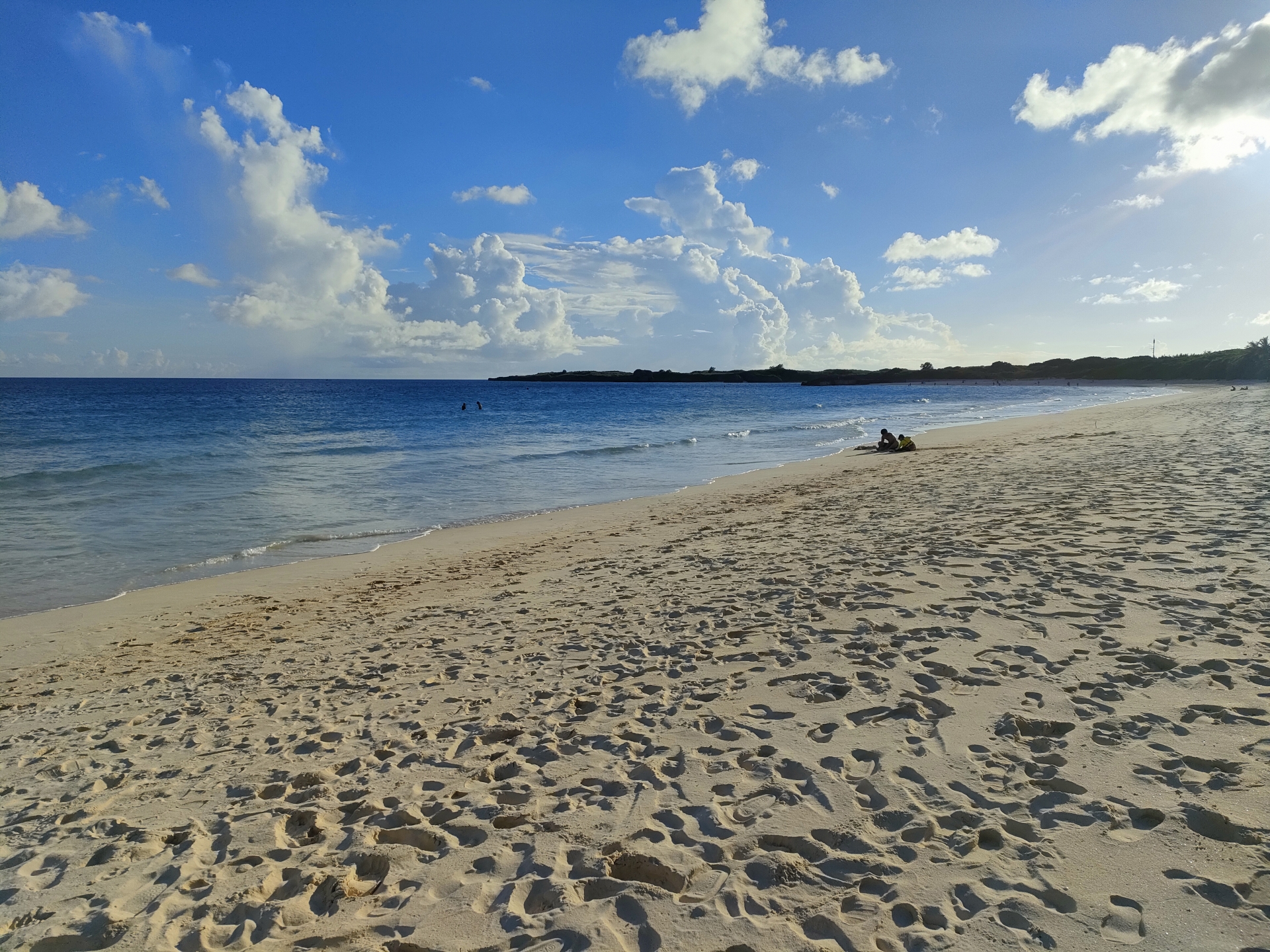
Toguchi-no-Hama is the most popular beach on Irabu Island, a place where pure white sand meets an emerald-green sea, so you can enjoy the view even in the rain. It was raining when I went, but the clarity of the sea was unchanged — in fact, with fewer people on the rainy day, I could walk quietly. Down on the beach, walking the sand under my umbrella, all I could hear was the sound of the waves, and I felt a stillness far from the bustle of the city.
Toguchi-no-Hama is about 800 m long and 50 m wide, and the shallow waters make it safe for families to play, and you can swim there on a fine day. You can't swim in the rain, but just taking in the view is well worth it — the contrast of pure white sand and blue sea is just as beautiful in the rain. I walked the beach for about 30 minutes, took photos, and slowly enjoyed the scenery. A rainy beach walk has a calm atmosphere all its own, different from a sunny day, and I thought it was wonderful in its own way.
Sawada-no-Hama & the Obiiwa Boulder: A Natural-Monument Blue-Sea Viewpoint
Sawada-no-Hama, chosen as one of Japan's "100 Best Beaches," is known for the distinctive scenery of countless giant boulders scattered across it, so visiting in the rain made the mystical atmosphere even stronger. When I went the rain had picked up, and I could hear it striking the rocks — "this is good in its own way," I thought. The boulders at Sawada-no-Hama are masses of coral reef carried in by the Great Meiwa Tsunami of 1771, known as "tsunami stones," so they carry historical value too.
The rain-soaked rock faces glistened black, with a force you don't feel on a sunny day. Obiiwa Rock, about a 10-minute drive from Sawada-no-Hama, is a giant rock designated a natural monument. At roughly 10 m (33 ft) high and 15 m wide, its sheer size is overwhelming. On the rainy day moss grew on the rock, and the contrast of green and black was beautiful. A torii gate stands in front of Obiiwa Rock, where it's said people pray for a good catch and safe voyages, worshipping it as a sacred object of folk belief. I too pressed my hands together before the torii and prayed, "May this trip become a good memory."
Makiyama Observatory: A Sweeping View of the Miyako Islands Mid-Drive
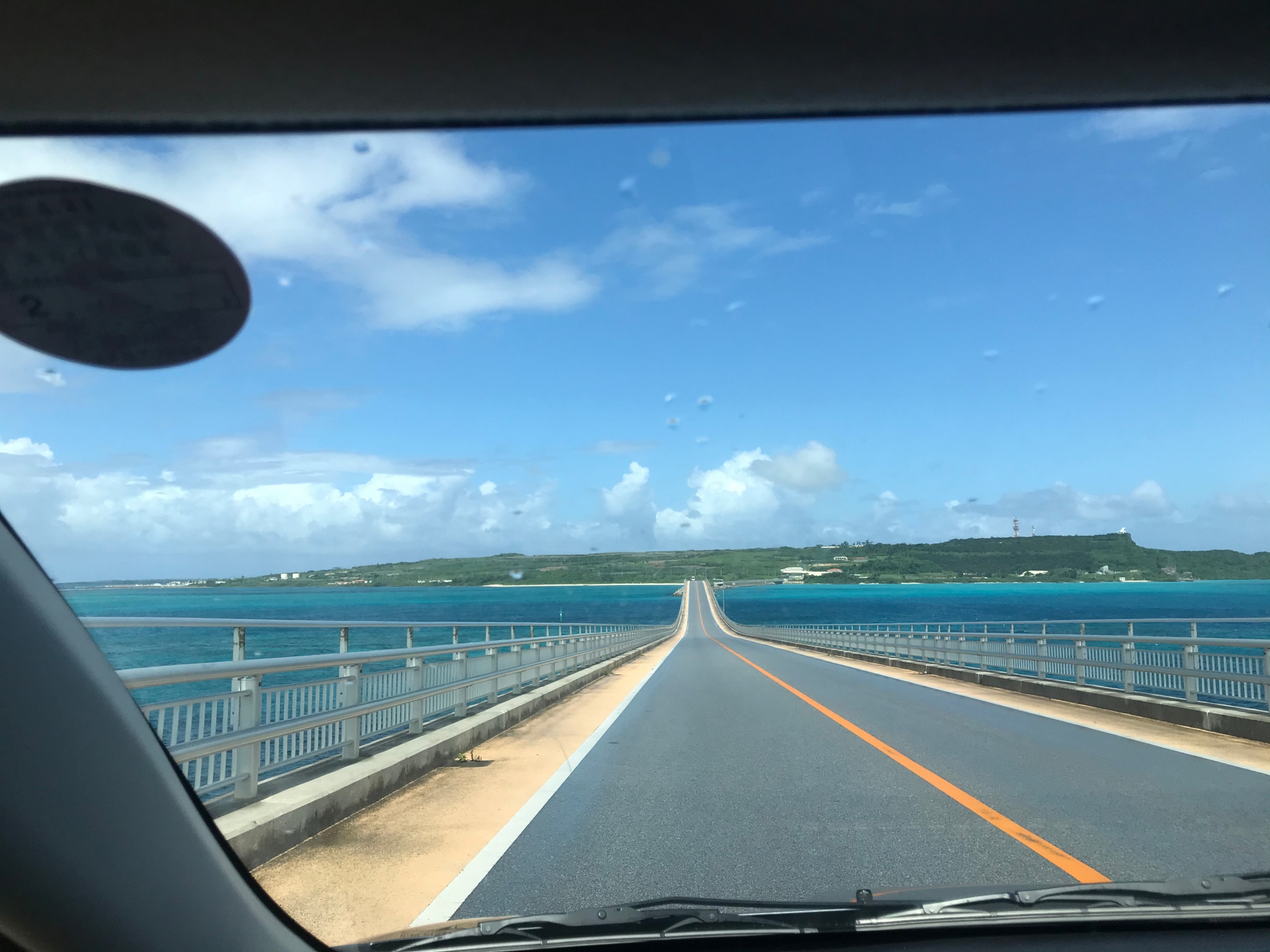
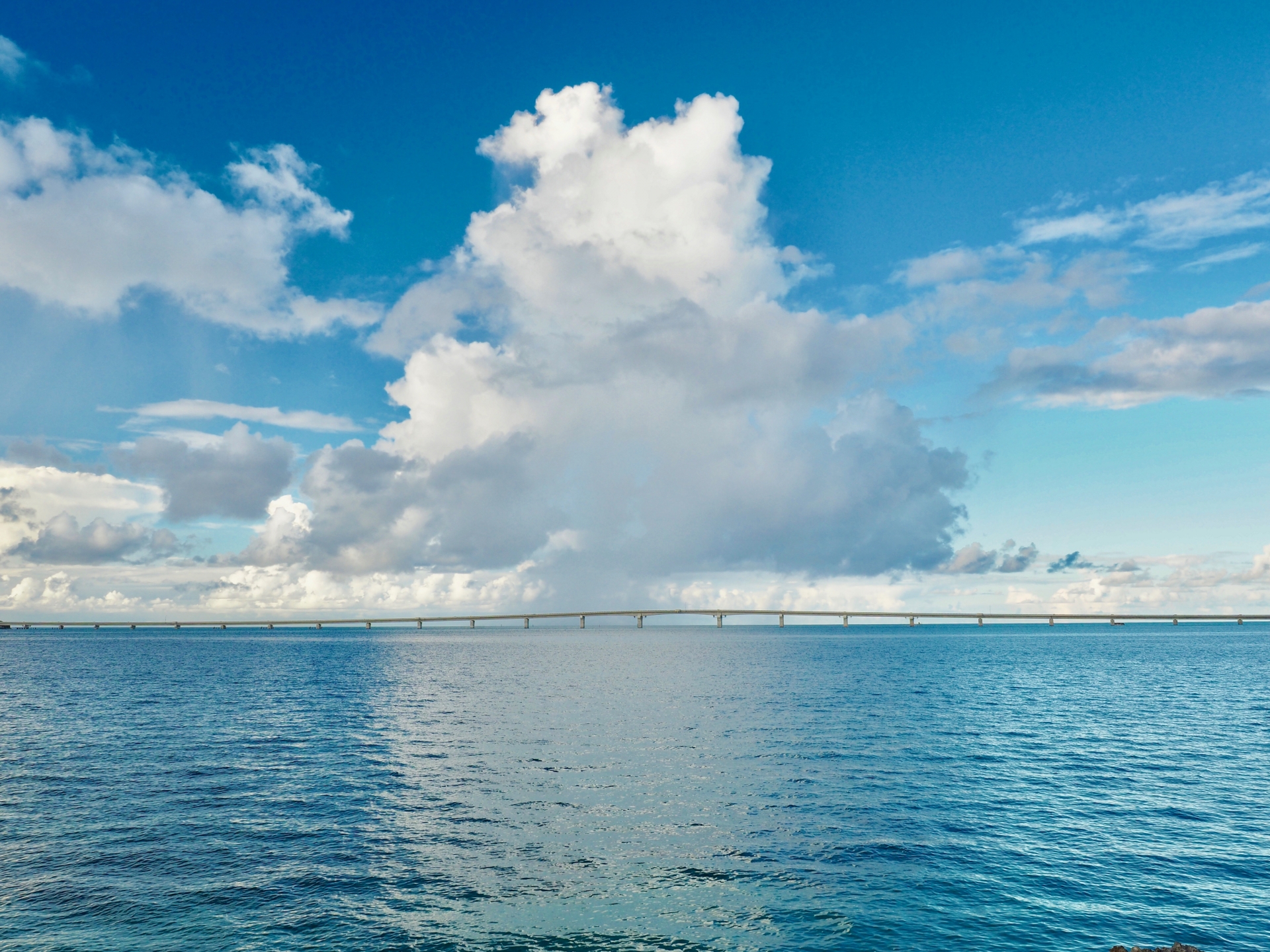
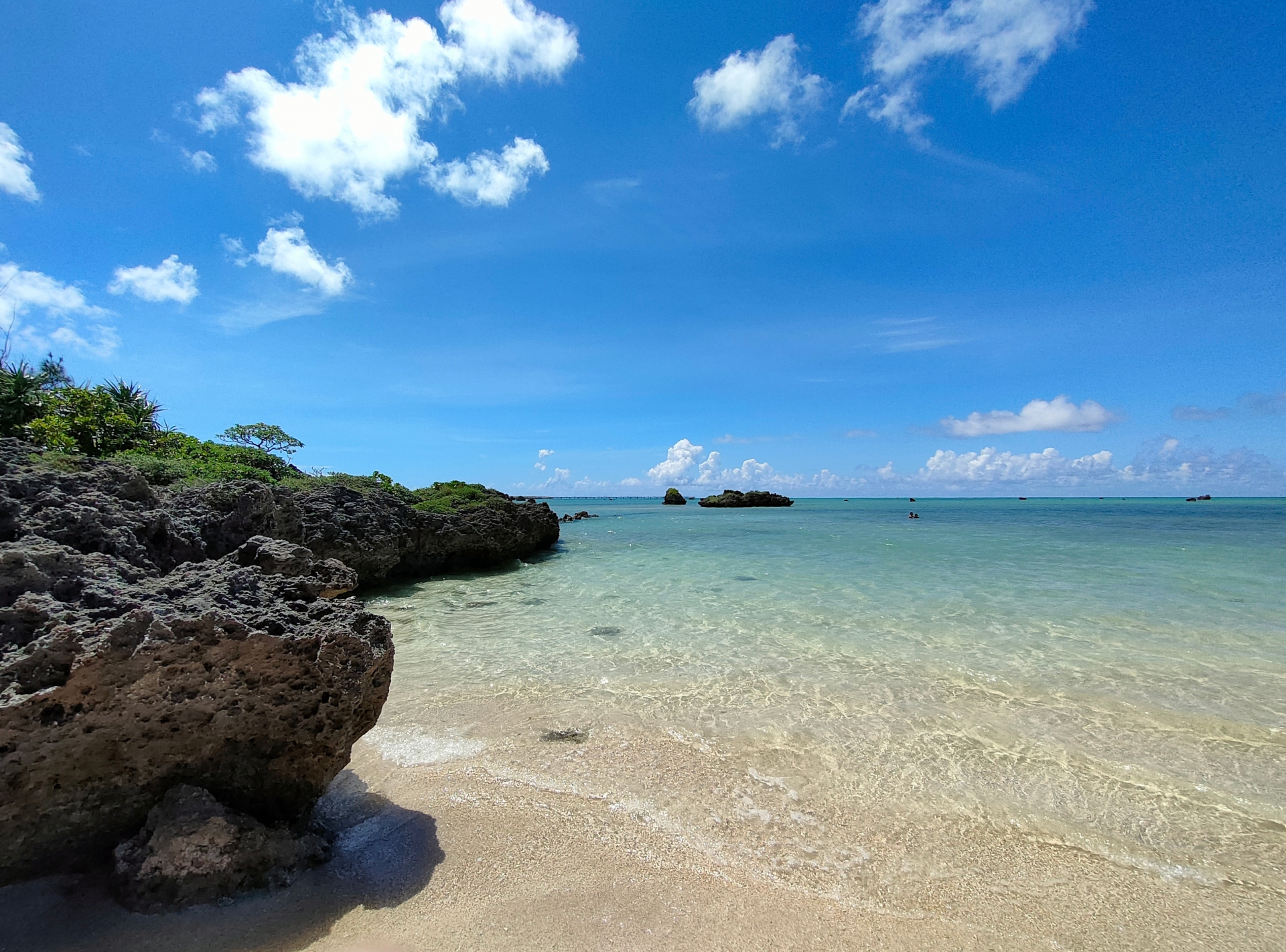
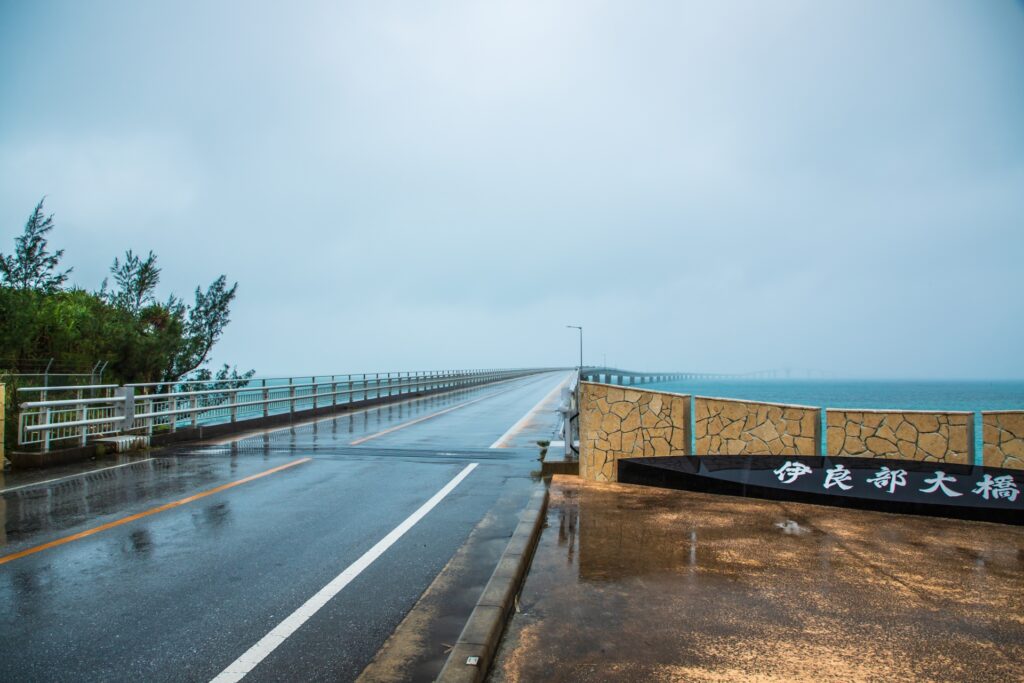
Makiyama Observatory sits on high ground on Irabu Island, a scenic spot with sweeping views of the Irabu Bridge and Miyako Island, so it's worth stopping by mid-drive. When I went the rain had hurt visibility, but I could still see the Irabu Bridge, and the rain-misted scenery was fine in its own way. The observatory has no roof, so an umbrella is essential on a rainy day, but five minutes of taking in the view and snapping photos is plenty.
On a fine day you can enjoy a 360-degree panorama, so I thought I'd like to come back on a clear day next time. From Makiyama Observatory you can see the whole of the Irabu Bridge and the townscape of Miyako Island, and in good weather Kurima Island and Ikema Island too, apparently. Even in the rain I could see the Irabu Bridge, so I was glad I came. There's a car park near the observatory, about a one-minute walk away, so access is easy too.
Tasting Sarahama Port's Signature "Binbinpan" at a Fishing-Town Diner
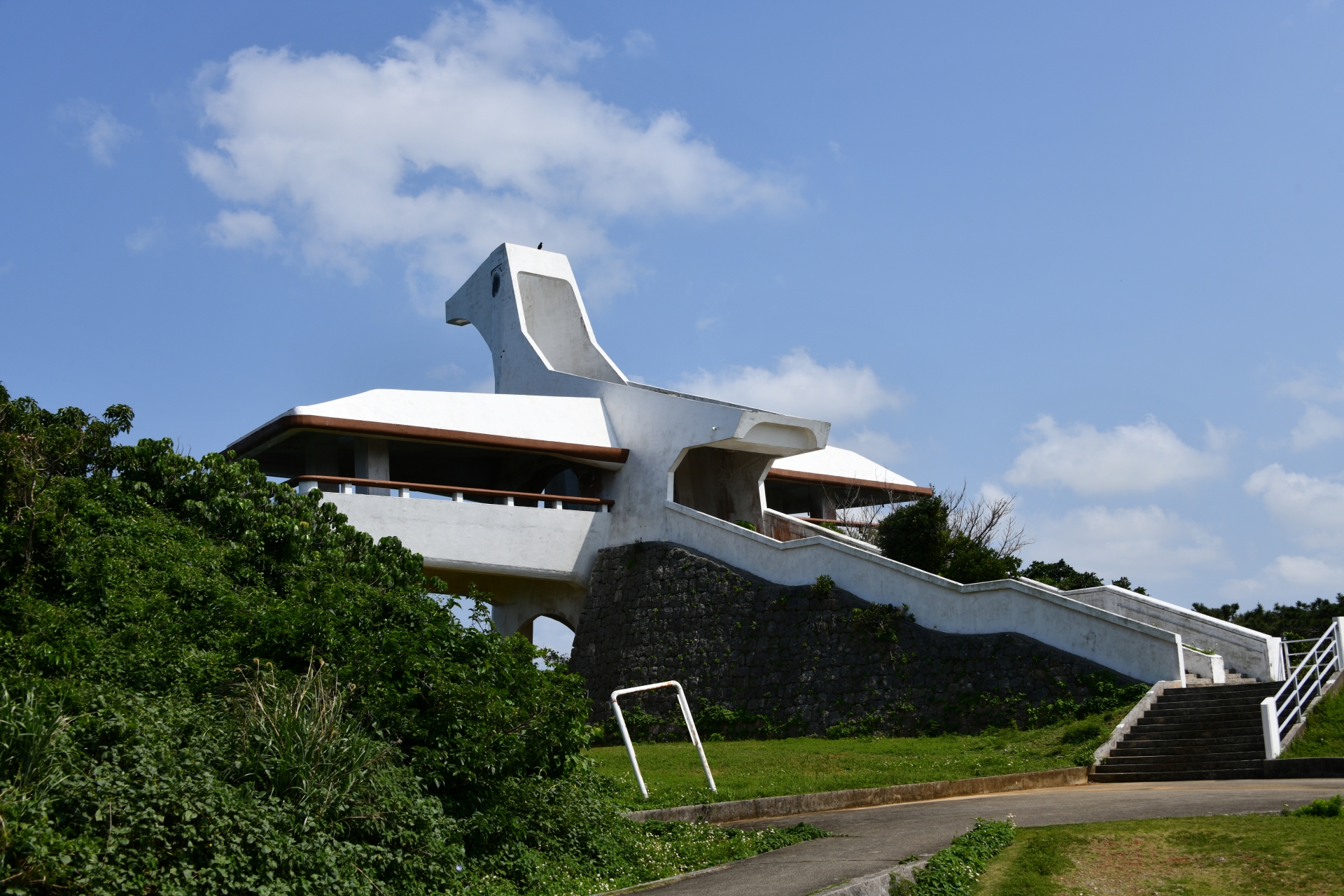
After the morning drive, I went to a Sarahama Port diner for lunch. Sarahama Port is Irabu Island's fishing town, a place where bonito (katsuo) fishing thrives, so you can eat fresh fish dishes. What I had was a signature dish called "binbinpan," a rice bowl topped with fresh bonito sashimi. "Binbin" apparently means the bonito is so fresh it's springy, and true to the name it really was fresh.
The bonito sashimi was thick-cut, and eaten with soy sauce and wasabi, the savouriness of the bonito spread through my mouth. There was plenty of rice too, and I was full. The owner told me, "This is bonito caught this morning," and I felt the warmth of the locals as well. It was around ¥1,200 (about US$8), and for bonito this fresh I thought it was cheap. The diner has a roof, so you can eat comfortably even in the rain, and the view from the window over the sea is a bonus.
A List of Local Diners That Impress Even Foodies from Tokyo and Osaka
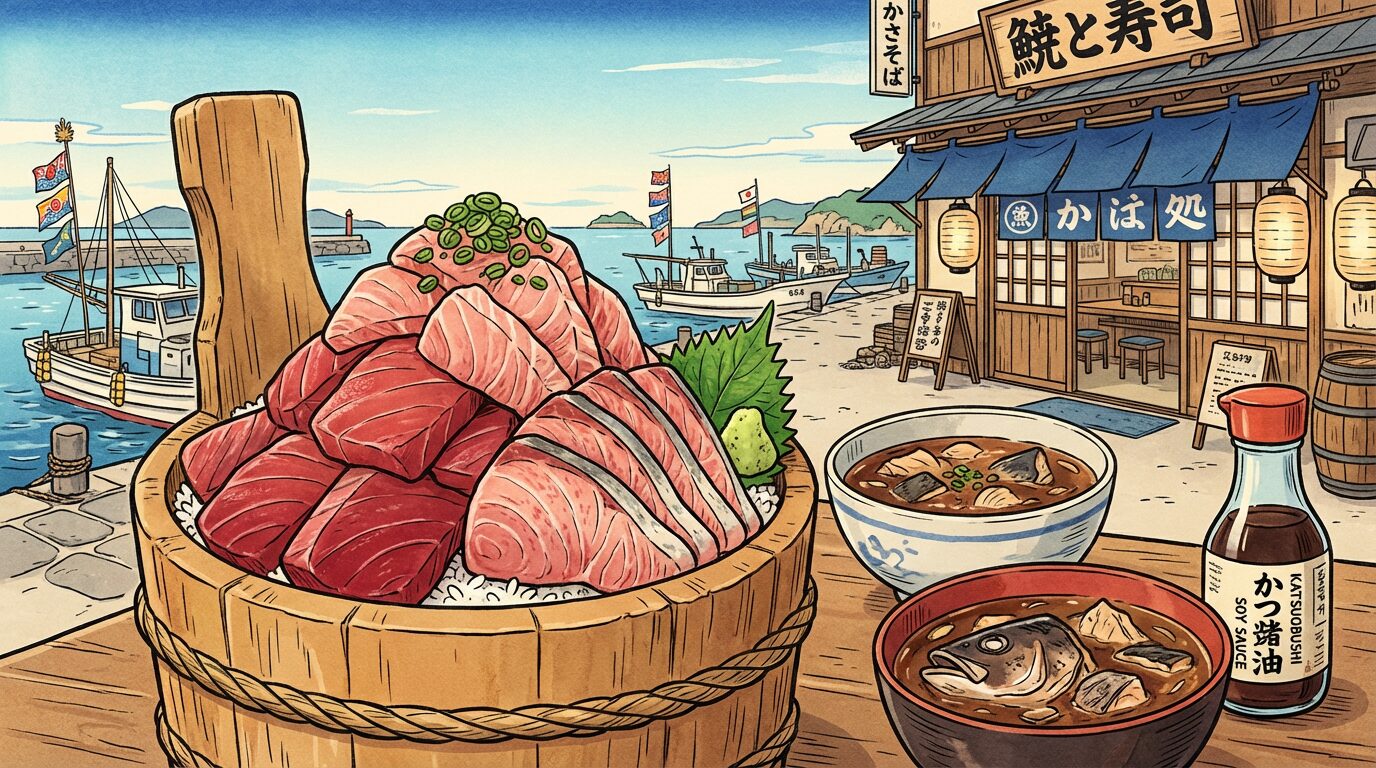
Irabu Island has several local diners beloved by residents, said to be tasty enough to make even foodies from Tokyo and Osaka sit up. Besides the Sarahama Port diner I went to, a diner called "Nakayukui Shoten" is famous, and I heard its soba is delicious. I absolutely want to go next time. "Nakayukui" apparently means "a little rest" in the Okinawan dialect — a place where locals come to take a break. The soba broth is full of flavour and the noodles slip down nicely, and at around ¥800 (about US$5) it's good value too.
There's also a popular café called "BOTTA," where apparently you can eat pizza while gazing at Sawada-no-Hama from the terrace seats. There's a roofed terrace even for rainy days, so you can dine while enjoying the view. BOTTA's pizza is authentic Italian-style, with a chewy base that's said to be delicious. It's around ¥1,500–2,000 (about US$10–13), and there are plans that come as a set with a drink. Irabu Island's diners mostly use local ingredients, so you can eat fresh fish and vegetables — a treat for food lovers. The prices are reasonable too, with a satisfying meal at around ¥1,000–1,500 (about US$7–10).
Ask a local "any recommended diners?" and they'll kindly tell you, so it's worth asking.
A Luxurious Afternoon Spent at the Shimojishima Airport Café
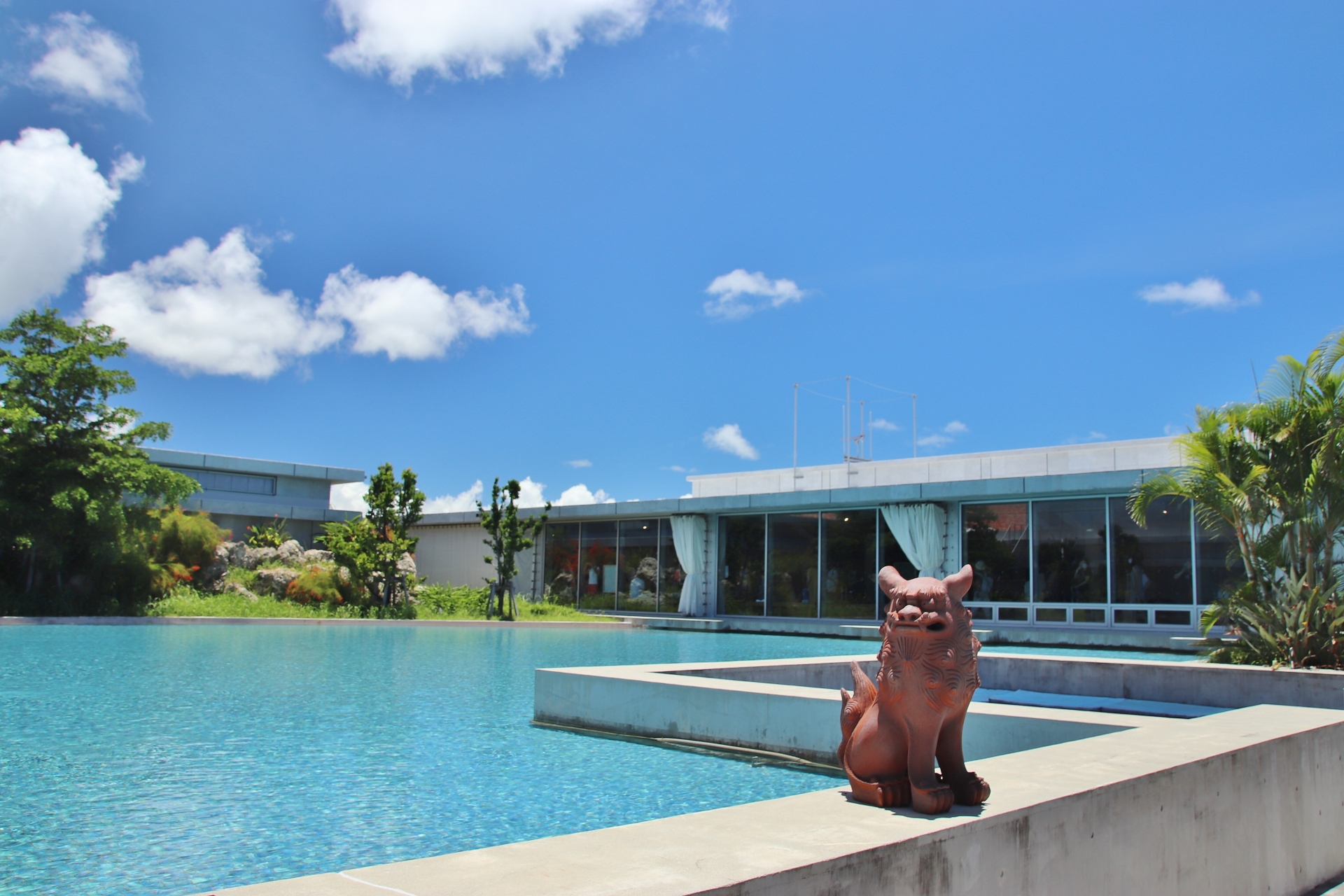
After the Blue Cave snorkelling, I took a break at the Shimojishima Airport café. Shimojishima Airport, which newly opened in 2019, is a clean airport, and the café in front of the security checkpoint can be used even by people not taking a flight. I didn't fly either, but used just the café.
Stepping into the café, the runway and sea were visible through the large windows, and the sense of openness was amazing. I took a seat and ordered the sandwich of bonito namari-bushi and sea grapes.
This sandwich is a limited menu item you can only eat at Shimojishima Airport — the bonito namari-bushi is given a Western twist, and the popping texture of the sea grapes is fun. The bread was freshly baked and crisp, and it was delicious. It was around ¥1,200 (about US$8) and comes as a set with a drink.
I spent a leisurely while drinking coffee and gazing out the window. It was raining, but being indoors was comfortable, and being able to relax watching the runway felt like a luxury.
You can watch the planes take off and land too, so I think it's an irresistible spot for aviation fans. I stayed at the café for about an hour, reading a book and sorting photos on my phone, taking it easy. It's precisely because it was a rainy day, I thought, that I could enjoy this kind of unhurried time.
A Packing Checklist to Make a Rainy Beach Walk Comfortable
To make a rainy beach walk comfortable, what you bring matters, so here are the things I actually took that proved worthwhile. First, an umbrella is essential, and a large one is ideal if possible. On windy days, choose a sturdy umbrella that won't break. A raincoat is handy too — with just an umbrella you still get wet, but a raincoat frees up both hands and makes walking easier.
A waterproof bag is also essential; I brought one to hold my camera and phone. Ziplock bags are handy too, useful for small items. For shoes, waterproof trainers or sandals are best.
I went in sandals, but the wet sand is slippery, so it's better to choose sandals with good grip. A towel is essential too — bringing two or three to wipe your face and hands is reassuring. Leaving a change of clothes in the car means you can change straight away when you get wet. A waterproof cover for your camera is handy, letting you take photos even in the rain.
Prepare these items and you can comfortably enjoy a rainy beach walk too.
Afternoon: Indoor Activities for Adventure and Calm — Toriike Pond, the Underwater Observatory and More
The afternoon is time to enjoy indoor activities, and I joined a Blue Cave snorkelling tour. The tour runs even in the rain, and underwater is unaffected by the rain, so in fact there were fewer people on the rainy day and I could enjoy it quietly.
The mystical blue light of the Blue Cave was as beautiful as ever even in the rain, and I genuinely thought, "I'm glad I came." After that I relaxed at the Shimojishima Airport café, and also dropped by the Irabu Island Museum of History and Folklore to learn about the culture. The afternoon was mostly spent taking it easy indoors, so I stayed comfortable even in the rain. Indoor activities are a rainy day's strong ally, and on Irabu Island the Blue Cave snorkelling is the top recommendation.
Feel the Mystery of Toriike Pond! An Undersea Tunnel Trial Dive
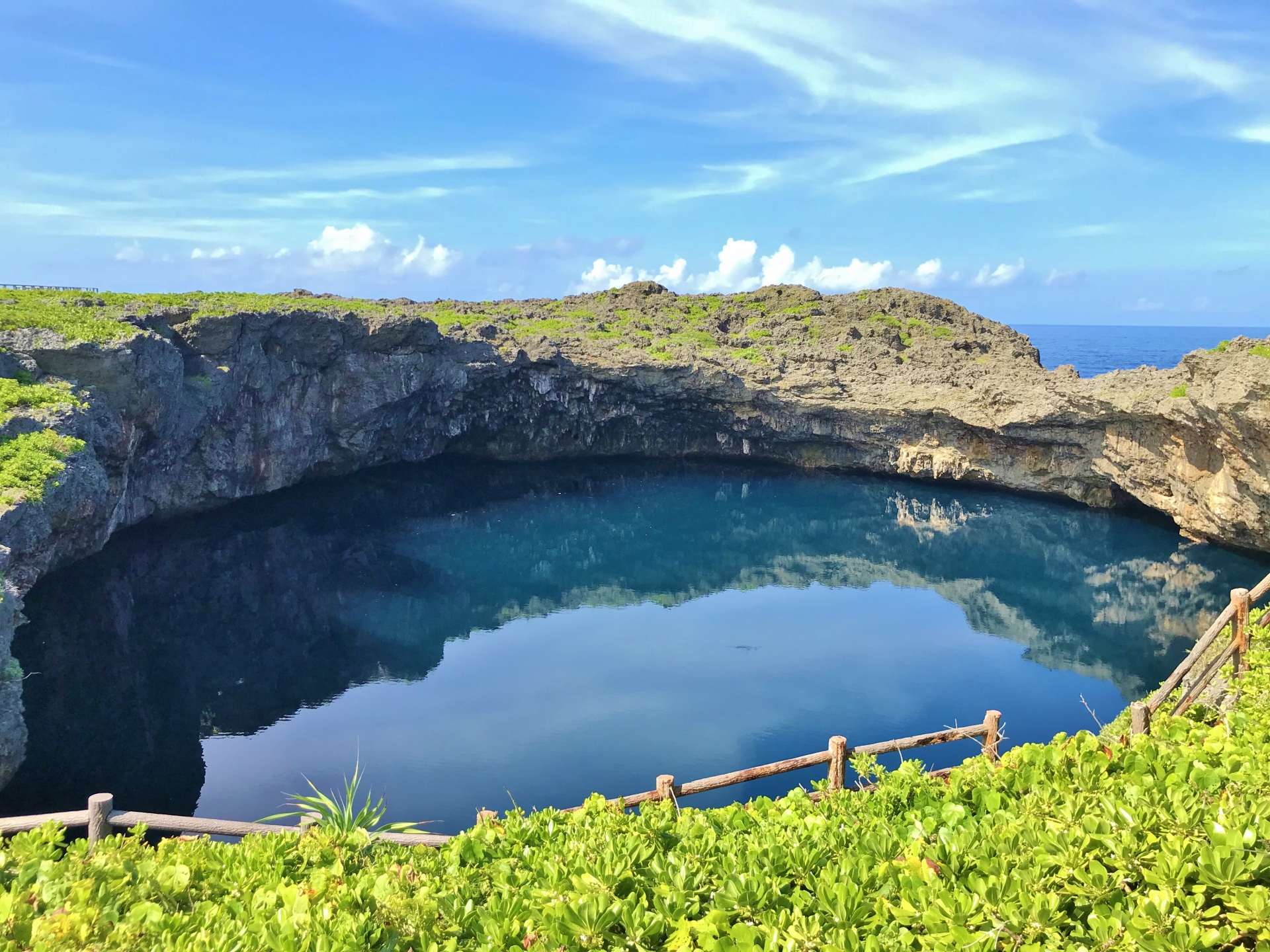
Toriike Pond is one of Irabu Island's signature power spots, a mystical place where two ponds, one large and one small, sit side by side, so visiting in the rain made the mystical atmosphere even stronger.
I only viewed Toriike Pond from above, but you can apparently experience the undersea tunnel by diving, and I thought I absolutely want to dive next time. Toriike Pond is also known as the "Dragon's Eye," so called because the two ponds look like a dragon's eyes.
The pond water is a deep blue, with a mystical beauty that seems to draw you in. When it rains, raindrops fall on the pond's surface and the spreading ripples are beautiful too.
Toriike Pond is a nationally designated place of scenic beauty and natural monument, and in fact it connects to the open sea via an undersea tunnel. It's a popular spot with divers, and famous as a high-difficulty dive site too.
I don't have a diving licence, so I only viewed it from above, but even so it was moving enough. A walking path is in place, so you can stroll around the pond and enjoy the scenery. You can walk the path even in the rain, so a stroll under an umbrella is nice too.
Blue Cave Snorkelling Was Brilliant Even in the Rain: My First-Hand Account
What I was looking forward to most was the Blue Cave snorkelling, and since I'd heard the tour runs even in the rain, I joined despite the wet. The result was the right call — precisely because it was a rainy day, there were fewer people and I could take my time.
The tour was a two-hour course from 2 pm to 4 pm. First we borrowed the gear at the shop, then moved by car to the spot. I put on a wetsuit, a mask, snorkel and fins, and I was ready.
The instructor explained things carefully and reassured me, "Underwater is unaffected by the rain, so don't worry." Indeed, once in the sea the rain didn't bother me at all, and I was absorbed in the underwater world.
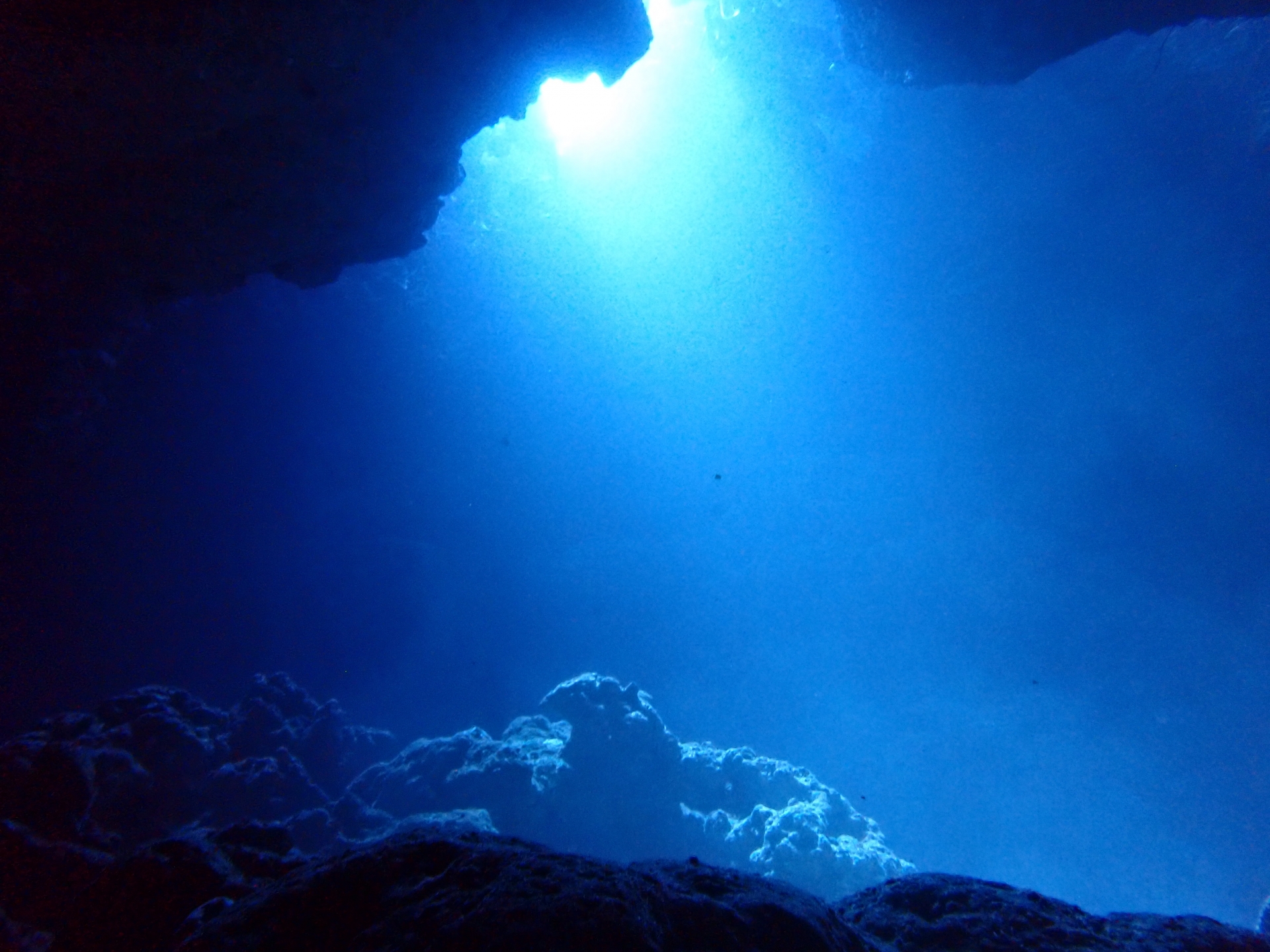
The Blue Cave is a natural cave formed by seawater erosion, where sunlight streams in and makes it glow blue — mystical. Stepping inside the cave, wrapped in blue light, I thought, "This is another world."
There were lots of fish too, and I got a close-up look at colourful tropical fish swimming about. The instructor brought fish food, and when I fed them the fish came up close, right near my hand. This experience became an unforgettable memory.
Tropical-Fish Watching at the "Shimojishima Station" Underwater Observatory
Shimoji Island has an underwater observatory where you can apparently watch tropical fish, but it was closed on the day I went. I absolutely want to go next time. An underwater observatory is a facility where you descend into the sea and view the underwater scene through windows, so you can watch tropical fish comfortably even in the rain. There's no worry of getting wet, it's comfortable indoors, and families with children can enjoy it.
Irabu Island's sea is so clear that the fish are apparently easy to see even from the underwater observatory. Being able to watch colourful tropical fish swimming through a window is a luxury. It's best to check the opening hours and closed days in advance, so I recommend checking the official website or confirming by phone.
Sheltering and Learning Culture at the Irabu Island Museum of History and Folklore
The Irabu Island Museum of History and Folklore is a facility where you can learn the island's history and culture, perfect for learning about the culture while sheltering from the rain. When I went there were exhibits on Irabu Island's fishing history and the Great Meiwa Tsunami, which were fascinating. Admission is free, and you can look round in about 30 minutes. There aren't many exhibits, but it's just right for getting to know Irabu Island's history. The Great Meiwa Tsunami exhibit in particular explained how the boulders at Sawada-no-Hama were carried in, and having just seen Sawada-no-Hama, my understanding deepened.
A museum staff member explained kindly, telling me, "These rocks were carried in by the tsunami." Irabu Island's fishing history was fascinating too, with photos and tools displayed from the era when bonito fishing thrived. Learning history at the museum on a rainy day was also enjoyable as part of the trip.

A Must for the Spiritually Inclined! Irabu Island's Power Spots and a "Scary" Legend
Irabu Island has several power spots, places the spiritually inclined won't want to miss. I was curious too, and went round Obiiwa Rock and Toriike Pond. Both had a mystical atmosphere, and I felt like I drew some energy from them.
There are also places rumoured to be "scary," and the stairs at 17END are apparently famous. I didn't go, but I want to take it on next time. Many of Irabu Island's power spots let you feel the force of nature, perfect for settling your mind away from the bustle of the city.
3 Irabu Island Power Spots: Obiiwa Rock, Nazaki and Higashi-Hennazaki
My three Irabu Island power spots are Obiiwa Rock, Nazaki and Higashi-Hennazaki. As introduced earlier, Obiiwa Rock is a giant rock designated a natural monument, enshrined as a sacred object of folk belief.
People pray there for a good catch and safe voyages, and the locals worship it too. I pressed my hands together before the torii and felt I'd drawn some energy. Nazaki is a cape at Irabu Island's southern tip, a scenic spot of continuous sheer cliffs. The contrast of the blue sea and the cliffs is beautiful, and it's known as a power spot too.
On a rainy day the footing is slippery, so you should walk carefully, but the scenery is as beautiful as on a sunny day. Higashi-Hennazaki is a cape on Miyako Island, but it's about a 30-minute drive from Irabu Island, so I recommend touring them together. There's a lighthouse, and the view from it is spectacular, popular as a power spot too.
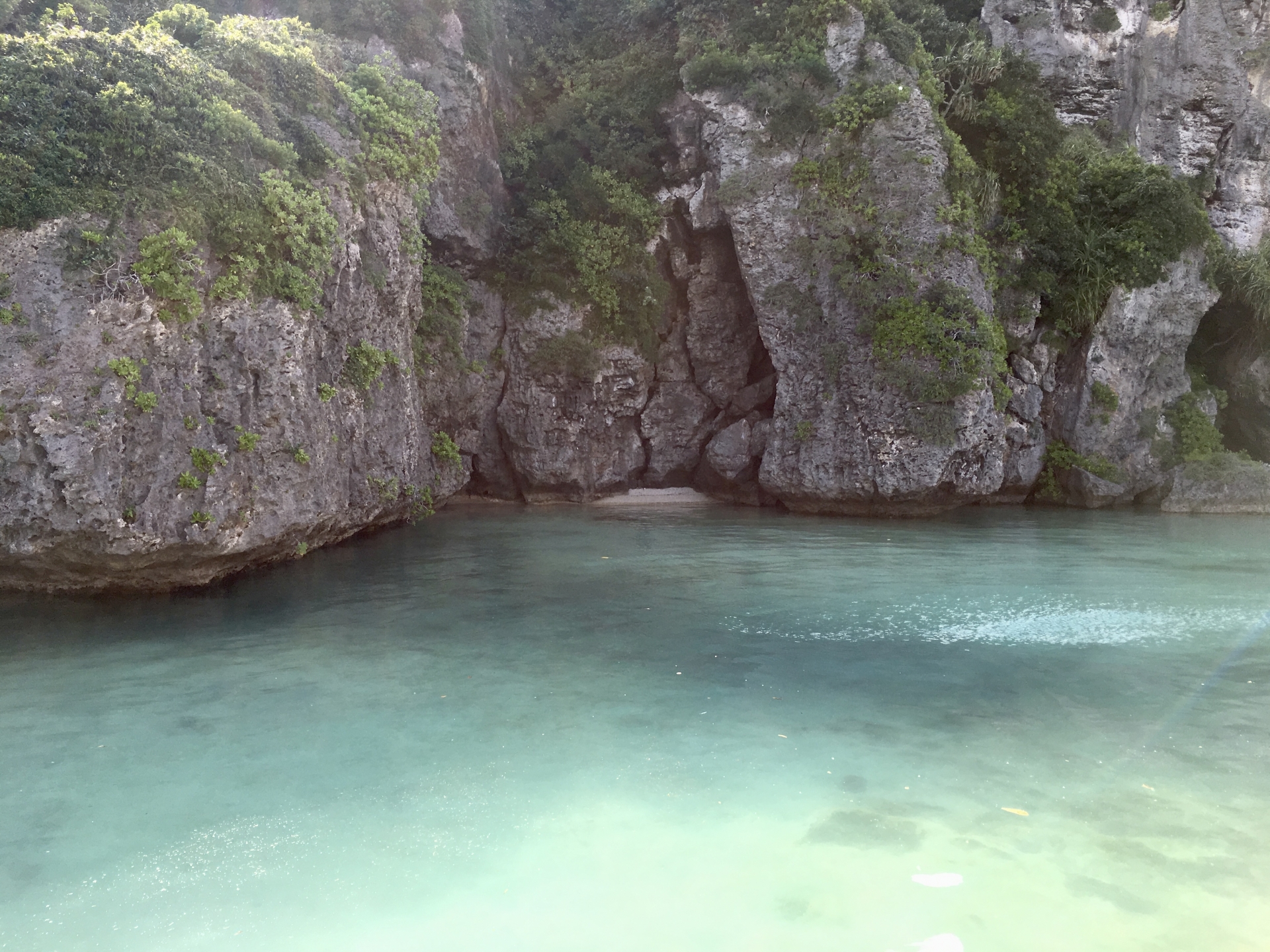
Take On the Rumoured-Scary "END Stairs"! Safe Access and Cautions
17END apparently has rumoured-scary stairs called the "END Stairs" — stairs descending the cliff with no handrail, said to be "scary" because they're dangerous. It was a rainy day so I didn't go, but even on a sunny day you need to descend carefully, so you definitely shouldn't go on a rainy day.
Going down the END Stairs takes you to the 17END beach, but some areas have recently become off-limits, so it's best to check in advance. To get there safely, take the proper route to 17END. You can drive close to 17END and walk from there. On a rainy day the footing is slippery, so wear waterproof shoes and walk carefully.
There are also places with no handrail, so families with small children and elderly visitors should take great care.
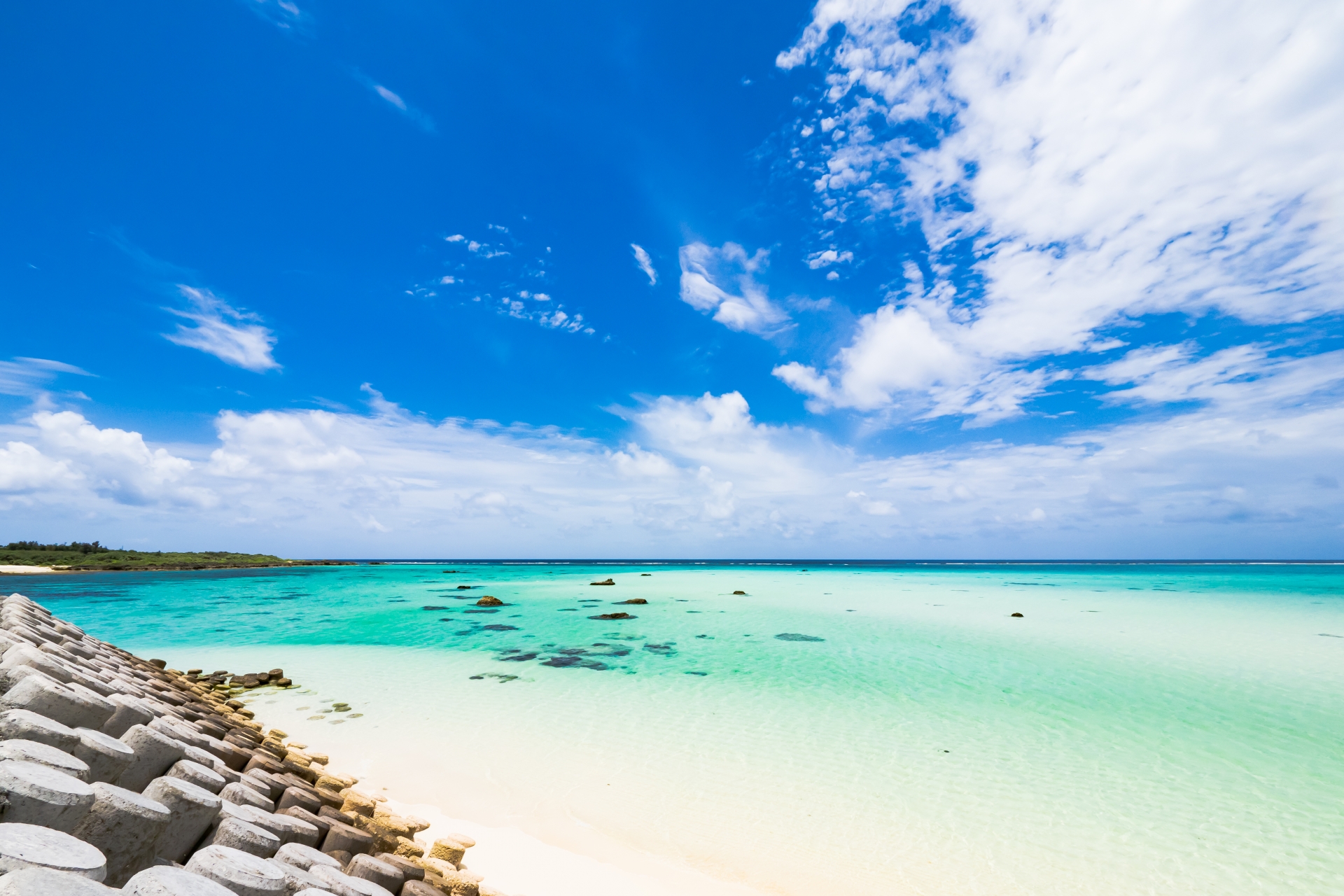
The Appeal and Cautions of 17END Beach at Shimojishima Airport
17END is a beach at the tip of Shimojishima Airport's runway, known as the "phantom beach." At low tide a pure white sandbar appears and an emerald-green sea spreads out — a spectacular spot. You can watch planes take off and land up close too, so it's irresistible for aviation fans.
It was a rainy day, so it wasn't low tide and I couldn't see the phantom beach, but the scenery was beautiful even so. 17END's appeal is, above all, its highly transparent sea and pure white sand — a place that symbolises the sea of Miyako Island. It's best to go at low tide, so I recommend checking the tide table before you go.
The cautions are that there are no-swimming areas, and that it becomes off-limits during aircraft take-off and landing. To enjoy it safely, follow the rules. You can enjoy the scenery even in the rain, but the footing is slippery, so walk carefully.
Trip-Planning Q&A: Access from Miyako Island / Miyako Airport and Booking Tips
When planning an Irabu Island trip, it's handy to know how to get there from Miyako Island and Miyako Airport. It's about a 30-minute drive from Miyako Airport to Irabu Island, arriving once you cross the Irabu Bridge. Renting a car is the most convenient, but you can also go by taxi or bus. Knowing the tour-booking tips helps your trip go smoothly too.
Checkpoints to Avoid Slip-Ups When Booking a Tour
The first checkpoint to avoid slip-ups when booking a tour is confirming the minimum number of participants. Blue Cave snorkelling has a minimum of, say, two or four people, so on a solo trip you may not be able to join. I went with a friend, so we were fine, but if you're going alone it's best to check in advance.
Also confirm whether tours run in wet weather. Most tours run even in the rain, but they may be cancelled in a typhoon or strong wind. Checking the cancellation policy is reassuring too. It varies by operator — a 50% fee for cancelling the day before, 100% on the day, and so on — so confirm it before booking. Check what's included in the price too: gear rental, insurance, transfers and photo data.
The tour I joined included everything, so I could enjoy it with no extra charges. Reviews are worth referring to as well — reading the accounts of people who actually took part tells you the tour's atmosphere and content.
Rainy-Day Packing and Plan-Adjusting Tips
To make rainy-day sightseeing on Irabu Island comfortable, what you pack and how you adjust your plan matter. Here are the items I found useful and how I adjusted the plan. Rather than giving up because it's raining, finding the rainy-day way to enjoy it makes the trip even richer.
Waterproof Gear, Camera Protection and Clothing Tips
Waterproof gear is essential; I brought an umbrella, a raincoat and a waterproof bag. The waterproof bag in particular was useful for holding my camera and phone. For camera protection, fit a waterproof cover. I brought a DSLR, so I fitted a dedicated waterproof cover to shoot. Keeping your phone in a waterproof case is reassuring.
The clothing tip is to choose quick-drying clothes. Cotton clothes are slow to dry once wet, so polyester or nylon is best. I went in a quick-drying T-shirt and shorts, and even when wet they dried fast and stayed comfortable. For shoes, choose waterproof trainers or sandals with good grip.
On a rainy day the footing is slippery, so choosing non-slip shoes matters. And bring plenty of towels for peace of mind — they're for wiping your face and hands, but also useful for wiping down wet clothes.
Plan-Adjusting Techniques I Used on the Rainy Day
On a rainy day, flexibly changing your original plan made it more enjoyable. Here are the plan-adjusting techniques I used. First, switching from outdoor spots to indoor ones. I saved Makiyama Observatory for a sunny day and prioritised the Blue Cave snorkelling and the Shimojishima Airport café on the rainy day.
Next, allowing extra travel time. Visibility drops in the rain, so driving takes longer. A schedule with room to spare let me get around calmly without rushing. Also, checking in advance where you can shelter — knowing the locations of cafés and diners means you can shelter quickly even in sudden rain.
Finally, checking the forecast frequently. Watching the rain-cloud radar and aiming for a window when the rain looks set to ease is a good strategy for going to the beach. I aimed for the morning window when the rain weakened to go round Toguchi-no-Hama and Sawada-no-Hama.
Do You Need This? Q&A
Here are answers to some common questions about an Irabu Island trip. I'll be glad if they help anyone planning rainy-day sightseeing.
Q1: Can you do Blue Cave snorkelling on a rainy day?
Yes. The tour runs even in the rain, and underwater is unaffected by the rain, so there are in fact fewer people and you can enjoy it quietly. It may be cancelled in a typhoon or strong wind, but ordinary rain is fine.
Q2: Where can you shelter from the rain on Irabu Island?
The Shimojishima Airport café, BOTTA, the diners and the Irabu Island Museum of History and Folklore are places to shelter. All are comfortable indoor spaces.
Q3: Do you need a rental car?
Yes. Irabu Island has few buses, so a rental car is handy. You can rent one at Miyako Airport and drive to Irabu Island. A car makes getting around easier, especially in the rain.
Q4: Which places are best avoided on a rainy day?
The END Stairs at 17END are dangerous in the rain, so best avoided. Makiyama Observatory has no roof, so you can't stay long — though a short visit under an umbrella is fine.
Q5: What food can you enjoy even on a rainy day?
I recommend binbinpan at a Sarahama Port diner. It's indoors, so you can eat comfortably in the rain. BOTTA's pizza, eaten on the roofed terrace, is good too.
Q6: Is it OK for a solo trip?
Yes. However, Blue Cave snorkelling has a minimum number of participants, so confirm in advance. Choose a tour you can join solo and there's no problem.
Q7: How long does rainy-day sightseeing take?
Half a day is enough for the main spots. A full day lets you take your time. I did beach-hopping in the morning and the Blue Cave and a café in the afternoon in one day, and spent a fulfilling time.
Irabu Island Is Fun Even in the Rain
A rainy Irabu Island has a charm different from a sunny day, with a quiet, calm atmosphere to enjoy.
The Blue Cave snorkelling was beautiful even in the rain, the hours spent relaxing in a roofed café were lovely, and the rainy beach walk had a mellow atmosphere too. Don't give up just because it's raining — I hope you find the rainy-day way to enjoy it.
At first I thought "it's a shame it's raining," but once I actually went round, I came to think, "a rainy Irabu Island is good too." Irabu Island is small, so you can get around efficiently even in the rain, the indoor spots and food are plentiful, and you can enjoy it fully even on a wet day.
The Blue Cave snorkelling especially is another world underwater even in the rain, and swimming with the fish inside a cave wrapped in blue light became a memory I'll never forget for the rest of my life. The Shimojishima Airport café, new and clean, was also perfect for relaxing while sheltering from the rain.
The binbinpan I ate at a local diner, with its delicious fresh bonito, also made me think from the bottom of my heart, "I'm glad I came to Irabu Island."
Next time I go to Irabu Island, I'd like to enjoy both a sunny day and a rainy day. You too — don't give up even on a rainy forecast, and enjoy Irabu Island. You're sure to find a charm unique to a rainy day.