- A Way of Walking That Lets You Feel the Narrow Alleys and People's Lives
- Irabu Island's Villages Have an Appeal That Isn't a Sightseeing Spot
- The Secret of Sarahama Village's Colourful Houses
- Enjoy the Maze-Like Narrow Alleys
- The "Yaagama-Kuugama" Village Walking Tour
- Island Life Seen Through the Community Noticeboards
- The Shrines and Tombs in the Villages
- Shopping at Local Shops
- Greeting Residents Is Important
- Recommended Times for a Village Walk
- Photography Manners and Points to Note
- Things to Be Careful About on a Village Walk
- Spots to Combine with a Village Walk
- Frequently Asked Questions and Answers
- The Value of a Place That Isn't a Sightseeing Spot
A Way of Walking That Lets You Feel the Narrow Alleys and People's Lives
The first time I walked the Sarahama village, I got lost in the maze-like narrow alleys and thought "which way should I go?" — but I realised that's what's good about it. The time spent walking the winding alleys, gazing at the colourful houses and catching a glimpse of the islanders' lives stayed in my heart more deeply than touring sightseeing spots.
Irabu Island has not only places maintained for tourists but several villages where locals actually live, and walking them, the island's true face comes into view. Sarahama village, Nagayama village, Irabu village — each has its own character, and just walking is fun.
In this article, I'll introduce walking Irabu Island's villages in detail, based on my experience of actually walking the villages many times. Since I'll write everything you'd want to know when walking the villages — how to walk the narrow alleys, the secret of the colourful houses, how to read the community noticeboards, the shrines and local shops, greeting residents, photography manners and so on — I hope those looking for Irabu Island's hidden gems will use it as a reference.
Irabu Island's Villages Have an Appeal That Isn't a Sightseeing Spot
Irabu Island has main villages — Sarahama, Nagayama and Irabu — each with an appeal different from a sightseeing spot.
Sarahama Village — A Fishermen's Town
Sarahama village is a fishing-port village in the northeast of Irabu Island, where colourful houses are packed densely. Known as a fishermen's town with thriving bonito fishing, it boasts an 80% share of bonito landings within Okinawa Prefecture.
Early in the morning, boats back from fishing line up one after another, and you can see fresh fish being landed. Seeing the locals' deft work and the lively fish, the realisation wells up that you've come to "the kitchen of the sea."
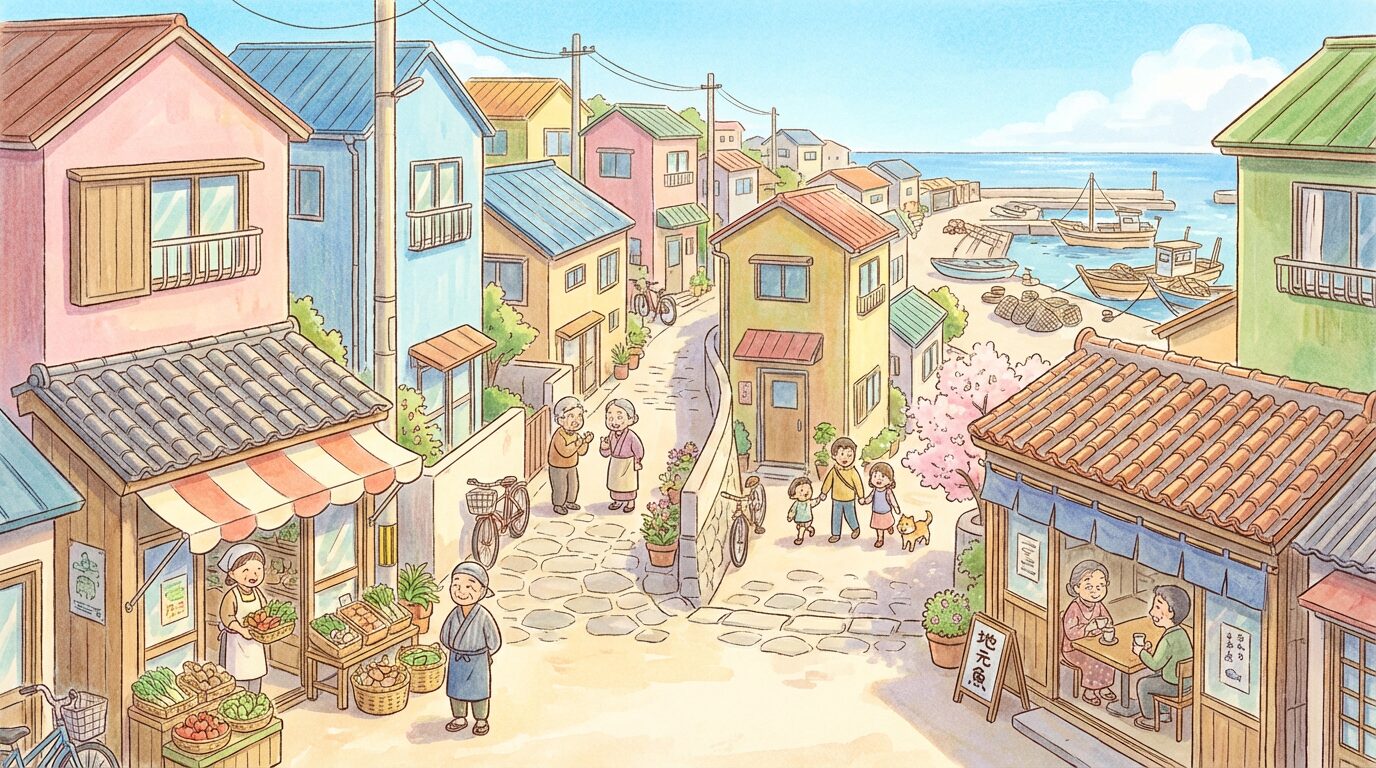
Behind Sarahama Fishing Port, houses crowd together, and an old-fashioned village spreads out. It's been talked about as resembling Santorini in Greece, so colourful and distinctive that the scenery is its appeal.
Nagayama Village — A Leisurely Atmosphere
Nagayama village is in the southeast of Irabu Island, located at the foot of the Irabu Bridge. With a more leisurely atmosphere than Sarahama, old rows of houses remain.
With few tourists and quiet, it's ideal for a leisurely stroll. I walked it several times too, and time felt like it flowed slowly, completely freeing me from the city's hustle.
Irabu Village — The Island's Centre
Irabu village is in the central part of Irabu Island, the island's largest village. Maruki Supermarket is here, and FamilyMart Miyako Irabu is also near this village.
With the facilities needed for life in place, it's also a place where you can catch a glimpse of the locals' daily life. Islanders shopping at the supermarket, children on their way home from school — those casual scenes convey island life.
What You See Because It Isn't a Sightseeing Spot
These villages aren't sightseeing spots — there are no tourist facilities, no souvenir shops, and few restaurants. But I found, from actually walking, that that's what's good about it.
The islanders' lives remain as-is, and you can see old-fashioned scenes of life. Precisely because it isn't touristified, the island's true face is visible. This is, I think, the greatest appeal of a village walk.
The Secret of Sarahama Village's Colourful Houses
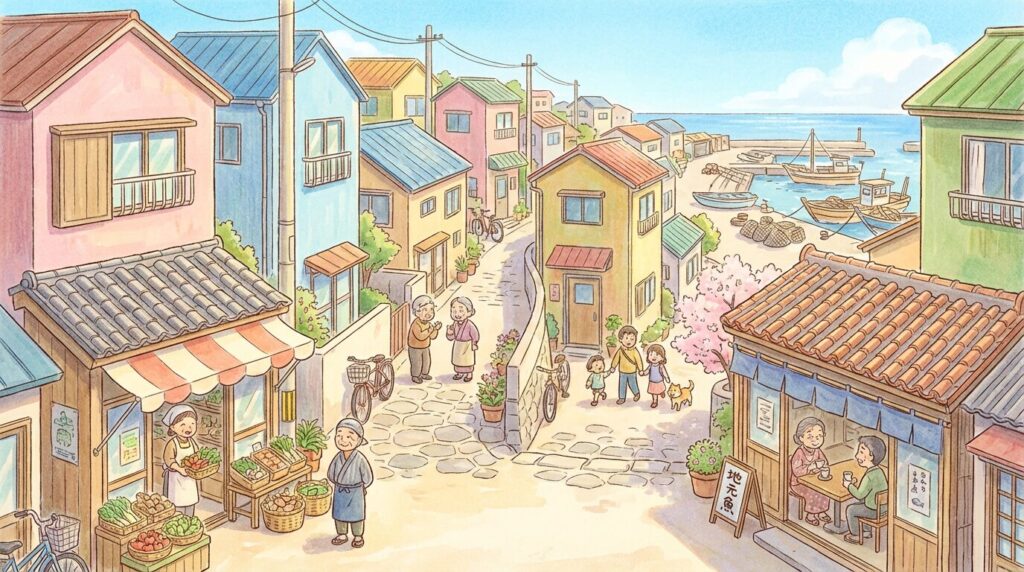
What catches the eye most in Sarahama village is the colourful houses — pink, blue, yellow, green — and many people, I think, wonder "why are they so colourful?"
Why the Colours Are So Vivid
There are several reasons the houses are colourful — one is said to be to make it easier for fishermen to find their own house when returning from the sea. Looking at the land from the sea, your own house's colour serves as a marker.
Another theory is that when repairing after a typhoon, they use the paint they have on hand. Since there's no need to unify the colours, each house chose its favourite colour, resulting in a colourful streetscape.
Precisely because the colours aren't unified, a distinctive, photogenic scenery is born. I walked with a camera too, and wherever I shot, the views all made a picture.
A Foreign-Like Atmosphere
The sight of colourful houses lined up makes you feel as if you're walking a foreign port town. It's actually sometimes said to resemble Santorini in Greece, and it's become a popular spot on social media too.
Visiting in the morning, the colourful colours look more beautiful due to the sun's position, so for those who want to take photos, the morning is recommended. On a fine day the colours stand out vividly, and on a cloudy day it becomes a slightly calmer atmosphere.
Observe Photography Manners
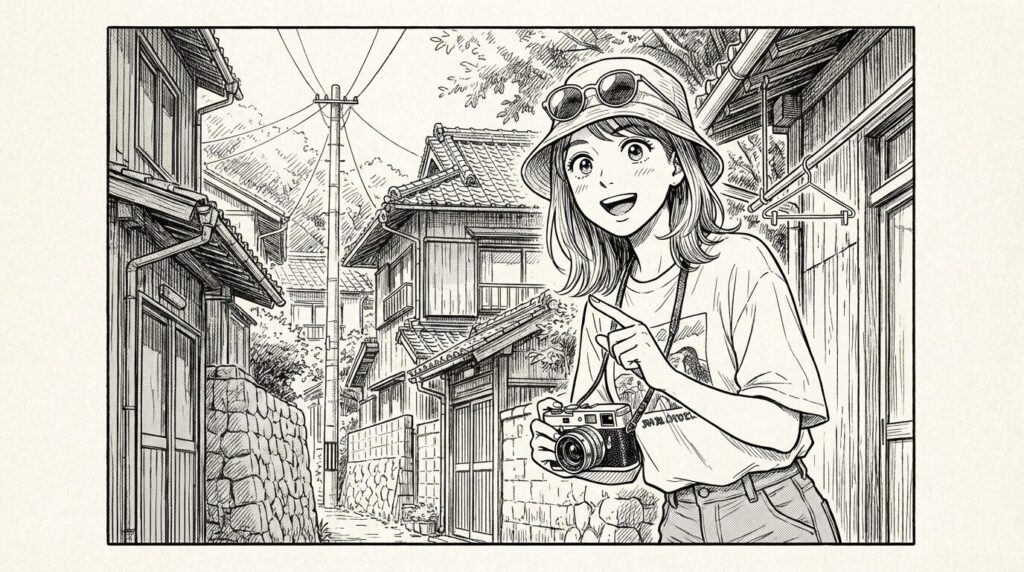
Just because it's colourful and photogenic doesn't mean you can shoot as you please. This isn't a sightseeing spot but a place where people actually live, so observing photography manners is important.
Don't enter the grounds of someone's house without permission, avoid shots that capture laundry or household items, and don't take shots residents would dislike. They're obvious things, but you tend to forget, so care is needed.
When I shoot too, I try to keep people out of the frame as much as possible, and if I meet a resident I make a point of saying a word, "may I take a photo?" Do that and they often kindly grant permission with "go ahead, go ahead."
Enjoy the Maze-Like Narrow Alleys
Sarahama village's alleys are incredibly narrow, only wide enough for one car to just pass. If an oncoming car comes, there's nothing for it but to reverse or pull aside and give way.
On Foot or by Bicycle Is Recommended
For exploring the alleys, on foot or by bicycle is more comfortable. By car it's too narrow and you have to mind the driving, and the places to park are limited. It's better to walk slowly, enjoying the view, and explore at your own pace.
At first I drove in too, but had trouble running into an oncoming car in a narrow alley. Ever since, I park at the village entrance and explore on foot.
The Maze-Like Alleys Are Fun
The alleys wind like a maze, and there are many similar alleys, so you lose your sense of direction. But that's fun, and you can feel like you're exploring.
It's fine if you get lost — the village itself isn't that big, so whichever path you walk you'll eventually come back to where you started. Rather, enjoying getting lost and trying alleys you don't usually pass through is recommended.
Around a corner you suddenly turned, there's a cute guesthouse, a local shop, a shrine — unexpected discoveries. That's, I think, the real pleasure of a village walk.
The Cats You Meet in the Alleys
There are many cats around Sarahama Fishing Port, and a photo walk searching for "fishing-port cats" is fun too. Walking the alleys, you meet all kinds of cats — cats basking in the sun, cats eyeing the fish.
It's an irresistible environment for cat lovers, and I took photos of cats many times too. However, avoid chasing the cats around or forcing yourself to touch them — a stance of watching over them gently is important.
The "Yaagama-Kuugama" Village Walking Tour
"Yaagama-kuugama" is Sarahama dialect meaning "strolling around town while dropping in at houses here and there," and there's a village walking tour where a local guides you.
Walk Together with a Local Guide
It's a special town walk where you walk the maze-like alley roads that can't be fully drawn on a map, visit village homes, and hear stories from the grandpas and grandmas. Being able to hear directly from the islanders about fishing-town life and festival events is a precious experience.
Since a guide shows you around, you can know the village more deeply than walking alone, and you can visit homes you couldn't usually enter. You can enjoy interaction with the islanders too, and touch their warmth.
Booking Is Required
The tour requires advance booking, and the price is ¥2,500 (about US$17, tax included) per person, with a minimum of 2 participants (¥5,000 for 1 person). The run time is 90 minutes from 11:30 to 13:00, with time changes negotiable.
The meeting point is Ryoshiya (in front of the fishing cooperative), and it runs even in light rain, so it's best to bring rain gear. Those interested are recommended to book by phone in advance.
I want to join at least once too, but haven't managed to yet. I'm definitely going to join next time I go to Irabu Island.
Island Life Seen Through the Community Noticeboards
Walking the village, you sometimes spot community noticeboards. Lots of information that gives a glimpse of island life is posted there.
What's Written on the Noticeboards
The noticeboards carry various information — community event info, announcements, circular notices, condolence notices, lost-cat and lost-dog info and so on. Unlike city noticeboards, many are handwritten, with a warmth.
There's a lot of information unique to a small community, like "notice of Mr So-and-so's funeral" or "notice of the community cleanup activity." Seeing these, you can tell the islanders live while helping each other.
Refrain from Photographing
The noticeboard contents are for the community's people, so they sometimes contain personal information. So it's best to refrain from photographing. Just look, and avoid taking notes or photos of the contents.
Just gazing at them, you can feel island life, so that's plenty, I think.
The Shrines and Tombs in the Villages
Walking the village, you sometimes come across small shrines and tombs. These are interesting too for knowing the island's culture and faith.
The Local Shrine
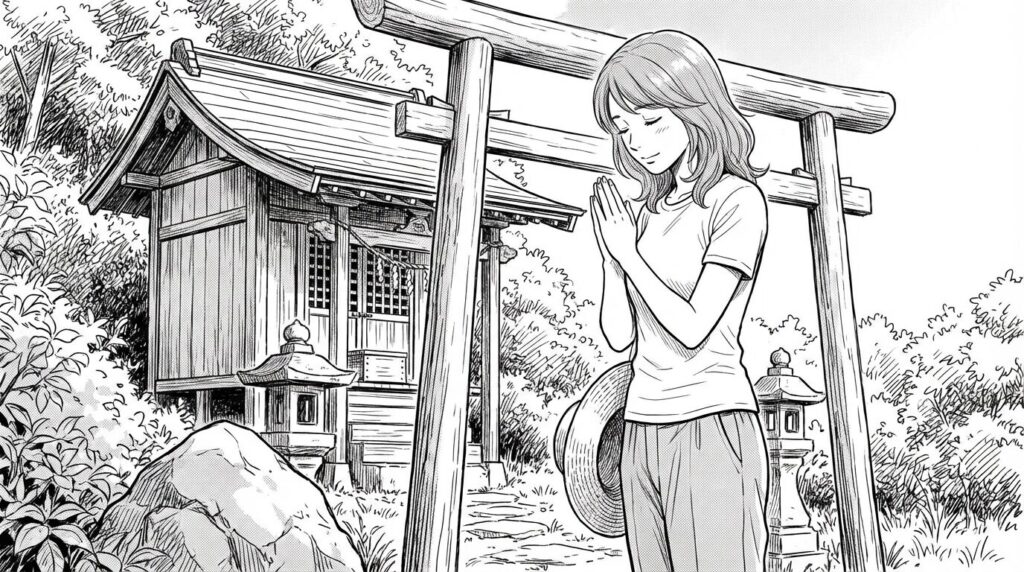
There's a small shrine within the village where the locals worship daily. Unlike the flashy shrines of tourist spots, it has a feeling of standing quietly.
When passing in front of the shrine, I make a point of bowing once before passing by. It's a place of the locals' faith, so treating it with respect is important.
Okinawa's Distinctive Tombs
Okinawa's tombs differ in shape from Honshu's tombs — there are many turtleback tombs, gabled tombs with roofs, and house-shaped tombs. They're characterised by large tomb chambers and forecourts, with the appearance of a small house.
Sarahama village has tombs like this too, including colourfully painted ones and even ones shaped like Mt Fuji. Okinawa's distinctive view of life and death is expressed in them, which is interesting.
Tombs are places where you should refrain from photographing, so just gaze from a distance. Manners in places like this are especially important, I think.
Shopping at Local Shops
Within the village there are small shops that locals use daily.

Insha-no-Eki Sarahama
"Insha-no-Eki Sarahama" within Sarahama village is a direct-sales shop and diner where you can buy local souvenirs like fresh dried fish, bonito flakes and sea grapes. If you're lucky, you might come across the "local fish flash sale" where fishermen sell on the spot.
They sell handmade seafood deli dishes too, perfect for a nightcap at your lodging. I bought bonito flakes here, and the aroma was completely different, which moved me.
Obanmai Shokudo
At "Obanmai Shokudo," directly run by the Irabu Fishing Cooperative, you can eat a fresh bonito bowl. Being cooperative-run the freshness is outstanding, and you can fully savour the deliciousness of bonito.
A flow of visiting around 11, eating a bonito bowl for an early lunch, and then walking the town a bit to take photos is recommended. At a late hour the bonito bowl may sell out, so it's best to go early.
I ate the bonito bowl too, and it was incredibly delicious. The taste of fresh fish can never be savoured in the city.
Greeting Residents Is Important
Walking the village, you sometimes meet local residents. At such times, greeting with a smile is important.
A Single "Hello"
Just calling out "hello" makes the residents happy. It's a small community, so an unfamiliar tourist walking stands out. But they're not watching with hostility — rather, they welcome you.
At first I was nervous and couldn't call out, but when I plucked up courage and tried saying "hello," they spoke to me with "where are you from?" From there I was taught all sorts of things about the island, and it was so much fun.
Mind Long Conversations
However, when a resident looks busy, keep it to just a greeting. When they're hanging laundry, cleaning, or look like they have things to do, a light nod is enough.
If they look like they have time and seem to enjoy talking, a little chat is fun too. They sometimes tell you the island's history, recommended spots, and information only locals know.
Recommended Times for a Village Walk
The atmosphere of a village walk changes by time of day, so it's fun however many times you visit.
Early Morning — The Fishermen's Energy
Early morning (around 6 to 7) is the time fishermen prepare to set out, when Sarahama Fishing Port is most lively. For those who want to see fresh fish being landed, this time band is recommended.
However, early morning is a busy time for residents too, so you need to be careful not to get in the way.
Morning — Ideal for a Walk
Morning (around 9 to 11) is the ideal time band for a walk. Due to the sun's position the colourful houses look beautiful, and it's not yet so hot so it's easy to walk.
I often walk in the morning too, and this time band is my favourite. You pass locals at a moderate rate, so you can feel island life.
Midday — Bonito-Bowl Lunch
Midday (around 11 to 13) is just the right time to eat a bonito bowl at Obanmai Shokudo. The flow of walking the village after lunch is natural and good.
Evening — A Quiet Atmosphere
Evening (around 16 to 18) is the time residents who've finished the day's work are relaxing, with a quiet atmosphere drifting. The colourful houses lit by the setting sun are beautiful too.
Night — Stargazing
At night there are few streetlights so it's dark, but the stars look beautiful. Rather than walking the village, a short stroll on the way back to the hotel is just right.
Photography Manners and Points to Note
Let me sum up the photography manners and points to note when strolling the village.
Respect Residents' Privacy
Don't enter the grounds of someone's house without permission, don't peer into houses with open windows or doors, and avoid shots that capture laundry or household items. They're obvious things, but you tend to forget when absorbed in taking photos, so care is needed.
Get Permission to Photograph People
If you want to photograph a resident, always get permission. Shooting without permission is rude and a source of trouble. Say a word, "may I take a photo?", and most people will kindly oblige.
Refrain from Photographing Tombs and Shrines
Tombs and shrines are places of faith, so you should refrain from photographing. If you really want to shoot, keep it to capturing the overall atmosphere from a distance.
Be Careful Posting to Social Media
When posting the photos you took to social media, check that no information identifying individuals is captured. For privacy-related information like nameplates, car number plates and people's faces, blur it or shoot so it isn't captured.
Things to Be Careful About on a Village Walk
Let me list a few things to be careful about when strolling the village.
Mind Your Driving
On the narrow alleys, the utmost care in driving is needed. If an oncoming car comes, one of you reverses or you give way to each other in a wide spot. Watch for pedestrians and cyclists too.
If possible, parking at the village entrance and exploring on foot is safer and lets you enjoy the view at leisure.
Heatstroke Measures
Okinawa's sunlight is strong, so a hat, sunscreen and staying hydrated are essential. Especially in summer the heatstroke risk is high, so don't overdo it and take frequent breaks.
Take Your Rubbish Home
There are few bins, so taking your rubbish home is basic. Absolutely don't throw plastic bottles or empty cans on the street.
Don't Enter Private Land
There's a lot of private land within the village too, so don't enter without permission. It's best to assume places other than the roads are basically private land.
Spots to Combine with a Village Walk
Let me introduce a few spots good to visit before or after a village walk.
Sankakuten (Triangulation Point)
Sankakuten, the Triangulation Point, about 5 minutes by car from Sarahama village, is a superb-view spot you especially see a lot of on social media on Irabu Island. It's a point atop a 70-metre sheer cliff, where you can take in a beautiful panorama view in a space with nothing blocking it before you.
A flow of going to Sankakuten after a village walk to see the superb view is recommended.
Iguana Rock
Iguana Rock, about 5 minutes by car from Sarahama village, is also a spot to visit together with Sankakuten. There's a rock shaped like an iguana, where you can enjoy a unique scenery.
Makiyama Observatory
Makiyama Observatory, at the highest point on Irabu Island, gives a sweeping view of the Irabu Bridge, Miyako Island, Kurima Island and Ikema Island. After seeing island life on a village walk, taking in the whole island from the observatory is good too.

Toguchi-no-Hama
Toguchi-no-Hama is a beautiful beach with white sand and an emerald-green sea. If you're tired from walking on a village walk, relaxing at the beach is the best too.

Frequently Asked Questions and Answers
Let me sum up and answer questions often asked about a village walk.
Q1: What clothing is suited to a village walk?
Easy-to-walk shoes, a hat and sunscreen are essential. Easy-to-move clothing is recommended.
Q2: How long does it take?
Walking slowly, about 1–2 hours. Including a bonito-bowl lunch, about 3 hours.
Q3: Can I enjoy it alone?
You can. Alone you can walk at your own pace, so it's recommended.
Q4: Can I walk on a rainy day?
You can, but the alleys get slippery so care is needed. An umbrella or raincoat is handy.
Q5: Are there toilets?
Not many within the village. Take care of it at the hotel or convenience store in advance.
Q6: Is a rental car necessary?
Better to have one. A car is needed for access to the village. On foot is recommended within the village.
Q7: Is it OK with children?
It's OK. However, watch for cars on the narrow alleys.
Q8: Does English work?
It mostly doesn't. The locals speak Japanese (Okinawan dialect).
Q9: Can I buy souvenirs?
You can at Insha-no-Eki Sarahama. Dried fish, bonito flakes, sea grapes and so on.
Q10: Is there a guided tour?
There's a village walking tour called "Yaagama-kuugama." Advance booking is required.
Q11: What are the photography points to note?
Respect residents' privacy. Don't photograph people without permission. Refrain from photographing tombs and shrines.
Q12: What's the recommended time?
Morning (around 9 to 11) is recommended. The colourful houses look beautiful.
The Value of a Place That Isn't a Sightseeing Spot
What I felt most strongly from experiencing village walks many times is that the island's true face lies precisely in places that aren't sightseeing spots.
The Irabu Bridge, Toguchi-no-Hama and Makiyama Observatory are wonderful too, but if you only tour those famous spots, the island's true face isn't visible. Walking the villages where locals actually live, getting lost in the narrow alleys, gazing at the colourful houses, exchanging greetings with residents — only then does island life come into view.
While walking the maze-like alleys of Sarahama village, when I called out "hello" to a grandma hanging laundry, she asked me "it's hot, isn't it — want some water?" When I touched that kindness, I felt I'd had an experience you can absolutely never get just touring sightseeing spots.
The colourful houses are photogenic, but that's not merely surface beauty — they're packed with the wisdom and history of life, like markers for fishermen returning from the sea, or the colour of the paint used in repairs after a typhoon. Knowing such background, they come to look not like mere "cute houses" but "houses packed with people's lives."
When you run into an oncoming car in a narrow alley, the stance of giving way to each other, or stopping the car to wait when a pedestrian passes — those small considerations support village life. The sense of distance between people that's being lost in the city remains here.
If you're planning to go to Irabu Island, please walk the villages too, not only the famous sightseeing spots. Walk the maze-like alleys of Sarahama village, gaze at the colourful houses, shop at the local shops, and exchange greetings with residents.
Those casual experiences may actually become the memory that stays in your heart most. The superb views of sightseeing spots are wonderful too, but the experience of touching people's lives has a different value again.
There's no right answer to a village walk — enjoy getting lost, delight in unexpected discoveries, and value the interaction with residents. That's, I think, how to enjoy a village walk.
Irabu Island's villages aren't sightseeing spots, but that's exactly why there's something that comes into view. The time spent walking leisurely while feeling the narrow alleys and people's lives will surely make your trip something special.