Trying to book a tour, first I was at a loss.
Search "Blue Cave snorkelling" and they come up and up. Half-day plans, one-day plans, with SUP, with canoe, with glass boat, with drone photography — the more I looked into what and how to choose, the less I understood. "They all look good, but what suits me?" I remember freezing for a while with my phone screen closed.
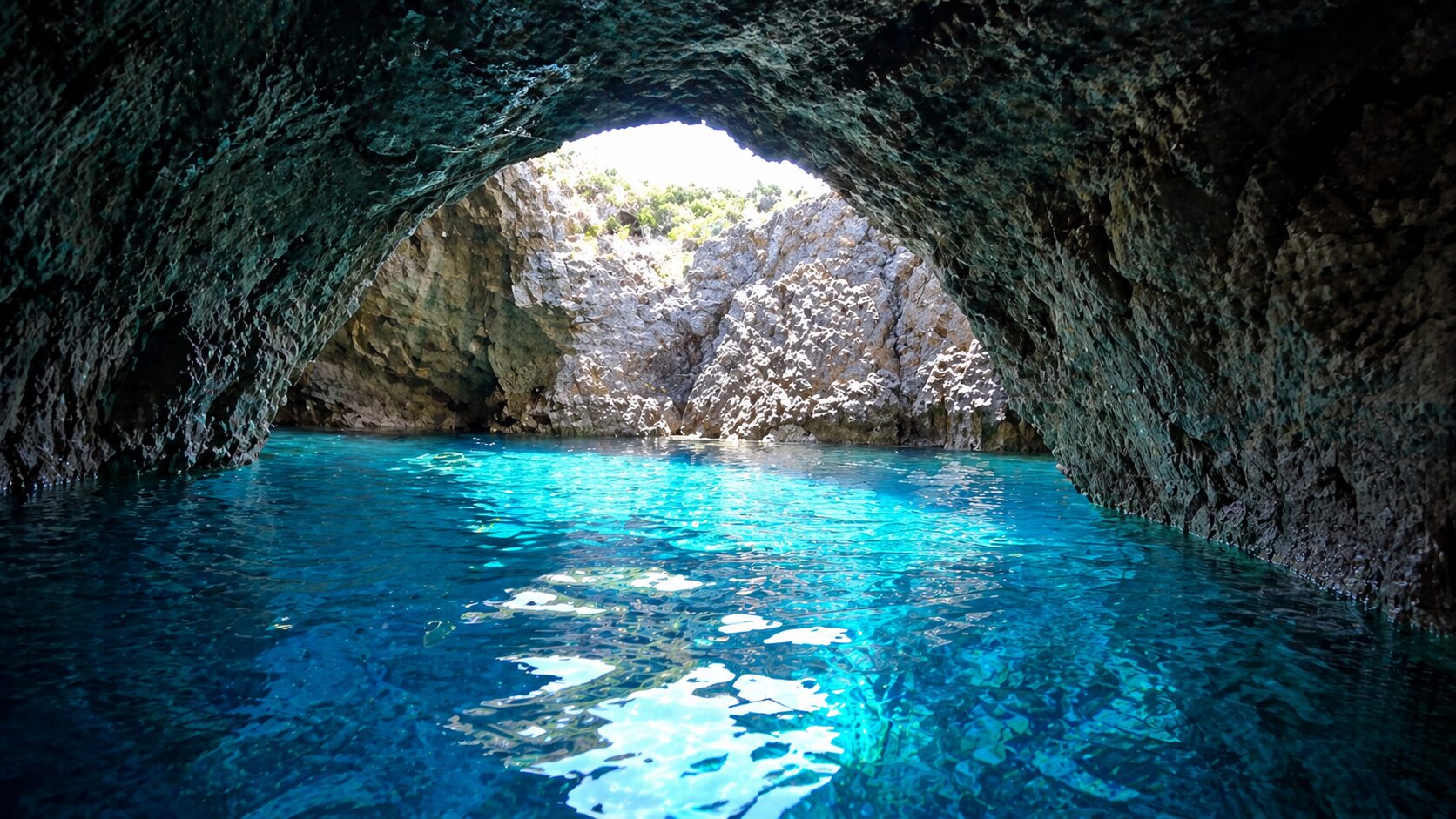
Even so, on the half-day snorkelling tour I took the plunge and booked, the emotion the moment I entered the cave — it's still hard to put into words. A blue exactly like its nickname Sapphire Cave filled the whole cave. The moment I entered from the water and turned around, I honestly thought "ah, I'm glad I came."
In this article, I'll write focusing on the Blue Cave tour itself. What kind of experience you can have, which plan to choose, and what view you can only see by joining a tour. It's people wavering with "which tour should I choose?" I especially want this to reach.
- What Is Irabu Island's Blue Cave?
- The Appeal of the Blue Cave Tour
- Creatures You Can See at the Blue Cave
- Recommended Blue Cave Tour Plans
- Tour Points to Note and What to Bring
- Participant Experiences and Reviews
- Irabu Island After the Tour — Ways to Enjoy It Besides the Cave
- Frequently Asked Questions
- Summary
What Is Irabu Island's Blue Cave?
An Overview of the Blue Cave (Sapphire Cave)
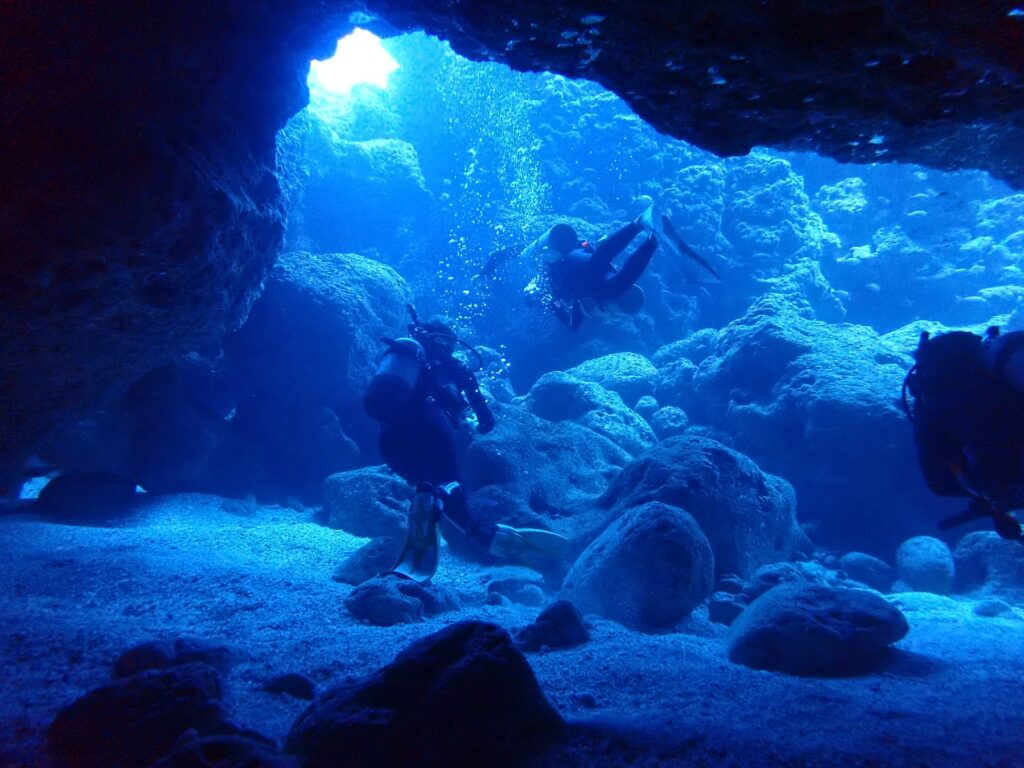
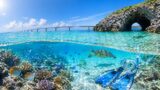
Irabu Island's Blue Cave, called by the nickname "Sapphire Cave," is a representative underwater spot of the Miyako Island area. The cave interior is always filled with seawater, and when sunlight pours in, the whole space dyes sapphire blue. The morning of a fine day has the best light conditions, and the blue reaches to the back of the cave.
When I actually stood inside the cave, what surprised me was the "stillness." Outside the sea I could hear the boat sounds and waves, but entering the cave the sound is nicely shut out, and only the blue before me remains. I finally understood the urge to call it "mysterious."
This cave can't be accessed from land. You can only enter from the sea side by boat or snorkelling, and trying to reach it on your own isn't realistic. It's also a place where judging sea conditions is hard, so joining a tour is the only safe method. Conversely, as long as you get on a tour, anyone can reach it.
Irabu Island's Location and How to Access It
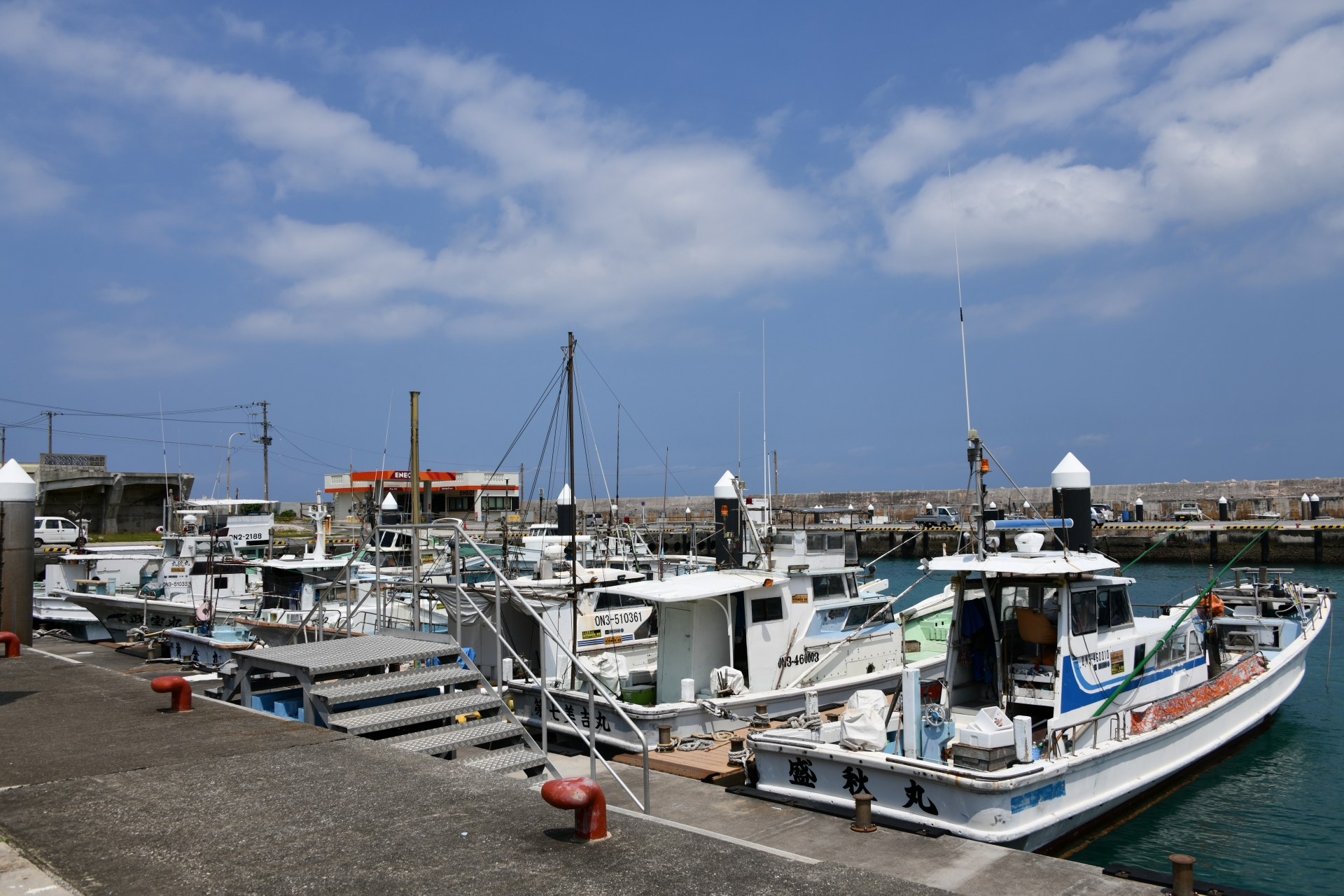
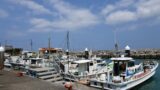
Irabu Island is a remote island northwest of Miyako Island, connected by land to Miyako Island by the Irabu Bridge (3,540 m total, free) opened in 2015. About 15 minutes by car from Miyako Airport to the bridge entrance. Finish crossing the bridge and proceed northeast, and you reach "Sarahama Fishing Port," the main departure point for Blue Cave tours.
There's almost no public transport on the island, and the basic means of transport is a rental car. Many tours meet on-site at Sarahama Port, so the realistic options are to head there by rental car, or to choose a shop offering free pick-up from all over Miyako Island. Once you arrive at Miyako Airport, I strongly recommend arranging the tour and rental car as a set. In peak season, both fill up quickly.
About 10 minutes by boat from Sarahama Port to the cave. Since the distance is short, there's little worry of seasickness, and even children and sea beginners can board relatively reassured.
The Appeal of the Blue Cave Tour
Popular Activities — Snorkelling, Kayak, Glass Boat
Say "Blue Cave tour" and the quality of the experience changes greatly by the main activity. Choosing the one that suits you decides 90% of your satisfaction.
Snorkelling is the most popular choice. Many plans can be joined from age 3, and people poor at swimming are supported by the guide while wearing a life jacket. Since you enter the cave from the water, you can experience the cave's blueness from the surface. The change in view the moment you enter the cave can't be savoured with other activities. A half-day plan is about 2 hours, with a price guide of ¥7,000–10,000 (about US$47–67).
Kayak and canoe are a style of exploring the cave from the paddle side. Floating on the surface, you approach the cave entrance and proceed inside while steering the craft. Since you don't have to enter the water like snorkelling, you can enjoy the whole cave from an "observing perspective." Being able to see the cave's exterior up close — shaped like a mouth opening at the foot of a sheer cliff — is also unique to the kayak.
The glass boat is a plan touring around the cave on a boat where you can see the seabed through the transparent hull. Without entering the sea, you can see the underwater world while seated, so it suits families with small children or people who "dislike getting wet." Many plans have no age limit.
Diving lets you dive into the cave on a trial-diving plan that needs no licence. The underwater perspective is exceptional, and you can observe coral and fish up close, but the participation age is generally 10 and up and the price is on the higher side at around ¥14,000 (about US$93). It suits people used to the sea.
How to Play and Experience the Blue Cave — What's Possible Because There's a Guide
The most important thing on a Blue Cave tour is to trust the guide and leave it to them. This isn't about "taking it easy" — it's because there are experiences only made possible by having a guide.
For example, on a snorkelling tour the guide takes photos while directing you "turn around here," "look over there." Photos remain with the cave light as a backdrop, from positions you couldn't control yourself. Without a guide, you couldn't take photos in the cave with both hands occupied in the first place.
The local guide's ability to read sea conditions is also on another level. I once joined a tour on a day with unstable weather, and the guide judged "the cave's condition is bad today." At the sea-turtle spot I was guided to instead, I unexpectedly met a parent and child sea turtle. An experience that changed from "a shame the tour was changed" to "this was the best." It's thanks to the professional guide's judgement, I think.
The story the guide told inside the cave also stayed with me. "Dairyumon," a huge sea cave about 20 metres high right near the Sapphire Cave, has apparently been passed down among local fishermen as a place to offer prayers to the dragon god since long ago. It's a rare spot only some local shops can enter, with a plan to explore it by canoe too. The experience of touring the cave while hearing island stories from the guide shows you a face of Irabu Island not in the guidebooks.
Choosing a shop where a guide with a lifeguard qualification accompanies you is reassuring in case of emergency too. Some established shops have a cumulative participant count exceeding 300,000. Choose a shop with many reviews like "the guide was careful," "even beginners weren't scared," and you'll hardly go wrong. There are also several shops clearly stating "English OK," so you can accommodate bringing foreign friends too.
Creatures You Can See at the Blue Cave
Encountering Sea Turtles
Sea-turtle encounters around the Blue Cave aren't guaranteed, but there's a track record. All of Miyako Island is a sea area with a high sea-turtle encounter rate, and summer (July–August) is the breeding season, so the odds are said to rise especially.
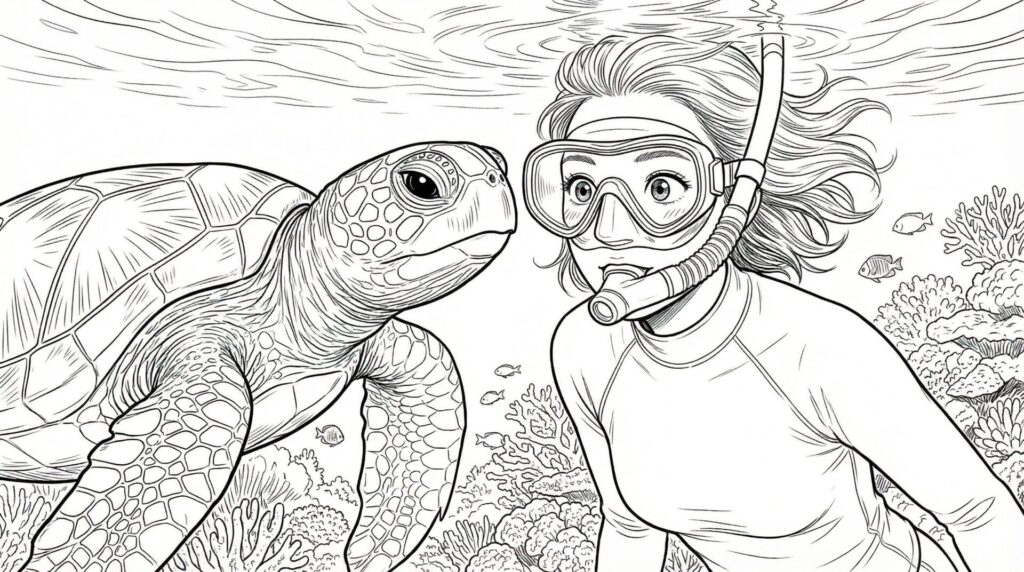
Looking at reviews of encountering sea turtles, there are many descriptions of "it came closer to me," "our eyes met and I couldn't move." I myself swam beside a sea turtle just once on an early-spring tour, and I remember that sensation forever. When I stopped moving my fins in surprise, the sea turtle also passed by slowly. A feeling of both being quiet together — that was good.
It's not "you'll definitely see one," but if you've come to the Miyako Island sea, keeping sea turtles in mind raises the quality of the experience. The guide takes you to high-encounter-rate spots, so depending on the day's sea conditions, you might meet a sea turtle before the cave. Never touch or chase sea turtles, that's the manner. When observing, just being quietly nearby is enough, and if they don't flee, it becomes the best time.
Clownfish, Coral Reefs, and the Richness of the Sea
Near the cave entrance, a fish called hatanpo lives densely, and you're enveloped by a school of fish the moment you enter by snorkelling. At first you're surprised, but once used to it I came to love that sensation. Some people say "it feels like becoming part of the sea," and I see what they mean.
In the coral reefs around the cave there are clownfish (the model for Nemo) too. The guide points and tells you "it's here," at the figure flitting about inside a sea anemone. The orange and white stripes stand out well even underwater.
There's one thing I want to touch on here. As someone joining a Blue Cave tour, please be a little conscious of the sea environment. Choose a "reef-safe" sunscreen harmless to coral, and don't touch sea creatures — it may sound obvious, but at a place many tourists visit each year, each person's choices add up. In fact, some shops have carbon-neutral initiatives, with mechanisms to offset the CO2 emitted by tour travel. Choosing such shops is, I think, one action to protect Irabu Island's sea.
Recommended Blue Cave Tour Plans
Family Plans — Enjoy It Together with Children
For families, a snorkelling half-day plan OK from age 3, or a glass-boat + kayak set plan with no age limit, is recommended. It can accommodate a mix of children who can swim and those who can't.
There are many reviews of "the children's reaction was beyond the parents' emotion." Children, having fewer preconceptions than adults, are apparently simply overwhelmed by the cave's blueness. Telling the shop in advance "we're joining with children, we have a ◯-year-old and a ◯-year-old" gets you guided to an appropriate plan.
As elements that reassure guardians, choosing a shop with all three of "a guide with a lifeguard qualification," "life jacket mandatory," and "free photo data during participation" is no mistake. In peak season there are many family participants, so booking 1–2 weeks ahead is reassuring.
Couple Plans — If You Want to Make a Special Time
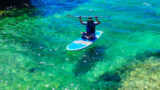
For couples, a Blue Cave snorkelling + scenic-beach SUP set one-day plan is popular. Experience the cave's mysterious blue in the morning, and SUP at the beach in the afternoon — a day with good contrast. With a plan giving free photo data, the two of you have a keepsake in form.
There are many reviews of "I joined on my honeymoon," "it was part of a proposal trip," and many people choose the Blue Cave for a milestone trip. Telling them "it's a commemorative trip" when booking, the guide sometimes looks out for you.
A one-day plan is about ¥13,500–20,000 (about US$90–133). There's a luxury of having both the cave's blue and the beach's openness fit into one day.
Tour Points to Note and What to Bring
Weather and Sea Conditions — Being Ready for a Tour Change or Cancellation
The Blue Cave is an area strongly affected by tide level and wind. The guide judges whether the tour can run and any content change by seeing the day's sea conditions. It can be cancelled even when it's fine, and run even when cloudy.
Choosing a plan with free cancellation until 18:00 the day before lets you decide until the last minute while watching the forecast, responding flexibly. Having one day of slack in your itinerary is even more reassuring. Confirming "what happens if it's cancelled" in advance is important too — ask the shop whether it's a "full refund" or "a change to an alternative plan."
Please don't be down even if the tour is changed, is my honest feeling. The "alternative place" the guide takes you to often has discoveries different from the cave.
Belongings and Clothing — Close to Empty-Handed Is OK
A swimsuit, towel and change of clothes and you're basically fine. Equipment like snorkels can be rented free at most shops. If I name one thing to bring, it's a rash guard. Miyako Island's sea has highly venomous jellyfish like the habu jellyfish and the Portuguese man o' war, and measures are needed regardless of season. A rash guard that minimises bare-skin exposure is effectively essential.
For sunscreen, a "reef-safe" type harmless to coral. It's sometimes specified by the shop, so it's good to check in advance. A wetsuit may be needed winter to spring, so confirm with the shop.
Participant Experiences and Reviews
Looking at the voices of people who actually joined a Blue Cave tour, the high satisfaction comes across. There are many voices like "just like the name Sapphire Cave, it felt like being inside a jewel," "it was a new-sensation experience enjoying snorkelling and cave exploration at once."
From first-timers, impressions like "it was totally fine even though I can't swim," "the guide was careful and I felt reassured the whole time" arrive, conveying the low barrier. From participants with children too, there are many heartwarming episodes like "my child snorkelled by themselves for the first time," "my 5-year-old son has been talking endlessly about fish since entering the cave (haha)."
On the other hand, there are several reviews of "couldn't enter the Sapphire Cave due to weather and it became an alternative plan," and the weather risk is a reality I want you to honestly know. But it's also a fact that many voices, even after moving to the alternative plan, say "in the end I got to meet a sea turtle, so it was good." Trusting and entrusting the guide's professional repertoire is important, I think.
What caught my attention in the reviews was that some said "the explanation was fast and hard to understand." The pre-departure briefing is important, so if there's anything you don't understand, I recommend asking on the spot without hesitation.
Irabu Island After the Tour — Ways to Enjoy It Besides the Cave
After a half-day tour ends, there's still time on the island. There's no reason not to use it.
Around Sarahama Fishing Port, local diners are dotted about, where you can eat seafood bowls and Okinawa soba using Miyako Island fresh fish. The Sarahama area, where the fishing-town atmosphere remains as-is, isn't over-touristified, a place where you can touch the island's real daily life. Asking the guide "where do you recommend for lunch?" sometimes gets you information only locals know.

As a place to rest your body after the tour, "Toguchi-no-Hama" is recommended too. A representative white-sand beach of Irabu Island, with high transparency and calm waves. Loosening the muscles used on the tour while gazing at the Miyako-blue sea and zoning out makes the best finish.
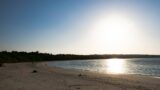
"17END" on Shimojishima, connected to Irabu Island by a bridge, is well within reach in half a day too. A place where you can have a fantastical experience like standing on the sea at low tide, just right to visit while still basking in the afterglow of the Blue Cave.
Frequently Asked Questions
Q. Can I join even with no snorkelling experience?
You can. Most participants are beginners, and the guide stays by you with a life jacket worn. Even if you can't swim, you can experience the cave's blueness. There are many reviews that even participants who "can't swim at all" enjoyed it.
Q. Can I book on the day?
Some shops accept same-day booking, but it's often hard in peak season (July–August, Golden Week). Securing a plan with free cancellation until 18:00 the day before, early, is reassuring.
Q. How long does the tour take?
A half-day plan is about 2 hours, a one-day plan 3–6 hours as a guide. Many shops run it twice, morning (from 9:30) and afternoon (from 13:30). The morning of a fine day is said to have the best conditions, so if you can choose, the morning is recommended.
Q. Who takes the photos?
Many shops have the guide shoot with a waterproof camera, and you receive the photo data via LINE or email. Underwater expressions and cave scenes you couldn't shoot yourself remain, so choose a plan clearly stating "free photo data."
Q. What happens if the weather is bad?
The shop judges whether the tour can run, and if cancelled, contacts you in advance and handles a refund or alternative plan, generally. Having one day of slack in your itinerary makes rescheduling easier.
Q. Until when can I cancel?
It differs by shop, but many allow free cancellation until 18:00 the day before. Check the cancellation policy before booking.
Summary
Irabu Island's Blue Cave tour, as long as you don't get the tour choice wrong, is an experience anyone can enjoy — even if you're not confident swimming, even with children, even as a couple. The view and the way you feel change by which plan you choose, so please make a choice that suits your purpose.
Summarising the points for choosing — for snorkelling, a half-day plan (¥6,900–10,000) is plenty to be moved. For children, a set plan with the glass boat; for couples, the cave + beach SUP one-day plan is the standard. With any plan, choosing a shop with free photo data and free equipment rental lets you join close to empty-handed.
Trust the guide, and make time to put your phone away. Close your eyes in the cave, and open them again. That blue has a slightly different expression each time. The sea of Miyako and Irabu Island should show it to you.
However many times you come, that place is new. The Irabu Island cave tour is, I think, an experience you shouldn't make a one-time thing.