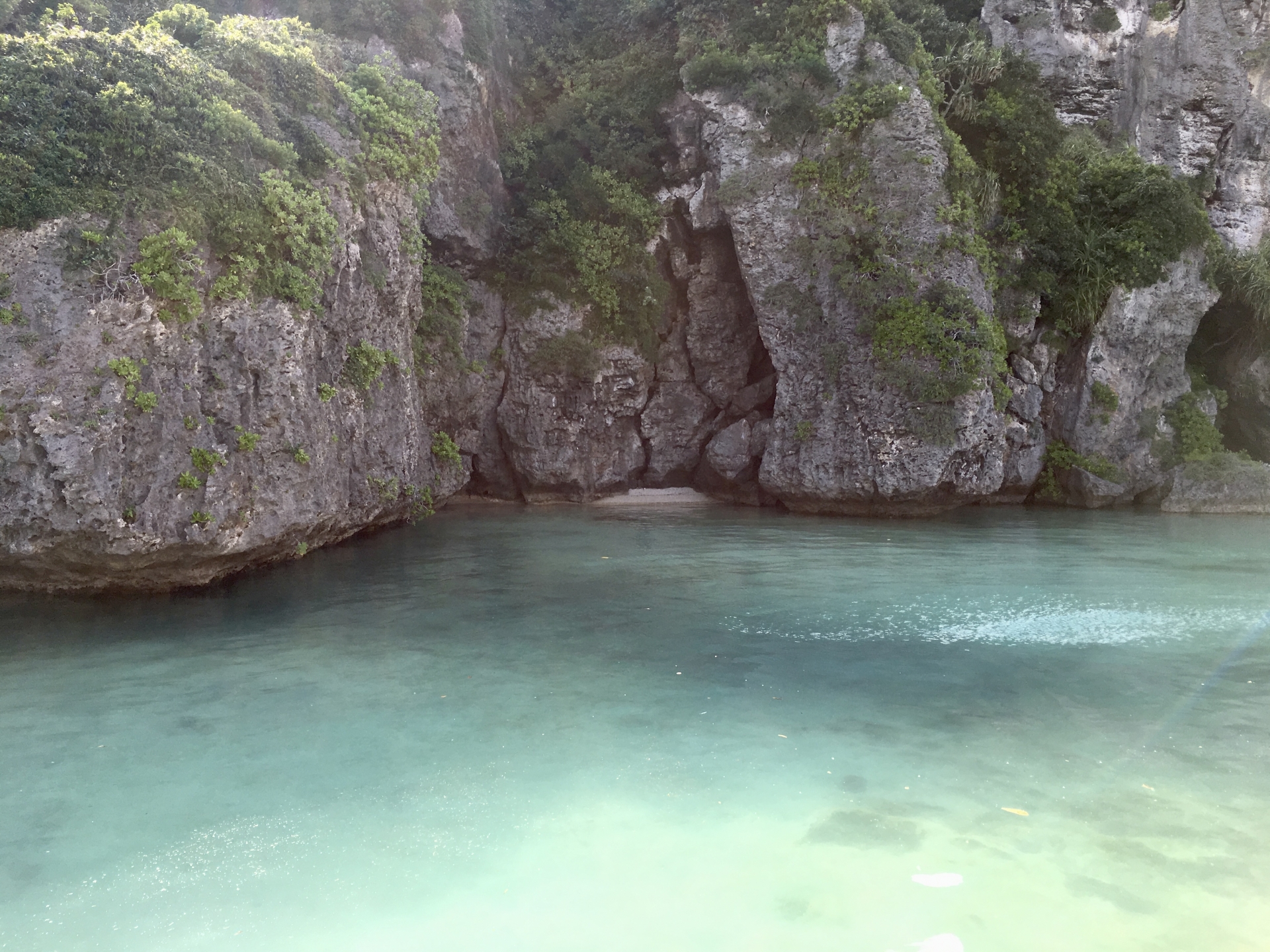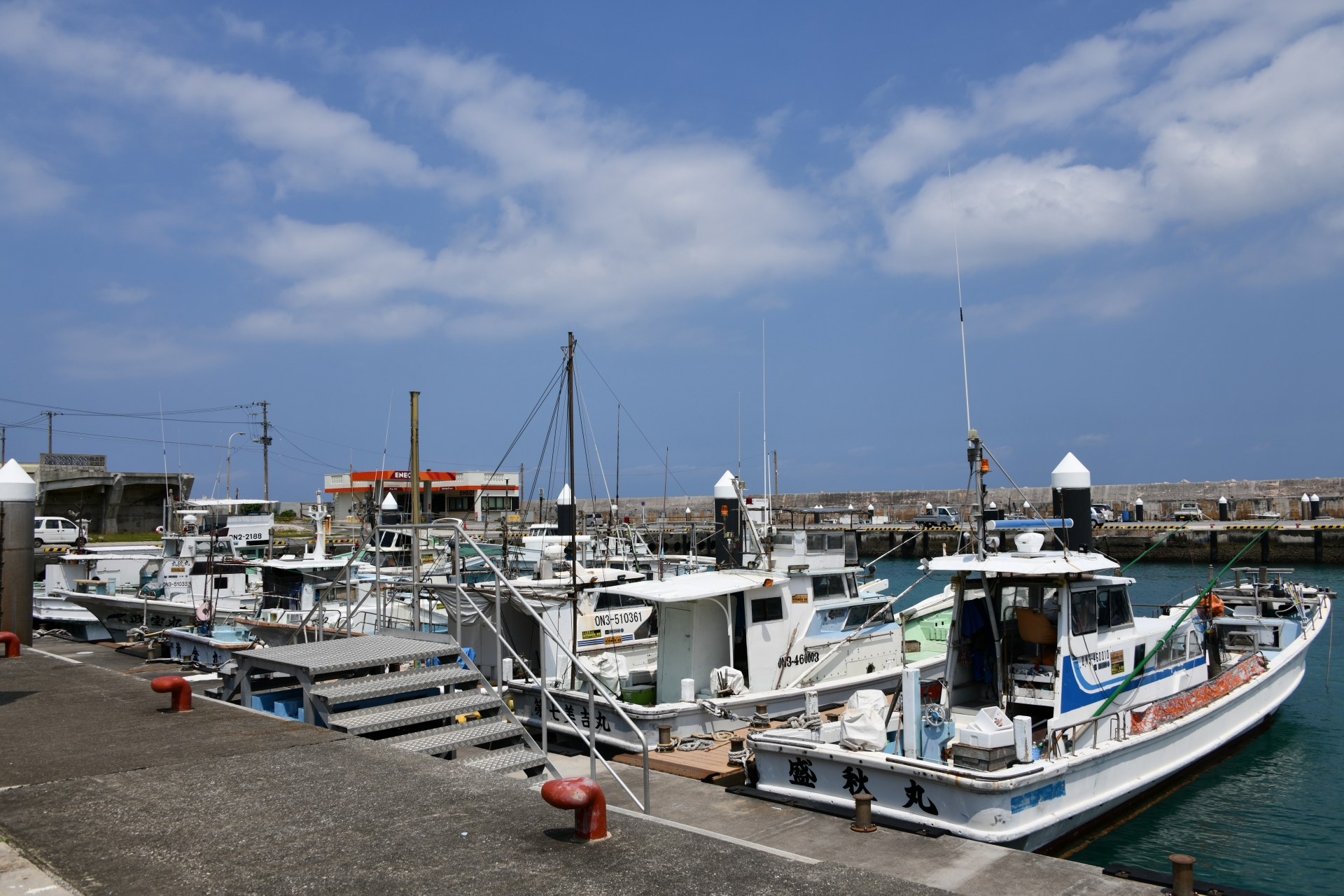
When I first went to Irabu Island, I was absorbed in 17END and Toguchi-no-Hama, and thought of Sarahama Port as only "just a fishing port, right?"
But once, I lost my way and wandered into this port town by chance, and when I saw the sight of colourful houses packed densely on a steep slope, I went "wow, what is this atmosphere...!" And just then at the port, fishing boats were returning, and the fishermen's lively voices, the smell of bonito and the engine sounds all mixed together, and I somehow felt as if I'd entered a film.
The bonito-sashimi set meal I ate for lunch that day, caught that very morning. It was shockingly delicious. Completely different from the bonito eaten in Tokyo — firm, with sweetness, not the slightest fishiness. "So this is the true taste of bonito," I thought from the heart.
I'll tell you thoroughly about Irabu Island's hidden-charm spot "Sarahama Port," weaving in what I actually experienced. It's people searching "Irabu Island sightseeing" especially I want to read this. It's not just the sea — it's a place where you can touch the island's true culture.
- What Is Sarahama Port? First, the Basics
- The History of Sarahama, the Town of Bonito
- Savour Fresh Seafood at "Insha-no-Eki Sarahama"
- Port Highlights | The Lively Landing Scene
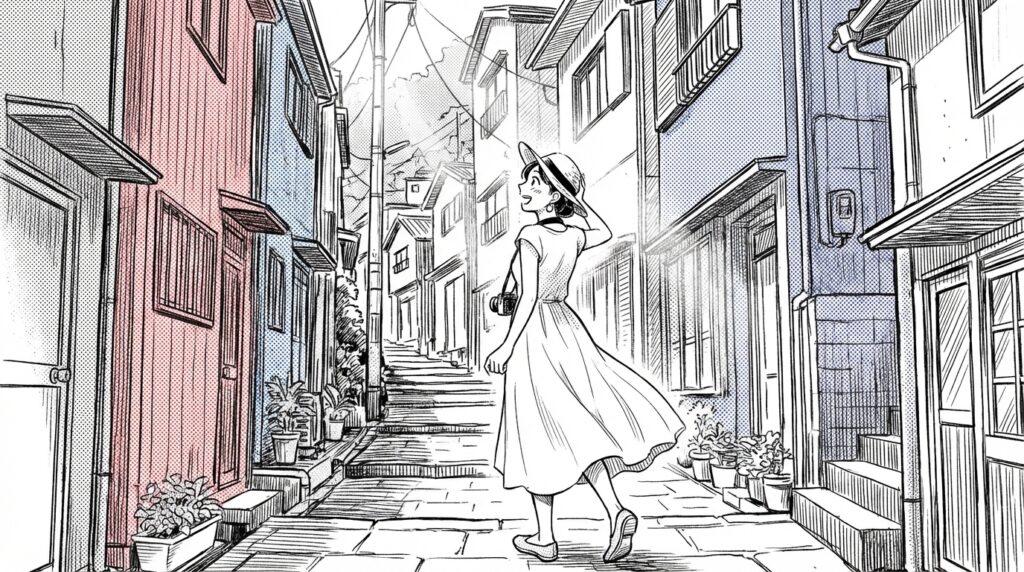
- Walk the Colourful Streets on the Steep Slope
- Sarahama Harii "Oobanmai" | The Day Bonito Fly Through the Sky
- Recommended Spots Around Sarahama Port
- Points to Note Before Visiting
- Frequently Asked Questions (FAQ)
- What Sarahama Port Taught Me
What Is Sarahama Port? First, the Basics
Sarahama Port is a Class-2 fishing port located in the eastern part of Irabu Island. A full-scale fishing port managed by Okinawa Prefecture, with over 100 years of history as a base for pole-and-line bonito fishing.
What's amazing is that 80–90% of all of Okinawa Prefecture's bonito catch is landed at this Sarahama Port. In other words, most of the bonito you see at Okinawa supermarkets comes from here. Even now, 4 bonito boats are active on the front line.
It once had a scheduled ferry running to Hirara Port on Miyako Island and was the gateway to Irabu Island, but since the Irabu Bridge opened in 2015, its function as a fishing port became the main role.
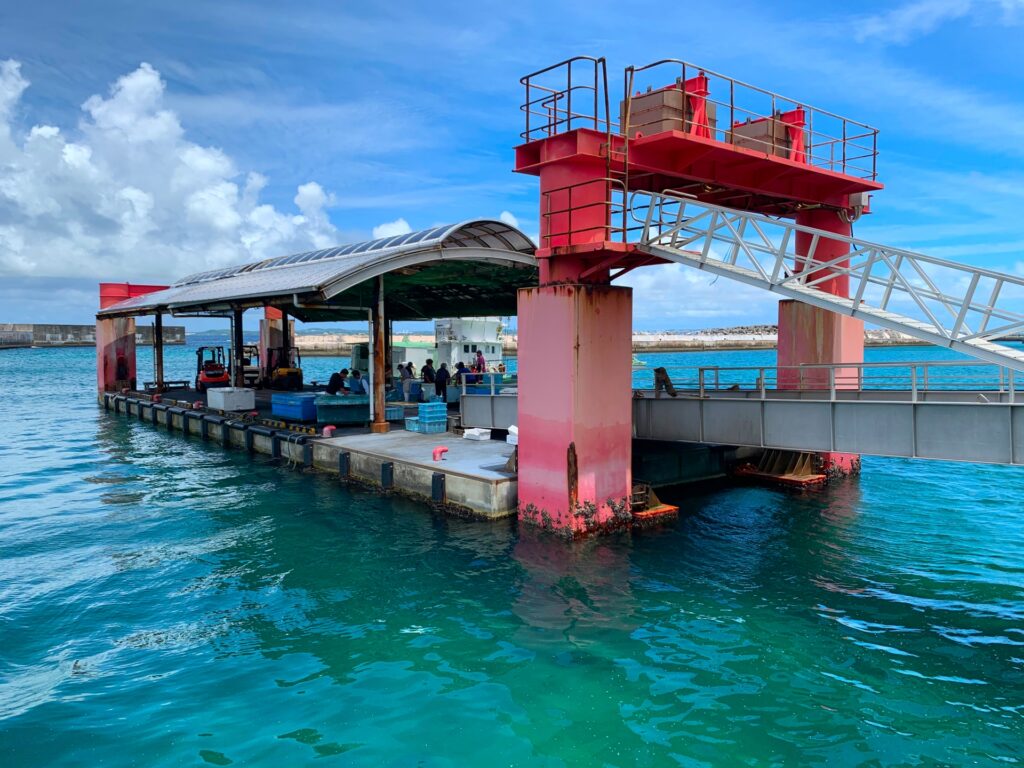
Access and Basics
Address: Sarahama, Irabu, Miyakojima City, Okinawa
Car park: yes (several places around the port, free)
Fee: the port itself can be viewed free
Time needed: 1–2 hours (including a meal and stroll)
Best season: July–September (the peak of bonito fishing)
About 25 minutes by car from Miyako Airport, about 10 minutes after crossing the Irabu Bridge. Being on the island's east side, it's a little away from 17END and Toguchi-no-Hama. But that's exactly why there are fewer tourists, and you can savour the real fishing-town atmosphere.
The History of Sarahama, the Town of Bonito
Bonito fishing began in Sarahama in 1909 (Meiji 42). It apparently started with 2 small fishing boats, like the "Miyukimaru."
Actually, this pole-and-line bonito technique came from Kagoshima and Kochi. The tradition of Japanese bonito fishing was transmitted all the way to faraway Miyako Island.
The Pride of the Ikema People
The roots of Sarahama's people lie in Ikema Island. In 1720, Ikema Island's population grew too large and faced food shortages, so Sarahama was created as a branch village. I touched on this story in my earlier Sabautsugaa article too, but it's truly deep history.
The people who crossed the sea from Ikema Island are called "a seafaring people proud of their noble bloodline." Cool, isn't it. In fact, their passion and skill for the sea are the real thing. It was Sarahama fishermen in 1982 who installed Japan's first artificial fish-aggregating device (payao) too.
The Heyday of Bonito Fishing
From the 1930s to before the war was the golden age of bonito fishing. It was apparently said that "if a father and son go out to southern fisheries together, they can build a mansion in one year."
Sarahama's fishermen went out to distant seas chasing schools of bonito, as far as Palau, Saipan, Papua New Guinea, the Solomons and Borneo. Just imagining it gives me goosebumps. Fishermen of a small island, going that far.
While the men were out at sea, it was the women who protected the island. Even now Sarahama has as many as 9 places of worship (utaki), and a culture of praying for safe voyages and big catches strongly remains. 9 places in a small settlement of about 2 km around — you can tell how strong the faith is.
Savour Fresh Seafood at "Insha-no-Eki Sarahama"
"Insha-no-Eki Sarahama" (official name: Miyakojima City Marine-Industry Support Facility), completed in 2018, is the highlight of Sarahama Port. "Insha" is the Okinawan dialect for "umin-chu," that is, fishermen.
This facility has a diner, a direct-sales shop, a processing room and an experience room. What I visit again and again is the diner and direct-sales shop here. They're truly the best.
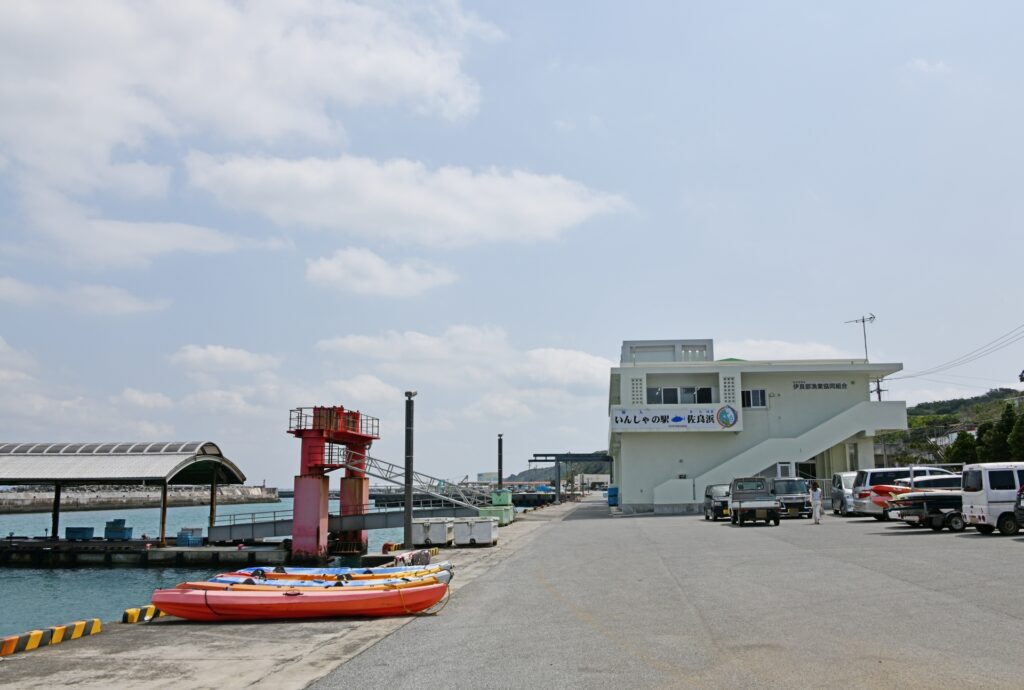
A Superb Seafood Bowl at Obanmai Shokudo
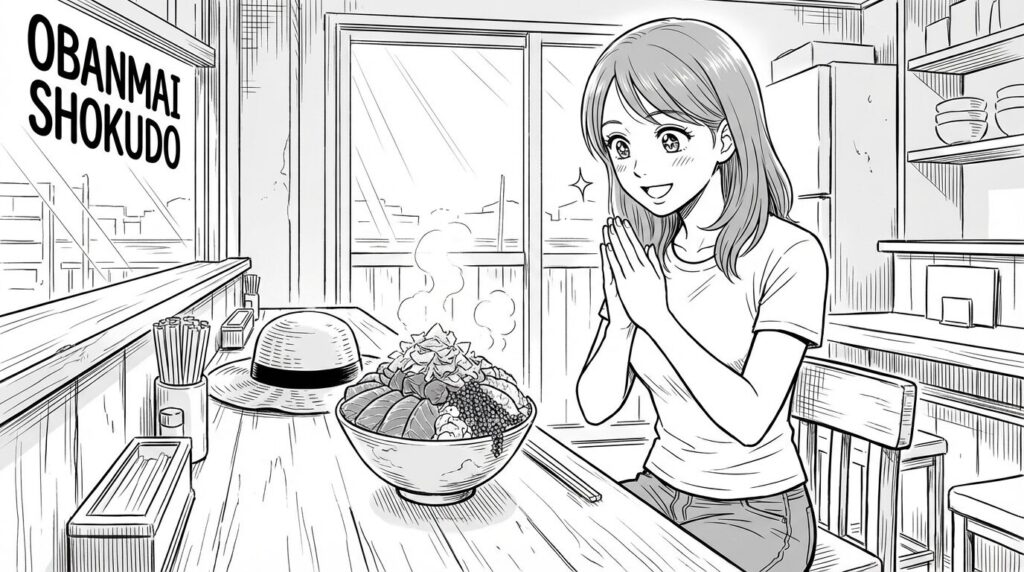
The fishery-cooperative-run "Obanmai Shokudo." I seriously want you to eat the seafood bowl here once.
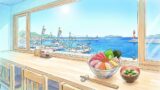
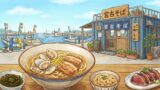
The seafood bowl I ordered on my first visit had tuna, squid, bonito, flying-fish roe, nori, shiso, sea grapes and sesame piled on plenty, with aosa miso soup. The price was about ¥1,000, I think. "Too cheap!" I thought.
The bonito-sashimi set meal is superb too. The bonito caught that morning has a firm, springy texture, an elasticity that pushes back against your teeth. There's an umami that hits deep on the tongue, enough that you don't need soy sauce. The fry is delicious too, with a freshness where the flesh splits springily inside the batter.
Incidentally, the staff calling out loudly "freshly fried tempura!" is also somehow port-town-like and nice. There's energy.
Buy Seafood at the Direct-Sales Shop
At the direct-sales shop, seafood landed that day is sold. A real market where local izakaya owners and islanders come to buy too.
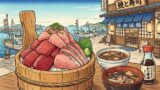
What I bought was tuna sashimi. "This volume for ¥1,000!?" — a surprisingly large block was in it. I took it back to the hotel and ate it with convenience-store rice, and this was the best dinner ever.
"Namari-bushi," half-dried smoked bonito, and "katsuo miso" are also recommended souvenirs. Katsuo miso, just put on rice, becomes a superb side dish. Even after returning to Tokyo, I couldn't forget that taste and wanted to go buy it again.

Narikiri Fisherman Experience
At "Insha-no-Eki," there's also an interesting programme called the "narikiri fisherman experience." A wild experience of filleting a whole bonito while receiving guidance from a fisherman.
I haven't joined yet (it's a bit scary...), but according to a friend who joined, "it was super fun! I came to feel affection for bonito." The bonito you fillet is apparently cooked on the spot and you can eat it. It's apparently so fresh it's moving.
A reservation is needed, so if you're interested, please inquire in advance.
Port Highlights | The Lively Landing Scene
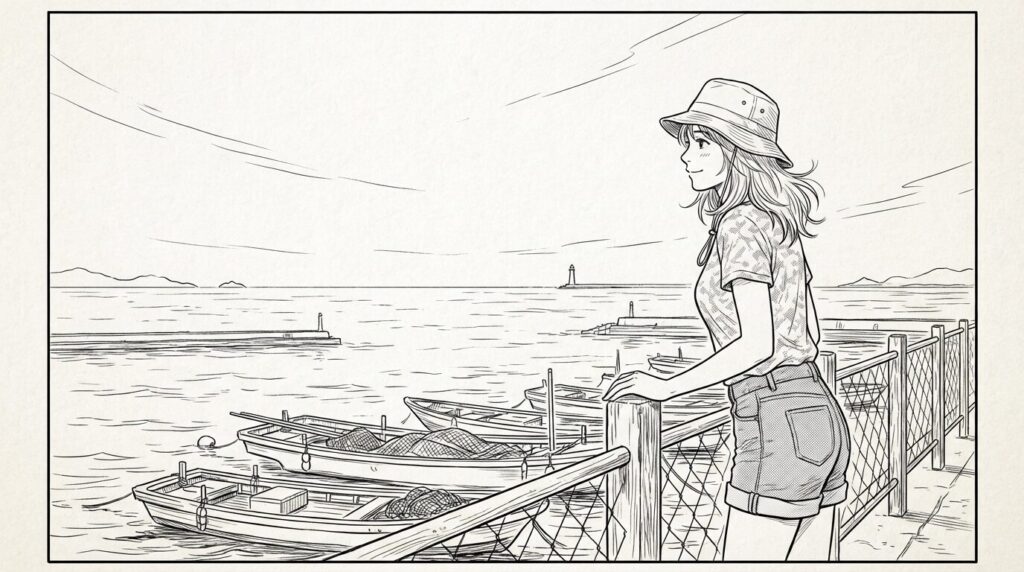
The port itself is full of highlights too. It's not just a fishing port — it really feels like a "living port."
Watch the Fishing Boats Return
If you visit in the July–September peak of bonito fishing, the scene of fishing boats returning to port is a must-see. The sight of them coming back flying a big-catch flag and playing music is spectacular.
When I watched, one boat apparently landed over 2 tonnes, 200–300 bonito, with 8 people. The large amount of bonito carried out steadily from the boat's hold. Watching the styrofoam boxes pile up one after another, I realised "ah, this is a real fishing town."
The time slot differs by day, so if you want to definitely see it, asking the port people might be good. They seem to often return in the morning or early afternoon.
You Can't Swim in the Sea
As a point to note, Sarahama Port is a fishing port, so you can't sea-bathe. Fishing boats come and go, and it would get in the way of the fishery.
There are people fishing, so it's fun to call out "what are you catching?" and hear their stories. The locals are kind and teach you all sorts of things.
Walk the Colourful Streets on the Steep Slope
Sarahama Port's appeal isn't just the port. The settlement spreading behind the port is truly distinctive and wonderful.
Maze-Like Alleys
Houses stand crammed on the steep slope, and narrow alleys cars can't pass are laid out like a net. An atmosphere reminiscent of an old European town, or an old Japanese port town.
The first time I visited, I genuinely got lost. Proceed down a narrow path and it comes out on another narrow path, which connects to yet another path... But that "getting lost" feeling is fun.
Walking the alleys, you meet local grandmothers. I was once asked "where are you from?" and got to hear stories of the wells and old Sarahama. These chance encounters enrich the trip.
The Secret of the Colourful Outer Walls
Sarahama's houses are characterised by being painted colourfully. Red, blue, yellow, green... just like a South American town. Full of exotic flavour, and photogenic too.
There's a theory that these wall colours actually use leftover paint from fishing-boat painting. The truth is unclear, but somehow there's romance to it. Beauty born from practicality.
The history of many people having to live on limited flat land created this distinctive streetscape. Now it's become a photo spot popular with tourists too.
The Settlement Walking Tour "Yaa-gama Kuu-gama"
If you want to know Sarahama more deeply, the settlement walking tour called "Yaa-gama Kuu-gama" is recommended. A guide from Sarahama shows you the settlement's history, culture and hidden spots.
The price is ¥2,500 per person (¥5,000 for one person), an about-90-minute tour. They teach you places you couldn't notice on your own, like a mysterious tunnel where gajumaru tree roots and a wall intertwine, and places of worship.
A phone reservation by 17:00 the day before is needed, so plan ahead.
Sarahama Harii "Oobanmai" | The Day Bonito Fly Through the Sky
If you go to Sarahama, what you absolutely want to experience is the "Sarahama Harii," held on the 4th day of the 5th lunar month (around June). The event called "Oobanmai" especially, once you see it you can't forget it.
What Is Harii?
Harii is a traditional event of competing by rowing boats called sabani, praying for a big catch and safe voyages. It was transmitted from China to the Ryukyus about 600 years ago, and to Sarahama around 1887 (Meiji 20) from Itoman fishermen.
The Sarahama Harii has the oldest history in the Miyako Islands. The biggest event in Sarahama, celebrated by all the islanders.
"Oobanmai," Where Bonito Fly Through the Sky
And the climax of the Harii is "Oobanmai." Fishermen boldly throw chunks of bonito and tuna from the fishing boats. Literally, bonito fly through the sky.
I haven't actually seen it yet (the 4th of the 5th lunar month changes date every year, so the timing hasn't matched), but even just seeing it on video it's crazy. To a gunkan march playing, chunks of bonito are flung high into the sky all at once from 4 boats, and below, the locals reach out and catch them while cheering loudly.
2 tonnes of bonito apparently dance through the sky in about 8 minutes. A frenzied festival.
Notes If You Participate
If you participate, clothing you don't mind getting dirty or a plastic raincoat is essential. They're chunks of bonito, so blood splatters fly. Even so, everyone enjoys it with a smile.
Bringing a cardboard box apparently makes it easier to catch bonito. A plastic bag is handy too. The locals are practised — catching with one hand, quickly picking up dropped ones by a 3-second rule — their technique is splendid.
If you can be in Sarahama on this day, it will undoubtedly become a lifetime memory.
Recommended Spots Around Sarahama Port
If you visit Sarahama Port, please do tour the surrounding spots too.
Sabautsugaa (Saba Offshore Well)
A historic well about 5 minutes by car from the port. A place that was used as living water for Sarahama's people for 240 years. You need to go down 123 steps, but you can feel the spectacular view and history.
I wrote about it in detail in an earlier article, so if you're interested, please check that out too.
Yarabu Road
The prefectural road heading from Sarahama towards Shimojishima Airport is called "Yarabu Road." A tree-lined avenue of yarabu (Alexandrian laurel), where you can enjoy old-fashioned, Irabu-Island-like scenery.
Yarabu trees are strong against sea wind and have been planted as a typhoon measure. The oil pressed from the large round fruit was apparently used as lamp fuel and as medicine in the old days.
The best road for a leisurely drive. Opening the window and driving while feeling the sea breeze feels good.
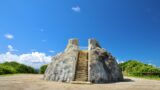
Makiyama Observatory and Funausagibanata
The island's other viewing spots aren't that far from Sarahama either. Makiyama Observatory is at the island's highest point, where you can take in the Irabu Bridge, Miyako Island and even Ikema Island.
Funausagibanata (the cape that sees off boats) is closed off due to deterioration, but the view from the surroundings is wonderful.
Points to Note Before Visiting
Sarahama Port is less a tourist spot than an active fishing port. Let's keep good manners and enjoy it.
Don't Get in the Way of the Fishery
When fishing boats are coming and going, take care not to get in the way. Don't get too close to the boat mooring areas. When taking photos too, from a place that doesn't interfere with the work.
Viewing the landing is basically OK, but the fishermen are busy, so be mindful of the timing of speaking to them. Sometimes they speak to you first.
About the Car Park
There are several parking spaces around the port, but some places are for fishery workers, so park in designated places. If you're unsure, asking the diner people is reliable.
Weekday daytime is relatively empty, but weekends and the time slots fishing boats return can get crowded.
Opening Hours and Closing Days
The opening hours of "Insha-no-Eki Sarahama" can change by day of the week and season. On days the sea is rough especially, they can't go out fishing, so the direct-sales shop and diner are sometimes closed.
If you want to definitely go, confirming by phone in advance is recommended. Going all that way only for it to be closed is sad.
The Best Time to Visit
My personal recommendation is around noon. Eating a seafood bowl at the diner, peeking into the direct-sales shop, strolling the settlement — that course is just right.
If you go in the peak of bonito fishing (July–September), seeing the port in the morning and then eating might be good too. But midsummer is truly hot, so don't forget to hydrate.
Frequently Asked Questions (FAQ)
Q1: Is there a place to swim?
A: Sarahama Port is a fishing port, so you can't sea-bathe. If you want to swim, go to other beaches like 17END, Toguchi-no-Hama or Nakanoshima Beach.
Q2: Is it OK with children?
A: The port itself is no problem with children, but watch out for fishing boats and work. The settlement alleys are narrow and steep, so hold small children's hands. The diner is family-friendly too.
Q3: How long does it take?
A: For just a meal, 1 hour; including a settlement stroll, about 2 hours. If you want to enjoy it thoroughly, allow 3 hours.
Q4: Can I enjoy it on a rainy day?
A: The diner and direct-sales shop are indoors, so it's fine. But strolling the settlement is hard even with an umbrella, so a fine day is recommended.
Q5: Does English work?
A: Basically Japanese only. But the diner menu has photos, so you can order by pointing. The locals are kind, so you can communicate with gestures.
Q6: Can I go alone?
A: Of course! I've been alone many times too. Sitting at the diner counter and talking with local regulars is fun.
Q7: Can I use a credit card?
A: I think it works at "Insha-no-Eki," but bringing cash is more reliable. The direct-sales shop is sometimes cash only.
Q8: What souvenirs are recommended?
A: Namari-bushi, katsuo miso, fresh seafood. Choose things storable at room temperature and you can take them home to Tokyo.
Q9: When is the Sarahama Harii?
A: It's the 4th of the 5th lunar month, so the date changes every year. Roughly around June. For the detailed schedule, inquire at the Miyako Island Tourism Association site or the Irabu Fishery Cooperative.
Q10: Is a rental car necessary?
A: It's essential. Sarahama is at the east end of Irabu Island, with few buses and taxis. Without a rental car you can move around freely, it's inconvenient.
What Sarahama Port Taught Me
With tourist spots, our eyes inevitably go to "photogenic" places. Beautiful beaches, spectacular observatories, stylish cafés. Those are lovely too, and I love them.
But a place like Sarahama Port has a different kind of appeal.
Here there's "real life." The tradition of bonito fishing continuing over 100 years. Houses built nestling against the steep slope. The robust figures of the fishermen. The culture of faith the women protected.
It might not be photogenic. But there's an air you can savour only here.
Eating morning-caught bonito, listening to the bustle of the port, walking the maze-like alleys. Talking with a local grandmother and hearing old stories. Such "casual moments" are actually what stays in memory most.
If asked my favourite place on Irabu Island, honestly I'd waver. 17END's spectacular view is hard to give up, and Toguchi-no-Hama's beauty is exceptional too. But if asked "the most memorable place?", I'd undoubtedly answer Sarahama Port.
The taste of the bonito I ate here. The figures of the fishermen I saw at the port. The smile of the grandmother I met in an alley. The row of colourful houses. I can still recall all of it vividly.
If you visit Irabu Island, please do once go to Sarahama Port. Beaches are nice, but touching a place like this "where you can feel people's lives" makes the trip deeper.
Sarahama, the town of bonito. There, the island's soul certainly lives and breathes.
Facility Information Summary
| Item | Details |
|---|---|
| Name | Sarahama Port (Sarahama Fishing Port) |
| Address | Sarahama, Irabu, Miyakojima City, Okinawa |
| Access | about 25 minutes by car from Miyako Airport, about 10 minutes from the Irabu Bridge |
| Car park | yes (free, several places) |
| Fee | port viewing free, meals separate |
| Time needed | 1–2 hours (including a meal and stroll) |
| Recommended period | July–September (peak of bonito fishing) |
| Sea-bathing | not allowed (it's a fishing port) |
Insha-no-Eki Sarahama
- Diner: Obanmai Shokudo
- Direct-sales shop: seafood landed daily
- Experience: narikiri fisherman experience (reservation required)
For making unforgettable memories on Irabu Island, why not visit Sarahama Port? It will surely join your "list of favourite places."