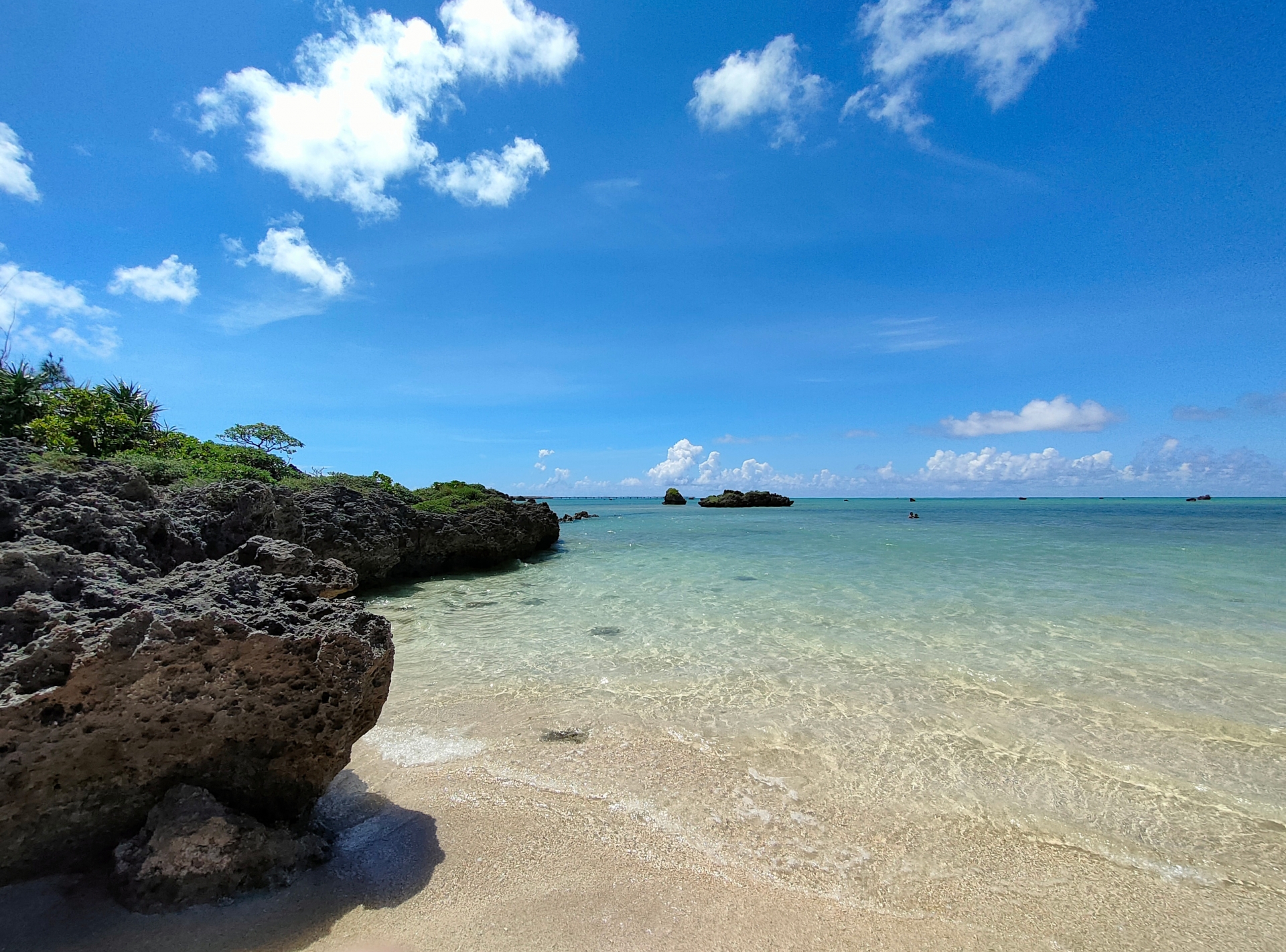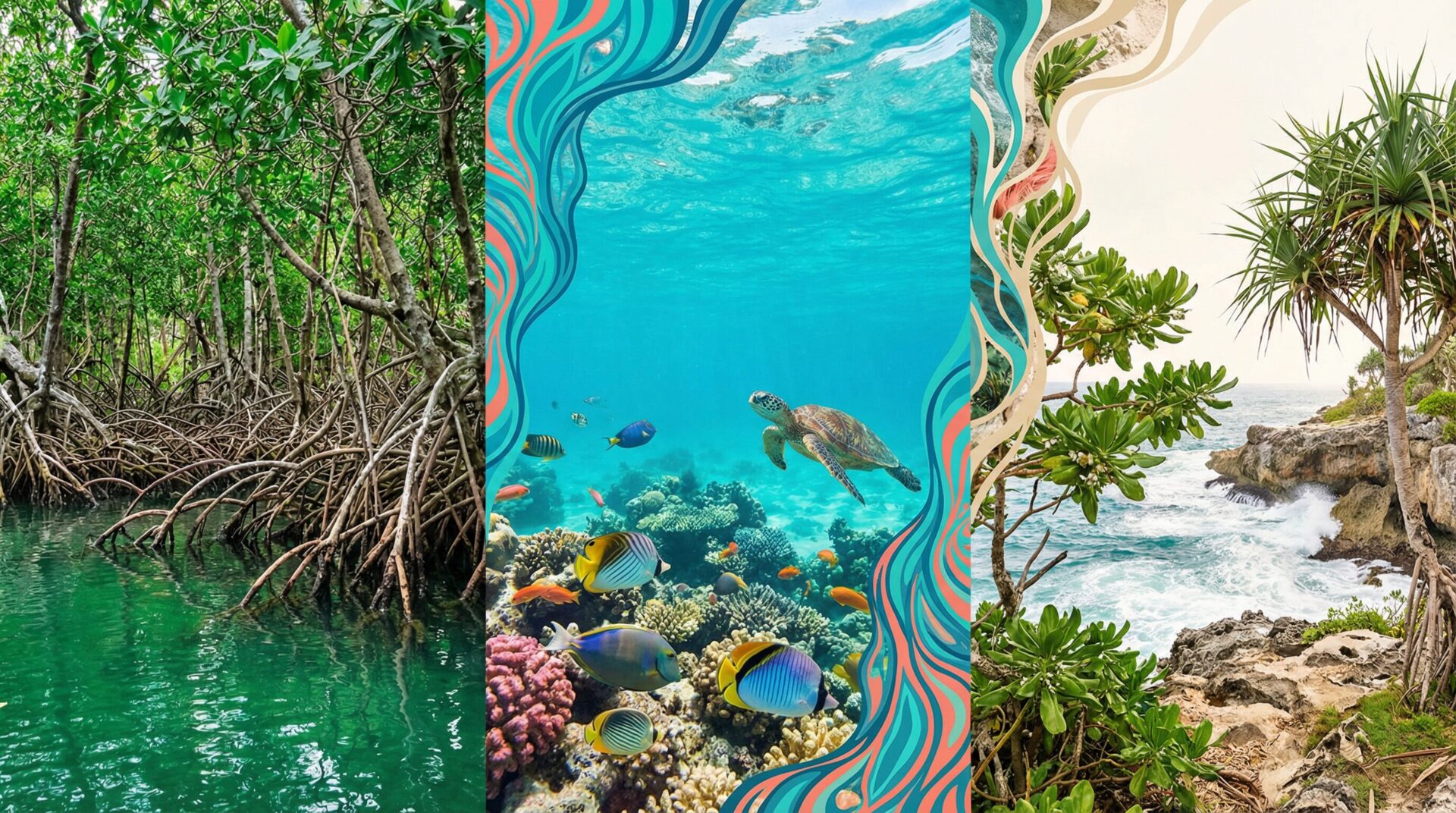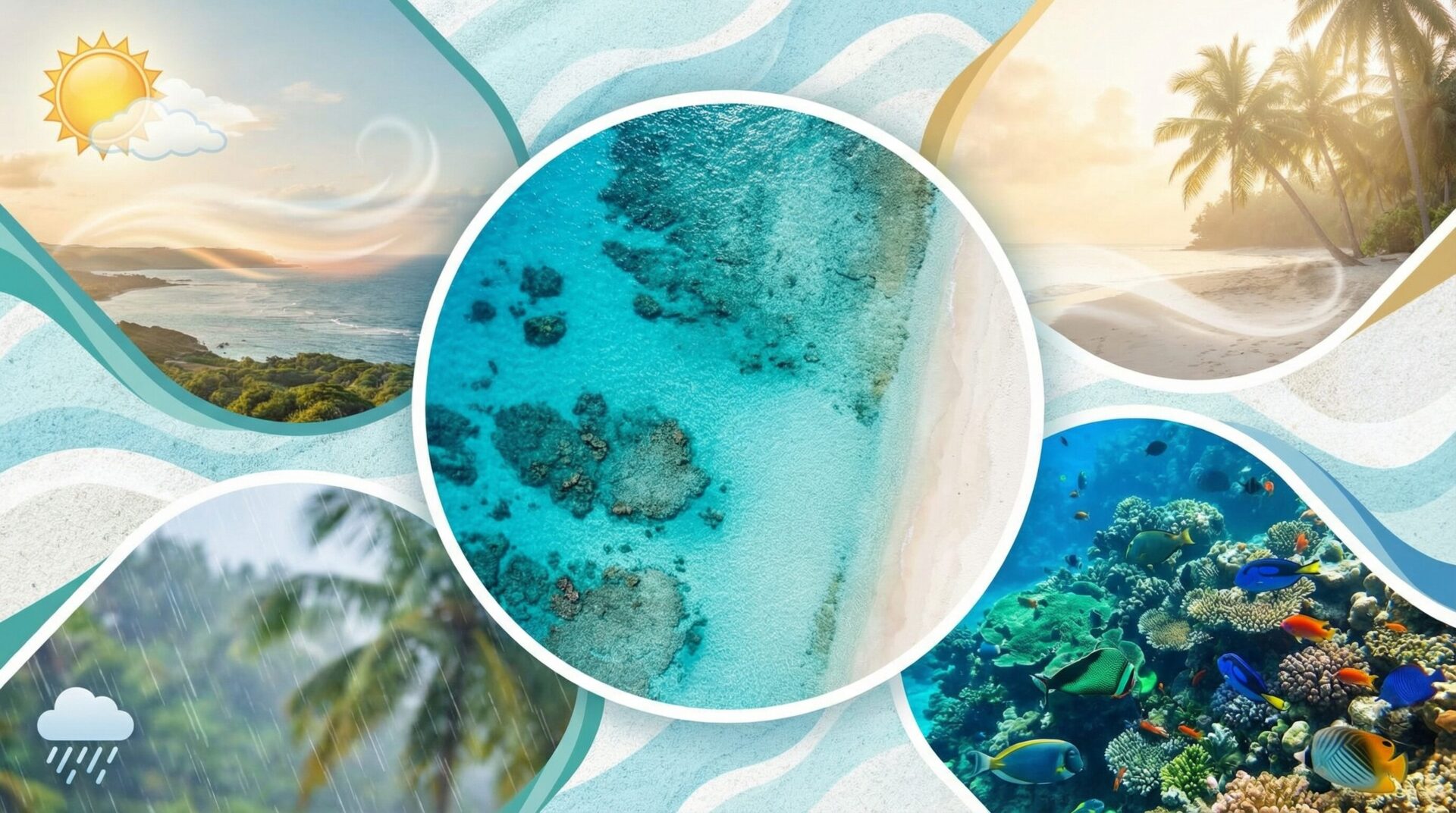
When I first landed on Irabu Island, the first thing that surprised me was the blueness of the sea. I'd heard the phrase "Miyako Blue," but seeing it in person it was beyond imagination. Clear blue, emerald green, and white sand. "Why is it this beautiful?" I genuinely wondered.
And another impressive thing was the pleasantness of the climate. Even though it was summer, a sea breeze blew and it was cool. When I visited in winter, it was so mild I thought "wait, this is winter?" Comfortable year-round, I thought "living here would be happiness."
In fact, this transparent sea and pleasant climate have a deep reason. The terrain, geology and climate of Irabu Island and Shimojishima all combine exquisitely to create this miracle-like natural environment.
This time, I'll explain the climate and water environment of Irabu Island and Shimojishima from a scientific viewpoint. "Why is the sea this beautiful?" "Why is it comfortable year-round?" I'll answer all those questions.
Subtropical Oceanic Climate | Mild and Comfortable Year-Round on Irabu Island and Shimojishima
The Miyako islands, including Irabu Island and Shimojishima, belong to a subtropical oceanic climate.
"Subtropical oceanic climate" sounds difficult, but simply put it's a climate that's "mild year-round, with gentle temperature changes because it's surrounded by sea." Hot and humid, and instead of having clear four seasons, it doesn't get extremely cold or hot. That's the feature of a subtropical oceanic climate.
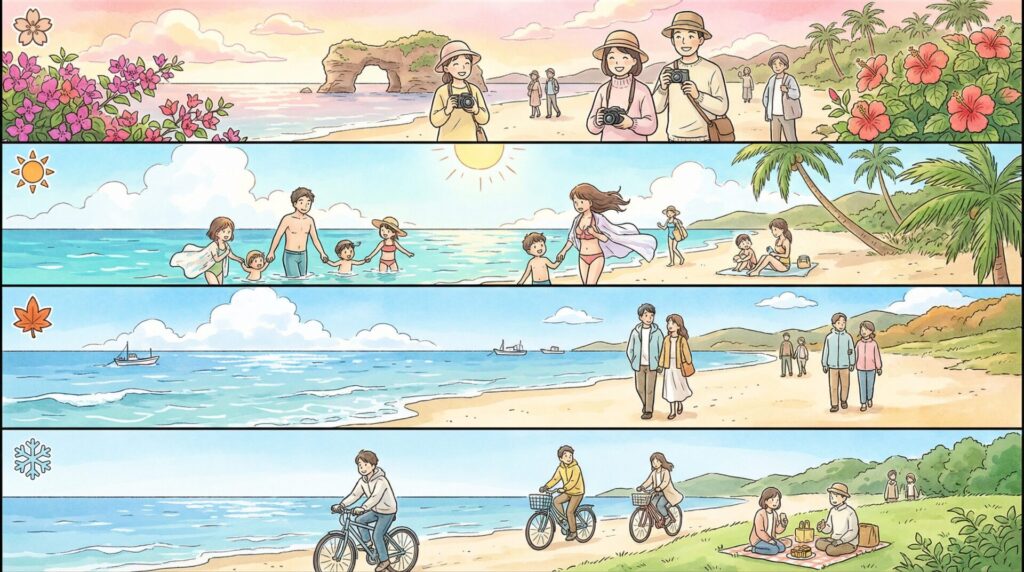
Annual Average Temperature 23.4°C | Why Both Winter and Summer Are Comfortable
The Miyako islands' annual average temperature is about 23.4°C.
This is an incredibly comfortable temperature. Tokyo's annual average is about 16°C, so it's 7–8°C higher. But Naha on Okinawa's main island is about 23.3°C, so it's almost the same. In other words, Irabu Island and Shimojishima are islands with the mild climate typical of Okinawa.
When I first visited Irabu Island in winter, I was surprised — "wait, this is winter?" In Tokyo, January is mid-winter and you need a down jacket, but on Irabu Island you can get by in a short-sleeved T-shirt. Of course, the nights can be a bit chilly, and it's cold to enter the sea, but the daytime is truly comfortable. The temperature is about 15–20°C. At about this temperature, it's ideal for strolling, relaxing at a cafe, or driving.
Conversely, summer on Irabu Island is hot. From July to September the daytime often exceeds 30°C. But it's strangely not as tough as a Tokyo summer. The reason is the sea breeze.
Irabu Island and Shimojishima are surrounded by sea on all sides. So a sea breeze is always blowing. This sea breeze softens the summer heat. A Tokyo summer, with the glare off the asphalt and the heat of the buildings, is hot wind even when the wind blows. But on Irabu Island, when the wind blows it's cool. Being wind that has crossed over the sea, the humidity is high but the temperature is relatively gentle.
When I first visited Irabu Island in summer, bathing in the sea breeze on the beach, I thought "ah, this is the island summer." Hot, but pleasant. The wind feels good. Step into the shade and it's cool. And enter the sea and you cool down in an instant. It's a comfortable summer, completely different from a Tokyo summer.
Being surrounded by sea on all sides means winter is relatively mild too. Seawater temperature changes more gently than air temperature, so the sea keeps the surrounding temperature warm. So the Miyako islands' winter is far milder than Honshu. It almost never snows.
Comfortable year-round. That's the greatest appeal of the climate of Irabu Island and Shimojishima.
Annual Rainfall 2,042 mm | There's a Lot of Rain, but the Sea Doesn't Turn Cloudy
The Miyako islands' annual rainfall is about 2,042 mm.
This is actually quite a lot. Tokyo's annual rainfall is about 1,500 mm, so it's over 500 mm more. In other words, Irabu Island and Shimojishima are islands with a lot of rain.
It rains especially well in the rainy season of May to June and the typhoon season of July to October. When I first visited Irabu Island in the rainy season, I thought "ah, it rains quite a bit." But unlike a Tokyo rainy season where it drizzles damply on and on, there's a lot of squall-like rain — it pours hard and stops suddenly. And when the rain stops it clears up again. That repetition.
In typhoon season, more serious rain falls. When a typhoon comes, the Irabu Bridge is sometimes closed, and flights are cancelled. But the sea after a typhoon passes is unbelievably beautiful.
Here's the important point.
Why, despite annual rainfall of over 2,000 mm, doesn't the sea of Irabu Island and Shimojishima turn cloudy?
The answer lies in the mechanism of "Ryukyu limestone and the freshwater lens" explained in the previous article.
The geology of Irabu Island and Shimojishima is made of highly permeable Ryukyu limestone (coral limestone). So even when it rains, the rainwater soaks straight into the ground. Water doesn't pool on the surface, and no rivers form. And it's said that about 40% of the rainwater permeates underground.
40% of the rainwater permeating underground is an amazing figure. Of the 2,042 mm, about 800 mm permeates underground by calculation. The remaining 60% evaporates or flows directly into the sea, but the important thing is that "surface water like a river hardly exists."
Because there are no rivers, earth and sand don't flow into the sea. So even when a lot of rain falls, the sea doesn't turn cloudy.
This is one of the reasons the sea of Irabu Island and Shimojishima is transparent year-round.
When I first learned this mechanism, I was convinced — "I see! So that's why the sea is beautiful even after heavy rain!" Tokyo's sea turns brown and cloudy after heavy rain. Because the rivers carry earth and sand. But Irabu Island and Shimojishima have no rivers. So even when it rains, the sea stays transparent. This natural mechanism protects the Miyako Blue.
The Transparent Sea of Miyako Blue | The Miracle Transparency Created by Coral Reefs
Have you heard the phrase "Miyako Blue"?
It's the blue sea with abnormally high transparency unique to the Miyako islands. Emerald green, cobalt blue, turquoise blue — a beauty that mixes various blues, beyond what words can express. That's Miyako Blue.
When I first saw Irabu Island's sea, I was surprised — "that colour I saw in photos was real." Transparency you can see all the way to the seabed. Emerald green where the white sand shows through. And the cobalt blue of the deep places. Wherever you look, unbelievably beautiful.
What creates this Miyako Blue is, in fact, the coral reef.
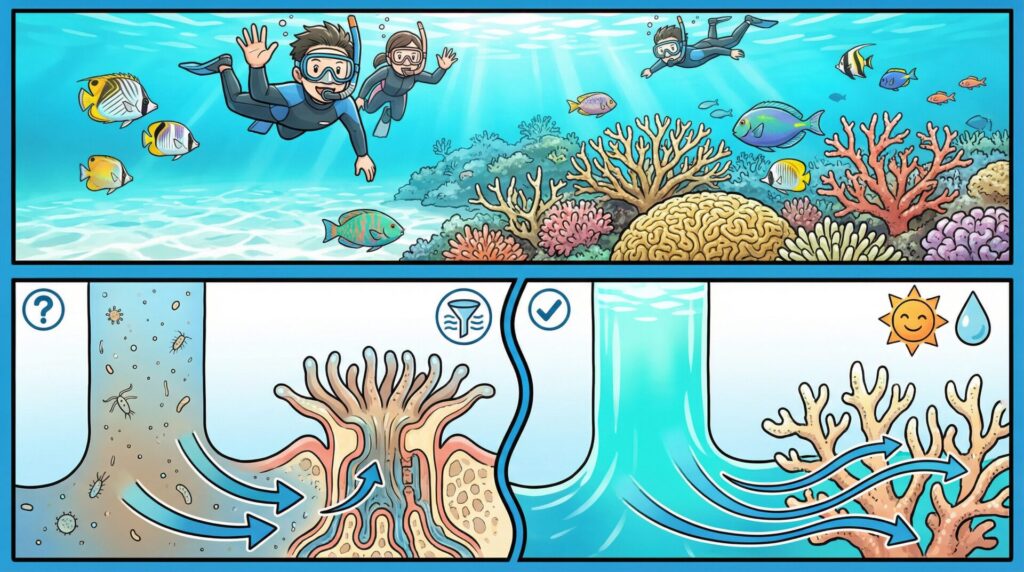
Because There Are No Rivers, No Earth and Sand Flow In
First, as mentioned, Irabu Island and Shimojishima have no rivers.
Being islands formed by an uplifted coral reef, the geology is highly permeable Ryukyu limestone. Rainwater permeates into the ground, and surface water like a river hardly exists. No large rivers means little earth and sand flows into the sea.
Okinawa's main island's sea is beautiful too, but near river mouths it can turn cloudy after rain. Because the rivers carry earth and sand. But the Miyako islands, especially Irabu Island and Shimojishima, have no rivers so no earth and sand flow in. So the sea is slow to turn cloudy.
When I first visited Toguchi-no-Hama, I thought "I've never seen a sea this transparent." The sand underfoot is clearly visible even at a depth of 1 metre. You can see small fish swimming too. Enter the water and your own feet are clearly visible. This transparency really is abnormal (a compliment).
The Coral Reef Is a Natural Filter
And another important element is the coral reef.
The coral reef surrounding Irabu Island and Shimojishima plays the role of a filter that adsorbs impurities in the sea.
Coral lives by taking in plankton and organic matter from the seawater. In other words, by coral existing, the seawater is naturally filtered. Like a large-scale natural water-purification plant.
And the reef of the coral protects against the rough waves of the open sea. So inside the reef (the lagoon) is calm, and the sand is slow to be stirred up. The transparency is maintained.
When I snorkelled at Nakanoshima Beach, I swam right beside the coral reef. The colourful coral, the tropical fish swimming around it, and the clear sea. Thinking "this coral protects this transparency," I was somehow moved.
Miyako Blue is a miracle created by the mechanism of nature.
Terrain, Geology, Climate, Ecosystem — the Result of Everything Combining Perfectly
What creates Miyako Blue isn't just one factor.
- Uplifted-coral-reef geology: highly permeable, with rainwater permeating underground
- Riverless terrain: no earth and sand flow into the sea
- The presence of coral reef: a natural filter that filters the seawater
- Subtropical oceanic climate: a mild climate where coral grows easily
- High rainfall: forms the freshwater lens and keeps groundwater abundant
All of these combine exquisitely to realise the miracle transparency of Miyako Blue.
If even one were missing, this transparency couldn't be maintained. If the geology were different, rainwater wouldn't permeate underground and rivers would form. If rivers formed, earth and sand would flow into the sea. Without coral reefs, the seawater wouldn't be filtered. If the climate were cold, coral couldn't grow.
Everything is perfectly in place. That's the sea of Irabu Island and Shimojishima.
When I first went to 17END, seeing the transparent sea spreading beyond the pure-white sand, I thought "how many places like this are there on Earth?" And I felt, "I'm in a place this miracle-like."
Understanding the Climate and Water Environment Makes the Trip More Enjoyable
So far, I've explained the climate and water environment of Irabu Island and Shimojishima.
To sum up, it's like this:
Climate:
- Subtropical oceanic climate, mild year-round
- Annual average temperature 23.4°C, mild even in winter and a cool sea breeze in summer
- Annual rainfall 2,042 mm, a lot of rain but no rivers
- About 40% of rainwater permeates underground, with surface water hardly existing
Water environment:
- No rivers, so no earth and sand flow into the sea
- Coral reefs are a natural filter that filters the seawater
- Realises the highly transparent sea called Miyako Blue
With this knowledge, how you enjoy the trip changes.
Swimming at the beach and thinking "this transparency is because there are no rivers," it becomes not mere swimming but the sensation of experiencing the mechanism of the Earth.
When it rains, thinking "ah, 40% of this rain permeates underground," you can feel the rain isn't so bad either.
When a sea breeze blows on a hot summer day, you can be convinced "this is the blessing of the subtropical oceanic climate."
When snorkelling while looking at the coral reef, thinking "this coral cleans the sea," your feeling of wanting to cherish the coral grows stronger.
Scientific knowledge makes the journey deeper and more interesting.
If you visit Irabu Island and Shimojishima, please by all means know this mechanism of the climate and water environment too. The view before you should come to look not like a mere "beautiful sea" but "a miracle the Earth created over tens of thousands of years."
And there are things we tourists can do to protect this miracle environment. Don't damage the coral, don't throw rubbish in the sea, use coral-friendly sunscreen. Small things, but important things.
Miyako Blue is a miracle created by nature. But depending on our actions, we can protect that miracle or destroy it. If you love Irabu Island and Shimojishima, you'd want to leave this beautiful sea for the next generation too, wouldn't you.