"I want to go to Irabu Island, but how do I get there?"
When I first tried to visit Irabu Island, I had the same question. Miyako Island is famous, but where is Irabu Island? Can I go there directly by plane? Or via Miyako Island? Do I need a car? Are there buses?
Looking into it, access to Irabu Island and Shimojishima was actually easier than I'd thought. Since the Irabu Bridge opened in 2015, Miyako Island and Irabu Island can be travelled between easily by car, and in 2019 Shimojishima Airport was converted to passenger use, so you can go on a direct flight from Tokyo (Haneda).
But there's not just one way to get there. Plane, rental car, route bus, taxi, rental cycle, on foot. There are various options, and you can choose to match your travel style and budget.
This time, I'll thoroughly explain how to access Irabu Island and Shimojishima, based on the latest 2025–2026 information. "Which method is most convenient?" "How much does it cost?" "How long does it take?" I'll answer all those questions.
- The Irabu Bridge | Japan's Longest Toll-Free Bridge Connecting Miyako Island and Irabu Island
- Access by Plane | Shimojishima Airport or Miyako Airport, Which Is More Convenient?
- Rental Car and Rental Cycle | Essentials for Getting Around the Island
- Route Buses | You Can Reach Irabu Island and Shimojishima Even Without a Car
- Taxi and Ride-Hailing | Easy and Comfortable Means of Transport
- Motorbike, Trike and on Foot | Means of Transport That Let You Feel the Wind
- [Summary] Access to Irabu Island and Shimojishima | Choose the Method That Suits You
The Irabu Bridge | Japan's Longest Toll-Free Bridge Connecting Miyako Island and Irabu Island
The first thing to know is the existence of the Irabu Bridge.
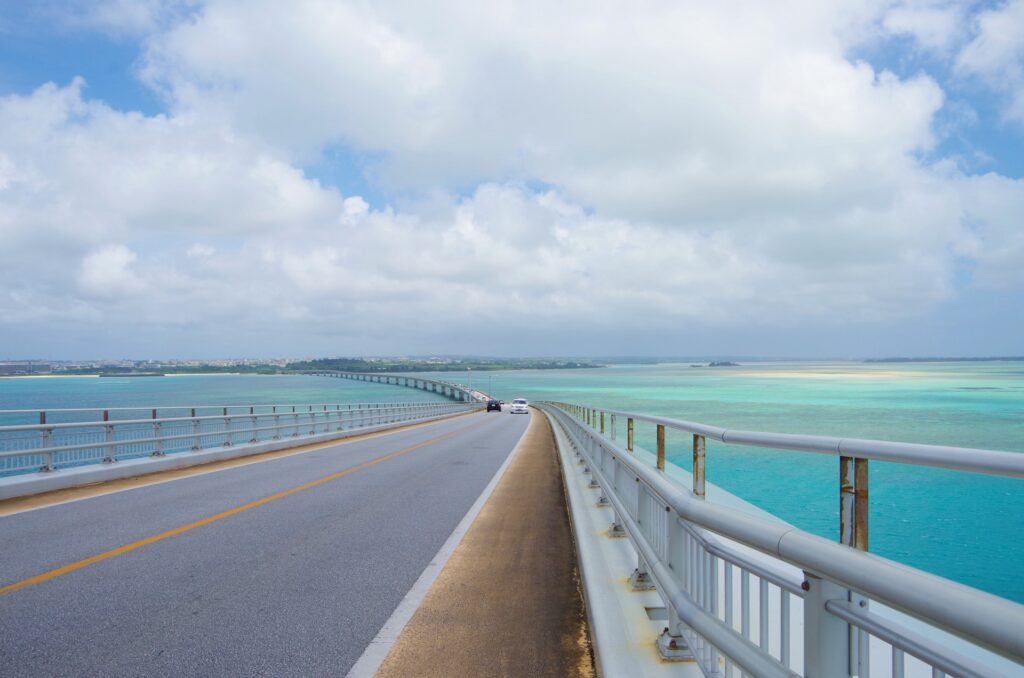
The Irabu Bridge is a 3,540-metre bridge opened in January 2015, connecting Miyako Island and Irabu Island. And this bridge has a surprising feature.
Japan's Longest Toll-Free Bridge
The Irabu Bridge is Japan's longest toll-free bridge.
3,540 metres total. About 3.5 kilometres. About 10 times the length of an ordinary bridge. And the toll is free. By car, motorbike, bicycle or on foot, anyone can cross for free.
When I first crossed the Irabu Bridge, I was surprised — "so long!" From entering the bridge to leaving it takes about 5 minutes by car. And the blueness of the sea spreading left and right. "So this is the Miyako Blue," I was moved.
If it were a toll bridge, at this length it wouldn't be strange for the toll to be ¥1,000 or ¥2,000. But it's completely free. Free however many times you cross. Locals and tourists, everyone can come and go freely. That's the wonderful thing about the Irabu Bridge.
Passable by Car, Motorbike, Bicycle or on Foot
The Irabu Bridge can be crossed by various means of transport.
- Car: the most common method. About 15–20 minutes by drive
- Motorbike: comfortable touring while feeling the wind
- Bicycle: about 40 minutes by cycle, enjoying the superb view while exercising
- On foot: walking slowly, savouring the sea view
When I first crossed the Irabu Bridge by car, I drove thinking "wow, the sea's beautiful!" But the second time I crossed by bicycle, I thought "the bicycle really lets you enjoy the view more." By car you have to focus on driving, but by bicycle you can ride at your own pace. You can stop partway and take photos too. The exhilaration of running over the sea while feeling the wind. That's the real pleasure of cycling.
And if you have time, crossing on foot is recommended too. It takes about 40 minutes one way, but the footpath is wide and well-maintained so it's safe. Gazing slowly at the sea view, walking leisurely. This might be the most luxurious way to use your time.
The "Miyako Blue" Seen from the Bridge Is a Superb View
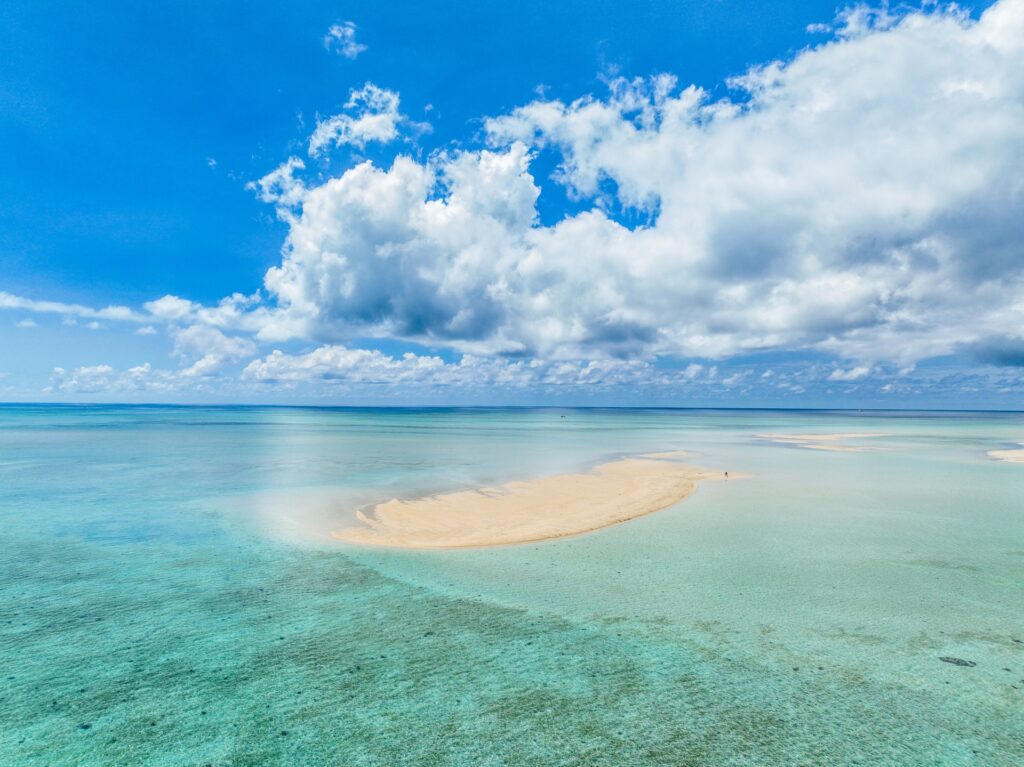
The Irabu Bridge's greatest appeal is, above all, the view.
The sea seen from atop the bridge is a superb view called "Miyako Blue." Clear emerald green, the cobalt blue of the deep places, white sand, and islands seen in the distance. 360 degrees, beautiful wherever you look.
The morning of a fine day is especially recommended. The sun's light reflects off the sea surface, and the sea sparkles. And the Irabu Bridge in the evening is wonderful too. Cross the bridge at sunset and the sky and sea dye orange, with Irabu Island in silhouette. You'll never forget this view your whole life.
The Irabu Bridge isn't just a means of transport. It's a sightseeing spot in itself.
Connected to Shimojishima by Bridge Too
Between Irabu Island and Shimojishima too, multiple bridges are built.
Cross the Irabu Bridge into Irabu Island and you can go straight on to Shimojishima by car, bus or bicycle. The channel between Irabu Island and Shimojishima is narrow, so you sometimes don't even notice you're crossing a bridge. The two islands are completely integrated.
In other words, Miyako Island → Irabu Bridge → Irabu Island → Shimojishima can all be travelled by car. This is the big change in Irabu Island and Shimojishima sightseeing since the Irabu Bridge opened in 2015.
Access by Plane | Shimojishima Airport or Miyako Airport, Which Is More Convenient?
When going to Irabu Island and Shimojishima by plane, there are two options.
- Miyako Shimojishima Airport: right next to Irabu Island and Shimojishima, direct access possible
- Miyako Airport: an airport on Miyako Island, crossing the Irabu Bridge by rental car
Which is more convenient depends on your travel style. Let's look at the features of each.
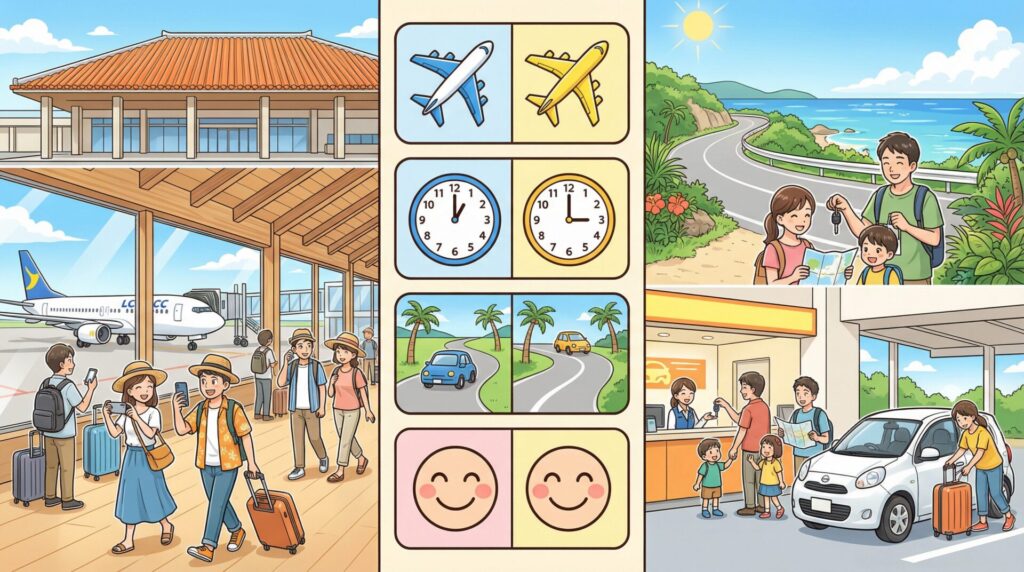
Miyako Shimojishima Airport | The Gateway to Irabu and Shimojishima Sightseeing
Shimojishima Airport (official name: Miyako Shimojishima Airport) is an airport on Shimojishima.
It was originally an airport dedicated to pilot training, but in 2019 a passenger terminal was developed, and LCC and domestic and international flights came to depart and arrive. And now, it's gaining popularity as the gateway to Irabu Island and Shimojishima sightseeing.
Shimojishima Airport's greatest appeal is direct access to Irabu Island and Shimojishima. From the airport, 5 minutes by car to 17END, 10 minutes to Toriike Pond, 15 minutes to Toguchi-no-Hama. The sightseeing spots are all close. This is the biggest merit of using Shimojishima Airport.
And the airport itself is incredibly stylish. The orange-tiled roof, the interior with the warmth of wood, and the sea spreading before you. It feels like "from the moment you arrive at the airport, you're already in resort mode."
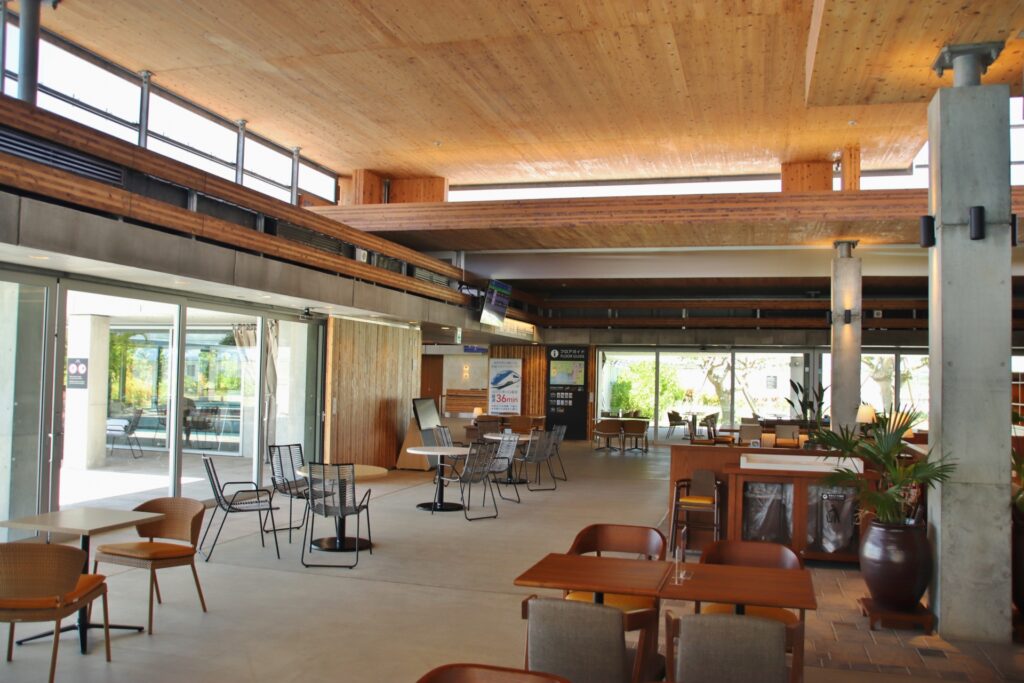
Flights on the 2025 Summer Schedule (30 March – 25 October)
On the 2025 summer schedule, the following direct flights operate:
Skymark:
- Haneda: 1 round trip a day
- Kobe: 1 round trip a day
- Naha: 2 round trips a day

Jin Air (Korea):
- Seoul (Incheon): 5 flights a week

Seasonal flights:
- Fukuoka: 1 round trip a day from 20 June to 30 September
Besides these, connecting flights to Sapporo, Ibaraki, Nagoya and elsewhere are also set up.
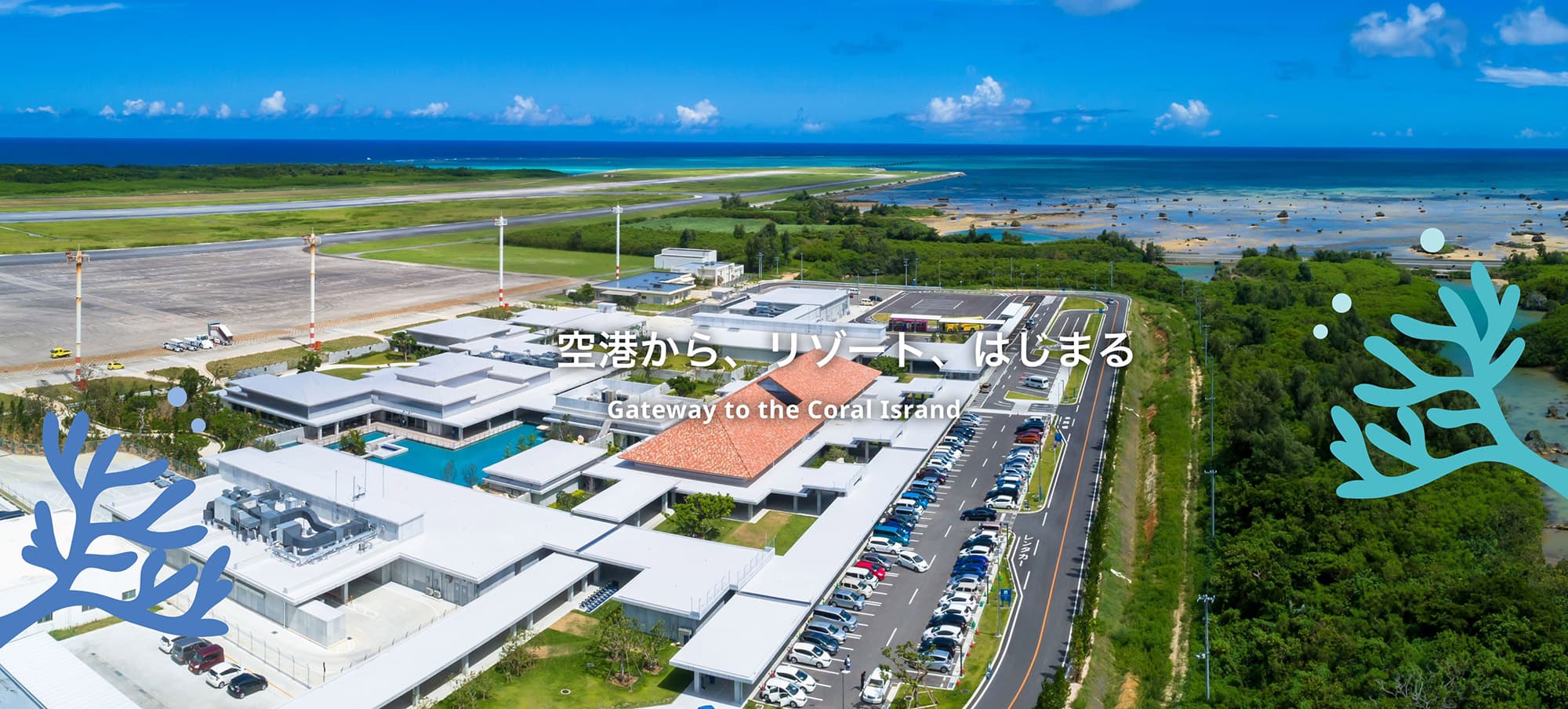
When I first used the direct flight from Haneda to Shimojishima, I was surprised — "you can come this easily." Leave Haneda in the morning, arrive at Shimojishima Airport before noon. Rent a car right at the airport, and lunch at an Irabu Island cafe. Snorkelling at 17END in the afternoon. A relaxed evening at the hotel. You can enjoy it to the full from day one. This is the convenience of the Shimojishima Airport direct flight.
Flights on the 2025 Winter Schedule (26 October – 28 March 2026)
On the winter schedule too, the main routes continue to operate.
- Seoul: 5 flights a week
- Haneda, Kobe, Naha: daily operation
Irabu Island and Shimojishima are relatively mild even in winter, so they're recommended as an off-season travel destination. Few tourists and quiet, prices cheaper than summer, and the sea's transparency is higher in winter. Irabu Island and Shimojishima in winter are surprisingly worth aiming for.
Miyako Airport | Abundant Flights from Major Cities
Miyako Airport is an airport on Miyako Island.
It has more flights than Shimojishima Airport, with abundant direct flights from major cities. There are flights to Miyako Airport from various airports — Haneda, Narita, Kansai, Chubu, Fukuoka, Naha and more.
When using Miyako Airport, the common approach is to rent a car at the airport and head to Irabu Island and Shimojishima across the Irabu Bridge. About 20 minutes by car from Miyako Airport to Irabu Island. You can enjoy the Irabu Bridge drive too, and drop by Miyako Island sightseeing spots. For those who want to enjoy both Miyako Island and Irabu Island and Shimojishima, Miyako Airport may be more convenient.
Which Airport Should You Choose?
Shimojishima Airport is recommended for people who:
- want to sightsee mainly on Irabu Island and Shimojishima
- want convenient access by direct flight
- want to go to sightseeing spots right from the airport
- want to experience a stylish airport
Miyako Airport is recommended for people who:
- want to sightsee both Miyako Island and Irabu Island and Shimojishima
- find it easier to plan a schedule with more flights
- want to enjoy the Irabu Bridge drive
- plan to stay at a Miyako Island hotel
I used Miyako Airport on my first trip, and came to use Shimojishima Airport from the second time on. The first time I wanted to see both Miyako Island and Irabu Island, so Miyako Airport. From the second time, I narrowed it to Irabu Island and Shimojishima and wanted to spend it leisurely, so Shimojishima Airport. Choosing to match your purpose is best.
Rental Car and Rental Cycle | Essentials for Getting Around the Island
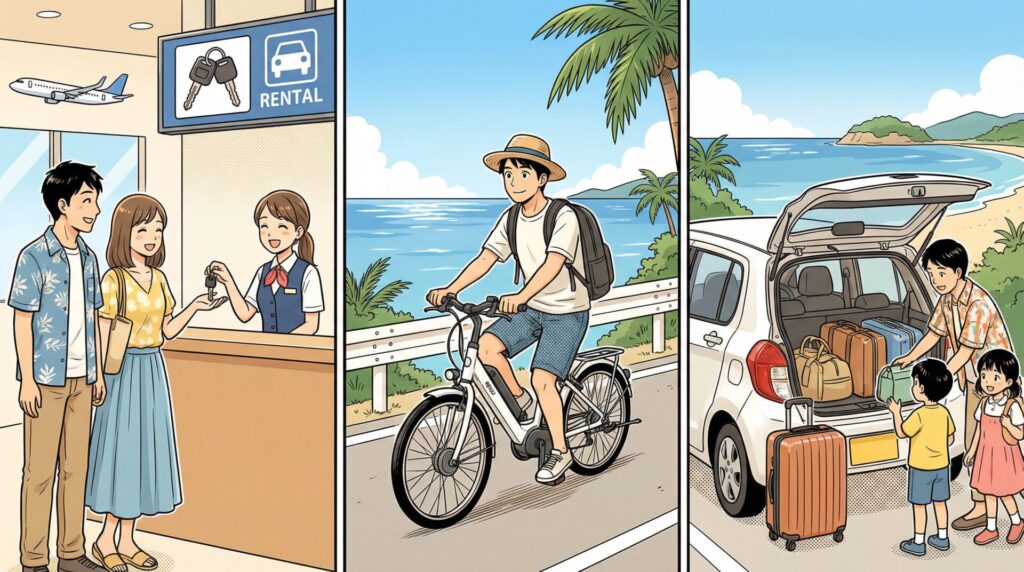
If you're sightseeing on Irabu Island and Shimojishima, a rental car or rental cycle is essential.
Because there's little public transport. There are route buses, but the number is limited, and they don't cover all the sightseeing spots. If you want to tour the island freely, you need a car or bicycle.
A Rental Car Is Most Convenient
On Miyako Island and Shimojishima, a rental car is the most convenient means of transport.
Both Miyako Airport and Shimojishima Airport have multiple rental car companies. Arrive at the airport, rent a car right away, and set off straight for sightseeing. That's the convenience of a rental car.
Travel times by rental car:
- Miyako Airport → Irabu Island: about 20 minutes
- Shimojishima Airport → Irabu Island sightseeing spots: 5–15 minutes
Inside Shimojishima Airport there are rental car company counters. Book in advance and you can rent a car right after arriving at the airport. Car-share information is also posted, so for short-time use car-share is an option too.
However, one point to note. In summer, rental cars run short.
From July to September, especially around Obon, tourists increase and rental cars run short. I once went to Miyako Island without a booking and was told "the rental cars are all taken," which left me stuck. If travelling in summer, always book the rental car in advance. That's the iron rule.
Rental Cycle and Electric Mobility Are Options Too
Irabu Island and Shimojishima have flat terrain with little undulation.
So getting around by bicycle or electric mobility is plenty possible. It may even be more pleasant than a car. Touring the island at your own pace while feeling the wind. If there's a place that catches your eye partway, stop right away and take a photo. That's how to enjoy cycling.
Crossing the Irabu Bridge by bicycle:
- about 40 minutes one way
- safe with a wide footpath maintained
- you can stop on the bridge and take photos of the sea
- a bit tough on windy days (but that's part of the fun too)
When I first crossed the Irabu Bridge by bicycle, I thought "this is incredibly pleasant!" By car you cross in 5 minutes, but by bicycle you can cross slowly over 40 minutes. Gazing at the sea, feeling the wind, riding leisurely. That was the most luxurious time.
However, the daytime in summer is hot. Watch for heatstroke. Stay properly hydrated, and don't forget sun protection. And be careful on windy days. The Irabu Bridge is built over the sea, so on strong-wind days the bicycle gets buffeted. Don't push it — safety first.
Route Buses | You Can Reach Irabu Island and Shimojishima Even Without a Car
"A rental car is expensive, and I don't have a licence. Can't I go by bus?"
It's fine. Using a route bus, you can reach Irabu Island and Shimojishima even without a car.
However, the number is limited, so you need to check the bus timetable in advance and move methodically.
The Irabu Sarahama via Hirara Line | The Only Route Circling the Island
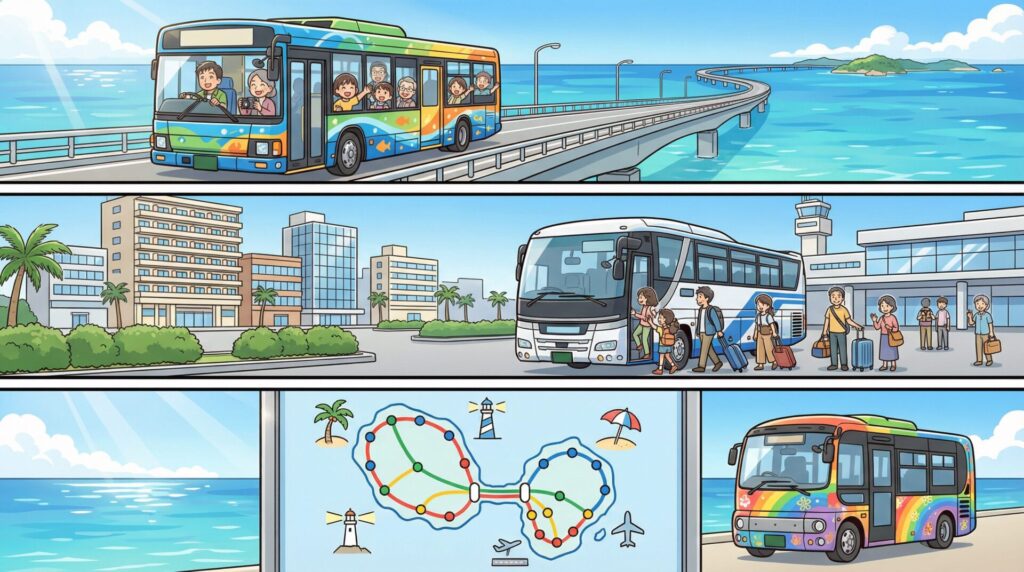
The Irabu Sarahama via Hirara Line is a route bus operated by Miyako Kyoei Bus.
From the Hirara town centre on Miyako Island, it crosses the Irabu Bridge into Irabu Island, passes through the Sarahama district, and runs to the terminus on Shimojishima. Since the Irabu Bridge opened in 2015, the route was extended, and it became the only route crossing the bridge and circling the island.
When I learned "even without a car, you can get to Irabu Island and Shimojishima on a single bus," I thought "this is convenient." It's an important route supporting not just tourists but the locals' lives.
However, the number isn't large. Only a few a day. So you need to act in line with the bus times. There can be cases like "miss the bus and the next is 2 hours later," so checking the timetable is essential.
Miyako Shimojishima Airport Shuttle Bus (Airport Liner) | A Convenient Bus Connecting the Airport and Hotels
The Miyako Shimojishima Airport shuttle bus is a bus operated by Miyako Kyoei Bus and Chuo Kotsu.
From 20 June 2025, it was shortened to a round trip between Miyako Shimojishima Airport and Miyako Airport. Along the way it stops at the following stops:
- Hilton Miyakojima
- Hirara Port
- Public Market
- Kitasho-mae
It used to stop at Shigira Resort and Miyakojima Tokyu Resort too, but it no longer stops there now.
Fare and travel time:
- Shimojishima Airport to Miyako Airport: about 40 minutes
- Fare: adults ¥600–800 (about US$4–5)
- No booking required
When I first landed at Shimojishima Airport, I hadn't booked a rental car and got flustered. But learning there was an airport shuttle bus, I was reassured. There's also the option of taking the bus to Miyako Airport and renting a car there.
It's also convenient for someone staying at a hotel who goes on a day trip from Shimojishima Airport to another island. You can take the bus to the airport with your luggage left behind. You can return to the hotel by bus on the way back too. Easy and convenient.
Miyakojima Loop Bus | A New, Limited-Time Public Transport
The Miyakojima Loop Bus is a limited-time bus operating from 18 July 2025 to 28 February 2026.
There are two routes, outer and inner loops, circling Miyako Airport, hotels, the town centre and sightseeing spots. It's attracting attention as a new public transport making up for the shortage of private cars.
Fare:
- Single ride: ¥500 (about US$3)
- One-day pass: ¥1,500 (about US$10)
Tickets can be bought on board or via a smartphone app.
For those who "want to sightsee Miyako Island without a car," this loop bus is groundbreaking. You can tour Miyako Island's main sightseeing spots on a single bus. Buy a one-day pass and you can get on and off freely as many times as you like. That's convenient, isn't it.
However, it may not cover Irabu Island and Shimojishima. It's a bus specialised for travel within Miyako Island, so to go to Irabu Island and Shimojishima you need to use the aforementioned "Irabu Sarahama via Hirara Line."
Other Route Bus Information
To each island around Miyako Island (Ikema Island, Kurima Island, Irabu Island), there are routes you can reach on a single bus.
You can transfer at the bus terminal near Hirara Port, so a trip touring multiple islands can be realised by bus alone. It takes time, but a leisurely bus trip isn't bad either. Enjoying the view from the window, swaying on the bus together with the locals. This too is one travel style.
And crossing a long bridge on foot is recommended too. Not only the Irabu Bridge, but the Ikema Bridge and Kurima Bridge can be crossed on foot. Take the bus to the island, cross the bridge on foot. Return by bus on the way back. This kind of travel is interesting too, isn't it.
Taxi and Ride-Hailing | Easy and Comfortable Means of Transport
"Minding the bus times is a hassle." "I have a lot of luggage." "I want to travel as a group."
At such times, a taxi is convenient.
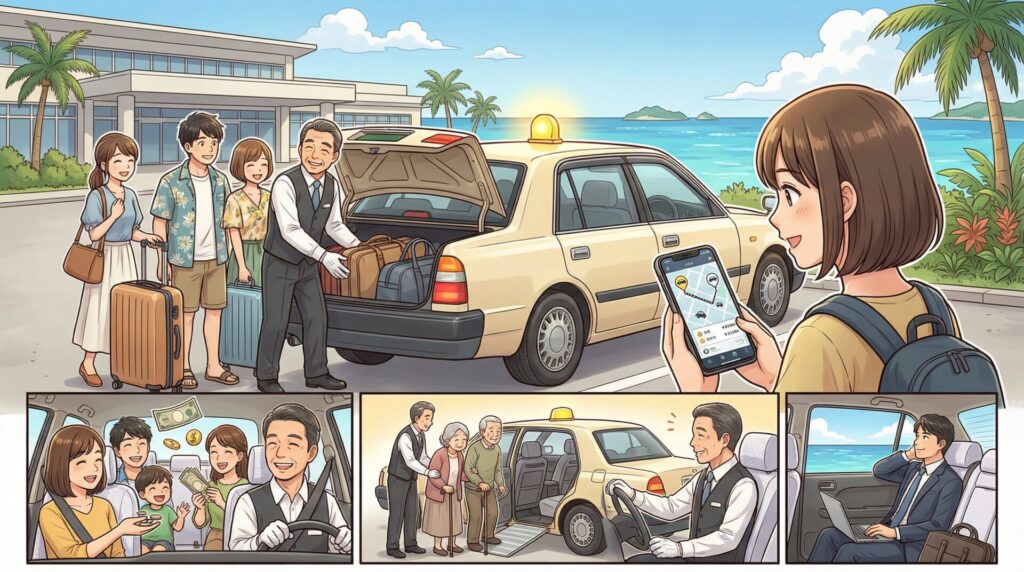
Within Miyakojima City and on Irabu Island and Shimojishima, there are taxi companies. From the airport or major hotels to anywhere on the island, you can travel door to door. That's the convenience of a taxi.
Taxi Fare Guidelines
From Miyako Airport:
- Miyako Airport to Irabu Island Sarahama district: about ¥2,000–2,500 (about US$13–17)
- Miyako Airport to Shimojishima Airport: about ¥2,500–3,000 (about US$17–20)
From Shimojishima Airport:
- Shimojishima Airport to Miyako town centre: about ¥3,000–3,500 (about US$20–23)
- Shimojishima Airport to Irabu Island sightseeing spots: about ¥1,000–2,000 (about US$7–13)
Fares vary by season, congestion and time of day. Late-night and early-morning surcharges may apply.
When I first used a taxi from Shimojishima Airport, I thought "it's surprisingly cheap." Split between 2 people, about ¥1,000 (about US$7) each. In some cases it's cheaper than renting a car for a day, and it's easy because you don't have to drive. For travel between sightseeing spots too, with a taxi you can leave it to the driver and relax in the car.
Smartphone Ride-Hailing Apps Are Usable Too
Shimojishima Airport's transport guide introduces not only the contacts of local taxi companies but smartphone ride-hailing apps too.
Use a ride-hailing app and you can call a taxi on the spot. The waiting time is displayed, and the fare guideline is clear too. It's become a convenient age, hasn't it.
However, being a remote island, the number of taxis isn't as large as in urban areas. In busy seasons or on bad-weather days, taxis can be hard to catch. Booking by phone in advance is reassuring.
For Group Travel, a Taxi Is a Good Deal
When travelling as a group of 4 or more, a taxi is surprisingly good value.
For example, from Miyako Airport to Irabu Island, ¥2,500 by taxi. Split between 4 people, ¥625 (about US$4) each. Renting a car for a day is about ¥5,000–8,000 including insurance. Petrol costs extra too. For short-distance travel, a taxi is cheaper in some cases.
And since you don't have to drive, everyone can enjoy the view. You can ask the driver for local information too. This is also how to enjoy a taxi trip.
Motorbike, Trike and on Foot | Means of Transport That Let You Feel the Wind
Finally, let me introduce some slightly special means of transport.
Touring by Trike (Three-Wheeled Motorbike)
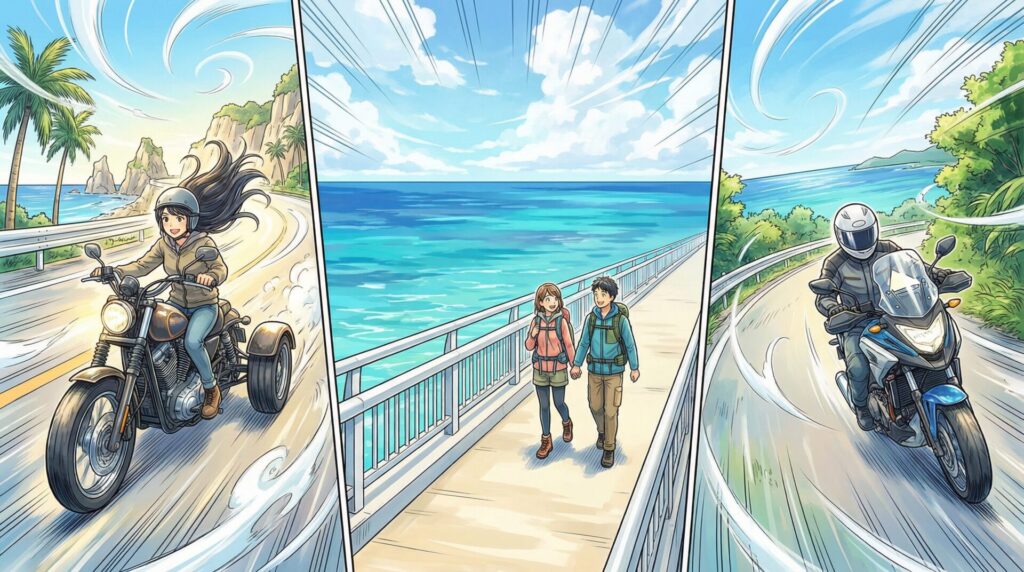
Renting a trike (three-wheeled motorbike) or motorbike is popular as a sightseeing method too.
Crossing the Irabu Bridge while feeling the wind. The exhilaration of running over the sea. An openness you can't taste in a car. That's the appeal of motorbike touring.
When I first crossed the Irabu Bridge by motorbike, I nearly shouted "this is too good!" The sensation of the sea wind stroking my cheeks, the engine sound, and the Miyako Blue spreading before me. You can feel the island with your whole body. That's the real pleasure of motorbike touring.
However, be careful on windy days. The Irabu Bridge is built over the sea, so on strong-crosswind days the motorbike gets buffeted. Don't push it — drive safely.
The Luxury of Crossing the Irabu Bridge on Foot
"Crossing the Irabu Bridge on foot."
This is incredibly recommended.
About 3.5 kilometres one way, about 40–50 minutes in time. A wide footpath is maintained, so you can walk safely. Stop partway to take photos of the sea, or just gaze blankly at the sea. Hurried by no one, you proceed at your own pace.
When I first walked the Irabu Bridge, I thought "how many times in life do you get to walk a bridge this long?" And the whole time you're walking, the sea is always visible. Look left and it's sea, look right and it's sea, look ahead and it's sea. There's no other luxurious walk like this, is there.
Walking in the evening is especially recommended. Walk the bridge at sunset and the sky and sea dye orange — truly beautiful. And the wind is cool and pleasant. Walking the Irabu Bridge while enjoying the evening cool. The greatest luxury.
However, the daytime in midsummer is best avoided. With no shade, it's incredibly hot. There's a heatstroke risk too. If walking, early morning or evening. And don't forget to stay hydrated.
[Summary] Access to Irabu Island and Shimojishima | Choose the Method That Suits You
So far, I've explained how to access Irabu Island and Shimojishima.
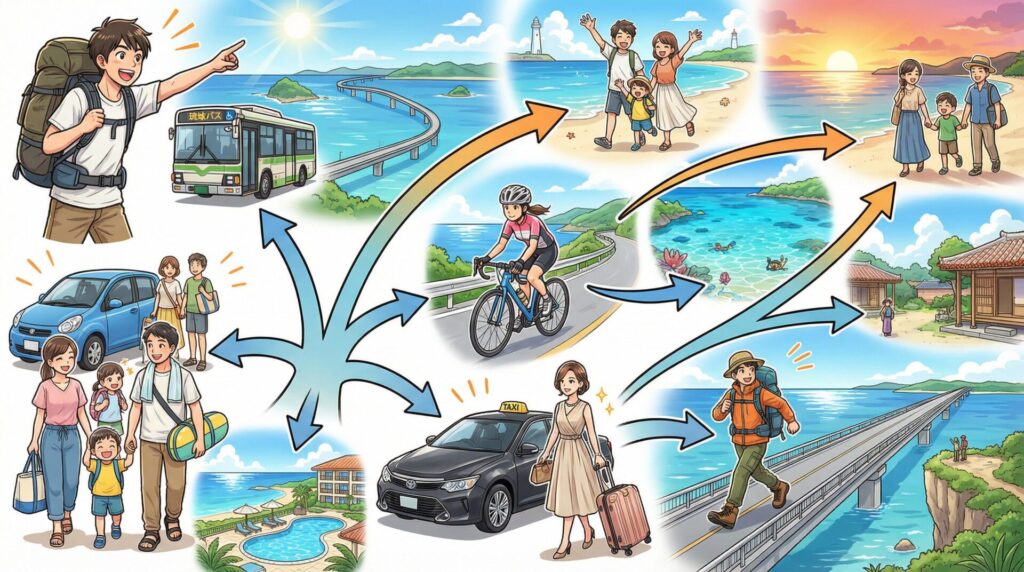
There really are many options. Plane, rental car, route bus, taxi, rental cycle, on foot. It's not that one is the right answer — the best method changes by your travel style, budget, who you go with, and your length of stay.
Recommended Access Methods by Travel Style
Want to tour the island freely:
- Shimojishima Airport direct flight + rental car
- tour the sightseeing spots efficiently
Leisurely bus-trip type:
- Miyako Airport + route bus (Irabu Sarahama via Hirara Line)
- enjoy the trip slowly in line with the timetable
Want to move actively:
- rental cycle or motorbike
- tour the island while feeling the wind
Luxuriously leisurely type:
- travel by taxi
- enjoy the view without minding the driving
Experience-focused type:
- cross the Irabu Bridge on foot
- the special experience of walking over the sea
Access Information Summary
Plane:
- Miyako Shimojishima Airport: Haneda, Kobe, Naha, Seoul, Fukuoka (summer)
- Miyako Airport: abundant flights from major cities
Travel times:
- Miyako Airport → Irabu Island: about 20 minutes by car
- Miyako Shimojishima Airport → Irabu Island: 5–15 minutes by car
- Irabu Bridge: 15–20 minutes by car, 40 minutes by bicycle, 40–50 minutes on foot
Fares:
- Irabu Bridge: free
- Route bus: ¥600–800 (airport shuttle bus), ¥500 per ride (loop bus)
- Taxi: ¥2,000–2,500 from Miyako Airport to Irabu Island
Points to note:
- rental cars run short in summer; always book in advance
- route buses are few; checking the timetable is essential
- watch out for Irabu Bridge crossings on strong-wind days
Finally
Access to Irabu Island and Shimojishima became dramatically more convenient with the 2015 opening of the Irabu Bridge and the 2019 passenger conversion of Shimojishima Airport.
Fly on a direct flight from Tokyo to Shimojishima Airport and swim at 17END that same day. Relax at the hotel in the evening gazing at the Miyako Blue. The next day, tour Toriike Pond and Toguchi-no-Hama. On the last day, cross the Irabu Bridge on foot and sightsee Miyako Island. It's become an age when such a luxurious trip can be realised easily.
If you research the access methods properly in advance, getting around on the ground is smooth too. You can reduce wasted time and spend it on sightseeing and swimming. And if you choose the means of transport that suits you, the travel itself becomes part of the trip's pleasure.
Have the very best time on your trip to Irabu Island and Shimojishima!