- The Gap Between the Stillness of Only Insects and Waves and the Plane Sounds of Shimojishima Airport
- Irabu Island at Night Is a Stillness Unimaginable in the City
- Why It's Called the Silent Island
- Stargazing Spots and Night-Walk Courses
- Explore Irabu Island at Night on a Night Tour
- The Gap with the Plane Sounds of Shimojishima Airport
- Recommended Ways to Spend the Night
- Points to Note for Irabu Island at Night
- Frequently Asked Questions and Answers
- Enjoy the Gap Between Stillness and Sound
The Gap Between the Stillness of Only Insects and Waves and the Plane Sounds of Shimojishima Airport
It was past 8 at night that I went out onto the hotel terrace, and outside was darker than I'd imagined, so at first I was a little bewildered, but as my eyes adjusted, the stillness spreading through the darkness came to feel pleasant.
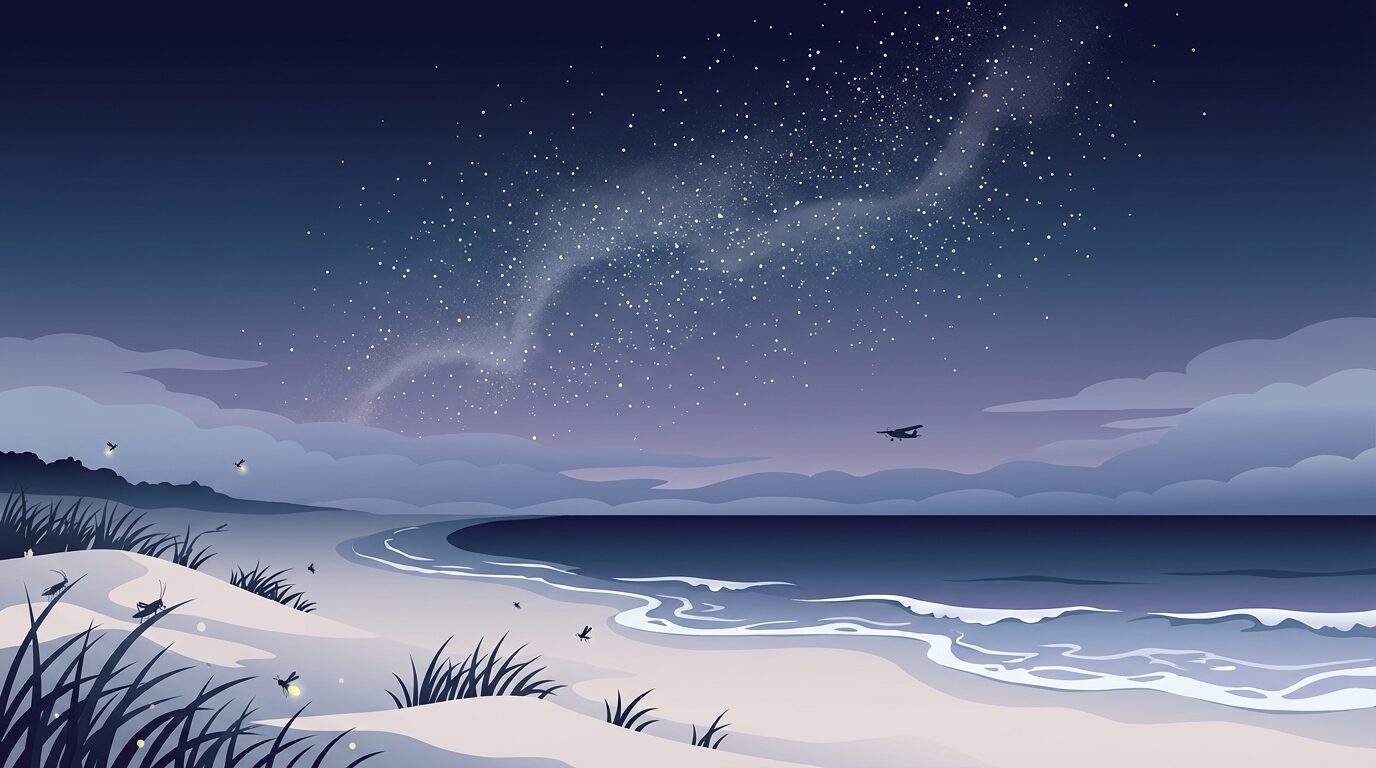
Strain your ears and all you hear is the sound of insects and waves — no car sounds, no human voices, no TV sounds, nothing. For me, living in the city, it was the first time I'd experienced such stillness, and I unintentionally said out loud, "so there are places this quiet."
The insects ring out rhythmically, and beyond them you hear the waves washing in, swish, swish. Just that world spreads out, and this stillness is irresistibly pleasant.
But the next day, when I went near Shimojishima Airport, jet engines roared, and I was surprised by the gap with the previous night's stillness. "Irabu Island is this quiet, yet near the airport it sounds like this" — that contrast was interesting.
I'll introduce the stillness of Irabu Island's night and the plane sounds of Shimojishima Airport in detail, based on my experience of actually living it many times. Since I'll write about the insect sounds, the wave sounds, the starry sky, night-walk spots, and the gap with the plane sounds, I hope those planning to stay on Irabu Island will use it as a reference.
Irabu Island at Night Is a Stillness Unimaginable in the City
The stillness of Irabu Island at night is, for someone living in the city, a level beyond imagination, and when I first experienced it, surprise and emotion welled up at the same time: "there really are places this quiet."
The city night is always lively — car sounds, train sounds, human voices, light and music from 24-hour convenience stores and eateries open until late, neon light, streetlight glow — so the very concept of a quiet night doesn't exist. But Irabu Island is completely different, and at night the whole island is wrapped in silence.

A World of Only Insect and Wave Sounds
What you hear on Irabu Island at night is truly only the sound of insects and waves, with almost no other sound. The insect sounds differ by season — in summer cicadas and crickets ring out, and in autumn you hear bell crickets. In every season the insects are the stars of the night, and their chorus colours the island's evening.
The waves wash in rhythmically, swish, swish, and that sound calms the heart. The wind blowing in from the sea touches your skin, the scent of the tide drifts over, and you can feel Irabu Island's night with your whole five senses.
On my first night too, I ended up spending over an hour just sitting on the terrace listening to the insects and waves. Even though I was doing nothing but listening to the sounds, I never got bored — rather, I had the sensation of my heart being washed clean, and I could forget the busy days in the city.
With No Traffic Lights, There Are Few Cars Too
Irabu Island has hardly any traffic lights, and at night the cars become extremely few too. A local passes by car now and then, and since tourists are staying at hotels or guesthouses, many don't go out at night. So you hear almost no car sounds, and that stillness stands out all the more.
I once went out thinking I'd take a night walk, but I walked for 30 minutes and not a single car passed — it was a stillness that made me feel the illusion that I was truly the only person here. I didn't have a torch, so on the streetlight-scarce road I couldn't see my feet, and that was scary in its own way, but that darkness and stillness was fresh and fun.
Why It's Called the Silent Island
Irabu Island is also called the "Silent Island," and true to the name it's an astonishingly quiet island. It's quiet precisely because there's nothing, and that stillness is, I think, the island's greatest appeal.
Having Nothing Is a Luxury
Irabu Island has no large supermarkets, hardly any convenience stores, no entertainment districts and no amusement facilities. To someone living in the city it may feel like "there's nothing," but that's what's good about it, I think.
Precisely because there's nothing it's quiet, precisely because there's nothing the starry sky is beautiful, and precisely because there's nothing you can hear the voice of your own heart. In the city you're always surrounded by some sound, with hardly any time to listen inward, but Irabu Island's night is different.
You can have time to face yourself within the stillness, and feelings you don't usually notice, things you really want to do — those kinds of things come vaguely into view. That's the luxury of an island with "nothing," I think.
Pitch Dark, Which Is Why the Stars Are Beautiful
At night there are few streetlights so it's truly pitch dark, dark enough that you can't walk without a torch. But that very darkness brings out the appeal of Irabu Island's night.
Precisely because it's pitch dark, the starry sky looks unbelievably beautiful — the Milky Way is clearly visible, and shooting stars can be seen frequently too. The stars invisible in the city feel here close enough that you could reach out and touch them.
When I first looked up at Irabu Island's night sky too, I was surprised — "there were this many stars" — and stood stock-still for a while. It's a place where you can truly feel what a sky full of stars means, with a beauty no planetarium can compare to.
A Leisurely Time Flows
On Irabu Island at night, a leisurely time flows, and there's no need to hurry at all. Listening to the insects, listening to the waves, you spend it slowly. Take a deep breath, relax, calm your heart.
In the city you're always chased by time, living while minding the next appointment, but Irabu Island's night does away with all of that. Without looking at a clock, without looking at your phone, you can just entrust yourself to nature's rhythm.
I once spent time just gazing blankly at the night sky while drinking beer on the hotel terrace, and ended up spending about two hours just on that, but I wasn't bored at all. Rather, I realised this kind of doing-nothing time is the greatest luxury.
Stargazing Spots and Night-Walk Courses
If you want to enjoy Irabu Island's night, knowing the stargazing spots and night-walk courses lets you spend a richer time.

Makiyama Observatory Is the Standard Stargazing Spot
Makiyama Observatory, at the highest point on Irabu Island, gives a sweeping view of the islands of the Miyako archipelago — Miyako Island, the Irabu Bridge, Kurima Island and Ikema Island. It's a superb view by day, but at night it's even more wonderful, a top spot where you can enjoy both the starry sky and the island's night view.
With no buildings around, there's nothing to block the view, and you can enjoy the starry sky spreading across the whole sky in panorama. In summer fireflies can apparently be seen too, and just imagining a collaboration of starry sky and fireflies is fantastical.
I went to Makiyama Observatory at night too, and there were few people so I could enjoy quiet time. Standing at the observatory and looking up at the night sky, you get the sensation of stars raining down, and you can feel the vastness of the universe.
Cape Shiratori Is a Hidden Stargazing Spot
Cape Shiratori, located at the northernmost tip of Irabu Island, is a hidden spot where you can enjoy a quiet night with few tourists. It's a luxurious place where you can take in night-time Miyako Island and the starry sky from a sheer cliff, especially the best for stargazing.
By day it's a superb sunset point with dynamic white waves viewed from the sheer cliff, but at night it has a different appeal again, and the time spent gazing at the starry sky while listening to the waves is supremely luxurious.
At Sawada-no-Hama, While Listening to the Waves
Sawada-no-Hama is a natural beach chosen among Japan's 100 Best Shores, characterised by a distinctive scenery of giant boulders strewn about. It's known as a place with a beautiful sunset, but at night it's appealing too, where you can spend quiet time while listening to the waves.
Since a sky full of stars can be observed from nearby Shimojishima Airport, it's recommended as an evening-to-night drive route. A course of listening to the waves at Sawada-no-Hama and then gazing at the stars near the airport makes a plan that lets you fully savour Irabu Island's night.
Toguchi-no-Hama Is Quiet at Night Too
Toguchi-no-Hama is Irabu Island's most popular beach, bustling with tourists by day, but at night people vanish and it goes quiet. The time spent walking barefoot on the pure-white powder sand, listening to the waves and gazing at the stars, is the best.
I walked Toguchi-no-Hama at night too, and just sitting on the sand listening to the waves felt like my heart was being washed clean. The waves lit by the moonlight were beautiful, and I lost track of time, gazing at them.
Explore Irabu Island at Night on a Night Tour
If you want to enjoy Irabu Island's night more deeply, joining a night tour is recommended too, and through jungle exploration and stargazing you can discover a face of the island you can't see by day.
Stargazing and Jungle Night Tour
The most popular Miyako Island night tour is one combining stargazing and jungle exploration, where you can enjoy a sky full of stars while observing the nocturnal creatures living in the subtropical jungle.
There's a chance to meet creatures rarely seen on the mainland — the coconut crab, the Yaeyama flying fox, the Ryukyu scops owl, the land hermit crab and more — and if you're lucky you might encounter a giant coconut crab.
The guide explains knowledgeably, so you can learn about Irabu Island's nature, and they take photos of the starry sky too, so it makes a keepsake. However, exploring the night jungle on your own is dangerous, so it's best to definitely join a tour.
Fireflies Can Sometimes Be Seen
On Irabu Island fireflies can sometimes be seen throughout the year, and they can apparently be encountered with a relatively high probability especially near the Shimojishima Airport control tower and on the east side of the camp village. Irabu Island's fireflies, unlike the Genji firefly and Heike firefly, are forest fireflies, a kind that can live even without a clear stream.
Even when adults aren't dancing about, the larvae blink their lights, so peering steadily into the roadside grass can sometimes find them. The sight of firefly light flickering in the darkness is fantastical, scenery you'll want to see at least once.
The Gap with the Plane Sounds of Shimojishima Airport
Irabu Island's night has the appeal of a stillness with only insects and waves, but go near Shimojishima Airport and jet engines ring out, and that gap is interesting.

Shimojishima Airport Is a Pilot Training Facility
Shimojishima Airport is a place long used as Japan's only airfield dedicated to pilot training, where jet take-off and landing training is carried out. From 2019 scheduled flights also began operating, and the number of tourists coming to Irabu Island using Shimojishima Airport is increasing.
When training is being carried out, the jet engines ring out across the island, and you're surprised by a volume of sound you wouldn't think possible for quiet Irabu Island. Especially going near the runway end called 17END, planes pass overhead, so the impact is tremendous.
It's Basically Quiet at Night
Training and scheduled-flight operations are basically in the daytime, so at night there are no plane sounds and it goes quiet. So if you want to enjoy the stillness of Irabu Island's night, taking lodging a little away from the airport is recommended.
But conversely, for plane lovers, being able to see take-offs and landings up close at 17END in the daytime is the best experience. The sight of planes taking off and landing with the emerald-green sea as a backdrop is a superb view you can see only here.
The Contrast of Stillness and Sound
The contrast of the night's stillness and the daytime plane sounds is, I think, the interesting thing about Irabu Island. At night it's a silent world with only insects and waves, and in the daytime the plane engines roar. This gap makes you feel the island's many sides.
At first I too felt the oddness of "the island's this quiet, yet there are plane sounds," but I came to understand that this is Irabu Island's reality, an island where quiet nature and modern technology coexist.
Recommended Ways to Spend the Night
Let me introduce a few recommended ways to spend Irabu Island's night.
Drink Beer on the Hotel Terrace
The easiest and most luxurious way to spend it is, I think, gazing at the stars while drinking beer on the hotel terrace. Buy some Orion Beer, pour it into a glass with ice, and drink it slowly while listening to the insects and waves.
Just spacing out without thinking of anything, you feel your heart relaxing. Work stress in the city, worries about relationships — all of that comes to feel like it doesn't matter, and you can think that just enjoying this present moment is enough.
Look Up at the Stars on a Night Walk
Heading out on a night walk with a torch is recommended too, and looking up at the stars while walking a streetlight-scarce road, a sky full of stars you could never see in the city spreads out.
However, a pitch-dark road is dangerous underfoot, so take a proper torch. And since there's no foot traffic, walking alone may be a little scary, so going as a group or choosing a bright road is safer.
Listen to the Waves at the Beach
Going to the beach at night and just sitting on the sand listening to the waves is healing too. The waves lit by the moonlight are beautiful, and you lose track of time, gazing at them.
Toguchi-no-Hama and Sawada-no-Hama are relatively safe even at night, so they're recommended for a night beach walk. But since it's dark, watch your footing and manage your valuables properly.
A Meal at Restaurant Irie
Restaurant Irie on the first floor of Hotel South Island is open at night too, where you can eat seafood dishes and Miyako soba. You can enjoy dishes using Irabu's local ingredients reasonably, so going for dinner is good too.
The time spent dining while gazing at the night sea seen from the window is relaxed and pleasant. Locals come too, so you can feel the island atmosphere.
Points to Note for Irabu Island at Night
In enjoying Irabu Island at night, there are a few things it's good to be careful about.
A Torch Is Essential
With few streetlights, a torch becomes essential when going out at night. A phone light can substitute, but if possible it's safer to have a proper torch.
At first I too thought "a phone light should be enough," but when I actually walked the dark road it was nowhere near enough, and I went to buy a proper torch.
Bring Insect Repellent
There are many insects at night, so it's best to bring insect repellent. Especially in summer there are many mosquitoes, so wear long sleeves and long trousers or use insect repellent thoroughly.
Drive Carefully
The night roads are pitch dark, so you need to drive carefully. With hardly any oncoming cars you tend to let your guard down, but animals can dash out too, so it's best to keep your speed modest.
Avoid Walking Alone
With no foot traffic, walking alone, especially for women, is best avoided. Act as a group, or choose bright places. Creating a situation where you can call for help if anything happens is important.
Frequently Asked Questions and Answers
Let me sum up and answer questions often asked about Irabu Island at night.
Q1: Is Irabu Island at night really quiet?
Truly quiet. A level where you hear only the sound of insects and waves.
Q2: Can you see the stars beautifully?
With few streetlights, you can see a sky full of stars. The Milky Way is clearly visible too.
Q3: Is it OK to go out at night?
It's fine if you carry a torch and choose bright roads. But walking alone is best avoided.
Q4: What are the recommended stargazing spots?
Makiyama Observatory, Cape Shiratori and Sawada-no-Hama are recommended.
Q5: Should I join a night tour?
If you want to enjoy Irabu Island's night more deeply, I recommend joining one.
Q6: Are the plane sounds loud?
In the daytime near the airport they're loud, but at night it's basically quiet.
Q7: Are convenience stores open at night too?
Irabu Island has hardly any convenience stores, so buy what you need in advance.
Q8: Are restaurants open at night too?
There are open places like Restaurant Irie, but they're few in number.
Q9: Can you see fireflies?
If you're lucky you can. Near the Shimojishima Airport control tower in particular is the target.
Q10: Is a torch necessary?
Necessary. With few streetlights, it's essential if going out at night.
Q11: Are there many insects?
Many. It's best to bring insect repellent.
Q12: What's the most recommended way to spend it?
Gazing at the stars while drinking beer on the hotel terrace is the most luxurious.
Enjoy the Gap Between Stillness and Sound
The appeal of Irabu Island's night is, above all, in its stillness, and experiencing a world where you hear only insects and waves makes you realise just how noisy life in the city is.
I still clearly remember the emotion of first experiencing Irabu Island's night — when I went out onto the hotel terrace and my eyes had adjusted to the darkness, the insects came audible, beyond them the waves came audible, and the moment I noticed there was no other sound, I thought from the bottom of my heart, "ah, this is stillness."
In the city you're always surrounded by some sound, with hardly any quiet time, so experiencing this kind of true stillness is, I think, precious. In a world of only insects and waves, you feel you can hear the voice of your own heart, and feelings you don't usually notice, things you really want to do — those come vaguely into view.
But the next day, when I went near Shimojishima Airport, jet engines roared, and I was surprised by the volume of that sound. The gap with the previous night's stillness was intense, and "it's the same island, yet this different" was interesting.
An island where quiet nature and modern technology coexist — at night there's a silent world with only insects and waves, and in the daytime the plane engines ring out. This contrast is, I think, Irabu Island's individuality.
If you're planning to stay on Irabu Island, please by all means experience the night's stillness. Go out onto the hotel terrace, let your eyes adjust to the darkness, strain your ears, and try entrusting yourself to a world of only insects and waves.
Head out on a night walk with a torch, and try looking up at the stars while walking a streetlight-scarce road. Savour the sensation of a sky full of stars raining down, and feel the vastness of the universe.
Sit on the beach and, while listening to the waves, try gazing at the waves lit by the moonlight. Forget the time, and just enjoy that moment.
Forget the busy days in the city, and have time to face yourself within the stillness. That's how to enjoy Irabu Island at night.
However many times I visit, my heart is captured by that stillness and the beauty of the starry sky, and I think I want to come again. Irabu Island's blue sea and white sand, and the night's stillness and sky full of stars. When all of this comes together, it surely becomes an unforgettable island trip. I hope you'll experience such a trip too.