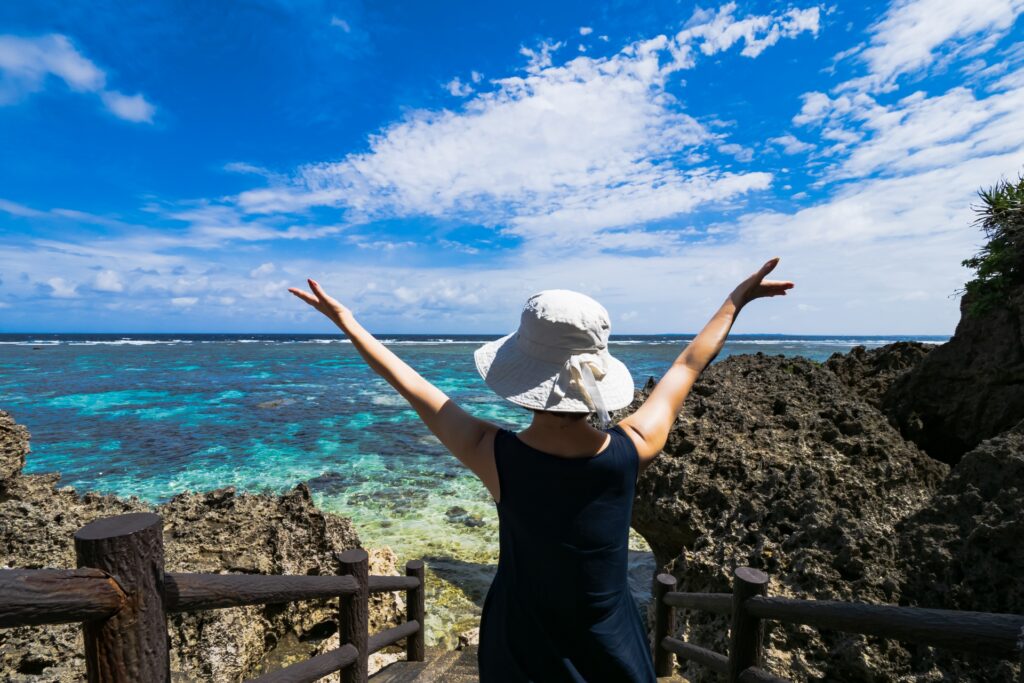
Full article about this spot

Map & Access
Basic Information
- Location (Island)Irabu Island
- AddressSawada 908-9, Irabu, Miyakojima City, Okinawa
- Hours / Opening time24 hours (always open)
- ClosedNone (always open)
- FeeFree
- ParkingAvailable, free, about 4 cars (unpaved gravel space)
- ContactNone
Visiting tips & what to bring
There are no facilities at all such as toilets, showers, gazebos or vending machines. The path from the car park to the sea is grassy with rough footing, and the white stone stairway is extremely slippery when wet, so non-slip marine shoes or easy-to-walk footwear are essential rather than sandals. At high tide the bottom of the stairway sinks into the sea, so the low-to-mid tide hours are safe. There is no shade and strong sun in summer, so bring a hat and drinks. As it is a place where almost no one comes, avoid going alone and a visit with 2 or more people is recommended. On days with high waves or strong wind it is dangerous, so do not approach. Insect repellent also gives peace of mind.For families with small children
The stairway is rough and slippery when wet, and there are no railings or handrails, with the end of the stairway dropping straight into the sea, so it cannot be recommended for families with small children aged 0 to 6. There are no toilets, nappy-change facilities or shade, and you need to walk a grassy path from the car park to the sea. For those with children, choosing another beach such as the well-equipped, shallow and safe Sawada-no-Hama allows for a more relaxed time.FAQ
Q.How do you get to Shinbiji and how long does it take?
A.Head north on the road circling Irabu Island and, just before Funausagi Banata Observatory, take the narrow path descending to the sea side. About 15 minutes by car from the Irabu Ohashi Bridge. There are few signs and it is hard to find, so it is recommended to search Shinbiji on your car navigation or Google Maps.
Q.Is there parking?
A.There is free parking for about 4 cars on an unpaved gravel space. From there it is about a 3-minute walk to the sea. As the number is small, please share considerately when crowded.
Q.What should I be careful about with clothing and items?
A.The stairway is slippery when wet and the footing is rough, so non-slip marine shoes or easy-to-walk footwear are essential rather than sandals. As there is no shade, bringing a hat, drinks and insect repellent gives peace of mind.
Q.Are there toilets or showers?
A.There are no facilities at all such as toilets, showers, gazebos or vending machines. Take care of things in advance at nearby Sawada-no-Hama or the village.
Q.What is the recommended time to visit?
A.At high tide the bottom of the stairway sinks into the sea, so the low-to-mid tide hours are safe and recommended. A clear daytime when the blueness of the sea stands out is photogenic, but as it is a place with few people, always visit with 2 or more people.