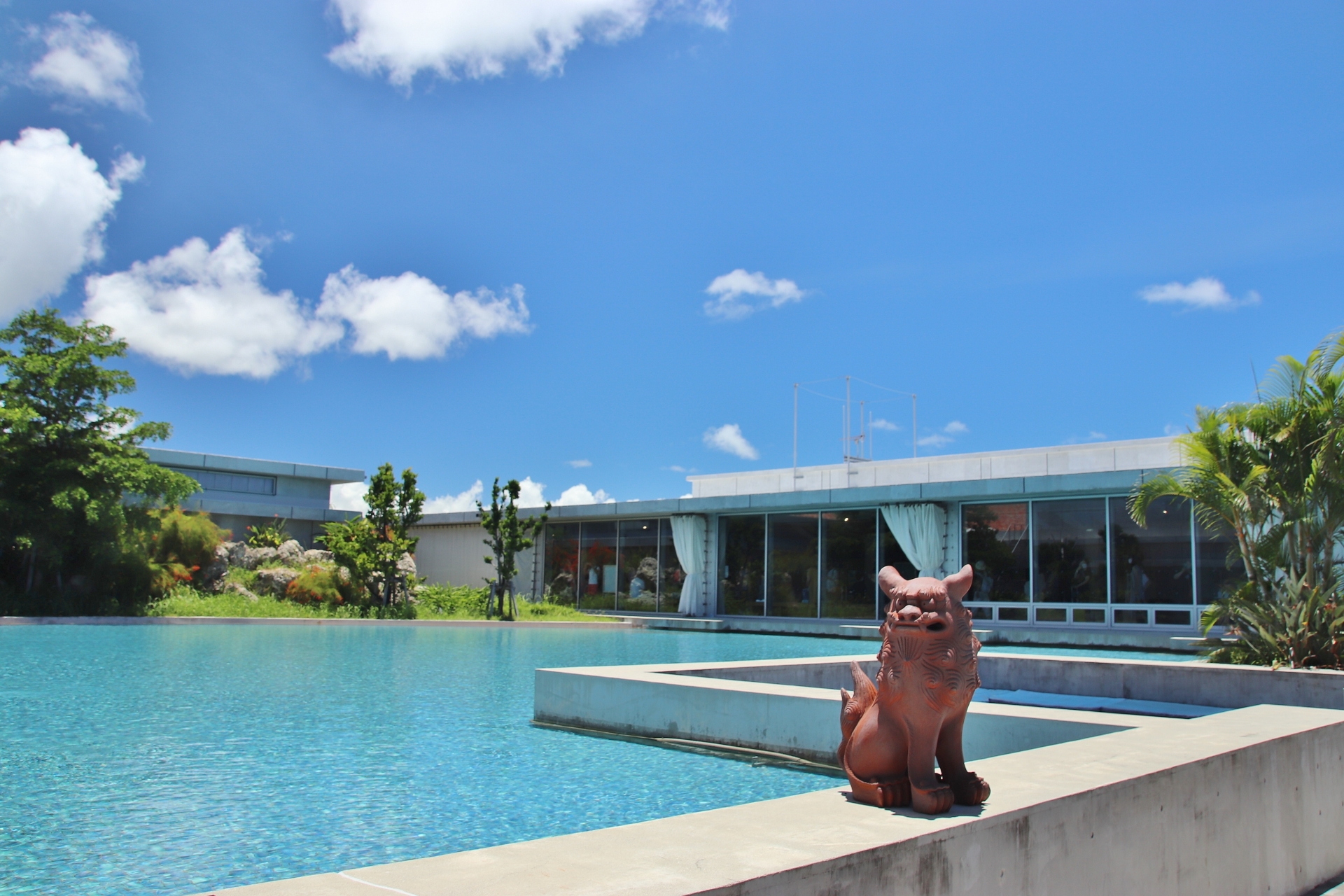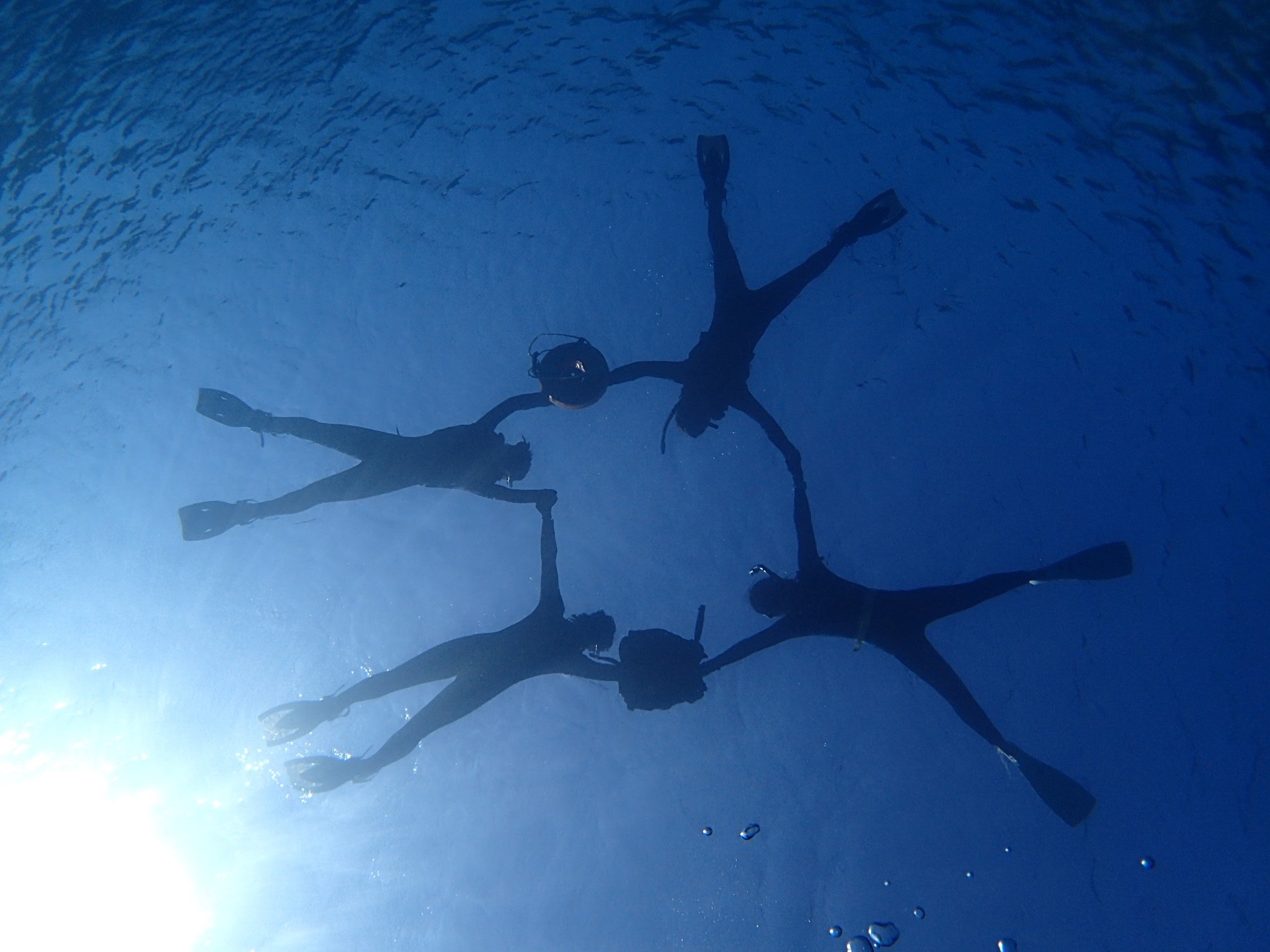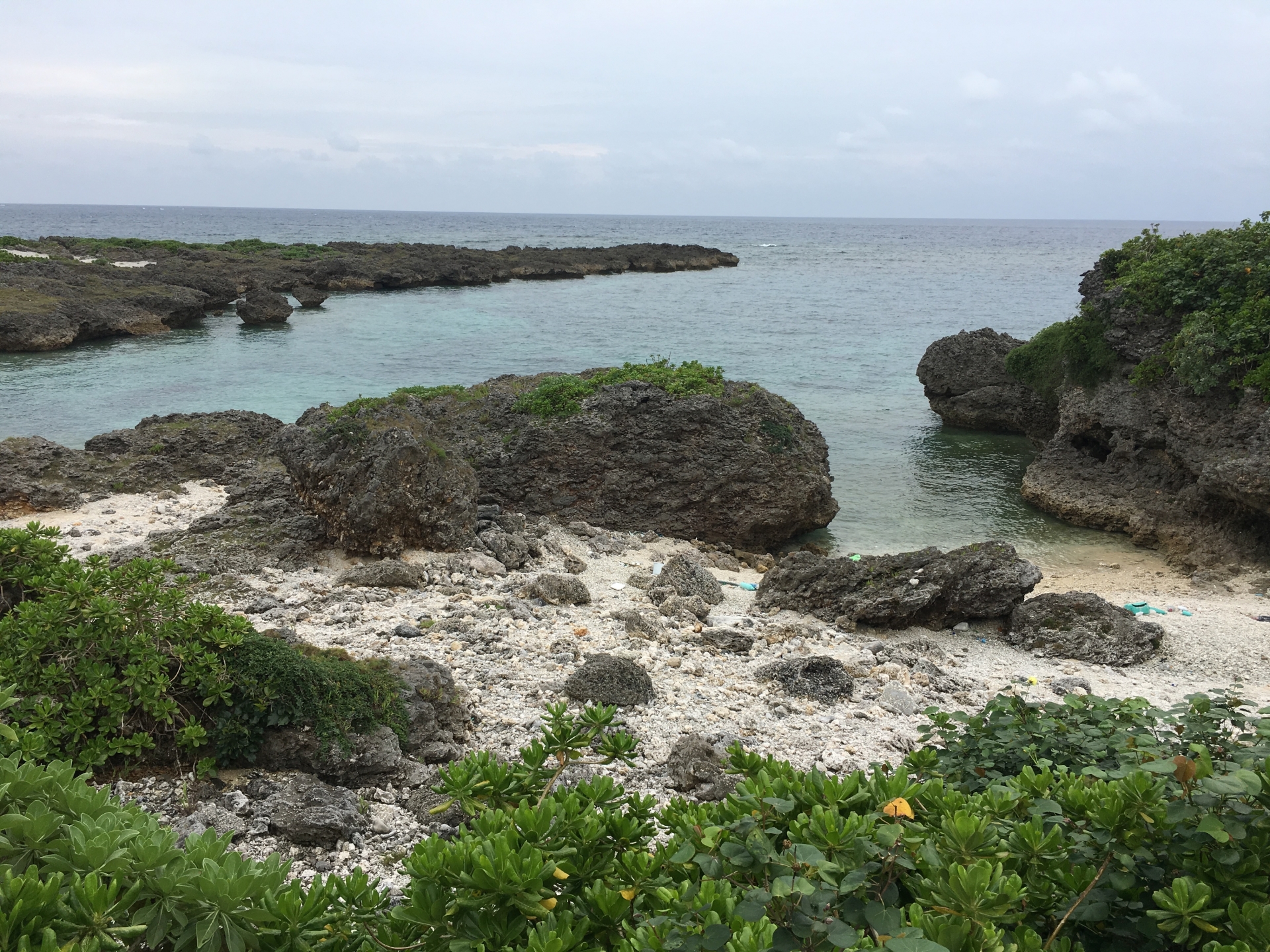
The first time I went to 35END was on the way back from 17END. "Since I've come all the way to Shimojishima, let's see the other side too," and with that light feeling I drove the car.
Since no particular name is on Google Maps, at first I got out of the car half-doubting "is this really the right place?" When I waited a few minutes after going out onto the sand, a plane passed low overhead — not so much a sound as the air shaking. The vibration of the engine came directly into my body, and a cry escaped me involuntarily. It was a sensation of bearing down from straight ahead, different again from 17END, and that was certainly the kind of thing you can't experience elsewhere.
Ever since, I haven't skipped 35END whenever I come to Shimojishima. Honestly, I personally think 35END has more interest as a "plane spot" than 17END. The beauty of 17END's sea is exceptional too, but on the single point of the plane experience, I feel 35END wins. When I took a friend, their reaction was "huh, it's this close?", and I learned it's quicker to actually take someone than to explain.
In this article, for those travelling to Miyako Island and Irabu Island, I'll write about Shimojishima's 35END — still a hidden spot known to those in the know — from basic information on the location to how to watch the planes, the snorkelling, and combinations with nearby sightseeing, based on the experience of actually visiting several times. From questions like "where is 35END?" and "what's different from 17END?" to specific questions like "is it true there's no car park?", you should be able to clear them all up.
- 35END's location, the origin of the name, and the difference from 17END
- How to access it by car and the car park situation
- Wind direction, time of day and how to check, for watching the planes
- Whether snorkelling is possible and things to note
- A combined sightseeing route with Toriike Pond and Nakanoshima Beach
- What to bring, clothing and safety measures
- What Is 35END? Shimojishima Airport's "Other Spectacular End"
- How to Get to 35END / Access
- Tips for Seeing Planes Right Overhead | Reading the Wind Direction and Time
- 35END's Sea and Snorkelling | Swimming Among the Coral Reef
- Combined Sightseeing with Nearby Spots
- Packing Check and Things to Note Before Going to 35END
- Frequently Asked Questions About 35END
- Summary | 35END Is "the Other Goal" of Shimojishima Sightseeing
What Is 35END? Shimojishima Airport's "Other Spectacular End"
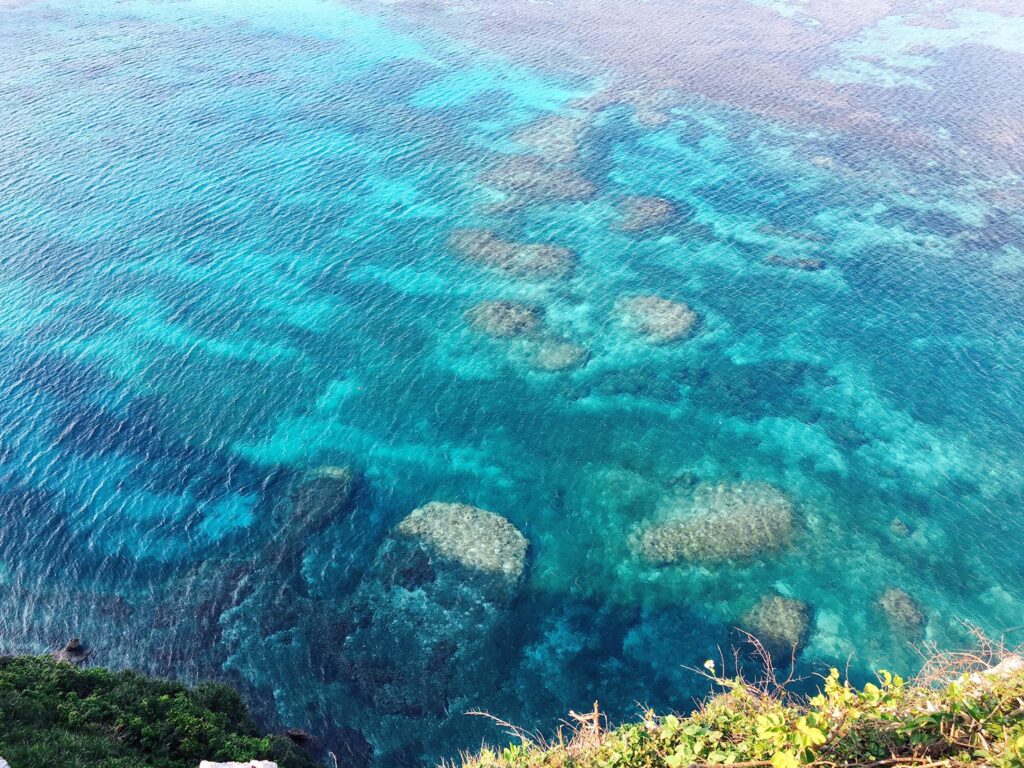
The name 35END is neither a place name nor a facility name. It derives from the runway number of Shimojishima Airport.
In the aviation industry, runway direction is expressed by magnetic bearing (in units of 10 degrees). Shimojishima Airport's runway runs north–south, and the direction seen from the north is "17" (170-degree direction), the direction seen from the south is "35" (350-degree direction). Each end (END) is called 17END and 35END respectively. It's a way of naming widely known among plane fans and aviation enthusiasts, but it may still be an unfamiliar word to ordinary tourists.
35END is located at the south end of Shimojishima Airport. Whereas 17END is the famous spectacular point on the airport's north side, at the island's north end, 35END is on the south side — close to the direction of Toriike Pond and Nakanoshima Beach, a still-uncrowded hidden sea reached after driving a slightly winding route.
Among local diving people it's also called "Sango End" (Coral End). Keeping both names in your head when going for the first time makes it harder to get lost.
If 17END is "a place to enjoy the sea's clarity and the whiteness of the sand," 35END is "a place to feel the vibration of the air right beneath a plane." It's not that one is better — only by experiencing both do you feel you've conquered Shimojishima's plane spots.
Shimojishima Airport has a runway about 3,000 m long that was once used for pilot training flights. The Miyako Shimojishima Airport Terminal opened in March 2019, and airlines such as Skymark serve it. Being able to see those planes on their landing approach up close from the roadside — that's the core of 35END.
How to Get to 35END / Access
The basic route for accessing Shimojishima is to cross the Irabu Bridge from Miyako's main island. About 30–35 minutes by car from Miyako Airport. Honestly it's quite inconvenient without a rental car — the route buses are infrequent and don't stop right near 35END. If you're going to Shimojishima, I strongly recommend a rental car.
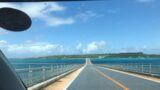
The Route by Car from Miyako Island
After crossing the Irabu Bridge, head south through Irabu Island and cross to Shimojishima. Irabu Island and Shimojishima are connected by a bridge, and the boundary is hard to tell, but once the airport comes into view you're in the Shimojishima area.
Once on Shimojishima, head south along the airport's perimeter road. Around the south end of the airport, you turn onto a gravel road or narrow lane heading towards the sea side. Picture heading towards "the southern-end sea."
Since it's not registered as "35END" on Google Maps, searching "Shimojishima airport south end sea" or "Sango End" makes it easier to reach. Keep driving south along the airport fence and you'll naturally come out at the sea.
About the Car Park — This Is the Biggest Caveat
35END has no designated car park. This is the biggest drawback, and one of the biggest differences from 17END.
You can park a few cars on the shoulder, but since the road is narrow you need to carefully choose a place that doesn't get in the way of traffic. Picture it as "pull onto the shoulder for now and turn off the engine." Early morning or weekdays are relatively roomy, but on summer weekends and holidays the scant shoulder space can be taken first.
Parking once at the Shimojishima Airport terminal and walking isn't out of the question, but it takes about 20–30 minutes on foot from the airport to 35END, so it's a bit tough under the blazing summer sun.
Another method is the route of walking from the Toriike Pond car park (free, fairly large) as a base. Since 35END and Toriike Pond are close, some people sightsee Toriike Pond first and then walk straight to 35END. Toriike Pond has a toilet too, so you can use it first.
Tips for Seeing Planes Right Overhead | Reading the Wind Direction and Time
35END's top highlight is being able to view landing planes from right below. However, "whether you can see planes at 35END today" changes depending on the day's wind direction. This is the most important premise I want you to know first.
How the Runway in Use Is Decided by Wind Direction
Planes land using a headwind. This is to gain lift more easily and shorten the landing distance. So depending on the wind direction, the runway end used changes.
On days with a north wind (wind from north to south), planes land facing north. Landing facing north means they approach from the south, cross over the south end (35END), and run down the runway. Standing at 35END, a plane that has slowly dropped altitude from the southern sea passes almost grazing overhead. The force of this moment is the core of the experience.
Conversely, on days with a south wind, planes land facing south (using the 17 side), so from 35END they fly at a distant position. It's not that you can't see them, but you won't get the experience of one passing right below. It's wise to check "today's Miyako Island wind direction" before going. You can look up Miyako Island's wind direction on the Japan Meteorological Agency site or a weather forecast app.
The Miyako Island area tends to have many days with northerly winds. That also means there are more days throughout the year when 35END is advantageous for the plane experience. 35END is in its best condition on days with a north or north-easterly wind. From winter into spring, northerly winds often continue, so chances increase. Note that in summer (June–August), southerly winds enter more easily, so in this period planes more often pass close at 17END.
How to Check the Flight Times
To see planes for certain, the best is to grasp the flight schedule in advance before going to 35END. You can check arrival and departure times on the Miyako Shimojishima Airport Terminal official site (shimojishima.jp). Arrive on-site within 30 minutes either side of the arrival time, and you can encounter the overhead pass at good timing.
If you want to check planes' positions in real time, the app Flightradar24 is handy. You can check the position of currently flying aircraft and estimated arrival times on a map, available free on a smartphone.
On days when training flights are carried out, there's "touch-and-go," where the same plane repeats taking off straight after landing, passing overhead many times. There can be more than 10 passes in one session, so it's actually a lucky day. The training schedule is mostly something you only find out on-site.
The Aircraft You Can See and Photography Tips
The commercial flights currently serving Shimojishima Airport are mainly mid-size aircraft of the Boeing 737 class, such as Skymark. Seen from right below, the wingspan feels wider than you'd imagine, and you can see the aircraft's details clearly. The distance can even get close enough to read the lettering on the fuselage paintwork.
For photography, a wide-angle to standard lens with burst mode is effective. Since you're aiming for the instant it passes overhead, using burst mode is more reliable even on a smartphone.
35END's Sea and Snorkelling | Swimming Among the Coral Reef
Beyond watching planes, there's the enjoyment of getting in the sea too. The coral reef that gave it its name is overwhelming when you actually see it up close.
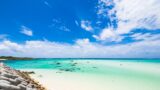
35END's sea is a shallow inlet surrounded by coral reef, a calm cove with the firm clarity of Miyako blue. On days with calm waves, you also see people enjoying snorkelling and free diving. Since it's not a developed beach, the facilities are completely zero — no toilet, no shop, no shower. In return there are few people and you can spend time quietly.
The first time I put my face in the water, I was surprised by the density of the coral. Colourful coral spreads from the shallows, and clownfish and blue damselfish swim in the gaps. The water clarity is high too, and on low-tide days the colours look even more vivid.
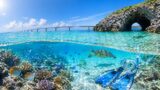
Always Follow the Coral Protection Rules
As the name "Sango End" (Coral End) shows, coral is dense on the seabed. Near the entrance there's a sign saying "no feeding, don't stand, don't kick, don't touch, don't walk." Take special care in shallow places not to accidentally tread on the coral with your fins or to break the coral by standing up in the shallows.
Standing on coral can become a legal issue too, and above all, it takes long years for a damaged coral-reef ecosystem to recover. No matter how shallow the place, make a habit of checking your surroundings before putting your foot down.
Choose reef-safe sunscreen too (a mineral type that doesn't contain oxybenzone or octinoxate). It's common manners at the beaches of Miyako Island and Irabu Island.
Beware of Rip Currents
In 35END's sea, tidal currents can occur around the coral reef. Even if the sea surface looks calm, if you feel a sensation of being pulled underwater, don't forcibly resist it. The iron rule is to swim perpendicular to the current (sideways) to escape it.
Avoid getting in alone — always get in the sea with several people. Also, when snorkelling, enjoying it within about 30 m of the shore as a guide is reassuring. On windy days you're swept away more easily than you'd think, so make a habit of swimming while regularly checking your position.
Combined Sightseeing with Nearby Spots
Using 35END as a base, you can go round Shimojishima's main spots together. With a car, it makes for plenty of content in one day.
Toriike Pond — a Power Spot You Can Walk To
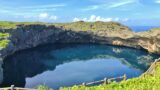
Just a few minutes by car from 35END is Toriike Pond. It's a mysterious landform where two ponds connect underground and further connect to the sea, designated a National Scenic Beauty and Natural Monument.
Seen from land it's two ponds, but they actually connect underwater and further connect to the open sea. The scenery of seeing the pond's ceiling (the sky) from underwater is known as one of the world's leading diving points, and tours passing through the underwater tunnel on the sea side are offered by several shops. Jumping in directly from the pond's edge is prohibited, but just peering at the water surface from the path has plenty of force. On fine days the colour changes with how the sunlight comes in, and the early-morning light hours are especially striking.
The car park is fairly large with a free toilet too, and unlike 35END it's properly developed. If you're worried about toilets, dropping by Toriike Pond first is a good move.
Nakanoshima Beach — a Quiet, Hidden Natural Beach
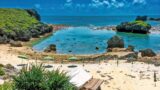
A natural beach on Shimojishima, known locally as a snorkelling spot. A quiet beach facing a small cove, it gives the impression of having a better-suited environment for swimming and snorkelling than 35END. The access is a little clearer than 35END too, and you enter from a nearby farm road.
There are many kinds of fish and the clarity is high too. It's a beach where coral and fish are so dense that some travellers describe it as "too many fish." Nakanoshima Beach basically has few facilities too, so bring drinks and (reef-safe) sunscreen.
How to Plan the Route with 17END
To go round the main spots together, the south-to-north route of "Toriike Pond → Nakanoshima Beach → 35END → 17END" is easy to drive. Personally, I like the flow of enjoying 17END in the morning and tackling the southern area (35END, Toriike Pond, Nakanoshima Beach) from the early afternoon. The high afternoon sun makes the sea colour look more vivid, and it's photogenic too.
Driving a full loop of Shimojishima takes only about 1–2 hours. It's an easy distance to combine with sightseeing on Irabu Island.
Packing Check and Things to Note Before Going to 35END
There really is nothing on-site, so advance preparation is everything. Everything introduced here is based on the experience of feeling "ah, I should have done that" on-site.
Absolute Must-Brings
Drinks and food There's no vending machine or shop on-site. Get them in advance at the airport terminal or a convenience store on Irabu Island. Under the blazing summer sun you easily get short of fluids, so bring plenty of water and sports drinks.
Toilet There's no toilet near 35END. The premise is to use one in advance at Toriike Pond or the Shimojishima Airport terminal.
Reef-safe sunscreen Sunscreen with chemical ingredients (containing oxybenzone or octinoxate) does great damage to coral. In Miyako and Irabu, from an environmental-protection standpoint, choosing a reef-safe type is manners.
Snorkel set (if getting in the water) Rental nearby can't be expected. If you plan to get in the water, bring it or rent in advance. If wearing fins, take care not to kick the coral.
Clothing and Timing
In summer a rash guard is essential-level. Wearing it over a swimsuit is the local default. Having marine shoes makes it easier to walk on the rocky area.
If you prioritise the plane experience, the best is to arrive on-site within 30 minutes either side of the flight's arrival time. For snorkelling, timing near low tide has higher clarity and the coral is easier to see. You can check the low-tide times on an app or the Miyakojima City Tourism Association site.
The weather changes fast in the Miyako Island area, and even if it's fine in the morning it can squall from the afternoon. Checking the forecast frequently is reassuring.
Frequently Asked Questions About 35END
Q. Does 35END have an admission fee?
There's no admission fee. There's no designated car park either (you park on the shoulder), so the cost is zero. However, since there are no developed facilities, you need to do the preparation yourself.
Q. Which is recommended, 17END or 35END?
Honestly, it's hard to choose between them. 17END features the beauty of white sand and a clear sea, 35END the force of a plane bearing down from right above. If you have time, going round both is best. Also, depending on the day's wind direction, which one has planes passing closer changes. By car, both together take only about 1–2 hours, so there's almost no need to choose just one.
Q. How long does it take from Shimojishima Airport to 35END?
A few minutes by car. You can reach it by heading south on the airport perimeter road. On foot it takes about 20–30 minutes.
Q. Is there anywhere to eat near 35END?
There's no eatery right in front of 35END. There's a café and light-meal shop inside the Shimojishima Airport terminal. Realistically, have lunch on Irabu Island or Miyako Island before coming, or get supplies at a convenience store.
Q. Can you go with children?
You can, but care is needed about the lack of facilities and the tidal currents. If you're putting small children in the sea, the well-equipped Nakanoshima Beach or Toguchi-no-Hama is safer. Realistically, drop by 35END for the purpose of "watching" and plan to get in the sea at another place.
Q. When is the best season to go to 35END?
It changes by purpose. For swimming and coral viewing, June–August. However, it's also typhoon season, so checking the weather is essential. If you prioritise the plane experience, winter to spring (around October to the following May), when there are many northerly winds, is advantageous for 35END. In summer (June–August) it tends to be a south wind, and in that period planes more often pass close at 17END.
Summary | 35END Is "the Other Goal" of Shimojishima Sightseeing
35END tends to be a hidden spot in the shadow of the famous 17END, but in the quality of the experience it's by no means inferior. If anything, that sensation of "a plane passing right overhead" is something unique to 35END that you can't get at 17END.
Because development hasn't progressed, there's a stillness not yet turned into a tourist site. Even at the summer peak, there are fewer people compared with 17END. For those who feel that air is good, 35END may actually resonate more. The time itself spent waiting for a plane is a kind of luxurious experience.
If you go to Shimojishima, I'd like you not to end with just 17END but to extend your steps to the south end. Go round it as a set with Toriike Pond and half a day is used up in no time. There's nowhere but here where you can experience the Miyako-blue sea together with planes. Just adding "the 35END experience" to a Miyako–Irabu trip greatly raises the density of the journey.
You can also check general information on Shimojishima sightseeing on the Miyakojima City Tourism Association official site. Do use it as a reference when planning your itinerary.
The surprise of the moment when, gazing up at a plane on the 35END shore, you feel "so a place like this existed" stays fresh no matter how many times you visit. Do put 35END into your plan for your next Miyako Island and Irabu Island trip.