- The Day I Got Buffeted by Wind in a Kei Car and Thought "This Is Seriously Scary"
- What Is the Irabu Bridge? Japan's Longest Toll-Free Bridge at 3,540 m
- The True Nature of the "Flying Over the Sea" Sensation
- The Wind Is So Strong It's Scary | Kei Cars Especially Need Caution
- Why the Roadside Strip Gets Crowded Despite Stopping Being Prohibited on the Bridge
- Why You Should Cross the Irabu Bridge Anyway
- 7 Preparations for Enjoying It Safely
- Frequently Asked Questions (FAQ)
- Don't Underestimate the Wind, and Have the Best Drive
The Day I Got Buffeted by Wind in a Kei Car and Thought "This Is Seriously Scary"
When I crossed the Irabu Bridge in a rental kei car, I put too much force into my grip on the wheel, and my palms hurt afterwards.
It was the spring of my third year after relocating to Miyako Island. A friend came to visit and said, "the Irabu Bridge is spectacular, right?", so I decided to rent a kei car and show them around. The weather was clear. I thought the wind was "just blowing normally." I was naive.
When I entered the bridge and reached the raised central part, suddenly I was shoved from the side with a thud by the wind. The wheel tried to turn right on its own. I hurriedly corrected it, and this time I was pushed left. My friend in the back seat said "wait, are we OK?" in a strained voice.
"This is the seriously scary kind."
By the time I realised that, it was too late, and I hadn't even crossed half the bridge. With no way to turn back, I dropped to about 40 km/h and focused solely on driving straight.
The Irabu Bridge is certainly spectacular. The exhilaration of flying over the sea is real too. But crossing it in a kei car on a windy day is, honestly, incredibly scary.
In this article, I'll write both the "emotion" and the "points to note" of an Irabu Bridge drive, based on actual experience. Cross it knowing the frightfulness of the wind and it becomes the best drive. Conversely, cross it knowing nothing and your palms hurt, like mine.
What Is the Irabu Bridge? Japan's Longest Toll-Free Bridge at 3,540 m
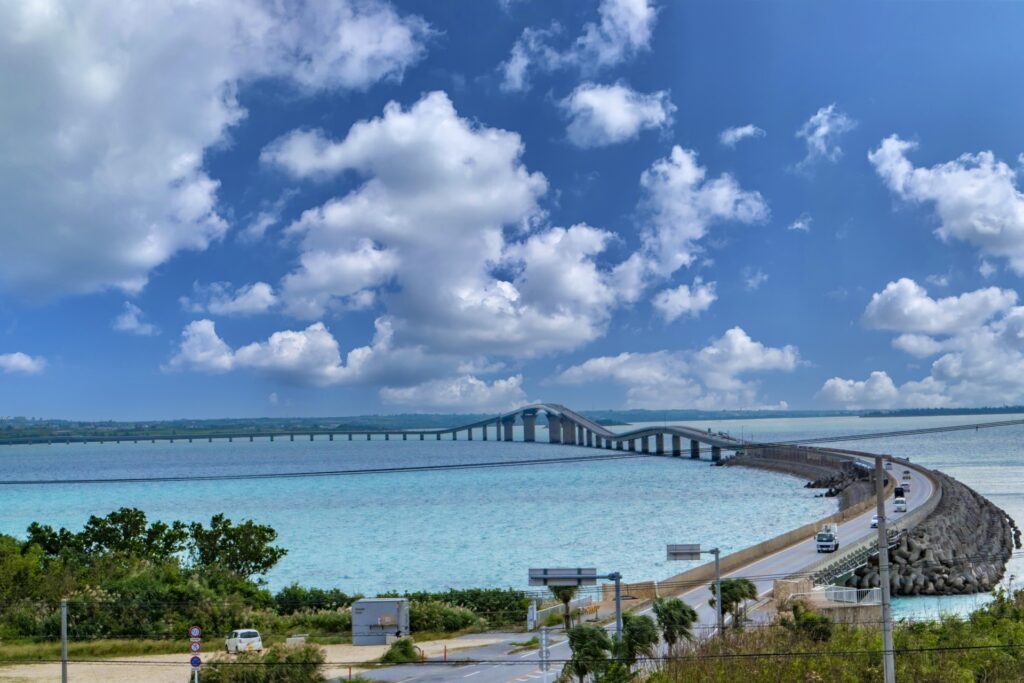
The Irabu Bridge is a bridge connecting Miyako Island and Irabu Island. It opened on 31 January 2015.
The total length is 3,540 m. The longest toll-free bridge in Japan. Incidentally, it was apparently designed around the wordplay "3,540 m (san-go-no-shima = island of coral)." I love this kind of stylish touch.
Before the bridge existed, the only way to go to Irabu Island was by ferry. When the weather was bad the ferry was cancelled, and islanders couldn't even go to the hospital on Miyako Island. This bridge, a long-cherished wish of Irabu islanders, took nearly 10 years from groundbreaking to opening.
About 15 minutes by car from Miyako Airport. Heading to the bridge from Hirara, the central area of Miyako Island, you can see the bridge stretching smoothly over the sea even from a distance. The first time I saw it, "wow, it's long!" came out of me.
Partway across, the central part rises in an arch. This is to let ships pass underneath. The ferry to Tarama Island passes under this bridge. So crossing the bridge, there's a sense of going up and then down.
This "up and down" is actually the true nature of the exhilaration.
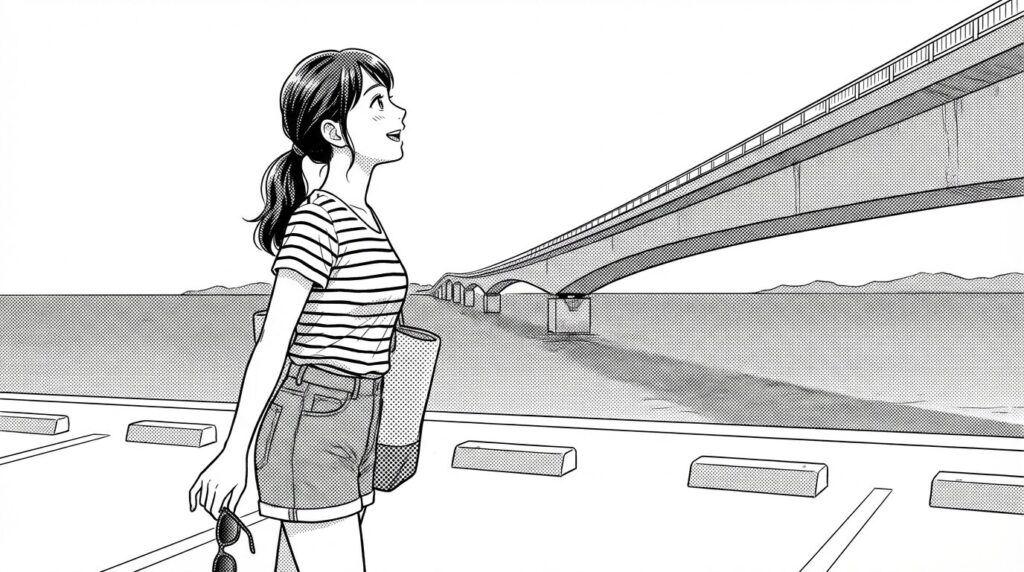
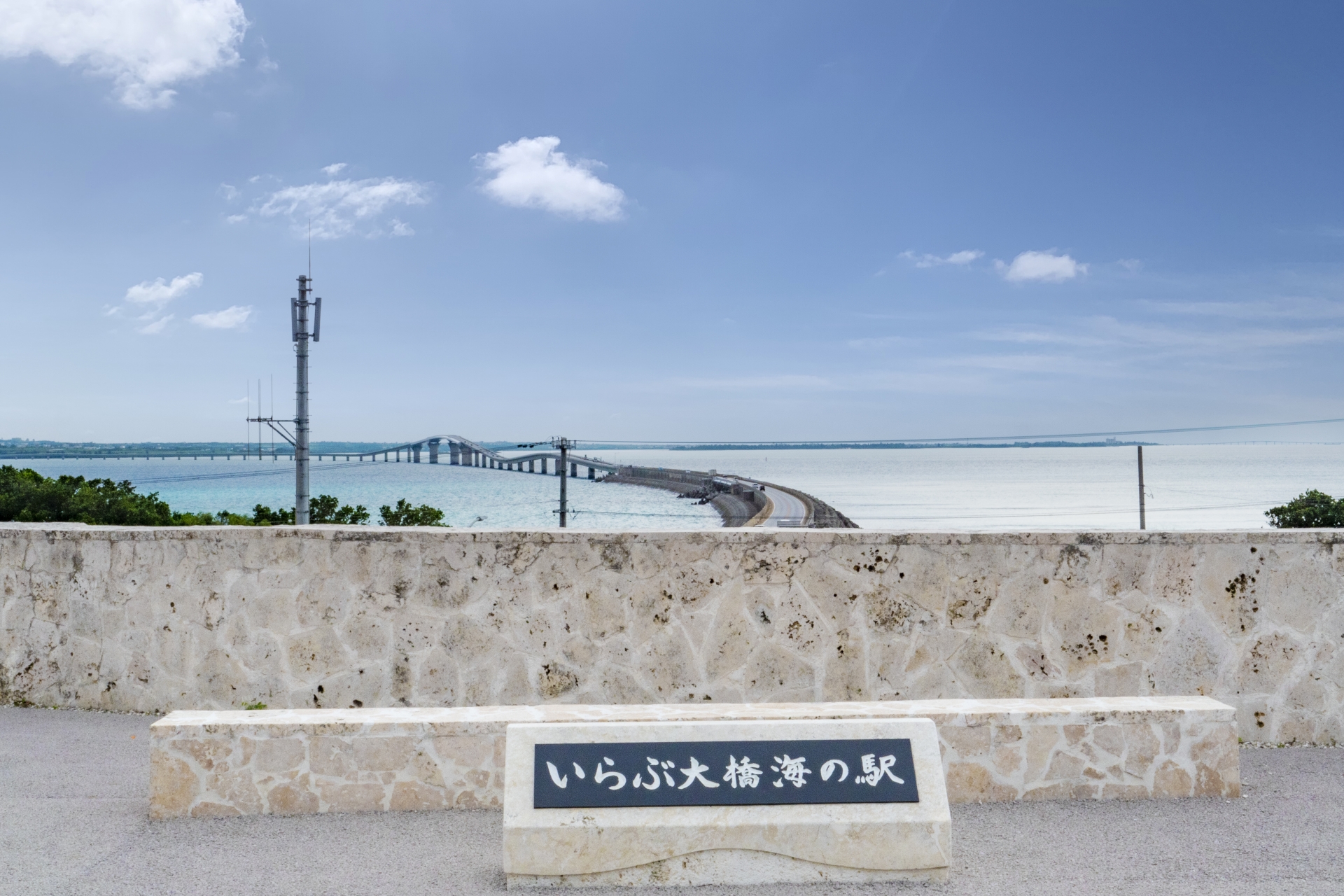
At the bridge entrance on the Miyako Island side, there's a stone monument reading "Irabu Ohashi." There's a car park here, and you can take photos before crossing the bridge. Everyone takes a commemorative photo here before entering the bridge.
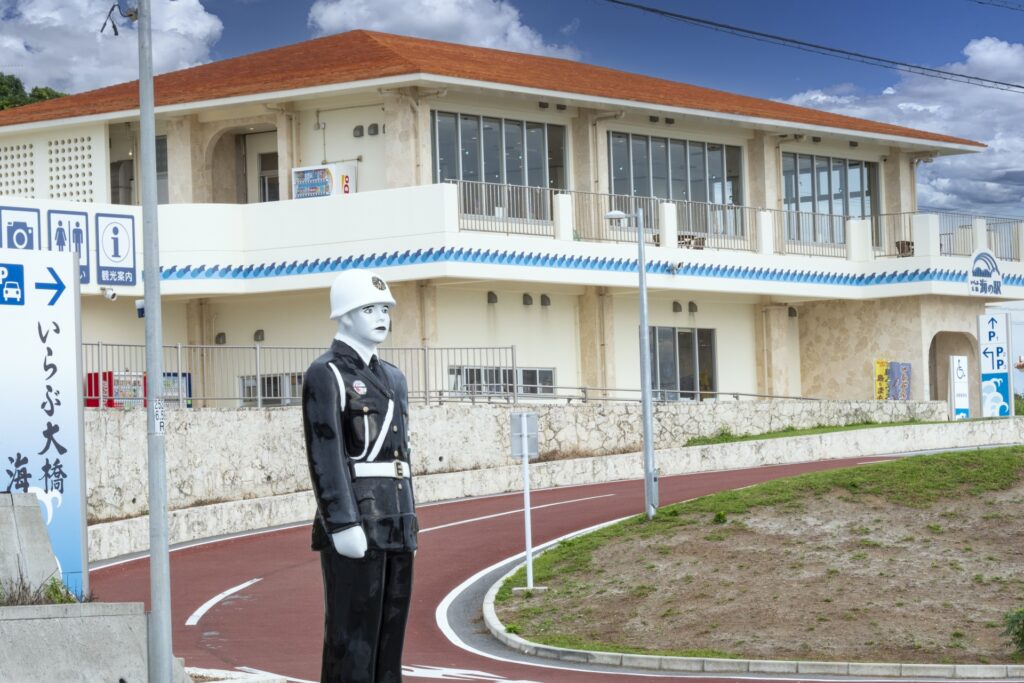
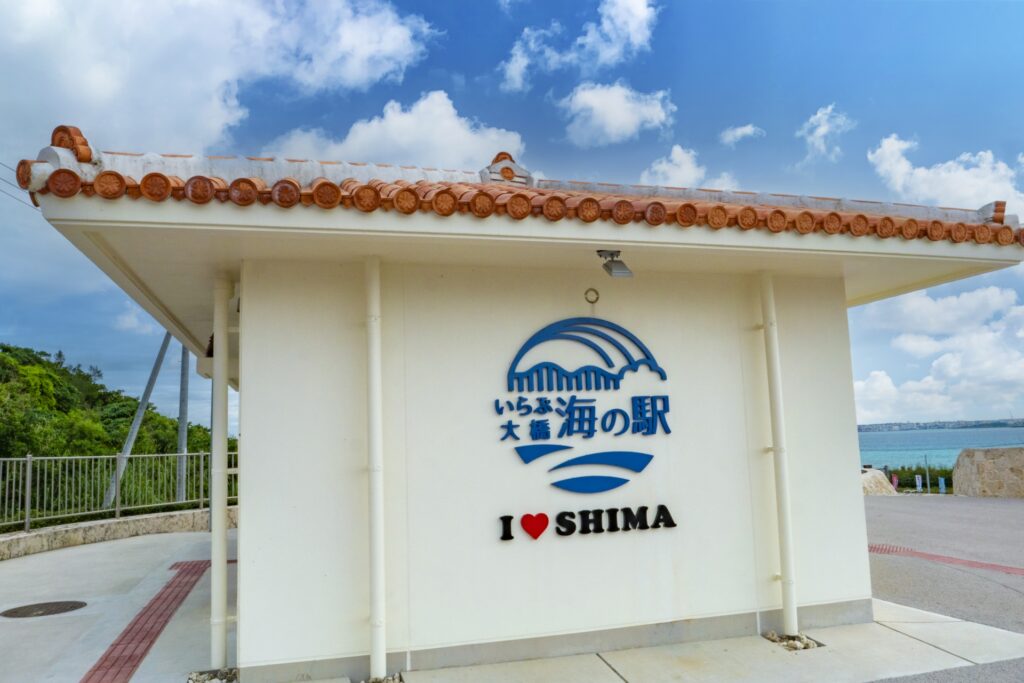
On the Irabu Island side too, there's a facility called "Irabu Ohashi Umi-no-Eki." It has a souvenir shop and a restaurant, and from the second floor you can take in the whole Irabu Bridge. Once you finish crossing, taking a break here is recommended.
Nearly 10 years after opening, the Irabu Bridge is still the highlight spot of Miyako Island sightseeing. Even at rental car shops, you're always told "definitely go to the Irabu Bridge!" That's how unmissable a place it is.
The True Nature of the "Flying Over the Sea" Sensation
Cross the Irabu Bridge and you truly get the sensation of "flying over the sea." This is no exaggeration.
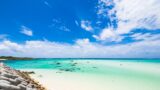
What spreads on both sides of the bridge is the clear sea called Miyako blue. A gradation of emerald green and cobalt blue. The colour changes by depth. Shallow places a bright light blue, deep places a deep blue.
The central part of the bridge, the highest point, is about 33 metres above sea level. In building terms, about the height of 10 storeys. The sea looked down on from here can only be described as "flying through the sky."
Especially spectacular is heading from Irabu Island towards Miyako Island. Coming down the raised central part, the sea and sky spread before you, and you get the sensation of diving straight into the sky. On a fine day, you seriously want to shout.
The first time I crossed was just past noon, and with the sun directly overhead, the sea colour is incredibly vivid. Since there's no backlight, the sea's transparency is clearly visible. From the morning to early afternoon is, I think, the time slot it looks most beautiful.
The evening is good too. Heading from Miyako Island to Irabu Island at sunset, the sea is dyed orange and the bridge becomes a silhouette. It gets a romantic atmosphere, so it's recommended for couples.
However, after evening needs caution. The bridge has almost no street lights. Once the sun sets, it gets seriously pitch dark. You can only see oncoming cars' lights, and you can't see the sea or sky at all. To enjoy the view, it's better to cross during the day.
In terms of exhilaration alone, crossing in an open car is apparently the best. I was once recommended at a rental car shop, "we have open cars." Feeling the wind with your whole body while running over the sea. Just thinking about it sounds pleasant.
But in an open car you take the wind full-on, so that might be scary in its own way.
The Wind Is So Strong It's Scary | Kei Cars Especially Need Caution
The Irabu Bridge is seriously windy.
Miyako Island itself is a windy place, but the Irabu Bridge is special. Being over the sea with nothing around, there's nothing to block it at all. It's also a region typhoons pass through easily, so the design reference wind speed is set at 82.2 metres per second. In speed terms, that's about 300 km/h. Faster than the Shinkansen.
Normally the wind speed is around 10 m/s. Looking at the number alone you might think "is that all?", but a wind speed of 10 m/s is the "hard to hold an umbrella" level. On the bridge, it feels even stronger.
The scary experience I had in the kei car was, I think, on a day of about 15 m/s wind. The forecast said "wind somewhat strong," but I took it lightly, thinking "well, it'll be fine."
Kei cars have a light body and are tall. Kei wagons and kei vans especially take crosswinds full-on. Buffeted by a crosswind at the central part of the bridge, the wheel gets yanked away with a jerk. People who aren't used to it panic.
When I asked a local, they said "around typhoons it's scary even in a regular car." When the wind blows from the front, you press the accelerator but don't advance at all. Conversely, with it blowing from behind, you pick up too much speed on the downhill, which is dangerous. The most dangerous is wind from the side. The car is about to be swept sideways.
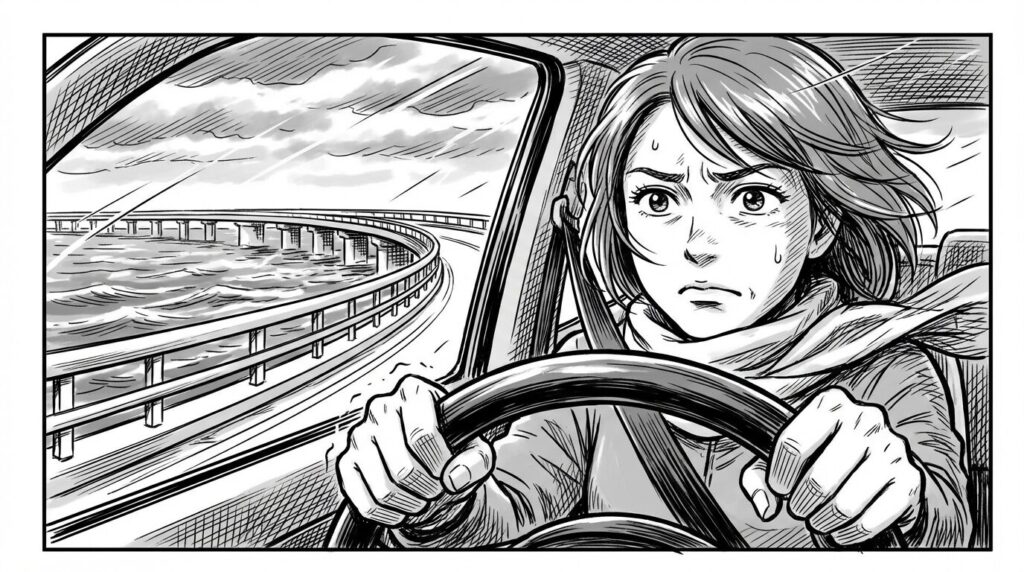
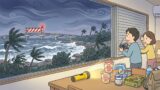
In fact, during typhoons the bridge is closed. A storm warning is issued, and at wind speeds of 25 m/s or more, prefectural staff set up gates at both ends of the bridge and close it. There's an announcement about 2 hours beforehand, so when a typhoon is approaching, it's better to cross the bridge early or decide not to cross.
As measures for a windy day:
Dropping your speed is the most effective. Drop to about 40–50 km/h. You might think it's slow, but safety first. Don't mind being tailgated. The locals all drive slowly.
Grip the wheel firmly and look straight ahead. Even buffeted by wind, don't hastily turn the wheel. Cars are basically designed to run straight, so just supporting the wheel, it returns on its own. Carelessly turning the wheel is conversely dangerous.
Avoid kei cars. This is the most reliable. When renting a car, you tend to choose a kei car because it's cheaper, but to cross the Irabu Bridge it's better to go with a regular car. Especially on a day that looks windy.
I now absolutely never cross the bridge in a kei car. That fear, I don't want to taste it again.
Why the Roadside Strip Gets Crowded Despite Stopping Being Prohibited on the Bridge
On the Irabu Bridge, stopping on the bridge is prohibited.
Yet in reality, cars line up parked on the roadside strip of the bridge's central part. Rental cars, taxis and tour buses. Everyone gets out and snaps photos.
This is completely a violation. But there's no sign, and there's no enforcement. So you get the sense of "everyone's stopping, so it's fine." A lawless zone.
At first I thought "why is everyone stopping?", but I understand the reason. The view from the bridge is seriously beautiful. Especially the highest central point. Surrounded 360 degrees by sea, with Miyako blue spreading out. I understand the urge to take photos.
But it's dangerous.
The Irabu Bridge has no footpath. There's only a roadside strip without a guardrail. Just a white line drawn. The same height as the road. Stop the car and get out, and rental cars zoom past beside you. On a windy day, the car door is buffeted by wind and opens on its own.
Fatal falls have happened too. In September 2017, a man fell from the central part of the bridge and died. He was apparently messing about with a friend, trying to climb over the railing, and slipped. Fall from 33 metres and you won't survive.
Park on the roadside strip and following cars back up. The bridge is one lane each way, so you can't overtake either. It's nerve-wracking enough already with the strong wind, and with a car stopped ahead it's more dangerous.
In the tourist season, especially Golden Week and summer holidays, the roadside strip gets crowded. Sometimes 5–6 cars are parked in a row. Then it takes over 10 minutes to cross the bridge. The locals are troubled by it.
In fact, some people have apparently been caught stopping on the bridge and warned by the police. A violation is a violation, so if you're caught you can't complain.
So where should you take photos?
Use the car parks at both ends of the bridge. The entrance on the Miyako Island side, and the "Irabu Ohashi Umi-no-Eki" on the Irabu Island side. Both have car parks. To shoot the whole bridge, from the Miyako Island side car park is the most beautiful.
If you want to shoot the view from the bridge, cross on foot or by bicycle. It's about 3.5 km one way, so walking takes about an hour. By bicycle 15–20 minutes. You can stop partway and take as many photos as you like.
However, walking the roadside strip is fairly dangerous too. With no guardrail, the distance to cars is close. On a windy day, a bicycle wobbles and is dangerous. In fact, the locals said they don't recommend crossing by bicycle.
In the end, the safest is to cross by car enjoying the view, and take photos at the car park. That's all there is to it.
Why You Should Cross the Irabu Bridge Anyway
The scary wind, no stopping, the risk of accidents. Reading this far, you may have thought "the Irabu Bridge seems scary..."
But even so, I want you to cross it.
Going home from Miyako Island without crossing the Irabu Bridge is seriously a waste.
The reason is simple. Because it's spectacular.
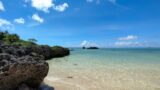
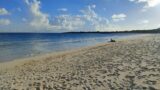
Miyako Island has many beautiful beaches. Yonaha Maehama, Sunayama Beach, Aragusuku Coast. All are wonderful. But the sea seen from the Irabu Bridge is different from the sea seen from a beach.
3.5 km in total, all over the sea. 360 degrees, only sea and sky. You can't have this experience anywhere else.
While crossing the bridge, "wow" keeps coming out. You say to each other with your companions "it's beautiful," "this is amazing." That's how overwhelming it is.
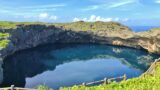
Cross to Irabu Island and there are lots of highlights, like 17END, Toguchi-no-Hama, Sawada-no-Hama and Toriike Pond. Without crossing the Irabu Bridge, you can't go to these spots. Not sightseeing Irabu Island is like throwing away half of a Miyako Island trip.
And it's not always windy days.
There are calm days too. On such days, it's simply the best. You can enjoy the view slowly without minding the wind. The sea colour is clearly visible, the sky is blue, and it feels good.
I've crossed many times, and there have been more calm days. It's just that because of that first kei-car incident, I've become sensitive to wind — there are far more days you can cross normally.
And I think the frightfulness, included, is the appeal of the Irabu Bridge.
A bit of thrill. The moment your heart jumps, buffeted by wind. The tension of gripping the wheel firmly and driving with focus. Including this is the Irabu Bridge experience.
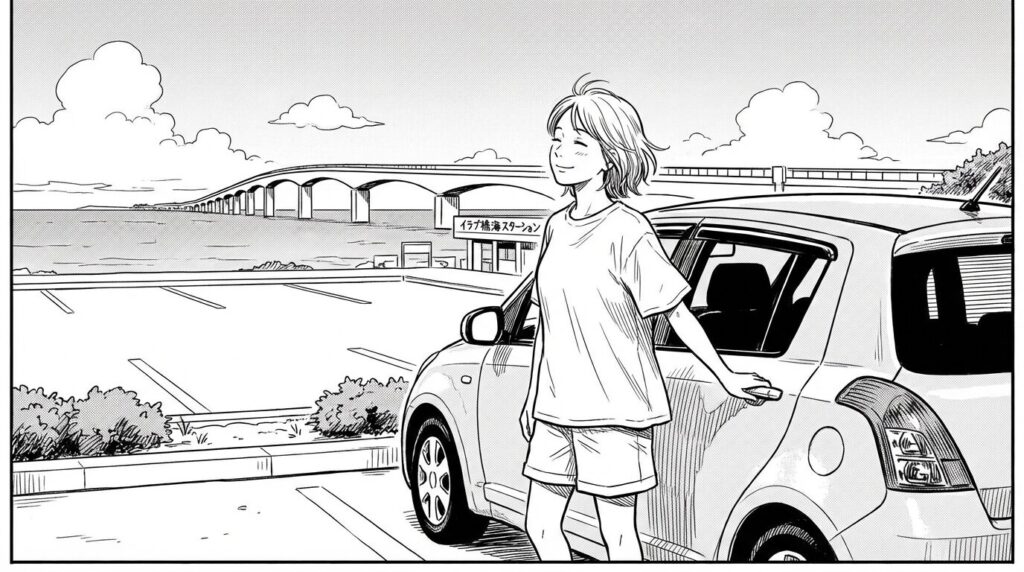
There's also the sense of accomplishment when you finish crossing safely. The moment of relief, "right, I made it across!" Parking the car at the Irabu Island side car park and turning back to look at the bridge, you realise "I crossed that bridge."
The Irabu Bridge isn't just a means of transport. It's a sight in itself. An experiential attraction. So cross it knowing the frightfulness and prepared, and it becomes the best memory.
7 Preparations for Enjoying It Safely
To enjoy the Irabu Bridge safely and to the maximum, let me introduce 7 preparations I actually do.
1. Check the Weather Forecast and Wind Speed
Always check before departing. If a forecast of 15 m/s or more wind is out, change crossing to another day or steel yourself. At 10 m/s or below, a regular car can cross without problem.
Miyako Island's weather changes easily. It can be clear in the morning and the wind gets strong from midday. Check the forecast for the time slot you cross the bridge.
2. Choose a Regular Car
When renting, a regular car over a kei car. A compact car is fine too. Anyway, avoid kei wagons.
It costs a little more, but safety can't be traded. Not just the Irabu Bridge — all of Miyako Island is a windy place, so a regular car is more reassuring throughout the trip.
3. Drive at 40–50 km/h
The bridge speed limit is 40 km/h. Keep to it. Drive slowly while enjoying the view. Ignore being tailgated. The locals are used to it, so they all drive slowly.
On a windy day, dropping the speed further is fine too. Even 30 km/h is OK. Safety first.
4. Grip the Wheel Firmly with Both Hands
One-handed driving is strictly forbidden. Grip firmly at the 10-and-10 position with both hands. Even buffeted by wind, don't panic. Just supporting the wheel, the car returns on its own.
Keep your gaze far. Not right in front, but look at the far end of the bridge. That makes it easier to drive straight.
5. Don't Stop on the Bridge
It's spectacular, but don't stop. It's prohibited and dangerous. Take photos at the car park.
If the car ahead has stopped, keep a safe distance and overtake slowly. Don't panic when overtaking either.
6. Don't Talk Too Much with Passengers
Getting excited going "beautiful!" at the view is fine, but don't break the driver's focus. On a windy day especially, let them focus on driving.
The front-seat passenger should tell the driver the wind situation. Like "the wind's getting a bit stronger."
7. Avoid After Evening
Once the sun sets, the bridge gets pitch dark. With almost no street lights, you can only see oncoming cars' lights. You can't enjoy the view either.
If possible, cross from the morning to early afternoon. It's the time slot the sea colour looks most beautiful, and the wind is calmer than in the evening too.
Keep these 7 and the Irabu Bridge isn't scary. Rather, it's the best drive spot. Don't underestimate the wind, prepare properly and cross, and it becomes a lifetime memory.
Frequently Asked Questions (FAQ)
Q1. Is there a fee to cross the Irabu Bridge?
There isn't. Completely free. However many times you cross, ¥0. This is the amazing thing about the Irabu Bridge. Even though it's Japan's longest bridge at 3,540 m, it's free. The Honshu–Shikoku bridges and other long bridges are mostly toll, so the Irabu Bridge is truly appreciated.
Q2. What do I do if I need the toilet on the bridge?
You have to hold it. The bridge has no toilet. So always go to the toilet before crossing the bridge. On the Miyako Island side there's "Hashi-no-Eki Nmyaachi," and on the Irabu Island side there's a toilet at "Irabu Ohashi Umi-no-Eki."
Q3. Can I cross by bicycle?
You can, but it's not recommended. You'll be riding the roadside strip, so the distance to cars is close. There's no guardrail either. On a windy day, you wobble and it's dangerous. If you absolutely want to cross by bicycle, a fine, calm morning. The uphill of the bridge's central part is a steep gradient, so it's better to get off and push the bicycle.
Q4. Can I walk across? How long does it take?
You can. About an hour one way. Taking photos partway makes it take longer. In summer it's hot, so watch for heatstroke. A hat and water are essential. At night there are no street lights, so it's not recommended. Crossing during the day, you can walk slowly while enjoying the view.
Q5. What happens during a typhoon?
It's closed. A storm warning is issued, and at wind speeds of 25 m/s or more, gates are set up at both ends of the bridge and it's closed. There's an announcement about 2 hours beforehand. When a typhoon is approaching, decide to cross the bridge early or not to cross. Once the bridge is closed, you can't go between Irabu Island and Miyako Island.
Q6. When is the most beautiful time slot?
From the morning to early afternoon. With the sun directly overhead, the sea colour is clearly visible. Since there's no backlight, the transparency is clear. The evening sunset is good too, but once the sun sets it gets pitch dark, so to enjoy the view the daytime is recommended.
Q7. What rental car is recommended?
A regular car. Avoid kei cars. Since it's less buffeted by wind, you can cross safely. A compact car is fine too, but a sedan type is more stable if possible. An open car is the best for enjoying the view, but you take the wind directly, so on a windy day it might be scary instead.
Don't Underestimate the Wind, and Have the Best Drive
The Irabu Bridge is an absolutely unmissable spot on a Miyako Island trip. The exhilaration of flying over the sea, the Miyako blue spreading 360 degrees, the transparent sea looked down on from the bridge's centre. This experience can only be had at the Irabu Bridge.
But you mustn't underestimate the wind.
The fear when buffeted by wind in the kei car, I still can't forget. I put too much force into my grip on the wheel, and my palms hurt. But that too, included, was the Irabu Bridge experience.
The scary wind, no stopping, the risk of accidents. They certainly exist. But prepare properly and it's fine. Check the weather forecast, choose a regular car, drive slowly. Just that lets you cross safely.
Going home from Miyako Island without crossing the Irabu Bridge is seriously a waste.
Cross it knowing the frightfulness and prepared, and it becomes the best memory. The sense of accomplishment when you finish crossing, the figure of the bridge seen looking back from the Irabu Island side, and the spectacular views waiting on Irabu Island.
Don't underestimate the wind, but don't fear it too much. I want you to enjoy the Irabu Bridge.