- A Shopping-Run Guide to Don Quijote and MaxValu
- Irabu Island Has No Large Supermarket but Does Have Small Ones
- A Shopping Run to Miyako Island Is Just Crossing the Irabu Bridge
- Miyako Island's Large Supermarkets Have an Abundant Range
- Shopping-Run Tips and an Efficient Plan
- For a Long Stay, a Weekly Shopping Run Is Recommended
- Irabu Island's Pros and Cons
- Frequently Asked Questions and Answers
- Enjoy the Ingenuity of Island Living
A Shopping-Run Guide to Don Quijote and MaxValu
When I came to stay long-term on Irabu Island and first tried going to Maruki Supermarket, it was more compact than I'd thought, and from the moment I noticed "huh, there's no large supermarket," I'd started thinking about a shopping-run plan to Miyako Island.
The bare essentials are there, but the options are few, so when you want to shop in bulk, or choose from various kinds, or buy souvenirs in one go, it does feel lacking after all.
I knew that crossing the Irabu Bridge would get me to Miyako Island, so on the afternoon of the first day I took the plunge and drove. About 20 minutes after crossing the bridge, the moment the sign for Don Quijote Miyakojima came into view, the words "this is it, this" slipped out of me.
I'll introduce Irabu Island's large-supermarket situation and a shopping-run guide to Miyako Island in detail, based on my experience of actually making the run many times. Since I'll write about the Irabu Bridge crossing time, Miyako Island's large supermarkets and shopping-run tips while weaving in actual experiences, I hope those planning a long-term stay on Irabu Island will use it as a reference.
Irabu Island Has No Large Supermarket but Does Have Small Ones
On Irabu Island there's no 7-Eleven, no FamilyMart, no Lawson, no large supermarket and no drugstore. But there are small-scale supermarkets and shops, so minimal shopping is possible.
Maruki Supermarket and Shimoji Supermarket
The supermarkets on Irabu Island are just two: Maruki Supermarket and Shimoji Supermarket.
Maruki Supermarket
Address: 1493-1 Irabu, Irabu, Miyakojima City, Okinawa
Opening hours: 8:00–20:00
Features: ground floor of Hotel South Island, community-rooted
Shimoji Supermarket
Address: 22 Irabu, Irabu, Miyakojima City, Okinawa
Opening hours: 7:30–20:00
Features: north side of Irabu Island, locally caught fish are sometimes lined up
Both are compact supermarkets, with the bare essentials — deli dishes and bento, drinks, bread, cup noodles, snacks, seasonings and daily goods. For a bit of shopping there's no problem, and since the locals do their everyday shopping at these two, you won't be stuck for ordinary living.
For the first few days I too got by with just the island supermarkets, but gradually I came to think "I want to choose from more kinds," and started considering a shopping run to Miyako Island.
The Few Options Are the Challenge
The island supermarkets' biggest challenge comes down to the few options. For example, even if you want to buy shampoo, only 2–3 kinds are stocked, and your preferred brand isn't necessarily there. Ingredients are the same, and even if you want a specific seasoning, it sometimes isn't handled.
Bulk buying is tough too — buying Orion Beer by the case is fine, but stocking up on lots of barbecue ingredients, or buying various things for a weekend party, is hard due to the range.
When you want to buy lots of souvenirs too, the island supermarkets alone are limited in kind, so going to Miyako Island's large supermarkets widens the options.
There's a Good Side Precisely Because There's Nothing
That said, Irabu Island having "nothing" isn't necessarily a bad thing. Because there are no convenience stores it's quiet, and because there are no large supermarkets it's calm. The natural, as-it-is island atmosphere, not over-touristified, remains precisely because there's nothing, I think.
Shopping needs some ingenuity, but if you consider that part of island living, it rather becomes an element you can enjoy. Planning a shopping-run drive to Miyako Island, crossing the Irabu Bridge, shopping at a large supermarket and coming back is also one of the real pleasures of an island stay.
A Shopping Run to Miyako Island Is Just Crossing the Irabu Bridge
A shopping run from Irabu Island to Miyako Island is just crossing the Irabu Bridge, so it's really simple, and for a long-term stay or when you want to shop in bulk, actively stretching out to Miyako Island is recommended.
The Irabu Bridge Is 3,540 Metres Long
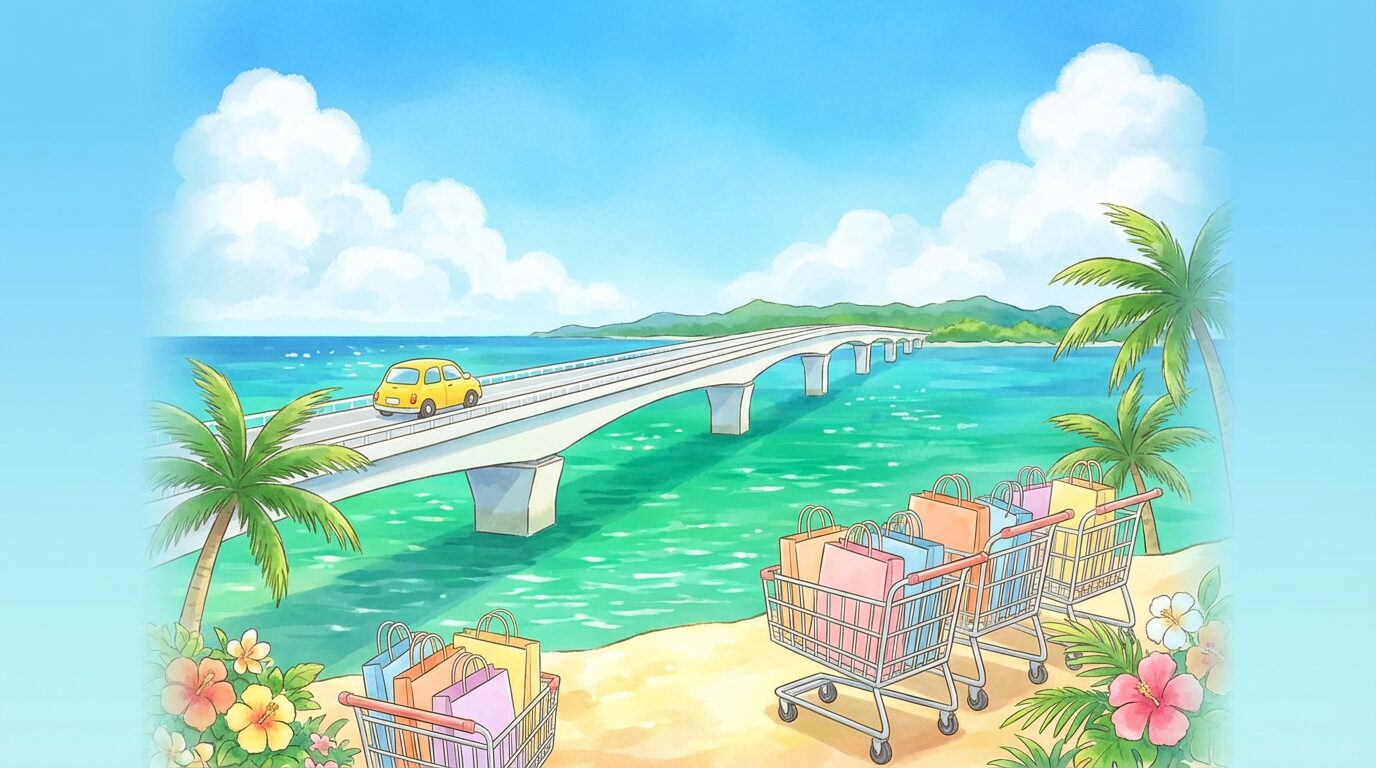
The Irabu Bridge, opened on 31 January 2015, is a 3,540-metre bridge connecting Miyako Island and Irabu Island, boasting the title of Japan's longest bridge you can cross for free. Thanks to this bridge, built at the enormous cost of 39.9 billion yen, you can now easily cross by car to Irabu Island, which until then could only be reached by ferry.
The crossing time by car is about 5 minutes, and the whole time the emerald-green Miyako blue spreads on both sides, so the drive itself is wonderfully pleasant. Being able to enjoy this scenery every time, when you're only going on a shopping run, is a luxurious experience, I think.
About 15–20 Minutes to Central Miyako Island
It's so close — about 15–20 minutes by car from crossing the Irabu Bridge to central Miyako Island (the Hirara district) — that you can go on a shopping run casually. Even the round trip of setting off from your Irabu Island hotel, crossing the bridge, shopping at Don Quijote or MaxValu and coming back is plenty within an hour and a half to two hours.
It's also easy to plan shopping alongside sightseeing — shop at a large supermarket after touring Miyako Island's sightseeing spots, or conversely go on the shopping run first thing in the morning and then sightsee. You can build a flexible schedule.
At first I too thought "going all the way to Miyako Island just for shopping might be a hassle," but actually going, it wasn't a hassle at all — rather, the drive is fun, so I came to go regularly.
Miyako Island's Large Supermarkets Have an Abundant Range
Miyako Island has large supermarkets and home-improvement stores all in place — Don Quijote, MaxValu, Makeman, Big One, San-A Shopping Town and more — an environment where you can get anything.
Don Quijote Miyakojima Is Overwhelmingly Convenient
Address: 1282 Nishizato, Hirara, Miyakojima City, Okinawa
Opening hours: 8:00–2:00 (next day)
Closed: Open year-round
Phone: 0570-073-511
Don Quijote Miyakojima, which opened in 2016 as the chain's first "island" store in Japan, has the appeal of an overwhelming range with about 47,000 product items lined up. It meets every need — food, daily consumables, cosmetics, home appliances, household sundries and more.
My impression when I first went was the surprise of "it's incredibly big" and "everything's here," and since the scale is completely different from Irabu Island's supermarkets, I had the sensation of my shopping options widening all at once.
The Souvenir Corner Is Well-Stocked
Right on the left as you enter there's a Miyako Island souvenir corner, popular with tourists and locals alike. Souvenir items sold at list price at Miyako Island supermarkets are slightly discounted here, so it's nice you can buy them at a good deal.
The standard souvenirs are all there — yukishio (snow salt), mango products, brown sugar, Miyako soba, awamori and so on — so if you're bulk-buying, here is the most efficient. I too stocked up on lots of souvenirs here the day before leaving and sent them by courier.
Marine-Leisure Goods Stocked Year-Round
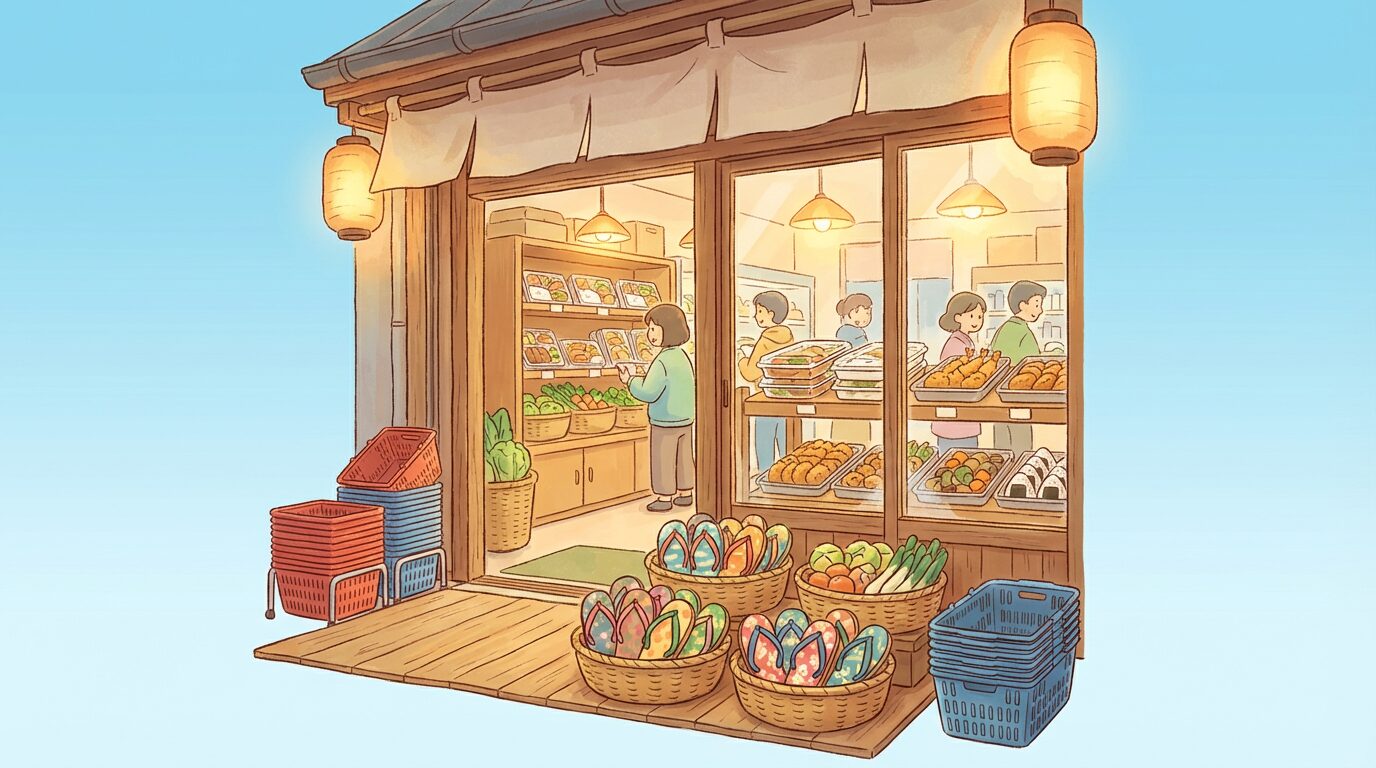
Since marine-leisure goods are stocked throughout the year, tourists can buy the items they need anytime. Everything needed for sea play is there — snorkel sets, swim rings, beach sandals, rash guards, sunscreen and more.
This is a feature unique to Miyako Island — a mainland Don Quijote only stocks marine-leisure goods in summer, but here they're stocked all year, so there's the reassurance that even if you forget something, you can procure it on the ground.
The Vegetable Corner Is Like a Greengrocer
There's a well-stocked vegetable corner, as if a greengrocer had moved in as-is, with abundant fresh Miyako-Island-grown vegetables and fruit too. At Irabu Island's supermarkets the kinds of vegetables are limited, but here the range can satisfy even the cook-for-yourself crowd.
Meat and seafood can be bought in the same place, so it's also convenient for gathering barbecue ingredients all at once. When I had a barbecue too, I always procured the ingredients here.
The Bento Corner Is Full of Volume Too
There's a hearty, full-of-volume bento corner too, where you can casually enjoy a delicious meal. It's ideal for meals while travelling or lunch eaten on the beach, and the price is reasonable, so it comes in handy.
The Long Hours Are Convenient
Since it's open every day from 8 a.m. to 2 a.m. the next day, the appeal is the convenience of being able to shop even at a late hour. It can handle shopping between sightseeing or sudden night-time shopping, and you can also shop and head home after playing until late at night.
I too once noticed past 9 p.m. that "there's no bread for tomorrow's breakfast" and rushed to buy some, but it was open as usual and saved me.
There's a Pharmacy Corner Too
There's a pharmacy corner too, where you can also buy medicines when a pharmacist or registered seller is on duty. It's convenient when you've fallen ill or suddenly need medicine.
MaxValu Miyako Nishizato Is Open 24 Hours
Address: 1290 Nishizato, Hirara, Miyakojima City, Okinawa
Opening hours: 24 hours
Closed: Open year-round
Phone: 0980-74-2255
MaxValu Miyako Nishizato is the only 24-hour supermarket on Miyako Island, and being next to Don Quijote, you can reach it in a 3-minute walk. It's open even during the 2 a.m. to 8 a.m. window when Don Quijote is closed, so there's the reassurance of truly being able to shop anytime.
The night before a day I had plans to set off early, I went around 3 a.m. thinking "let me buy water and onigiri," and it was open as usual — and there were a fair number of customers too, which surprised me. It was a moment I felt the gratitude of 24-hour opening.
The range as a supermarket is well-stocked too, with nearly everything you need — food, daily goods, souvenirs. The freshness of the ingredients in particular is good, so it's recommended for the cook-for-yourself crowd.
Makeman Miyako Is a Home-Improvement Store
Address: 1290 Nishizato, Hirara, Miyakojima City, Okinawa
Opening hours: 9:00–21:00
Makeman is an Okinawan home-improvement store, and being right behind Don Quijote, it's convenient to drop by after shopping at Don Quijote. As a home-improvement store, it has a wide range of products — tableware, bedding, bicycles, pet supplies, car supplies, marine-leisure goods, outdoor goods and more.
It can also be used to look for things you couldn't find at Don Quijote, and it's ideal for gathering camping or barbecue gear.
Other Large Supermarkets
San-A Shopping Town Miyako
A major Okinawan supermarket chain, divided into a food hall and a clothing hall. The clothing hall has a cosmetics corner and a 100-yen shop, so it's useful when you've forgotten cosmetics or run short on daily goods.
Big One Miyako
A community-rooted discount store where you can buy food and daily goods cheaply.
Atarasu Ichiba
A market with Miyako Island's fresh ingredients and specialty products, where you can shop while enjoying the local atmosphere.
Shopping-Run Tips and an Efficient Plan
Let me introduce a few tips for making your shopping run to Miyako Island efficient.

Do Don Quijote and MaxValu as a Set
Don Quijote and MaxValu are a 3-minute walk apart, so doing both as a set is efficient. Buying daily goods and souvenirs at Don Quijote and fresh food at MaxValu — dividing it up this way lets you make the most of each one's strengths.
I always did these two as a set too, and had a routine of buying sundries and souvenirs at Don Quijote and vegetables and meat at MaxValu before heading home.
Makeman Is Close Too, So You Can Do It Together
Makeman is right behind Don Quijote, so when there's something you want from the home-improvement store, you can do it together. Especially when you need outdoor or barbecue gear, it's good to peek into Makeman too.
Make a Shopping List
Noting down the "this is missing, I want that" thoughts you had on Irabu Island and making a shopping list before going to Miyako Island is efficient. At a large supermarket you tend to end up buying even unnecessary things, so a list also prevents wasteful spending.
Bring a Cooler Box
When buying fresh food, loading a cooler box into the car is convenient. Especially in summer the car interior gets hot, so putting ice packs in a cooler box means no worry of the ingredients spoiling.
At first I didn't take a cooler box and once had fish spoil, and ever since I always make sure to bring one.
Plan It as a Set with Sightseeing
Going to Miyako Island just for a shopping run is a waste, so planning it as a set with sightseeing is recommended. For example, tour Miyako Island's sightseeing spots in the morning and do the shopping run in the afternoon before returning to Irabu Island, or conversely do the shopping run first thing and then sightsee — you can build a flexible plan.
I too enjoyed sightseeing alongside the shopping run, dropping by Sunayama Beach or going to Cape Higashi-Henna.
Crossing the Irabu Bridge Is Comfortable
Crossing the Irabu Bridge is truly comfortable, and the drive while gazing at the Miyako blue spreading on both sides never gets old however many times you run it. There's a parking space partway across the bridge, but parking is prohibited except in emergencies, so if you want to enjoy the view, it's best to park in the car park at the foot of the bridge and take photos.
On windy days you need to watch for crosswinds, but it's basically an easy bridge to drive, so even people anxious about driving will have no problem.
For a Long Stay, a Weekly Shopping Run Is Recommended
For a long-term stay on Irabu Island, going on a shopping run to Miyako Island at a pace of about once a week is recommended. Buying a week's worth of ingredients and daily goods in one go, then topping up what's missing at the island supermarkets — this style is, I think, the most efficient and comfortable.
When I stayed for two weeks too, I spent it at a pace of doing a big shopping run on the first weekend and going on a shopping run once more in the second week. Using the island supermarkets for small daily shopping and Miyako Island for a weekly bulk buy was just the right balance.

Irabu Island's Pros and Cons
Let me sum up the pros and cons of shopping on Irabu Island that I felt from actually staying long-term.
Pros
A quiet, calm environment
With no large supermarkets or convenience stores, you can spend quiet, calm time.
You can feel island life at the local supermarkets
By shopping together with locals at Maruki or Shimoji Supermarket, you can experience island life.
Miyako Island is close
Cross the Irabu Bridge and you reach central Miyako Island in about 20 minutes, so access to large supermarkets is good.
The shopping-run drive is fun
The drive across the Irabu Bridge itself is fun, so the shopping run isn't a chore.
You can make it a set with sightseeing
You can enjoy Miyako Island sightseeing alongside the shopping run, so it's two birds with one stone.
Cons
No large supermarket on the island
With few options, you're stuck when you want a specific brand's product.
It takes effort to go to Miyako Island
The round trip takes an hour and a half to two hours, so going frequently can feel like a hassle.
It costs petrol money
Going on a shopping run once a week, four round trips a month costs a fair amount of petrol money.
It's tough without a car
With little public transport, a shopping run to Miyako Island is hard without a car.
Frequently Asked Questions and Answers
Let me sum up and answer questions often asked about shopping on Irabu Island.
Q1: Is there a large supermarket on Irabu Island?
No. There are just two: Maruki Supermarket and Shimoji Supermarket.
Q2: Convenience stores?
There's not a single convenience store on Irabu Island.
Q3: How many minutes to Miyako Island?
Cross the Irabu Bridge and it's about 15–20 minutes by car to central Miyako Island.
Q4: Until what time is Don Quijote open?
From 8 a.m. to 2 a.m. the next day.
Q5: Is MaxValu open 24 hours?
The Miyako Nishizato store is open 24 hours.
Q6: Where is recommended to buy souvenirs?
Don Quijote's souvenir corner is well-stocked and slightly discounted, so it's a good deal.
Q7: Where to buy fresh food?
MaxValu is recommended for its good freshness.
Q8: Is shopping hard without a car?
Hard. With little public transport, a car is essential.
Q9: For a long stay, how often should I go on a shopping run?
Going on a shopping run to Miyako Island at a pace of about once a week is recommended.
Q10: Are Don Quijote and MaxValu close?
They're a 3-minute walk apart, so doing them as a set is efficient.
Q11: What can you buy at Makeman?
A home-improvement store, with a wide range — outdoor goods, barbecue gear, tableware, bedding and more.
Q12: What's the Irabu Bridge toll?
Free.
Enjoy the Ingenuity of Island Living
What I felt from staying long-term on Irabu Island was that, while having no large supermarket is inconvenient, the process of overcoming it with ingenuity is fun.
When I first went to the island supermarket I thought "the options are few," but once I established the routine of going on a shopping run to Miyako Island once a week, that became part of the rhythm of island living and rather turned into something to look forward to.
Cross the Irabu Bridge and drive while gazing at the Miyako blue, shop in bulk at Don Quijote, choose fresh ingredients at MaxValu, browse camping gear at Makeman, load the car with bags stuffed full of shopping, and cross the Irabu Bridge again to come back to the island. That whole sequence had become a standard weekend event.
Certainly I think it would be convenient to have a large supermarket on the island, but then the reasons to go to Miyako Island would decrease, so the current style of being able to enjoy Miyako Island sightseeing alongside the shopping run was, in the end, good, I think.
Once I could divide it up — using the island supermarkets for small daily shopping and Miyako Island for the weekend bulk buy — I stopped feeling the inconvenience. Rather, I came to notice the value of being able to experience island life by shopping together with the island's people at the local supermarket.
If you're planning a long-term stay on Irabu Island, at first you may feel anxious that "there's no large supermarket," but I want to tell you it's fine. Go on a shopping run to Miyako Island once a week and everything you need is there, and that drive itself becomes a fun experience.
The sense of release when heading to Miyako Island across the Irabu Bridge, the satisfaction of bulk-buying at Don Quijote, the excitement of choosing fresh ingredients at MaxValu, and the fulfilment of coming back to the island clutching your shopping bags. All of this becomes part of the pleasure of island living.
Irabu Island is said to have nothing, but precisely because there's nothing, there's the fun of ingenuity, and the shopping-run drive to Miyako Island becomes a special event. I hope you'll experience such island living too.