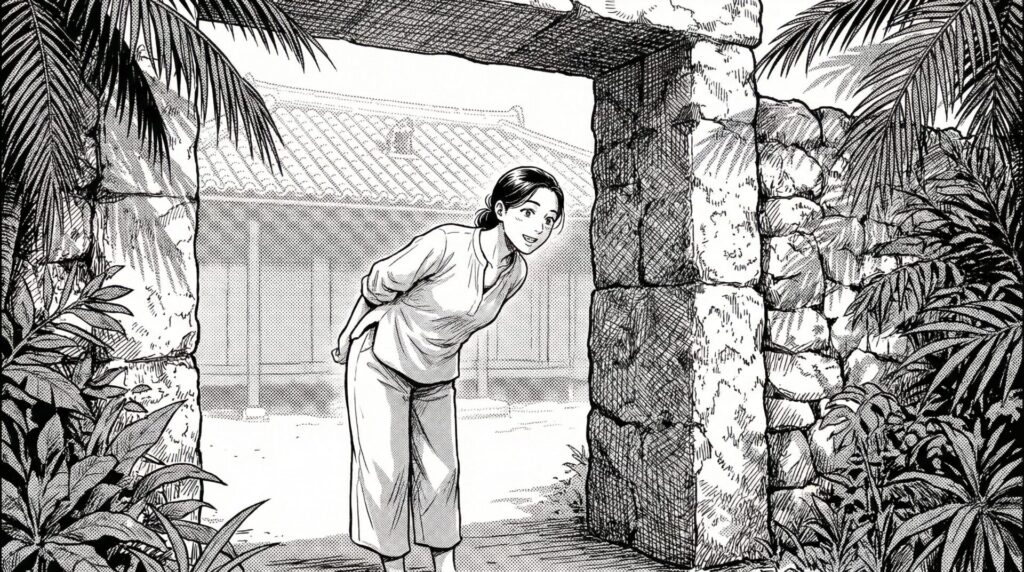
It was what a friend who'd once lived on Irabu Island for a few years said to me the day before my visit: "Even if you go without a reservation, you won't get in." Honestly, I was half in doubt as to whether a small island diner needed that much, but the next day, standing in front of the shop, I understood what it meant. From the moment you pass through the stone gate, an air of "this is no ordinary diner" drifts over.
Shima-ryori Ryugu. A local-production-for-local-consumption creative dining that an owner-chef who walked across the world built after settling down on Irabu Island. Bonito sashimi, pasta, champuru — all of it is composed of "things found only on the island." If you're looking for lunch on Irabu Island, please absolutely remember this shop's name.
In this article, I'll introduce Ryugu's menu, access, how to reserve and the surrounding sights, based on my actual experience. It's a popular shop where reservation is recommended, so I'd like you to read while making your plans. Even among Irabu Island gourmet, I think it's a shop that especially lands with people who want to enjoy a slightly luxurious lunch.
- What Is Shima-ryori Ryugu? A Creative Dining Flying the Flag of Local Production
- Access and Basics: Opening Hours and Reservation Points
- Through the Stone Gate: The Atmosphere Inside and the Seats
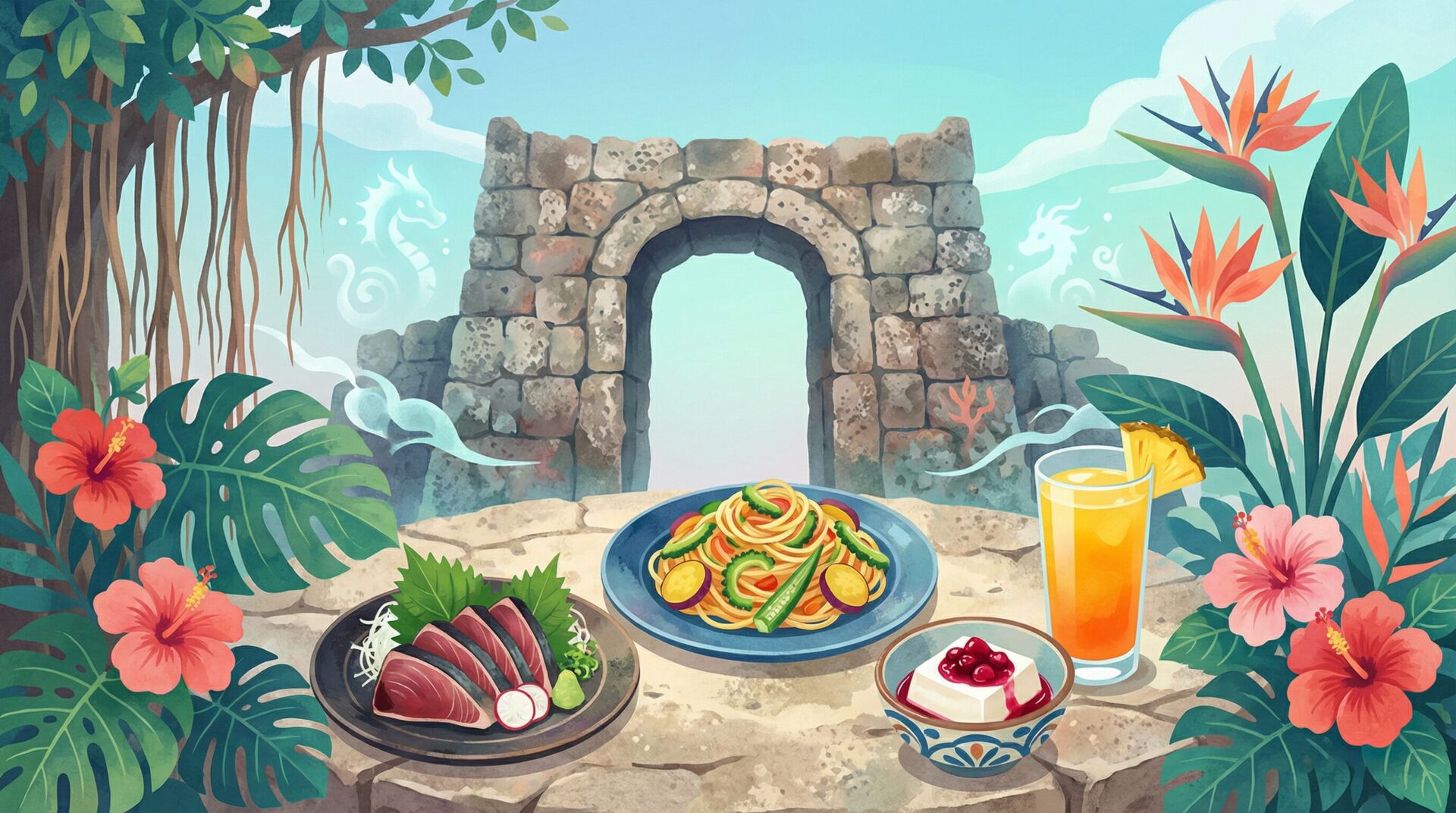
- A Lunch Menu Making the Most of Island Ingredients: Sashimi, Champuru, Pasta
- Bonito Sashimi That Was Swimming Until This Morning (¥880 / about US)
- White-Goya and Agu-Pork Champuru (¥880 / about US)
- 100% Miyako-Beef Hamburg (¥1,280 / about US + cheese ¥100)
- Over 10 Kinds of Irabu Island Pasta! Island-Octopus & Aasa Pasta, Vongole and More
- Plenty More Japanese-Western Creative Items, One After Another
- The Desserts Are Superb Too! Savour Island-Ingredient Sweets
- The Appeal of Shima-ryori Ryugu: Experience a Fusion of Tradition and Creation
- An Irabu Island Lunch Tour Enjoyed as a Set with Sightseeing
- FAQ: Frequently Asked Questions About Shima-ryori Ryugu
- Summary: For Lunch on Irabu Island, Experience the "Island Dragon Palace" at Ryugu
What Is Shima-ryori Ryugu? A Creative Dining Flying the Flag of Local Production
Ryugu was there even before tourists started gathering on Irabu Island.
The owner-chef is a person who built up culinary training in countries across the world, and putting down roots on Irabu Island, he keeps making his own creative dishes. Locally caught seafood, Miyako beef, agu pork, and the pesticide-free vegetables and herbs grown in the garden. He multiplies these with the cooking methods he learned around the world, putting "dishes found only on the island" on the plate.
Say Okinawan cuisine and many people imagine champuru and soki-soba. But Ryugu's cooking isn't only that. There's pasta, there's smoking. There's Miyako-beef nigiri sushi, there's agu-pork gapao. The genres look scattered at first glance, but a core of "island ingredients" runs through all the dishes, and that has become a unique style.
The exterior is striking. Pass through the imposing stone gate and a tasteful building reminiscent of Ryukyu architecture appears. The moment you see that appearance, also called "the island's Ryugu-jo (Dragon Palace)," the anticipation of the trip rises a notch. When you visit, you naturally come to understand the reason quite a few repeat visitors say this is the one place they always reserve when they come sightseeing.
There are table seats and tatami seats, and a rich range of drinks including Ryukyu awamori is in place too. For people who want to enjoy awamori slowly from the daytime, there's also the choice of relaxing on the tatami.
That the number of saves on Tabelog exceeds 5,000 well expresses this shop's popularity. A cosy little diner on the remote island of Irabu makes this many people think "I want to come again." There's a background that it's a shop that became reputed by word of mouth alone, before its name spread through travel magazines and social media. Locals say "you can't get in there without a reservation" as a matter of course. That tells the whole story.
Access and Basics: Opening Hours and Reservation Points
Let me organise the basic information.
| Item | Details |
|---|---|
| Shop name | Shima-ryori Ryugu |
| Address | 1492-13 Irabu, Irabu, Miyakojima City, Okinawa |
| TEL | 0980-78-6543 |
| Lunch | 12:00–14:00 |
| Dinner | 18:00–23:00 |
| Closing day | Tuesday |
| Payment | credit cards (JCB, AMEX, etc.) and electronic money accepted |
| Car park | yes |
| Reservation | phone reservation recommended |
▶"Please check the latest opening hours and closing days on [Tabelog: Ryugu]"
Access is about 7–8 minutes by car after crossing the Irabu Bridge. From the central part of Miyako Island it's about 25–30 minutes. There are narrow stretches along the way, so a little caution is needed if you're driving a large car on unfamiliar roads. There's a sense of proceeding through the alleys of a residential area, and you may get anxious — "is this really the right way?" — but follow the map app and you'll arrive.
Reservation is basically by phone. You may think "does a small island shop need a reservation in advance?", but on top of the seats being few, the owner-chef cooks alone. You often hear stories of someone visiting without a reservation and being turned away because it was full. Putting in a single phone call at the planning stage of your trip is, for this place alone, the absolute correct answer.
Please come understanding that serving the food takes time too. Since one person makes everything, it can take time from ordering to it coming out. You might feel it's "slow," but that's because it's made without cutting corners. It's not suited to lunch on a day you're in a hurry, so I recommend coming with time to spare.
When you actually come, there's an atmosphere where the wait doesn't bother you. Gazing at the interior, or relaxing while feeling the island air, time passes in a "wait, the food's here already?" sort of way. Come with the feeling of matching a shop that lives by the island's rhythm too, and the wait becomes part of the trip.
Through the Stone Gate: The Atmosphere Inside and the Seats
I like the space beyond the stone gate.
Pass through one alley of the residential area and it suddenly feels like another air. From the gate stacked with traditional Ryukyu stone, you go through the garden, and entering the shop an Okinawan, settled interior spreads out. A cosy, comfortable space with the warmth of wood. The glass showcase has what look like antiques or collectibles displayed, and gazing at them you forget the time.
There aren't that many table seats. The tatami seats are easy to use even with small children, and suited to use on a family trip too. Precisely because the seats are limited, there's an atmosphere where you can eat settled and at leisure. There's a moderate distance from the next table, making conversation easy.
The rich variety of awamori, including rare aged kusu in stock, is an appeal unique to here. For people who want to thoroughly enjoy island cuisine while drinking awamori at the evening dinner, it becomes the best choice. For people who want to drink just a little even at lunch, you can have the experience, unique to Irabu Island, of awamori from the daytime.
The story that locals come with reservations too is true, and there's an atmosphere where locals and tourists naturally mix. I think it's a shop that hasn't become over-touristified, where the island's reality remains. You don't stick out coming alone, and you can talk settled coming with a friend. There's that sense of a place to belong. Even among Irabu Island's gourmet, it's a shop you choose when you want a slightly stretched, special feeling.
A Lunch Menu Making the Most of Island Ingredients: Sashimi, Champuru, Pasta
Ryugu's lunch makes you agonise just looking at the menu. A blend of Japanese and Western, island ingredients and world cuisine line up, and choosing what to order is hard. A bewilderment in the good sense.
Bonito Sashimi That Was Swimming Until This Morning (¥880 / about US)
This menu name is amazing. In the line "was swimming until this morning," confidence in the freshness of the ingredient seeps out. Put it in your mouth and the firm, crunchy bite of the bonito comes through. A freshness that makes you think "was sashimi this kind of texture?" A dish that makes you realise anew that bonito bought at a supermarket and bonito just landed from the sea are different things.
However, there are days it can be served and days it can't, depending on the fishing situation. On days the weather is bad and they couldn't go out fishing, the fish items can become fewer. Please check by phone in advance, or come on the premise that the menu may change.
White-Goya and Agu-Pork Champuru (¥880 / about US)
Using white goya is unusual. The bitterness is more restrained than green goya, and the umami of the agu pork rides straight onto the goya. You understand by eating the reason this is introduced as "a dish that surpasses home cooking." The heat control and use of seasonings the chef cultivated around the world layer onto the ingredients of Okinawan home cooking, bringing out an entirely different depth.
I want people who think "champuru can be eaten anywhere" to eat this. I realised for the first time, coming here, that champuru is a dish where the chef's skill comes out directly.
100% Miyako-Beef Hamburg (¥1,280 / about US + cheese ¥100)
A hamburg carried out sizzling on an iron plate. Being 100% Miyako beef, the umami is rich and it's tender. Large and full of volume, yet not greasy, so you can finish it to the end. It comes as a set with Ishigaki-rice multigrain rice and umin-jiru (fisherman soup), totalling about ¥1,580 (about US$11).
I well understand the feeling of the person who wrote in a review "a luxurious lunch on holiday." Good ingredients, food made with effort, eaten slowly in the island space. The density of that time is completely different from other places. The choice of Ishigaki-rice multigrain rice is finished in good balance combined with the Miyako beef too.
Over 10 Kinds of Irabu Island Pasta! Island-Octopus & Aasa Pasta, Vongole and More
This surprised me. Even hearing in advance the fact of over 10 kinds of pasta at an Irabu Island lunch, I was half in doubt until I actually saw the menu. Island-scallion and clam vongole (¥980 / about US$7), island-octopus and aasa pasta, white squid and mentaiko cream sauce... all of them combine Okinawan ingredients and Italian technique exquisitely.
There are multiple reviews of "the pasta is superb too," and this is no bluff. The combination of island octopus and aasa especially is a taste you can't eat elsewhere, making you think the choice of "eating pasta on Irabu Island" was the right call. The doneness of the noodles, the richness of the sauce — all of it is calculated. The white squid and mentaiko cream sauce looks like an unexpected combination, but the umami of the Miyako sea dissolves into the cream and you can't stop. It's at a level where it wouldn't be strange for someone to come with pasta as their goal.
Plenty More Japanese-Western Creative Items, One After Another
Miyako-beef nigiri sushi, island-shrimp karaage, agu-pork gapao, zenmai (royal fern) papkun champuru... write them out and it already takes time to decide which to go for. Coming with a friend and sharing everything might be the ideal way to come.
The Desserts Are Superb Too! Savour Island-Ingredient Sweets
Even if you finish lunch and think "I'm full," looking at the dessert menu might change your mind.
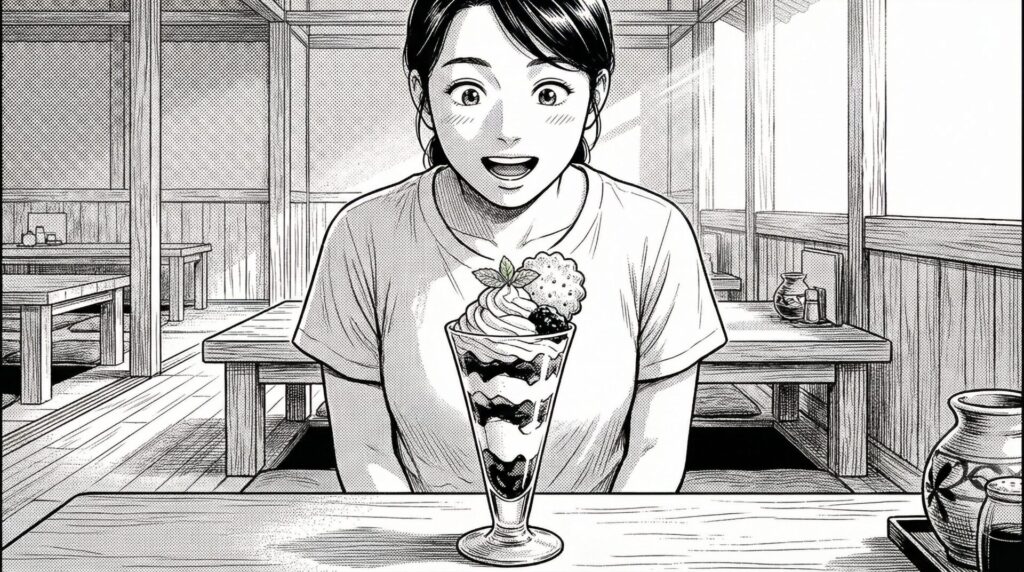
Jimami Tofu and Roselle Confiture Parfait (¥480 / about US)
Jimami tofu is an Okinawan tofu using peanuts, characterised by a springy texture. A parfait combining it with roselle (a relative of hibiscus) confiture. The vivid red and acidity of the roselle balance exquisitely with the sweetness of the peanut tofu. The look is island-like and vivid too, and it's photogenic.
It comes out in a "this is a parfait?" sort of way. Different from the usual parfait image, the combination of ingredients is avant-garde. But eat it and you understand "indeed, this is a parfait." A dish that shows off the potential of sweets using island ingredients.
Yushi-Tofu Chocolate Brownie with Vanilla Ice Cream (¥480 / about US)
A brownie with yushi tofu kneaded into the batter. Putting tofu in gives a springy texture, and combined with the richness of the chocolate it becomes a mysterious deliciousness. Combined with vanilla ice cream, and further garnished with roselle confiture. Acidity, sweetness, cold and warm coexist on one plate, and eating it you feel "they thought this up well."
That both are ¥480 is also a conscientious price setting for island sweets. Please go for it with the feeling of about the luxury of ordering just one dish after lunch. Even if you got full at lunch, if there's such a concept as a separate stomach for dessert, it definitely fits there.
The Appeal of Shima-ryori Ryugu: Experience a Fusion of Tradition and Creation
What can't be left out when talking about Ryugu is the fact that "he does it alone."
The owner-chef makes all the dishes alone. When an order comes in, he starts making it from scratch in the kitchen. So it takes time, and you have to come understanding that. But conversely, the chef's eye and hand reach every dish. That's the reason a corner-cut dish never comes out.
The background of having built up culinary training in countries across the world directly connects to the breadth of the menu. Okinawa's traditional ingredients and cooking methods, Italian pasta technique, Southeast Asian spice use... these fuse on the stage of Irabu Island. There's a sense closer to "world cuisine staged on the island" than to "creative Okinawan cuisine."
That reviews write "the chef's skill is top-class" is no overstatement. A person who knows the island's ingredients inside out cooks with the technique he learned around the world. The plate at that intersection becomes something you can eat only here.
Another distinctive thing is that the care over local ingredients comes out even in the ingredient names. The expression "bonito that was swimming until this morning" is used as-is, and Miyako-Island-specific ingredients like white goya, winged beans, aasa, jimami tofu and roselle properly show their faces on the menu. Rather than serving "something Okinawan-like" by atmosphere alone for tourists, he uses what's really on the island. That reality becomes the persuasiveness when you eat.
That the smoked items have become a hidden speciality is also unique to here. At dinner, a lineup even more luxurious than lunch is in place — Ryukyu spiny lobster, mangrove snapper, Miyako-beef nigiri sushi and more. If you like it at lunch, please try reserving dinner next time.
An Irabu Island Lunch Tour Enjoyed as a Set with Sightseeing
Arranging an Irabu Island sightseeing course around a visit to Ryugu is recommended.
Irabu Bridge
A 3,540-metre bridge connecting Miyako Island and Irabu Island, the longest remote-island bridge you can cross toll-free in Japan. Since you'll definitely pass it when crossing to Irabu Island, you can enjoy a drive while gazing at the Miyako-blue sea. Stopping on the bridge is prohibited, but you can take photos from the viewing spots at both ends. The colour of the sea is completely different morning and evening, so it's a spot I want you to see at different times.
Toguchi-no-Hama
A white-sand beach 50 m wide and about 800 m long. It's highly popular even within Irabu Island, with a shop, showers and toilets in place so you can drop by casually. With a shallow, calm sea it's suited to snorkelling too, and it has a view chosen among "Japan's 100 Best Beaches." The flow of eating lunch at Ryugu and then spending the afternoon at Toguchi-no-Hama has become the royal-road course. The sand's whiteness is far more vivid than it looks in photos, and you can have the experience of thinking "so this is Miyako blue" the moment you arrive at the beach. To avoid the crowds the morning is the time to aim for, but walking the sand listening to the sound of waves in the afternoon light isn't bad either.
As a model course for Irabu Island, the combination of crossing the Irabu Bridge → strolling the beach at Toguchi-no-Hama → lunch at Ryugu (reserved) → on to Shimojishima and 17END is reasonable time-wise too. Ryugu is near the central part of Irabu Island, so access to any of the sights isn't bad.
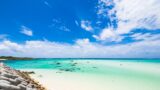
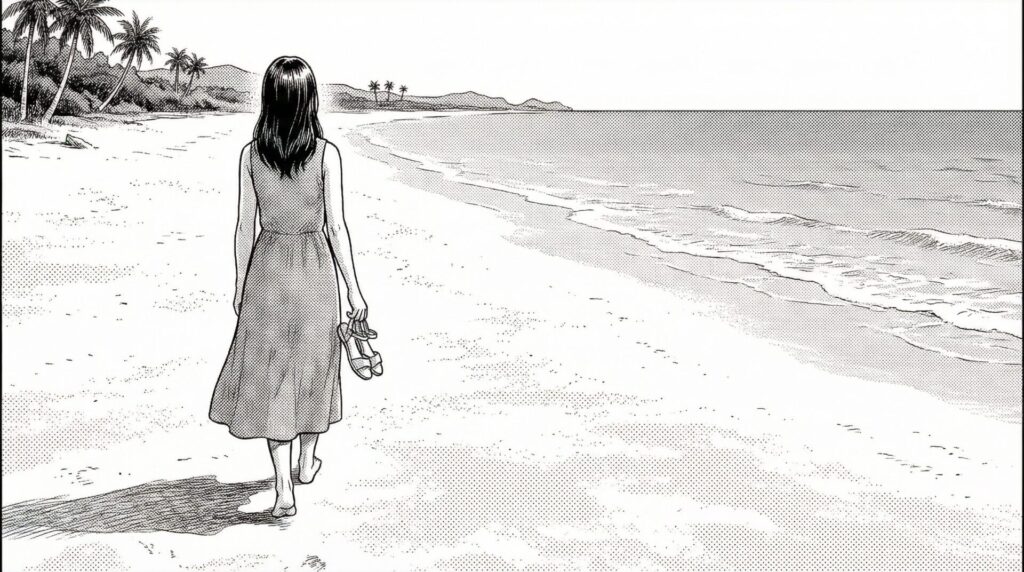
Many people tour it as a set with Shimojishima sightseeing too. Along the runway near Shimojishima Airport, the sea at 17END and more — the Irabu–Shimojishima area lets you tour the main spots in half a day. Placing Ryugu's lunch at the centre of that, the day turns over at just the right rhythm.
FAQ: Frequently Asked Questions About Shima-ryori Ryugu
Q1. Are reservations needed for lunch?
A phone reservation is strongly recommended. Since the seats are few and the chef cooks alone, coming without a reservation often means being turned away because it's full. It's a popular shop that even locals come to with reservations, so putting in a phone call (0980-78-6543) at the trip-planning stage is reliable.
Q2. What are the opening hours and closing day?
Lunch is 12:00–14:00, dinner is 18:00–23:00. The closing day is Tuesday. There can be temporary closures and changes to the items served depending on the fishing situation and weather. The most reassuring thing is to check the latest information by phone before visiting.
Q3. What are the payment methods? Can I use a credit card?
Credit cards (JCB, AMEX, etc.) and electronic money can be used. Among Irabu Island, where many shops are cash-payment only, it's in the category with a wide range of acceptance.
Q4. What are the recommended items?
Bonito sashimi, Miyako-beef hamburg, white-goya and agu-pork champuru, island-octopus and aasa pasta. There are over 10 kinds of pasta, so you can choose by preference. Please try the jimami-tofu parfait for dessert too.
Q5. Can it be used with children?
There are table seats and tatami seats, so it's easy to accommodate families too. Tatami seats are convenient with small children. Since the seats are few, even with children it's smoother to reserve after confirming by phone in advance.
Q6. Is there a car park?
There's a car park. However, the road to the shop has narrow stretches, so caution is needed when driving. Proceed while checking the route with a map app and you can arrive without problem.
Q7. What kind of person is the owner?
It's a shop run by an owner-chef who built up culinary training in countries across the world. His forte is original creative dishes multiplying island ingredients with world cooking methods, and he's supported not only by tourists but by locals too. Since he handles the kitchen alone, serving the food can take time. Please come thinking of that, included, as the Ryugu experience.
Summary: For Lunch on Irabu Island, Experience the "Island Dragon Palace" at Ryugu
If I were to name one recommended lunch on Irabu Island, I'd say the name Shima-ryori Ryugu first of all.
"Bonito sashimi that was swimming until this morning," "white-goya and agu-pork champuru," "100% Miyako-beef hamburg," "over 10 kinds of pasta." Just reading the menu, you feel like you're being taken somewhere. The dishes a chef who walked across the world makes facing Irabu Island's ingredients are a taste found nowhere else.
Few seats and reservation essential, food takes time, closed Tuesdays. Please come taking these into account. But there certainly are shops only people who came prepared can experience. I think Ryugu is that kind of shop. It has a slightly deeper, locally rooted air, different again from Painmi and Soraniwa. The more lunches on Irabu Island someone has experienced, the more they'll notice Ryugu's uniqueness, I think.
Pass through the stone gate, settle down at a tatami seat, and wait slowly for the food that comes out. Within Irabu Island's island time, one of the most luxurious ways to spend it is here.
Shima-ryori Ryugu
Address: 1492-13 Irabu, Irabu, Miyakojima City, Okinawa
TEL: 0980-78-6543
Lunch: 12:00–14:00
Dinner: 18:00–23:00
Closing day: Tuesday (temporary closures possible)
Payment: credit cards (JCB, AMEX, etc.) and electronic money accepted
Car park: yes
Reservation: phone reservation recommended
The opening hours, closing days and menu of each shop may change. Please be sure to check directly with the shop before visiting.