Ask anyone about Irabu Island gourmet — "where's good?" — and the first name out is "Kame." People who live on the island, and tourists who've come many times, all say the same thing. That's how far the name has spread, and once you actually eat there, you understand the reputation isn't a lie.
The exterior is an old folk house as-is, and when you first come you can't quite tell whether it's a diner or a private home — it's that quiet. But there are cars in the parking space, and people queue from before opening. Seeing the sight of "people waiting from 10:45 even though it opens at 11," my expectations rose.
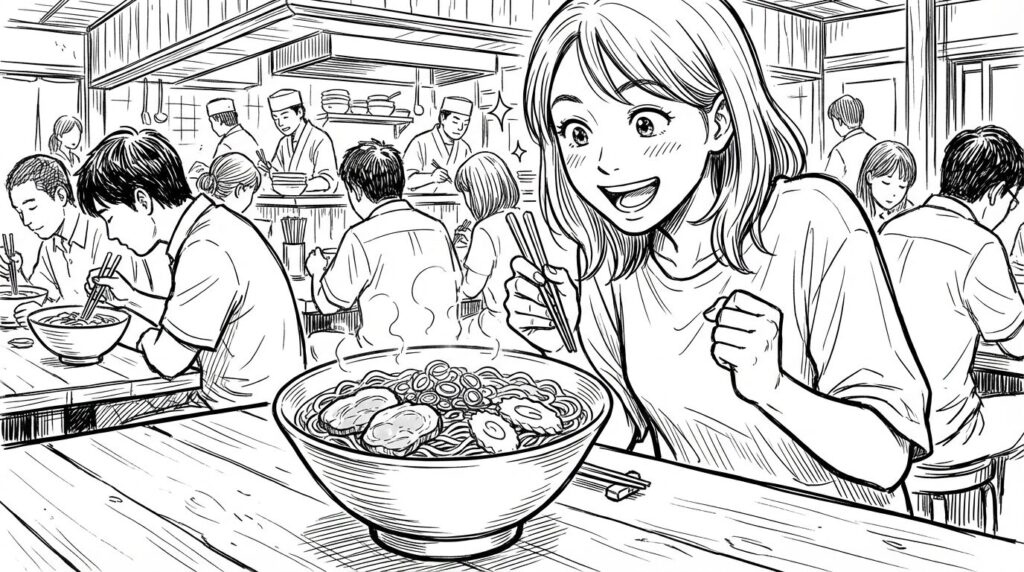
The moment I drank a mouthful of soup, I thought "ah, this is different." It's clear yet has depth. The stock made with namari-bushi (bonito boiled and then smoke-dried) tastes like something I've drunk somewhere, yet like something you can only drink here. The noodles are springy and slip smoothly down the throat. As a single bowl eaten between sightseeing, it had been a while since I'd eaten soba this memorable.
- Okinawa Soba with House-Made Noodles and Bonito Stock, Savoured in an Old Folk House
- Irabu Soba Kame Is an Old Folk House Renovated from Grandma Kameko's Home
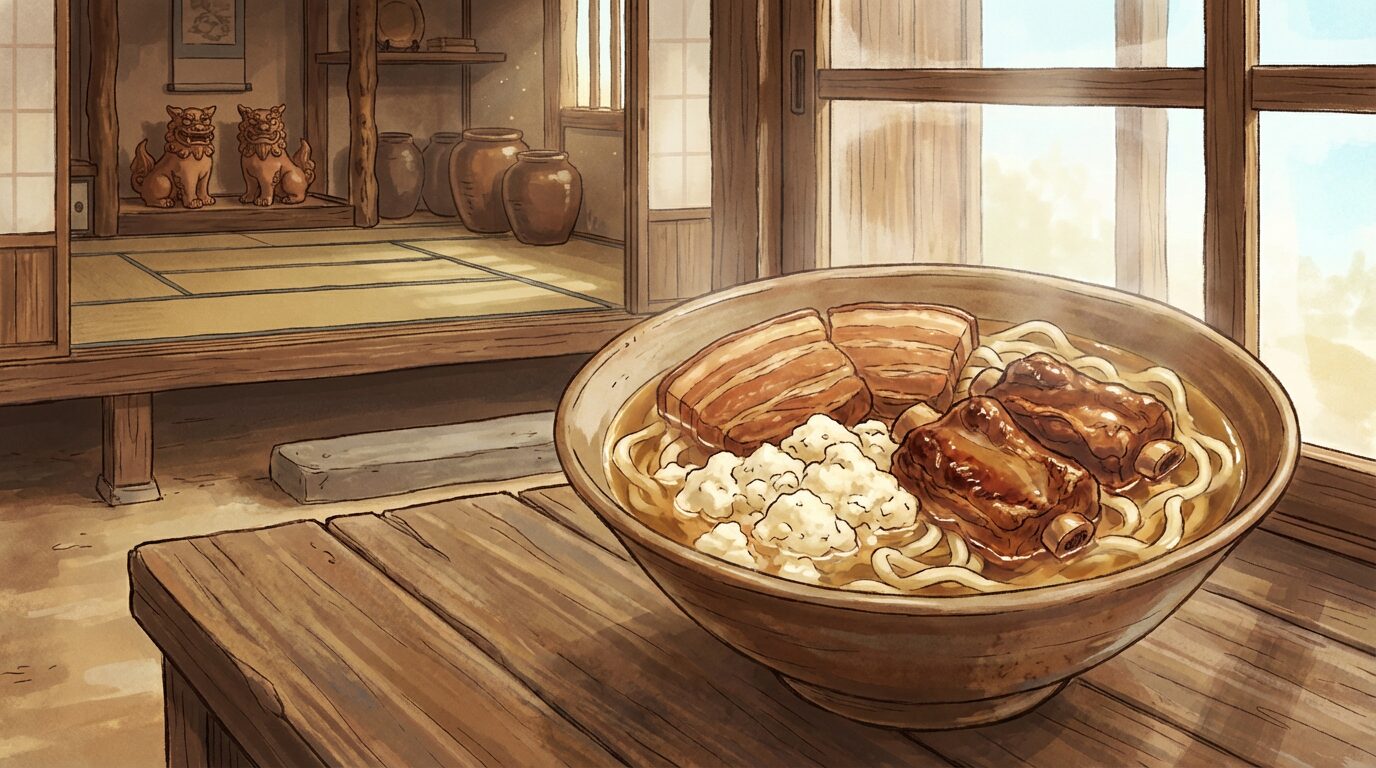
- Kame-Soba Is a Luxurious Bowl of Three-Layer Pork, Cartilage Soki and Yushi Tofu
- Irabu-Soba Is Characterised by Namari-Bushi and Bone-In Meat
- The House-Made Noodles Are Springy and Smooth
- The Bonito-Stock Soup Is Superb
- The Side Menus Are Substantial Too
- Since It's a Popular Shop, Be Ready for a Queue
- Points to Note When Going to Irabu Soba Kame
- Visit Together with the Surrounding Sights
- Frequently Asked Questions and Answers
- A Famous Shop You Must Visit When You Come to Irabu Island
Okinawa Soba with House-Made Noodles and Bonito Stock, Savoured in an Old Folk House
In this article, based on my actual experience eating at Irabu Soba Kame, I've gathered everything — the menu, the queueing system, how to get there, and points to note. I've written about the difference between kame-soba and irabu-soba, the care put into the house-made noodles and soup, and the side menus too.
I'd be glad if this helps anyone who, while travelling Irabu Island, doesn't want to miss the food. It's not the "tidied-up Okinawa soba" of Naha's tourist areas, but a bowl where the rustic feel of a remote-island diner and an artisan's care live together.
Irabu Soba Kame Is an Old Folk House Renovated from Grandma Kameko's Home
The House Where Grandma Kameko Lived
Several origins are told for the shop name "Kame." One is the story that long ago a "Grandma Kameko" lived on this land. Another is the episode that during the shop's renovation work a turtle (kame) wandered in, which was felt to be auspicious, so it was named "Kame." Which story is accurate isn't clear, but it's certain the name and the shop's atmosphere fit each other well.
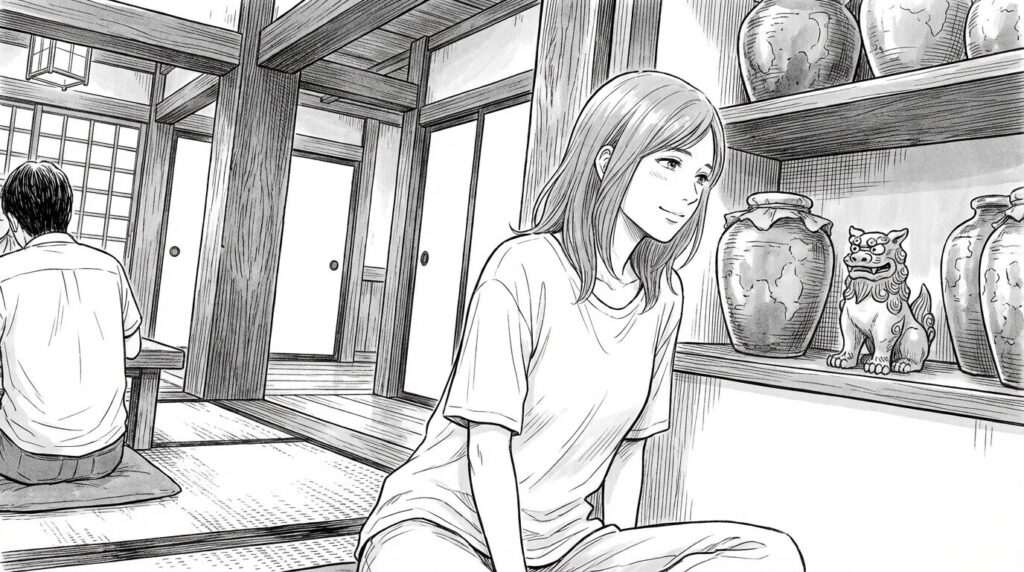
The building uses the old private house almost as-is, and once you step inside from the entrance, it feels like "going up into an acquaintance grandmother's home." It's an atmosphere that absolutely doesn't come out of a touristified eatery.
The Warm Atmosphere Only an Old Folk House Has
The interior isn't large. The number of seats is limited, so when it's crowded you end up waiting outside. Just knowing in advance that "you'll end up waiting outside" makes you feel a good deal easier.
There are both tatami seats and table seats. The tatami room, where you take off your shoes and step up, is a place where you can feel like "eating an Okinawan home-cooked meal." From the window you can see the garden. At midday with the sound of cicadas, the time quietly waiting for soba felt like part of the meal.
Opening Hours and Closing Days
Opening hours are 11:00–16:00 (last order 15:30). When they sell out, they sometimes close early. If you go imagining they're open until 17:00 or 18:00 in the evening, there's a chance they'll be closed, so please be careful.
The closing days are irregular, so checking in advance by social media or phone is most reliable. Outside peak season especially, they can suddenly close. So that you don't come all the way to Irabu Island only to find "it was closed today," it's good to make a habit of confirming by phone (0980-78-5477) the day before your visit.
Location and Access
The address is 251 Nagahama, Irabu, Miyakojima City, Okinawa. After crossing the Irabu Bridge and entering Irabu Island, head towards the central part of the island. Search "Irabu Soba Kame" on Google Maps and it comes up, but it's along a narrow road, so you need to be careful not to drive past it. The car park has space for a few cars across from the shop. When crowded it's full, but using the cars parked on the nearby roadside as a marker makes it easier to find.
Kame-Soba Is a Luxurious Bowl of Three-Layer Pork, Cartilage Soki and Yushi Tofu
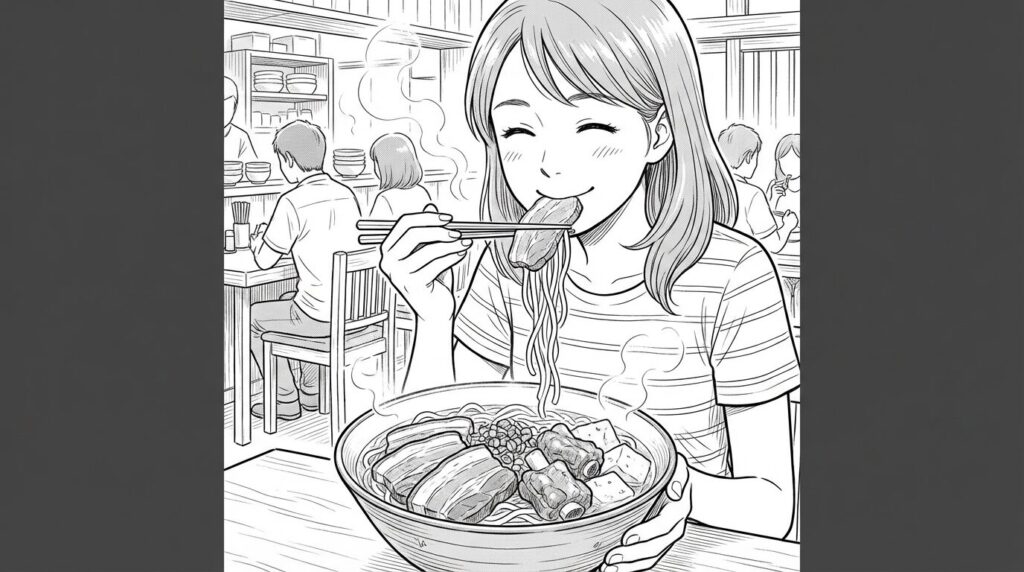
The No.1 Popular Kame-Soba
The most ordered item on the menu is "kame-soba." It's the signature item with all three toppings — three-layer pork, cartilage soki and yushi tofu — in it. Compared with the other items it's a little pricier, but there's a satisfaction that makes you think "this was the right choice" after eating.
Lift the noodles and the chopsticks bend under the weight of the ingredients. The yushi tofu is crumbled, so you end up swallowing it together with the soup. The three-layer pork is tender enough to cut with chopsticks, and the cartilage soki is melt-in-the-mouth. Even though they're all in one bowl, each has its own proper presence.
Tender Three-Layer Pork
The three-layer pork (simmered pork belly) is simmered over time, so it's tender enough to crumble just by putting chopsticks in. Fat and lean meat layer alternately, and put in the mouth it disappears as if melting. The fat transfers to the soup, increasing the richness.
The three-layer pork of Okinawa soba is seasoned completely differently by shop. Places with strong soy sauce, places where the awamori flavour comes through, places simply with only salt. Kame's three-layer pork is seasoned just enough not to lose to the lightness of the stock, but without asserting itself too much. It plays a supporting role while showing presence.
Melt-in-the-Mouth Cartilage Soki
Cartilage soki (pork rib meat with the cartilage attached) is personally my favourite topping in the kame-soba. It's simmered tender right down to the cartilage part, and it crumbles when you bite. Since it's low in fat, your stomach doesn't get heavy even if you keep eating.
It's certain that time and effort have gone into it, and you're surprised by a tenderness that makes you wonder "how did they make this?" I've eaten soki at other shops as soki-soba too, but I felt Kame's soki is in a class of its own.
House-Made Yushi Tofu
Yushi tofu is tofu in a soft state before it sets. Think of it as tofu served in the state right after adding the bittern (nigari) during the tofu-making process, and you'll be close. With a fluffy texture, you eat it as one with the soup.
Kame's yushi tofu is house-made, prepared every day. The texture is completely different from store-bought tofu put into soup. It seems crumbled, yet has a proper tofu flavour. Eaten together with the soba, the plain tofu takes on the flavour of the bonito stock and becomes yet another taste.
Full of Volume and Hugely Satisfying
The volume of kame-soba is more than enough for someone with an ordinary appetite. The amount of noodles, the amount of ingredients, the size of the bowl — after finishing you won't feel "it wasn't enough." Eaten after moving around sightseeing on summer Irabu Island, your tiredness feels like it's blown away.
Among women, some might think "this is a bit much." In that case, choosing a menu item with fewer toppings, like irabu-soba or three-layer-pork soba, can sometimes be just the right amount.
Irabu-Soba Is Characterised by Namari-Bushi and Bone-In Meat
Irabu-Soba Using Namari-Bushi
"Irabu-soba" is a separate item from kame-soba. It's topped with namari-bushi (bonito boiled once and then smoke-dried) and bone-in meat. If kame-soba is a luxurious three-item assortment, irabu-soba is a more rustic, simple bowl.
Namari-bushi is an ingredient rooted in Irabu Island's food culture. In the Miyako Islands there's a history of using bonito as an important ingredient since long ago, and namari-bushi is one of those. It's an ingredient you hardly see in Tokyo or Osaka supermarkets, so many people eat it for the first time.
The Difference from Kame-Soba
The big difference between kame-soba and irabu-soba is the combination of toppings. Whereas kame-soba has the three kinds — three-layer pork, cartilage soki and yushi tofu — irabu-soba has the simple composition of namari-bushi and bone-in meat. The soup uses the same bonito stock.
As you eat, the namari-bushi gradually breaks apart and dissolves into the soup. By the time you finish, it's become a slightly different taste from the start. If you come with the feeling of "I want to eat an ingredient typical of Irabu Island," irabu-soba is worth choosing.
The Flavour of Namari-Bushi
You eat namari-bushi while breaking it apart with chopsticks. The broken-apart flesh mixes into the soup, and the bonito aroma rises. It has a distinctive chewy texture different from both raw bonito and dried bonito flakes. If you like bonito, irabu-soba might land more for you.
Namari-bushi is sold at local supermarkets and souvenir shops too, but there aren't many chances to eat it as-is. Eating it at Kame is the easiest first experience.
The House-Made Noodles Are Springy and Smooth
Hand-Made House Noodles
Kame's noodles are house-made. They prepare and make them every day. Okinawa soba noodles are generally thick and either straight or gently waved, but Kame's noodles combine a springy bite with a smoothness that slips down the throat.
The good thing about house-made noodles is the freshness of being just made. They tangle well with the soup too, and there's firmness when you lift them with chopsticks. The texture changes once time passes after boiling, so they can't be made ahead. That's one reason they take the trouble to make them every day.
The Difference from Other Okinawa Soba
Compare them with the famous Okinawa soba shops of Naha and Nago, and you understand the uniqueness of Kame's noodles. The difference in method shows in the texture, and the fixed idea that "Okinawa soba is like this" shifts a little.
Kame's noodles have a sense that "the noodles themselves have flavour." Combined with the flavour of the soup, there's a synergy that makes the whole balance good. Comparing them with store-bought or frozen noodles is a different matter to begin with, but the impression when you eat them is clearly different.
Sold at Supermarkets Too
There's information that the house-made noodles Kame uses are also sold at supermarkets within Irabu Island. For people staying long-term on the island or travelling while self-catering, there's the option of buying them as a souvenir to take home. However, stock status and whether they're carried can change, so please check locally.
There are also many voices saying "I tried to recreate the noodles I ate at the shop at home, but I couldn't recreate the soup, so eating at the shop is far better." Perhaps it means that even taking just the noodles home, without the soup it's only half.
The Bonito-Stock Soup Is Superb
A Light Bonito-Based Soup
Kame's soup is based on bonito stock. The colour is a pale amber, and it looks light. Drink it, and you understand it has more depth than its appearance. The saltiness isn't too strong, and the bonito aroma passes cleanly through the nose.
Many people have the impression "it's light yet has richness." Since there's no greasiness, it doesn't get heavy even eaten on a hot day. It's a soup that makes you want to drink it down. I've heard several times the story of "I drank down to the last drop."
The Care Over Namari-Bushi
The namari-bushi used in Kame's soup is made by processing bonito caught in the seas near Miyako Island. The care over the material for taking the stock connects directly to the soup's taste.
The stock of general Okinawa soba often combines dried bonito flakes and pork bone, but Kame's soup gives the impression of a high bonito ratio. There's no heaviness of pork bone, yet there's richness. That exquisite balance produces the difference in taste you "understand in one sip."
A Natural Taste with No Additives
The story that it's finished with only the stock from the ingredients, using no MSG, appears repeatedly in the reviews of people who've visited. The feeling after eating is different from soup that uses MSG. The aftertaste is clean, and your throat doesn't get dry.
For people who mind "whether food contains MSG," the difference in Kame's soup should be easy to tell. Even people who can't tell such a subtle difference can definitely have the feeling of "somehow delicious," I think.
A Taste Gentle on the Stomach
Drink Kame's soup after a run of oily dishes, and there's a sense of your stomach being reset. Okinawan cuisine has many things using pork and oil, and eating them continuously during sightseeing can make your stomach feel heavy. Amid that, Kame's soup rather settles the stomach.
Even when your appetite has dropped from the summer heat, you can eat it smoothly. Even finishing all the noodles and ingredients, your stomach doesn't get strained. There are voices saying "I could eat it even when I had no appetite."
The Side Menus Are Substantial Too
Other Soba Items
Besides kame-soba and irabu-soba, there are several items with changed toppings, like three-layer-pork soba and soki-soba. People who think "I just want to eat cartilage soki" or "I like a simple bowl of only three-layer pork" can choose each item.
Honestly, first-timers should choose kame-soba or irabu-soba without hesitation, but from the second visit on, trying the other items brings new discoveries. A shop you want to come to again and again is, I think, that kind of place.
Inari-Zushi
Inari-zushi can be ordered à la carte. Many people eat it together with soba. The sweet-savoury taste of the fried tofu pouch goes surprisingly well with the bonito-stock soup. It's just the right amount for people who find noodles alone a little unsatisfying.
Being able to eat inari-zushi at an island soba shop isn't a rare combination in the Miyako–Irabu area. Kame's inari-zushi also gives the impression of being carefully hand-made.
Juushii
Juushii is Okinawan mixed rice. It's pork and vegetables cooked in stock, and although it looks plain, eating it there's a rustic savouriness. It might be a taste locals prefer over tourists.
Many people order juushii together with soba. Choose it when you want a rice dish, not just noodles. The portion is on the small side, so it's just right even ordered together with soba.
Tuna Nigiri Sushi
On some days you can order a set of nigiri sushi using tuna landed at nearby Sarahama Port. Sarahama is a settlement where bonito and tuna fishing has thrived since long ago, a place where fresh fish is easy to obtain. However, the tuna nigiri can't be served on some days depending on the catch. Confirming "do you have sushi today?" before ordering is most reliable. In combination with the soba, you can enjoy Irabu Island's ingredients all at once.
Since It's a Popular Shop, Be Ready for a Queue
The Wait Is 30 Minutes to 1 Hour
Kame is one of the most well-known diners on Irabu Island, and in peak season (summer, long holidays) you'll definitely queue. The guideline is 30 minutes to 1 hour, but on days when it fills up right after opening it can be even longer. Some people say "I got in within 10 minutes," while others say "I waited an hour and a half."
Whether you think the wait is "long" or "can't be helped" depends on your mental preparation. Time on the island flows slowly. Think of the wait as part of the trip, and strangely it doesn't become that much of a burden.
Write Your Name on the List and Buy a Meal Ticket
Kame's waiting system is distinctive. First, enter the shop and write your name on a board. Next, buy a meal ticket at the ticket machine or counter, and wait outside. When your name is called, you're shown to a seat.
What first-timers get confused about is the point "is it OK to wait outside?" It's fine to be outside until you're called, and some people wait in their car in the car park. That said, it's safer not to go too far.
Queueing Before Opening Is Recommended
The best move for people who don't want to wait long is to arrive before opening. Come around 10:45–11:00 and there's a high probability of getting in the moment it opens. When arranging your sightseeing itinerary, it's good to set the lunch timing a little earlier.
It's easy to arrange a flow of seeing 17END and Toguchi-no-Hama first in the morning, and dropping by Kame at the timing you get hungry. Wrapping up the morning sightseeing a little early and heading to Kame aiming for 11 o'clock is a realistic schedule.
The Off-Season Is Relatively Empty
In winter (December–February) when there are few tourists, you can often get in relatively smoothly. There's hardly any wait, and you can use the seats at leisure. However, Irabu Island's winter has many days of strong wind and rough seas, so caution is needed for visits with sightseeing in mind.
Early spring (March–April) is also a relatively empty period, the timing before the crowds. Irabu Island around cherry-blossom time doesn't have that many tourists, and you can sometimes get into Kame without waiting.
Points to Note When Going to Irabu Soba Kame
Check the Opening Days
Since the closing days are irregular, please be sure to check before visiting. Confirming by phone (0980-78-5477) or checking the latest information on social media is most reliable. After a typhoon and over the New Year period especially, there's a chance of a sudden closure.
Rather than putting it off with "I'll go on the last day of the trip," I recommend "going on the first day you arrive." If you go on the first day, even in the unlikely event it's closed, you can have another go the next day. The later you push it, the more it becomes a risk to your itinerary.
Closes Once Sold Out
Opening hours are until 16:00, but when the noodles or soup sell out, they close at that point. There are days they sell out around 1–2 in the afternoon. Visit in the afternoon and you may run into a "finished for today" situation.
If you definitely want to eat, going between 11 and 12 is the safest. Having the awareness to arrange your sightseeing plans around lunch makes it easier to prevent the situation of "I went and it was closed."
Possibly Cash Payment Only
Payment is highly likely to be cash only. Please check with the shop in advance whether cards or smartphone payment can be used. Irabu Island is an area with many shops that only take cash, so I recommend carrying plenty of cash throughout your whole island sightseeing.
There are ATMs within Miyakojima City and near Shimojishima Airport, so if you run short on cash you can withdraw there. You'll want to avoid the situation of "I only brought a card" in advance.
A Rental Car Is Necessary
Kame's location is effectively inaccessible by public transport. This applies to all of Irabu and Shimojishima, but as islands with almost no bus routes, a rental car or rental bike is essential. The general flow is to rent a car within Miyakojima City or at Shimojishima Airport, and come across the Irabu Bridge.
Rental cars fill up early in peak season, so once you've made your travel plans, I recommend booking early. In summer's July–August especially, last-minute tends to mean no availability.
You Might Get Lost Even with Car Navigation
Search "Irabu Soba Kame" on Google Maps and it comes up, but once you enter the narrow local alleys you can get lost. The shop's sign is small, so there's a chance you'll drive past. When you come near the navigation's arrival point, it's good to slow down and proceed while looking carefully around you.
The car park has space for a few cars across from the shop, but when crowded it can be full. Using the cars parked on the nearby roadside as a marker makes it easier to find.
Visit Together with the Surrounding Sights
There are sights nearby that you'll want to tour after finishing lunch at Kame, or to fit in with the wait if you go in the morning. Irabu and Shimojishima are islands so compact that a full loop by car takes less than an hour, so it's easy to arrange a half-day course combining a meal and sightseeing.
Irabu Bridge
Toguchi-no-Hama
Sawada-no-Hama
Frequently Asked Questions and Answers
What's the difference between kame-soba and irabu-soba?
Kame-soba is a luxurious bowl with three-layer pork, cartilage soki and yushi tofu all in it. Irabu-soba is the simple composition of namari-bushi and bone-in meat. The soup uses the same bonito stock. If it's your first time, choose kame-soba; if you want to enjoy Irabu's ingredients, choose irabu-soba.
Can I go with children?
You can go without problem. There are tatami seats, so children can sit easily. However, when crowded the time waiting outside gets long, so if you have small children, coming aimed at just after opening can shorten the wait.
Can I get takeaway?
There are cases where they handle takeaway. However, since the texture changes once time passes after taking the noodles and soup home, I recommend eating in the shop if possible. Please check whether takeaway is possible in advance by phone (0980-78-5477).
Can I go on my own?
You can get in on your own without problem. The tatami seats are group-oriented, but the table seats are easy to use even alone. Many people tour Irabu Island on a solo trip, and the sight of someone eating alone isn't rare.
A Famous Shop You Must Visit When You Come to Irabu Island
Irabu Soba Kame is one shop representing Irabu Island's gourmet. The old-folk-house atmosphere, the springy texture of the house-made noodles, the bonito stock of namari-bushi, the three-layer pork and cartilage soki and yushi tofu. Only when all of these are present does it first become "Kame's soba." Leave out any one of them, and it doesn't become this bowl.
Please visit with time to spare, on the understanding that there's a queue. Queue before opening, aim for the off-season, or fit your itinerary to before noon. Come with some kind of countermeasure and the probability of eating smoothly rises. The sincerity of an island diner, different from a famous shop at a tourist spot, comes out in this bowl.