- Savour a Spectacular Ocean View with Miyako Soba & Bonito Rice
- What Is Irabu Ohashi Umi-no-Eki Restaurant? A Special Seat Overlooking the Irabu Bridge
- Access and Basics: Opening Hours, Seats, Location
- Care Over Local Ingredients: 4 Points
- Recommended Lunch Menu: Miyako Soba, Soki Soba, Bonito Rice
- Lunchtime While Gazing at the Sea: Island Food Enjoyed with a Spectacular View
- Why I Recommend Irabu Ohashi Umi-no-Eki for Lunch on Irabu Island
- Enjoy It as a Set with the Surrounding Sights
- FAQ: Frequently Asked Questions
- Summary: For Lunch on Irabu Island, Decide on Here Without Hesitation
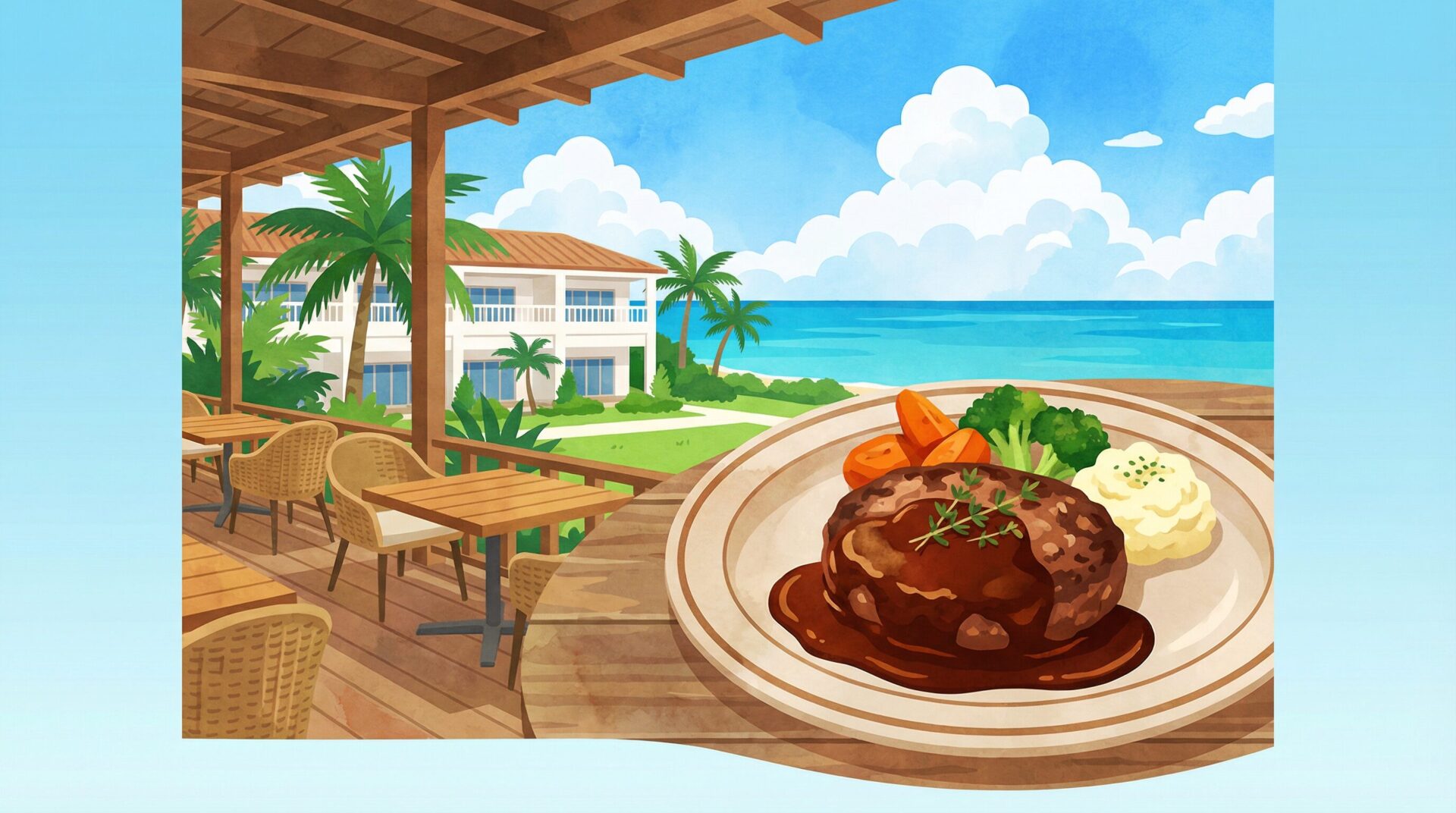
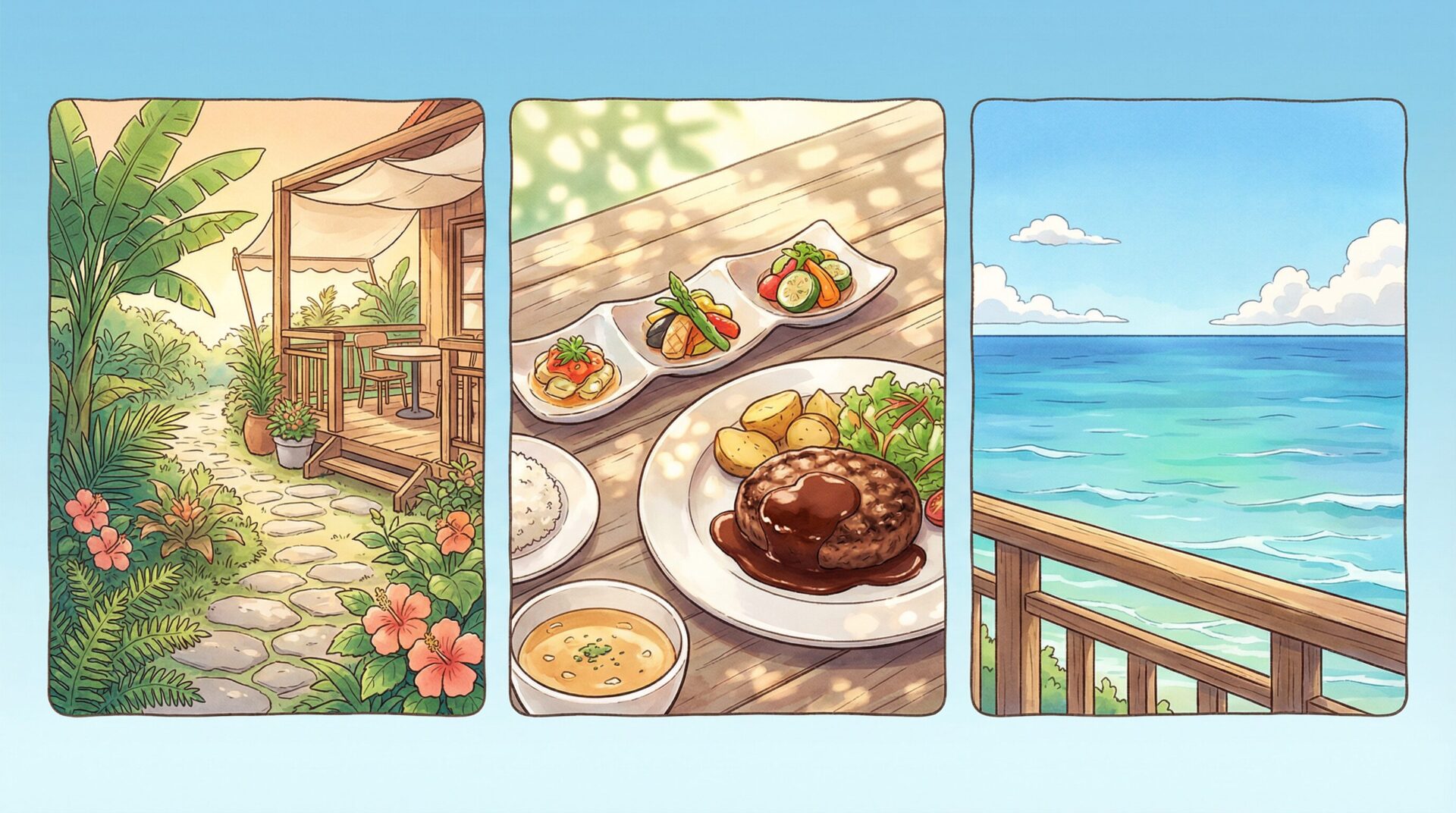
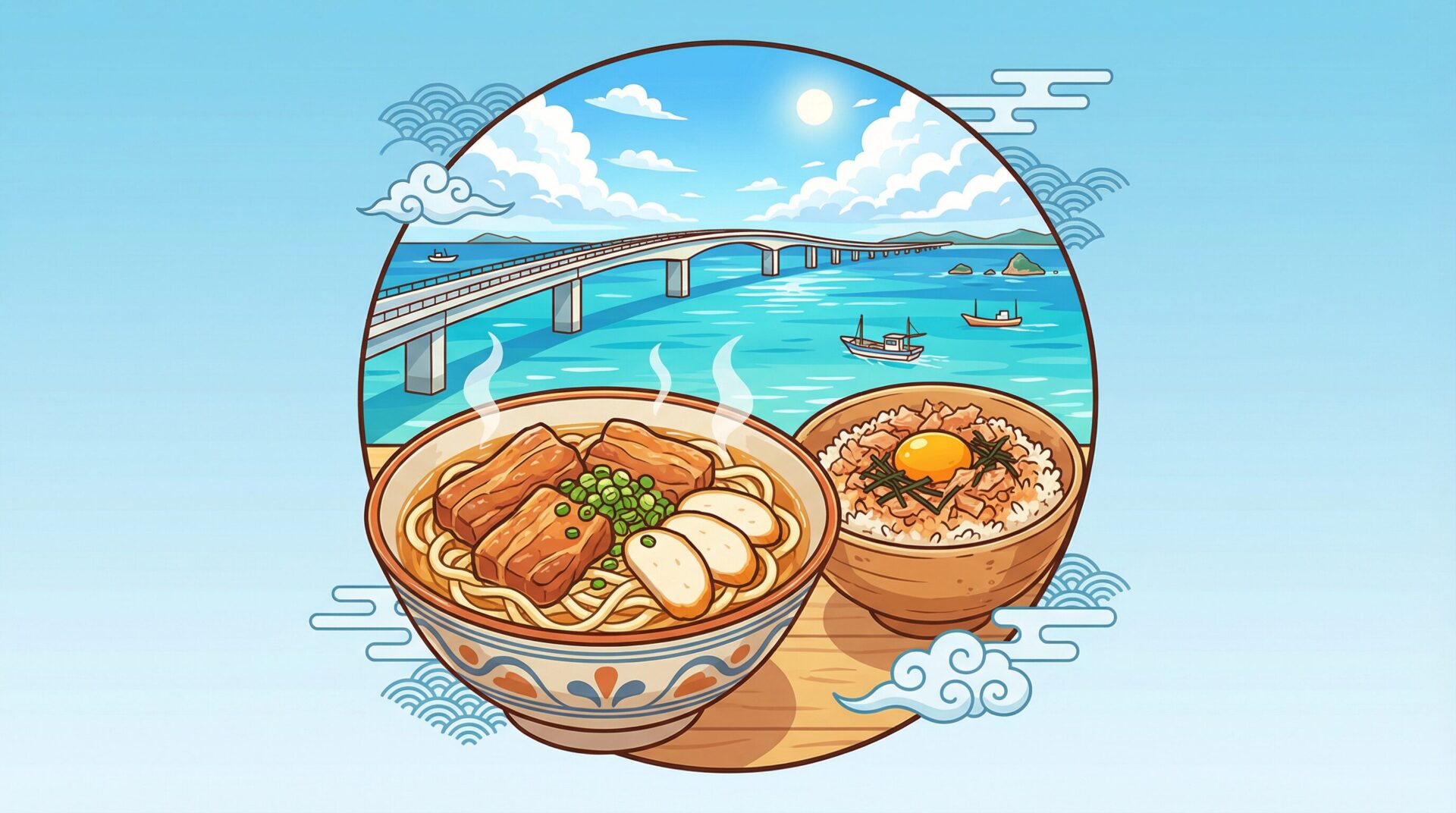
Savour a Spectacular Ocean View with Miyako Soba & Bonito Rice
You made it to Irabu Island, but have you ever agonised over "where shall we eat lunch...?"
When I first visited Irabu Island, I seriously couldn't figure this out. I drove around the island in a rental car, going "huh, is this closed?" "are the opening hours too short?" "where are the eateries even?", and in the end I missed lunch and went back to Miyako Island. It's a pathetic story, but I think this is a surprisingly common Irabu Island thing.
Irabu Island is a truly beautiful island, but in the sense of tourism infrastructure it's still scarce compared with the main island of Miyako. There are almost no supermarkets or convenience stores (to be precise, there are some across the bridge from Miyako Island, but the dining options within Irabu Island aren't many). So crossing to the island without deciding "where to eat lunch" can make you a food refugee. Come thinking "it'll work out somehow" with the sense of the main island, and you'll have a fairly rough time.
For example, you swim at Toguchi-no-Hama, fully satisfied, and think "right, let's have lunch" — and there are hardly any eateries nearby. You go straight to 17END, are moved by the view of Shimojishima Airport, and before you notice it's past 2 pm. You look for a nearby shop and it's closed, or SOLD OUT... that happens normally.
But there's a place that solves all that worry at once. That's "Irabu Ohashi Umi-no-Eki Restaurant."
It's right in front the moment you finish crossing the Irabu Bridge, with outstanding access. You can enjoy island standards like Miyako soba and bonito rice while taking in the Miyako-blue sea and the Irabu Bridge. The casualness of being able to drop straight by in the middle of sightseeing coexists with serious care over island ingredients.
In this article, while conveying plenty of the appeal of Irabu Ohashi Umi-no-Eki Restaurant, I'll deliver practical information so you don't get lost choosing lunch on Irabu Island. The Miyako soba story, the bonito rice story, and even realistic things like "what time to go" and "how to prevent sell-outs."
What Is Irabu Ohashi Umi-no-Eki Restaurant? A Special Seat Overlooking the Irabu Bridge
This facility opened in June 2020, and actually I first learned of it on a friend's social media. The first thing was latching onto an image going "where in this view are they eating!?"
It's structured with a souvenir shop on the first floor and a restaurant on the second, and the moment you go up to the second floor, what spreads across your whole field of view is the Irabu Bridge and the aqua-blue sea. This view is truly hard to put into words. An impact that makes the word "spectacular" look light. On a fine day especially, the contrast of the bridge and the sea is breathtakingly beautiful.
It's food-court style, with 66 seats in total. You finish ordering and paying first, and go fetch your food when the call buzzer rings, so you can sit at a table and wait at leisure. The time waiting while gazing at the spectacular view in front of you — fetching water and red pickled ginger self-service — is quite a luxury.
I first went on a weekday early afternoon, but even then it was quite lively. There were locals, and tourists too. The impression was that there are many families. On weekends and at noon in the tourist season, the seats can fill up unless you arrive early, so caution is needed.
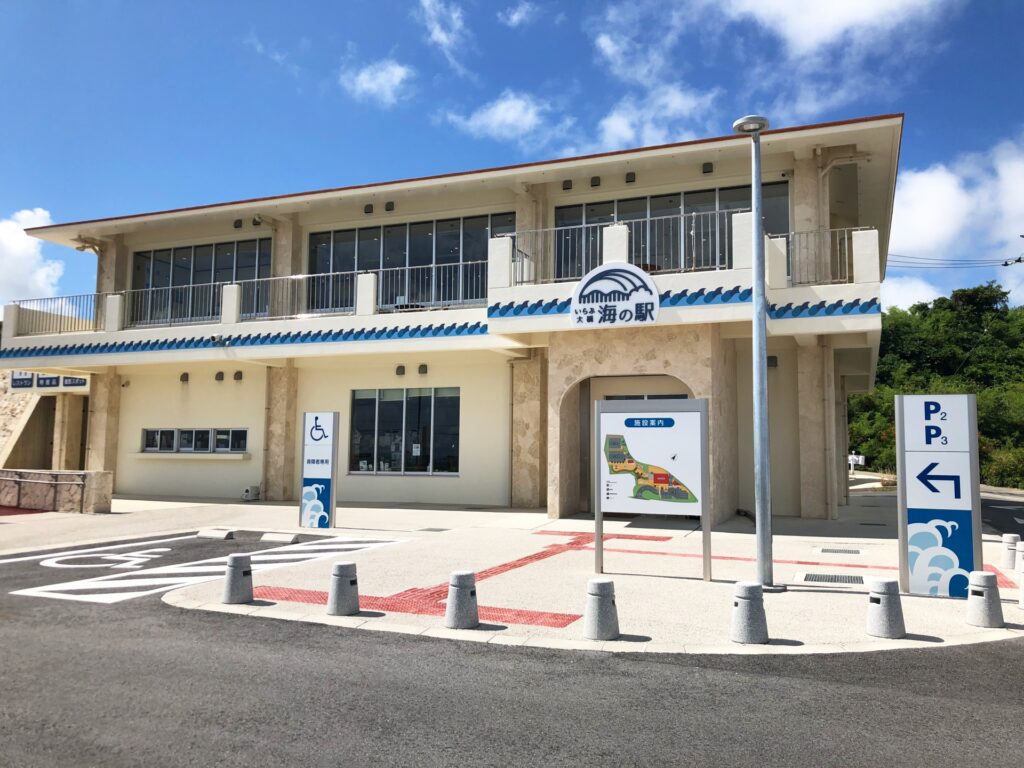
Ah, and to mention that the entrance is a little hard to find — if you park in the first-floor car park (P1), you can go up to the second-floor restaurant using the stairs inside the building. There's also a P2 car park directly connected to the second-floor restaurant, and from there you can enter as-is without using the stairs. The first time I went, I parked at P1 and got lost going "why can't I find the entrance" (haha), so knowing this in advance makes it smooth. There are actually multiple car parks here and there, more than it looks on the map, and since it's built on high ground, it has a three-dimensional construction matching the slope.
Access and Basics: Opening Hours, Seats, Location
First, let me cover the basic information.
- Irabu Ohashi Umi-no-Eki Restaurant
- Address: 1092-1 Ikemasoe, Irabu, Miyakojima City
- Phone: 0980-78-3778
- Opening hours: 9:00–18:00
- Meal service: 10:30–17:00 (L.O. 16:30)
- Seats: 66
- Car park: 1st–3rd car parks (free)
▶"Please check the latest opening hours and closing days on [Irabu Ohashi Umi-no-Eki Restaurant]"
As for access, it's located right in front after crossing the Irabu Bridge by rental car from Miyako Airport, so you can hardly get lost. It's also the first landmark-like presence that makes you feel "ah, I've arrived" once you enter the Irabu Island side.
Incidentally, the car parks are P1 on the first-floor side and P2 directly connecting to the second-floor restaurant. Park at P2 and you can enter the restaurant as-is without using the stairs, so P2 is far more convenient when you have a lot of luggage or your legs are tired. The first time I came I parked at P1 and got a little lost going "why can't I find the entrance," so it doesn't hurt to know this in advance.
What's important is the operating style of "closes once sold out." Popular items can sell out early. There seem to be more than a few people who came in the 2 pm hour to find their target item "SOLD OUT," so honestly I recommend visiting as early as possible (between 10:30 and noon).
Care Over Local Ingredients: 4 Points
This isn't simply a "scenic eatery" — it has proper care over ingredients and cooking.
① Prioritising island ingredients
Seafood like tuna and bonito of course, but also actively using local vegetables raised by Miyako Island's mineral-rich groundwater and intense sunlight. Except for unavoidable circumstances like bad weather, the stance of choosing local as much as possible is consistent.
② Handmade-focused, avoiding ready-made products as much as possible
The Miyako soba soup is apparently prepared carefully every day, with a pork base plus a seafood blend of bonito flakes, mackerel flakes, dried sardines and kelp, with dried shiitake and ginger added. Honestly, I think this is work that takes too much effort to do at a food-court-style facility. That's exactly why, when you eat it, you can feel "ah, this is properly made."
③ Using off-spec vegetables
Even if the appearance is off-spec, they actively use them as ingredients to support local farmers and reduce food loss. I think efforts like this create a "shop that lasts long on the island."
④ All seats ocean-view
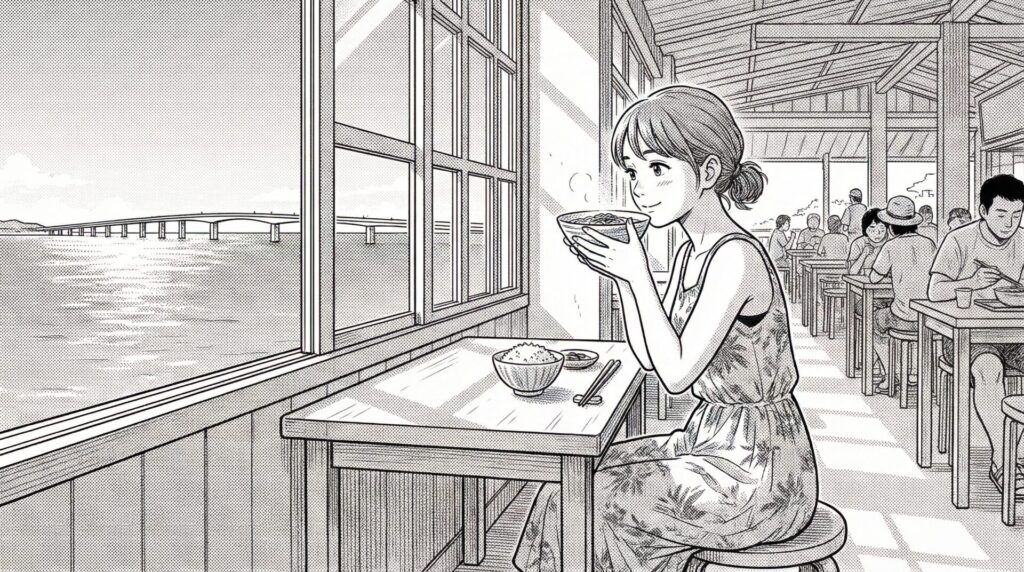
Not just ingredients — "the quality of the seats" is one of the cares too. It's designed so the Irabu Bridge and the Miyako-blue sea come into view wherever you sit. The counter seats and window-side seats have especially good views, but honestly you can enjoy the spectacular view well enough wherever you sit.
Recommended Lunch Menu: Miyako Soba, Soki Soba, Bonito Rice
Right, here's the main event. Let me talk about what to eat.
Miyako Soba
First, it has to be Miyako soba.
The soup, prepared carefully every day with a pork-bone base plus bonito flakes, mackerel flakes, dried sardines and kelp, looks like a clear, light type, but holding it in your mouth there's firm umami. This "gap between the clear appearance and the umami" is the fun of Miyako soba, and first-timers are often surprised, going "deeper than I thought."
The noodles are made at the local "Hawaii Noodle Factory." Straight square-cut noodles, thinner than mainland ramen. The doneness is good, and they tangle naturally with the soup. The pork belly is simmered tender, with 2 slices in the regular size.
For the price range, a small size with a juushii set is around ¥850 (about US$6), and a Miyako soba set is around ¥1,250 (about US$8) (varies by season).
Cartilage Soki Soba
The soki soba has "cartilage soki" — the cartilage part of spare ribs simmered until melt-in-the-mouth — boldly on top. At ¥1,300 (about US$9) it's a little pricier than Miyako soba, but this softness of the cartilage is worth eating. It crumbles apart, with almost no need to chew. If you like soki soba, this without hesitation is no mistake.
Add the mixed rice "juushii" as a side and it becomes the standard Miyako combo. When you're hungry, the soki soba + juushii set is the strongest.
Bonito Rice
This is my personal top pick.
It's mixed rice using Irabu-Island-made "namari-bushi." Namari-bushi is raw bonito steamed and smoke-dried just once. Whereas bonito flakes are repeatedly smoke-dried until rock-hard, namari-bushi is an intermediate finish, and it's generally flaked apart and used as an ingredient.
The bonito rice cooked with plenty of this namari-bushi has a completely different aroma. The moment you put it in your mouth, the bonito aroma spreads softly, a mouthful that recalls the sea of Irabu Island. Eaten as a set with aasa soba, the scent of the shore and the bonito flavour have an irresistible synergy.
Sitting at a food-court table and putting a little bonito rice into the Miyako soba soup to eat it ochazuke-style is apparently the best too (a trick a regular taught me). When I actually tried it, the soup stock and the bonito flavour combined, and indeed this was foul-play-level delicious. You could say it's bad manners, but please forgive it as the privilege of the food-court casualness.
Namari-bushi is sold at the first-floor souvenir shop too, so if you like it, buying some to take home is an option. However, it can be sold out by the afternoon, so securing it early along with lunch is better.
Other Menu Items
- Yushi-tofu soba: a dish with the gentle, Okinawan-style flavour of soft tofu. The texture of the tofu melting softly into the soup is irresistible
- Aasa soba: soba using the Miyako-Island seaweed "aasa (aosa)." There's a firm scent of the shore, irresistible for people who love the sea
- Tuna with vinegar-miso: a small dish using fresh Irabu tuna. The kind that makes drinkers want to pair it with awamori
The cartilage soki soba can sell out early. If you've decided what you want to eat, coming in time for the 10:30 opening is the most reliable.
Still, maintaining this many items and this quality in a food-court format is amazing. Island ingredients, handmade soup, noodles from a local noodle factory... in every detail you feel the care of being "a place that serves proper island food," not "somewhere to just grab a meal."
Lunchtime While Gazing at the Sea: Island Food Enjoyed with a Spectacular View
I've talked about the food, but I can't wrap up without talking about this restaurant's other big appeal — the view, after all.
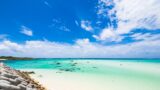
The Irabu Bridge visible from the second-floor large windows is, at 3,540 metres, the longest toll-free bridge in Japan. That bridge is visible almost straight ahead, and the Miyako-blue sea spreading beyond it fills your whole field of view. On a fine midday, the view is truly "like a painting," and there are moments your hands stop eating.
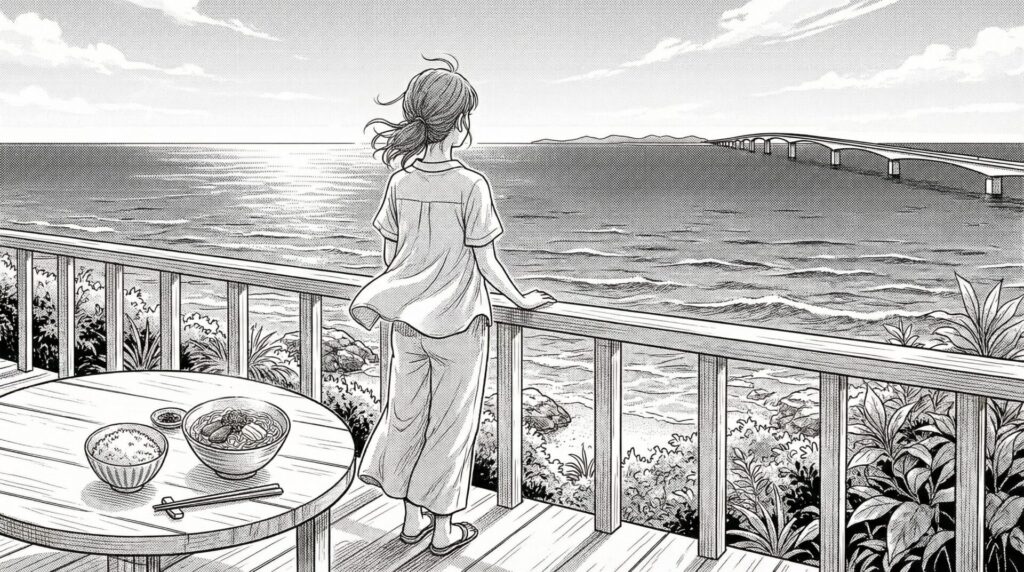
There are terrace seats too, and going outside the openness increases further. On a fine day, absolutely go out to the terrace. There are days the wind is a little strong, but including that it feels good. The summer midday sun is strong, so a hat is handy. Conversely, in the refreshing periods of winter and spring, spending time on the terrace was simply the best.
Towards evening, you can sometimes see the view of the setting sun dyeing the bridge and sea. Since meal service is until L.O. 16:30, going in time for that hour lets you enjoy your meal together with the special view. The moment cars crossing the bridge become silhouettes in the backlight, you can't help wanting to take a photo.
Being able to spend a leisurely time while gazing at passing cars and fishing boats is, I think, the reason this isn't "just an eatery." Irabu Island sightseeing often means moving around actively, but coming here you somehow naturally slow down. Gazing at the sea while waiting for your food, you realise "ah, I'm properly on the island now." I love that time terribly.
Why I Recommend Irabu Ohashi Umi-no-Eki for Lunch on Irabu Island
There are several reasons I can assert this is the place for lunch on Irabu Island.
First, that it's open from 10:30. Many island eateries close in the early afternoon, and the options are few to begin with. A 10:30 start fits perfectly with the timing sightseeing starts moving. You can drop by as the "before departure" of a drive looping the island.
Next, that it cares about local ingredients and handmade cooking. Due to the food-court format, some people inevitably worry about a "mass-produced feel," but one sip of the Miyako soba whose soup is prepared every day erases that worry.
And that a car park is fully provided. Since almost everyone sightseeing Irabu Island uses a rental car, this is quietly important. There's a wide free car park, so you can drop by casually.
Lastly, that the souvenir shop below is substantial too. Being able to buy Irabu and Miyako Island limited souvenirs all at once along with lunch is hugely helpful when thinking about a sightseeing schedule. Namari-bushi souvenirs are sold too, and condiments using bonito line up as well.
Then, not to be forgotten is the "serious commitment to local production for local consumption." The stance of using off-spec vegetables and supporting local farmers isn't visible on the surface, but I think it seeps into the taste of the cooking. A place where there's a proper philosophy of island food behind the food-court casualness. That might be the number-one reason I love this restaurant.
Enjoy It as a Set with the Surrounding Sights
Let me also briefly introduce spots you'll want to drop by before or after lunch.
Irabu Ohashi Umi-no-Eki is right at the foot of the Irabu Bridge, so dropping by at the timing you cross the bridge, or dropping by after sightseeing the island before returning to Miyako Island — either fits the positional relationship.
Toguchi-no-Hama is a particularly popular beach even within Irabu Island, characterised by high transparency and white sand. About 15 minutes from Umi-no-Eki by rental car. The course of swimming here before lunch and coming to Umi-no-Eki once you get hungry is, personally, the best.
Sawada-no-Hama is a beach with a distinctive contrast of rocks and sea. It's especially beautiful at dusk. It's a little off the meal hours, but it's recommended as an evening stroll destination.
17END and Shimojishima Airport are popular spots on Shimojishima, connected to Irabu Island by a bridge. It's a place where aeroplanes pass low overhead, with outstanding sea transparency too. The combination of touring here first and then lunch is also good as a standard course.
Loop the island, and lastly eat Miyako soba at Irabu Ohashi Umi-no-Eki before crossing the bridge home. This route might be the royal road of "a day enjoying Irabu Island to the maximum."
FAQ: Frequently Asked Questions
Q1. Can I reserve?
Reservations aren't possible due to the food-court format. With 66 seats, an early visit is important in peak seasons like weekends, Golden Week and Obon. If you can arrive between 10:30 and 11:30, you can pretty much secure a seat.
Q2. Are there closing days?
Irregular closures. Checking the official site or phone (0980-78-3778) is the most reliable. Checking before your trip prevents trouble.
Q3. What are the payment methods?
Cash is the basic. There are cases where credit cards and electronic money can't be used, so preparing cash is reassuring.
Q4. Is it OK with children?
With the food-court format and room in the seats, it's easy to move around even with a buggy or small children. Miyako soba is light in taste, so it's easy for children to eat too.
Q5. What's the best time to enjoy the view?
A fine midday is when the Miyako-blue sea shines most. In the evening (around 4 pm) you can sometimes see the sight of the setting sun dyeing the bridge, and this too is exceptional. Both are hard to give up.
Q6. How can I avoid sell-outs?
Coming between 10:30 and noon is the best move. "SOLD OUT" displays tend to increase from the 1–2 pm hour onward, so aim for an early lunch.
Q7. Where can I buy souvenirs?
The first floor is a souvenir shop, with Miyako and Irabu Island limited foods and bonito-related products in stock. Being able to shop all at once along with lunch is convenient. Namari-bushi and bonito miso are especially popular, and these too can sell out by the afternoon.
Summary: For Lunch on Irabu Island, Decide on Here Without Hesitation
If asked "where's a recommended lunch on Irabu Island?", I'd now answer Irabu Ohashi Umi-no-Eki Restaurant without hesitation.
The Miyako soba soup is a serious make, prepared daily; the bonito rice is an original using Irabu-Island-made namari-bushi. And you can eat it while taking in the Irabu Bridge and the Miyako-blue sea. A lunch spot with all these conditions in place is right in front the moment you cross the Irabu Bridge.
Since it's open from 10:30, you can drop by before departing on sightseeing, and the car park is wide so you won't struggle even coming by rental car. Handmade cooking caring about island ingredients can be eaten casually in the casual format of a food court.
Actually, the biggest secret to "succeeding" at lunch on Irabu Island is, I think, "deciding in advance." The island is beautiful, but the dining options aren't that many. Come with "it'll work out somehow" and you easily become a food refugee in the early afternoon. That's exactly why having an anchor point of "first here once you cross the Irabu Bridge" reduces travel stress all at once.
That said, "closes once sold out" is true, so if you have a target item, it's better to arrive before noon. Just bear this in mind and you'll hardly regret your lunch.
An Irabu Island trip has already begun with the first bite after crossing the bridge.
Miyako soba soup with the island wind, Miyako blue spreading beyond the window. That lunch on Irabu Island could be such a rich time, honestly I didn't imagine when I first came. But now it's become a place I can declare "first here when you come to Irabu Island." Please do, once, check that view and taste with your own tongue and eyes.
The opening hours, closing days and menu of each shop may change. Please be sure to check directly with the shop before visiting.