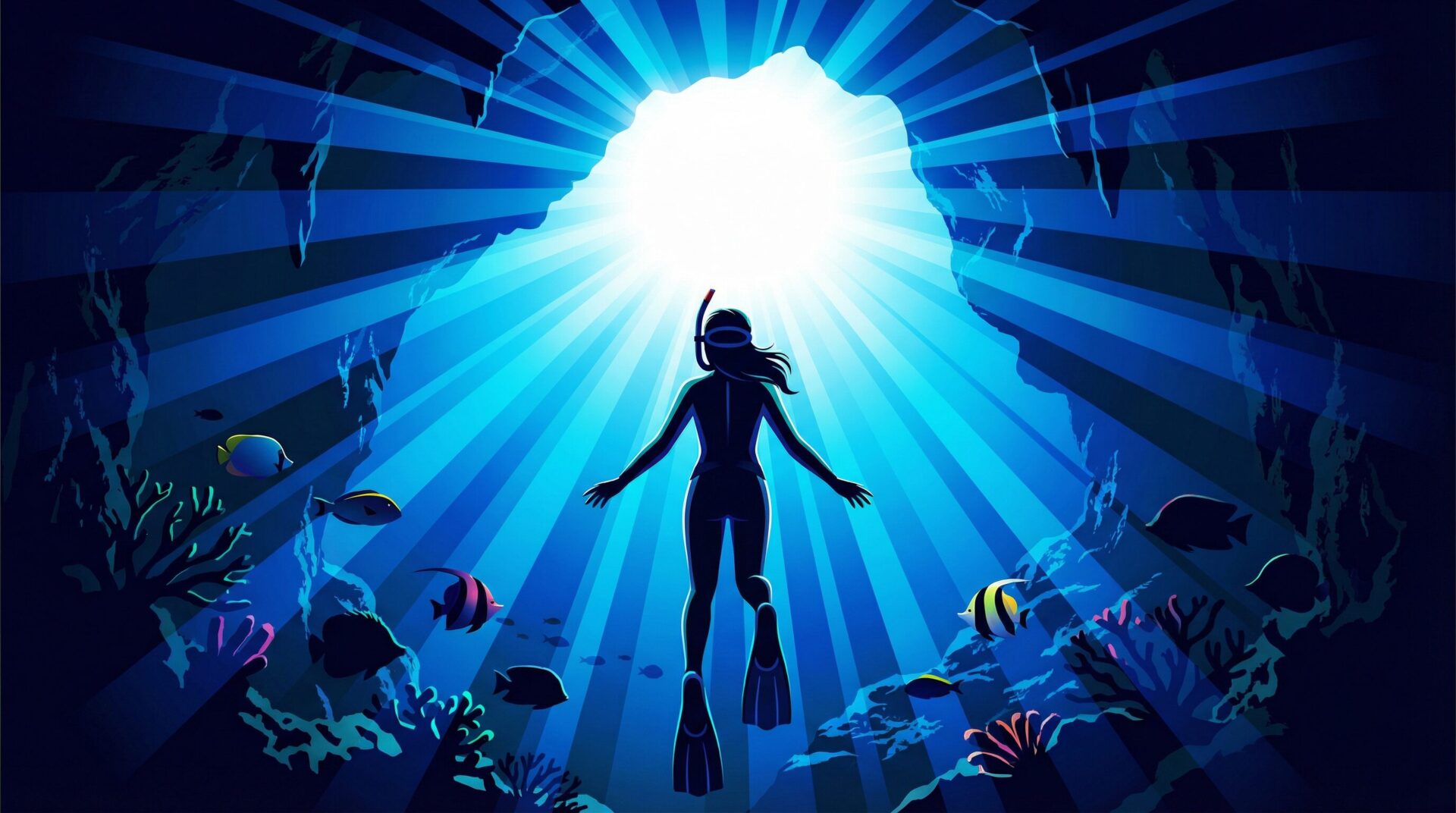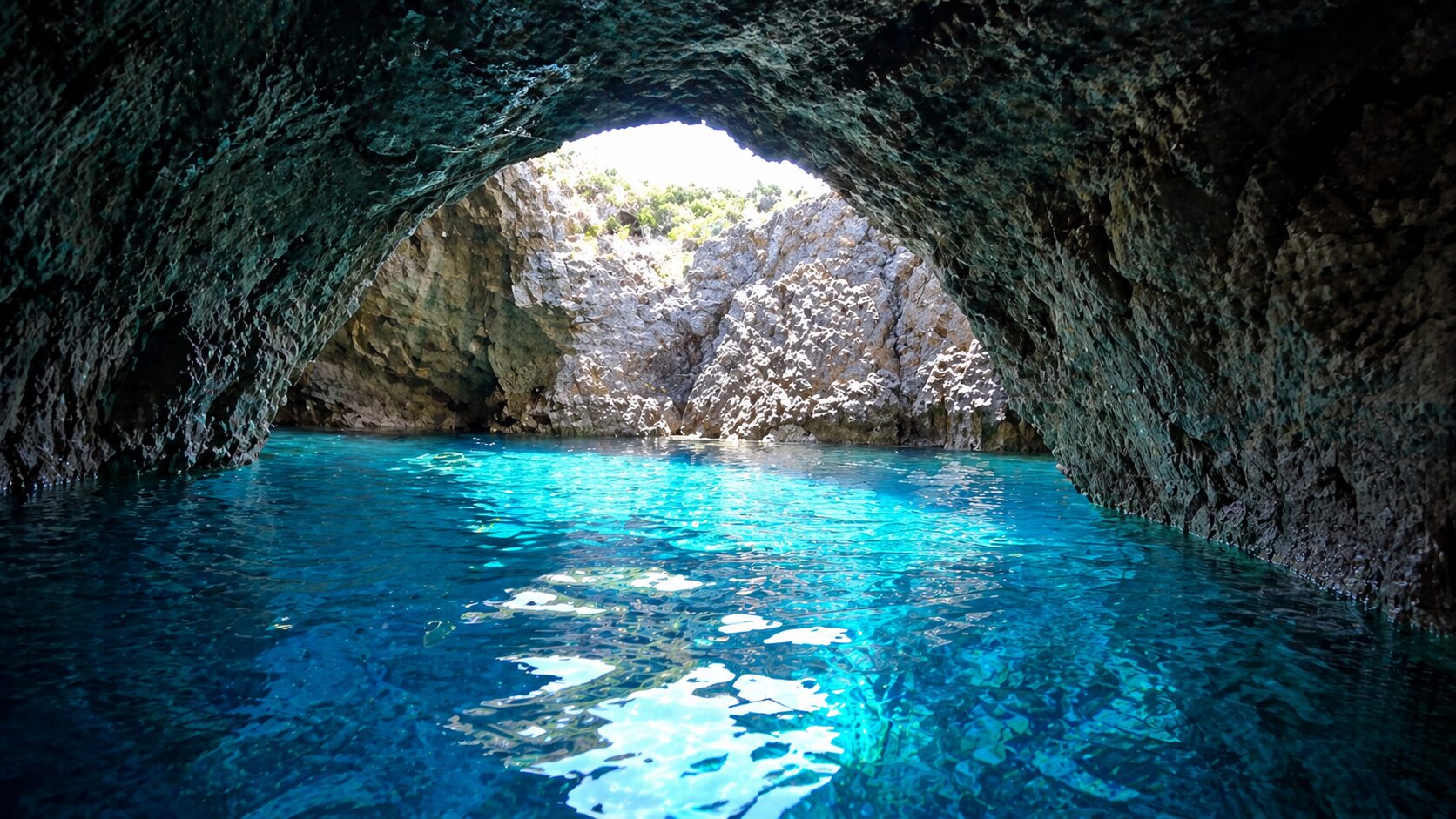
Irabu Island's Blue Cave (Sapphire Cave) is a place where, however many times you go, you think "ah, this is it" each time. When I first visited, the moment I jumped into the sea from the boat and raised my face, my view dyed a single blue, and a voice escaped me. That sensation absolutely won't come across in photos.
But at first, an awful lot of people stop at "I don't know how to get there."
"From Miyako Airport to the Blue Cave, how do I go?"
"There are several kinds of tour, but which should I choose?"
"Can I go independently? Or is a tour essential?"
I've seen many friends close their browser within 10 minutes of opening a travel site.
In this article, about Irabu Island's Blue Cave, I'll bring together and introduce the necessary information all at once, centred on access methods and recommended tours. From basic knowledge of the place to specific directions, choosing a tour, points to note, the best season, and even accommodation and food, I've built it so a first-time visitor can plan without getting lost.
By the time you finish reading, you should be thinking, "let's put this into the next itinerary."
- What Is Irabu Island's Blue Cave? Let's Know Its Appeal and History
- Irabu Island's Location and Access: How to Get There from Miyako Island
- Specific Directions to the Blue Cave and Tour Meeting Points
- Creatures You Can Meet at the Blue Cave: A World of Sea Turtles and Tropical Fish
- Activities You Can Enjoy at the Blue Cave: Snorkelling, Diving, Kayak
- Points to Note and What to Bring When Visiting the Blue Cave
- Recommended Tours and the Best Season
- Frequently Asked Questions About the Blue Cave
- Irabu Island's Accommodation and Food
- Irabu Island's Means of Transport: Rental Car and Taxi
- Summary | Go to the Blue Cave at Least Once, I Really Want You To
What Is Irabu Island's Blue Cave? Let's Know Its Appeal and History
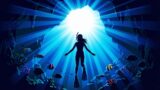
Irabu Island's Blue Cave is a sea cave also called "Sapphire Cave." It opens gapingly on the coastline about 10 minutes by boat from Sarahama Port, on the north side of Irabu Island.
Its appeal is above all the phenomenon where light pouring into the cave reflects off the water surface and dyes the whole space blue. This is born from the combination of light refraction and seawater transparency, and the blue comes out densest from about 9 a.m. to noon on a fine day. It's plenty beautiful even when cloudy, but the blueness on a fine day is in another class.
Incidentally, this "reason it looks blue" surprised me when I asked a local guide. Fine particles in the seawater scatter the short-wavelength blue light, while the cave ceiling blocks other light, so as a result only the blue reaches your eyes — that's the phenomenon, apparently. It's the same mechanism as the Grotta Azzurra of Sicily. Being able to meet this scenery in the Miyako area without going abroad is a luxurious thing.
Historically, it was a place the local fishermen had long known and called "Sangara cave," and for a while after the war it wasn't turned into a tourist site. It began to be recognised as a sightseeing tour only from the 2000s onwards. Now it's become one of the highlights of Miyako Island sightseeing.
On the northwest coast of Irabu Island there's also a huge cave called "Dairyumon", and tours touring it as a set with the Blue Cave are popular. Dairyumon is a cave of the type you look up at from a boat outside, and the fantastical air of its interior is distinctive. Looking up at the rock ceiling reaching tens of metres from the sea surface, you're truly overwhelmed by nature's scale.
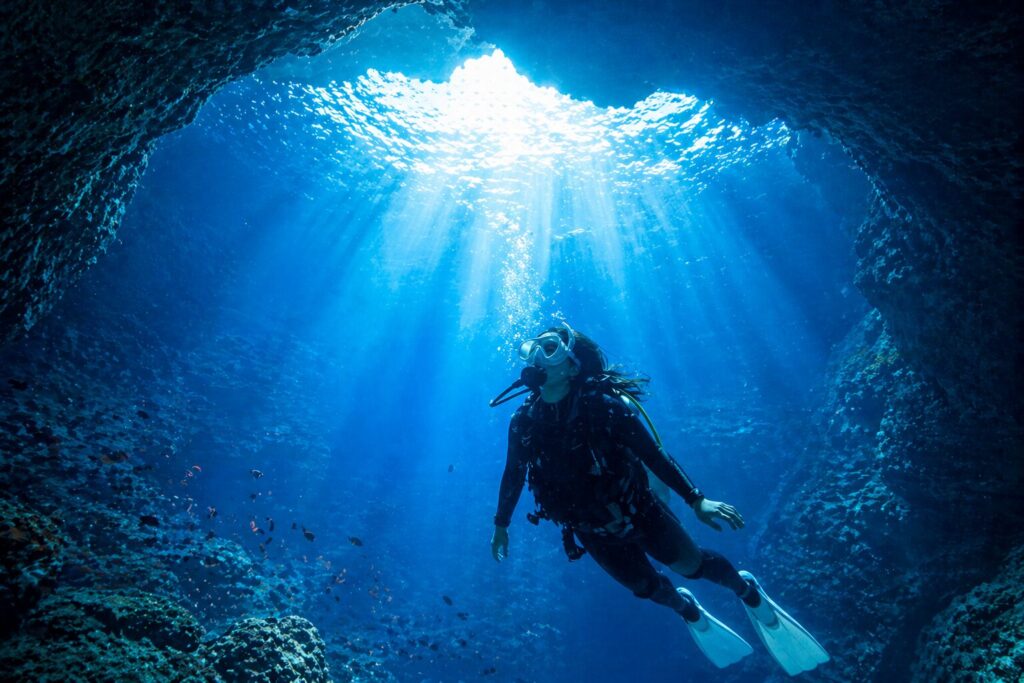
By the way, there are several places in Japan named "Blue Cave," but Irabu Island's is among the largest in the Okinawa area, a rare place with all three of scale, transparency and good access.
Irabu Island's Location and Access: How to Get There from Miyako Island
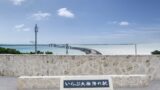
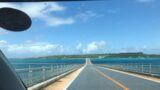
Irabu Island is a remote island northwest of Miyako Island, connected by land to Miyako Island by the Irabu Bridge (3,540 m total, the longest bridge in Japan you can cross for free) opened in 2015. Before the bridge existed you could only go by ferry, so the barrier to sightseeing dropped all at once.
For access to Miyako Island and Irabu Island, direct flights from Tokyo, Osaka, Nagoya, Fukuoka and elsewhere to Miyako Airport or Shimojishima Airport are convenient. Shimojishima Airport is on Irabu Island, so if you're joining a Blue Cave tour, arriving at Shimojishima Airport is overwhelmingly easier. It's about 15 minutes by car from the airport to Sarahama Port.
If going via Miyako Island, cross the Irabu Bridge from Miyako Airport onto the island. After finishing crossing the bridge, it's around 10 minutes by car to Sarahama Port. As for travel time, whether arriving at Miyako Airport or Shimojishima Airport, you can reach the Blue Cave tour meeting point within an hour by calculation.
Getting around the island, a rental car is almost essential. There are only a few buses a day, and using one as your sightseeing legs isn't realistic. Rental cars can be hired at either Shimojishima Airport or Miyako Airport, and in season early booking is essential. Securing one together with your flight is the safe move.
Incidentally, the ferry connecting Miyako Island and Irabu Island was abolished with the opening of the Irabu Bridge in 2015. Old information-site descriptions of "go by ferry" don't apply as of 2025, so please be careful.
Specific Directions to the Blue Cave and Tour Meeting Points
To the Blue Cave itself, you can absolutely never reach it from land. There's no path down to the shore, and being a sea cave surrounded by cliffs, you can only enter from the sea by boat or snorkelling. This is the point first-timers most easily misunderstand, so I'll emphasise it.
In other words the effective "way to get there" is, as a base, book with a tour company and head to the designated meeting point. Meeting points are mainly split into three.
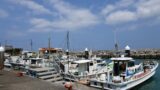
Meeting at Sarahama Port: the most common pattern. Park your car in the Sarahama Fishing Port car park and join up with the tour company staff. It's about 10 minutes by boat from the port to the Blue Cave, so the travel is short and there's little worry of seasickness.
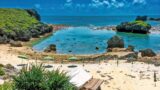
Meeting at Shimojishima / Nakanoshima Beach: a meeting point often used for snorkelling-type tours. About 10 minutes by car from Shimojishima Airport, with a free car park.
Hotel pick-up within Miyako Island: many tours run free pick-up from major hotels on Miyako Island and Irabu Island. It's a welcome service for those without a rental car or not confident driving.
The meeting time is mostly 8 to 9 in the morning. Heading to the cave in the morning is advantageous from every viewpoint — sea conditions, the angle of the light, and avoiding crowds. There are afternoon tours too, but the quality of the blue in fine weather is decidedly better in the morning.
Incidentally, recently tour-booking apps (Activity Japan, Asoview, KKday and others) that push real-time notifications of weather and operation status have been increasing. Used in combination with a map app, the day's movements become really easy. Cancellation decisions due to sea conditions can also be managed in one place via the app, so it's especially convenient for first-time travellers.
Creatures You Can Meet at the Blue Cave: A World of Sea Turtles and Tropical Fish
The sea around the Blue Cave is the Miyako-blue field itself, with developed coral reefs. What you can meet with high probability during the tour is the sea turtle.
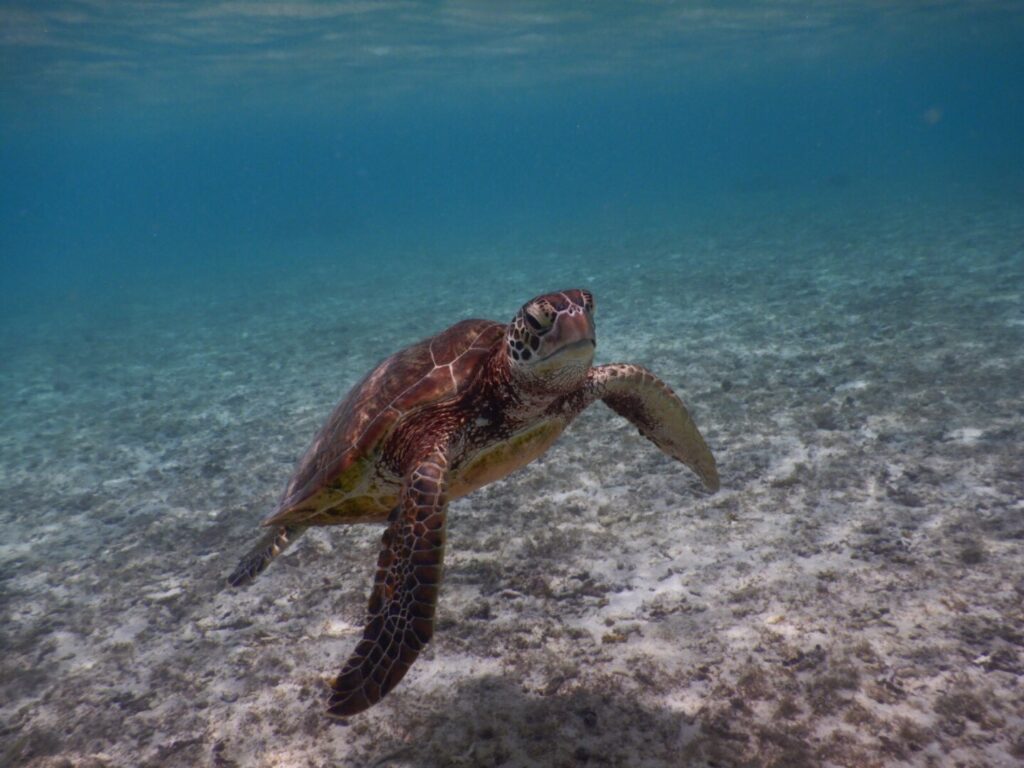
Around Irabu Island two species live, the green turtle and the hawksbill turtle, and especially in the shallows in the morning you often come across sea turtles surfacing to breathe. I myself have swum at close range with sea turtles more than five times on tours so far. According to a local guide, the encounter rate exceeds 90%, apparently.
When you meet a sea turtle, you get excited and want to chase it, but this is a no. Sea turtles rise to the surface to breathe, so blocking from above means drowning them. The three — "don't cover from above," "don't touch," "don't block its path" — are absolute manners.
Tropical fish are abundant too, and colourful fish like the pink anemonefish, blue-green chromis, scissortail sergeant and Moorish idol can be seen up close. The anemonefish swimming among the coral sometimes come close enough that you want to poke them with a finger, making it an unbeatable photo spot.
About the coral, in recent years bleaching has been confirmed in part due to rising seawater temperatures. Locally, monitoring for coral conservation got going in earnest around 2021, and shops running eco-tours you can join (coral-planting experiences and the like) have been increasing. Just mixing in a little of the "return it to the sea" perspective, not only "just enjoy," changes the depth of the trip's memory by a notch. The more experienced should feel this all the more.
Activities You Can Enjoy at the Blue Cave: Snorkelling, Diving, Kayak
The activities you can choose on a Blue Cave tour fall broadly into four kinds. Each suits different people, so it's good to choose the one matching your style.
Snorkelling: the most popular and beginner-friendly. Many plans can be joined from age 3, and with a life jacket worn it's OK even if you're poor at swimming. The going rate is ¥6,900–9,800 (about US$46–65) for a half-day course. At many shops, free equipment rental and free photo data have become the standard service. For first-timers, choosing this first is no mistake.
Trial diving: no licence needed. Together with a guide you dive to 5–8 m underwater and tour the inside of the cave from an underwater perspective. The price is ¥14,000–20,000 (about US$93–133). Age 10 and up is general. The experience of "looking up at" the cave's blue from below is underwater-only. If you're the diving type, by all means.
Sea kayak / canoe: the type where you paddle right into the cave. Since you can enjoy it without getting wet, it suits those wanting to protect their hair or make-up, or those poor at entering the sea. Plans setting exploration to Dairyumon as a pair are popular too. The price is around ¥9,000 (about US$60) for 2 hours.
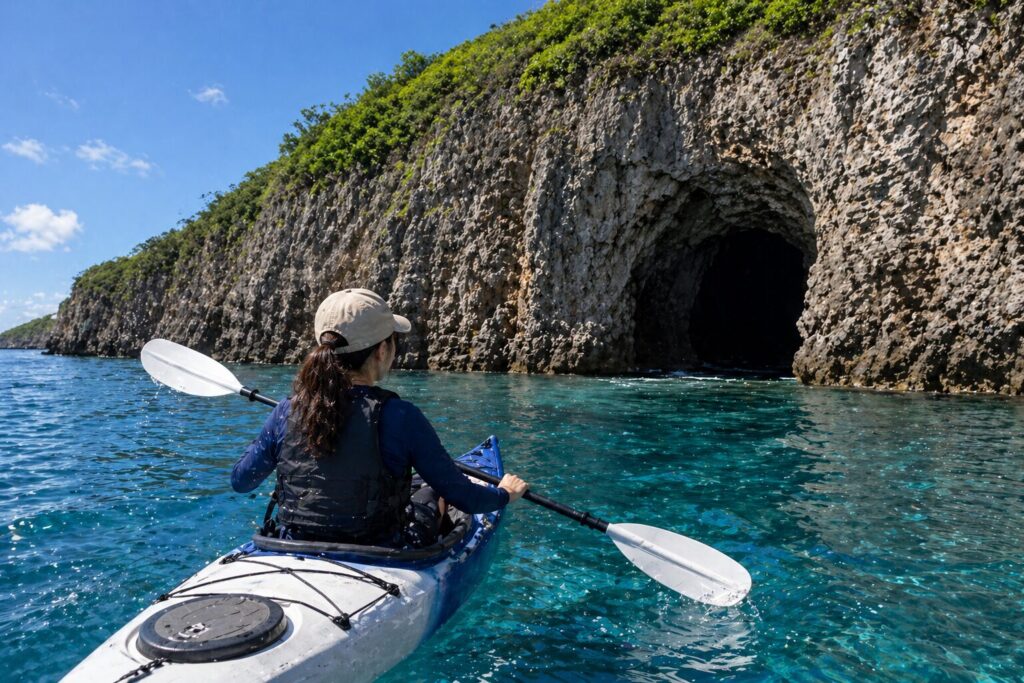
SUP: cruising around the cave while standing on the board. A calm sea surface is the condition, so the operation rate is a little lower. The time spent stopping and gazing at the cave entrance is exceptional. There are plans combining it with sunset SUP too.
If you're undecided, a snorkelling + kayak combo tour is recommended. After swimming through the cave to experience it, you gaze from outside by kayak in a two-stage setup, and satisfaction rises sharply. The price is around ¥10,000 (about US$67) for a half day.
Points to Note and What to Bring When Visiting the Blue Cave
The Blue Cave is a natural sea cave, so there are several points to be careful about for safety. Following the guide's instructions is the main premise, but the participant's preparation matters too.
Clothing: a rash guard over your swimsuit. Having marine shoes helps when descending to rocky areas. A hat is essential for sun protection. In winter (November–April) many shops include a wetsuit as standard, but check in advance just in case.
Belongings: towel, change of clothes, sandals, waterproof phone case, sunscreen (reef-safe recommended), motion-sickness medicine. Photo data is often provided free by the tour company, so you don't have to force yourself to bring your own camera.
Safety measures: on the morning of the day, contact from the tour company about whether it will run comes in. It can be cancelled due to sea or weather conditions, so allow slack in your itinerary. Don't drink too much the day before, keep breakfast light, and don't push it on a day you can't equalise your ears. This is the most basic of basics.
And then rip currents (reef currents). In free-swimming areas like Nakanoshima Beach, there are currents that sweep you offshore if you go outside the reef, so absolutely don't cross the line. This is a point where accidents happen every year, so please be especially careful if swimming independently outside a tour.
Locally, the "Coral Protection Ordinance" was revised in 2024, and the policy now is that not only touching or harvesting coral but also using non-reef-safe sunscreen is discouraged. It's become an era where the tourist side's awareness is also questioned.
Recommended Tours and the Best Season
Over 100 Blue Cave tour plans are listed on major booking sites, but you only need three criteria for choosing.
- Is it small-group (1–6 people per group)?
- Is photo data free or a cheap extra charge?
- Does it include pick-up (if you have no rental car)?
Shops satisfying these three can be joined with peace of mind even by beginners. Shops with a high cumulative number of reviews have stable operating track records, and tend to have high quality of same-day cancellation and accident response too.
The best season is April–October. The sea is calm, the fine-weather rate is high, and the blue inside the cave can be seen stably. In particular, late June to early July just after the rainy season ends, and late September to October when there are few typhoons, are sweet-spot timings. While Obon in August and the year-end and New Year are crowded, the operation rate is high.
Winter (November–March) is actually not to be underestimated. The operation rate drops due to the north wind's influence, but if you can join, the chance of having it to yourself with few tourists rises. The seawater temperature is also around 20 degrees, and with a wetsuit provided you can swim. There are even seasons when the transparency is rather higher than summer.
Even on a rainy day, snorkelling runs if it's only light rain. The Blue Cave in the rain is the Blue Cave in the rain, with a moist, fantastical atmosphere. This is what I heard from a guide, but an acquaintance who actually joined on a rainy day also said "this was good in its own way."
Frequently Asked Questions About the Blue Cave
Q. Can even a snorkelling beginner enjoy it?
Almost all tours are built for beginners, and with a life jacket worn plus a guide accompanying you, you can join even if you're poor at swimming. Many plans are OK from age 3, accommodating seniors and families too. If worried, choosing a tour clearly stating "beginners-only course" gives one more notch of reassurance.
Q. Can families, couples and whole groups all join?
From age 3 up, there's a wealth of plans families can join. Glass-boat tours have no age limit and are OK with babies too. There are couple-only private tours and charter plans for groups, so you can choose to match your party composition.
Q. Can't I go to the Blue Cave independently?
Technically it's not impossible if you bring your own sea kayak, but judging the sea conditions is extremely hard and dangerous for beginners. A tour with a local guide accompanying is effectively the essential route. For safety's sake too, please definitely join a tour the first time.
Q. Does it get cancelled in rain or bad weather?
Since it's a sea activity, a cancellation decision is made when a forecast of strong wind, high waves or thunder comes out. Contact from the tour company comes in on the morning of the day, so building your itinerary with one day of slack is reassuring. With app booking you can manage it all via notifications.
Q. How long does the tour take?
About 2.5–4 hours for a half-day plan, around 6 hours for a one-day plan. A half-day plan from meeting at Sarahama Port to dispersal is general. If it's hotel-to-hotel including pick-up, allow about an extra hour. A one-day plan, with a setup like cave in the morning and sea-turtle search in the afternoon, has quite high satisfaction.
Q. Can I take photos with my own camera?
Basically, underwater-camera and GoPro shooting by the tour company comes as a free service, so there's no problem without your own camera. The data can often be received via the cloud that same day. A smartphone needs a waterproof case mandatorily, and since there's a risk of sinking it underwater, if you're not used to it, choosing not to bring it is also wise.
Irabu Island's Accommodation and Food
To maximise the Blue Cave experience, staying on Irabu Island is overwhelmingly recommended. You can reach the morning meeting point in 5–15 minutes.
Accommodation falls broadly into three types. Luxury resorts (Iraph SUI, the Shigira Seven Mile Resort family, Felis Villa Suite and so on), private villas (whole-building rental type, mainly in the ¥30,000–60,000 range / about US$200–400), and guesthouses and minshuku (¥4,000–8,000 per night / about US$27–53). I get the impression many people choose private villas by finding "I want to stay here" on Instagram.
Choosing by purpose: a resort if you want to spend lavishly, a villa for families and groups, a minshuku if cost-performance is the priority — this simple division mostly hits the mark. Cross-referencing reviews and top ratings across the three sites Rakuten Travel, Jalan and Booking.com makes it easier to judge.

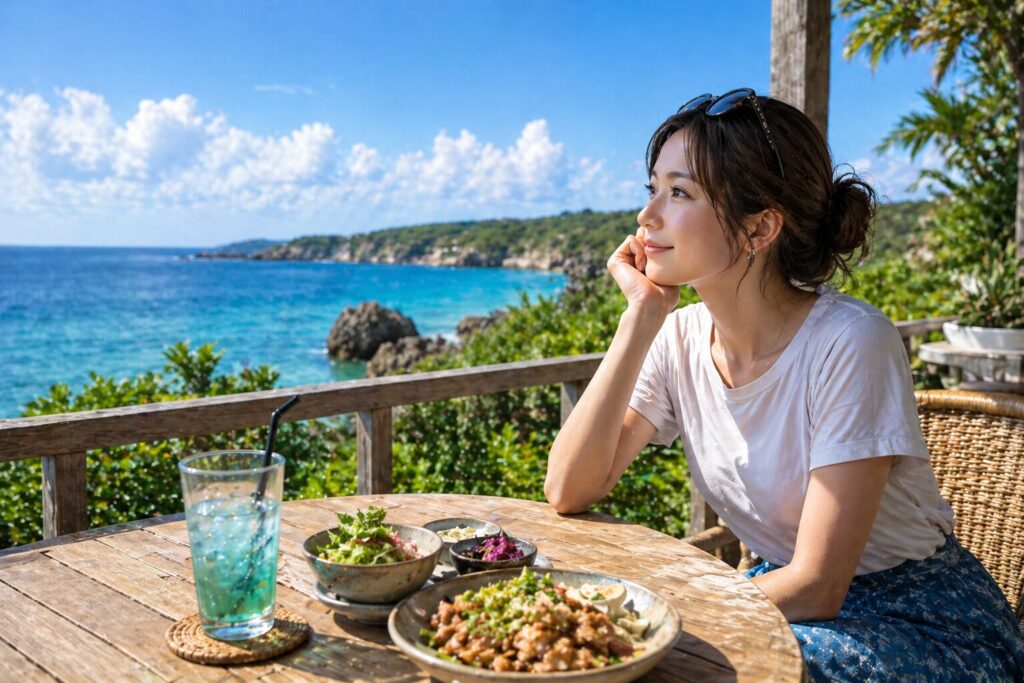
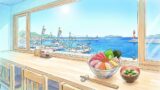
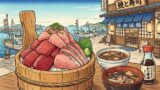
For food, the fishermen's fare around Sarahama Port can't be skipped. The tuna and bonito tub-piled bowl at "Uoichiba Ichiwa," the kame soba at "Irabu Soba Kame," and the creative dishes at "Shima-ryori Ryugu" are local standards. Local-production, local-consumption ingredients go well with the sense of achievement after a tour. Deciding on one menu item popular with tourists and choosing a shop by on-the-ground reviews is the trick to not failing.
Speaking of my own preference, lunch after a tour is absolutely fish. The body right after coming up from the sea craves salt and protein, and the ¥900 (about US$6) tub-piled bowl is delicious enough to bring tears.

Irabu Island's Means of Transport: Rental Car and Taxi
To repeat, sightseeing on Irabu Island is rental-car-based. You can hire at either Shimojishima Airport or Miyako Airport, with prices guided at ¥3,000–6,000 (about US$20–40) per day (light car to compact car). Advance booking is essential, and in peak season available cars drop sharply even a month ahead.
A Japanese ordinary driving licence is OK for the licence. For an overseas-issued licence, an International Driving Permit is needed. Map apps (Google Maps, Yahoo Car Navi) work without trouble, but the island's narrow roads include back streets not on the maps, so using them together with the paper map you get at the rental shop is sure.
Taxis are few in number and not suited to sightseeing use. There's also the option of using a sightseeing-taxi charter plan (half day from about ¥20,000 / US$133), but as the freedom is lower, a rental car is more realistic.
There are only a few buses a day and checking the timetable is essential. The fare is cheap at around ¥700 (about US$5), but the waiting time tends to get long. You can think of "joining a Blue Cave tour by bus" as realistically almost impossible.
Summary | Go to the Blue Cave at Least Once, I Really Want You To
Irabu Island's Blue Cave (Sapphire Cave) is, I think, a truly special place even within Miyako Island sightseeing. That emotion of light pouring into the sea cave filling the space with blue won't come across however hard you try in photo or video. It's scenery you can only see with your own eyes.
The way to get there is simple. From arriving at Shimojishima Airport or Miyako Airport, travel within the island by rental car, and meet for the tour at Sarahama Port. Tours are from ¥6,900 (about US$46) for a half day, and snorkelling can be joined from age 3. "For now, the snorkelling combo plan" is almost the right answer the first time.
As points to note: going independently is an absolute no, a fine morning is best, use reef-safe sunscreen, follow the guide's instructions. Keep these four and you can enjoy it safely to the maximum.
To you, wavering at night with a travel site open. On your next Miyako Island trip, please by all means put the Blue Cave into your plans. That blue leaves just a little something in the life of those who come to see it. I, too, will go to meet it again before long.