What I think every time I come to Miyako Island is, "what are people who haven't been here yet looking forward to?" I'm sorry if that sounds a little condescending. That's not it — it's because the shock of entering Irabu Island's Blue Cave for the first time never leaves my head.
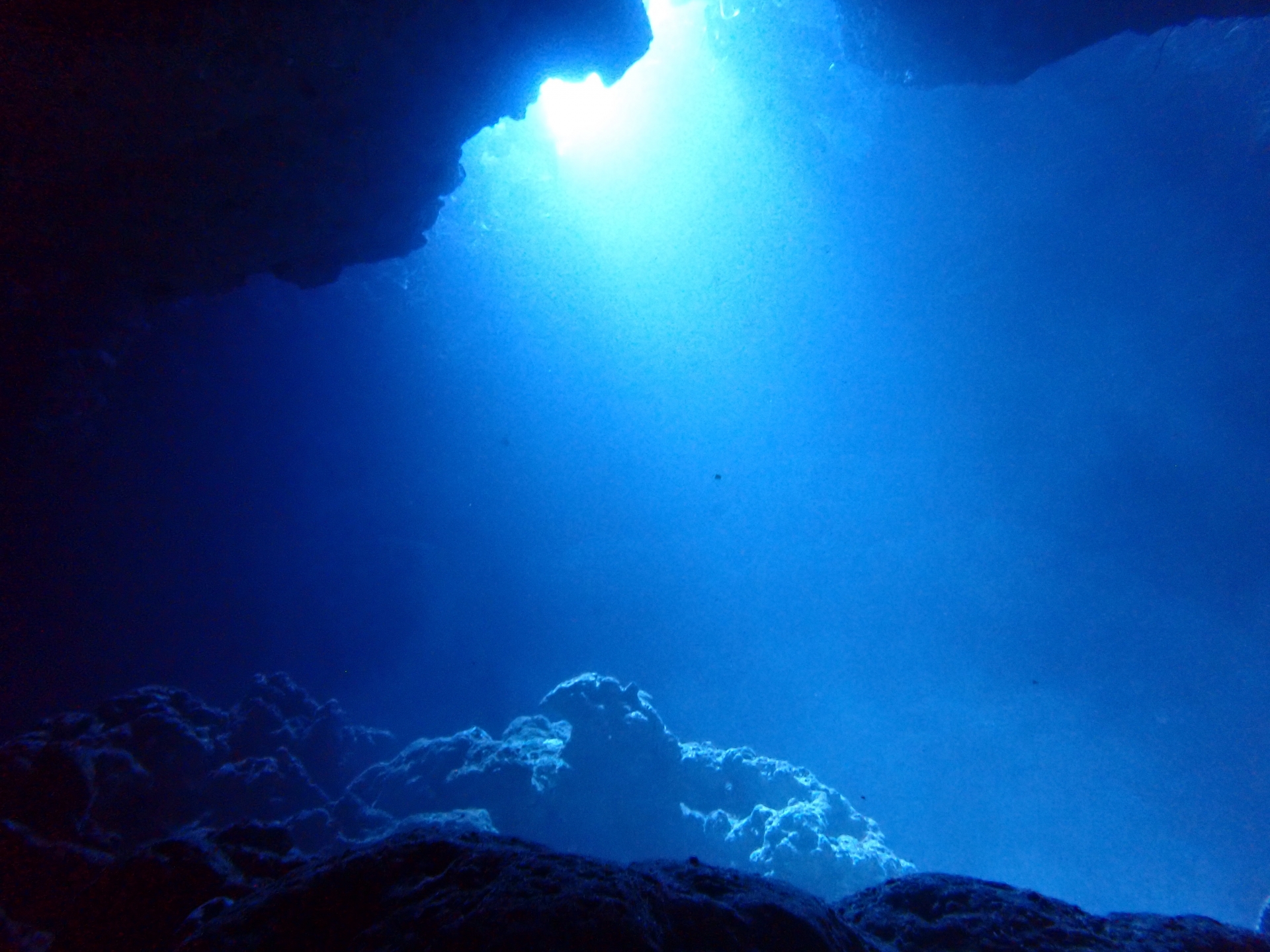
That was around the end of March, I think. I joined a tour, boarded a boat from Sarahama Port, and in about 10 minutes arrived in front of the cave — and the moment I entered the sea, I turned around and right before me was "blue." Trying to put it into words inevitably turns trite. Like sapphire, but with far more depth than that, that colour. The light passing through the cave ceiling scatters underwater, and it feels as if the inside of the cave is entirely dyed blue. A sound came out of me without thinking.
Even though they've come to Miyako Island several times, surprisingly many people don't know of this Blue Cave (Sapphire Cave). I see travellers who "cross the Irabu Bridge, see the view, and that's it," but that alone is a terrible waste.
In this article, I'll gather everything about Irabu Island's Blue Cave — from how to get there, to how to choose an activity, points to note, and how to enjoy the surroundings — based on actual experience. I've tried to make it useful both for those coming to Miyako and Irabu Island for the first time and for those who've come several times but haven't yet been to the Blue Cave, so please read to the end.
- What Is Irabu Island's Blue Cave (Sapphire Cave)?
- Access and How to Get to Irabu Island
- Activities You Can Enjoy at the Blue Cave
- Creatures You Can Meet at the Blue Cave
- Points to Note When Visiting the Blue Cave
- How to Enjoy the Blue Cave Surroundings — Tips to Enrich Your Trip More
- Frequently Asked Questions
- Summary
What Is Irabu Island's Blue Cave (Sapphire Cave)?
Why It's So "Blue" — the Cave's Formation and Mystery
The Blue Cave, its official nickname "Sapphire Cave." It's a sea cave located along the northeast coast of Irabu Island, formed naturally over long years as waves kept eroding the limestone. There's a famous "Blue Cave" in Onna Village on Okinawa main island too, but it's completely different from Irabu Island's in both location and scale. Truly many people confuse them, but they're entirely different.
To put simply the mechanism by which the cave interior shines that mysterious blue: sunlight enters the cave from the sea surface and reflects and scatters off the cave's white rock walls and sandy bottom, dyeing the whole space a deep sapphire-like blue. Conditions are best especially around 10 in the morning on a fine day, when the angle of light reaches just to the back of the cave.
I once went on a cloudy day, and that time it was a "well, it's pretty, but..." feeling. The guide also said, "today's a bit unfortunate." When you can't read the weather it can't be helped, but if you can choose, please aim for a fine morning. That alone makes the quality of the experience completely different.
The cave entrance can only be accessed from the sea side. Shaped like a mouth opening at the foot of a sheer cliff, it's structured so you can only reach it by boat or snorkelling. You can't enter from land, so a solo charge is dangerous and reaching it is hard in the first place.
"Dairyumon," Where a Dragon God Dwells — Irabu Island's Lore and Mystery
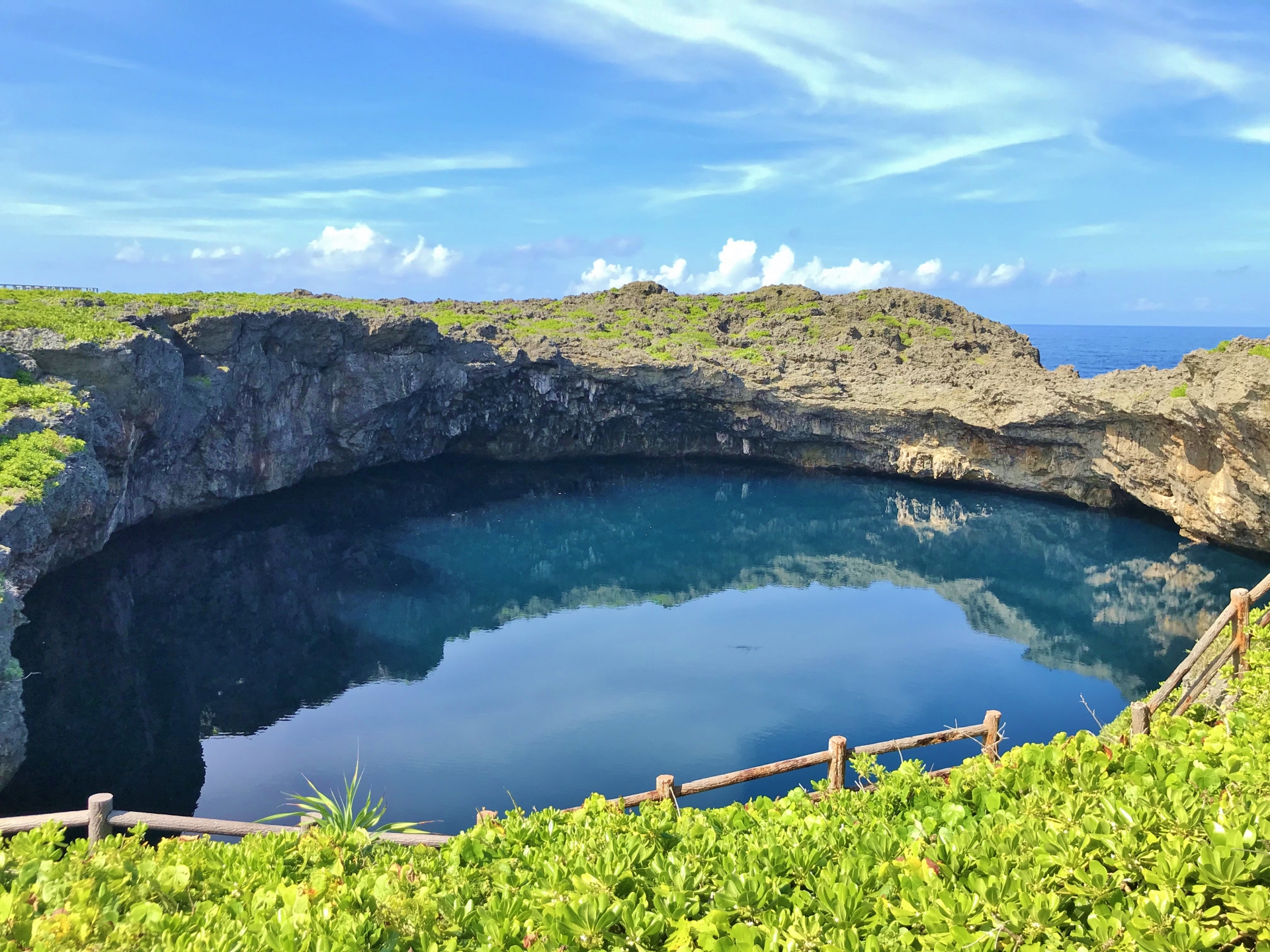
A little away from the Sapphire Cave is a huge sea cave called "Dairyumon (the Great Dragon Gate)." At about 20 metres high, it's one of Miyako Island's largest caves, a rare spot only some local shops can guide you to.
The guide taught me that it's been passed down among local fishermen and islanders since long ago as "a place to offer prayers to the dragon god." In the Miyako Island area, lore and faith related to the sea still remain strongly, and you realise it's not just a tourist spot but a place deeply tied to the island's culture.
To the question "why is this cave blue," the island people of old apparently spoke not of a scientific explanation but said "because the power of the dragon god dwells here." Those words sound strangely real even seen from us today. That blueness certainly has a force that makes you imagine something supernatural.
There are also tours where you can explore inside the cave by canoe, and the waves inside the cave are calm so even small children can easily join. Choosing a plan that tours not just the Blue Cave but legendary spots like this together adds a level of depth to Irabu Island sightseeing. If you're coming all this way, I want you to enjoy not just the spectacular spots but the island's lore like this together.
Access and How to Get to Irabu Island
From Miyako Island Across the Irabu Bridge
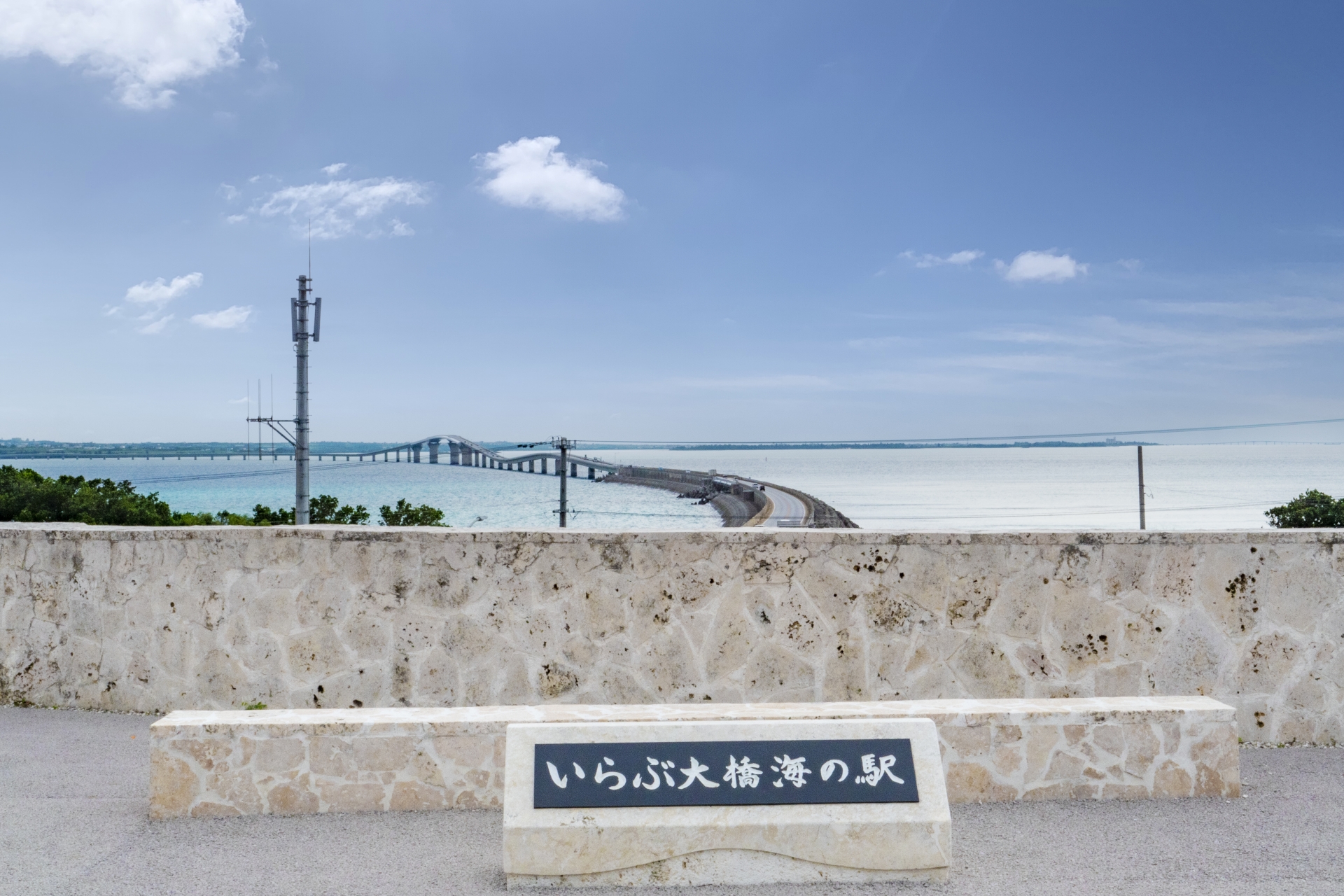
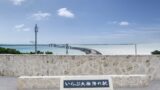
Access from Miyako Island to Irabu Island is basically the "Irabu Bridge," opened in 2015. At 3,540 metres, it's the longest toll-free bridge in Japan. The Miyako-blue sea seen from the bridge is truly spectacular, and I'm repeatedly seized by the urge to stop the car and gaze at it slowly (in reality stopping is prohibited, so please take care).
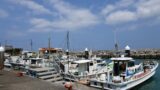
From Miyako Airport to the Irabu Bridge entrance is about 15 minutes by car. Cross the bridge and head straight in the island's northeast direction and Sarahama Fishing Port comes into view. Most Blue Cave tours depart from this Sarahama Port, so first aim for here.
Previously, when a friend first crossed the Irabu Bridge, they said "I get the illusion I'm about to fall off the bridge into the sea, it's scary." Indeed, the bridge railings look low, and driving surrounded by the Miyako-blue sea is a distinctive sensation. But once you get used to it, that becomes a pleasure. Crossing this bridge itself is, I think, one of the highlights of a Miyako Island trip.
A Rental Car Is a Must for Getting Around — Assume There's No Public Transport
Honestly, Irabu Island has almost no public transport. I see people searching "can I go by bus?", but the reality is quite harsh. To move around the area combining Miyako and Irabu Island, you'd better consider a rental car essential.
The common flow is to rent from a rental car company near Miyako Airport and cross the Irabu Bridge straight away. On-site meet-up at Sarahama Port is no problem if you have a rental car. In peak periods (July–August, Golden Week, year-end and New Year), rental cars run out all at once, so I strongly recommend arranging the car at the same time as booking the tour. How many people have I heard say "I booked only the tour and put off the rental car, and it was all gone."
About 10 Minutes by Boat from Sarahama Port — This Is the Standard Route
Once you apply for a tour, the shop contacts you the day before with the meeting time and place. Gather at Sarahama Port, receive the rental of equipment like a life jacket and snorkel, board the boat and move. From the port to the Blue Cave it arrives in about 10 minutes. Even people worried about seasickness can take it on easily since the distance is short.
As another access method, there's also a route heading directly to the cave by snorkelling from a place called "Sabautsugaa." But this is for people somewhat used to the sea, and being an area easily affected by tide level and wind, it's not suited to first-timers or beginners. At first, please always use a guided tour.
Activities You Can Enjoy at the Blue Cave
Snorkelling Is Overwhelmingly Popular — Even Beginners Can Experience It in Half a Day
The standard activity at the Blue Cave is snorkelling. Many tours can be joined from age 3, designed so that people poor at swimming and those with children can enjoy it with peace of mind.
A half-day tour takes about 2 hours. Many shops run it twice, morning (from 9:30) and afternoon (from 13:30). The price is around ¥7,000–10,000 (about US$47–67), and most shops offer free rental of mask, snorkel, fins, life jacket and so on. Plans gifting photo data for free are increasing too, where the guide shoots with a dedicated waterproof camera. This is a more pleasing service than expected — you get underwater photos you could hardly take yourself.
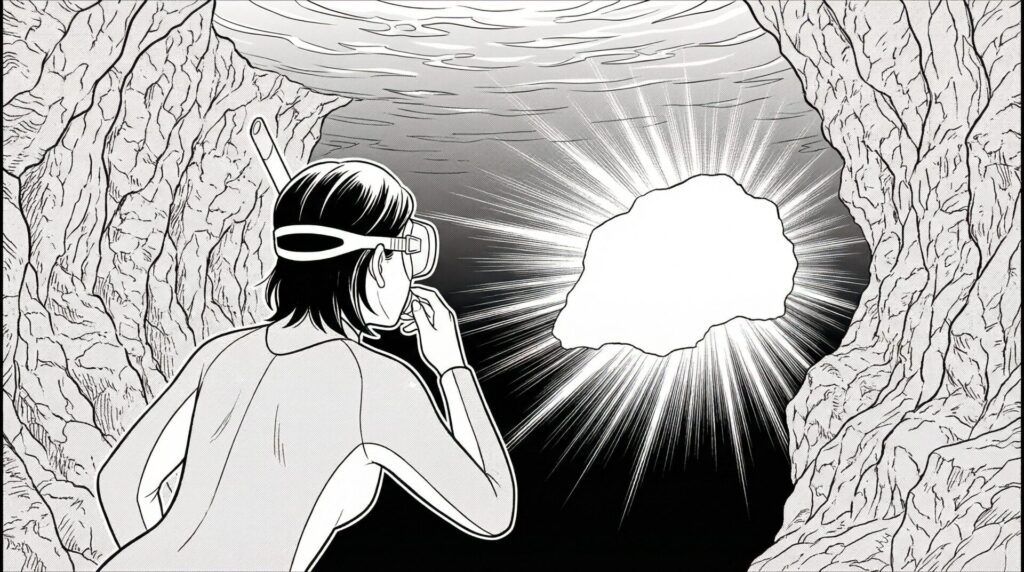
When I joined too, the guide signalled "turn around here!" inside the cave, and took a photo of me with the light-filled cave as a backdrop. The kind you absolutely can't take with a phone, and I still keep it carefully. Since you can focus on feeling that moment with your body during the tour, there's high value in leaving it to the guide.
Diving, SUP, Sea Kayak, Glass Boat — Choose by Your Purpose
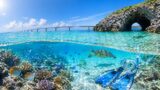
Not just snorkelling — around the Blue Cave you can enjoy various marine sports.
Trial diving is a plan you can join without a licence, diving deeper into the cave. One-on-one instruction is the basic, so even beginners are reassured. Since you can enter deep places, you can observe coral and tropical fish up close that you can't see by snorkelling. The price is around ¥14,000 (about US$93), with many plans OK from age 10.
SUP (stand-up paddleboard), canoe and sea kayak are suited to leisurely exploring the sea around the cave. Paddling, you can look around the cave entrance and sheer cliffs at your own pace. The sense of paddling into the cave has a different kind of adventure feel from snorkelling. A one-day plan combining canoe or sea kayak with Blue Cave snorkelling has high enjoyment and is recommended.
The glass boat is a plan touring around the cave on a boat where you can see the seabed through the transparent hull. Since you can enjoy the underwater world without entering the sea, even small children and people who dislike the sea can experience it easily. The price is from ¥8,800 (about US$59), with many tours having no age limit.
| Plan | Duration | Price guide | For |
|---|---|---|---|
| Snorkelling half-day | about 2 hours | ¥6,900–10,000 | age 3+ |
| Snorkelling + canoe full-day | about 3–6 hours | ¥14,000–20,000 | age 3+ |
| Trial diving | about 2–3 hours | around ¥14,000 | age 10+ |
| Glass boat + kayak | about 1 hour | from ¥8,800 | no limit |
Tour Booking Timing and Points for Choosing
It's best to complete tour booking online by the day before. In peak periods (July–August, Golden Week) they fill from weeks ahead, so once your travel dates are set, you'd better move early. There are shops that accept same-day booking, but it's safer to think of that as an off-season thing.
As a point for choosing a shop, please always check whether guides with a lifeguard qualification are on staff. Some established shops have a cumulative participant count exceeding 300,000. Look properly at reviews and choose a shop with many voices like "the guide was kind," "the photos came out well," "even beginners felt reassured," and you won't go wrong.
Choosing a plan with free cancellation the day before (until 18:00 the day before) lets you watch the situation until the last minute when the weather is uncertain too. Irabu Island's weather changes easily, so this is an unexpectedly important point.
Creatures You Can Meet at the Blue Cave
Encountering Sea Turtles — the Odds Are "Down to Luck," but Meeting One Is Exceptional
Miyako Island is known as an area with a high sea-turtle encounter rate even globally. Around the Blue Cave too, with luck you can meet a sea turtle. However, it's not guaranteed. Since it's in nature, the honest truth is it's not a case of "you'll definitely see one."
Summer (July–August) is the breeding and spawning season, and sea turtles increase in the Miyako Island waters, so the encounter rate is said to rise. I met one once in early spring and missed one once in summer. It really is a matter of fate, and the emotion when you meet one is beyond words. There was a moment a sea turtle came up close and our eyes met — that's a slightly unforgettable experience.
Clownfish and Coral Reefs — the Cave Interior and Surroundings Are Truly Rich
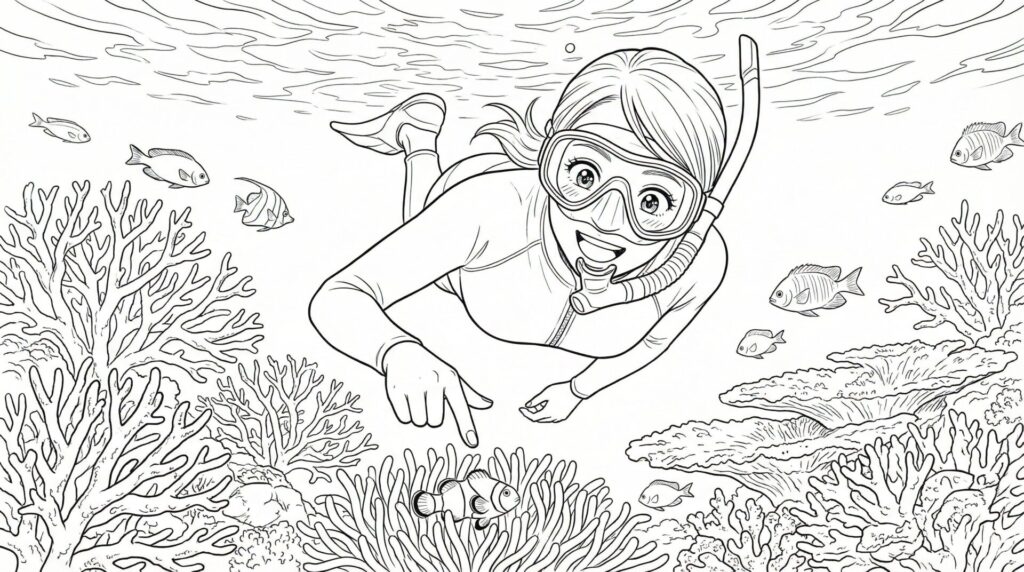
Near the Blue Cave entrance, a fish called "hatanpo (bullseye)" lives in a large school, and you can experience being surrounded by fish all at once the moment you enter from the sea. This was more overwhelming than expected, and I was surprised the first time. A situation of fish all around was a first for me, so at first I was bewildered and my body froze. That too is a good memory.
In the coral reefs around the cave, clownfish (the fish that was the model for the film "Finding Nemo") are often seen too. The orange and white stripes stand out so they're easy to find, and when the guide says "it's hiding in this sea anemone," it's properly there. The kinds of coral reef are abundant too, and the number and diversity of tropical fish are truly splendid.
With luck you can meet rays and whitetip reef sharks (a kind of shark, but gentle) too. The area around the Blue Cave is a diving spot that Miyako Island relocators frequently come to dive too, and in terms of the richness of creatures, Irabu Island's sea is in a class of its own from other tourist spots, I think.
Points to Note When Visiting the Blue Cave
Weather and Sea Conditions — Charging in Solo Is Absolutely a No
The first thing I want to say is, please don't try to go to the Blue Cave on your own. It's a cave facing the sea, an area very greatly affected by tide level and wind. Being fine doesn't necessarily mean it's safe, and there are days when judging sea conditions is hard even for a guide who knows the area inside out.
The shop makes the call to cancel a tour. Participants don't need to judge the safety of sea conditions. But trying to go personally on your own judgement carries high risk. Choosing a tour accompanied by a guide with a lifeguard qualification is the absolute premise.
In the unlikely event a tour is cancelled, the shop often contacts you on the day and offers a refund or alternative plan. Leaving slack in your itinerary makes it easier to arrange alternative dates. Itinerary-building that keeps in mind the possibility of being swayed by the weather is important on Irabu Island.
Absolutely Bring a Rash Guard — On Belongings and Clothing
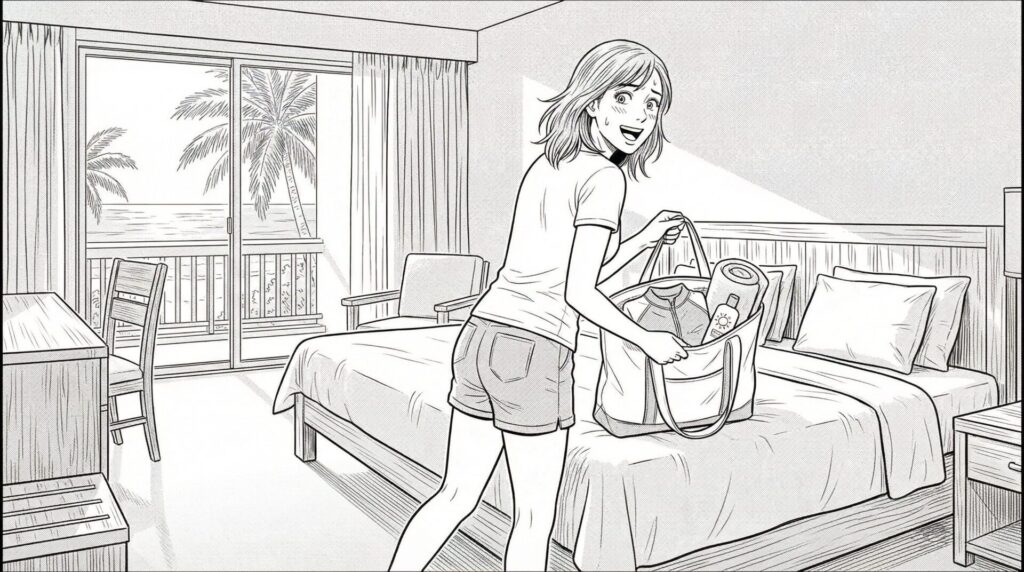
Belongings are simple — a swimsuit, towel and change of clothes are enough. Equipment like mask, snorkel, fins and life jacket is often included in free rental. That plans you can join empty-handed are increasing is truly a help.
But a rash guard alone I absolutely recommend. Miyako Island's sea has highly venomous jellyfish like the "habu jellyfish (box jellyfish)" and the "Portuguese man o' war." Jellyfish appear regardless of season, so measures are needed year-round, not just in summer. To reduce bare-skin exposure, a rash guard is close to essential. There are cases where you can rent one at the shop, but having your own is more reassuring.
For sunscreen, it's desirable to choose an "eco-friendly type" harmless to coral reefs. Chemical sunscreens can damage coral, so they're sometimes specified by the tour shop. It's good to check in advance.
As for clothing, please be conscious of whether you can put on and take off fins easily. Sandals and beach sandals are a no, and easy-to-move marine shoes are suited. A wetsuit is needed depending on the season (the sea temperature drops winter to spring), so confirm with the shop in advance.
How to Enjoy the Blue Cave Surroundings — Tips to Enrich Your Trip More
After the Tour, Head to Toguchi-no-Hama or Local Gourmet
The Blue Cave alone is plenty of an experience, but since you've come all the way to Irabu Island, please do tour the surroundings too.
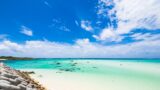
The unmissable sight on Irabu Island is "Toguchi-no-Hama." A beautiful beach where the white sand draws an arc, popular with tourists and locals alike. With high transparency and calm waves, it's perfect for swimming leisurely too. If you have time after the tour, it's a place I want you to definitely drop by. Sitting on this beach zoning out after the Blue Cave, the day feels unbelievably fulfilling.
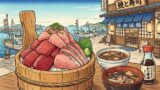
The Sarahama area is dotted with local diners too, including some understated places that serve seafood caught off Miyako Island. Unlike the stylish cafés for tourists, the atmosphere of a fishing town strongly remains, and I like that again. Taking a leisurely lunch here after the tour has become my personal standard course. Island-born guides sometimes teach you their recommended diners, so it's good to actively ask for such information.
Also, visiting "Shimojishima," connected to Irabu Island by a bridge, together raises the enjoyment by a notch. Shimojishima's "17END" is a place where you can have a fantastical experience like walking on the sea at low tide, in a position you can drop by straight after crossing the Irabu Bridge. Touring Irabu and Shimojishima as a set is the standard course.
Frequently Asked Questions
Q. Can I join even if I'm poor at swimming? You can. Since you wear a life jacket, you can enjoy the cave interior just by floating. The guide stays by you the whole time, so please be reassured. There are many reviews that even participants who "can't swim at all" enjoyed it.
Q. From what age can you join? Snorkelling has many plans OK from age 3. Glass-boat tours have no age limit. Trial diving is generally age 10 and up. Please check on the shop's page in advance and book.
Q. Fine day or cloudy day, which is better? Overwhelmingly a fine morning. The blueness inside the cave is completely different. If your itinerary has slack, adjusting with a same-day-cancellable plan while watching the weather is a hand too.
Q. When are the crowded periods? The July–August summer season, Golden Week, and year-end and New Year are crowded. Spring (March–April) and autumn (October) are relatively empty, with high sea transparency too. If you want to avoid crowds, spring or autumn is recommended.
Q. What if the tour is cancelled on the day? The tour can be cancelled depending on weather and sea conditions. In that case the shop contacts you in advance and handles a refund or reschedule. Leaving one day of slack in your itinerary is reassuring.
Q. Do I always get photo data for free? It differs by shop. Choose a plan that clearly states "free photo-data gift" and you're fine. The guide shoots with a waterproof camera and so on and sends it via LINE or email.
Q. Can I not go to the Blue Cave on my own? It's not technically impossible, but it's hard even for the experienced. There are many risks like changes in sea conditions and the narrowness of the cave. For the first time, please always join a tour.
Summary
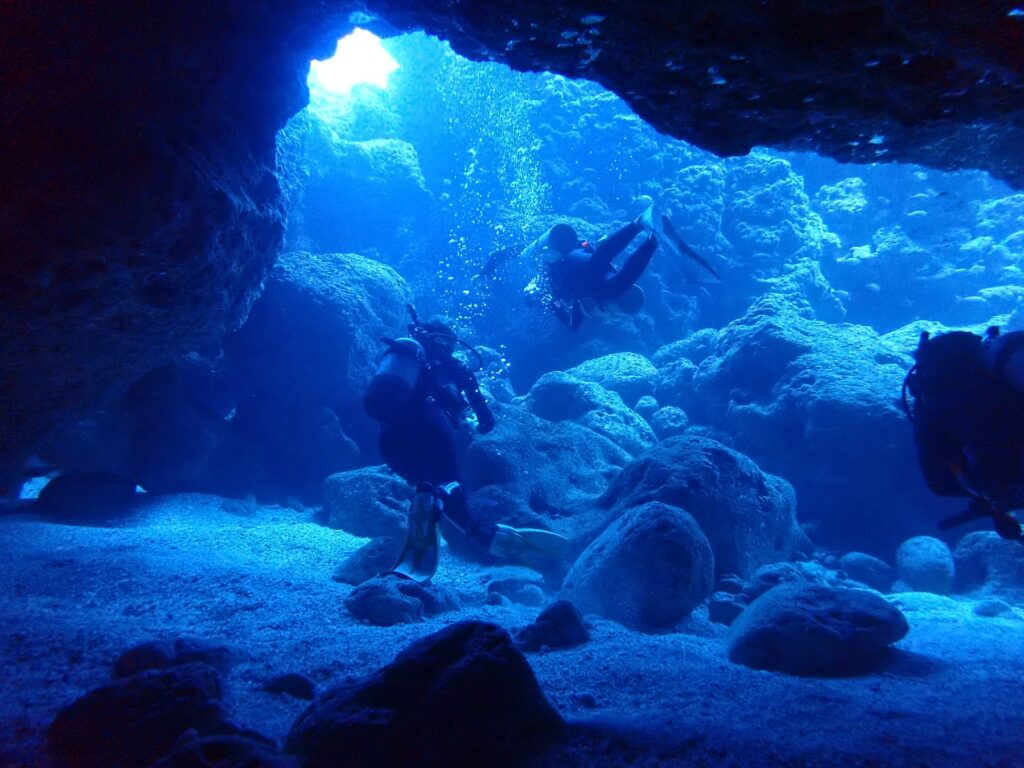
Irabu Island's Blue Cave (Sapphire Cave) is, I think, a spot with a special impact even among Miyako Island sightseeing. Not just entering the sea, but the experience of light pouring into a closed space called a cave shining a mysterious blue — once you see it, you can't forget it.
For access, cross the Irabu Bridge from Miyako Island and it's 10 minutes by boat from Sarahama Port. As long as you secure a rental car, it's not hard. The kinds of tour are abundant too, choosable from snorkelling to trial diving, SUP, sea kayak and glass boat. The price guide is ¥7,000–14,000, and since shops with free photo data and free equipment rental are increasing, empty-handed is reassuring too.
If I have one request, it's please don't charge in on your own. Changes in sea conditions are hard to predict and carry danger. It's precisely because you go with a guide who knows the area inside out that you can enjoy it safely and to the maximum. Book a trusted shop's tour and savour Irabu Island's sea to the full.
Every time I come to Miyako Island, I think "I'm glad I came again." But regarding this cave, every time I feel "I'm glad I came again for the first time." That's how much it's a place with fresh emotion every time. Please do check that blue with your own eyes.