- The Okinawan Scenery the Alexandrian-Laurel Avenue Teaches Us
- What Is Yarabu Road? Let's Cover the Basics
- What Is Yarabu (Alexandrian Laurel)?
- The Appeal of Yarabu Road | What's So Good About It?
- Driving Tips and Things to Note
- Recommended Spots Around Yarabu Road
- A Recommended Drive Plan
- How to Enjoy It Each Season
- Frequently Asked Questions (FAQ)
- What Yarabu Road Teaches Us
The Okinawan Scenery the Alexandrian-Laurel Avenue Teaches Us
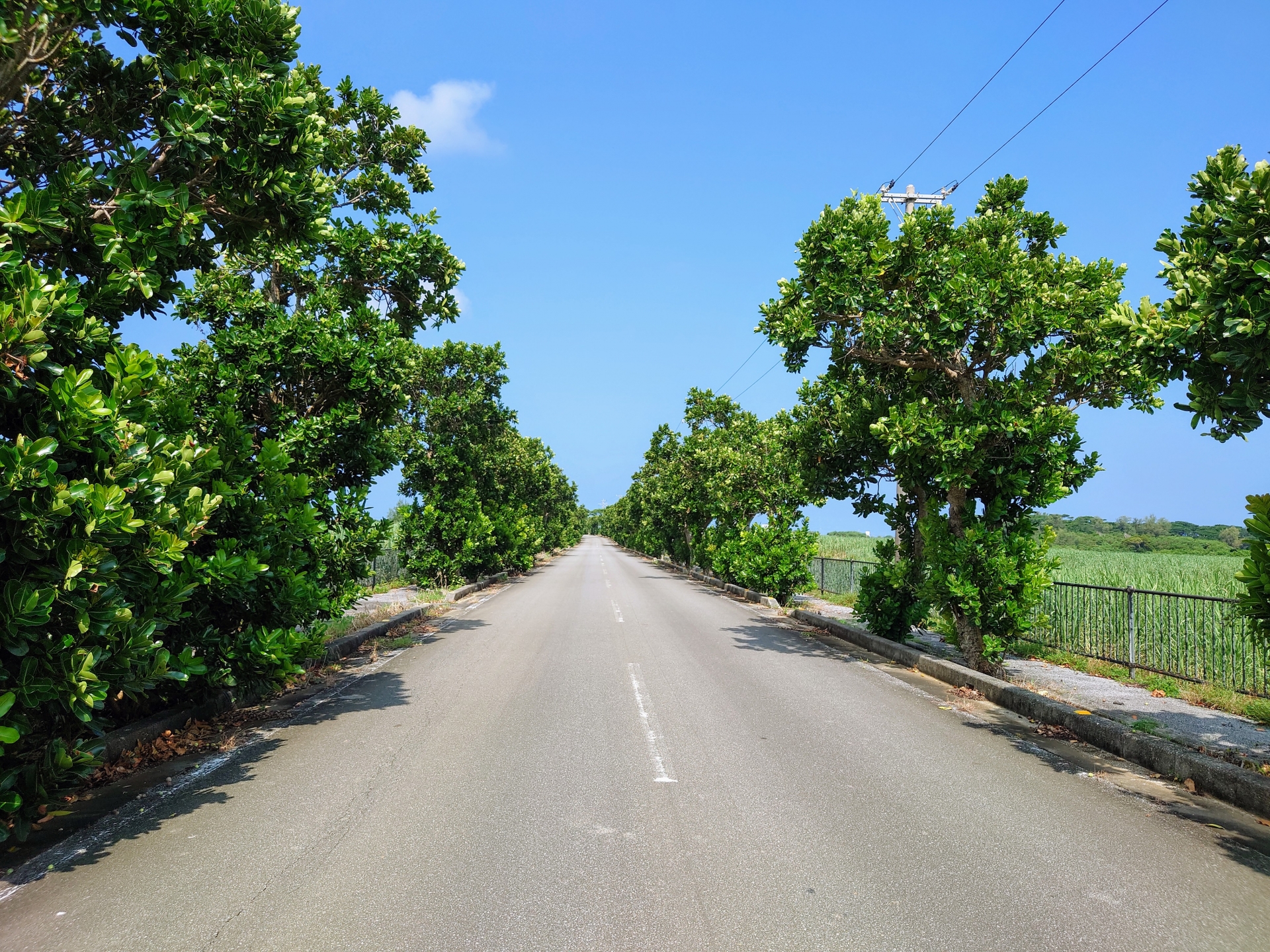
On the way from Sarahama to Shimojishima Airport, there's a road that's somehow strangely calming. Tall trees line both sides, dappled sunlight falls on the road, and you can hear the sound of the wind shaking the leaves.
Thinking "I kind of like this road," I stopped the car and looked it up, and learned this place is called "Yarabu Road." Yarabu is the Okinawan name for a tree called the Alexandrian laurel (terihaboku). It's strong against typhoons, doesn't lose to the sea breeze, and has protected the island, apparently.
It's not a flashy tourist spot. But driving this road, somehow your heart calms. The flow of the island's time is different, you might say — it makes you feel there's no need to hurry.
I'll tell you about Irabu Island's hidden charm "Yarabu Road," interwoven with my own experience of actually visiting many times. I want exactly those searching "Irabu Island sightseeing" to read it. It's not just the beach — it's a place where you can see the island's true face.
What Is Yarabu Road? Let's Cover the Basics
Yarabu Road is the nickname for the prefectural road (Okinawa Prefectural Route 90, Shimojishima Airport–Sarahama Line) heading from Sarahama on Irabu Island towards the Shimojishima Airport area. It's not an official tourist-spot name, but it's called that among the locals and repeat visitors who have been many times.
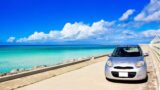
Yarabu (Alexandrian laurel) trees line both sides of the road, and there are places where they cover over like a tunnel. The total length is about 8 km (5 miles). It's a 15-minute distance if you drive, but there's no need to hurry. Rather, driving slowly with the windows open, feeling the wind, is the right answer.
Basic Route Information
Start: around Sarahama Port
End: around Shimojishima Airport
Distance: about 8 km
Time needed: 15–20 minutes by car (driving slowly)
Road width: single lane each way (relatively narrow)
Feature: an avenue of yarabu (Alexandrian laurel)
The route from Miyako Airport, crossing the Irabu Bridge towards Sarahama, and from there heading to Shimojishima Airport, is Yarabu Road. Conversely, the route from Shimojishima Airport towards Sarahama is fine too.
What Is Yarabu (Alexandrian Laurel)?
The word "yarabu" — I think many people are hearing it for the first time. I was the same.
Yarabu is the Okinawan name, and the formal name is "terihaboku" (Alexandrian laurel). True to the name (teriha meaning glossy leaf), a feature is that the leaves are glossy and shiny. It's an evergreen tree growing on the coast, a tall tree reaching 20–25 metres (66–82 ft) in height in good conditions.
The Island's Guardian, Strong Against Typhoons
The most amazing thing about yarabu is just how strong it is against typhoons.
Because it's a taproot tree whose roots extend deep underground, even if branches break in a typhoon, it almost never topples over. The Okinawan islands, including Miyako Island, take a direct hit from typhoons every year. That's exactly why it's been planted along the coast and around settlements since long ago as a windbreak and tide-break forest.
In the era of the Ryukyu royal government, it was apparently planted systematically as a windbreak forest called "umigaki." As a tree that protects the island, it's been cherished for hundreds of years.
One of the reasons I came to like Yarabu Road is that you can feel this "history of protecting the island." Thinking it's not just an avenue but a place where the wisdom and effort of our forebears still remains, it's somehow moving.
A Versatile Tree of High Practicality Too
Yarabu isn't just about looks — it's a tree of high practicality too.
From the large round fruit, good-quality oil can be pressed, and in the past it was used as lamp fuel and as medicine. Recently, under the name "tamanu oil," it's attracting attention as a beauty oil too. It has high antioxidant power and is apparently good for skin and hair care. On Ikema Island, they've started producing this tamanu oil, and it's becoming a new industry for the island.
As timber it's excellent too. Because it's hard with a beautiful grain, it's been used for farm tools, ritual bowls, furniture and the like. The wave-like grain is artistic, and single-board pieces and furniture are treated as high-end goods.
Where Did the Tree Come From?
The certain answer isn't known, but there's a theory that, along with fukugi (a beauty-leaf tree), it was brought from Fujian during the trading era. In Okinawa it's called differently by region — "yarabu," "yarau," "yanabu," "yarabo" and so on.
Ishigaki Island has a mountain called "Yarabu-dake," and there are apparently people with the surname "Yarabu" too. That's how deeply this tree has been rooted in the lives of Okinawa's people.

The Appeal of Yarabu Road | What's So Good About It?
You might think "tree-lined avenues are everywhere." That's certainly true. But Yarabu Road has a distinctive atmosphere not found in other places.
The Flow of Time Is Different
What you feel most is the difference in the flow of time.
Urban avenues are hectic, aren't they. Cars zoom along, there are traffic lights, and shops and signs catch your eye. But Yarabu Road is different.
On a narrow single-lane road, your speed naturally becomes slow. Not many oncoming cars come either. Fields and sugarcane fields spread around, with almost no buildings. The yarabu trees sway slowly, dappled sunlight falls on the road, and you can hear the sound of the wind.
"Ah, so this is what island time means," I realised for the first time.
There's no need to hurry. There's no reason you have to rush somewhere. You can just drive slowly, feeling the wind and light of this very moment. It's a road that makes you feel that way.
Okinawa Felt with All Five Senses
Driving with the windows open, your five senses are stimulated.
Sight: the green tunnel, the pattern of dappled sunlight, the blue of the sea visible in the distance
Hearing: the sound of leaves rustling in the wind, birdsong, stillness
Touch: the dampness of the sea breeze, the softness of Okinawa's air
Smell: the scent of the tide, the smell of vegetation, the smell of earth
Everything except touch can't be felt unless you open the windows. So turn off the air conditioning, open the windows fully, and drive. Even if it's a bit hot, it's worth it.
My favourite is the sound of the wind. The "sawasawa" rustling sound of yarabu leaves swaying in the wind. A sound you absolutely can't hear in the city. To hear this sound, I sometimes deliberately stop the car and turn off the engine.
The Expression Changes by Season and Time of Day
The reason it never gets old no matter how many times you visit is that it shows a completely different face by season and time of day.
Early morning: the morning sun streams in between the trees, a fantastical sight. The air is clear and pleasant. Birdsong echoes.
Daytime: the green is dazzling. The tree shade is cool, relatively comfortable even in high summer. The contrast with the blue sky is beautiful.
Evening: the setting sun lights the trees, dyeing them golden. The most dramatic time of the day.
Rainy days: the wet leaves are even glossier, and the green looks deeper. The sound of rain and leaf-sound mixing is pleasant.
My favourite is actually just after the rain. The wet leaves reflect the light and sparkle, the air is cool, and there's an indescribable freshness.
Driving Tips and Things to Note
To enjoy Yarabu Road, there are a few tips.
The Courage to Drive Slowly
First, what matters is driving slowly.
The speed limit is about 50 km/h, but I drive leisurely at about 30–40 km/h. If a car comes from behind, I give way in a wide spot. That's fine.
At first I drove fast thinking "I might be a nuisance to the car behind," but that's a waste. The scenery and the wind all pass you by. Have the courage to drive slowly and the world you see changes.
Open the Windows
To repeat, please open the windows. Fully if you can.
Yarabu Road seen from an air-conditioned car interior and Yarabu Road driven with the windows fully open feeling the wind are completely different things. Including the heat, I want you to feel the island's air.
However, the daytime in high summer is really hot, so early morning or evening is recommended. Or the comfortable periods of May–June and October–November.
Places to Stop Are Limited
Yarabu Road is single-lane each way, and basically there's no parking space. Forcibly stopping on the shoulder gets in the way of oncoming cars or farm work.
When you really want to stop, it might be good to find a place where the road widens, or to go as far as the car park at Shimojishima Airport or Sarahama Port and walk back.
I once stopped near the entrance to a farm road and was cautioned by a local. "This is a farm road, work vehicles pass through here." I felt terribly sorry, and have been careful ever since.
Watch for Oncoming Cars
The road is narrow, so be careful when passing oncoming cars. There are many curves especially, so there are places with poor visibility.
Not going too fast is the best safety measure.
Recommended Spots Around Yarabu Road
If you drive Yarabu Road, do go round the nearby spots too.
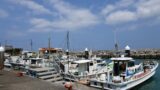
Sarahama Port
The start (or end) of Yarabu Road. A fishing port famous for bonito fishing, where you can eat fresh seafood bowls at "Insha-no-Eki Sarahama." The colourful settlement on the steep slope behind the fishing port is also a must-see. Stroll the maze-like alleys and you can feel the old island way of life.
In the morning, after driving Yarabu Road, a seafood-bowl lunch at Sarahama Port. This is my standard course.
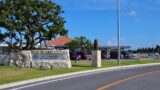
Miyako Shimojishima Airport
A stylish airport renewed as a civilian airport in 2019. The café and souvenir shop in front of the security check can be entered even by those not taking a flight.
The recommendation is the sandwich using bonito namari-bushi and sea grapes. A dish you can only eat at Shimojishima Airport. Perfect for a break on a Yarabu Road drive.

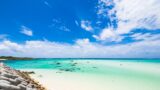
17END
A spectacular beach at the tip of the Shimojishima Airport runway. A place so beautiful it's called the "last paradise."
Drive Yarabu Road, pass Shimojishima Airport and proceed further, and you reach 17END. The pure-white sand and clear sea at low tide are beauty that leaves you lost for words. If the timing's right, you can see a plane just before landing up close.
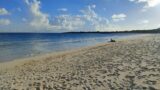
Toguchi-no-Hama
A natural beach representative of Irabu Island. A bow-shaped beach about 800 metres long.
The powder sand is fluffy, and walking barefoot feels good. You can get there with a little detour from Yarabu Road, so visiting them together is recommended.
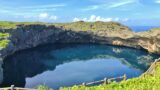
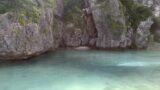
Toriike Pond
A mystical natural pond where two ponds, large and small, connect underground. It's also called the "Dragon's Eye."
The contrast of the emerald-blue water surface and the rocky area is beautiful, and it's also popular as a power spot. It's about 5 minutes by car from Yarabu Road. There's a path, so you can enjoy it while strolling.
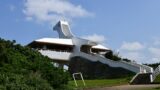
Makiyama Observatory
An observatory at the highest point on Irabu Island. Its design modelled on a sashiba (migratory bird) is distinctive.
From here you can survey the Irabu Bridge, Miyako Island, Kurima Island and Ikema Island. A 360-degree panorama view. It's a different route from Yarabu Road, but if you've visited Irabu Island it's a place not to be missed.
A Recommended Drive Plan
Let me introduce the Yarabu-Road-centred drive plan I actually do.
Half-Day Plan (Morning Start)
8:00 Makiyama Observatory
To the observatory first thing in the morning. Early morning has few tourists, and you can enjoy the scenery quietly. The air is clear and pleasant too.
8:30 Drive Yarabu Road slowly
Windows fully open, from Sarahama to Shimojishima Airport. The morning light streams in between the trees, very fantastical. Partway, stop the car in a safe place and listen to the sound of the forest.
9:00 Café break at Shimojishima Airport
Breakfast (or a light meal) at the airport café. Relax while watching planes take off and land.
9:30 17END
Visit timed to low tide. Stroll the pure-white sand. Take lots of photos.
11:00 Toguchi-no-Hama
Swim a little if you like, or walk the sand. Experience the pleasantness of the powder sand.
12:00 Seafood lunch at Sarahama Port
Bonito bowl or seafood bowl at "Obanmai Shokudo." Fresh and delicious!
13:00 Stroll the Sarahama settlement
Capture the colourful townscape in photos, and walk the maze-like alleys.
Full-Day Plan
In addition to the half-day plan, in the afternoon:
14:00 Sabautsugaa (Sabaokiido)
Descend the 123 steps and view the historic well. The scenery is wonderful too.
15:30 Toriike Pond
Stroll the mystical pond. Receive some power.
17:00 Sunset viewing at Sawada-no-Hama
A beautiful beach chosen among "Japan's 100 Best Beaches." The sunset hours are especially beautiful. The distinctive scenery with giant rocks dotted about.
18:30 Cross the Irabu Bridge to Miyako Island
The Irabu Bridge at dusk is a spectacle too. The sea dyed orange is romantic.
With this plan, you can cover almost all of Irabu Island's main spots.
How to Enjoy It Each Season
Spring (March–May)
A comfortable climate, ideal for driving. It's the season of fresh greenery, and the yarabu leaves are lively too. Golden Week has many tourists, so April or early May is recommended if possible.
The beach opens in late March, so you can swim too. However, the water temperature may still be a little cold.
Summer (June–September)
The hottest period. Yarabu Road has tree shade so it feels relatively cool, but even so it's hot. An early-morning or evening drive is recommended.
The sea is at its most beautiful. If you're swimming at 17END or Toguchi-no-Hama, this period is the best. It's also the peak of bonito fishing, so Sarahama Port becomes lively.
It's also typhoon season (July–October), so check the weather forecast frequently. In case of a direct typhoon hit, refrain from going out.
Autumn (October–November)
Personally my most recommended season. Not too hot, not too cold, you can drive comfortably. There are fewer tourists than summer too.
The sea is still a water temperature you can well swim in. The sky is high, and you can take beautiful photos too.
Winter (December–February)
Okinawa's winter is mild, but even so it's around 20°C (68°F). On windy days the perceived temperature drops.
A Yarabu Road drive may actually be more comfortable in winter. Open the windows and it's not too cold, and the just-right wind feels good. There are few tourists too, and you can spend time quietly.
The sea is cold for swimming, but just seeing the scenery is no problem. The winter Miyako blue is beautiful too.
Frequently Asked Questions (FAQ)
Q1: From where to where is Yarabu Road?
There's no clear definition, but generally it refers to Prefectural Route 90 from around Sarahama Port to around Shimojishima Airport. It's a journey of about 8 km.
Q2: Is a rental car needed?
It's essential. Irabu Island has almost no public transport, so without a rental car it's inconvenient.
Q3: Can you go by bicycle?
It's possible, but 8 km is quite a distance. And there are ups and downs, so it's for those confident in their fitness. An electric-assist bicycle might be easier. There's apparently bicycle rental at Shimojishima Airport too, so some people cycle from the airport to 17END.
Q4: How about a night drive?
I don't recommend it. There are almost no streetlights and it's pitch dark. Wild animals can come out, and the road is narrow, so it's safer to avoid the night.

Q5: What are the best spots for photos?
Honestly, anywhere makes a picture. Places where the trees form a tunnel, places where dappled sunlight falls beautifully, places where the sea is visible in the distance. However, shooting on the road is dangerous, so always stop in a safe place first.
Q6: Can you enjoy it on a rainy day?
There's a way to enjoy it unique to rainy days. The wet leaves sparkle beautifully, and the harmony of rain-sound and leaf-sound is pleasant. However, visibility worsens, so take full care when driving.
Q7: Can you eat the yarabu fruit?
The fruit itself is not edible. The oil pressed from the fruit (tamanu oil) is used. As a beauty oil, it's recommended as a souvenir too.
Q8: How long does it take?
About 15 minutes driving normally. But to enjoy it slowly, you'll want to allow 30 minutes to an hour. Stop partway, listen to the sound of the forest, take photos.
Q9: Is there a toilet?
There's none along Yarabu Road. Use one at Sarahama Port or Shimojishima Airport beforehand.
Q10: Can you enjoy it alone?
Of course! If anything, it's perfect for a solo drive. You can drive at your own pace, and stop as much as you like. Play music, or listen to the sound of the forest in silence.
What Yarabu Road Teaches Us
The "must-see spots" listed in tourist guides are mostly fixed, aren't they. A beautiful beach, a spectacular observatory, a famous eatery. Those are wonderful too, and I love them.
But Yarabu Road is different.
This is a place with "nothing." There's no Instagram-worthy flashiness. There are no tourist facilities. Just trees lined up.
But that "nothingness" conversely teaches you various things.
You don't have to hurry
There's no need to arrive at the destination quickly. Feeling the wind and light of this very moment is the real joy of travel.
The wisdom of coexisting with nature
A tree that endured typhoons, didn't lose to the sea breeze, and protected the island for hundreds of years. The importance of coexisting with nature, not just human convenience.
True richness
Not convenience or efficiency, but slowly flowing time and the leisure to listen to the sound of the wind. Isn't that kind of thing actually the greatest luxury?
If I'm asked my favourite place on Irabu Island, honestly I hesitate. The spectacle of 17END is wonderful, and the beauty of Toguchi-no-Hama is exceptional. But if I'm asked "the place where your heart calms most?", I'd answer without a doubt: Yarabu Road.
The time spent here can't be tasted anywhere else.
After returning to Tokyo, when I'm chased by busy days, I suddenly remember Yarabu Road. The feeling of the wind when I drove with the windows open. The pattern of dappled sunlight. The sound of leaves rustling.
And then, somehow my heart calms. I think, "ah, I want to go again."
If you visit Irabu Island, do drive Yarabu Road slowly once. Without hurrying, with the windows open, feeling the island's time. Turn off the air conditioning, turn off the music too, and just drive.
You're sure to realise that a road with nothing is actually the richest place.
Route Information Summary
| Item | Details |
|---|---|
| Route name | Yarabu Road (unofficial nickname) |
| Official name | Okinawa Prefectural Route 90, Shimojishima Airport–Sarahama Line |
| Start | around Sarahama Port |
| End | around Shimojishima Airport |
| Distance | about 8 km |
| Time needed | 15–20 minutes (driving slowly) |
| Road width | single lane each way |
| Feature | an avenue of yarabu (Alexandrian laurel) |
| Recommended times | early morning, evening |
| Recommended seasons | March–May, October–November |
How about adding Yarabu Road to making wonderful memories on Irabu Island? It's not flashy, but it's sure to be an experience that stays in your heart.